Cats don’t need carbs, so fruit should be a tiny, occasional treat. See cat-safe fruits with exact portions, sugar-risk tiers, serving tips, and fruits to ...
Article
•
Designer Mixes
Cat Safe Fruits: Portions and Warnings

Shari Shidate
Designer Mixes contributor
Cats are obligate carnivores, so fruit is never a nutritional “need” in the feline diet. But many cats enjoy a tiny bite of something new, and a few fruits can be a safe, fun treat when you keep portions small and prep them correctly.
As a veterinary assistant, I tell families to think of fruit as an occasional snack, not a meal add-on. The best tools are a small portion, a slow introduction, and knowing which fruits are a hard no.
Quick safety rules before you share
- Keep it tiny: A common veterinary nutrition guideline is to keep treats (including fruit) under about 10% of daily calories. For most cats, that means fruit is measured in teaspoons, not tablespoons.
- Introduce one fruit at a time: Offer a small bite and wait 24 to 48 hours to watch for vomiting, diarrhea, or itching.
- Prep matters: Wash thoroughly, remove seeds, pits, stems, and rinds, and cut into pea-sized pieces to reduce choking risk.
- No added sugar or sweeteners: Skip fruit cups in syrup, “no sugar added” products that may contain xylitol, and anything baked or seasoned.
- Avoid processed fruit foods: Fruit yogurt, smoothies, salsas, chutneys, and fruit salads can hide ingredients that are unsafe for cats (like onions, garlic, artificial sweeteners, or preservatives). Stick with plain, fresh fruit only.
- Pause if your cat has medical issues: If your cat has diabetes, obesity, IBD, chronic diarrhea, pancreatitis, or kidney disease, ask your vet before offering fruit. Also check with your vet for kittens, since very young kittens generally should not have treats.
Cat safe fruits list (with portion sizes)
Portions below are meant for a healthy adult cat as an occasional treat, up to a few times per week. If your cat is small, senior, or has a sensitive stomach, start with half of the suggested amount.
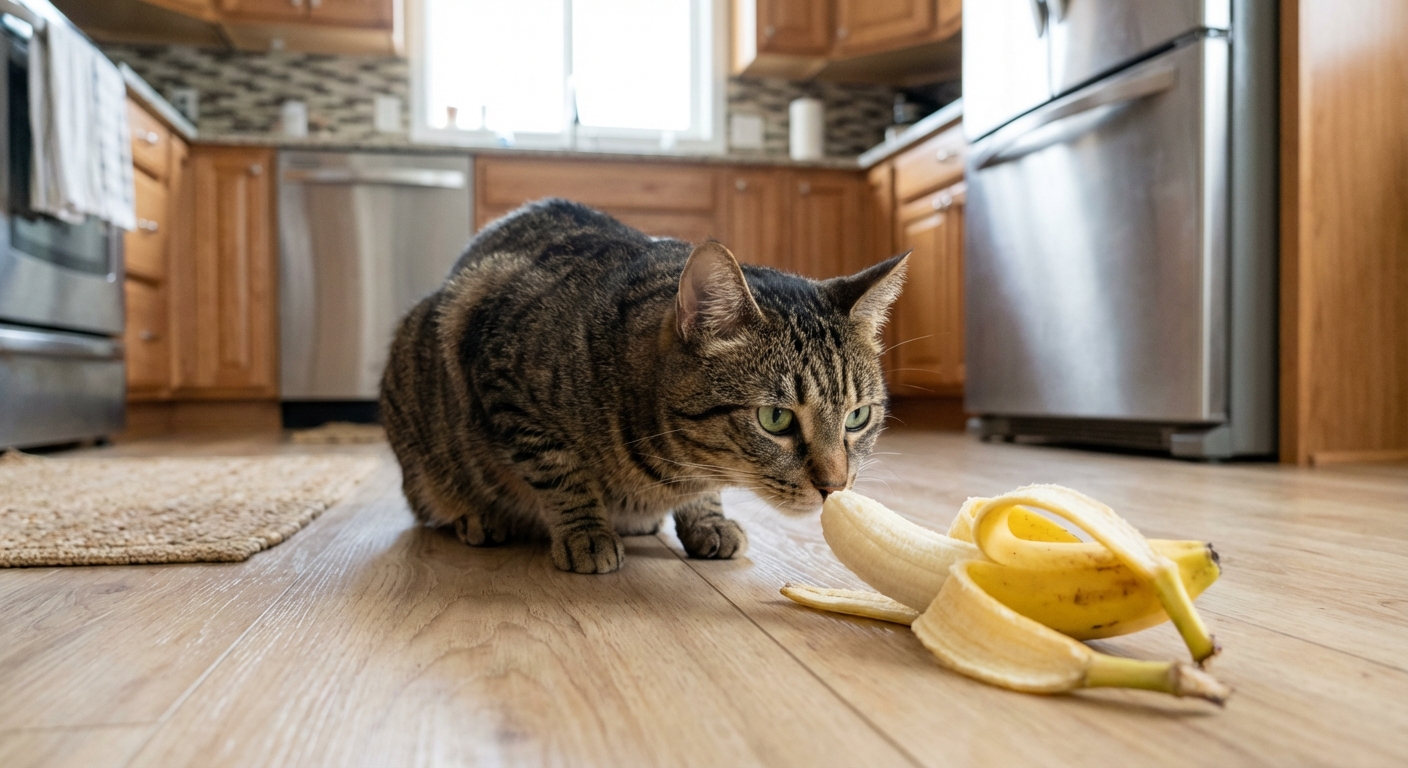
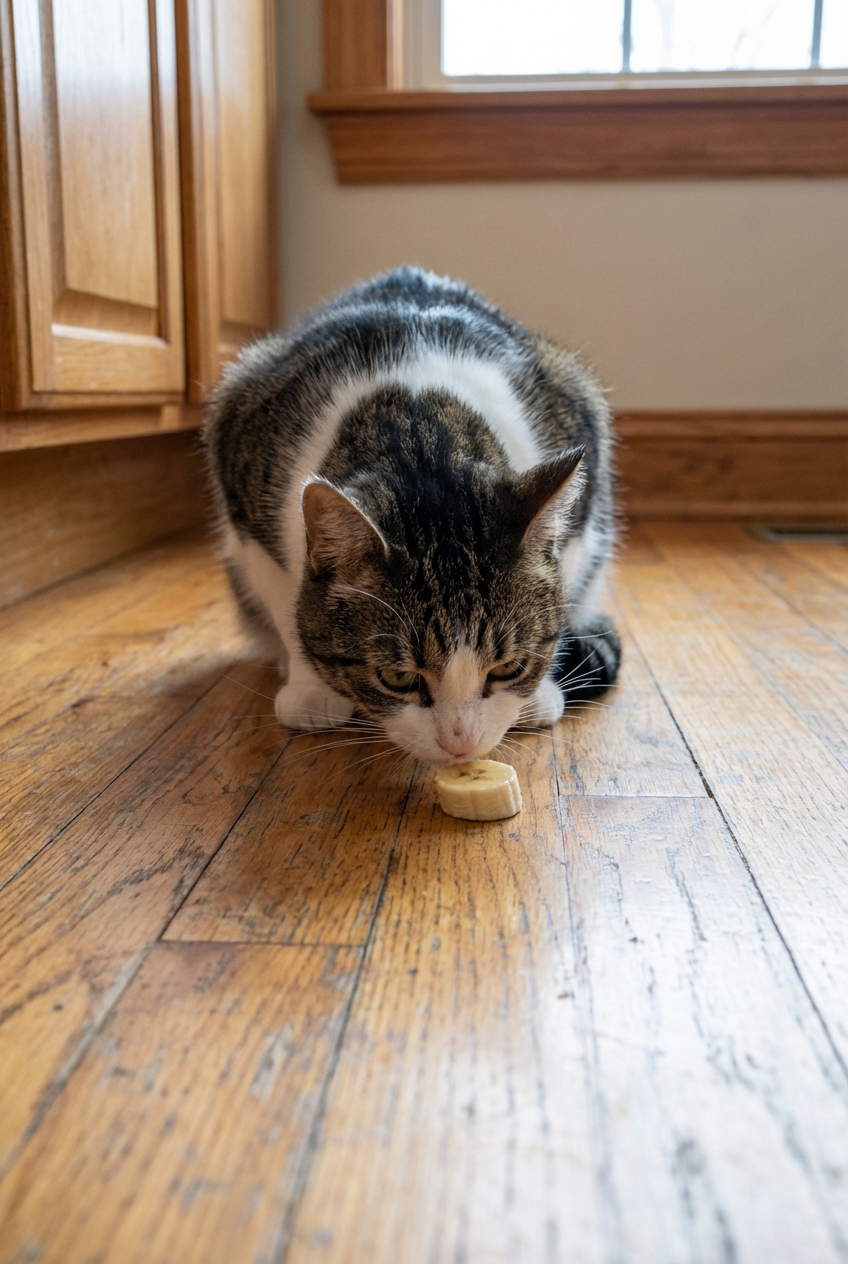
Banana
- Portion: 1 to 2 small slices (about 1 teaspoon total)
- Why it can work: Soft texture and mild flavor
- Watch-outs: Higher in sugar and starch, can cause tummy upset or constipation in some cats
Blueberries
- Portion: 1 to 3 blueberries, cut in half for smaller cats
- Why it can work: Easy to portion, some cats enjoy the “bat it around” factor
- Watch-outs: Too many can loosen stools
Strawberries
- Portion: 1 small strawberry or 1 to 2 teaspoons chopped
- Why it can work: Aromatic and appealing to curious cats
- Watch-outs: Remove the leafy top, avoid sweetened frozen products
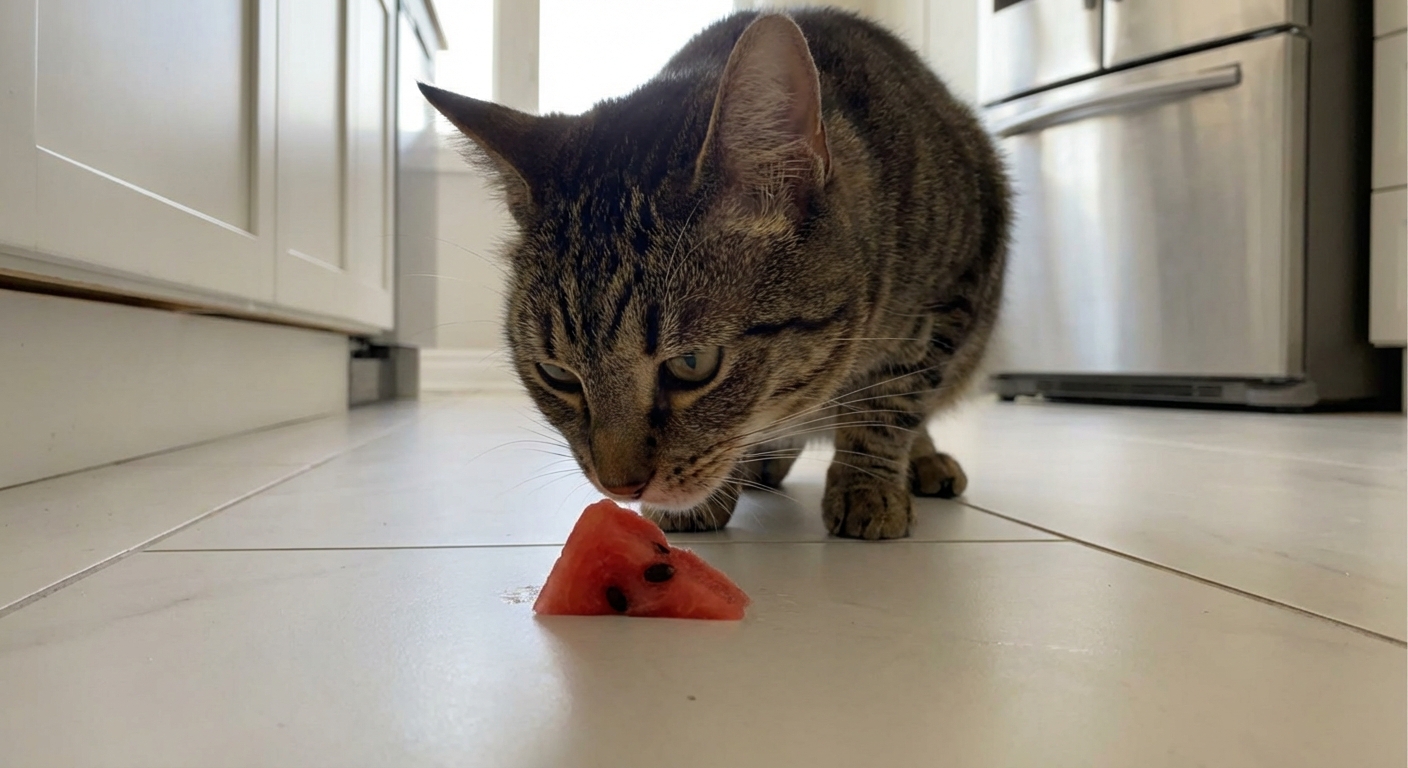
Watermelon (seedless)
- Portion: 1 to 2 teaspoons of seedless flesh
- Why it can work: Hydrating and low calorie
- Watch-outs: No rind, avoid seeds, too much can cause diarrhea
Cantaloupe
- Portion: 1 to 2 teaspoons, diced
- Why it can work: Many cats love the scent
- Watch-outs: Remove rind and seeds, keep portions small due to sugar
Apple (peeled is best)
- Portion: 1 to 2 small cubes (about 1 teaspoon)
- Why it can work: Crunchy texture for some cats
- Watch-outs: Remove seeds and core completely, as seeds contain cyanogenic compounds
Pear
- Portion: 1 to 2 small cubes (about 1 teaspoon)
- Why it can work: Soft and mild
- Watch-outs: Remove seeds and core, avoid canned pears in syrup
Mango
- Portion: 1 teaspoon diced
- Why it can work: Soft, fragrant treat
- Watch-outs: Remove skin and pit, sugar content is higher so keep it rare
Pineapple
- Portion: 1 teaspoon of fresh chunks
- Why it can work: Some cats like the tang
- Watch-outs: Acidity can upset sensitive stomachs, avoid canned pineapple in syrup
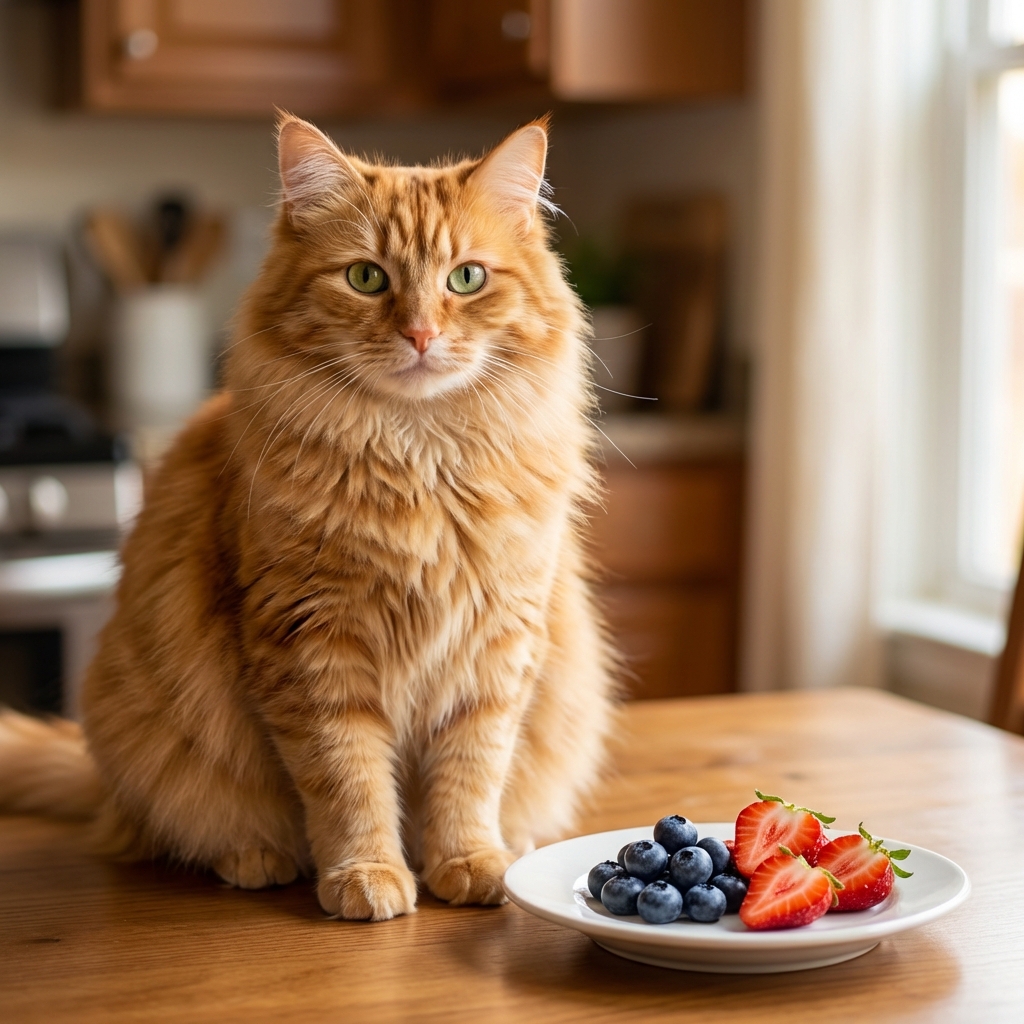
Good to know: Your cat may show zero interest in fruit, and that is completely normal. Cats do not taste sweetness the way humans do, so interest in fruit is often about texture, smell, or play. Also, most cats do not get meaningful nutritional benefit from fruit, so it is perfectly fine to skip it.
Fruits to avoid
These are the ones I recommend treating as “not worth the risk.” If your cat gets into any of these, contact your veterinarian or a pet poison helpline, especially if symptoms occur or you are unsure how much was eaten.
Grapes and raisins
Avoid. Toxicity is well documented in dogs. Evidence in cats is more limited, but because the mechanism is still not fully understood and kidney injury is a serious outcome, the safest plan is zero exposure.
Citrus (orange, lemon, lime, grapefruit)
Avoid. The biggest problems are the peels, essential oils, leaves, and concentrated extracts, which can irritate the stomach and may cause drooling, vomiting, or diarrhea. Some cats may tolerate a tiny amount of plain flesh, but reactions vary, so I still recommend skipping citrus as a treat.
Cherries
Avoid. The pits, stems, and leaves contain cyanogenic compounds, and the fruit itself is very sugary. Pit ingestion is also a choking and obstruction risk.
Stone fruits with pits (peach, plum, apricot)
Avoid. Pits are choking hazards and contain cyanogenic compounds. The flesh is also high in sugar and can trigger GI upset.
Avocado
Best avoided. While persin toxicity is a bigger concern in some other species, avocado is high in fat and can cause vomiting or diarrhea in cats. High-fat foods can also increase pancreatitis risk in sensitive cats.
Figs and dates
Best avoided. They are very sugary and can cause digestive upset. Dates are also sticky and easy to overfeed.
How much fruit is too much?
For most cats, “too much” happens quickly. A few bites can be fine, while a few tablespoons can cause a messy litter box.
- Typical max serving: About 1 to 2 teaspoons total fruit in a day (less for small cats).
- Frequency: 1 to 3 times per week is plenty for most cats.
- If your cat is overweight: Keep fruit rare, and choose lower-sugar options like a small piece of watermelon or a couple blueberries.
- If your cat is prone to constipation or diarrhea: Fruit fiber and sugar can make GI issues worse in some cats, so it may be better to avoid fruit altogether.
Signs your cat is not tolerating fruit
- Vomiting or repeated gagging
- Diarrhea or very soft stool
- Drooling, pawing at the mouth
- Itchy skin, facial swelling, or hives (seek urgent care)
- Lethargy, refusing food, or abdominal pain
Safer ways to offer fruit
- Use a lick format: Mash a blueberry or banana slice and let your cat lick a tiny smear from a spoon.
- Mix with a high-protein base: Add a few blueberry halves to a spoonful of plain, unseasoned cooked chicken, or place a small fruit piece next to their regular meal.
- Freeze for enrichment: Freeze a teaspoon of mashed watermelon in a small silicone mold and offer it supervised. Some cats enjoy it, others walk away.
- Supervise and pick up leftovers: Fruit dries out, attracts bugs, and can encourage nibbling beyond a comfortable amount.
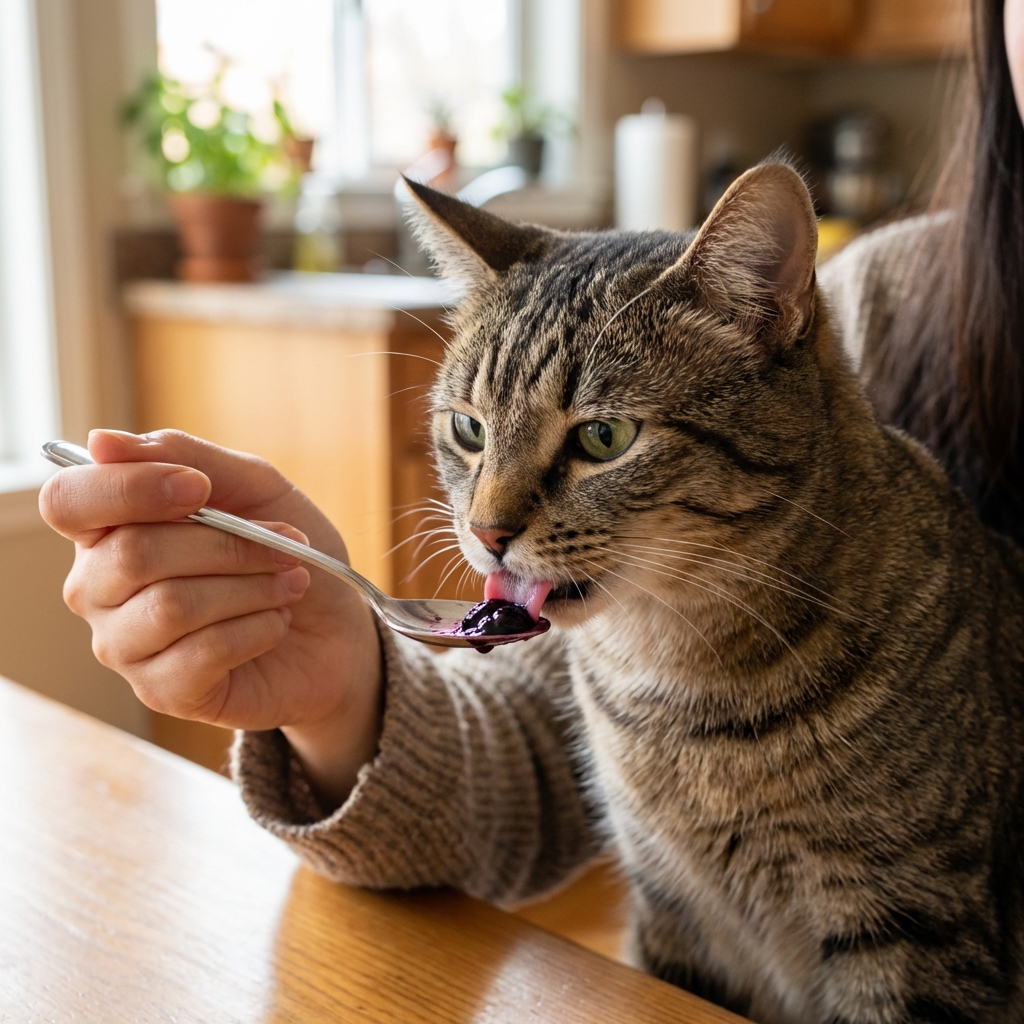
When in doubt, skip the fruit and offer a species-appropriate treat like a bite of cooked meat. Cats thrive on protein first.
When to call your vet
Contact your veterinarian promptly if your cat eats a fruit from the avoid list, swallows a pit or seed, or shows vomiting, diarrhea, weakness, drooling, or signs of pain. If you are unsure how much was eaten, it is always okay to call and ask. It can save you a long night of worry.