Wondering if cats can eat fruit? Get a cat-safe fruits list with teaspoon-sized portions, easy prep steps, GI warning signs, and a clear avoid list (grapes, ...
Article
•
Designer Mixes
Cat-Safe Fruits: Portions and Sugar Risks

Shari Shidate
Designer Mixes contributor
Fruit can be a fun little bonus for some cats, but it should stay exactly that: a bonus. Cats are obligate carnivores, meaning their bodies are built to thrive on animal-based protein and fat. Cats have no minimum carbohydrate requirement, so too much fruit can add unnecessary sugar and calories. In some cats it can also trigger stomach upset.
If your cat loves a fruity nibble, you can absolutely do it safely with two rules: keep portions tiny and choose low-risk fruits.
Quick calorie rule: keep all treats (including fruit) under about 10% of your cat’s daily calories.
Why sugar matters
Unlike us, cats do not need carbohydrates to meet their nutritional needs. A bite of fruit here and there is not automatically dangerous, but frequent fruit treats can work against a healthy weight and steady blood glucose control, especially for indoor cats who already move less.
Common sugar-related concerns
- Weight gain: Fruit adds calories without the protein cats need to feel satisfied.
- Diabetes management: If your cat is overweight, pre-diabetic, diabetic, or on a special diet, fruit is usually not worth the gamble unless your veterinarian approves it.
- Dental health: Sugary, sticky foods can contribute to plaque, especially if a cat is not getting regular dental care.
- GI upset: Some cats get soft stool or vomiting from sugary or high-fiber fruits.
Think “taste, not snack.” For most cats, fruit should be an occasional lick or nibble, not a regular treat portion.
Cat-safe fruits and portions
Portions below are designed for a typical healthy adult cat. If your cat is small, senior, overweight, or has a medical condition, go even smaller and check with your veterinarian.
How often: 1 to 2 times per week is a sensible upper limit for most cats that tolerate fruit well.
Introduce slowly: Offer one new fruit at a time, then wait 24 to 48 hours before trying another. It makes it easier to spot sensitivities.
Lower-sugar options
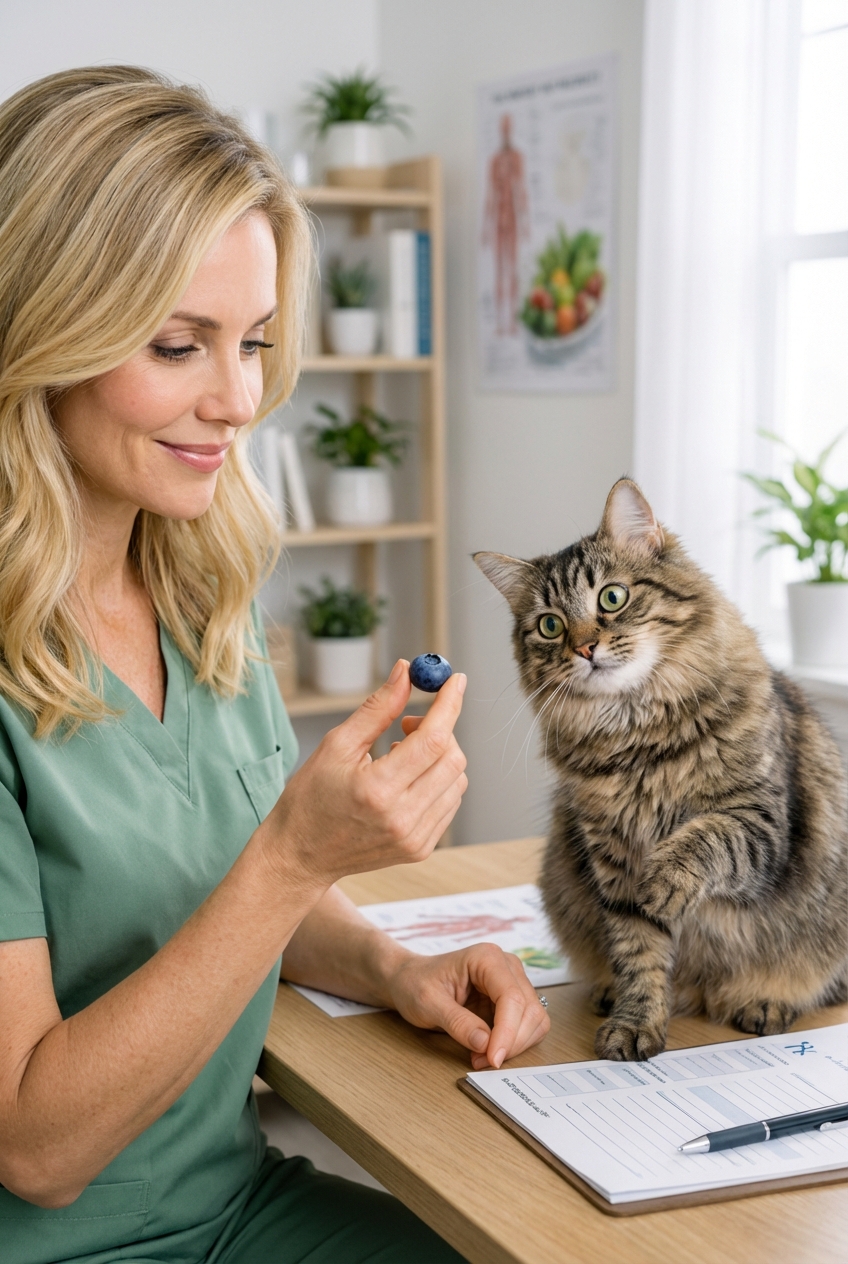
- Blueberries: 1 blueberry (or 1/2 for small cats).
- Raspberries: 1 berry.
- Strawberry: 1 small slice (about dime-sized). Remove leafy top.
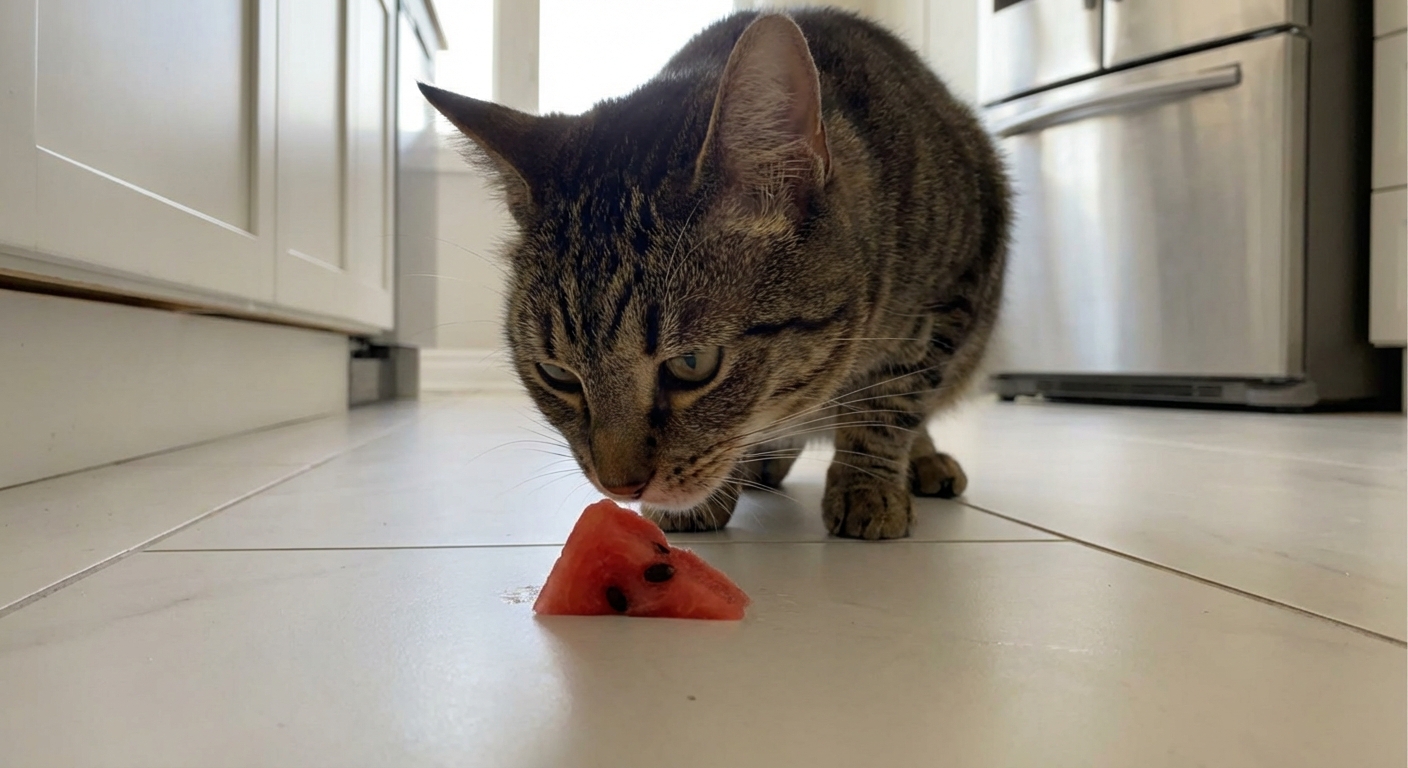
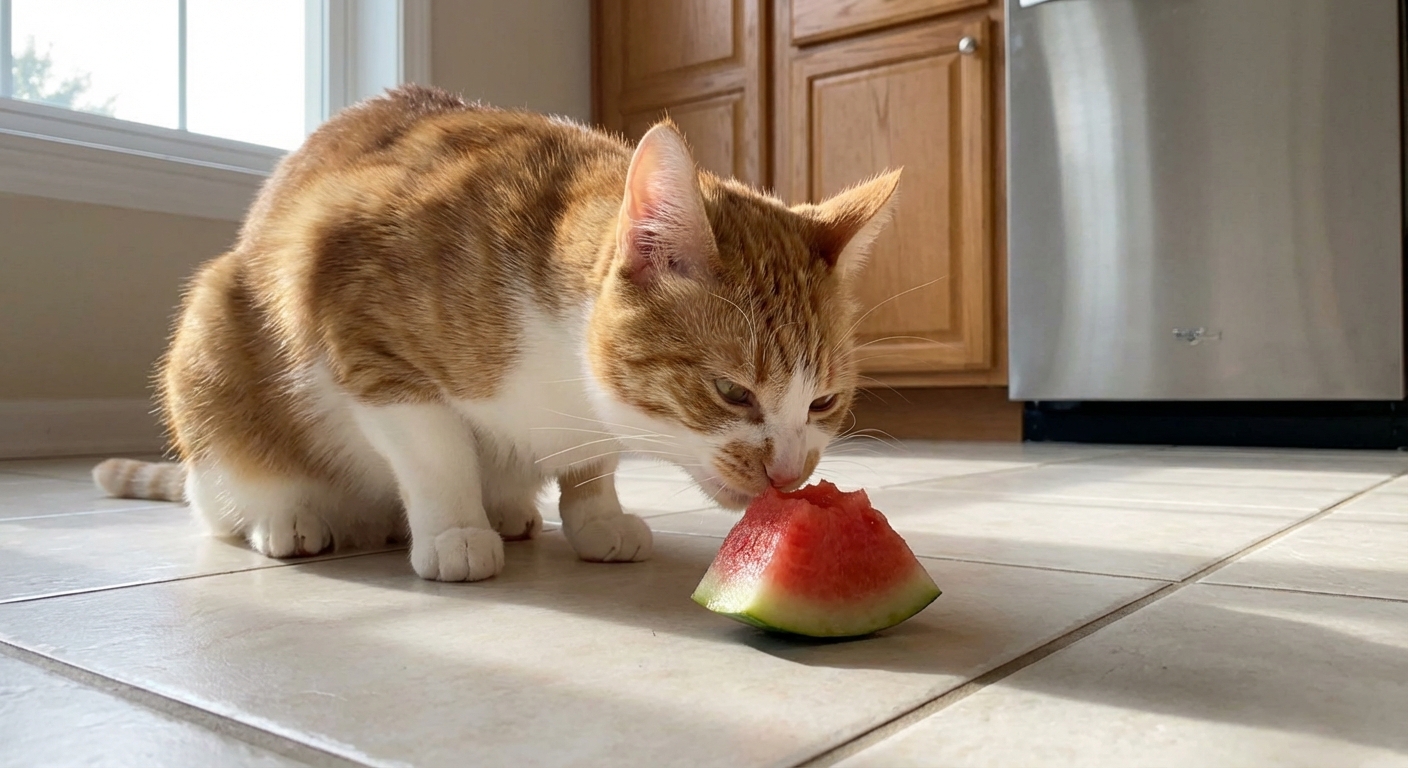
- Watermelon: 1 to 2 seedless cubes (about 1 cm each).
- Cantaloupe: 1 small cube (about 1 cm).
Moderate-sugar options
- Apple: 1 small peeled cube (about 1 cm). No seeds and avoid the core.
- Pear: 1 small peeled cube (about 1 cm). Skip seeds and stem.
- Peach: 1 pea-sized bite of flesh only. No pit and no canned peaches in syrup.
Higher-sugar options
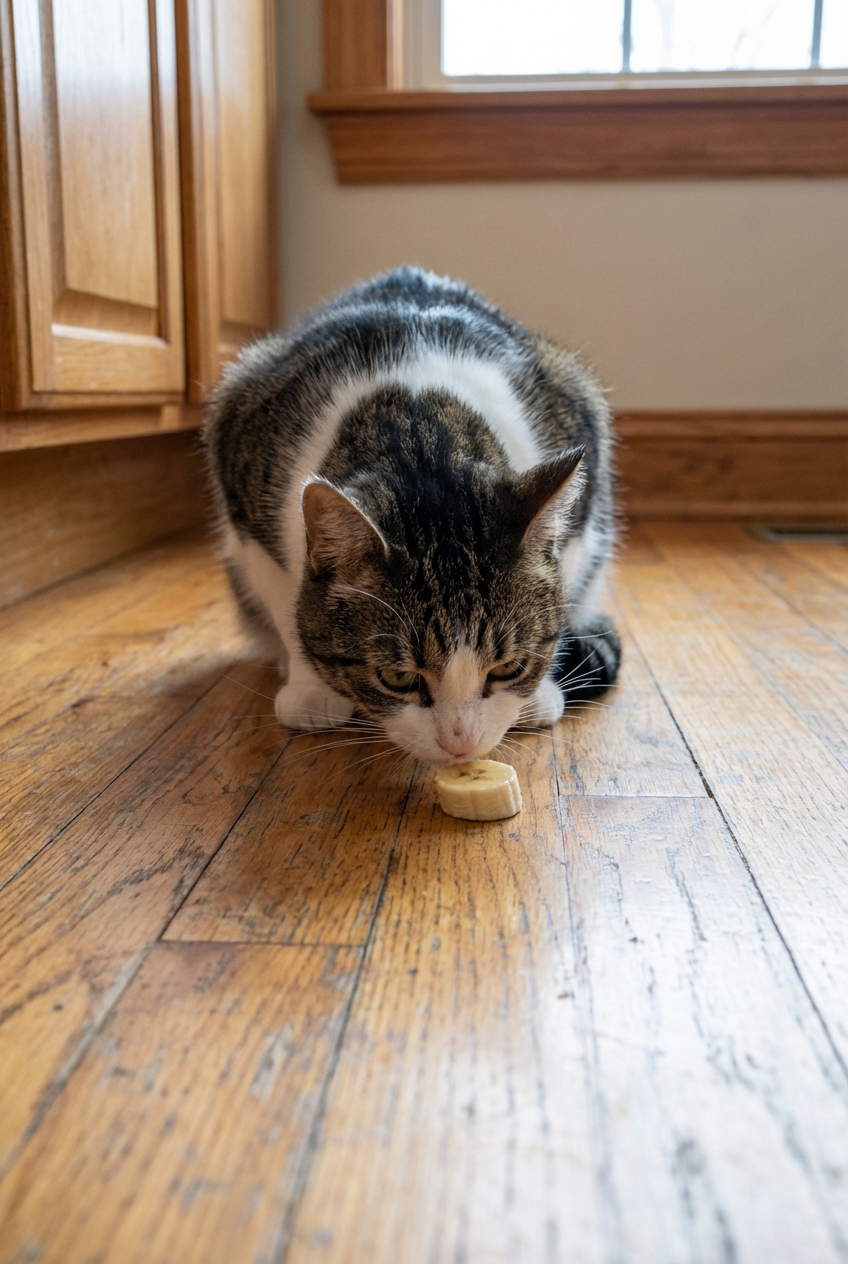
- Banana: 1 thin slice about the size of your pinky fingernail.
- Mango: 1 pea-sized bite.
- Pineapple: 1 tiny cube (about 1 cm). Can be acidic and may upset sensitive stomachs.
Tip from the vet clinic world: If you are using treats for training or enrichment, use freeze-dried meat treats instead. They are much more species-appropriate than fruit.
Fruits to avoid
Some fruits are risky enough that it is simplest to skip them. When in doubt, choose a meat-based treat instead.
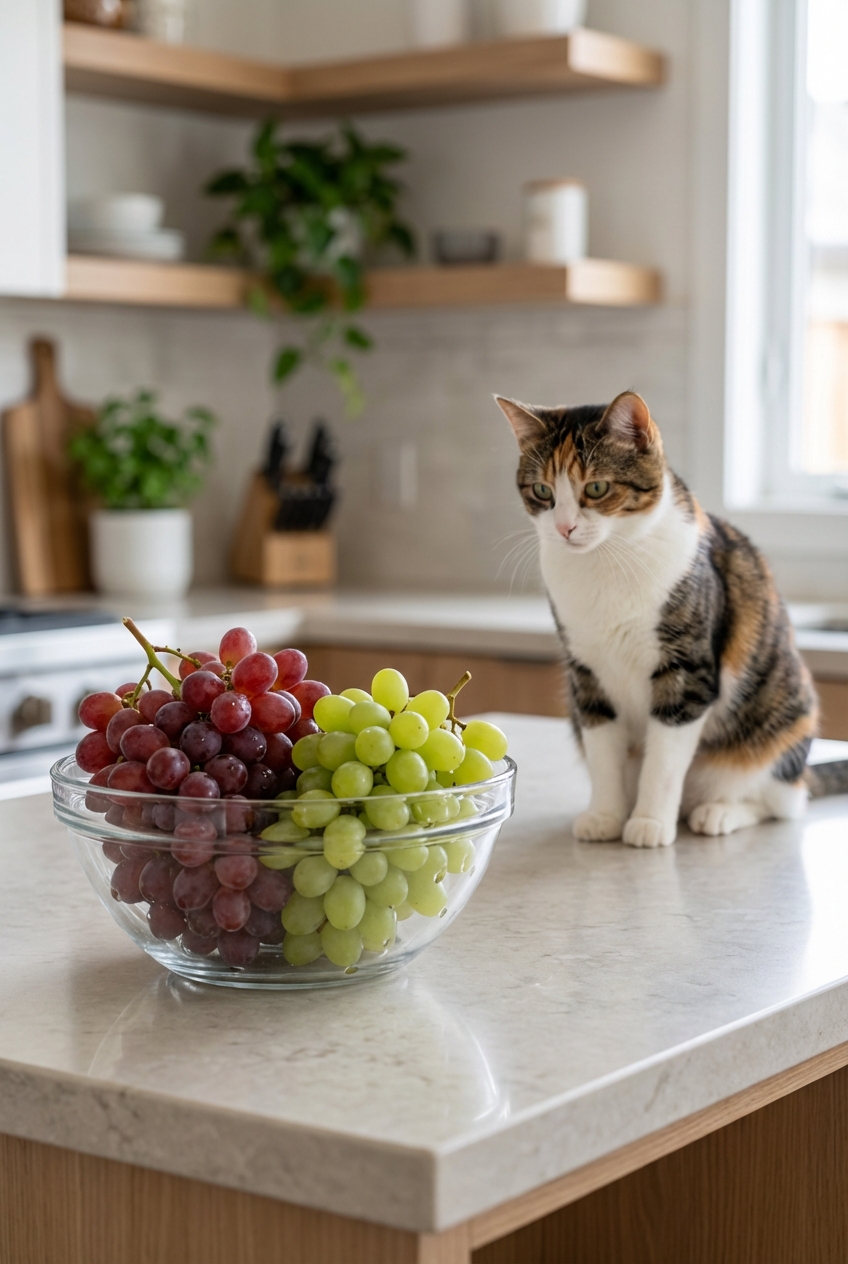
- Grapes and raisins: Best avoided. Kidney injury is well documented in dogs, and while the risk in cats is uncertain and appears rarer, there are reports in pets and it is not worth experimenting.
- Citrus (orange, lemon, lime, grapefruit): Many cats get GI upset. The peel and essential oils are higher-risk irritants than the flesh, but even small tastes can bother sensitive stomachs.
- Cherries: Avoid pits, stems, and leaves. They contain cyanogenic compounds if chewed, and the pits are also a choking or obstruction hazard.
- Avocado: Best avoided. It may cause GI upset in some cats, and the pit and skin are major choking or obstruction hazards.
- Fruit pits, seeds, and cores: Always remove them. They are common choking hazards, and some contain toxic compounds.
How to serve fruit
Even “safe” fruits can become unsafe if served the wrong way. Here is the simple checklist I recommend as a veterinary assistant.
- Wash thoroughly: Remove pesticide residue and surface bacteria.
- Remove seeds, pits, stems, peel, and rind: These are common choking and obstruction hazards, and peels can be more irritating than the flesh.
- Cut into tiny pieces: Aim for pea-sized or about 1 cm. Cats do not chew like we do.
- Serve plain: No sugar, honey, yogurt coatings, whipped cream, spices, or chocolate.
- Avoid dried fruit and fruit juice: Dried fruit is very sugar-dense and can be sticky or harder to chew. Juice is concentrated sugar and may include additives.
- Watch for sweeteners: Never offer “sugar-free” foods. Some products can contain xylitol, which is dangerous to pets.
- Offer separately from meals: This helps you notice if the fruit causes vomiting or diarrhea.
Signs your cat is not tolerating fruit
- Vomiting or repeated gagging
- Diarrhea or mucus in stool
- Excess gas, abdominal discomfort, hiding
- Refusing food afterward
If any symptoms are severe, persistent, or paired with lethargy, call your veterinarian.
When fruit is a no
There are times when it is safest to skip fruit altogether or only offer it if your veterinarian specifically okays it.
- Diabetes or suspected diabetes
- Obesity or a weight-loss plan
- History of pancreatitis
- Food allergies or chronic GI disease
- Kidney disease (diet consistency matters, and treats should be coordinated with your vet)
If your cat is on a prescription diet, ask your veterinary team what treats are allowed. Many clinics can suggest compatible options.
Quick treat guide
Best fruit picks: 1 blueberry, 1 raspberry, 1 small strawberry slice, 1 to 2 tiny cubes of watermelon or cantaloupe.
Keep extra tiny: apple or pear (peeled, seedless), peach flesh only.
Avoid: grapes and raisins, citrus, cherries (especially pits, stems, leaves), avocado, all pits and seeds, dried fruit, fruit juice, and any sugar-free products with sweeteners.
When it comes to fruit and cats, less really is more. If you keep portions small, choose safer fruits, and make it occasional, you can share a sweet moment without piling on sugar.