Bald patches from “hair pulling” are often overgrooming. Learn the top causes (fleas, allergies, ringworm, pain, stress), when to call the vet, and safe ...
Article
•
Designer Mixes
Cat Pulling Fur Out: Need-to-Know Tips

Shari Shidate
Designer Mixes contributor
When a cat starts pulling fur out or grooming a spot raw, it can look shocking and feel personal, like they are stressed because of something you did. Take a breath. In most cases, overgrooming is a symptom, not a “bad habit.” And the sooner you narrow down the cause, the faster your cat can get comfortable again.
As a veterinary assistant in Frisco, Texas, I have seen this come down to a few common categories: itch, pain, parasites, infection, allergies, stress, and sometimes a mix of several. Below is a practical, step-by-step way to approach it, plus the red flags that should move you straight to your vet.
What “hair pulling” usually means
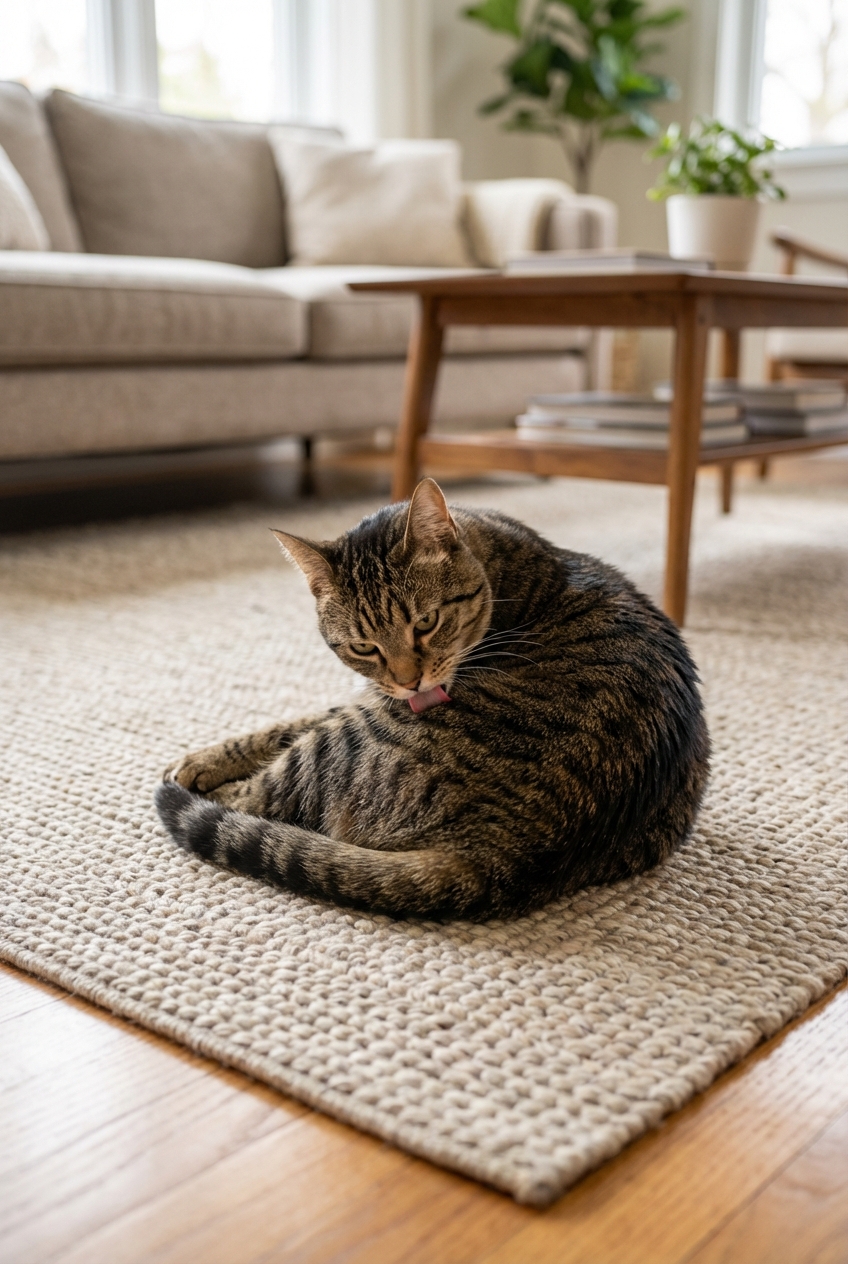
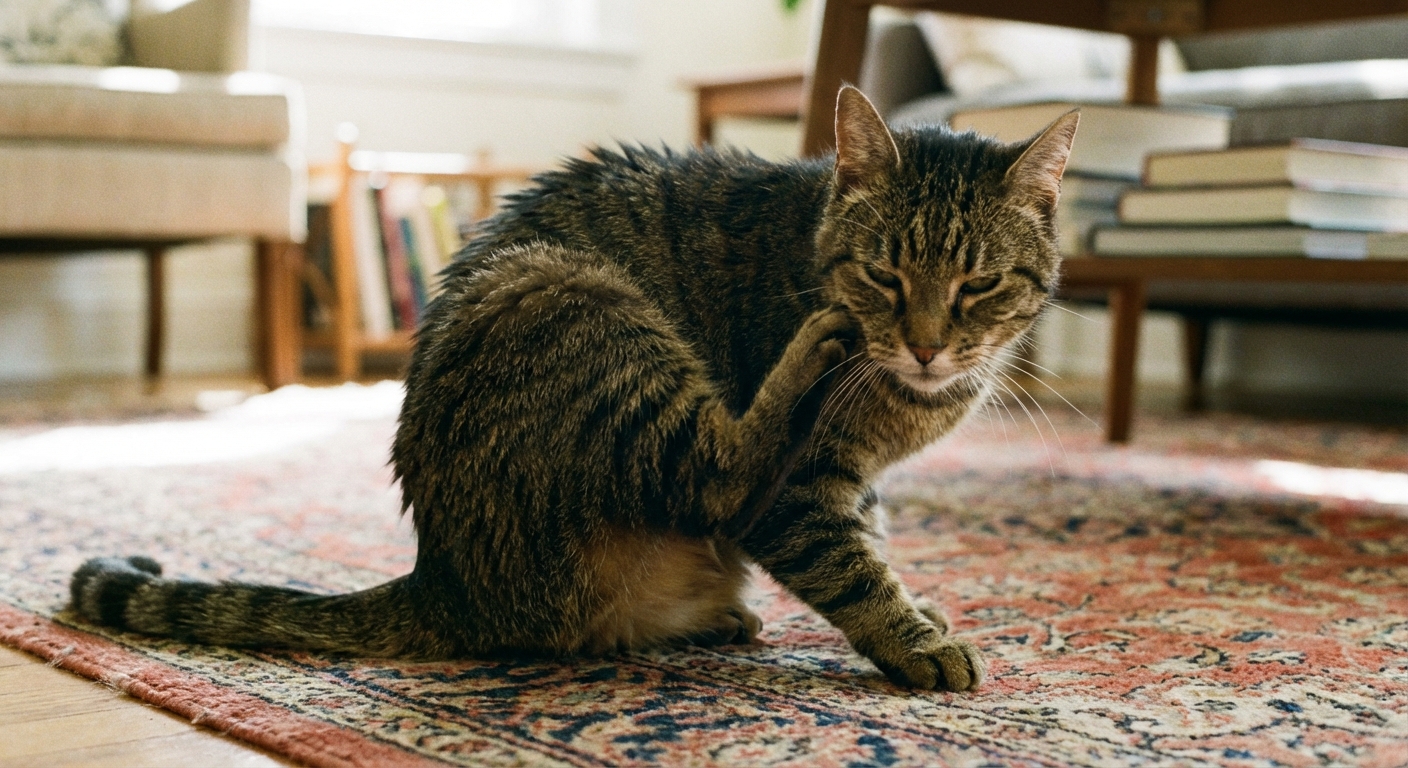
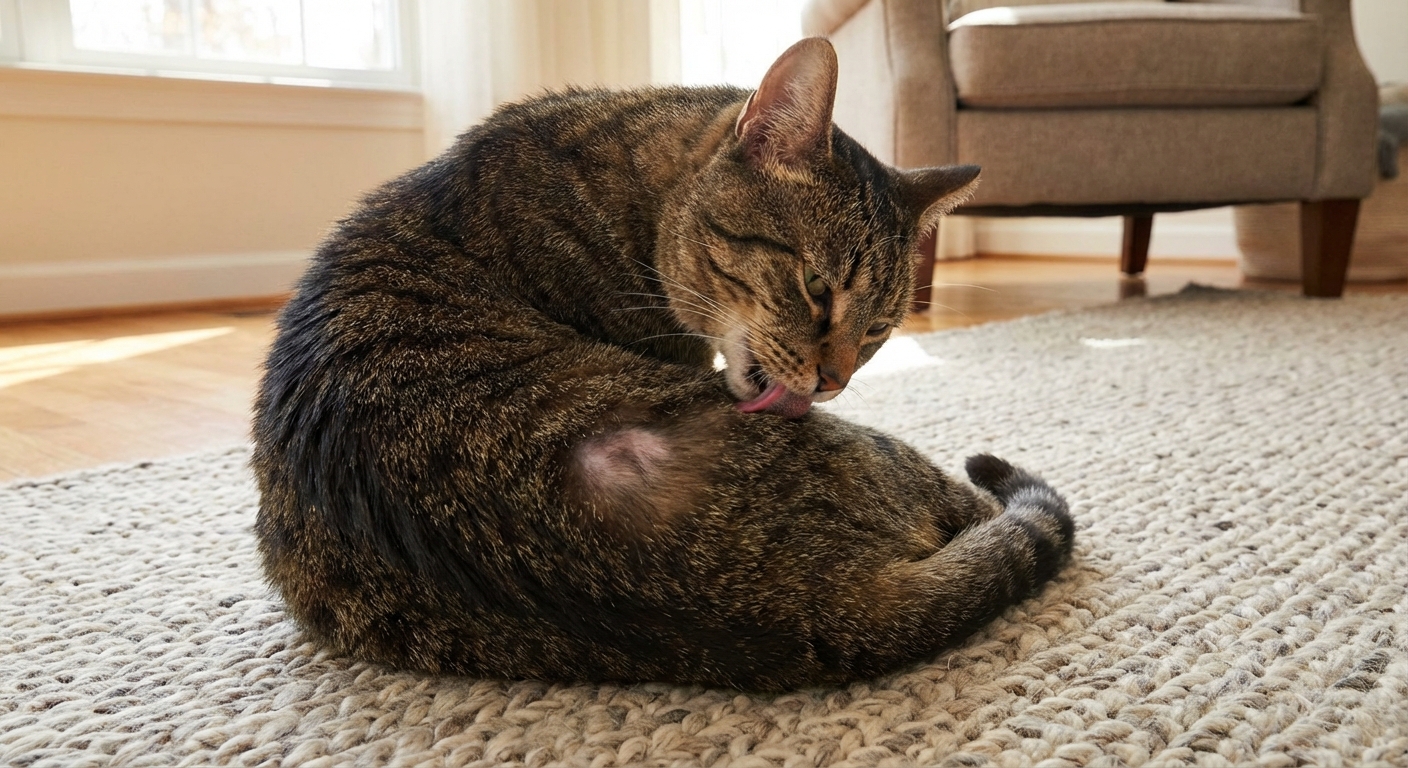
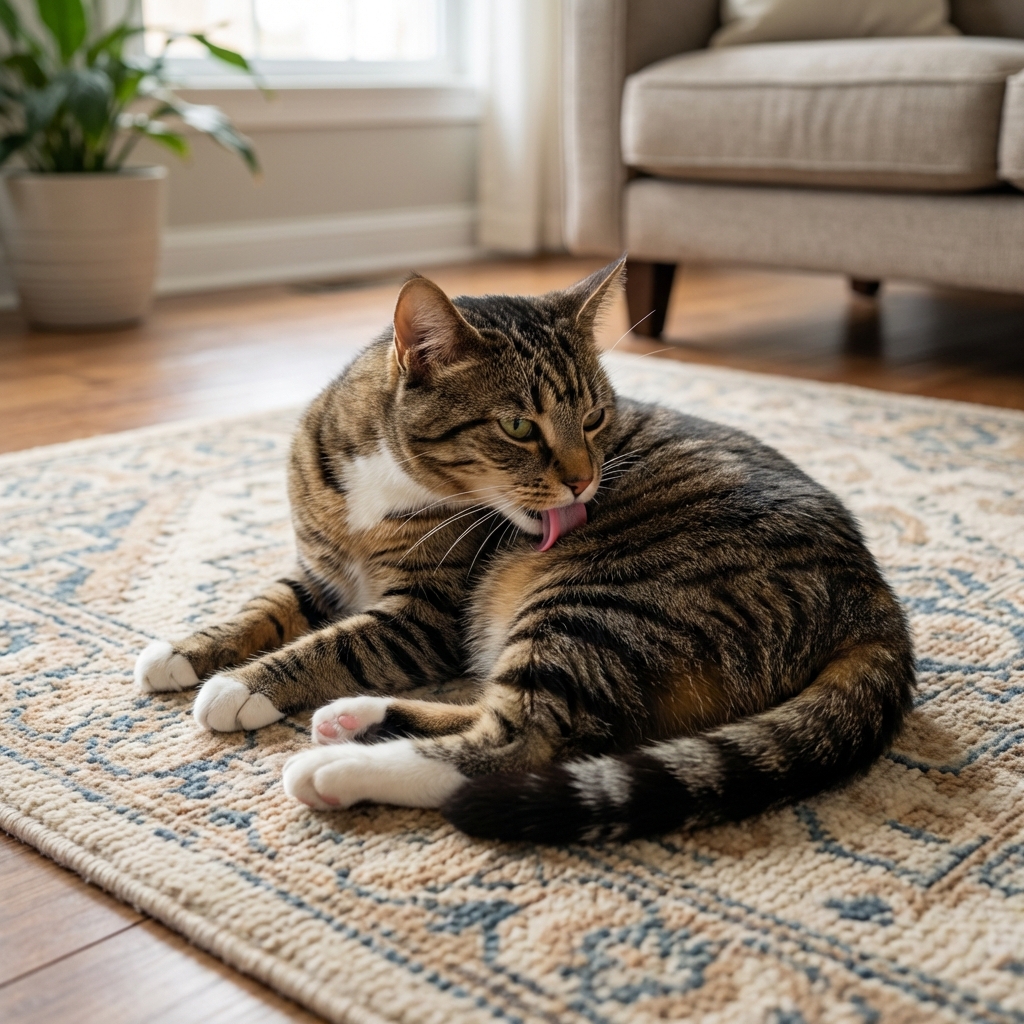
Most cats are not literally yanking fur out with their paws. More often they are overgrooming with their tongue, which breaks hairs and can create:
- Thinning fur (often on the belly, inner thighs, sides, or forelegs)
- Short, “barbered” stubble where the coat looks clipped
- Bald patches, sometimes with red or darkened skin
- Scabs or small crusts (especially with flea allergy)
Less commonly, cats can pull fur with their teeth due to severe itch or discomfort. Either way, the core question is the same: what is driving the sensation or stress?
Fast triage: 6 questions
1) Where is the hair loss?
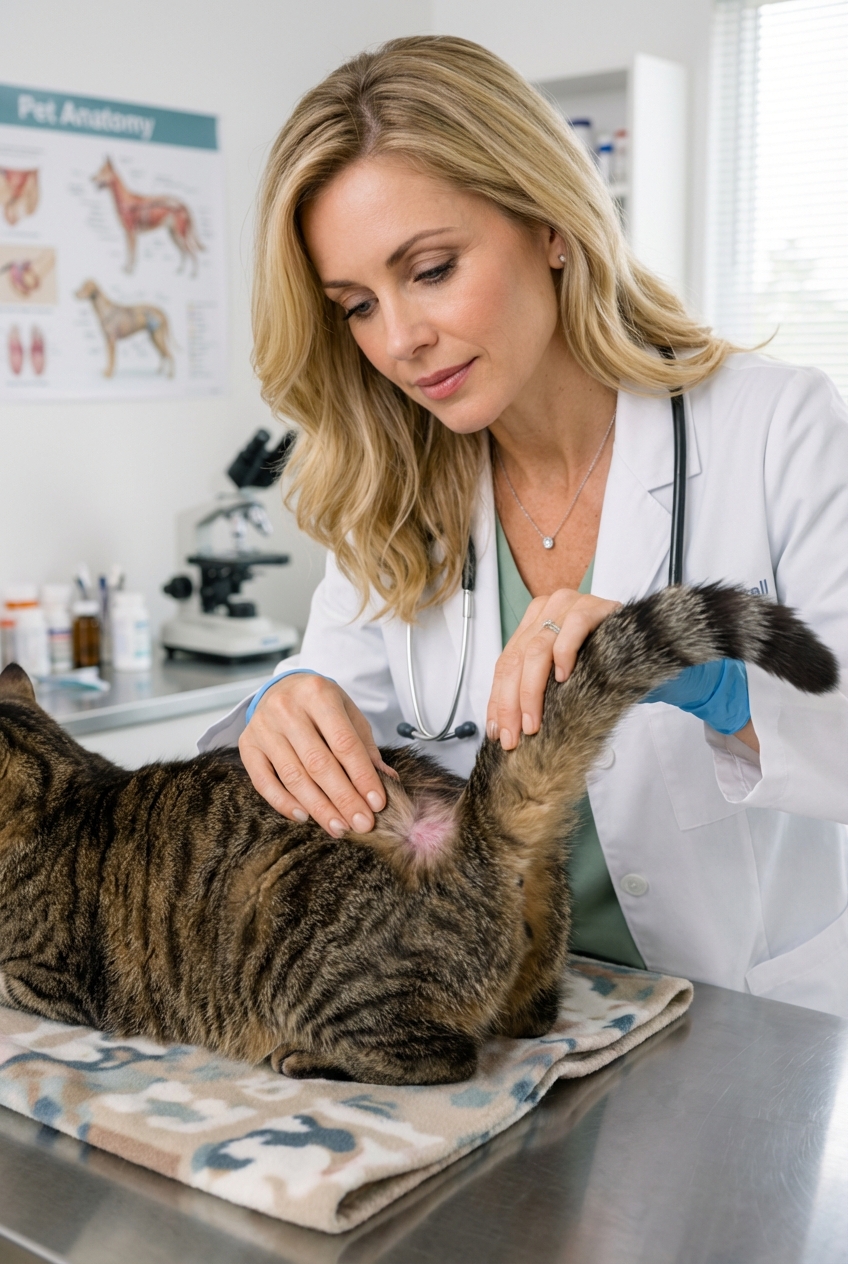
- Base of tail, lower back: fleas or flea allergy is high on the list.
- Belly, inner thighs: allergies, stress, or discomfort (including urinary discomfort) can show up here.
- One specific spot: think pain, wound, infection, ringworm, or a localized parasite issue.
- Face/ears: ear mites, ear infection, allergies.
2) Is the skin irritated or normal?
- Red, moist, smelly: possible skin infection or moist dermatitis (less common in cats than dogs, but it can happen).
- Black specks, dandruff: flea dirt, “walking dandruff,” or other skin disease could be involved.
- Normal-looking skin with missing fur: can still be allergies, stress, pain, or parasites.
3) Are there any new stressors?
Common triggers include a move, new pet, new baby, schedule change, construction noise, neighborhood cats outside the window, or even a new litter box location.
4) Any changes in food, treats, or supplements?
Food allergy is less common than people think, but it is real. It often shows up as itch or recurrent skin issues. It may also cause vomiting or diarrhea in some cats.
5) Is your cat on consistent parasite prevention?
Indoor cats can get fleas too. Fleas hitchhike in on people, dogs, and visiting pets. If prevention is inconsistent, fleas must be treated as a likely factor until proven otherwise. Use products according to the label, often monthly depending on the medication.
6) Any other symptoms?
- More frequent urination, accidents, straining: urinary discomfort can lead to belly grooming.
- Hiding, grumpy behavior, sensitivity to touch: pain is possible.
- Sneezing, watery eyes: can occur with allergies or irritants, but these signs are also common with infections, so check in with your vet if you notice them.
Common causes and next steps
If you have answered the questions above, here is how the most common causes usually look, and what to do next.
Fleas (even if you do not see them)
Flea allergy dermatitis is one of the most common reasons cats overgroom. Some cats react to just a few bites and you may never catch a flea in the act.
- What helps: veterinarian-recommended flea prevention for all pets in the home, used consistently according to the label.
- Home support: wash bedding, vacuum thoroughly (especially baseboards), and empty the vacuum canister right away.
- Know this: flea control often takes multiple months of consistent treatment to fully calm things down.
- Avoid: dog-only flea products and essential oils. Many are unsafe for cats.
Allergies (environmental or food)
Allergic cats can itch without an obvious rash at first. Environmental allergies can be seasonal or year-round. Food allergies require a true elimination diet trial to diagnose.
- What helps: a vet exam to rule out parasites and infection first, then a targeted plan. For food allergy testing, your vet may recommend a prescription hydrolyzed diet or a novel-protein diet trial.
- Home support: keep a simple log of flare-ups, diet changes, and grooming intensity.
Skin infection (bacterial or yeast)
Infection may be primary or secondary to allergies and overgrooming. If the skin is red, crusty, oozing, or has a strong odor, get help promptly.
- What helps: veterinary treatment and, sometimes, skin cytology testing to choose the right medication.
Other parasites (mites, lice)
Fleas are not the only culprit. Mites (including Cheyletiella, often called “walking dandruff”) and, more rarely, lice can cause itch and patchy hair loss.
- What helps: your vet can check skin and fur and recommend the right parasite treatment. Do not guess with over-the-counter products, since some are not safe for cats.
Ringworm
Ringworm is a fungal infection that can cause patches of hair loss, broken hairs, and sometimes scaly skin. It does not always look like a perfect ring, and it can spread to people and other pets.
- What helps: veterinary testing (often a fungal culture or PCR) and a treatment plan that may include topical and oral medications, plus cleaning guidance for your home.
Pain or discomfort (including urinary issues)
Cats often groom the area that hurts, but it is not always obvious. Belly grooming can be linked to bladder inflammation, constipation, arthritis, or back pain.
- What helps: a vet visit for a physical exam and possibly a urine test. Do not assume it is “just anxiety” if your cat is also acting uncomfortable.
Stress and compulsive overgrooming
Stress-related overgrooming is real, and it can become a cycle: grooming briefly lowers stress, then the skin becomes inflamed, then the itch increases, and grooming ramps up again.
One important note: psychogenic or compulsive overgrooming is a diagnosis of exclusion. In other words, your veterinarian will typically rule out medical causes first.
- What helps: reduce triggers, increase enrichment, create predictable routines, and talk with your veterinarian about behavior support if needed.
What you can do today
1) Book a vet visit if it is new or worse
Skin problems are much easier to treat early. Bring photos of the progression and a list of products used (food, treats, flea prevention, supplements).
2) Start a quick log
- Where the hair loss is expanding
- How often you see grooming (morning, evening, after meals)
- Any litter box changes
- Any household changes (new smells, guests, schedule)
3) Check for fleas the right way
Use a flea comb if you have one. Comb the base of the tail and along the back. Flea dirt looks like black pepper. If you put it on a damp paper towel, it may smear reddish-brown.
4) Reduce skin irritation safely
- Do not bathe your cat unless your vet advises it. Many cats find bathing stressful, and stress can worsen overgrooming.
- Avoid topical home remedies like essential oils, tea tree oil, or human anti-itch creams. Cats are very sensitive to many ingredients.
- Avoid over-the-counter human medications (pain meds, antihistamines, creams) unless your veterinarian specifically directs you. Some common products are dangerous for cats.
5) Add low-stress enrichment
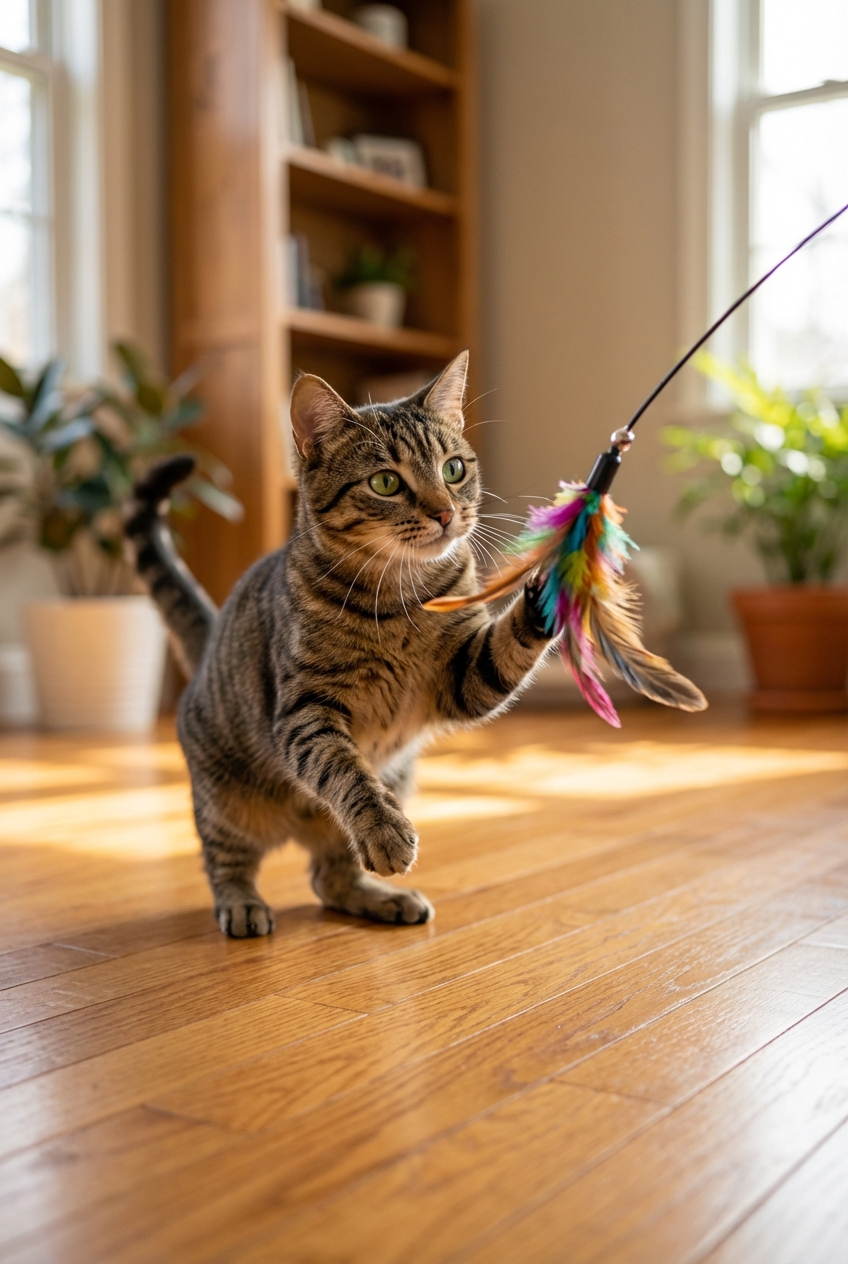
- Two short play sessions daily (5 to 10 minutes) with a wand toy
- Food puzzles or “hunt the kibble” for cats who can eat dry food
- Window perch plus a safe “hideaway” bed
- More vertical space, like a cat tree
When it is urgent
Call your veterinarian promptly if you notice any of the following:
- Open sores, bleeding, swelling, or pus
- Rapidly spreading hair loss
- Strong odor from the skin
- Severe itch that keeps your cat from resting
- Bathroom changes like straining, frequent trips, crying in the litter box, or accidents
- Lethargy, poor appetite, or hiding more than usual
- Suspicious patches that could be ringworm (remember it can spread to people and other pets)
What your vet may recommend
Depending on the pattern and exam, your vet might suggest:
- Parasite control (even if fleas are not seen)
- Skin tests like cytology for bacteria and yeast
- Fungal testing for ringworm when indicated
- Allergy support including medications to control itch and inflammation
- Diet trial for suspected food allergy
- Pain control if discomfort is suspected
- Behavior plan for stress-related overgrooming (environmental changes, pheromone support, and sometimes prescription medication)
One helpful mindset: think “itch, pain, parasites, infection, stress.” It is rarely random, and you do not have to guess alone.
Prevention tips that help
- Keep flea prevention consistent, especially in multi-pet households.
- Maintain routine for meals and playtime. Cats love predictability.
- Support a healthy coat with a complete, balanced diet and regular hydration.
- Reduce conflict in multi-cat homes by providing enough litter boxes (often recommended: one per cat plus one extra) and multiple feeding stations.
- Schedule wellness exams so problems are caught early, before overgrooming becomes a habit loop.