
Wondering if your cat is pregnant? Learn early signs, how long pregnancy lasts, how vets confirm it, a week-by-week timeline, nutrition and nesting tips, and...
Article
•
Designer Mixes
Cat Pregnancy Symptoms

Shari Shidate
Designer Mixes contributor
As a veterinary assistant here in Frisco, Texas, I get this question a lot: “Is my cat pregnant, or is she just… acting weird?” If your girl has been around an unneutered male, pregnancy is definitely possible, and the early signs can be surprisingly subtle.
In cats, pregnancy lasts about 63 to 65 days on average, but a normal range is often closer to about 58 to 67 days (and occasionally a little longer). The good news is that once you know what to look for, you can support her in safe, simple ways and know when it is time to call your veterinarian.
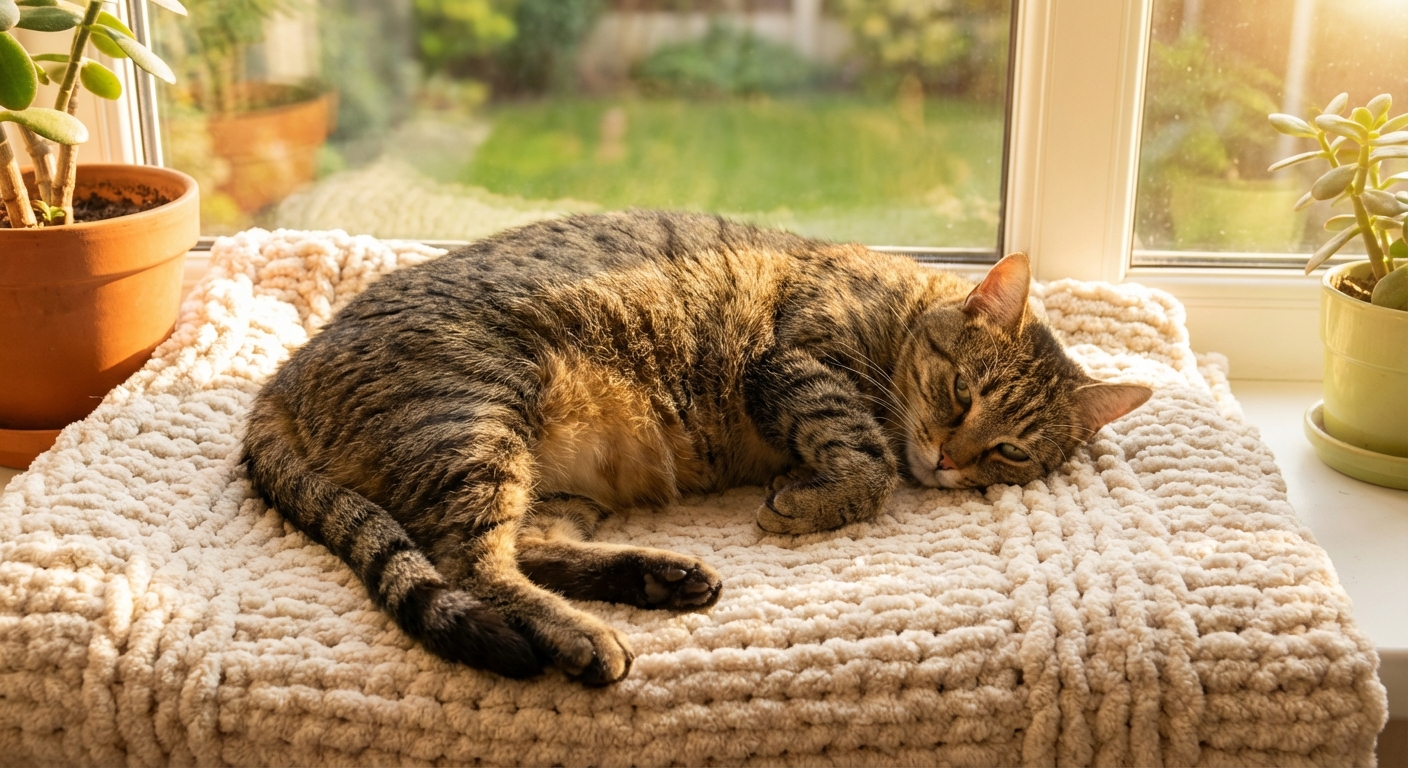
First things first: Could she be pregnant?
A cat can become pregnant very quickly after going into heat, and she can go into heat multiple times during breeding season. If your cat is not spayed and had access to a male, treat any “maybe” as a “possibly” until proven otherwise.
At-home reality check: Unlike humans, there is no reliable over-the-counter pregnancy test for cats. Confirmation usually comes from a veterinary exam, ultrasound (often possible around 2 to 3 weeks), or abdominal palpation by an experienced veterinarian (typically around 3 to 4 weeks, and it gets harder later).
One more option your vet may recommend: An x-ray can help count kittens later in pregnancy (often around 45 days or later), which is useful for knowing when labor is truly finished.
Early symptoms (weeks 1 to 3)
Early pregnancy can look like mild behavior changes plus a few physical clues. Not every cat shows all of these, and some cats show none at all.
1) “Pinking up” of the nipples
This is one of the classic early signs. Around 2 to 3 weeks, nipples may look more prominent and rosy.
- What you might notice: Slight swelling and pink color on the mammary glands.
- Tip: Do not squeeze or manipulate her nipples. Just observe.
2) Mild nausea or appetite shifts
Some cats eat a little less for a few days. Others suddenly seem hungrier.
- What to watch: Occasional vomiting can happen, but repeated vomiting, lethargy, or not eating for 24 hours is a veterinarian call.
3) Extra affection or extra privacy
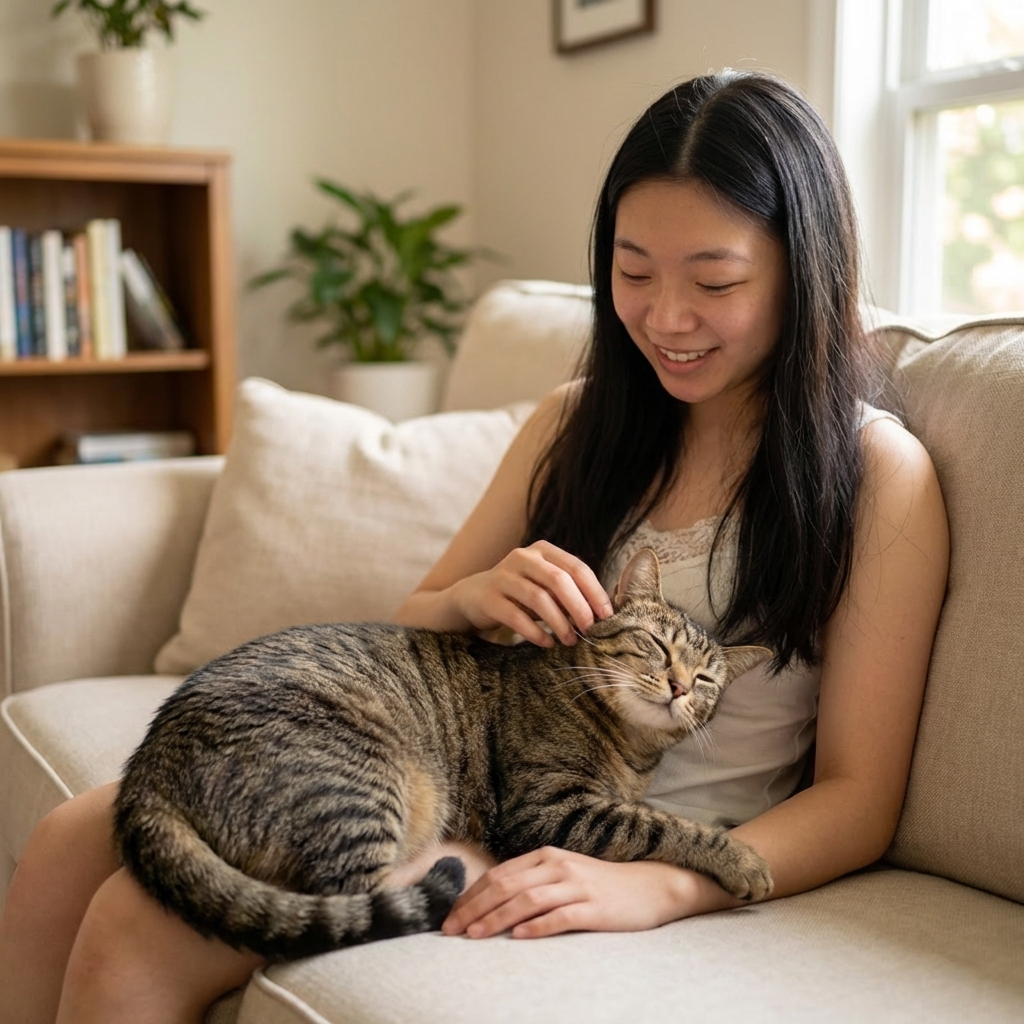
Pregnant cats often become clingier, purr more, knead, and follow you around. Some do the opposite and seek quiet hiding spots.
4) Sleepiness
Hormonal changes can make her seem “low energy” compared to normal. If she is truly weak, breathing hard, or seems painful, that is not normal pregnancy fatigue.
Mid-pregnancy symptoms (weeks 4 to 6)
This is when signs become easier to recognize. Many cats start to show an obvious body shape change.
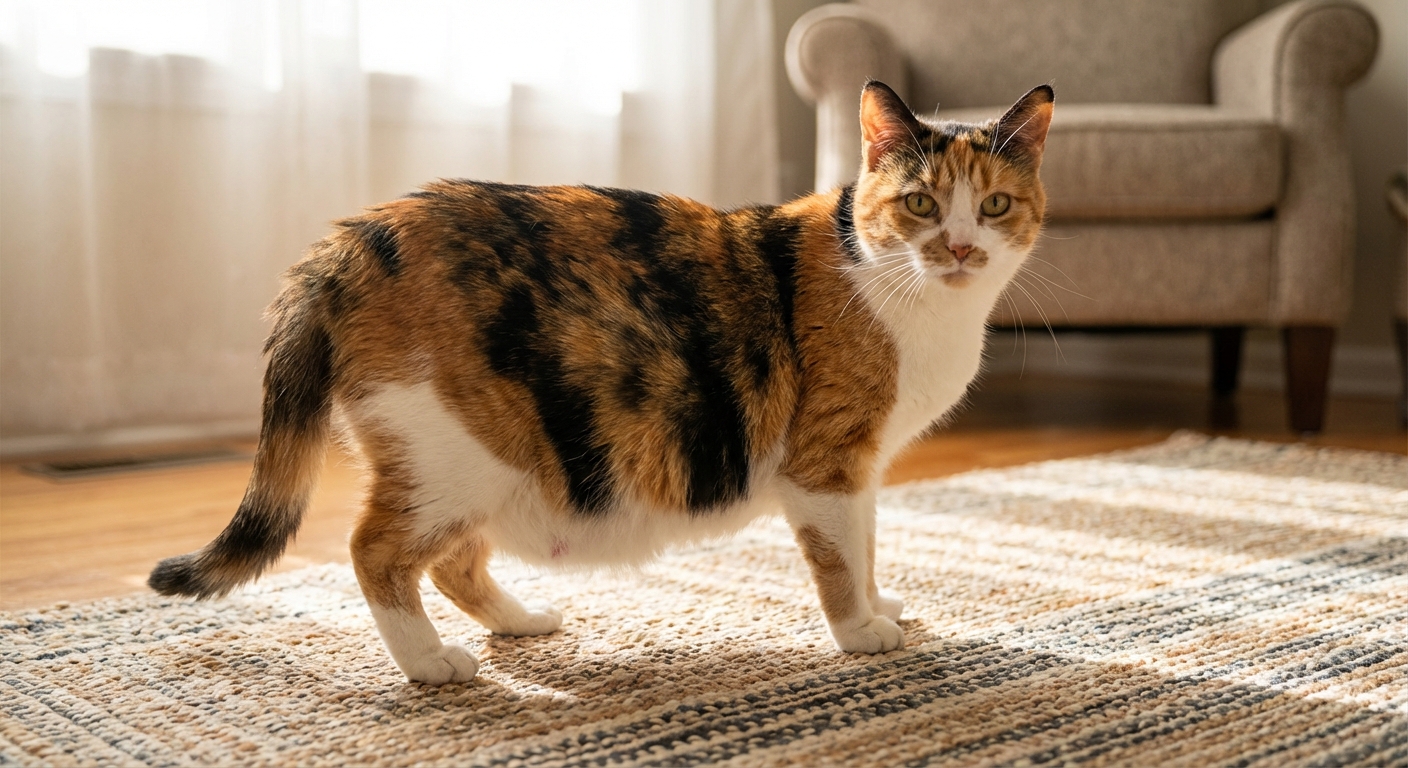
1) Weight gain and a widening belly
Abdominal enlargement usually becomes noticeable around week 5, sometimes earlier in petite cats.
- Important: A round belly is not always pregnancy. Worms, fluid, constipation, and other conditions can also cause abdominal swelling.
2) Increased appetite
Most pregnant cats need more calories as the kittens grow. Hunger is normal, but sudden ravenous eating plus weight loss can also point to parasites or thyroid issues, so context matters.
3) Grooming changes
Some queens groom more, especially the belly area. Others groom less as their abdomen becomes uncomfortable to reach.
4) Gentle fetal movement (later in this stage)
Closer to week 6 and beyond, you may see subtle movement when she is resting. Avoid pressing on her belly. Palpating at home can hurt her or the kittens.
Late pregnancy symptoms (weeks 7 to delivery)
In the final stretch, your cat will start preparing for labor. This is where your support really matters.
1) Nesting behavior
She may search closets, under beds, or quiet corners. Some cats choose the laundry basket at the worst possible moment. It is all part of the process.
- What to do: Offer a clean, cozy nesting area in a calm room and let her decide.
2) Mammary glands enlarge
Mammary glands may enlarge, and you might notice small amounts of milk close to delivery. Significant discharge, blood, foul smell, or obvious pain needs a veterinary check.
3) Restlessness, vocalizing, or clinginess
Many cats seek their person more as labor approaches. Some pace or meow. Aim for a quiet, predictable environment.
4) Temperature drop (not always practical at home)
Some animals have a mild temperature drop before labor, but checking rectal temperatures can stress cats and is not necessary for most families. Behavior is usually more helpful than numbers.
5) Visible contractions and active labor
When labor begins, you may see abdominal contractions and focused straining. Kittens often arrive every 10 to 60 minutes, but some queens have longer breaks. What matters most is whether she is comfortable and resting, or actively straining and getting nowhere.
From signs to action
If pregnancy is likely or confirmed, your next goal is simple: keep her safe, well-fed, and low-stress, and involve your veterinarian early so there are no surprises.
Home care: How to help your pregnant cat feel safe
Schedule a checkup
If you suspect pregnancy, it is smart to schedule a prenatal visit. Your veterinarian may confirm pregnancy, check overall health, discuss nutrition, and set a safe parasite control plan.
Set up a simple nesting space
- Choose a quiet room with low traffic and warm temperature.
- Use a box or covered cat bed with low sides, lined with washable towels or blankets.
- Keep food, water, and a litter box nearby, but not right next to the nest.
Feed for pregnancy and nursing
Most veterinarians recommend transitioning to a high-quality kitten formula food during pregnancy and continuing through nursing, because it is more calorie-dense and nutrient-rich.
- Offer smaller meals more often as her belly grows.
- Provide fresh water at all times.
- Avoid random supplements unless your veterinarian recommends them. Over-supplementing can be harmful.
Parasite prevention and safety
Pregnancy is not the time for guesswork with flea or deworming products.
- Call your veterinarian before giving any flea medicine, dewormer, or herbal remedy.
- Keep her strictly indoors to reduce disease and injury risk.
Minimize stress
- Keep routines consistent.
- Limit rough play with other pets.
- Give her affection on her terms.
What not to do
- Do not give human medications unless your veterinarian specifically instructs you to.
- Avoid essential oils and strong fragrances around her (many are not cat-safe).
- Do not press on her abdomen to “feel for kittens.”

Could it be a false pregnancy?
Yes. Some cats show pregnancy-like changes after a heat cycle, including nesting behavior, mild weight gain, and enlarged mammary glands. This is called a false pregnancy (pseudopregnancy). Because it can look so similar at home, a veterinary exam is the best way to know for sure, especially if her belly is getting bigger.
When to call the vet right away
Most cat pregnancies and deliveries go smoothly, but complications can happen quickly. Please contact your veterinarian urgently if you notice any of the following:
- Hard straining for 20 to 30 minutes with no kitten produced.
- More than 2 hours between kittens during active labor, especially if she is straining or contracting (a quiet rest period can be normal).
- Heavy bleeding or foul-smelling discharge.
- Dark green or black discharge before the first kitten, or without a kitten following within about 15 to 30 minutes.
- Extreme lethargy, collapse, pale gums, or trouble breathing.
- Persistent vomiting or refusal to eat for 24 hours.
- She cries out in pain, hides, or seems unable to get comfortable.
- You suspect a kitten is stuck.
Trust your gut. If something feels off, it is always appropriate to call and ask.
After the kittens arrive: quick support tips
The first 24 hours are a big deal for kitten health.
- Let mom lead. She will clean and stimulate kittens and guide nursing.
- Watch nursing. Kittens should latch and feed regularly. Quiet, steady nursing is a good sign.
- Keep it warm. Newborns cannot regulate their body temperature well.
- Do not over-handle. Gentle, minimal handling early on keeps stress low.
If a kitten is weak, chilled, crying constantly, or not nursing, contact your veterinarian promptly.
The most loving next step: plan the spay
I know “surprise kittens” can feel exciting, but shelters are overwhelmed. Once mom is done nursing and your veterinarian says it is safe, spaying prevents future unplanned litters and helps protect her long-term health.
One pregnancy can turn into many very quickly. Spaying is one of the kindest, most protective choices you can make for your cat.