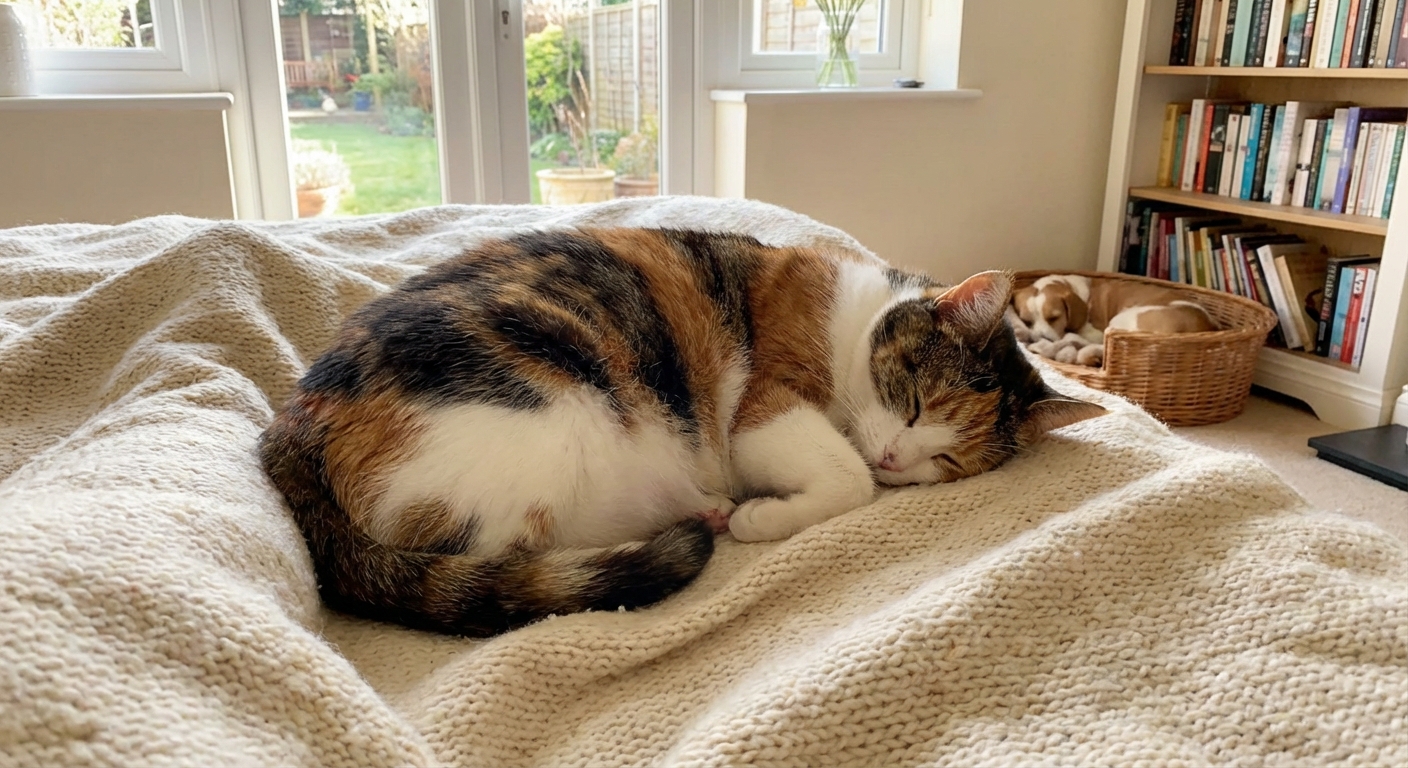
Wondering if your cat is pregnant? Learn symptoms by week, how vets confirm pregnancy, how to set up a nesting area, what to feed, and when to call the vet.
Article
•
Designer Mixes
Cat Pregnancy: Signs, Timeline, and Care Guide

Shari Shidate
Designer Mixes contributor
Starting your morning right sets the tone for the entire day. I tell my patients the same idea applies to pet care: small, consistent habits add up. If you think your cat may be pregnant, a little knowledge and a calm plan can make the next several weeks safer and less stressful for both of you.
This guide walks you through common signs of cat pregnancy, what to expect week by week, and how to support a healthy mom (also called a queen) and kittens. For anything urgent or unusual, your veterinarian is your best partner.

How long are cats pregnant?
Cat pregnancy (gestation) usually lasts about 63 to 66 days, though a broader range of 58 to 70 days can occur. Timing varies with litter size and individual differences.
If you know the approximate breeding date, your veterinarian can help you estimate a due window and plan appropriate checkups.
Early signs of cat pregnancy
In the first few weeks, pregnancy can be subtle. Some cats act completely normal. Others show small changes that are easy to miss unless you are watching closely.
Quick note: Some signs below can also happen with heat cycles, false pregnancy (pseudopregnancy), or other health issues. At-home signs are not definitive, so confirm with your veterinarian if pregnancy is possible.
Common early clues
- Nipple changes (pinking up): Often around week 2 to 3, nipples may become more pink and slightly enlarged.
- Increased affection or clinginess: Some cats seek more attention and comfort.
- Mild appetite changes: Appetite can increase, or your cat may have a brief period of decreased appetite.
- Sleepiness: More resting and less high-energy play can happen early on.
- Occasional vomiting: Some cats experience mild nausea. Repeated vomiting is not normal and deserves a vet call.
Important: These signs can overlap with other conditions. The most reliable way to confirm pregnancy is a veterinary exam.
How to confirm pregnancy
At-home signs are not definitive. If pregnancy is possible, schedule a vet visit. Your veterinarian may use one or more of the following:
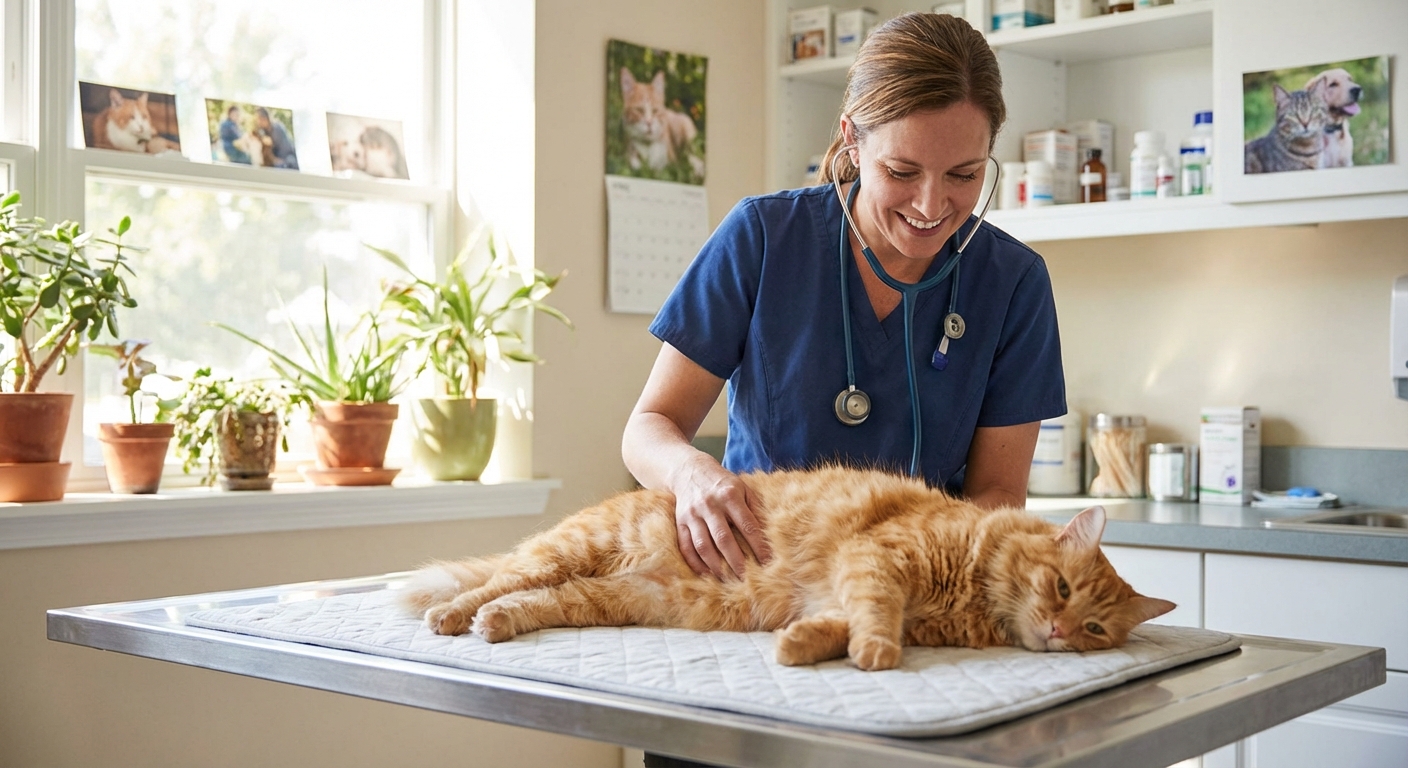
- Palpation: A trained professional may be able to feel developing kittens around day 21 to 28 (about weeks 3 to 4). Palpation is time-sensitive and becomes harder later, so it is not always conclusive. Do not try this at home, because pressure can harm fetuses.
- Ultrasound: Often used to confirm pregnancy around day 16 to 21 (often about 3 weeks) and beyond. Heartbeats and viability are typically easier to assess a bit later, depending on equipment and operator.
- X-ray: Typically useful later (often after about day 45) to see skeletons and estimate kitten count more accurately.
Knowing the kitten count can be helpful near delivery so you can tell whether labor seems complete, but remember that counts are not always perfect.
Pregnancy timeline
Here is a practical overview of what you may notice as pregnancy progresses.
What to do: Keep notes on appetite, energy, and any discharge or vomiting, and plan a vet visit for confirmation and guidance.
Weeks 1 to 2
- Fertilization and early embryo development.
- Few outward signs.
Weeks 2 to 3
- Nipples may become pinker and more prominent.
- Some cats become more affectionate or slightly quieter.
Weeks 3 to 4
- Possible mild nausea or appetite changes.
- Your veterinarian may confirm pregnancy by ultrasound and sometimes by palpation.
Weeks 4 to 5
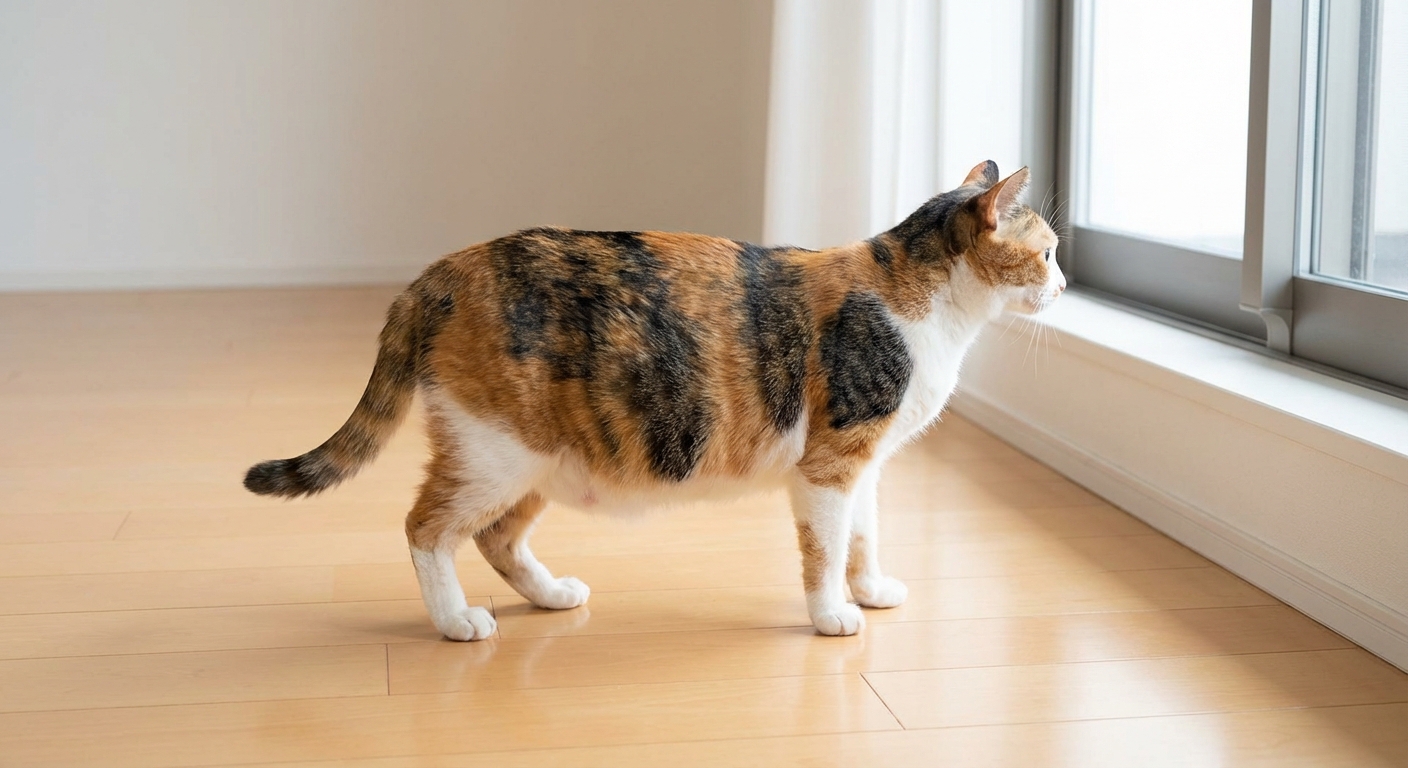
- Abdomen may begin to round.
- Weight gain becomes more noticeable.
- Appetite often increases.
Weeks 5 to 6
- Energy may dip and resting increases.
- Some cats start seeking quieter resting spots.
Weeks 7 to 8
- More obvious belly enlargement.
- Nesting behaviors may begin: seeking quiet, enclosed spaces.
- Mammary glands enlarge further.
- Fetal movement may be noticeable when your cat is relaxed (often now, sometimes a bit later).
Weeks 8 to 9
- Increased nesting and restlessness close to labor.
- Appetite may decrease within 12 to 24 hours of delivery.
- Milk may be present in some cats.
- Fetal movement is often easiest to notice in this window.
Care guide
Good prenatal care for cats is mostly about nutrition, a low-stress environment, and smart prevention. Your goal is to support healthy body condition, steady weight gain, and a smooth delivery.
Nutrition and feeding
- Switch to a growth diet: Many veterinarians recommend feeding a high-quality kitten or growth-formula food during pregnancy and nursing because it is more calorie and nutrient dense.
- Smaller, more frequent meals: As the abdomen fills, big meals can be uncomfortable. Offer multiple small meals per day.
- Fresh water always: Hydration matters for milk production later.
- Avoid overfeeding: Weight gain is expected, but obesity can complicate delivery. If you are unsure how much to feed, ask your veterinarian to help you monitor body condition and adjust portions.
- Avoid supplements unless prescribed: Extra calcium or vitamins can be harmful if not medically indicated.
Activity and stress
- Keep her indoors: This lowers the risk of trauma, parasites, and infectious disease exposure.
- Maintain gentle play: Light play helps mobility and mood, but avoid intense jumping games if your cat is uncomfortable.
- Provide quiet resting spots: Offer soft bedding in a calm room away from loud activity.
Parasites, vaccines, and medications
- Do not use over-the-counter flea or deworming products without guidance: Some medications are not safe during pregnancy.
- Ask your veterinarian about parasite control: Your vet may recommend a deworming plan tailored to pregnancy and nursing, often with a dose late in pregnancy and follow-ups after birth.
- Vaccines: If your cat might be pregnant, check with your vet before giving any vaccinations.
Nesting area
As your cat approaches labor, a comfortable nesting setup can reduce stress and help her choose a safe place to give birth.
How to set up a birthing space
- Choose a quiet room: Low traffic, dim lighting, and comfortable temperature.
- Use a large, low-sided box or covered bed: High enough to contain kittens but easy for mom to step in and out.
- Line with washable layers: Use towels or blankets you can replace quickly.
- Keep supplies nearby: Clean towels, gloves, a small scale for kittens if desired, and your vet’s phone number.
Some cats will still choose a closet or under-bed spot. If it is safe, it is often best to let her decide rather than forcing a location.

Signs labor is near
As delivery approaches, you may notice behavioral and physical shifts.
What you should see: more nesting, more rest, and sometimes a brief appetite drop.
- Nesting and restlessness: Pacing, rearranging bedding, hiding.
- Decreased appetite: Often within 12 to 24 hours of labor.
- Excess grooming: Especially around the belly and vulva.
- Vocalizing or seeking you out: Some cats want reassurance, others want privacy.
Most cats handle birth without human interference. Your role is mainly to monitor and keep the environment calm.
Normal labor
Knowing what “normal” can look like helps you spot true emergencies.
- Stage I (pre-labor): Restlessness, nesting, panting, or vocalizing. This can last 6 to 12 hours (sometimes up to 24 hours).
- Stage II (delivery): Active contractions and kittens are born. Kittens may arrive quickly or with breaks in between.
- Stage III (placentas): Placentas usually pass after each kitten or sometimes after two kittens. It is common for the mom to lick and clean intensely.
When to call the vet urgently
Trust your instincts. If something feels off, it is worth calling. Seek veterinary help promptly if you notice any of the following:
- Active, hard straining for 30 to 60 minutes with no kitten produced.
- More than 2 hours between kittens when you know more kittens may remain and mom seems distressed, weak, or in pain.
- Dark green or black discharge (placental) before the first kitten, foul-smelling discharge at any point, or heavy bleeding at any time. A small amount of clear or mildly blood-tinged fluid can be normal.
- Lethargy, collapse, pale gums, or trouble breathing.
- Fever (about over 103°F / 39.4°C), severe abdominal pain, or marked weakness.
- A pregnancy that seems to go beyond 70 days from a known breeding date.
If you are unsure whether a symptom is “normal,” call your veterinarian or an emergency clinic. Quick guidance can prevent serious complications.
After birth
Once kittens arrive, the first 24 to 48 hours are about warmth, nursing, and monitoring.
- Let mom do the cleaning: Licking helps clear airways and stimulates breathing and circulation.
- Check that kittens nurse: Healthy kittens usually latch and suckle regularly.
- Keep the room warm and quiet: Chilled kittens can fade quickly.
- Watch mom’s appetite and behavior: She should eat, drink, and care for kittens. A sudden decline warrants a vet call.
If a kitten seems weak, is not nursing, is persistently crying, or feels cool to the touch, contact your veterinarian promptly. If a kitten is not breathing or is fading, seek emergency guidance immediately.
Your veterinarian can advise on a postpartum exam for mom and kittens, plus a plan for deworming and future vaccinations.
Postpartum warning signs
Call your veterinarian promptly if you notice:
- Foul-smelling discharge, discharge that becomes heavy, or heavy bleeding.
- Fever, lethargy, trembling, or weakness.
- Refusal to eat or drink for more than a few hours, or rapid decline.
- Hard, hot, painful mammary glands, or milk that looks abnormal (possible mastitis).
- Neglecting kittens, persistent crying from kittens, or kittens not gaining weight.
Frequently asked questions
Can you feel kittens moving?
Sometimes, yes. Many owners notice movement most easily in the last couple of weeks (often weeks 7 to 9) when the cat is relaxed. Avoid pressing on the abdomen, since this can be harmful.
Should I change her food right away?
If pregnancy is likely, ask your vet about transitioning to a kitten or growth-formula diet. A gradual transition over several days helps prevent digestive upset.
Can a cat be spayed while pregnant?
This is a medical and ethical decision that varies by situation and location. If you suspect pregnancy and are considering spay, talk with your veterinarian promptly about options and timing.
How soon can she get pregnant again?
Cats can return to heat surprisingly quickly after giving birth, sometimes within weeks. If you are not planning a future litter, discuss spaying once your veterinarian confirms it is safe.
Final reminder
Pregnancy can be a normal, healthy process for cats, but it is also a time when small problems can escalate quickly. Your best approach is simple: confirm pregnancy with your veterinarian, feed for growth while avoiding excess weight gain, keep her safe indoors, and prepare a calm nesting area. Those steady steps make a meaningful difference.