Wondering if your cat is pregnant? Learn symptoms by week, how vets confirm pregnancy, how to set up a nesting area, what to feed, and when to call the vet.
Article
•
Designer Mixes
Cat Pregnancy Behavior Signs

Shari Shidate
Designer Mixes contributor
If your cat is acting a little different lately, you are not imagining it. Pregnancy can change a queen’s behavior in subtle (and sometimes very obvious) ways. As a veterinary assistant here in Frisco, Texas, I always remind families of two things: behavior signs can be helpful clues, and they are not a perfect pregnancy test. The safest next step is a quick vet visit to confirm pregnancy and get your cat set up for a healthy, stress-free journey.

Quick note: Many pregnancy behaviors can also happen with heat cycles, stress, illness, or a “false pregnancy.” If your cat seems unwell, stops eating, vomits repeatedly, has discharge, or looks painful, contact your veterinary clinic promptly.
How long is cat pregnancy?
Most cat pregnancies last about 63 to 65 days, but a commonly cited range is roughly 63 to 67 days. Behavioral changes often show up in phases, so it helps to think in terms of early, mid, and late pregnancy.
Your veterinarian can usually confirm pregnancy by:
- Ultrasound (typically starting around 3 to 4 weeks after breeding, depending on timing and equipment)
- Palpation (sometimes around 3 to 4 weeks, depending on the cat and the clinician)
- X-rays (later in pregnancy to count kittens, usually around 6 weeks or later, once fetal skeletons mineralize)
Early behavior signs (weeks 1 to 3)
Early pregnancy can be quiet. Many cats still act like themselves, but you may notice small shifts that add up.
More affection (or more distance)
Some pregnant cats become extra cuddly, follow you from room to room, and seek lap time. Others get more private and prefer quiet hiding spots. Either response can be normal.
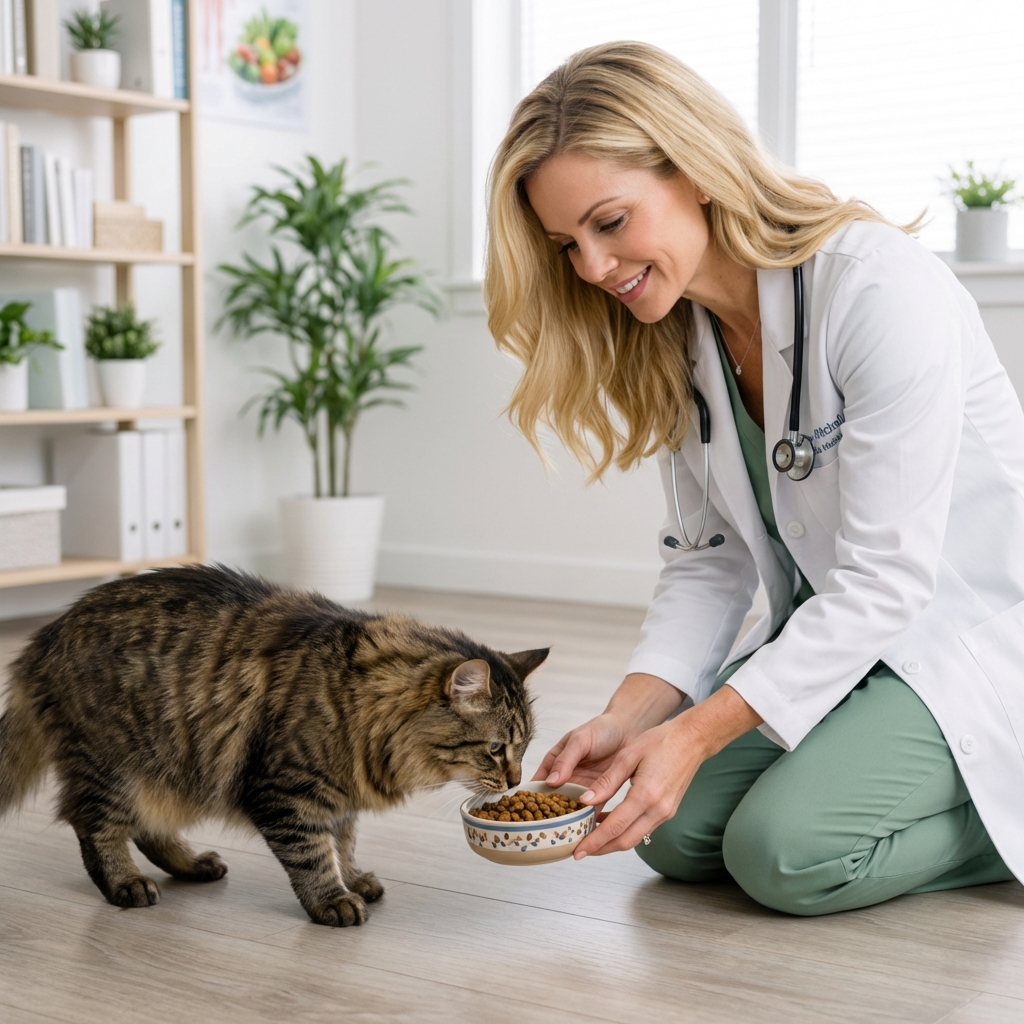
Changes in appetite
Mild nausea can happen, so you might see picky eating for a few days. More commonly, appetite begins to rise as pregnancy progresses. If she refuses food for more than 24 hours, check in with your veterinarian.
Lower energy
Sleeping more and playing less can be an early clue. Think “subtle slowdown,” not severe lethargy. If she seems weak, wobbly, or unusually uninterested in normal activity, have her evaluated.
Less tolerance for other pets
Hormonal shifts can change social dynamics. A normally friendly cat may hiss or swat more quickly, especially around other cats.
Mid-pregnancy behavior signs (weeks 4 to 6)
This is when many owners start thinking, “Okay, something is definitely going on.”
Increased appetite and food focus
As kittens grow, mom’s calorie needs increase. You may notice:
- More frequent begging or food-seeking
- Finishing meals quickly
- Interest in higher-protein foods
Practical tip: ask your veterinarian when to transition to a growth or kitten-formulated diet. Those diets are often used during pregnancy and nursing because they are more calorie-dense and nutrient-rich.
More grooming, especially around the belly
Many queens groom their abdomen and nipples more often. This can be a normal preparation behavior.
More quiet and routine-focused
Pregnant cats often prefer predictable days. Loud visitors, construction noise, or frequent changes to the home can make them more skittish than usual.
Late pregnancy behavior signs (weeks 7 to delivery)
Late pregnancy behaviors are often the most recognizable. Your cat may start “telling you” she wants a calm, safe place to deliver.
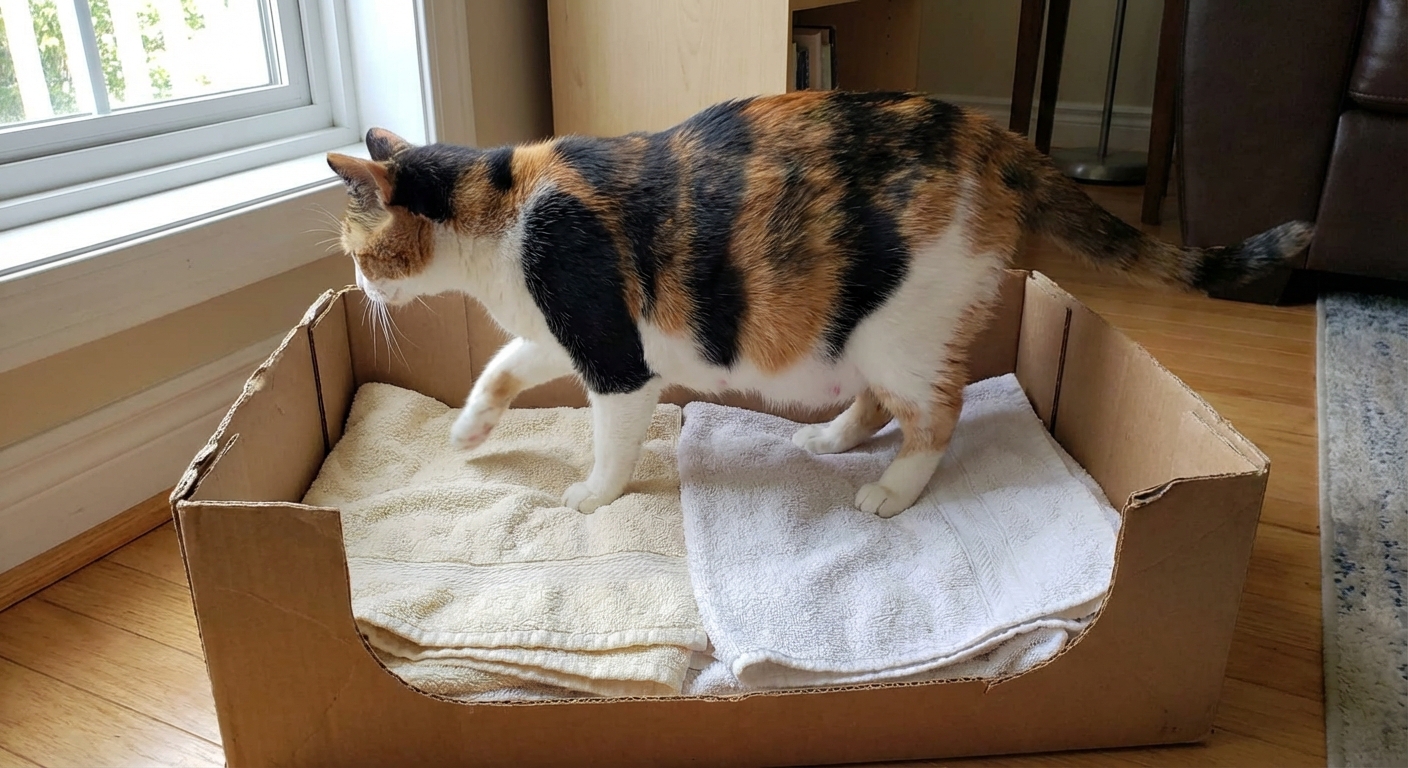
Nesting behavior
Nesting can look like:
- Searching closets, under beds, or behind furniture
- Scratching at bedding or rearranging blankets
- Trying out boxes, laundry baskets, or carriers
Actionable tip: Offer a nesting spot before she chooses a tricky location. A large box with low sides, lined with clean towels, placed in a quiet room works well.
Restlessness and pacing
In the final days, some queens alternate between resting and pacing. They may appear unable to get comfortable.
Clinginess or hiding
Both are common. Some cats want you nearby for reassurance. Others go into “private mode.” If she hides, let her, but keep the area safe and easy to monitor.
More vocalizing
Extra meowing can happen late in pregnancy. It can also signal discomfort, so pair this sign with her overall body language, litter box habits, and appetite.
Reduced appetite right before labor
Many cats eat less in the 12 to 24 hours before labor. Keep fresh water available and contact your clinic if you are unsure whether what you are seeing is normal.
Common physical signs (plus behavior)
Behavior often comes alongside physical changes. These still do not replace a vet confirmation, but they can support your suspicion:
- Nipple changes: nipples may look larger or pinker starting around 2 to 3 weeks in some cats
- Gradual weight gain: usually more noticeable mid to late pregnancy
- Abdominal enlargement: often becomes easier to see as pregnancy progresses
If you notice a sudden swollen belly, obvious pain, or your cat seems ill, do not assume it is normal pregnancy. Seek veterinary guidance.
Behavior signs confused with pregnancy
Because behavior is not specific, here are a few common look-alikes.
Heat cycle behavior
A cat in heat may:
- Be very vocal
- Roll and rub on floors
- Raise her hindquarters
- Try to escape outside
Heat behavior can be intense and is often mistaken for pregnancy early on.
False pregnancy
Some cats show nesting, mothering behavior, and even mammary development without being pregnant. A vet exam is the best way to sort this out.
Stress or illness
Hiding, appetite changes, and irritability can come from pain, urinary issues, GI upset, or stress. If your cat seems “off,” it is always okay to get advice from your veterinary team.
How to support a pregnant cat
The goal is simple: reduce stress, protect her health, and get ready for kittens.

- Create a calm space: quiet room, comfortable bedding, and predictable routines.
- Feed for pregnancy: ask your vet about switching to a kitten or growth diet and how much to feed.
- Keep her indoors: this lowers risk of injury, parasites, and infectious disease exposure.
- Litter box comfort: easy-to-access box, kept very clean. Some cats prefer unscented litter during pregnancy.
- Avoid unnecessary meds: do not give over-the-counter medications or supplements unless your vet approves. Some products are unsafe in pregnancy.
- Plan a vet check: confirmation, parasite control plan, and guidance on delivery and nursing.
What not to do
- Do not repeatedly move her nesting spot once she has chosen and settled into a safe area.
- Do not give human pain medications.
- Do not force handling during active labor unless your veterinarian instructs you to.
When to call the vet now
Please seek veterinary care promptly if you notice:
- Strong, active contractions with no kitten produced for 20 to 30 minutes
- More than 2 hours between kittens when you know more kittens are likely, or mom seems distressed
- Green or foul-smelling discharge before the first kitten, especially if a kitten does not follow quickly
- Heavy bleeding
- Severe lethargy, collapse, or trouble breathing
- Vomiting repeatedly or not eating for more than 24 hours
- Obvious pain, crying, or a swollen, painful abdomen
Labor questions are always worth a phone call. It is much easier to prevent an emergency than to treat one.
The bottom line
Pregnancy-related behavior changes in cats are real, and they can be incredibly helpful for noticing what is going on early. Look for patterns like increased affection or privacy, appetite shifts, nesting, and restlessness as the due date approaches. Then confirm with your veterinarian so you can support her with the right nutrition, a safe space, and a calm plan for delivery.