Poop outside the litter box is usually a clue—not a “bad cat.” Learn medical red flags, common causes (pain, diarrhea, stress, box setup), and practica...
Article
•
Designer Mixes
Cat Pooping Outside the Box

Shari Shidate
Designer Mixes contributor
If your cat is pooping outside the litter box, I want you to know two things right away: you are not a bad cat parent, and your cat is not “being spiteful.” In veterinary settings, we see this as a communication problem, not a character flaw. Most of the time, it is either a medical issue, a litter box setup issue, stress, or a combination.
This handbook walks you through the most common causes, what to check at home today, when to call your veterinarian, and how to set up a litter routine your cat actually wants to use.
Start here: quick safety check
Before you change litter brands or buy a new box, do a quick health and safety check. These red flags mean you should call your veterinarian the same day (or go to an urgent clinic if severe):
- Straining to poop, crying in the box, or repeated attempts with little output
- Blood in stool, black tarry stool, or sudden, watery diarrhea
- Vomiting, not eating, hiding, or obvious belly pain
- No bowel movement for about 48 hours or longer than your cat’s normal pattern, especially if paired with straining, poor appetite, vomiting, or lethargy
- Pooping outside the box plus weight loss, increased thirst, or low energy
Important: Constipation and urinary problems can look similar when you only see straining. If your cat is repeatedly going in and out of the box and producing little or nothing, treat it as urgent until proven otherwise.
If your cat is “acting normal otherwise,” I mean: eating and drinking, normal energy, no vomiting, and no painful or repeated straining.
Why cats poop outside the litter box
In my experience as a veterinary assistant, there are four big buckets that cover most cases. Your cat may have more than one going on at once.
1) Medical discomfort (very common)
Cats are excellent at hiding pain. If using the box hurts, many cats make a simple connection: “Box equals pain,” and they start choosing other spots.
- Constipation: Hard, dry stool can make the box an unpleasant place. Some cats also start associating the box with straining and discomfort.
- Diarrhea or intestinal upset: When urgency hits, your cat may not make it to the box in time.
- Arthritis or mobility issues: Older cats may struggle with high-sided boxes, stairs, or slippery floors.
- Rear-end pain (less common, but possible): Anal gland issues are more common in dogs than cats, but cats can still have pain from irritation, injury, infection, or inflammation around the rear.
- Parasites: Especially in kittens, new rescues, or multi-pet homes.
- Food sensitivities or diet intolerance: Can contribute to soft stool, urgency, and repeat accidents.
- Other medical causes: Inflammatory bowel disease (IBD), chronic constipation/megacolon, neurologic problems, or (in seniors) cognitive changes can contribute. These are veterinarian-diagnosed issues, not something to self-diagnose at home.
2) Box setup your cat dislikes
Cats can be picky for a reason: smell, texture, privacy, and cleanliness matter. The most common setup problems include:
- Too few boxes
- Boxes that are too small
- Covered boxes (some cats hate lids)
- Strong scented litter or sudden litter changes
- Not scooping often enough
- Box placed near loud appliances or in a high-traffic area
- A box that feels “guarded” by another cat
3) Stress, conflict, or territory
Stress can change gut movement and also change how safe your cat feels using the box. Common triggers:
- New pet, new baby, house guests, remodeling, moving
- Outdoor cats visible through windows
- Bullying or subtle tension between cats
- Schedule changes, boredom, or lack of safe hiding places
4) Habit and lingering odor
If your cat has used a spot more than once, scent cues can pull them back there. Even when you clean “well,” tiny odor traces can remain.
Poop location clues
The pattern often points to the cause.
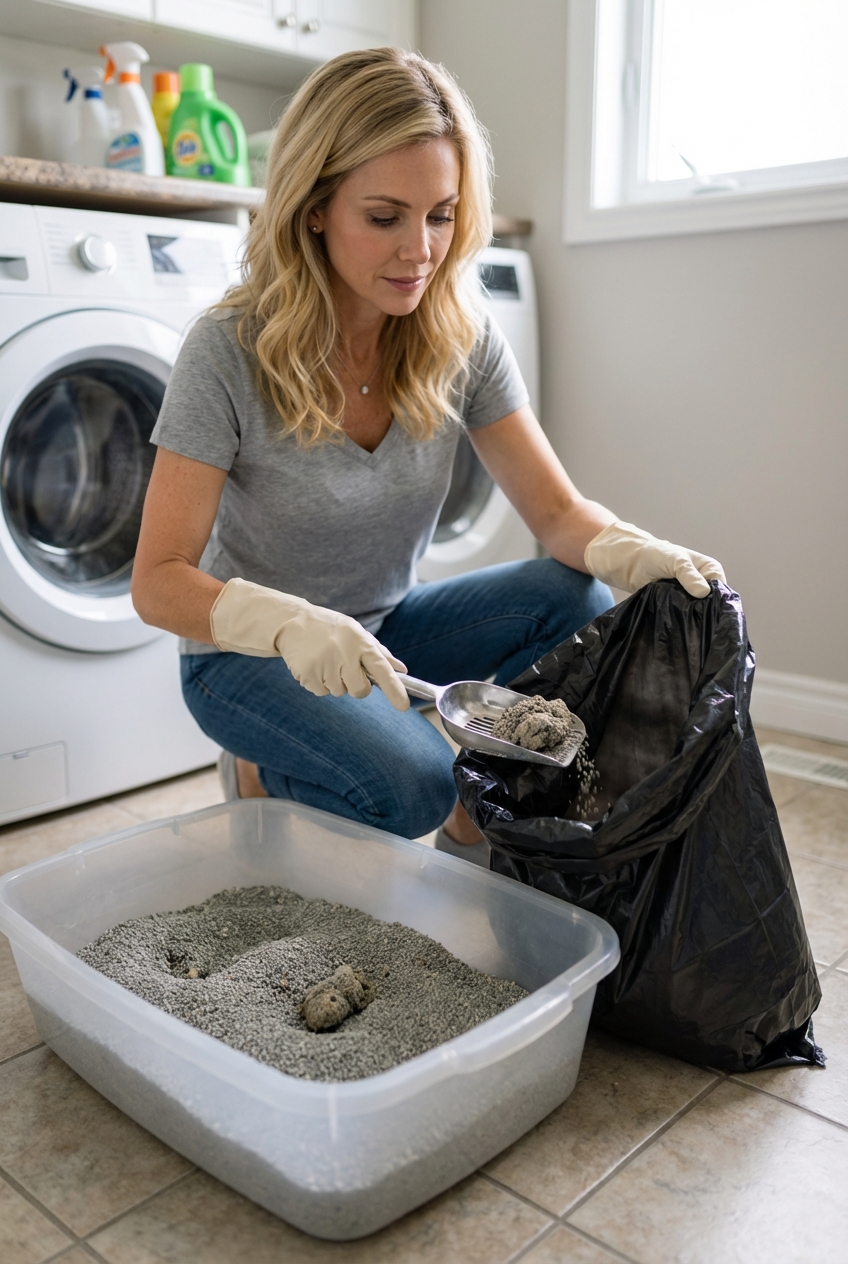
- Right next to the box: Common with box aversion, dirty box, painful pooping, or litter texture issues.
- On soft surfaces (bath mat, rug, laundry): May suggest your cat prefers a softer texture than the litter, or they are seeking comfort when stressed.
- In a hidden corner or closet: Often stress or a need for privacy, but can also be due to a box location that feels unsafe.
- Multiple places around the home: More likely medical urgency (like diarrhea), severe stress, or multi-cat conflict.
Two-day reset plan
If your cat is stable and acting normal otherwise, these steps are safe and often make a fast difference. Do not use punishment. It increases anxiety and can make litter box avoidance worse.
Step 1: Add enough boxes
Use the classic guideline: number of cats + 1. So, two cats should have three boxes. In many homes, this is the single most effective change.
Step 2: Get the size and entry right
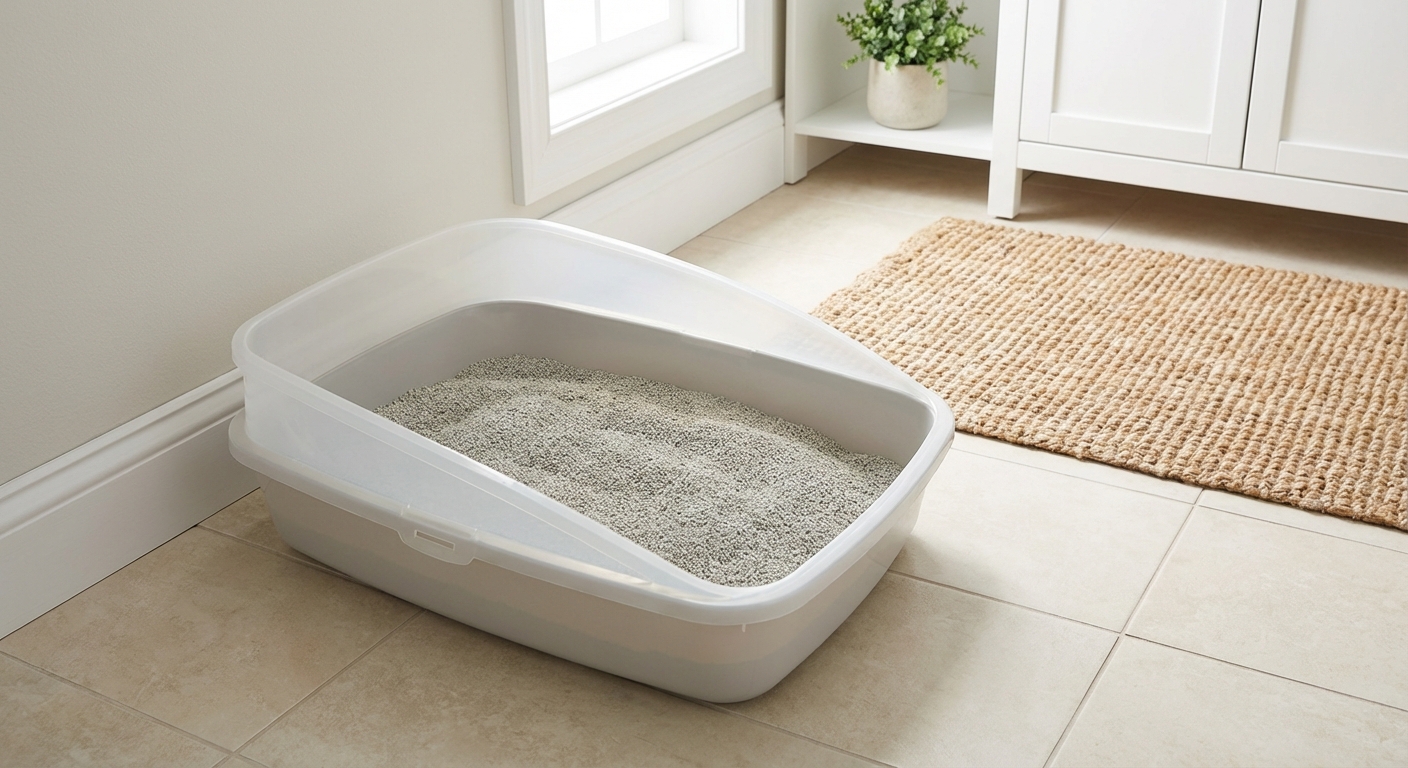
- Box size rule of thumb: aim for at least 1.5 times your cat’s body length (nose to base of tail). Bigger is often better.
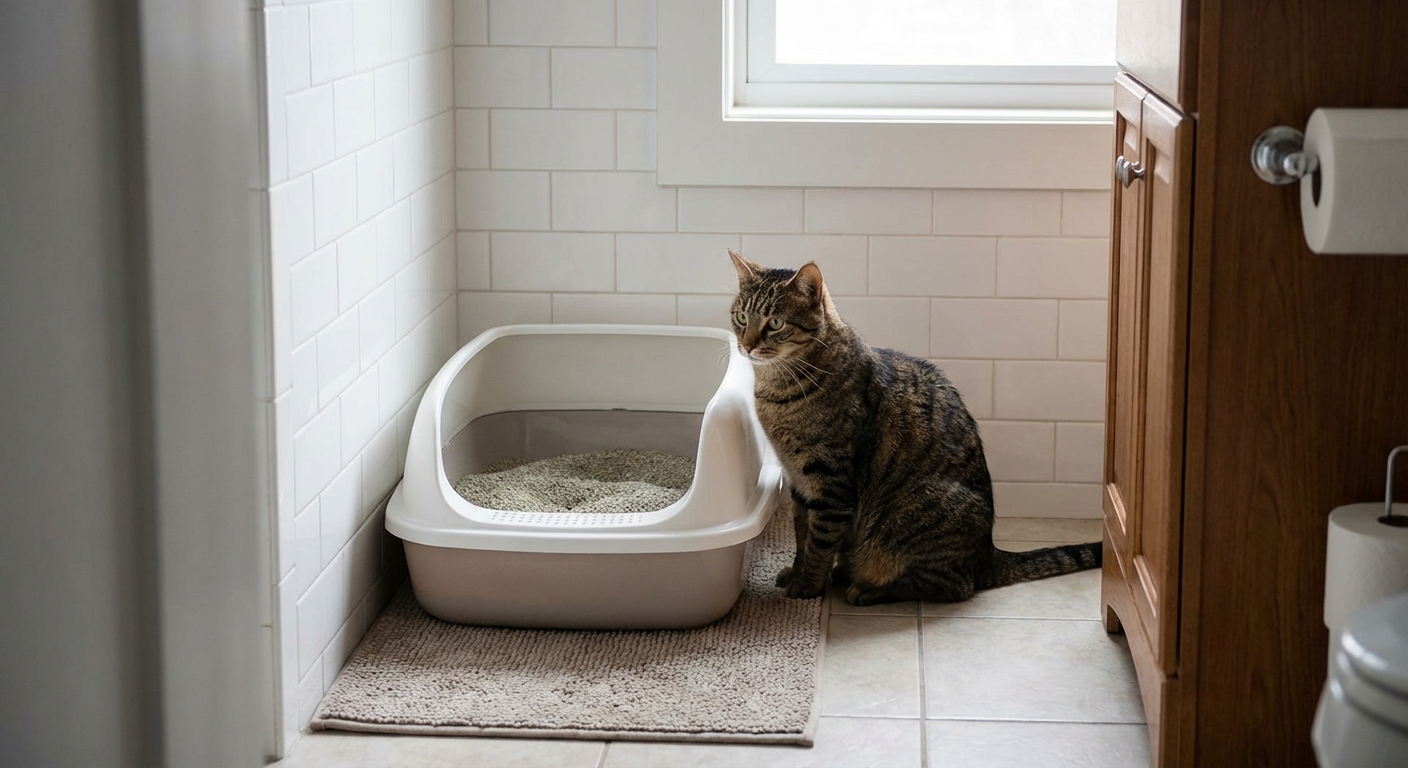
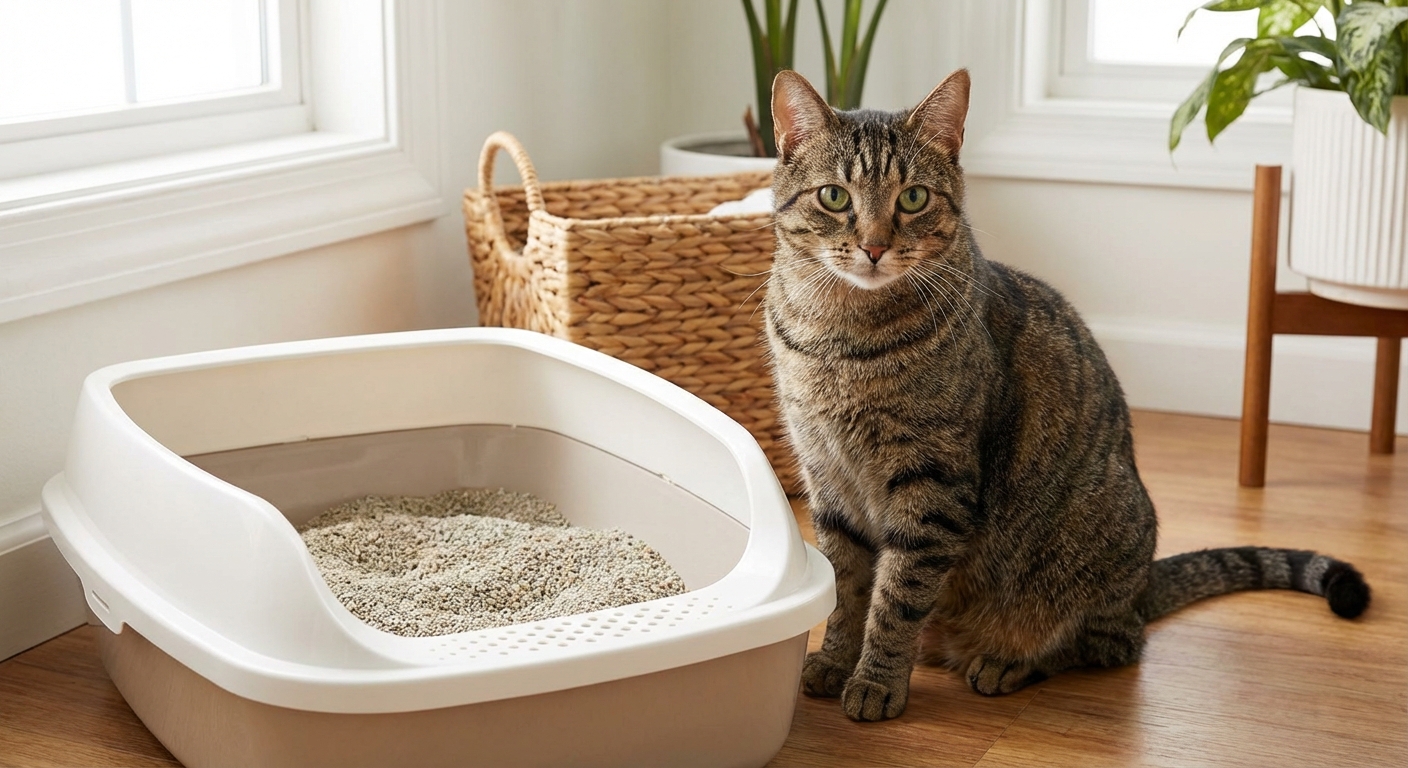
- Choose large, open boxes when possible.
- For seniors or arthritic cats, use a low-entry box or a storage tote with a cut-down door.
- Place a non-slip mat under and around the box for stability.
Step 3: Choose litter your cat is likely to accept
- Many cats prefer unscented, fine-grain clumping litter.
- If you must switch, mix gradually over 7 to 14 days.
- Avoid heavy fragrance and strong deodorizers inside the litter itself.
Step 4: Scoop like it matters
- Scoop at least once daily, twice daily in multi-cat homes.
- Wash the box with mild soap and warm water regularly. Avoid ammonia-based cleaners.
Step 5: Put boxes in safe, easy places
- Quiet, accessible, and not trapped in a dead-end space where another cat can ambush.
- Spread boxes out across the home, not all in one room.
Step 6: Clean accidents the right way
Use an enzymatic cleaner made for pet waste. Regular cleaners may remove the stain but not the odor cues your cat can still smell.
Age matters
A quick way to narrow causes is to consider your cat’s life stage:
- Kittens: parasites and diet changes are common culprits. Also check that boxes are easy to climb into and close to their main hangout area.
- Adult cats: stress, box setup issues, and diet-related stool problems are common. Sudden changes still deserve a medical rule-out.
- Seniors: arthritis and mobility issues are frequent, and chronic constipation becomes more common. Some senior cats also struggle with routine changes or cognitive decline.
When to call the vet
Book an exam promptly if the problem is new, sudden, or paired with any other symptom. Also schedule a visit if:
- You see any red flags from the safety check
- There is no clear improvement after 48 to 72 hours of solid litter box changes
- Accidents keep recurring (even if they briefly improve)
Your veterinarian may recommend:
- Physical exam: checking hydration, abdominal discomfort, mobility pain, and the anal area.
- Fecal testing: primarily to look for parasites (including giardia). If bacterial causes are suspected, additional testing may be needed.
- Bloodwork: helps assess systemic illness and inflammation.
- X-rays: useful for constipation, foreign material, and some orthopedic pain issues.
- Diet review: fiber level, treat frequency, food changes, and water intake.
If you can, bring a fresh stool sample and photos of the poop and location. It feels odd, but it genuinely helps your care team.
Constipation basics
Constipation is one of the most frequent medical contributors I see. Signs include hard, dry stools, straining, and small stool balls. Some cats still eat and act “mostly normal,” which can delay treatment.
Supportive steps your vet may suggest
- Increasing moisture: adding water to food, switching to wet food, or using a pet fountain
- Dietary fiber changes (the right amount matters)
- Stool softeners or medications when appropriate
- Addressing pain, dehydration, or underlying illness
Do not give human laxatives unless your veterinarian specifically tells you to. Cats are sensitive, and the wrong product or dose can be dangerous.
Stress and multi-cat homes
Even cats who get along can have resource tension around litter boxes. If one cat blocks the path or waits nearby, the other cat may choose a safer spot elsewhere.
Ways to reduce conflict
- Add boxes in different areas so one cat cannot control access.
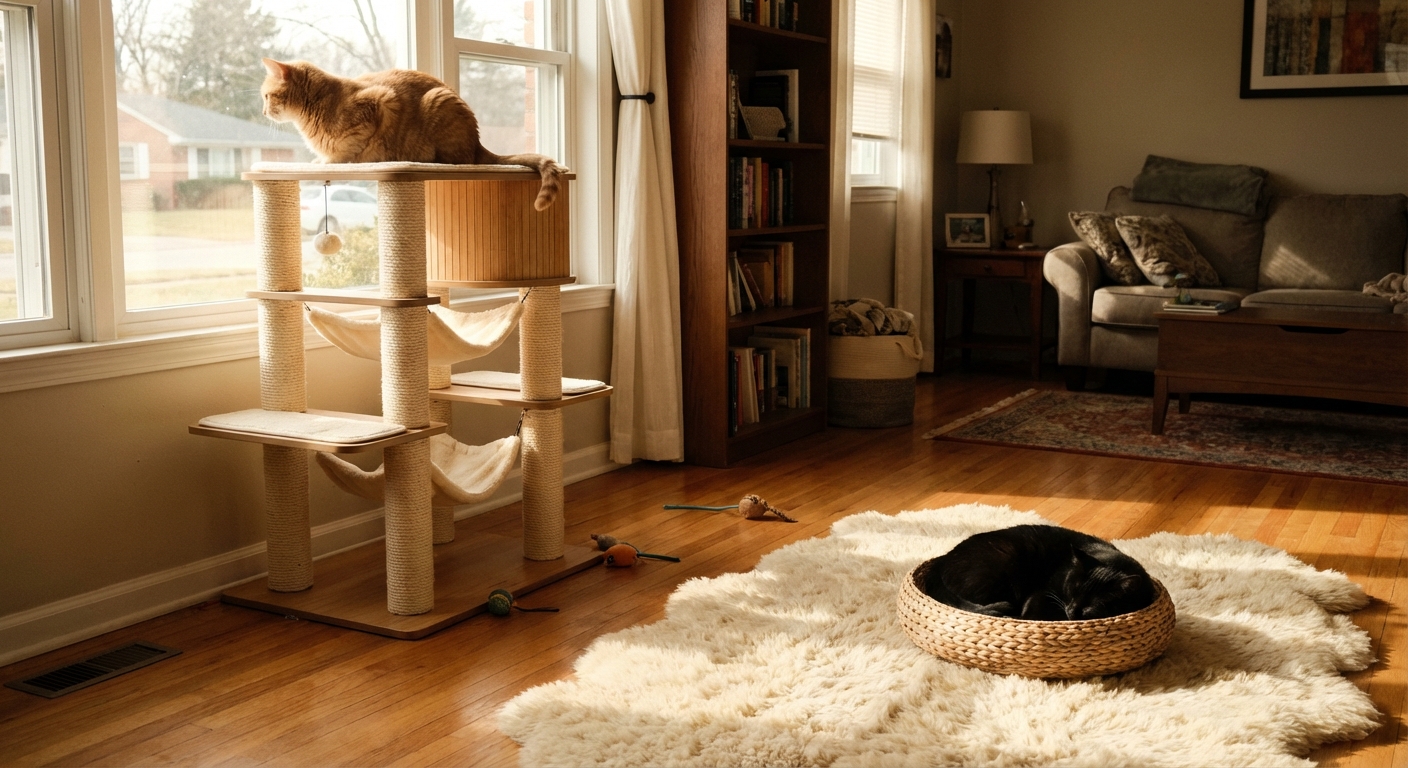
- Create vertical space like cat trees and shelves, plus hiding spots.
- Feed cats separately if mealtimes create tension.
- Use calm, consistent routines.
- Talk with your veterinarian about pheromone diffusers if stress is a factor.
Common mistakes
- Punishing or yelling: increases fear and stress, and your cat may hide accidents better instead of stopping them.
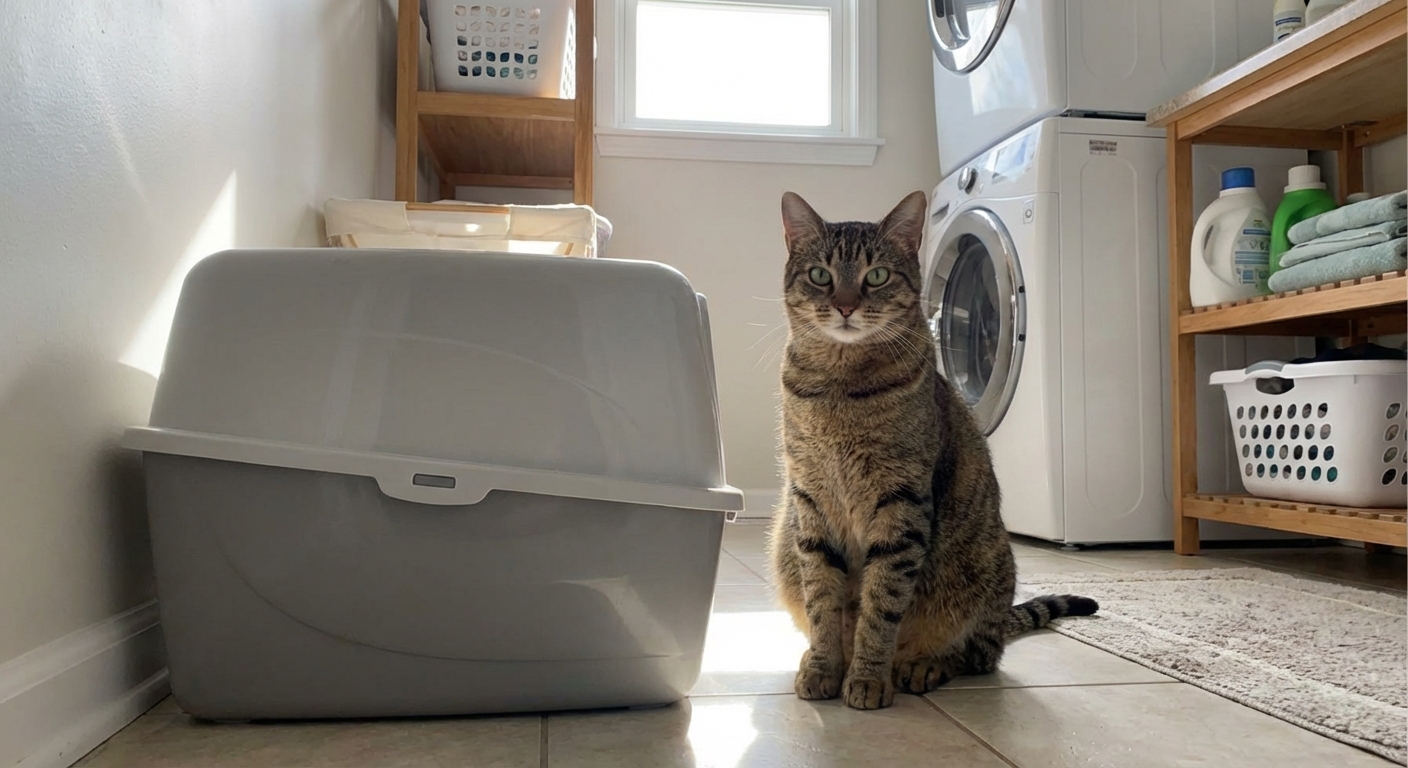
- Moving the box to an isolated area: many people push boxes to the garage or laundry room, but noise and access issues can backfire.
- Using strongly scented litter or harsh cleaners: cats often reject intense smells.
- Assuming it is behavioral without ruling out pain: a cat in discomfort cannot “train” their way out of a medical problem.
How long to fix this
If the cause is purely litter box setup, many cats improve within days once you add boxes, scoop more, and switch to a comfortable unscented litter. If stress is the root cause, it may take a few weeks of consistent environmental changes. If a medical issue is present, improvement often depends on diagnosis and treatment, and you may see gradual progress rather than an overnight change.
Your goal is not perfection on day one. Your goal is to make the litter box the easiest, safest, least painful option again.
FAQ
Is my cat doing this out of spite?
No. Cats do not plan revenge poops. When they go outside the box, they are usually avoiding discomfort, avoiding stress, reacting to the box setup, or unable to get there in time.
More litter or less?
Most cats prefer enough depth to dig and cover. A common starting point is about 2 to 3 inches, but individual preference matters. If your cat is pooping on the floor beside a deep box, try slightly less depth and see if it helps.
Covered or open box?
Many cats prefer open boxes because they feel less trapped and the smell does not build up as much. Covered boxes can work for some cats, but if you are troubleshooting accidents, switching to open is often a good test.
Pees in the box but poops outside. Why?
This pattern often points to discomfort with pooping (constipation, rear-end pain), litter texture issues, or a box size problem. Pooping requires more posture change and time in the box, so small frustrations show up there first.
What should I track?
For one week, jot down stool frequency, stool consistency (firm, soft, watery), any straining, and where accidents happen. Photos can help too. This is useful at home and extremely helpful if you end up at the vet.
Takeaway plan
If you remember nothing else, remember this order:
- Rule out pain and illness if anything feels “off” or the change is sudden.
- Fix the box setup with more boxes, cat-friendly litter, daily scooping, and safe locations.
- Reduce stress and protect your cat’s sense of safety, especially in multi-cat homes.
- Clean with enzymes so the old spot stops calling your cat back.
If you want, tell me your cat’s age, whether you have other pets, what litter and box type you use, and where the accidents are happening. Those details can narrow the likely cause quickly.