Male cat spraying is usually fixable. Learn how to tell spraying vs. peeing, rule out urinary issues, improve litter boxes, reduce stress, clean with enzymes...
Article
•
Designer Mixes
Cat Peeing on the Carpet

Shari Shidate
Designer Mixes contributor
Finding cat urine on the carpet can feel personal and honestly, it can be frustrating. But in my experience as a veterinary assistant, it is almost never “spite.” Most often, cats pee outside the litter box because of a medical problem, stress or territory tension, or a litter box setup they dislike. These causes can overlap, so the goal is not to pick just one, but to work through them step by step. The good news is that once you identify the “why,” you can usually stop the behavior and protect your home.
First, is it pee or spray?
This matters because the solution can be different.
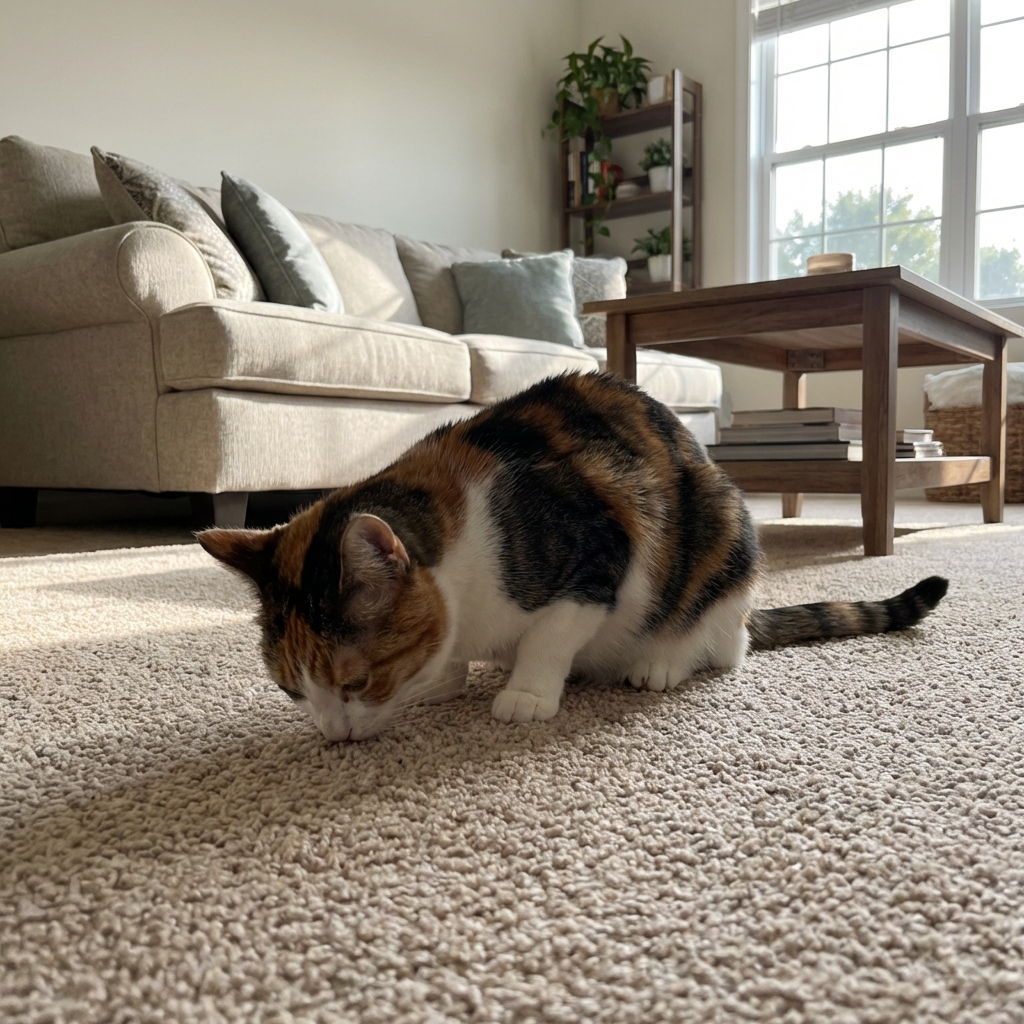
- Peeing (urinating) is usually a larger puddle on a horizontal surface like carpet, a bathmat, or a pile of laundry.
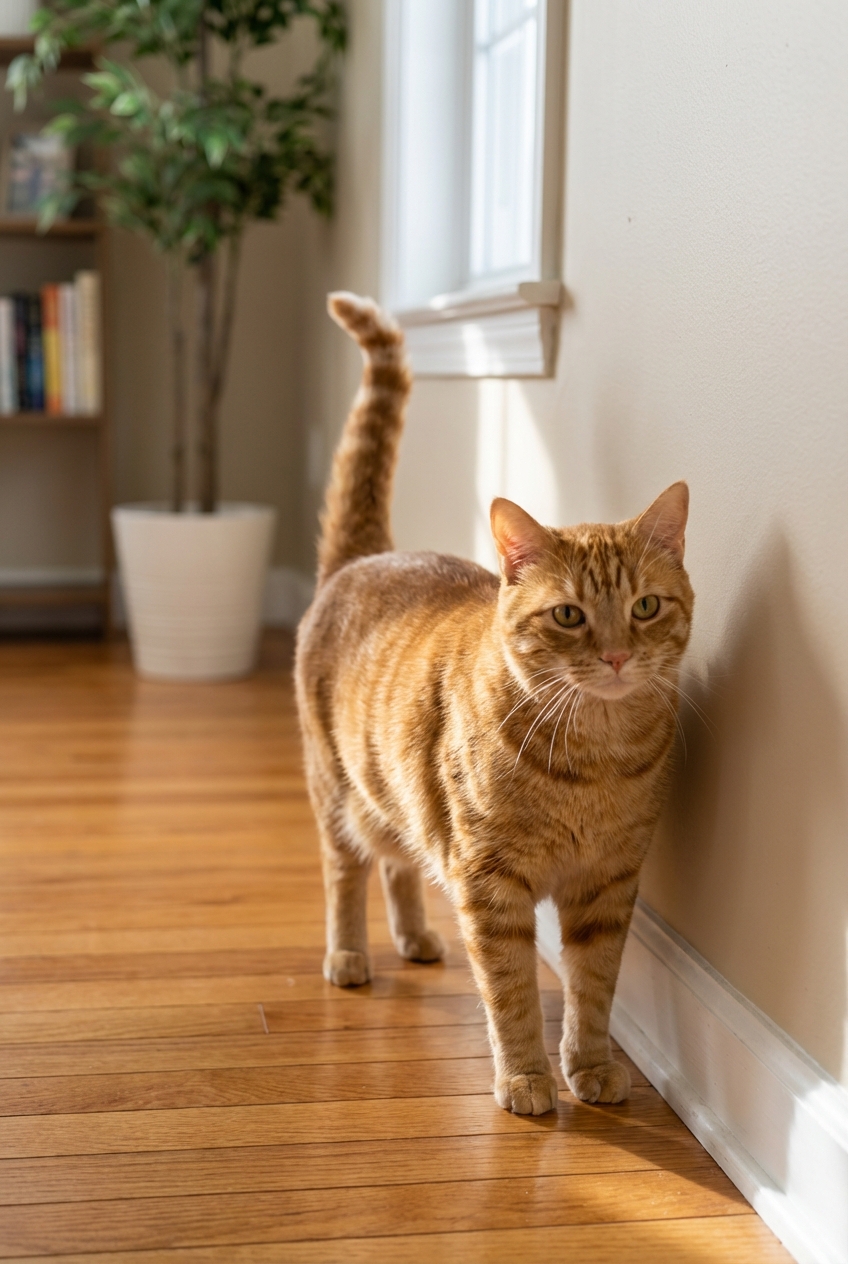
- Spraying is typically a small amount on a vertical surface like a wall, furniture leg, or doorway, and it often comes with tail quivering.
Both can happen in the same household, so do not assume it is only one. If you are unsure, take a quick photo for your veterinarian. The pattern can be a helpful clue.
Quick note: Intact cats, especially males, are more likely to spray. Spaying or neutering can reduce spraying for many cats, though it does not fix every case on its own.
Rule out medical causes first
If your cat is suddenly urinating on the carpet, treat it like a health concern until proven otherwise. Pain or urgency can make a cat avoid the litter box even if they used it perfectly for years. Your vet can determine which issue is actually driving the behavior and what treatment is appropriate.
Common medical reasons
- Feline lower urinary tract disease (FLUTD) including inflammation of the bladder (often idiopathic cystitis).
- Urinary tract infection (UTI) which is usually less common in young, otherwise healthy cats. True bacterial UTIs are more common in older cats and cats with conditions like diabetes or kidney disease.
- Bladder stones or crystals which can cause pain and frequent small urinations.
- Arthritis especially in older cats who struggle to step into a high-sided box.
- Diabetes, kidney disease, hyperthyroidism which can increase urine volume and accidents.
Urgent red flags
- Straining, crying, or frequent trips to the box with little or no urine
- Blood in urine
- Lethargy, vomiting, hiding, or loss of appetite
- A male cat that cannot pass urine (this is an emergency)
What to ask your vet for: A urinalysis at minimum. Many cats also benefit from a urine culture, and sometimes imaging if stones are suspected. Sample collection method matters for culture accuracy, so your vet will guide you on the best way to collect it.
If your cat is choosing soft surfaces like carpet and beds, that can line up with urinary discomfort. In clinic, I often hear owners describe that some cats seem to seek out softer, quieter spots when they feel urgency or pain, but it is not a rule.
Stress and territory triggers
Cats are sensitive, routine-driven animals. When their environment changes, litter box habits can be one of the first things to wobble.
Common triggers
- A new pet, new baby, or a roommate moving in or out
- Construction noise, visitors, or changes in schedule
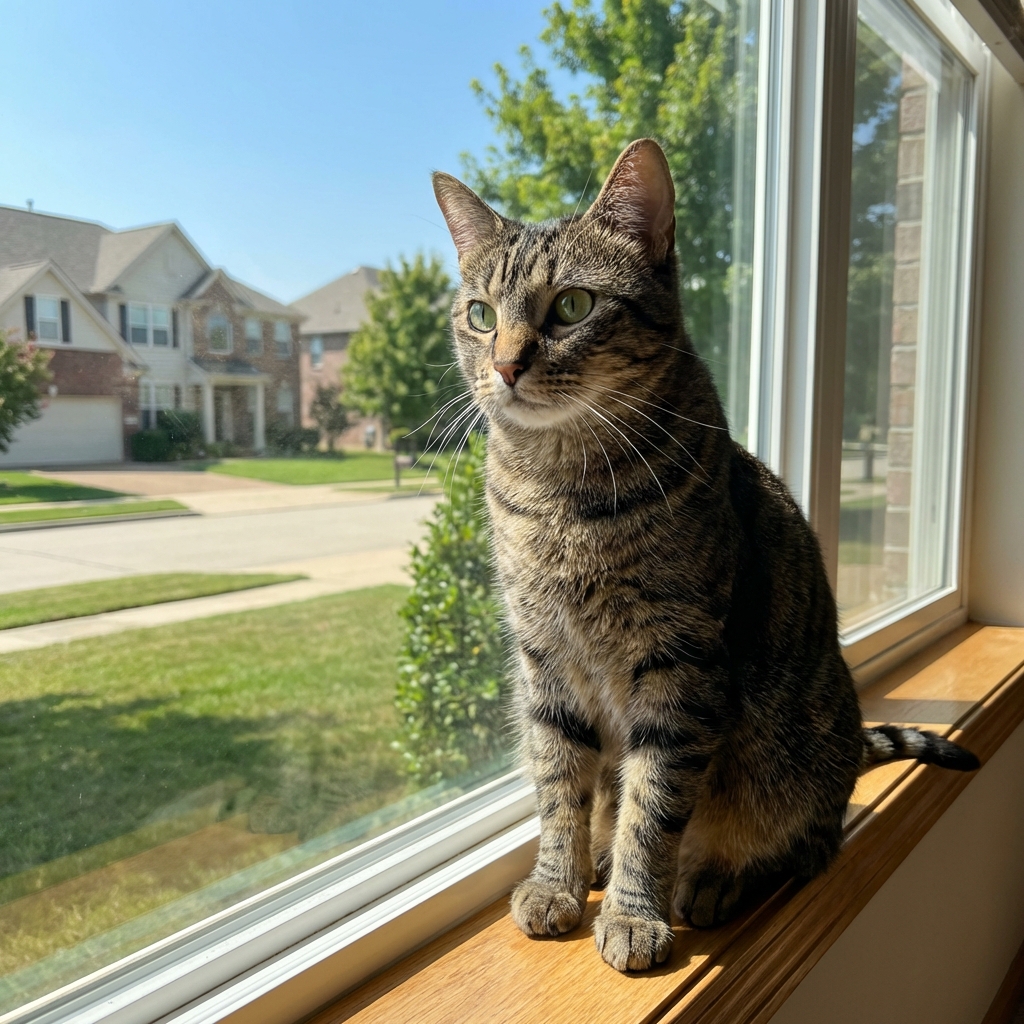
- Outdoor cats visible through windows
- Conflict between cats in the home (even subtle staring or blocking hallways)
If the accidents started after a change, you are not imagining the connection. A cat may choose the carpet because it holds scent, feels soft under stressed paws, or is located in a “hotspot” of household traffic or conflict.
Litter box setup problems
Many cats are particular about their litter setup. The carpet is rarely the first choice. It becomes the choice when the litter box is uncomfortable, scary, or not clean enough for that cat.
Common issues
- Not enough boxes: Aim for one box per cat, plus one extra.
- Box location: Avoid putting all boxes in one spot. Also avoid loud, scary areas like next to a furnace or washing machine.
- Dirty boxes: Scoop daily. Some cats need twice daily. Wash boxes with mild soap regularly and replace old boxes that hold odor.
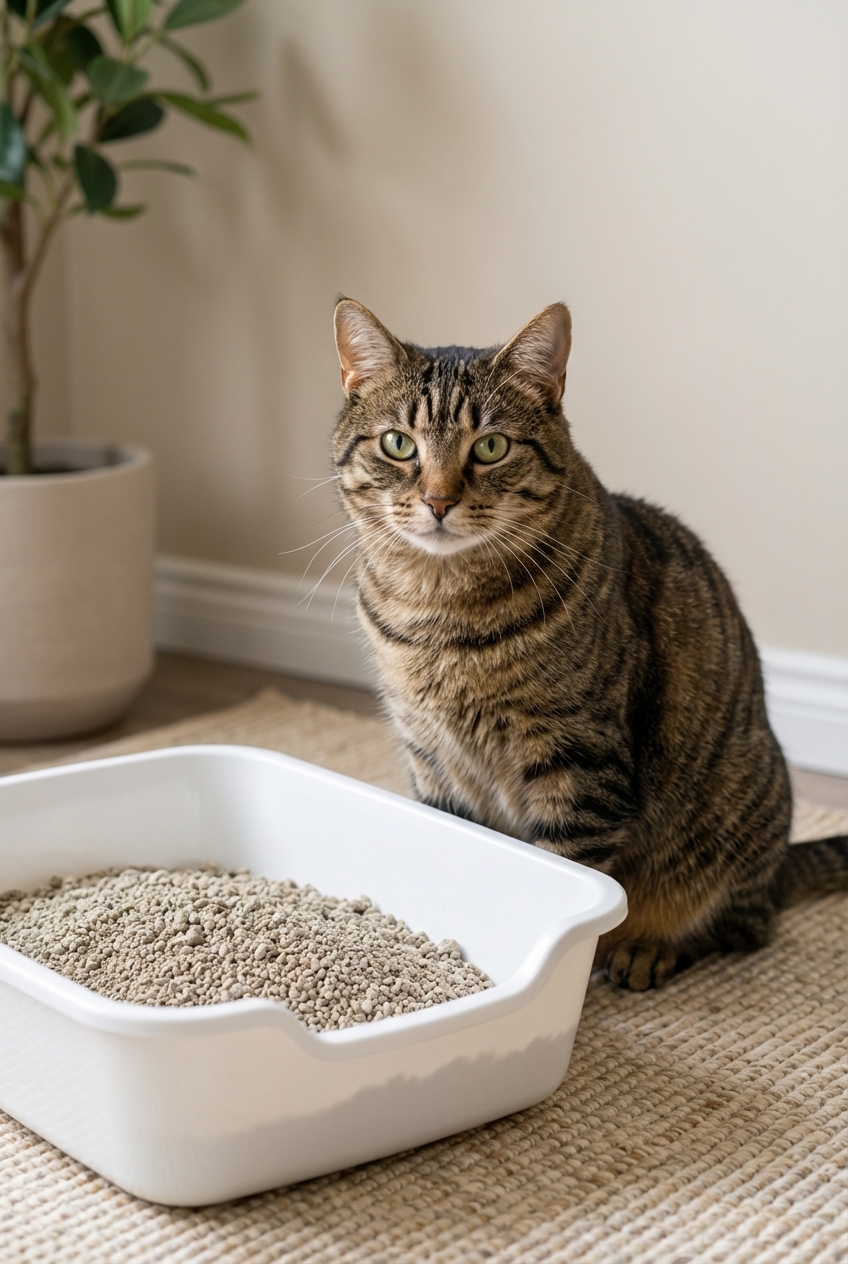
- Box type: Many cats prefer large, open boxes. Covered boxes can trap odor and some cats dislike having only one exit, though other cats do fine with a cover.
- Litter texture or scent: Strongly scented litters are a common deal-breaker. Many cats prefer unscented, fine-grain clumping litter.
- Entry height: Senior cats may need a low-entry box.
When cats avoid the box, I always look at it through their eyes: Is it clean, easy to access, and does it feel safe?
How to stop carpet peeing
Step 1: Book a vet visit
Even if you strongly suspect “behavior,” start with health. It is the kindest and fastest route to a solution, because pain-driven accidents will not resolve until the underlying issue is treated.
Step 2: Reset the litter setup
- Add boxes so you meet the 1 per cat + 1 rule.
- Place boxes in quiet, accessible areas with at least two “escape routes” if possible.
- Try a large, uncovered box with unscented clumping litter as a simple reset.
- Scoop daily and keep litter depth around 2 to 3 inches unless your cat shows a strong preference.
Step 3: Clean the carpet correctly
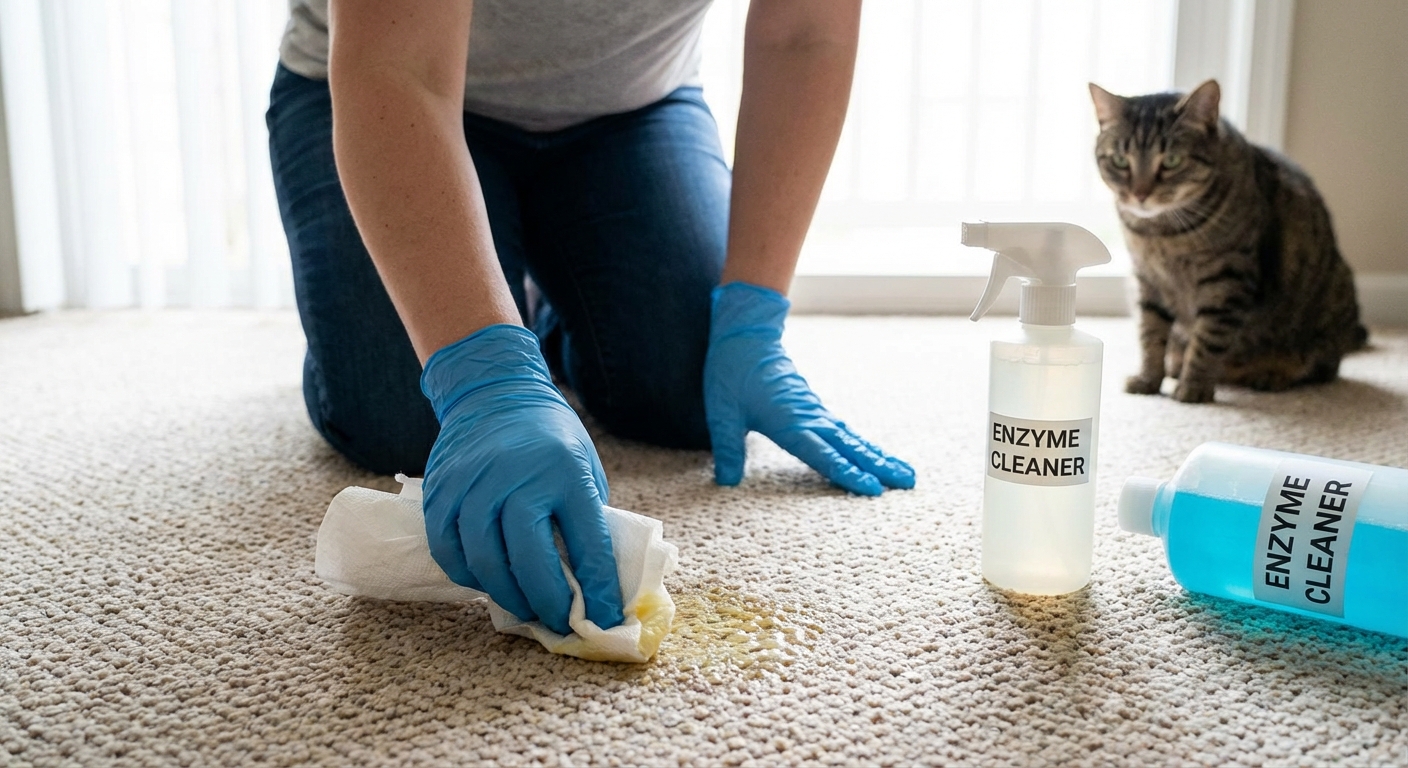
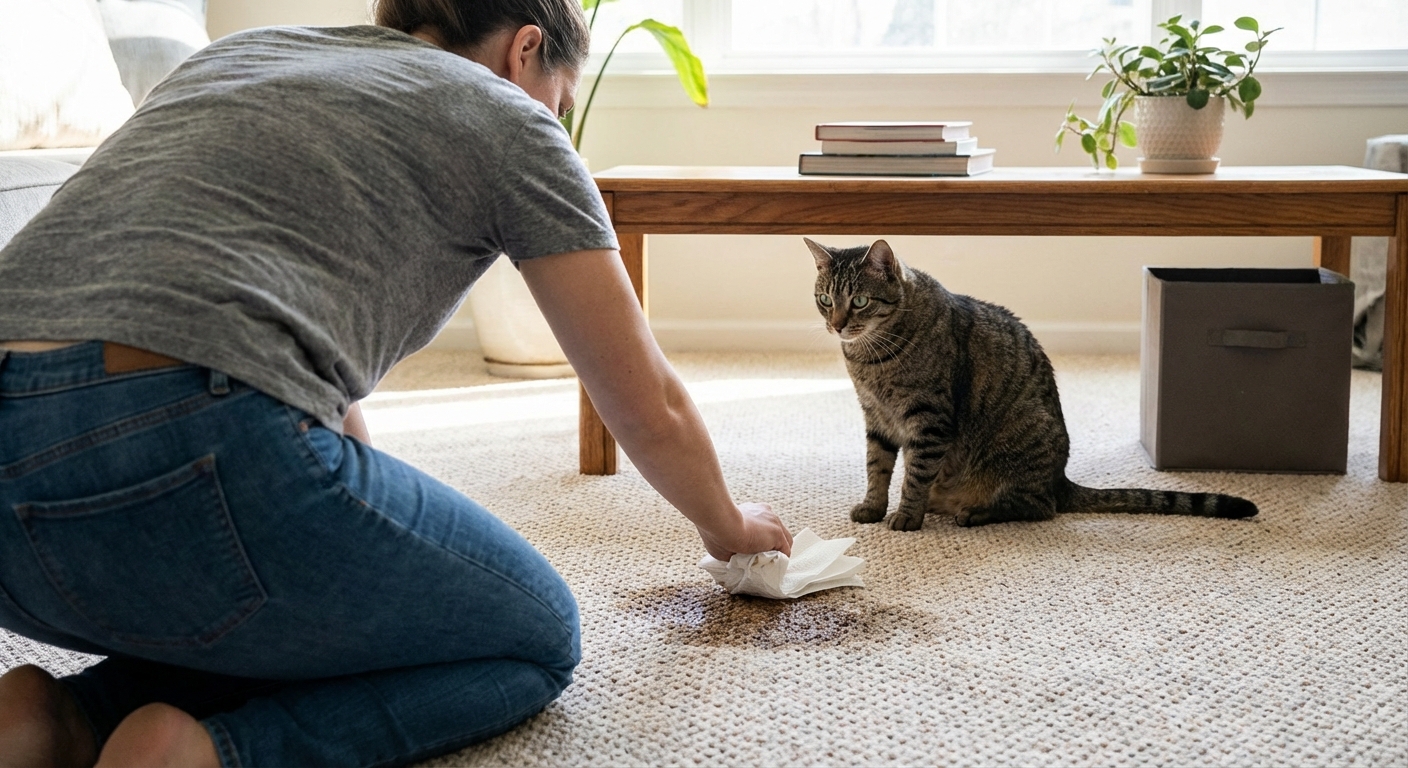
If any urine scent remains, many cats will return to that spot. Use an enzymatic cleaner made for pet urine. Many standard cleaners and vinegar can reduce odor for humans, but they do not reliably break down the compounds cats detect.
- Blot first, do not rub.
- Saturate the area according to product directions. Urine often soaks into the pad below the carpet.
- Let it air dry fully.
- Avoid ammonia-based cleaners, which can smell urine-like to cats.
- Spot test any cleaner for colorfastness first.
- If accidents are frequent, consider professional cleaning or pad replacement in that area.
Step 4: Block access while you retrain
Think of this as breaking the habit loop. Close doors, use baby gates, or cover the area with a waterproof mat temporarily. If your cat has a “favorite” corner, place a litter box nearby for a few weeks and then slowly move it to your preferred location.
Step 5: Lower stress and add safe territory
- Add vertical space like a cat tree or wall shelves.
- Create predictable routines for meals and play.
- Use puzzle feeders and short play sessions to relieve anxiety.
- If outdoor cats are a trigger, use window film or keep blinds partially closed at problem windows.
Some households benefit from pheromone diffusers. They are not magic, but they can be a helpful support alongside the environmental changes above.
Step 6: Do not punish
Do not scold, rub your cat’s nose in it, or use spray bottles. Punishment increases stress and can make inappropriate urination worse. Focus on making the box easier to use and the home feel safer.
Special situations
Multi-cat homes
In multi-cat households, carpet urination can be a sign of competition, even if the cats are not openly fighting. Watch for hallway blocking, staring, chasing, or one cat preventing access to the litter box. Spread resources out: food, water, resting areas, and boxes.
Senior cats
If your cat is aging, assume mobility matters. Try a low-entry box, add a runner rug for traction, and keep boxes on the same floor where your cat spends most of their time.
After moving or remodeling
New smells can unsettle cats. Add extra boxes temporarily, keep a quiet safe room, and stick to routine until your cat settles in again.
When to get extra help
If you have ruled out medical causes and improved the litter setup but accidents continue for more than a couple of weeks, it is time to bring in more support. Your veterinarian may recommend pain control trials, diet changes for urinary health, anxiety medication, or a referral to a credentialed behavior professional.
You do not have to handle this alone, and you are not failing your cat. Inappropriate urination is one of the most common reasons cats are surrendered, and it is also one of the most fixable when you take a thoughtful, step-by-step approach.