Cats don’t pee on the bed out of spite. Learn how to tell urine vs spraying, rule out FLUTD/UTIs, improve litter box setup, reduce stress, and clean properly.
Article
•
Designer Mixes
Cat Peeing on the Bed: Causes and Solutions

Shari Shidate
Designer Mixes contributor
Few things feel as frustrating, and honestly as personal, as discovering your cat has peed on your bed. As a veterinary assistant, I want you to know two things can be true at the same time: you can be completely over it, and your cat may genuinely be signaling a health or stress problem that needs attention.
Also, the practical reality matters. This is a lot of laundry, a lot of cleaning, and it can wear you down fast.
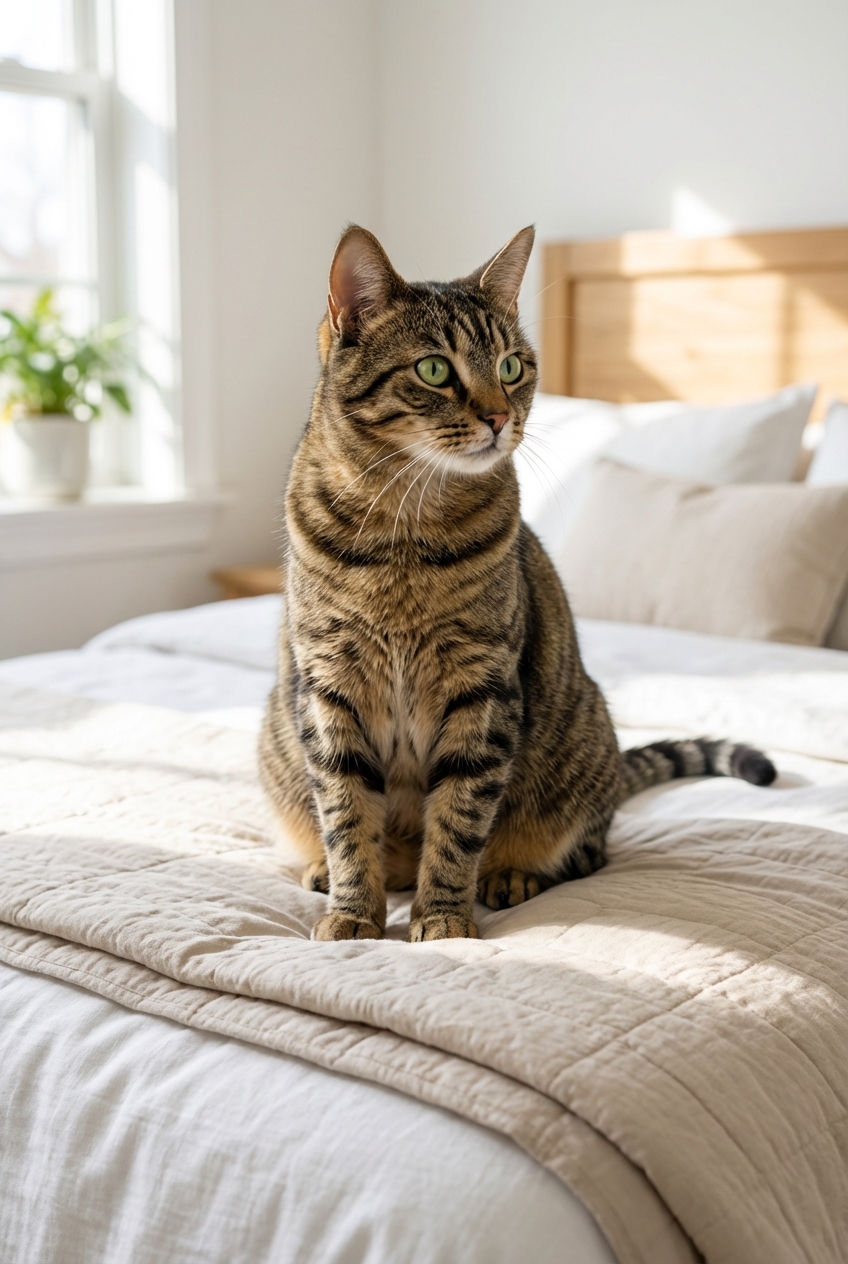
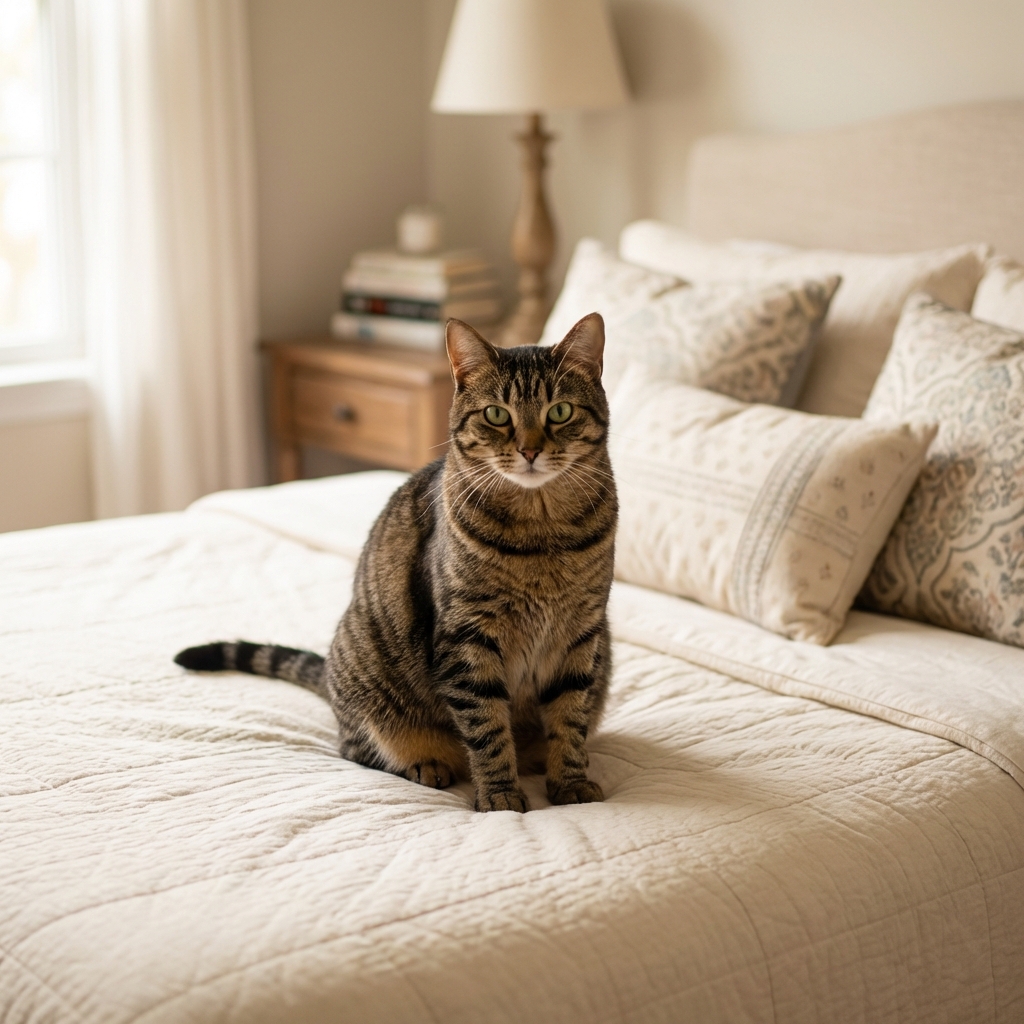
Bed peeing is often about comfort, scent, and safety. The bed smells strongly like you, it is soft, and it is usually in a quiet room. When something feels “off” physically or emotionally, many cats choose that spot.
First: Peeing or spraying?
These behaviors can look similar but often have different causes and solutions.
- Urination (peeing): Typically a larger puddle on a horizontal surface. Your cat squats.
- Spraying: Usually small amounts on vertical surfaces. Your cat stands with tail up and may “tremble” the tail. Spraying is often territorial or stress-related and is common in unneutered males, but any cat can spray.
Urine on a bed is more often squatting or urination, though some cats can spray onto bedding too.
Medical causes first
If your cat suddenly starts peeing on the bed, assume it could be medical until proven otherwise. Many cats do not show obvious signs of illness until they feel pretty uncomfortable.
FLUTD and cystitis (UTI is less common)
Cats can develop bladder inflammation (cystitis) that creates urgency and pain, and the cat associates the litter box with discomfort.
Important nuance: In otherwise healthy adult cats, a true bacterial urinary tract infection is less common than sterile inflammation (often called idiopathic cystitis). That is why antibiotics should not be assumed without testing, and why a urine culture can matter.
Common signs: frequent trips to the box, small amounts of urine, straining, crying in the box, blood-tinged urine, excessive licking of the genital area, urinating outside the box.
Urinary blockage is an emergency
If your cat is straining and producing little or no urine, seek emergency veterinary care immediately. This includes repeated trips that only produce a few drops. A urinary blockage, especially in male cats, can become life-threatening quickly.
Other red flags include restlessness, vomiting, hiding, or signs of pain.
Arthritis or pain
Older cats or cats with joint pain may still want to use the box, but climbing into a high-sided litter pan or going downstairs to the laundry room can feel like too much. A soft bed becomes the easier choice.
Clues: stiffness, hesitating before jumping, sleeping more, changes in grooming, litter tracking because the cat is not stepping in fully.
Kidney disease, diabetes, thyroid disease
Conditions that cause increased thirst and urination can overwhelm litter box habits. Cats may not make it in time, or they may choose areas that feel safer if they feel unwell.
Clues: increased water intake, weight loss, increased appetite, larger clumps in the litter, accidents outside the box.
Constipation, diarrhea, and other GI pain
Bowel discomfort can lead to litter box avoidance in general. Some cats start avoiding the box altogether, which can show up as accidents on soft surfaces, including beds. If you are seeing stool problems plus urine accidents, tell your vet. It helps connect the dots.
Other “ask your vet” triggers
- Senior cognitive changes (disorientation, routine changes, night waking)
- Pain elsewhere (dental pain, back pain) that increases stress and reduces good habits
- Medications that increase urination (for example, diuretics or some steroids)
Stress and behavior triggers
If medical causes are ruled out or treated and the behavior continues, look at what changed in your home. Cats are sensitive, and “small” changes to us can feel huge to them.
- New pet, new baby, new roommate, or visitors
- Schedule changes like travel, new work hours, or more time away
- Moving or rearranging furniture
- Outdoor cats seen through windows (territory stress)
- Conflict between cats in multi-cat homes, including subtle bullying
- Litter box changes like a new box style, new litter texture, new location, or more scented products
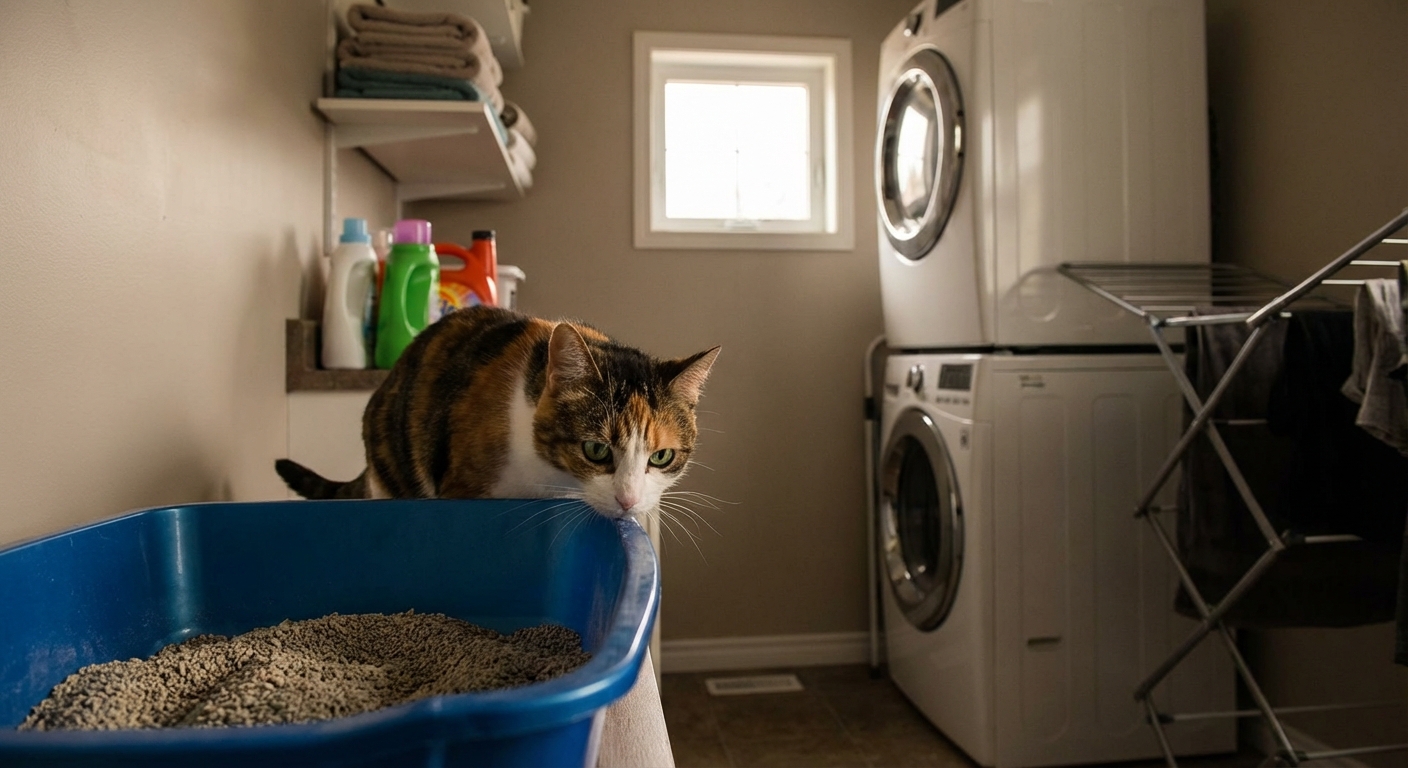
From a wellness perspective, it helps to think of inappropriate urination as a cat’s “check engine light.” It is communication, not revenge.
What helps most
1) Book a vet visit and ask for key tests
For a sudden change, especially bed peeing, ask your vet about:
- Urinalysis (checks concentration, blood, crystals, inflammation)
- Urine culture when infection is suspected or if signs keep returning
- Bloodwork if increased drinking or weight change is present
- Imaging (x-ray or ultrasound) if stones are suspected
2) Make the litter box easier right away
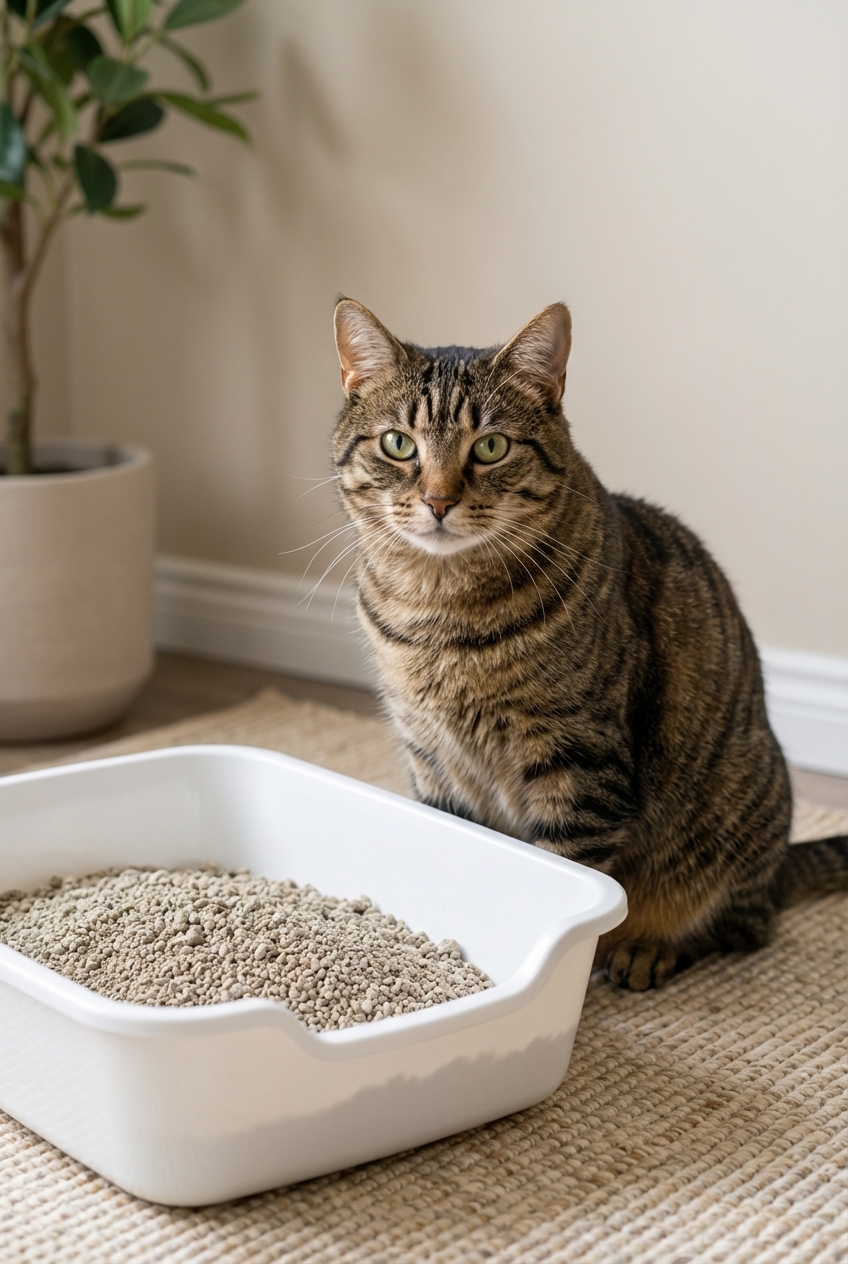
- Number of boxes: a helpful starting point is one box per cat, plus one extra. Some cats need more. Placement matters as much as quantity.
- Location: quiet, easy access, and spread out. Do not put all boxes side-by-side if you have more than one cat.
- Box size: aim for at least 1.5 times your cat’s body length (nose to base of tail). Bigger is often better.
- Box style: many cats prefer large, open boxes. Covered boxes can trap odors and feel “unsafe” to some cats. If your cat is older, try low-entry.
- Litter depth: many cats do well with about 2 to 3 inches. If your cat is a “digging” type, a bit deeper may help. If they seem hesitant, try slightly less.
- Litter: unscented, clumping litter is often best tolerated. If you want to switch, do it gradually.
- Cleanliness: scoop daily (twice daily is even better during retraining). Wash the box with mild soap and water about weekly to monthly, depending on how many cats use it.
3) Manage access to the bed while you retrain
This is not punishment. It is simple management while you fix the underlying cause.
- Keep bedroom doors closed when you cannot supervise.
- Use a waterproof mattress protector and washable blankets.
- If your cat tends to pee at specific times, restrict access during those windows.
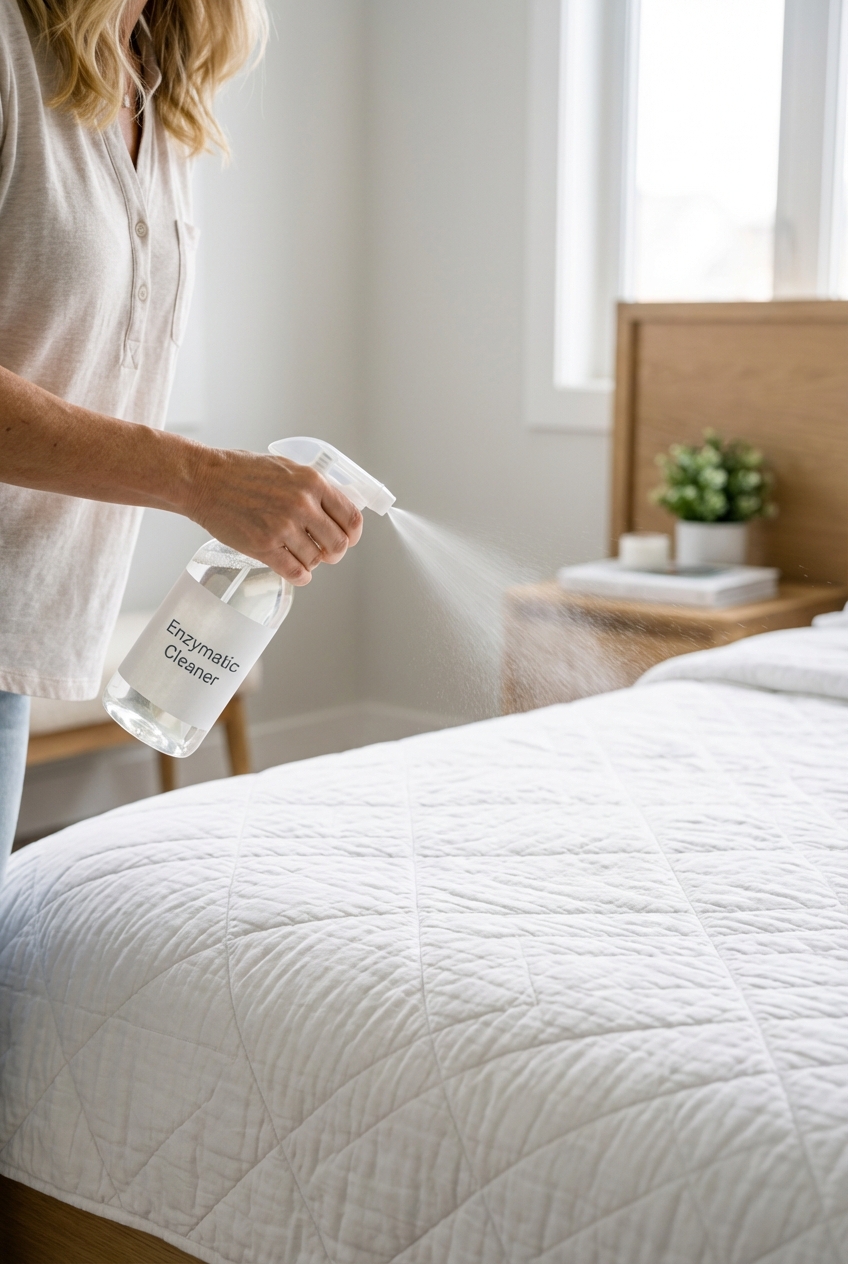
4) Clean urine correctly (especially mattresses)
Cats return to areas that smell like urine, and regular cleaners often fail because they do not break down uric acid.
- Use an enzymatic cleaner designed for pet urine on bedding and mattress.
- On a mattress, apply enough product to reach the same depth the urine soaked. Blot, do not scrub.
- Let it fully air-dry. Repeat treatments if any odor remains.
- Avoid heat (hair dryers, steam, hot water) until the odor is gone, since heat can “set” the smell.
- Avoid ammonia-based cleaners, which can smell urine-like to cats.
5) Reduce stress, especially in multi-cat homes
- Increase resources: more litter boxes, more water stations, multiple feeding spots.
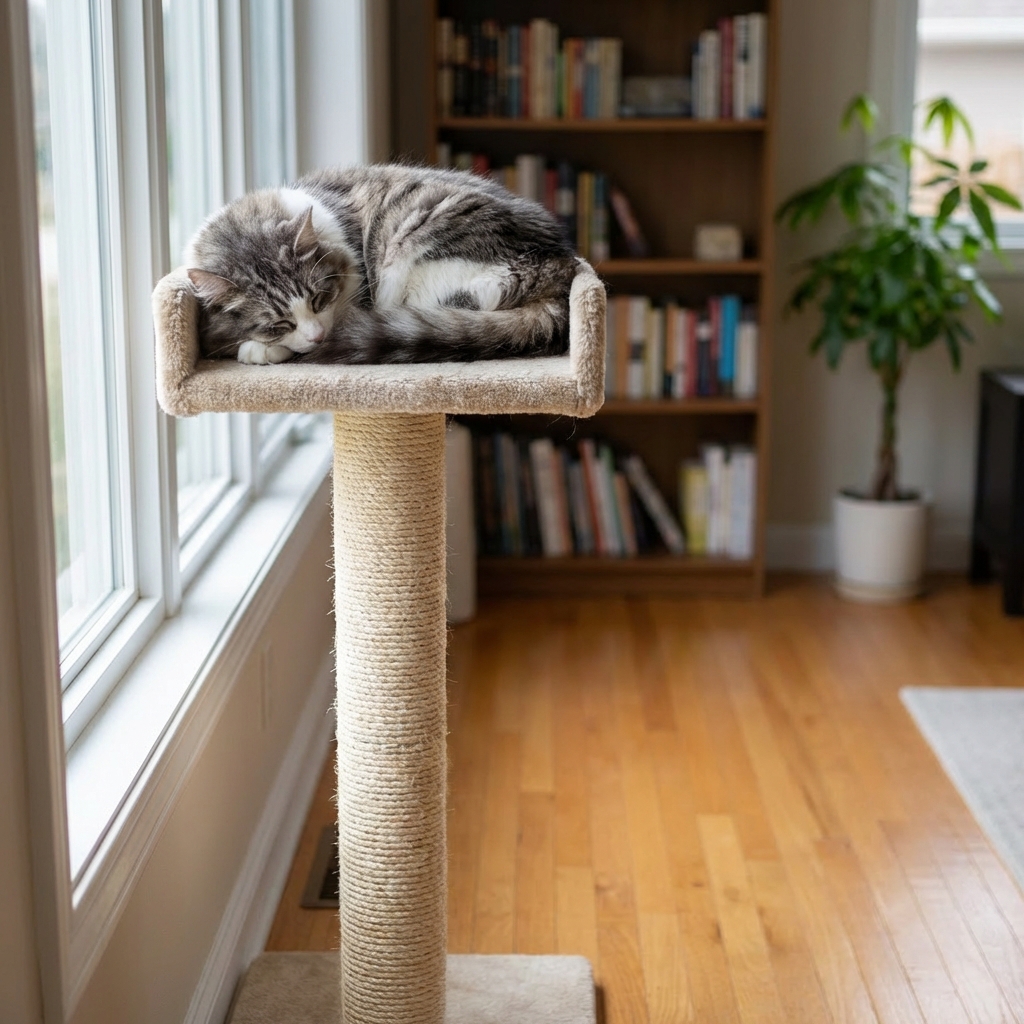
- Add vertical space: cat trees and shelves reduce conflict.
- Daily play: 10 to 15 minutes of interactive play can help reduce stress and build confidence.
- Pheromone support: a feline facial pheromone diffuser can help some cats feel safer.
- Safe zones: give each cat a private place to nap and decompress.
6) If bladder inflammation is part of the picture
Your veterinarian may recommend strategies such as:
- Increasing moisture (wet food, adding water to meals, pet fountains)
- Prescription urinary diets when indicated
- Pain control and anti-inflammatory support
- Weight management for overweight cats
Hydration is a big deal for cats. Many cats simply do not drink enough water, especially if they eat mostly dry food. More moisture can mean less concentrated urine and a calmer bladder for some cats.
What not to do
- Do not punish, yell, or rub your cat’s nose in it. It increases stress and can make the problem worse.
- Do not move the litter box to a hard-to-reach area as a “solution.” Accessibility matters.
- Do not switch litter types suddenly. Transition slowly over 7 to 14 days if you change brands or textures.
- Avoid heavily scented litter, scented liners, and strong cleaners near the box.
- Do not rely on antibiotics “just in case” without your vet’s guidance and testing.
Call the vet today
- Straining with little or no urine (including repeated trips that only produce drops)
- Crying in the litter box or obvious pain
- Blood in urine
- Vomiting, lethargy, or refusal to eat
- Sudden increase in water intake or large urine clumps
- A male cat that seems unable to urinate
If you are unsure, it is always safer to call. Urinary issues can escalate quickly.
7-day reset plan
If your cat has been medically evaluated or you are awaiting results, here is a simple, supportive plan:
- Day 1: Add an extra litter box in a quiet, easy-to-reach spot. Use unscented litter.
- Day 2: Scoop twice daily and note urine amount and frequency.
- Day 3: Add a water fountain or an extra water bowl away from food.
- Day 4: Start 10 minutes of play daily, same time each day.
- Day 5: Add a pheromone diffuser near the problem area or common room.
- Day 6: Review stressors: windows where outdoor cats appear, loud appliances, conflict between pets.
- Day 7: If bed peeing continues, contact your vet for next steps and consider a veterinary behavior consult.
You are not alone
I know this can feel exhausting. The encouraging news is that most cats improve when you address the root cause, support bladder health, and make litter box habits easy again. Your cat is not being spiteful. They are asking for help the only way they know how.