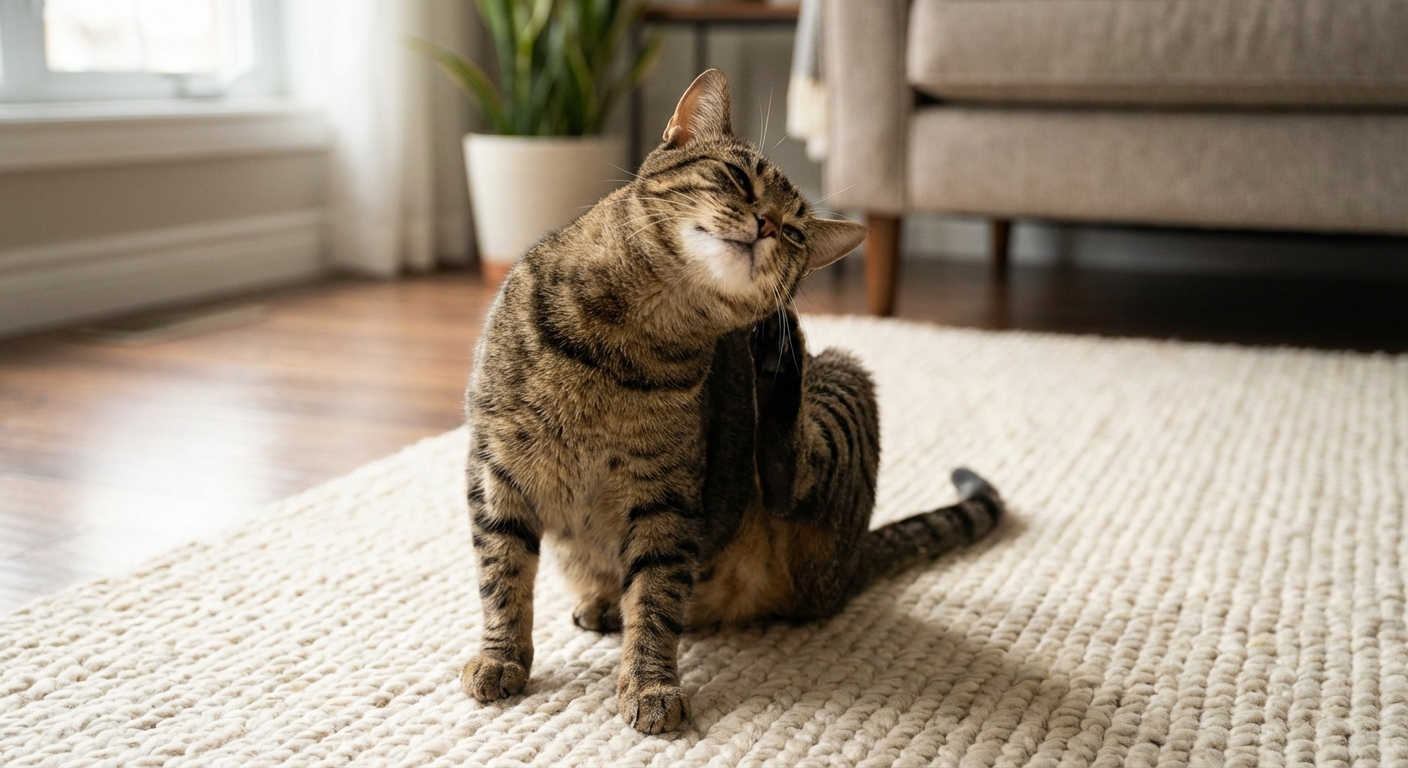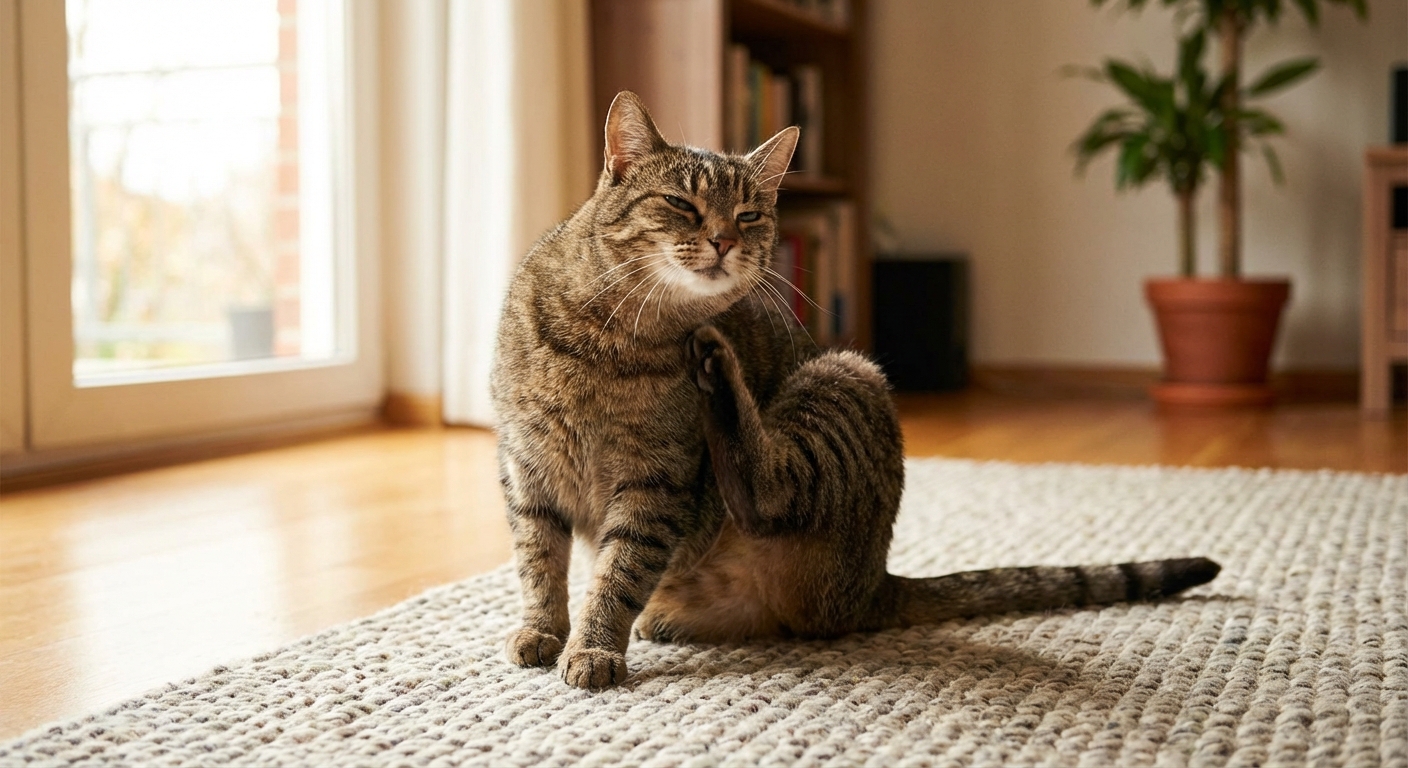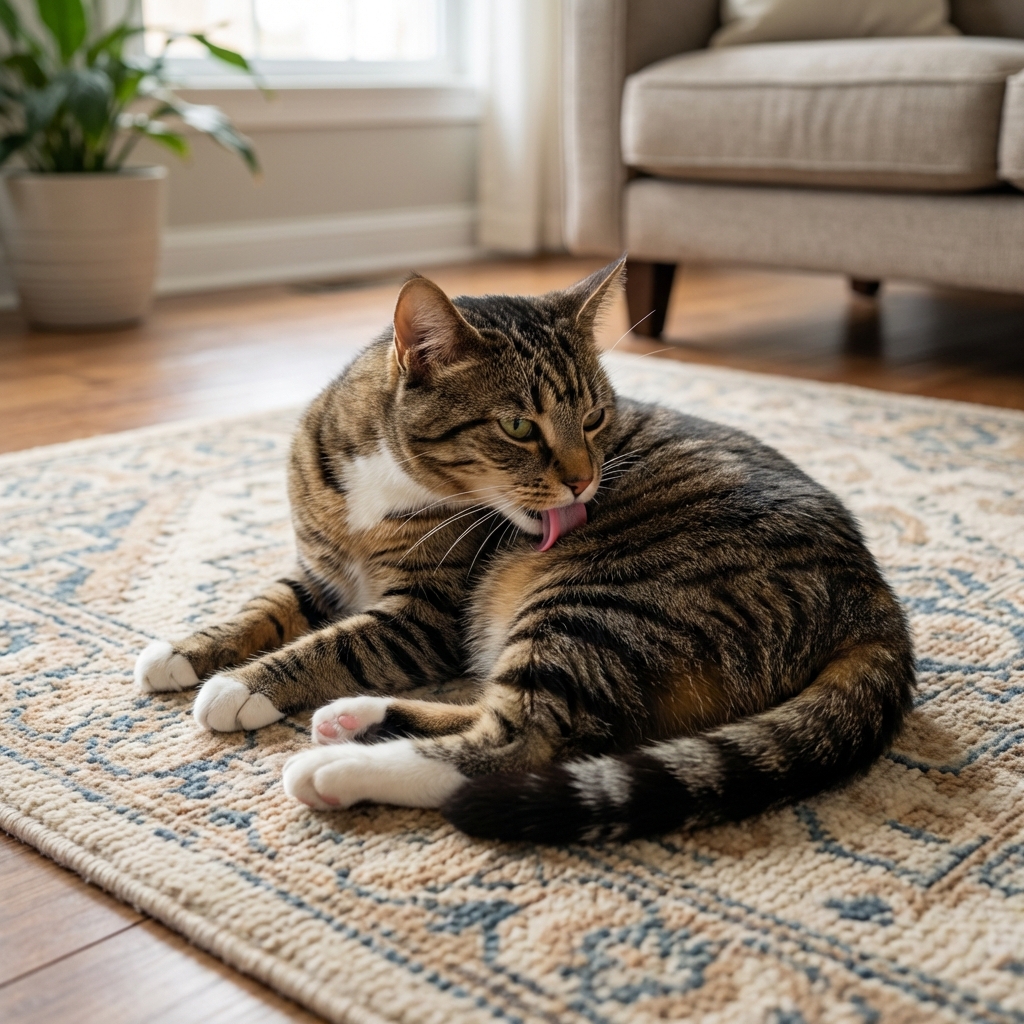
Cat overgrooming isn’t “bad behavior.” Learn the top causes—fleas, allergies, parasites, infection, pain or stress—plus quick triage questions, saf...
Article
•
Designer Mixes
Cat Overgrooming: Stress, Allergies, or Pain?

Shari Shidate
Designer Mixes contributor
If your cat is licking, chewing, or pulling fur to the point of bald patches or scabs, it is not “just a bad habit.” Overgrooming is a sign that something is bothering your cat physically, emotionally, or both. As a veterinary assistant, I have seen many loving families blame themselves or assume it is anxiety, when the real culprit was fleas, allergies, arthritis, or even a hidden urinary issue.
The most helpful mindset is this: overgrooming is a symptom. The goal is to figure out what is driving it, then treat that root cause.
What overgrooming looks like
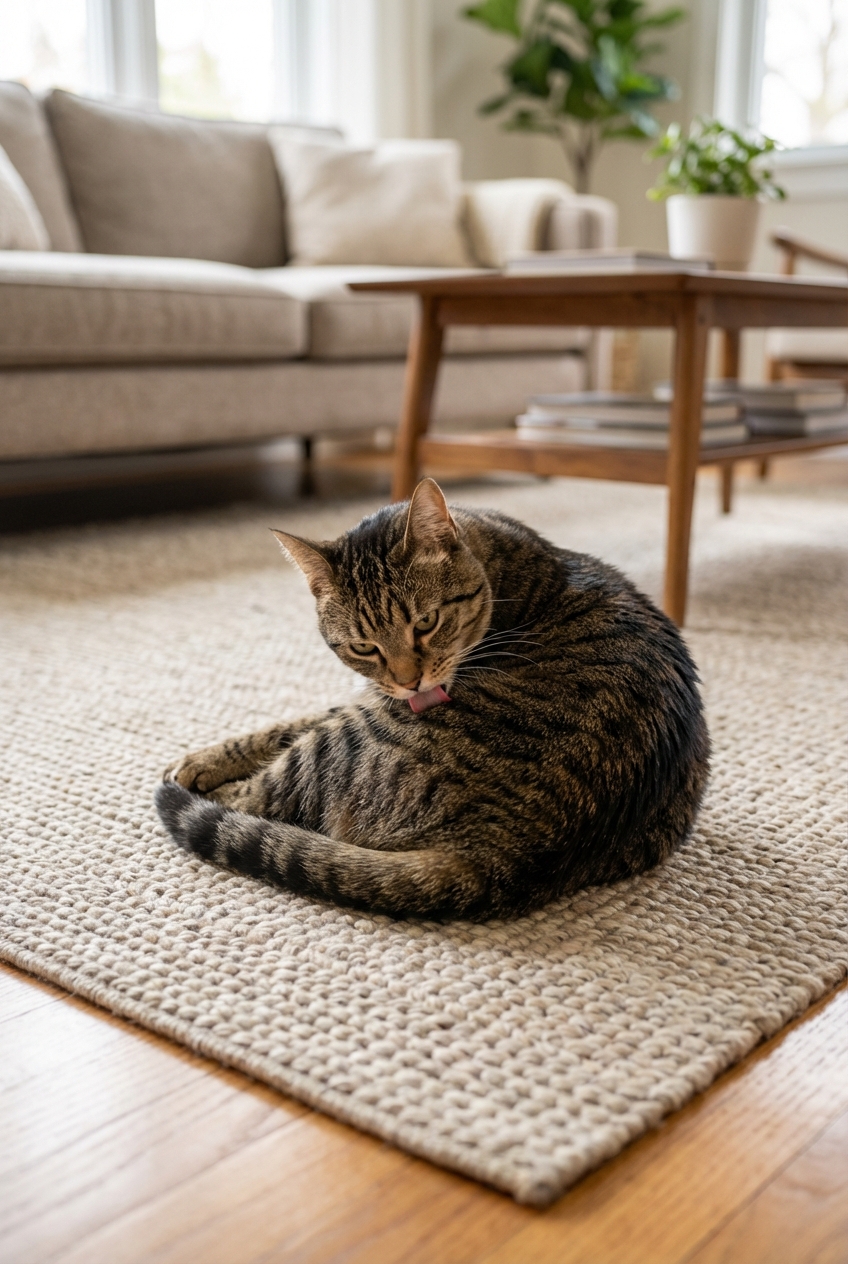
Normal grooming keeps a coat clean and comfortable. Overgrooming goes beyond normal and may show up as:
- Bald spots (often on the belly, inner thighs, or along the sides)
- Broken, stubbly fur that looks “trimmed”
- Redness, scabs, or tiny bumps
- More hairballs and, in some cats, more vomiting after heavy licking
- Constant licking or chewing that is hard to interrupt
Some cats overgroom symmetrically (both sides of the body) and the skin may look fairly normal. That pattern can still be medical, so do not assume it is behavioral based on appearance alone.
Common causes to consider
A lot of cases do fall into a few big buckets, but it is important to know there are other medical causes too. Think of this as a practical starting framework, not a complete list.
1) Stress and anxiety (psychogenic overgrooming)
Cats are routine-driven, and their stress signals can be subtle. Overgrooming can be a self-soothing behavior when a cat feels unsafe, bored, or overwhelmed.
Common triggers include:
- Moving, remodeling, or new furniture smells
- New pets, new baby, or changes in household schedule
- Conflict with another cat, including outdoor cats seen through windows
- Litter box stress (location change, not enough boxes, dirty boxes)
- Under-stimulation, especially for young, active cats
Clues that point toward stress: grooming increases during busy times, after a conflict, or when the cat is left alone. You might also see hiding, appetite changes, urine marking, or increased vocalizing.
2) Allergies and itch (skin discomfort)
When a cat is itchy, licking is their version of scratching. Allergies are among the most common medical drivers of overgrooming.
Major allergy categories:
- Flea allergy dermatitis: a single flea bite can trigger intense itching in sensitive cats.
- Environmental allergies (atopy): pollens, dust mites, molds.
- Food allergies: often a reaction to a protein source, and can look like itchy skin, ear issues, and sometimes GI upset.
Clues that point toward allergies: seasonal flares, head and neck itching, scabs along the back (miliary dermatitis), ear debris or recurring ear infections, or multiple pets in the home itching.
3) Pain or internal discomfort
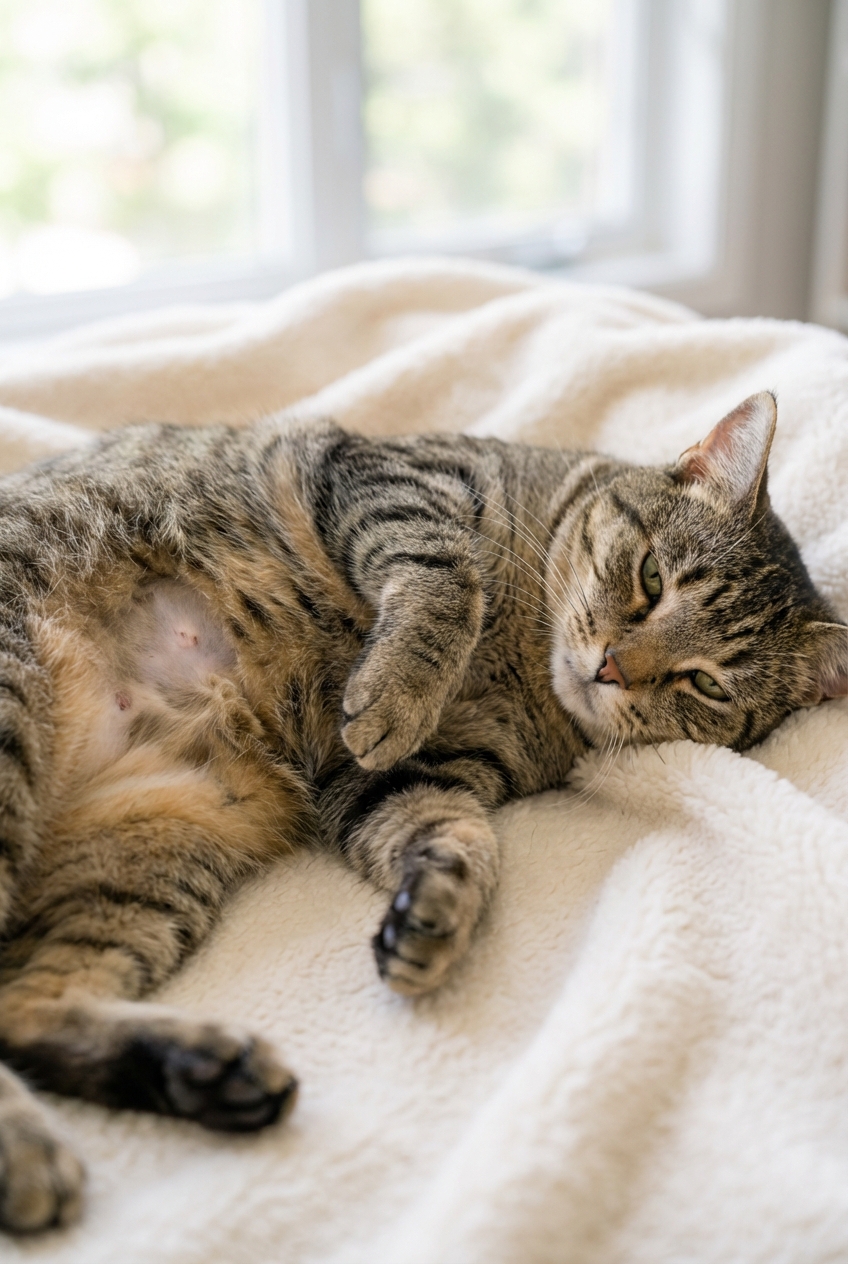
Cats are masters at hiding pain. Licking can be a response to soreness, nerve irritation, or discomfort from inside the body.
Examples we see in clinics:
- Arthritis or back pain: cats may lick hips, lower back, or hind legs.
- Neuropathic pain or skin sensitivity: some cats develop a “buzzing” discomfort that leads to intense licking or twitchy skin.
- Urinary discomfort: excessive licking of the belly or genital area can occur with cystitis or urinary tract disease.
- Dental disease or mouth pain: can contribute to stress and behavior changes, even if it does not directly cause a focal lick spot.
Clues that point toward pain: decreased jumping, stiffness, hiding more, irritability when touched, changes in litter box habits, or grooming focused on one specific area.
Other causes your vet may rule out
These are not meant to scare you, but they are important “do not miss” possibilities:
- Parasites beyond fleas: mites (including Cheyletiella), lice, and ear mites. Yes, even indoor cats can get parasites.
- Skin infections: bacterial or yeast dermatitis can make cats itchy and drive licking.
- Ringworm (dermatophytosis): can cause hair loss and sometimes itch, and it can spread to people and other pets.
- Less common medical issues: certain endocrine diseases or systemic illness, depending on your cat’s full picture.
- True compulsive disorders: these exist, but they are typically diagnosed after medical causes are addressed.
Pattern clues (not a diagnosis)
- Belly and flanks: often allergy or discomfort, sometimes urinary.
- Head and neck: often allergy, sometimes parasites.
- One small, focal area: think pain, a skin lesion, infection, or ringworm.
Patterns can be helpful, but they are not definitive. Your vet will put the whole story together.
When to call your vet quickly
Please seek veterinary care promptly if you notice any of the following:
- Open sores, bleeding, swelling, or oozing skin
- Rapidly expanding bald areas
- Overgrooming near the genitals with frequent trips to the litter box
- Crying in the litter box, straining, or very small urine clumps
- Sudden behavior changes, hiding, or appetite loss
Extra note for male cats: straining, repeated box trips, or producing only tiny amounts of urine can be a sign of a urethral blockage, which is an emergency.
These signs can indicate infection, significant pain, or urinary issues that should not wait.
What your vet may do
Because overgrooming has many potential causes, veterinary workups are often step-by-step. The goal is to rule out the most common and most treatable issues first, then keep narrowing it down based on response.
Common diagnostics
- Skin and coat exam plus flea combing
- Skin cytology (tape test or swab) to look for bacteria or yeast
- Skin scraping to check for mites when indicated
- Fungal testing if ringworm is a concern
- Urinalysis if belly or genital licking is a pattern
- Pain assessment and possibly X-rays if arthritis or spinal pain is suspected
Typical treatment paths
- Flea control for every pet in the home (vet-recommended products are safer and more effective than many over-the-counter options)
- Anti-itch or anti-inflammatory medications as needed
- Treatment for skin infection if bacteria or yeast are present
- Food elimination trial for 8 to 12 weeks if food allergy is suspected
- Pain control for arthritis or other discomfort
- Behavior and environment plan if stress is a major driver
Many cats improve dramatically once itch or pain is controlled, even if stress played a role too.
What you can do at home now
While you are scheduling your vet visit or working through a treatment plan, these practical steps can help.
Start with the basics
- Do not punish grooming. It can increase stress and make the cycle worse.
- Prevent self-trauma. If your cat is causing sores, ask your vet about an e-collar or soft recovery collar.
- Take photos weekly. Same lighting, same angle. This helps you see progress and helps your vet.
Lower stress with routine and enrichment
- Daily play: 10 to 15 minutes with a wand toy, then a small snack to mimic hunt-eat-groom-sleep.
- Food puzzles and foraging: puzzle feeders, treat balls, or small “hunt” piles of kibble (if diet allows).
- Rotate toys: put a few away and swap weekly to keep novelty high.
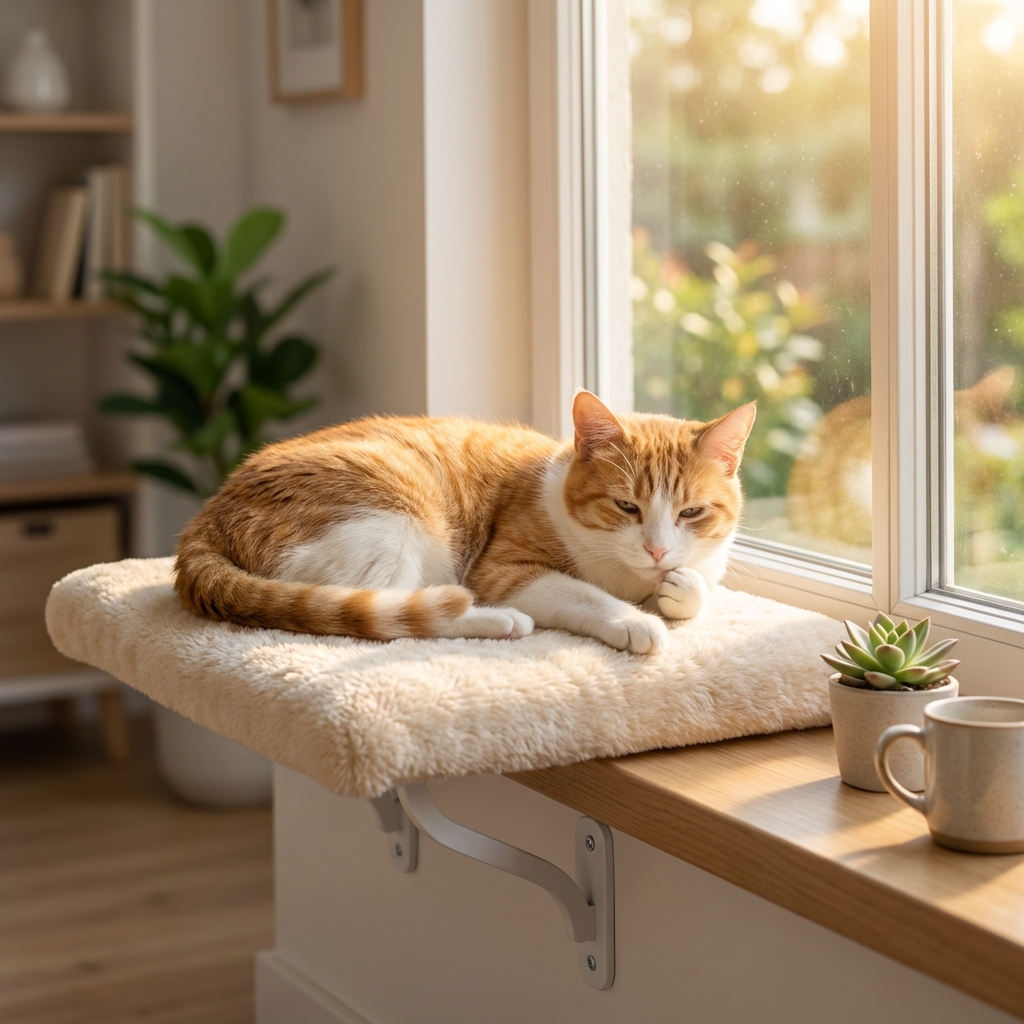
- Safe spaces: cat trees, window perches, and hiding spots.
- Litter box comfort: one box per cat plus one extra, scooped daily, placed in quiet locations.
- Limit outside-cat triggers: block direct window views if outdoor cats cause agitation.
Support skin and coat safely
- Use only cat-safe products. Never apply essential oils or human anti-itch creams unless your veterinarian specifically instructs you to.
- Ask about omega-3s. Veterinary guidance matters because dosing and product quality vary widely.
- Stay consistent with parasite prevention. With flea allergy, inconsistency is often the reason a cat does not improve.
Fleas: why you may not see them
This is one of the most important points I can share. Cats are excellent groomers. They remove evidence quickly, and you may never spot a flea even when fleas are the trigger.
If your vet suspects fleas, the plan is usually to treat all pets in the household and keep it consistent for several months. In flea-allergic cats, it can take time for the skin to calm down, even after the fleas are controlled.
Food allergies and diet trials
Food allergy testing with blood or saliva has limited reliability in cats and does not always match true food allergy. The diagnostic standard is a veterinarian-guided elimination diet trial.
Key points for success:
- Feed the prescribed diet exclusively for 8 to 12 weeks.
- No flavored treats, no table food, no flavored medications without vet approval.
- If your cat gets into other food, the clock may need to restart.
It can feel strict, but when food is the culprit, the improvement can be life-changing.
Bottom line
Cat overgrooming is your cat’s way of saying, “Something is not right.” Stress is real, but itch and pain are very often part of the story, and there are other treatable medical causes your vet may need to rule out. A thoughtful vet visit, consistent parasite control, and a calm, enriching home routine can make a big difference.
If your cat is licking to the point of hair loss, treat it like a medical clue first, not a behavior problem.
Educational note: This article is for general information and is not a substitute for an exam and diagnosis from your veterinarian.