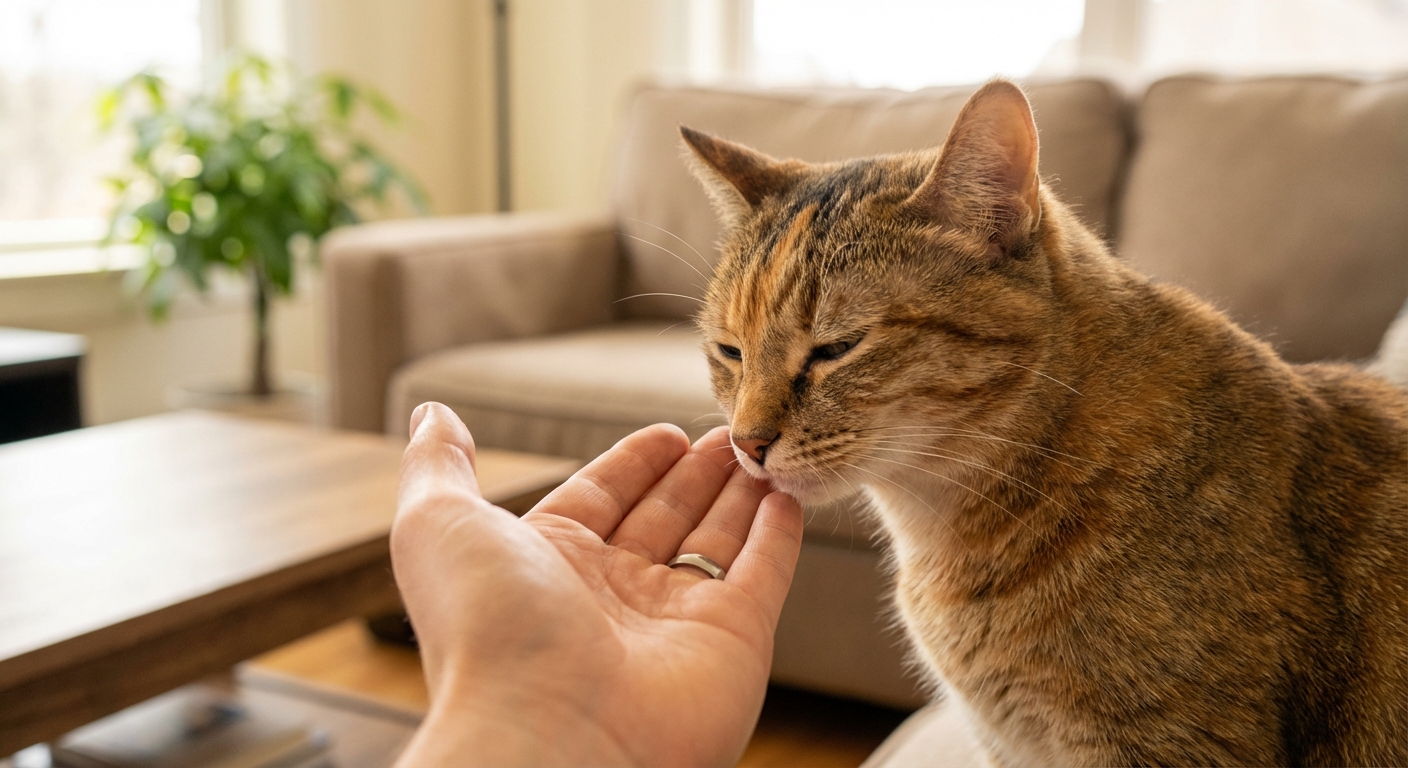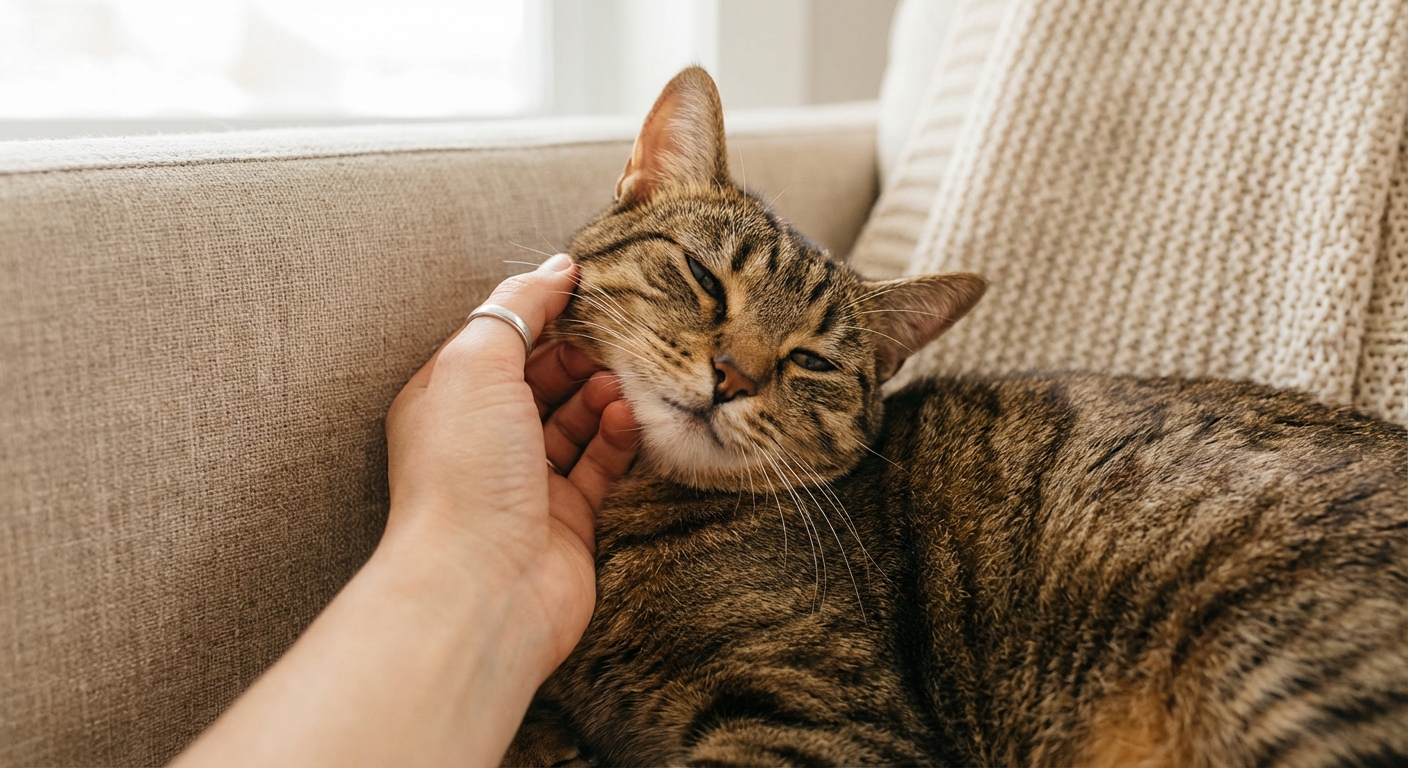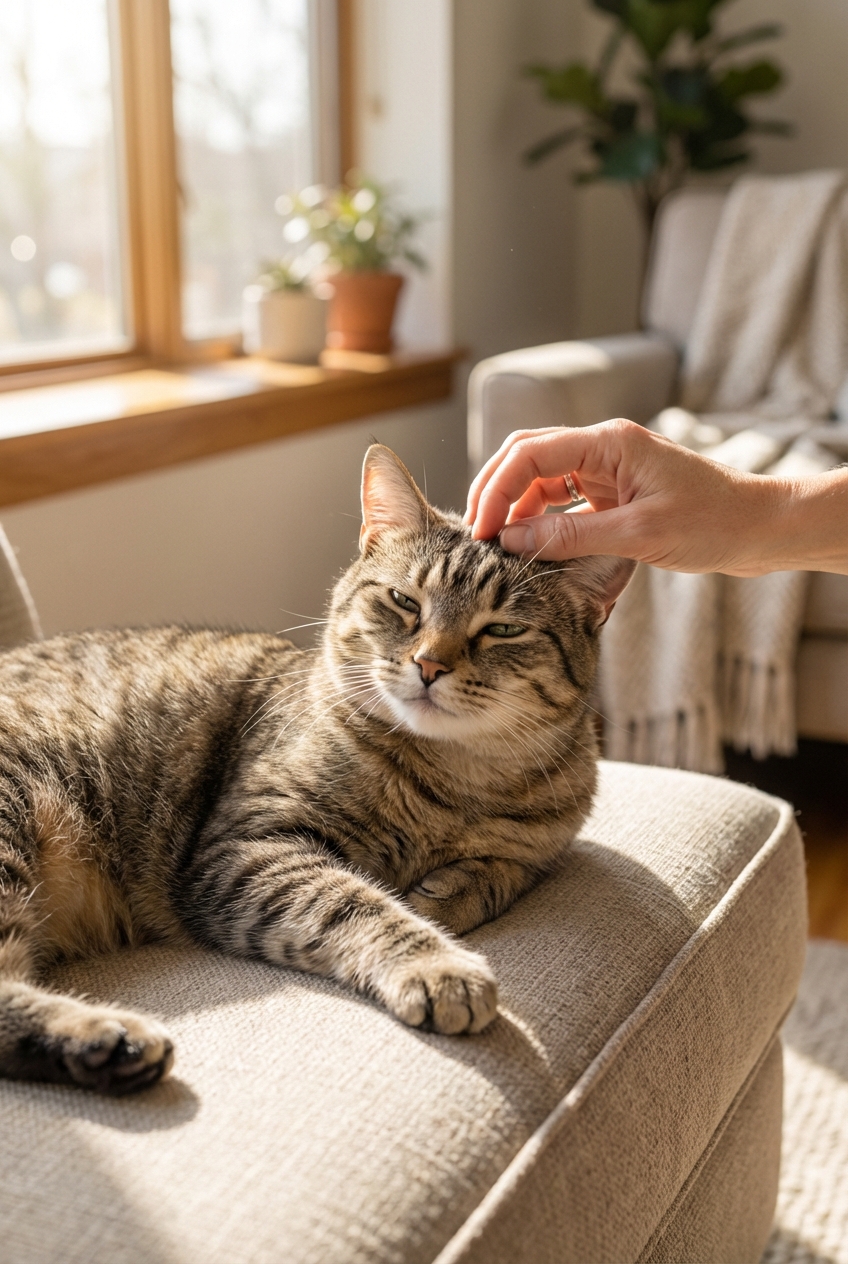
Your cat isn’t “mean”—petting bites are often overstimulation, pain, stress, or playful energy. Learn the warning signs, safer petting tips, and a si...
Article
•
Designer Mixes
Cat Love Bites: What They Mean and How to Stop Them

Shari Shidate
Designer Mixes contributor
Starting your time with your cat on the right note sets the tone for the whole relationship. One minute you are enjoying purrs and head bumps, and the next you feel teeth on your hand. These quick, usually gentle nips are often called love bites , and they can be confusing, especially when they happen during cuddling.
In most cases, love bites are not aggression. They are communication. The goal is not to punish your cat for “being mean,” but to understand what your cat is saying and respond in a way that keeps everyone safe and relaxed.
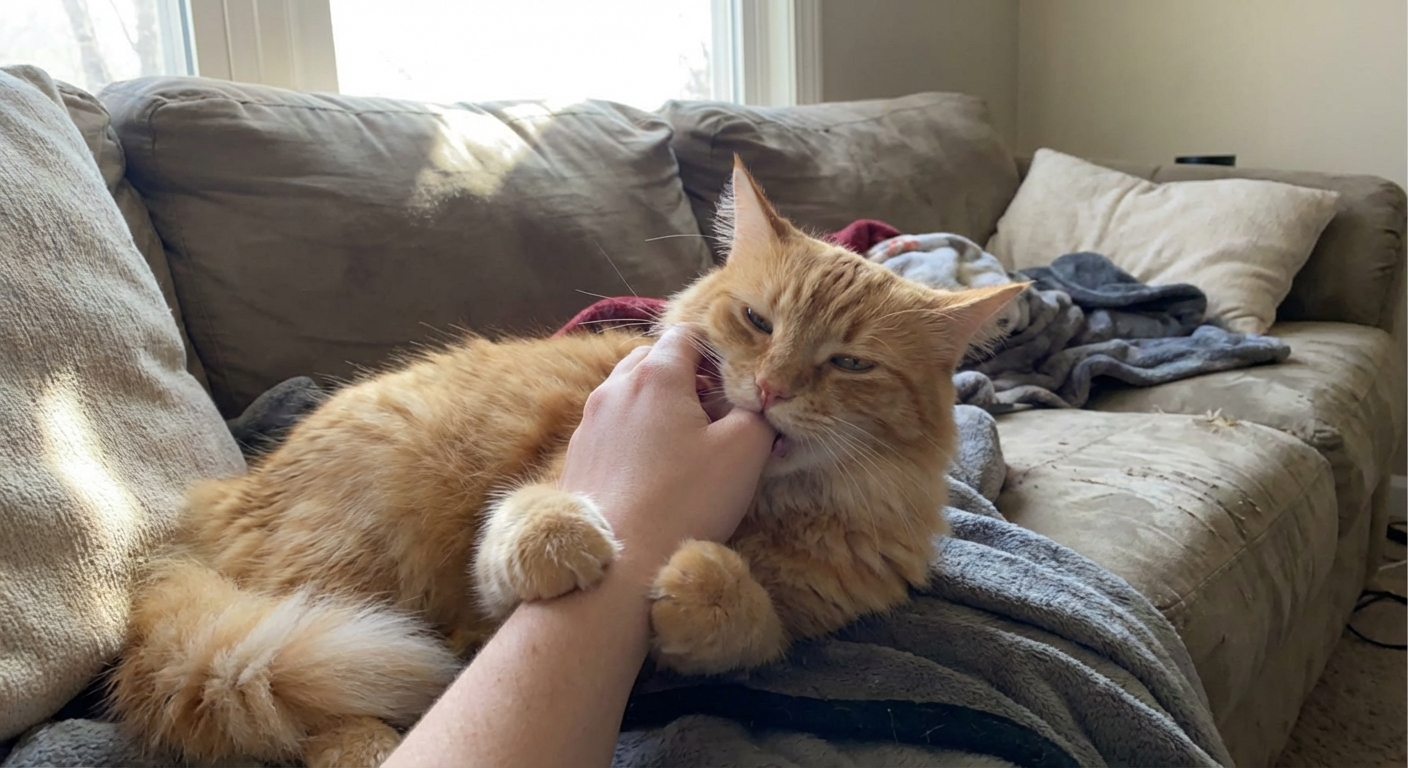
What are love bites?
A love bite is typically a soft to moderate nip that happens during friendly interaction. Many cats will nibble or mouth without breaking skin, and their body language usually looks more playful or overstimulated than truly defensive.
Love bite vs. aggressive bite
- Love bite: often occurs during petting, grooming, or play; may be preceded by purring, kneading, or rubbing; bite pressure is usually mild.
- Defensive or aggressive bite: often comes with hissing, growling, stiff posture, flattened ears, a hard stare, and fast escalation to scratching or repeated biting.
If your cat is breaking skin, biting hard, or showing repeated fear signals, treat it as a safety issue and consider veterinary and behavior support.
Why cats give love bites
Cats do not have one single reason for nibbling. Most love bites fall into a few common categories.
1) Overstimulation during petting
Many cats enjoy petting, but only up to a point. Their nervous system can shift from “this feels good” to “too much” quickly. This is sometimes called petting-induced overstimulation .
Common pattern: purring and leaning in, then a sudden nip as a way to say, “That is enough.”
2) Affection and social grooming
Cats groom each other to bond. Some cats include gentle nibbles as part of that grooming style. If your cat nibbles your hand or sleeve after rubbing on you, it may be a version of bonding behavior.
3) Play behavior that went too far
Kittens and young cats explore with their mouths. If hands have been used as toys, your cat may think biting is a normal part of play. This is not spite. It is learned behavior.
4) Attention-seeking
Some cats learn that a nip makes people react immediately. Even a surprised “Ow!” and pulling your hand away can be rewarding because it creates instant engagement.
5) Stress, pain, or discomfort
A cat that suddenly starts biting during touch may be signaling pain or discomfort (arthritis, dental disease, skin irritation, injury, and more). More broadly, any sudden behavior change can also be a clue that something is off medically.
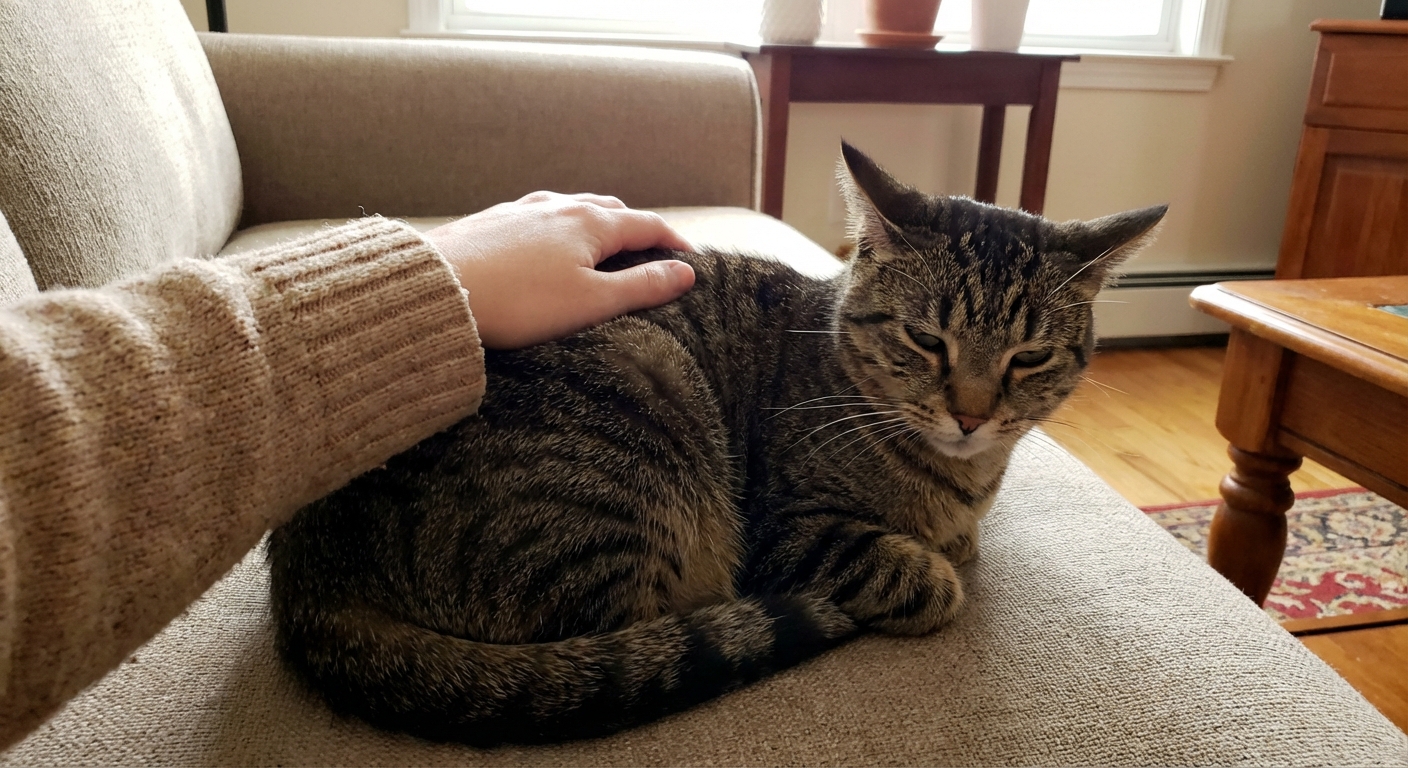
Signs a bite is coming
Cats usually give subtle signals before they nip. Learning these cues helps you stop bites before they happen.
- Tail flicking or thumping
- Skin rippling along the back
- Ears turning sideways or flattening slightly
- Sudden stillness after enjoying petting
- Pupil dilation
- Quick head turn toward your hand
When you see these signs, pause petting and give your cat a moment to reset. In many homes, this one change dramatically reduces nipping.
How to stop love bites
Think of this as skill-building, not discipline. The most effective approach is to prevent the bite, redirect the behavior, and reward the calm interactions you want more of.
Step 1: Respect the stop signal
When your cat shows early warning signs, stop petting. Do not try to pet through it. Cats often bite because their earlier signals were missed.
Step 2: Use consent-based petting
Try a simple consent test: pet briefly, then stop and hold your hand still. If your cat leans in, head-bumps, or repositions for more, continue. If your cat looks away, tenses, or flicks their tail, take that as a “no thanks.”
Step 3: Use the right petting zones
Many cats prefer petting around the cheeks, under the chin, and at the base of the ears. Some cats become overstimulated by long strokes down the back, belly rubs, or tail-area petting.
If you are not sure what your cat prefers, start small. For example, try 3 to 5 gentle strokes, then pause and see if your cat asks for more by leaning in.
Step 4: Freeze, then redirect
If a nip happens, avoid yanking your hand away, which can increase arousal or invite playful pursuit in some cats. Instead:
- Freeze for a second.
- Calmly stand up or turn away to end the interaction.
- Redirect to an appropriate item like a toy or kicker.
Step 5: Replace hand play with toy play
If your cat bites during play, switch to interactive toys that keep teeth off human skin:
- Wand toys (lets your cat chase at a safe distance)
- Soft kicker toys (great for bunny-kicking behavior)
- Small toss toys for short hunting bursts
Aim for one to two short play sessions daily, especially for young cats. A well-played cat is often a less mouthy cat.
Step 6: Reward gentle behavior
When your cat stays relaxed during petting, quietly reinforce it. Use what motivates your cat:
- A small treat
- A favorite brush session
- Soft praise and slow blinking
You are teaching your cat that calm, teeth-free interaction keeps the good things coming.
Step 7: Avoid punishment
Do not yell, flick, or scruff. Punishment can increase fear, worsen biting, and harm your bond. Behavior change works best when your cat feels safe.

In the moment: what not to do
- Do not keep petting once you see warning signs.
- Do not hit, yell, or spray water.
- Do not use your hands as toys.
- Do not chase or corner your cat after a bite.
Even gentle nips are worth redirecting, because practicing any teeth-on-skin habit can make it easier for a cat to escalate when they are extra excited or uncomfortable.
Love bites during cuddling
If your cat bites when snuggling, it is often either overstimulation or a quick transition into play. Try these adjustments:
- Keep touch slower and lighter, especially around the belly and lower back.
- End on a good note: stop petting while your cat is still relaxed, not after the warning signs escalate.
- Offer a cuddle alternative, like a blanket next to you or a heated cat bed, so your cat can stay close without constant touch.
Kids and cat biting
With kids, management matters as much as training. Supervise cuddling, discourage hugging or belly rubbing, and teach kids a simple rule: if the cat nips, freeze, stand up, and get a toy. This keeps hands safe and prevents rough play habits from forming.
When to call the vet
Because cats hide discomfort, a change in biting behavior deserves attention. Consider a veterinary check if:
- The biting is new or escalating
- Your cat seems sensitive to touch in one area
- There are signs of illness (reduced appetite, hiding, litter box changes, bad breath, drooling)
- The bites are hard enough to break skin
If your cat bites and punctures skin, wash the area well with soap and water and contact a healthcare professional promptly. Cat bites have a high risk of infection and may require antibiotics and a tetanus update.
Quick troubleshooting
If your cat bites during petting
- Shorten petting sessions and add pauses
- Focus on head and cheek rubs
- Stop at the first tail flick or skin ripple
If your cat bites to start play
- Schedule daily interactive play
- Keep wand toys within reach
- Reward calm approaches with attention
If your cat bites when you stop petting
- Teach a predictable routine: pet, pause, treat, done
- End interactions by tossing a toy or treat away from your hands
Bottom line
Cat love bites are often a form of communication: “I am overstimulated,” “I want to play,” or “That is enough.” When you respond calmly, adjust how you pet, and redirect biting to appropriate outlets, most cats learn quickly that gentle interaction works best.
Small, consistent habits add up over time. Pay attention to your cat’s signals, keep play positive, and you will protect both your hands and your bond.