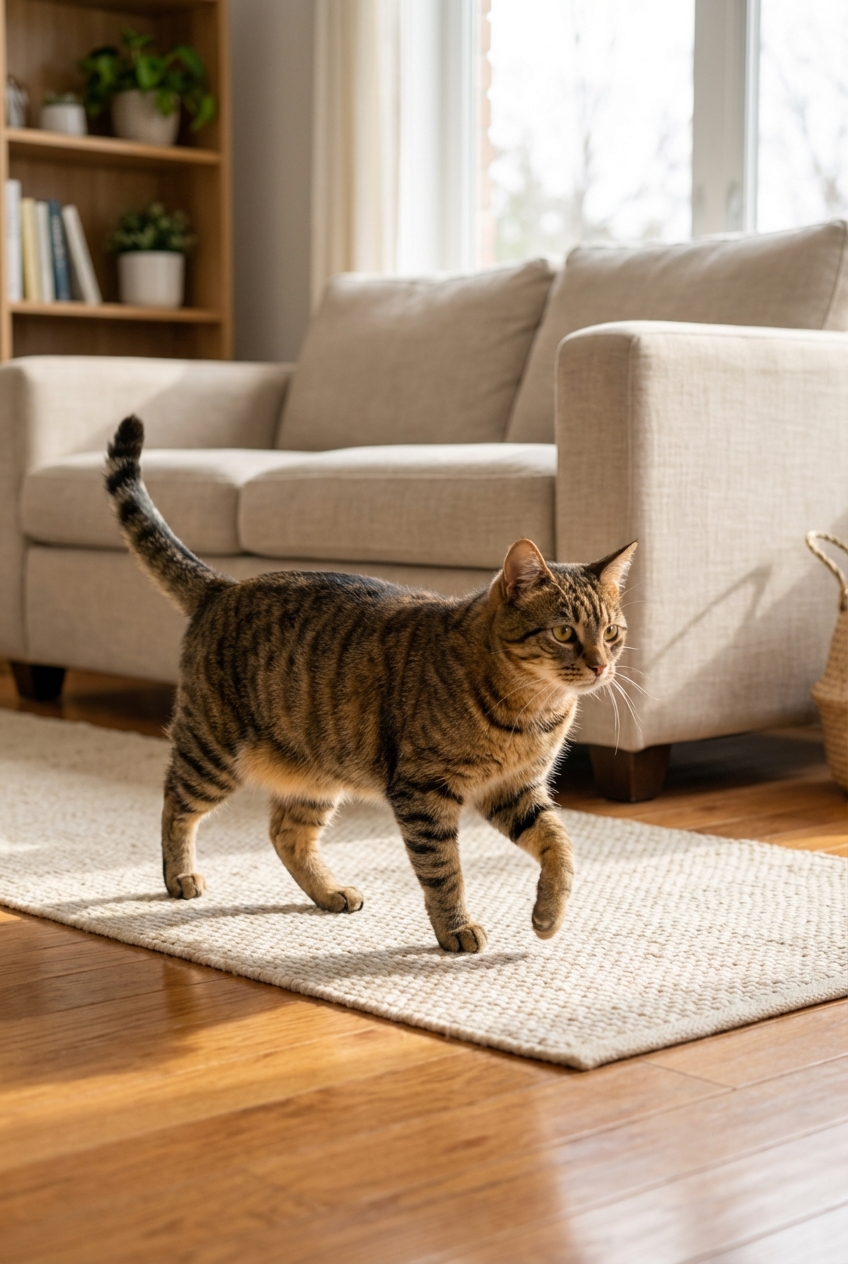
Your cat’s front paw limp can range from a torn nail to infection or fracture. Learn safe at-home checks, what to avoid, emergency signs, and when to see a...
Article
•
Designer Mixes
Cat Limping on Front Paw

Shari Shidate
Designer Mixes contributor
If your cat is limping on a front paw, it can feel scary and confusing, especially when they still want to play, eat, or jump on the couch like nothing happened. As a veterinary assistant, I can tell you this is one of the most common concerns I see. The good news is that many causes are treatable once you know what to look for and when to get help.
This guide breaks down the most likely reasons a cat limps on a front paw, how to do a safe at-home check, and what your veterinarian may recommend.
First: Is it an emergency?
Some limps can wait for a next-day appointment. Others should be seen the same day or immediately. Use this quick triage list.
Go to an emergency vet now if you notice:
- Severe pain: crying, growling, trying to bite when approached, or hiding and refusing to move
- Non-weight-bearing: the paw will not touch the ground at all
- Obvious deformity: dangling limb, unusual angle, or sudden swelling that looks extreme
- Open wound, heavy bleeding, or a nail torn off
- Cold, pale, or blue paw pads (possible circulation issue)
- Difficulty breathing, collapse, or extreme lethargy
- Known trauma: fall from height, hit by car, dog attack
Call your vet within 24 hours if:
- The limp lasts more than 24 hours or is not clearly improving
- There is noticeable swelling, heat, or tenderness
- Your cat is eating less, grooming less, or acting “off”
- Your cat is older or has known arthritis or heart disease
Cats are masters at masking pain. A “small” limp can still mean a significant injury.
Common causes
A front-leg limp usually comes from the paw itself, the wrist area (carpus), elbow, shoulder, or even the neck. Here are the most common culprits.
1) Something stuck in the paw (or a sore paw pad)
Litter, small thorns, splinters, sticky substances, or tiny cuts can make a cat tiptoe. Irritation from hot surfaces or caustic chemicals (like some cleaners) can also cause sudden tenderness.
Clues: licking the paw, shaking the paw, leaving tiny spots of blood, or limping that appears suddenly after exploring a garage, yard, or new area.
2) Broken nail or nail bed injury
A partially torn nail can be surprisingly painful. Sometimes the nail is cracked close to the quick or is bleeding a little.
Clues: your cat yelps when scratching, avoids the scratching post, or you see a nail that looks crooked or shorter than the others.
3) Sprain, strain, or soft tissue injury
Cats can pull a muscle or sprain a joint from an awkward jump, a slip, or rough play, even without major trauma.
Clues: mild swelling, limping that improves with rest but worsens after bursts of activity.
4) Fracture (broken bone)
Front-leg fractures can happen from falls, being stepped on, or getting caught in something. Some fractures are subtle and not obvious to the eye.
Clues: sudden non-weight-bearing limp, significant pain, swelling, or your cat refuses to move.
5) Bite wound or abscess
Outdoor cats and even indoor cats in multi-cat homes can get puncture wounds. These can seal over quickly and form an abscess, often within a few days.
Clues: a tender swelling, warmth, a small scab, fever, hiding, or decreased appetite.
6) Arthritis or joint disease
We usually think “back legs” with arthritis, but elbows and shoulders are common sites too, especially in older cats. Some owners notice pain seems worse after rest or during colder seasons, even though patterns can vary from cat to cat.
Clues: stiffness after resting, reluctance to jump up, slower movement, or limping that comes and goes.
7) Shoulder or elbow problems
Shoulder injuries, elbow dysplasia (rare but possible), or inflammation around the joint can cause a front-limb limp that looks like the paw is the issue.
Clues: the paw looks normal, but your cat resists moving the leg forward or pulling it back.
8) Nerve or neck pain
A pinched nerve, neck pain, or spinal issue can show up as a front-limb limp. This is one reason persistent limping should be evaluated even if the paw looks fine.
Clues: head held lower than usual, yowling when picked up, weakness, or knuckling (walking on the top of the paw).
9) Deeper foreign body (embedded thorn)
Sometimes the paw looks clean, but something small is embedded under the skin. This can cause ongoing limping, a small draining spot, or repeated flare-ups even after you remove surface debris.
Clues: a persistent tender spot, swelling that comes back, or a tiny puncture that will not fully heal.
10) Infection or inflammation in a joint (less common)
Less commonly, a joint itself can become inflamed or infected. This is more concerning when limping happens along with fever or your cat seems truly unwell.
Clues: significant lethargy, fever, marked swelling around a joint, or sudden worsening without an obvious paw injury.
11) Mass or bone problem (chronic or progressive limp)
If a limp is slowly getting worse over weeks, we also think about issues like a mass, bone infection, or other bone disease. This is not the most common cause, but it is important not to miss.
Clues: progressive lameness, visible muscle loss, swelling that does not go down, or weight loss.
12) Less common but urgent: blood clot or heart-related issue
Blood clots are more classic in the back legs, but they can affect a front limb, too (though less commonly). This is an emergency.
Clues: sudden severe pain, very cold limb, pale or bluish pads, rapid breathing.
A safe at-home check (2 to 3 minutes)
If your cat is calm and you can handle them safely, you can do a quick, gentle assessment. If your cat is stressed, painful, or likely to scratch or bite, stop and call your veterinarian.
Safety tip: Keep handling minimal. If you need to hold your cat, wrapping them snugly in a towel like a “kitty burrito” (head out, legs supported) can prevent scratches and help your cat feel more secure.
Step-by-step
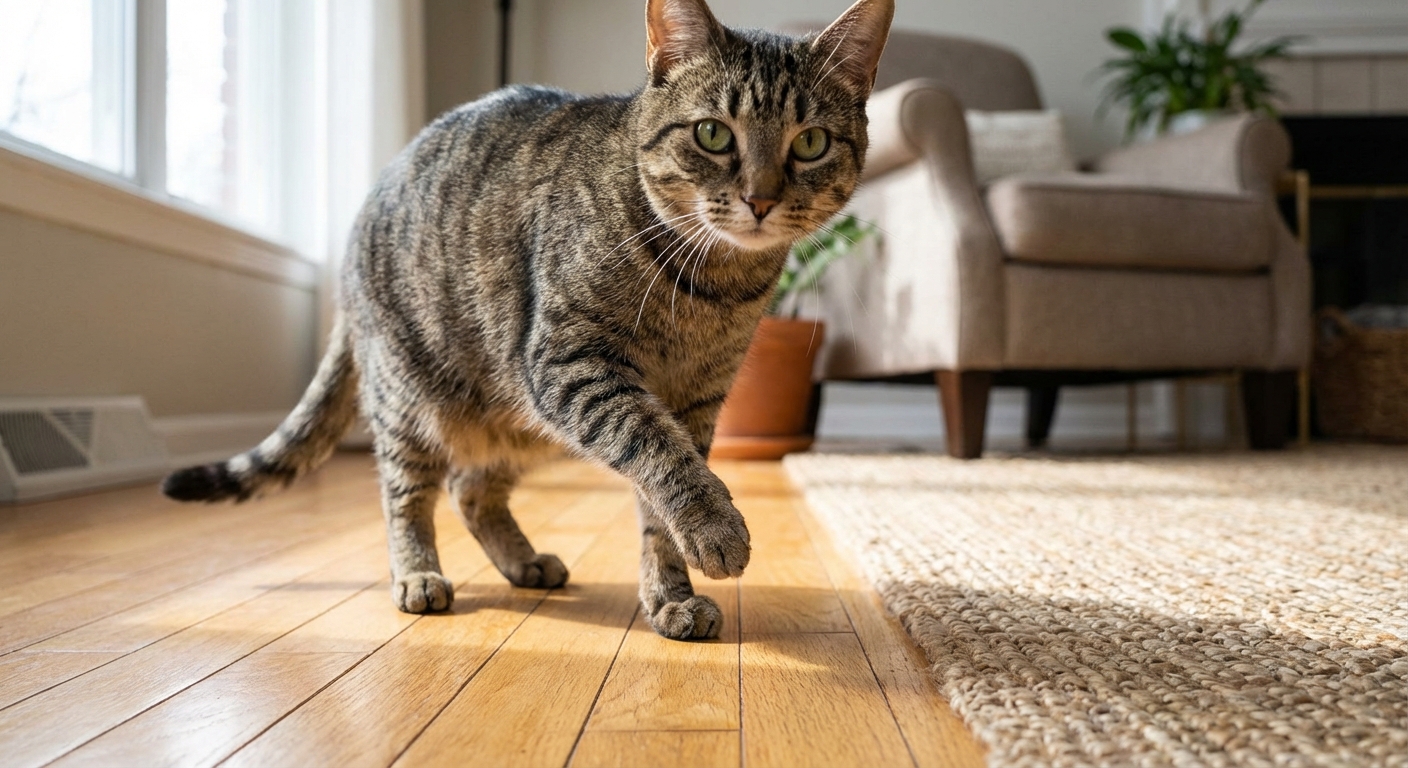
- Watch them walk on a non-slip surface. Are they toe-touching, hobbling, or fully holding it up?
- Look at the paw pads for cuts, swelling, or debris.
- Check between the toes for litter clumps, thorns, or irritation.
- Inspect the nails for a split, bleeding, or a missing nail.
- Compare both front legs for swelling, heat, or an unusual angle.
- Gently feel from paw to shoulder. Stop if your cat flinches, cries, or tries to escape.
Please avoid: forcing the leg to bend, “testing” the joint aggressively, or trying to splint at home unless guided by a veterinarian.
What you can do now
For a mild limp with no open wound and your cat is otherwise acting normal, these steps can help while you arrange care.
- Rest and restrict activity for 24 to 48 hours. Keep them in one room if possible. No jumping games.
- Keep them indoors until evaluated, even if they usually go outside.
- Check the environment: remove slippery rugs, block tall furniture access, and keep litter boxes easy to enter.
- If there is a minor superficial cut, you can gently rinse with sterile saline if your cat allows it.
- Use an e-collar if constant licking is making the area worse.
What not to do
- Do not give human pain meds (see below).
- Do not use essential oils or topical pain creams (many are toxic to cats, and licking is a big risk).
- Do not bandage tightly or wrap the paw unless your vet instructs you to. Bandages that are too tight can cut off circulation.
- Do not try to pop or drain a swelling at home.
Do not give human pain meds
This is so important it deserves its own line: do not give ibuprofen, naproxen, acetaminophen (Tylenol), or aspirin unless your veterinarian specifically instructs you to. Cats process many drugs differently than people, and some can be fatal even in small doses.
What your vet may do
Your veterinarian will start with a physical exam, pain assessment, and a careful orthopedic check. Depending on what they find, they may recommend:
- X-rays to look for fractures, arthritis, bone infection, or masses
- Paw and nail exam with gentle sedation if your cat is too painful or stressed
- Wound care, antibiotics, and drainage if an abscess is present
- Pain control using cat-safe medications
- Activity restriction plan and follow-up schedule
- Bloodwork if systemic illness, infection, or chronic disease is suspected
If arthritis is involved, your vet may discuss weight management, joint-supportive nutrition, environmental changes (like ramps or lower perches), and long-term pain control options tailored to your cat.
When to worry
As a general rule, if your cat is limping and it is not clearly improving within 24 hours, it is time to call your vet. If the limp is severe or your cat will not bear weight, treat it as urgent.
Patterns that matter
- Sudden onset (especially after a fall or rough play) can point to injury, sprain, or fracture.
- Gradual onset can fit arthritis or chronic issues.
- Intermittent limp may still be significant, especially if it keeps returning.
- Progressive worsening over weeks, repeated episodes, muscle loss, or weight loss are reasons to schedule an exam promptly.
Even when the cause is “just a sprain,” cats heal best with early rest and proper pain control. Waiting too long can lead to compensation injuries, worsening inflammation, or an untreated infection.
Prevention tips
- Trim nails regularly to reduce tears and snagging.
- Keep high-risk items secured: recliners, heavy doors, garage tools, and rocking chairs.
- Use non-slip rugs for cats that sprint and launch off hardwood.
- Encourage safe jumping by providing stable steps or a lower cat tree.
- Routine wellness visits help catch arthritis early, before it becomes a daily pain issue.
If you are in that worried in-between stage right now, you are doing the right thing by paying attention. A short video of your cat walking is also incredibly helpful for your vet, especially if the limp comes and goes.