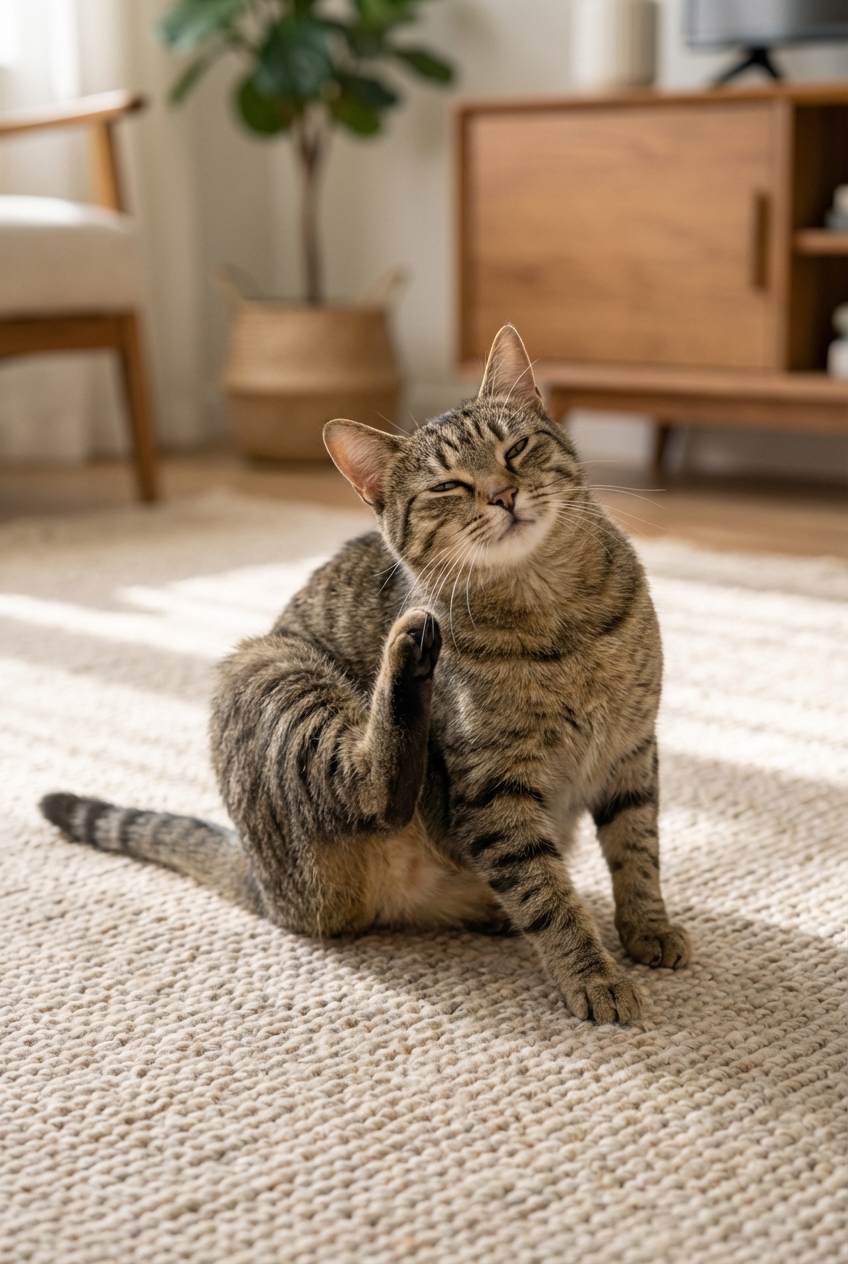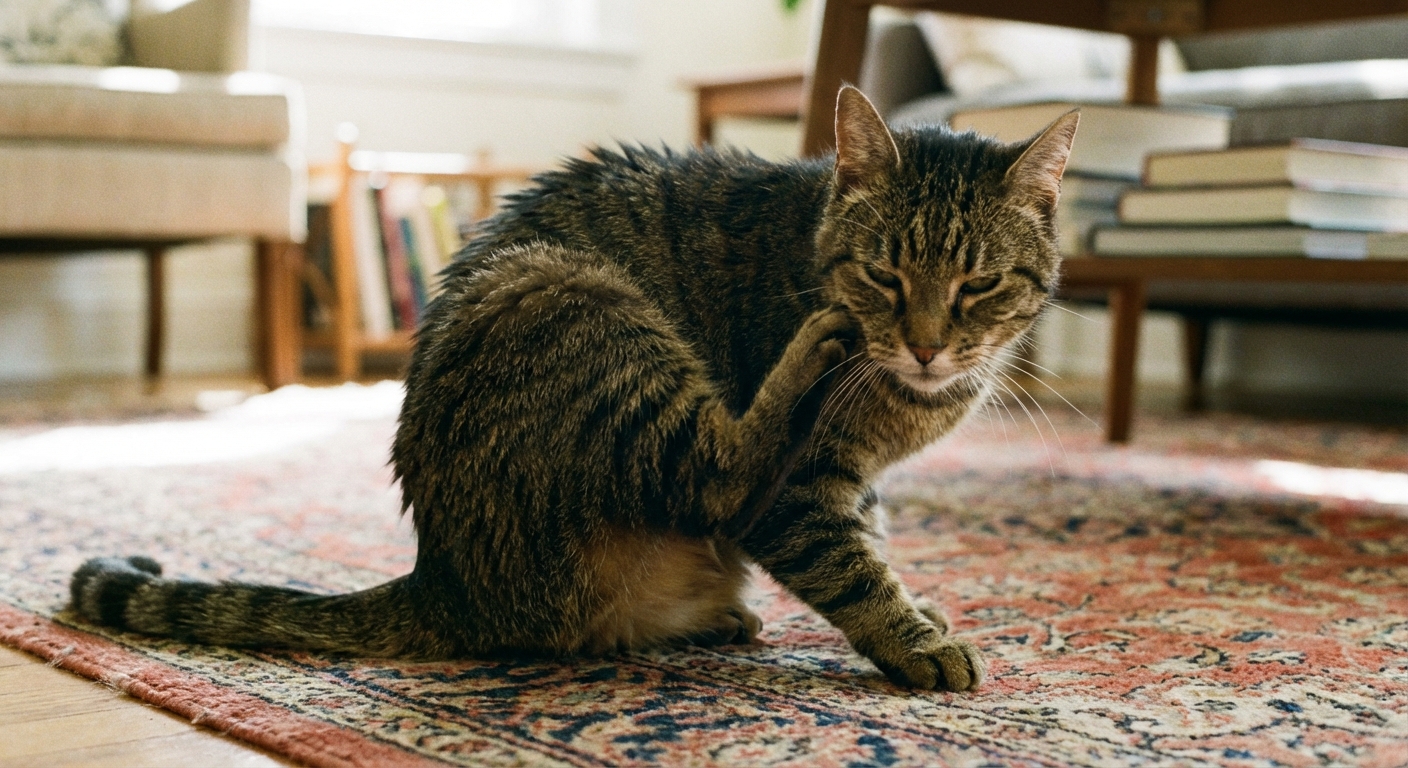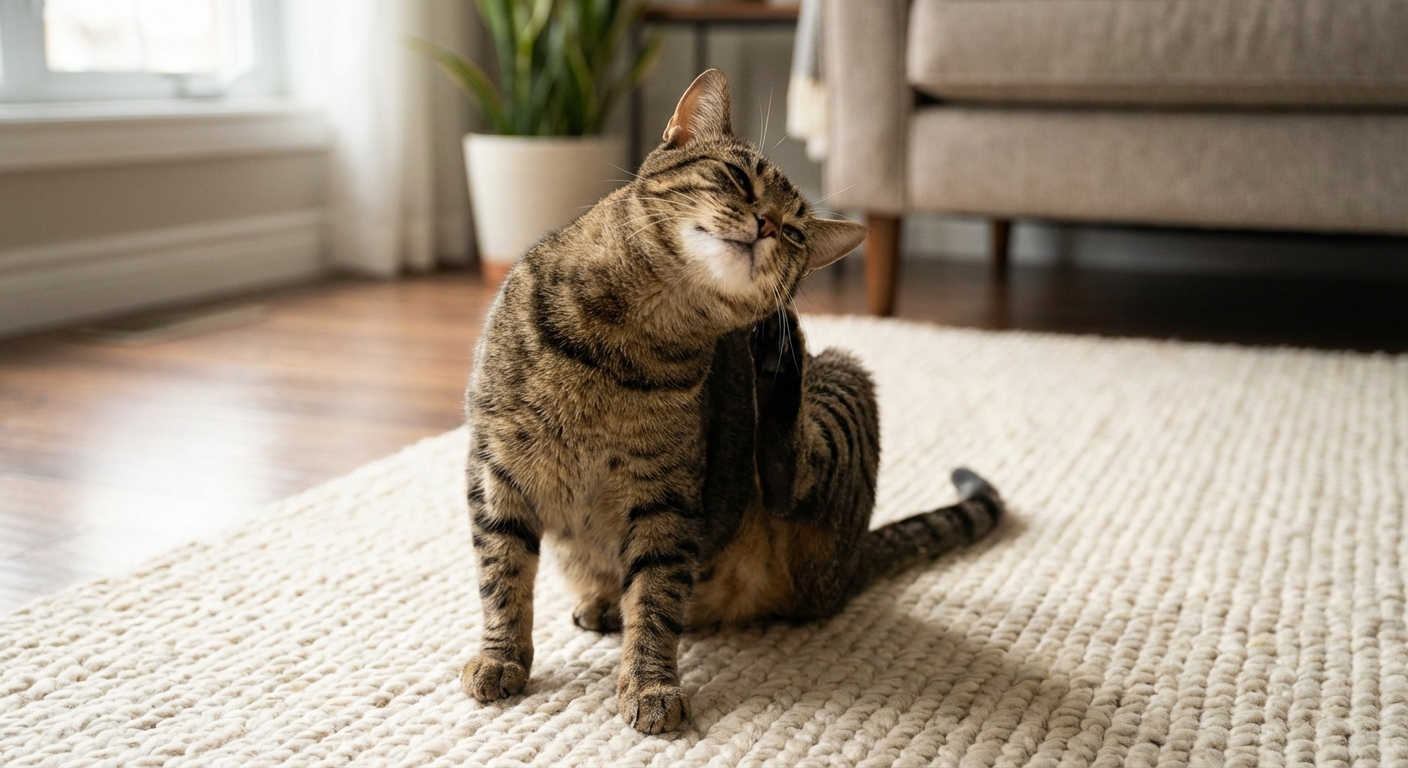
From fleas and allergies to mites, infections, ringworm, and stress grooming—learn the top causes of itchy skin in cats, key symptoms, vet diagnostics, and...
Article
•
Designer Mixes
Cat Itching With No Fleas

Shari Shidate
Designer Mixes contributor
If your cat is scratching like crazy but you cannot find a single flea, you are not imagining things. Cats can itch for a long list of reasons that have nothing to do with fleas, and many of them are very treatable once you pinpoint the trigger.
As a veterinary assistant, I always encourage a calm, step-by-step approach: confirm the basics (flea control, skin check), watch for patterns, then work with your vet to rule out the most common causes first.
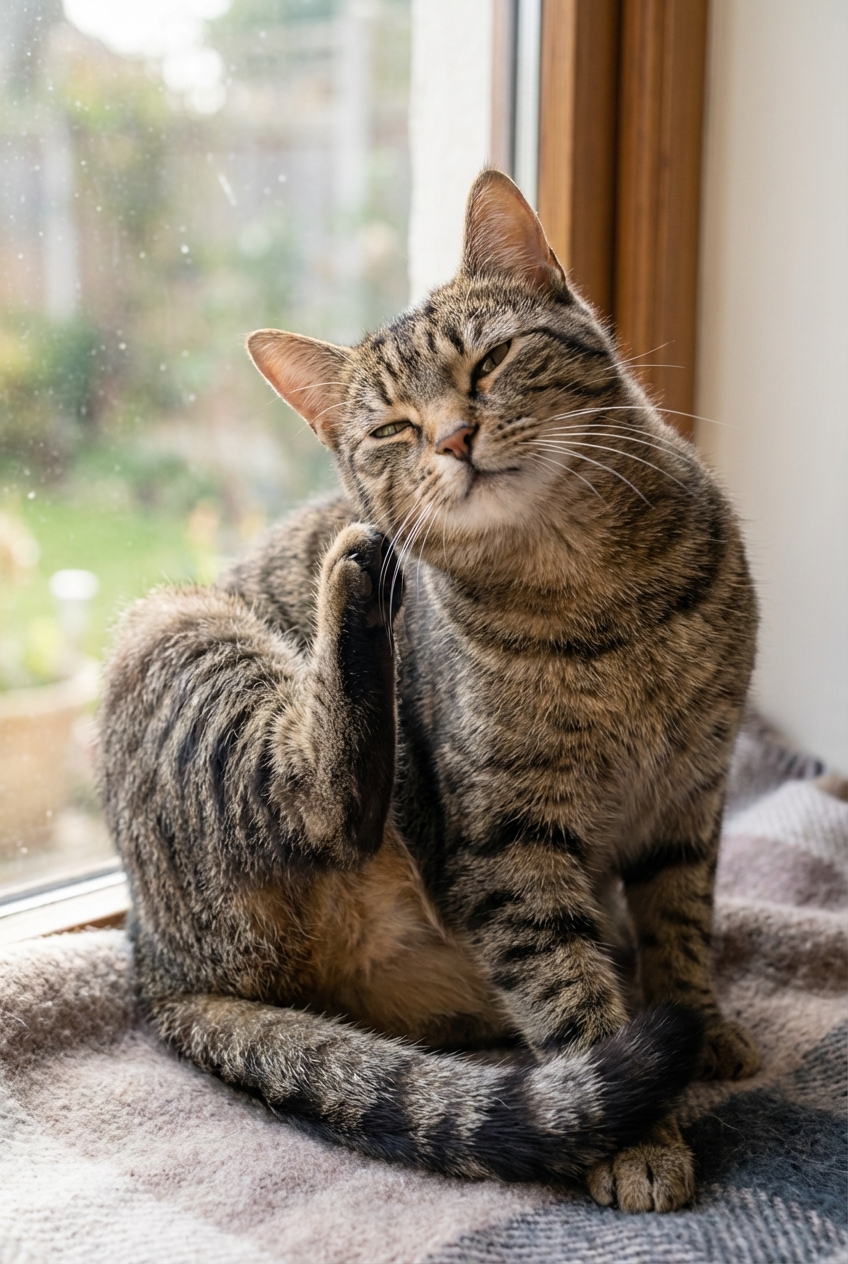
Step 1: Rule out fleas
Even indoor cats can get fleas, and some cats have flea allergy dermatitis, meaning even a single bite can trigger significant itching for days in some cats.
Quick at-home check
- Use a flea comb over the rump, tail base, and neck.
- Look for flea dirt (black specks). Place specks on a damp white paper towel. If it turns reddish-brown, that can indicate digested blood.
- Confirm your cat is on consistent veterinary flea prevention for every pet in the household. Skipping doses is one of the most common reasons itching keeps coming back.
Important safety note: Never use dog-only flea or tick products on cats. Many contain permethrins or pyrethroids that can be toxic to cats.
If your cat is not on a reliable flea preventive, start there and talk with your veterinarian about the best product for your cat’s age, weight, and health history.
Once you have fleas truly covered, it is time to look at the other common causes of itching.
Common causes of cat itching without fleas
1) Environmental allergies (atopy)
Cats can be allergic to everyday airborne things like pollen, dust mites, and molds. Unlike people, cats often show allergies through their skin: scratching, overgrooming, scabs, or hair loss.
Clues: seasonal flare-ups, itchy face and neck, recurrent ear irritation, or licking the belly and inner thighs.
One extra note: belly licking is not always “just itch.” Some cats lick the belly or lower abdomen due to pain or discomfort (for example, bladder inflammation or cystitis), so it is worth flagging this to your vet, especially if you notice litter box changes.
2) Food allergy or food sensitivity
Food reactions in cats are most commonly triggered by proteins (like chicken, beef, or fish), but cats can react to a variety of ingredients. True grain allergy is considered less common. Symptoms can look identical to environmental allergies (see elimination trial details below).
Clues: itch year-round (not seasonal), recurring ear issues, vomiting or soft stool in some cats, or symptoms that started after a diet change.
3) Skin infections (bacterial and, less commonly, yeast)
Infections can happen on their own, but they also commonly occur secondary to allergies. When the skin barrier is inflamed, microbes overgrow and itch worsens. Yeast overgrowth is less common in cats than in dogs, but it can still occur.
Clues: odor, greasy coat, red skin, crusts, “pimples,” or oozing spots.
4) Ringworm (dermatophytosis)
Ringworm is a fungal skin infection that can look like allergy, mites, or “mystery scabs.” Some cats are very itchy, while others are not. It is also contagious to people and other pets, so it is important to rule out.
Clues: circular or patchy hair loss, broken hairs, scaling, crusts, or lesions on the face, ears, and forelimbs.
5) Mites and other parasites you cannot easily see
Even when fleas are not present, other parasites can trigger intense itching.
- Cheyletiella (often called walking dandruff)
- Notoedres (feline scabies, very itchy)
- Ear mites (head shaking, dark debris in ears)
- Demodex (Demodex cati or Demodex gatoi, uncommon; some cases are associated with underlying illness)
These require a veterinary diagnosis and targeted treatment.
6) Insect bite hypersensitivity
Some cats react strongly to bites from mosquitoes or other insects, especially on less-furry areas.
Clues: seasonal bumps or crusts, often on the ears, nose, or other exposed skin.
7) Dry skin and overgrooming
Dry indoor air, harsh shampoos, or low humidity can contribute to flaking and mild itch. That said, dry skin alone is not a common cause of severe itching, so if your cat is frantic or developing scabs, it is smart to look deeper.
Some cats then overgroom due to irritation, which creates more inflammation and more itching.
Clues: flaking, dull coat, itching that seems worse in winter, or excessive licking without obvious rash.
8) Contact irritation
Cats can react to litter fragrances, cleaning sprays, laundry detergents on bedding, carpet powders, diffusers, and even certain plastics.
Clues: itchy paws, belly, or chin, symptoms that started after a new product in the home, or itching concentrated where the cat touches surfaces.
9) Stress, pain, or less common causes of overgrooming
Behavioral overgrooming is real in cats and can look like an “itch problem.” Moves, new pets, schedule changes, noise, or conflict with another cat can trigger it.
Also, do not forget that cats may lick or chew at an area due to pain (like bladder discomfort, arthritis, or a sore spot) or, more rarely, nerve-related sensations.
Clues: barbered hair (broken off), belly or inner legs licked smooth, skin that looks fairly normal underneath, and flare-ups during stressful events. If the licking seems focused on the lower belly with urinary signs, call your vet promptly.
What you can do at home now
Build a simple itch log
This helps your veterinarian connect the dots faster.
- Where is your cat itchy (face, ears, belly, tail base)?
- When did it start and is it seasonal?
- Any new foods, treats, supplements, litter, cleaners, or fragrances?
- Any vomiting, diarrhea, hairballs, or ear debris?
- Any urinary changes (straining, frequent trips, accidents) along with belly licking?
- What flea preventive is used and when was the last dose?
Reduce common irritants safely
- Switch to unscented litter.
- Wash bedding with fragrance-free detergent.
- Avoid scented sprays, diffusers, and essential oils around cats (many are irritating and some can be toxic).
- Run a HEPA air purifier and vacuum regularly to reduce dust and dander.
- Consider a humidifier in dry months.
Support the skin barrier (as an add-on)
Ask your vet about omega-3 fatty acids (EPA and DHA). In many cats with allergic skin disease, they can help support the skin barrier and reduce inflammation over time, but they are best used as an adjunct, not a stand-alone fix. Choose a product made for pets and use the dose your veterinarian recommends, since cats are sensitive to certain additives and overdosing can cause stomach upset.
Skip home remedies like apple cider vinegar, essential oils, or random creams. Cats groom and ingest what you put on their skin, and many “natural” products are not cat-safe. Also, do not give over-the-counter human medications (including antihistamines) unless your veterinarian tells you exactly what to use and how to dose it.
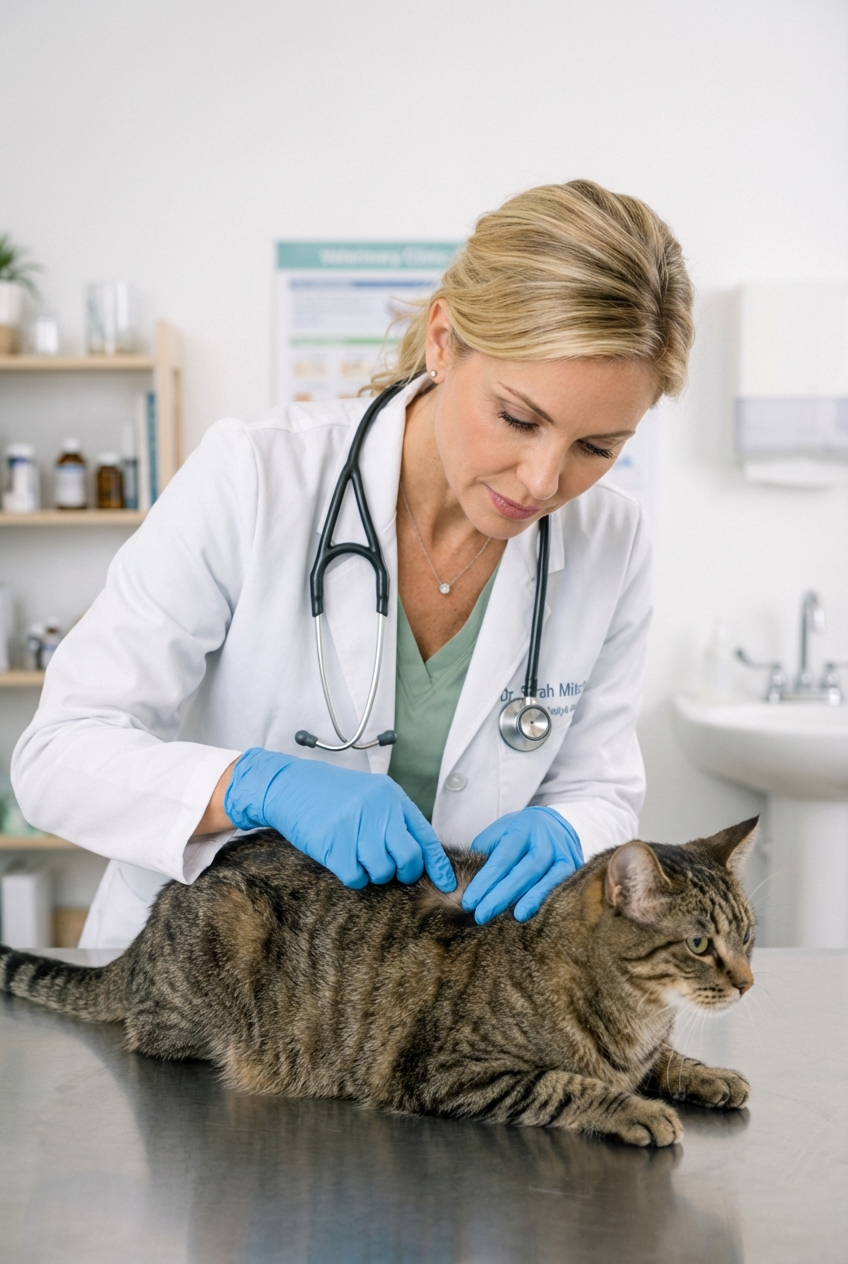
When to see the vet (and what to expect)
Please book a veterinary visit promptly if you notice:
- Open sores, bleeding, swelling, or pus
- Hair loss in patches, thick scabs, or a strong odor
- Head shaking, ear redness, or dark discharge
- Itching severe enough to disturb sleep
- Any change in appetite, energy, or litter box habits
- Possible ringworm lesions (especially if people in the home have new itchy, circular rashes)
Common diagnostics your vet may recommend
- Skin cytology (tape prep or swab) to look for bacteria or yeast
- Skin scraping to check for mites
- Fungal testing if ringworm is a possibility
- Ear cytology if ears are involved
- Diet elimination trial for suspected food allergy
Treatment options (based on the cause)
- Prescription parasite treatment if mites are suspected or confirmed
- Antibiotics or antifungals for infections
- Anti-itch medications tailored to cats (your vet will choose the safest option for your cat’s health status)
- Allergy management including environmental control, prescription diets, and in some cases allergy testing and immunotherapy

Food allergy: elimination trial basics
If your vet suspects food allergy, the gold standard is a strict 8 to 12 week elimination diet trial using a prescription hydrolyzed diet or a truly novel protein diet.
- Feed only the prescribed diet. No flavored treats, no table food, and be careful with flavored medications.
- Track itching weekly. Some cats improve gradually.
- If your cat improves, your vet may recommend a diet challenge to confirm.
This can feel tedious, but it is one of the most powerful, evidence-based ways to get lasting relief when food is the trigger.
Quick recap
- Cats can itch intensely without fleas due to allergies, mites, infections, ringworm, insect bites, dry skin, contact irritation, or stress, pain, and less common neurologic causes.
- Start by confirming consistent flea prevention and checking for flea dirt. Never use dog-only flea products on cats.
- Remove common irritants and keep a simple itch log.
- See your veterinarian sooner rather than later if there are scabs, hair loss, ear problems, skin sores, or belly licking with urinary changes.
Your cat does not have to live in an itch cycle. With a little detective work and the right treatment plan, most cats get comfortable again.