From fleas and allergies to mites, infections, ringworm, and stress grooming—learn the top causes of itchy skin in cats, key symptoms, vet diagnostics, and...
Article
•
Designer Mixes
Cat Itching: Causes, Relief, and When to See the Vet

Shari Shidate
Designer Mixes contributor
If your cat is scratching, licking, chewing, or over-grooming, you are not imagining things. Itching is one of the most common reasons cats come into my clinic, and it can look like everything from a few extra scratches to dramatic hair loss, scabs, and cranky behavior. The encouraging news is that most itching has an underlying cause we can identify and manage once we approach it step by step.
In this article, I will walk you through the most likely reasons cats itch, what you can safely do at home, what to avoid, and the specific clues that tell us it is time for a veterinary exam.
What cat itching can look like
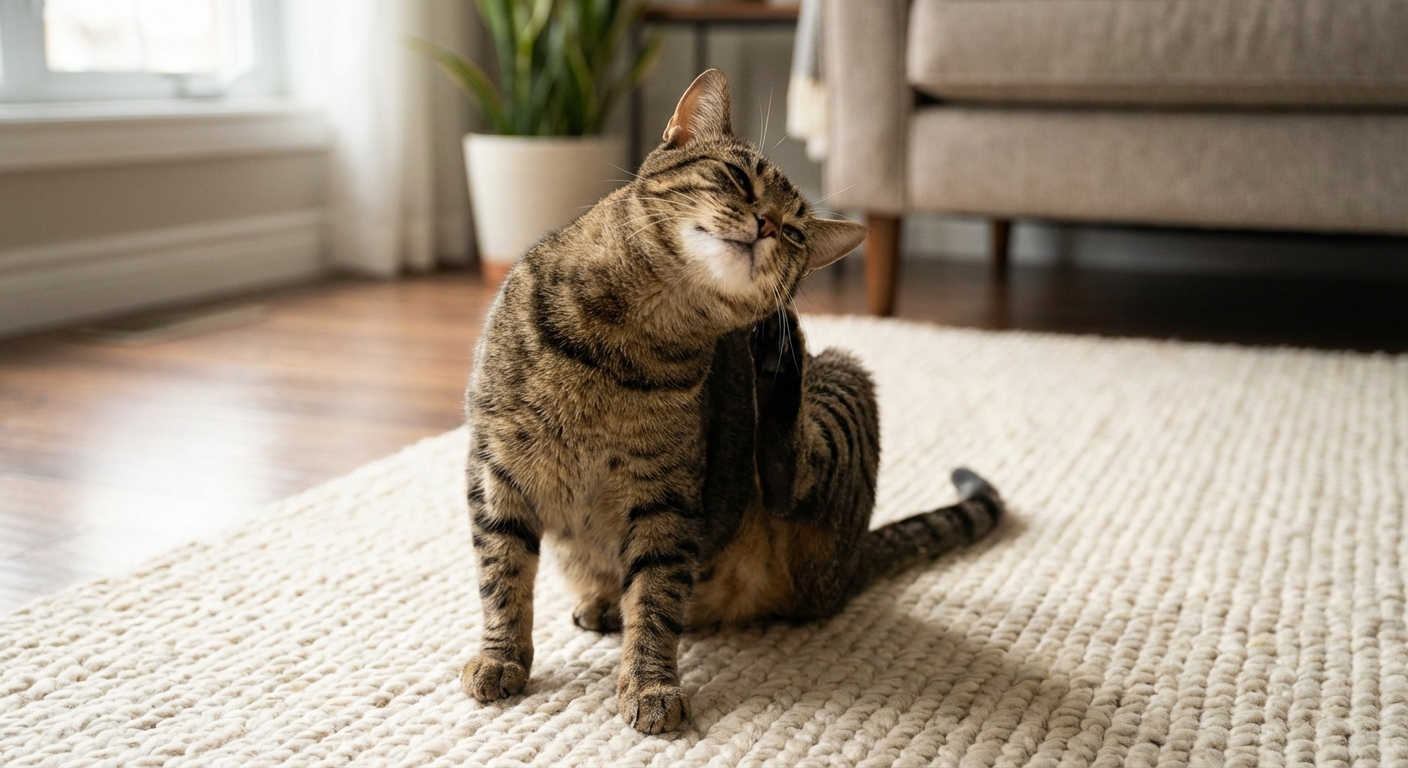
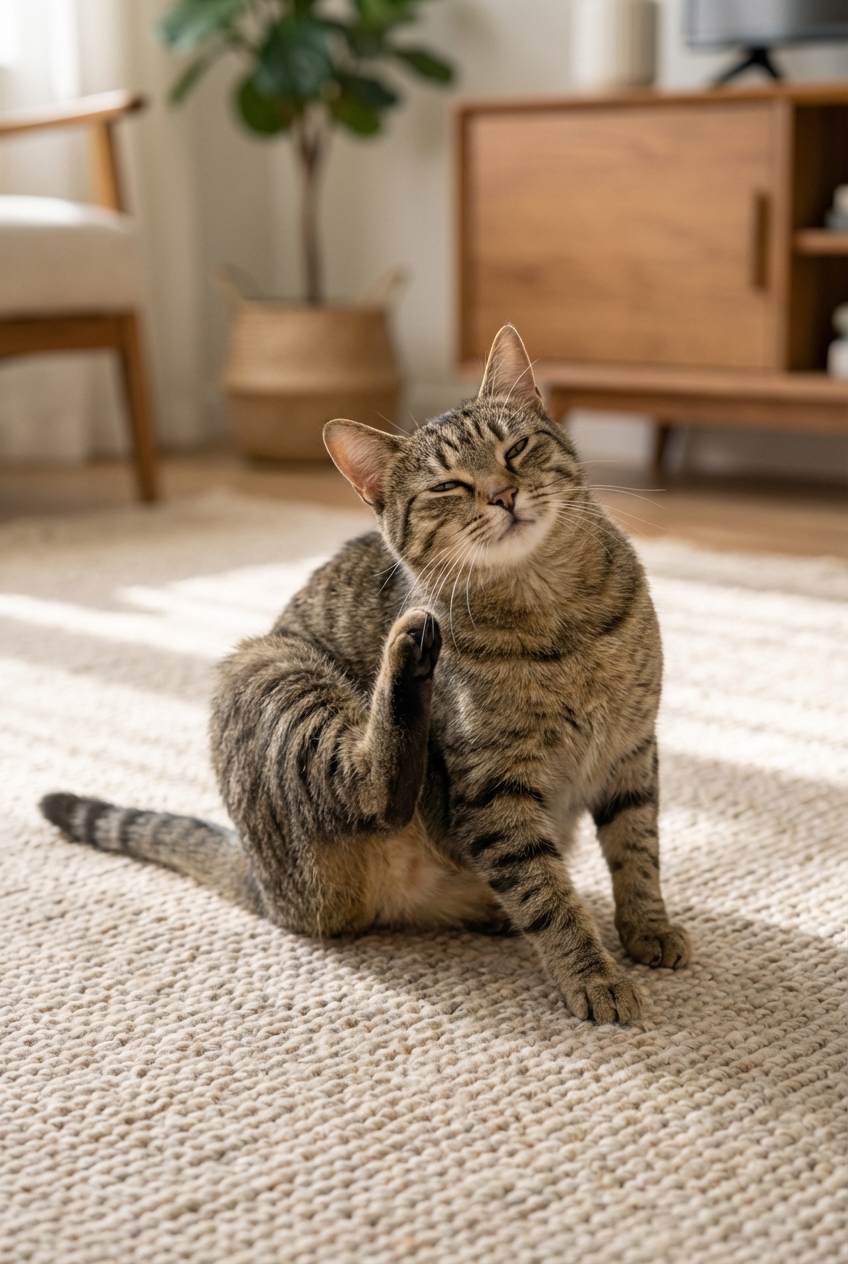
Itching is not always obvious scratching. Cats are expert groomers, so many itchy cats look “clean,” but they are actually overdoing it.
- Scratching at the ears, neck, or face
- Licking the belly, inner thighs, or paws
- Chewing the base of the tail or along the back
- Hair loss, often on the belly or legs, sometimes with normal-looking skin underneath
- Scabs or crusts, especially on the neck and back (miliary dermatitis)
- Head shaking or ear scratching (ear issues can be intensely itchy)
- Restlessness or hiding because they feel uncomfortable
If you are seeing hair loss, scabs, or repeated ear scratching, those are especially helpful clues for narrowing down the cause.
The most common causes of itching in cats
1) Fleas, flea dirt, and flea allergy
Even indoor cats can get fleas, and a single bite can trigger major itching in cats with flea allergy dermatitis. Many cats also groom away the evidence, so you might never see a live flea.
Common clues: itching around the base of the tail, back, and neck; tiny scabs; black “pepper” specks in the coat (flea dirt).
2) Environmental allergies and irritant reactions
Cats can react to things like dust mites, pollens, and molds. Some cats also have irritant reactions to household products (like fragranced cleaners, plug-ins, or certain litters). These issues often show up as itchy skin, recurrent ear problems, or excessive licking.
Common clues: seasonal flares, recurring itch without obvious parasites, itchy face and ears, or over-grooming the belly and legs.
3) Food allergy or food sensitivity
Food allergies in cats are usually a reaction to a protein source (like chicken, beef, or fish). It can look identical to other allergies, which is why vets often recommend a properly structured diet trial.
Common clues: year-round itching, head and neck itching, possible vomiting or soft stool (not always).
4) Skin infections (bacterial and, less commonly, yeast)
Infections can be primary, but more commonly they move in after the skin barrier is damaged by allergies, parasites, or over-grooming. Yeast issues are less common in cats than dogs, but they can occur, especially when there is underlying inflammation. Treating infection often brings fast relief, but you still need to address the underlying trigger to prevent repeat flares.
Common clues: odor, redness, greasy fur, crusts, pimples, or worsening itch despite flea control.
5) Ear mites or ear infections
Ear mites are more common in kittens and multi-cat homes, but any cat can get them. Ear infections can also develop from allergies or anatomy.
Common clues: dark debris in the ears, head shaking, ear scratching, sensitivity when you touch the ear, or a foul or yeasty smell.
6) Dry skin and over-bathing
Low humidity, frequent bathing, harsh shampoos, or nutritional gaps can contribute to dry, flaky, itchy skin. Cats generally do not need regular baths unless a veterinarian recommends it. If you do bathe, use a cat-specific shampoo and avoid fragranced or harsh products.
Common clues: dandruff-like flakes, dull coat, itch without scabs or redness.
7) Ringworm (fungal infection)
Ringworm is a contagious skin infection caused by a fungus. Despite the name, it is not a worm. Some cats are very itchy, and others are barely itchy at all, which is why it can be easy to miss at home.
Common clues: circular hair loss, broken hairs, scaling, lesions on the face, ears, or paws, and people or other pets in the home developing suspicious skin spots.
8) Other mites (less common)
Some cats itch due to mites other than ear mites, including Cheyletiella (often nicknamed “walking dandruff”) or Demodex gatoi. These are less common, but they matter, especially in multi-cat households or when more than one pet is itchy.
Common clues: heavy flaking, patchy hair loss, intense itch that spreads among pets, or poor response to routine flea control.
9) Stress, pain, and compulsive over-grooming
Sometimes the skin looks normal, but the cat is licking because of stress, pain, or habit. This is often called psychogenic alopecia, and it is a real condition, but it is also a diagnosis we make after ruling out itch and pain causes. In practice, I also keep an eye out for pain-driven grooming from issues like arthritis or urinary discomfort.
Common clues: symmetrical hair loss on the belly or legs, licking when the home is busy, changes after moving, new pets, schedule shifts, or licking that seems tied to stressful events.
First steps you can take at home
Step 1: Start with parasite prevention
Because fleas are so common and so itchy, consistent vet-recommended flea prevention is usually step one even if you never see a flea. Many over-the-counter options are less reliable, and some dog flea products are dangerous for cats.
- Use a cat-specific product and follow weight guidelines.
- Treat every pet in the home, not just the itchy one.
- Stay consistent for at least 8 to 12 weeks to truly judge results. Adult fleas often die sooner, but eggs and larvae in the environment take time to clear.
Step 2: Do a quick daily “itch check”
Aim for 1 to 2 minutes a day.
- Look for scabs along the neck and back by gently parting the fur.
- Check ears for debris or redness.
- Note where your cat is licking or scratching most.
- Track changes with photos every 3 to 4 days.
That little bit of documentation helps your vet move faster toward the correct diagnosis.
Step 3: Support the skin barrier
Think of the skin as a protective coat. When it is irritated, it loses moisture and becomes more reactive.
- Humidity helps: a humidifier in winter can reduce flaking.
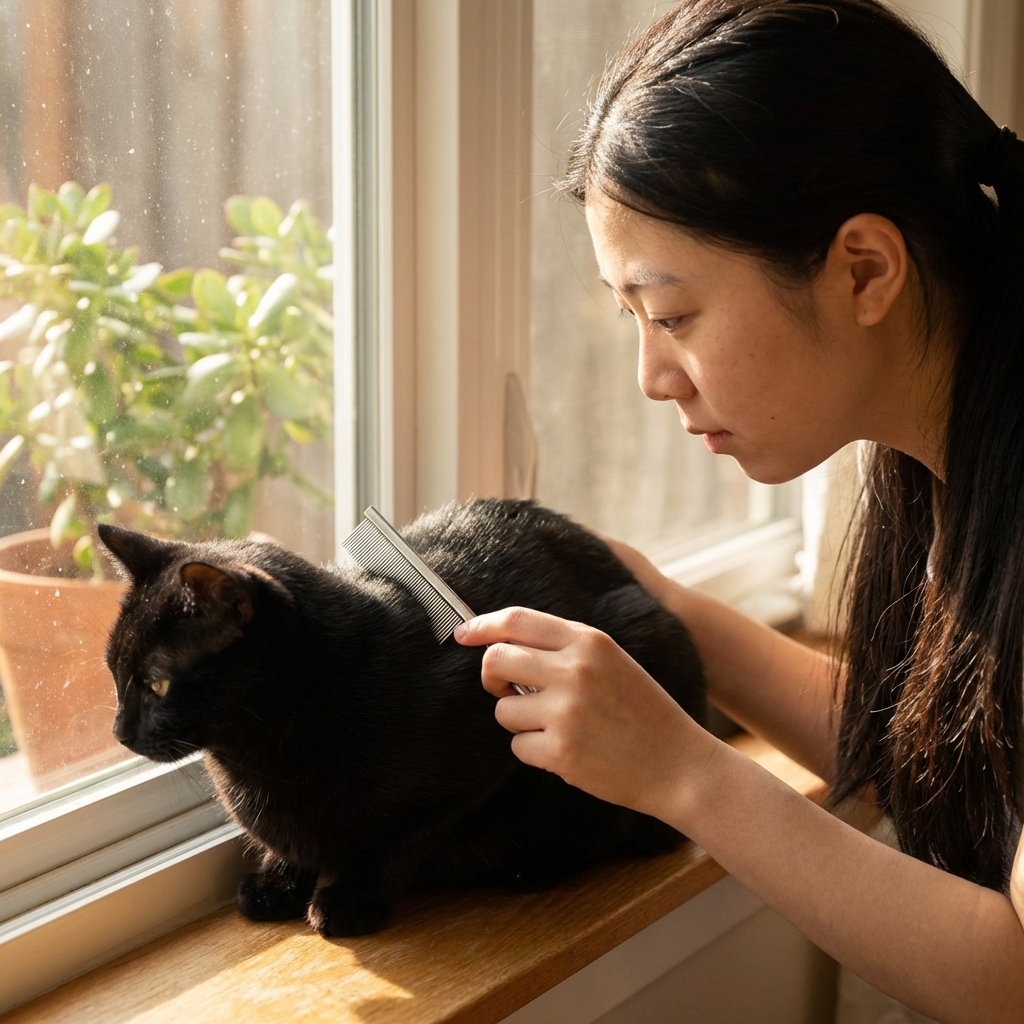
- Gentle grooming: brush to remove loose hair and distribute natural oils.
- Omega-3 fatty acids: ask your vet about a cat-appropriate fish oil dose and brand.
Step 4: Avoid common “quick fixes”
- Do not use dog products on cats, especially anything containing permethrin.
- Avoid essential oils for itch relief. Many are toxic to cats when inhaled, licked, or absorbed.
- Skip random antihistamines unless your vet tells you what to use and how much. Dosing mistakes are common.
- Do not apply human steroid creams or OTC hydrocortisone unless your veterinarian directs you. Cats will lick them, and skin can thin with inappropriate steroid use.
- Avoid frequent bathing unless your vet recommends it. If bathing is needed, use a cat-safe shampoo and follow your vet’s schedule.
When itching is urgent
Please contact a veterinarian promptly if you notice any of the following. These are the situations where waiting often makes things worse and more expensive.
- Open sores, bleeding, or a rapidly spreading rash
- Swollen face, hives, or trouble breathing
- Severe head shaking, ear swelling, or a painful ear
- Large patches of hair loss with red, angry skin
- Signs of infection: odor, pus, heat, oozing, or fever
- Any itching in a kitten, senior, or immunocompromised cat
- You have people in the home with new itchy red bumps or ring-shaped lesions (some causes are contagious)
How your vet finds the cause
At the clinic, we try to be methodical so we do not miss something treatable.
- History and pattern: where the itch is, when it started, and any seasonal trends
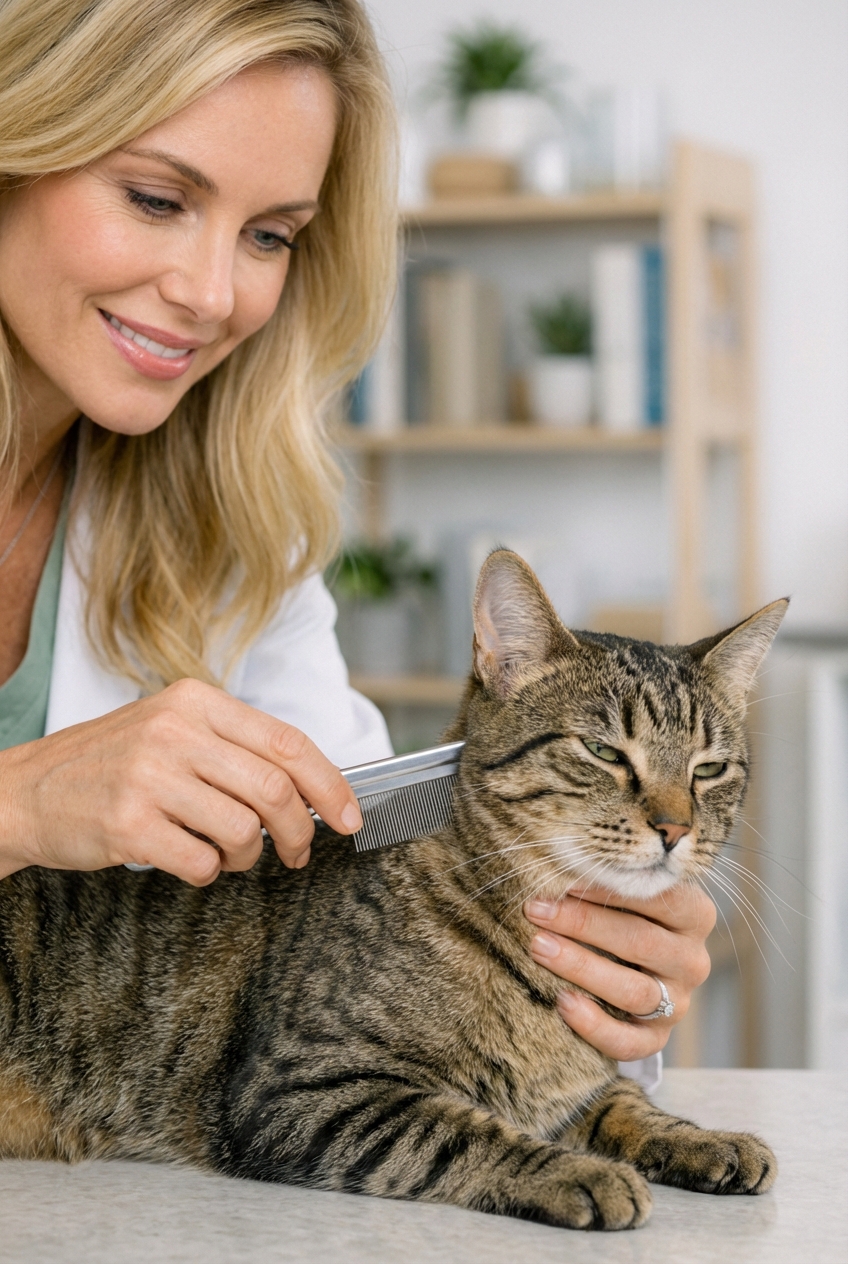
- Skin exam and flea combing
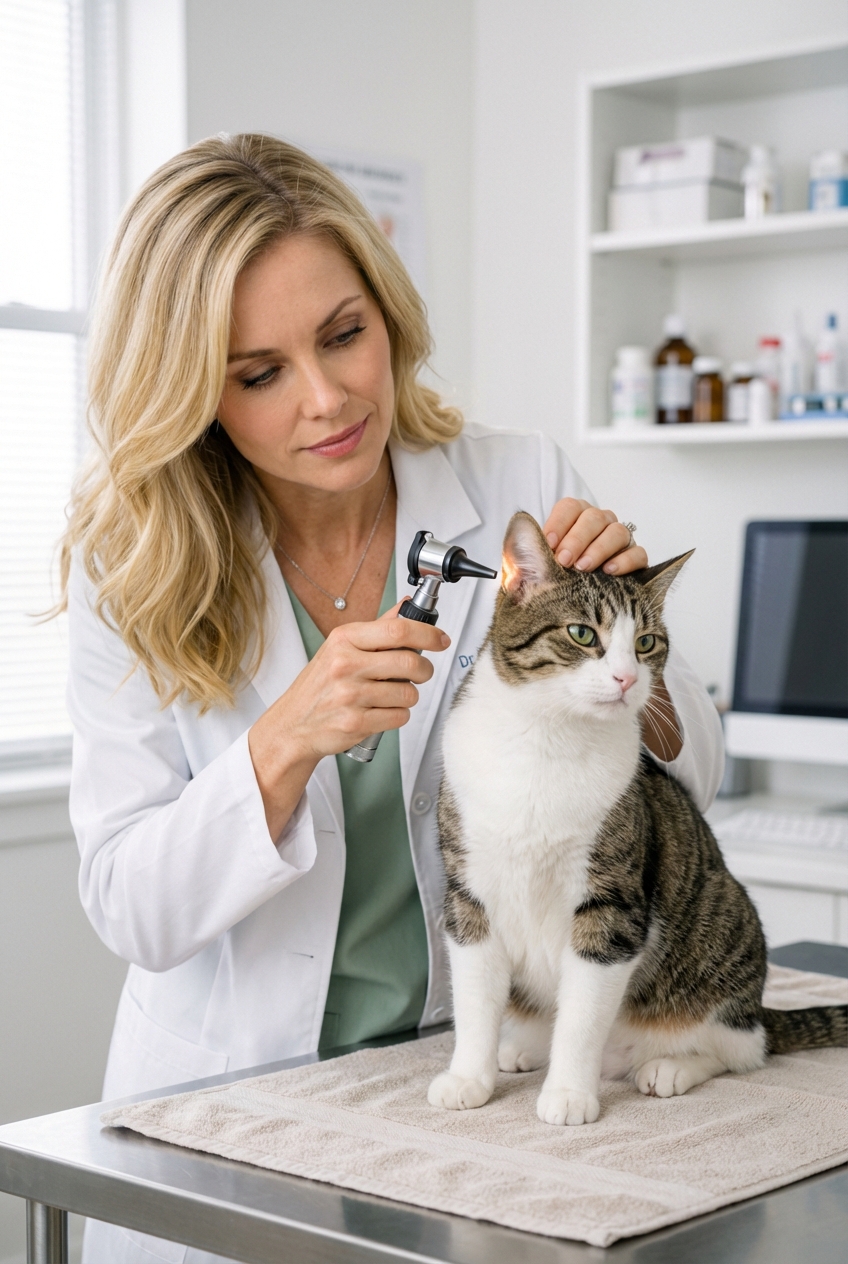
- Ear exam and ear swab microscopy: to look for yeast and bacteria; mites may be seen depending on the technique and what is present
- Skin tests like tape prep, impression smear, or skin scraping
- Fungal testing if ringworm is possible
- Diet trial if food allergy is suspected (usually 8 to 12 weeks with a strict prescription novel protein or hydrolyzed diet plan)
- Allergy management plan for environmental allergies, which may include medications plus ongoing skin support
- Allergy testing (blood or intradermal) in select cases to guide immunotherapy for environmental allergies (this does not diagnose food allergy)
Many cats feel better quickly once infection and parasites are controlled, but lasting relief usually comes from identifying the primary driver, especially allergies.
What improvement looks like
When you are dealing with itching, it helps to set expectations.
- Fleas: you may see improvement in 2 to 4 weeks, but full control often takes 8 to 12 weeks as you break the life cycle and clear environmental stages.
- Infection: relief can begin within days once the right medication starts.
- Food allergy: you usually need 6 to 8 weeks to see meaningful change, sometimes longer.
- Environmental allergy: management is often ongoing, but the right plan can dramatically reduce flares.
The goal is not just fewer scratches today. It is calmer skin, a healthier coat, and fewer repeat flare-ups over time.
A simple action plan
- Confirm your cat is on consistent, cat-safe flea prevention.
- Check ears and note any debris, odor, or head shaking.
- Photograph problem areas and track where your cat itches most.
- Remove triggers you can control: scented litter, strong cleaners, plug-in fragrances.
- Book a vet visit if there are scabs, hair loss, ear issues, symptoms lasting more than 7 to 10 days, or any concern for ringworm or contagious mites.
If you are in the Frisco area like me, I always encourage you to bring photos and a short timeline to your appointment. It saves time, and it helps your veterinary team target the most likely cause faster.