See the most common signs of a cat in heat, how long estrus typically lasts, and practical, vet-informed home care tips to keep her calm, safe, and indoors.
Article
•
Designer Mixes
Cat In Heat: Signs, Timeline & Care

Shari Shidate
Designer Mixes contributor
If you have an unspayed female cat (a queen), the first heat cycle can feel sudden and honestly a little dramatic. One day she is her normal self, and the next she is calling, rolling, and acting like she is desperate to get outside. The good news is: most of these behaviors are normal for a cat in heat, and there are safe, practical ways to help her (and you) get through it.
As a veterinary assistant, I want you to know two things right up front: a cat in heat is not “misbehaving,” she is responding to hormones, and heat cycles repeat often until she is spayed or becomes pregnant. Heat is not usually painful, but it can be stressful and frustrating, which is why the vocalizing and restlessness can look intense.
What “in heat” means
“In heat” describes a period when a female cat is fertile and actively seeking to mate. Cats are seasonally polyestrous, meaning they can have multiple heat cycles during certain times of the year. In many regions, cycling increases with longer daylight (often spring and summer). Many indoor cats can cycle year-round because artificial light can mimic longer days.
Unlike dogs, cats typically do not have obvious vaginal bleeding during heat. The signs are mostly behavioral. Any discharge or bleeding is not considered normal and is worth a call to your veterinarian.
Common signs your cat is in heat
Most owners notice behavior changes first. Signs can range from mild to intense, and they may come and go over several days.
Behavior and body language
- Very loud vocalizing (often described as yowling or calling), especially at night.
- Restlessness, pacing, and trouble settling.
- Extra affection, rubbing on you, furniture, or doorframes more than usual.
- Rolling on the floor and frequent stretching.
- Heat posture: front end down, rear end raised, tail held to the side, and “treading” with back legs when touched near the tail base.
- Trying to escape through doors or windows to find a mate.
Changes you might notice at home
- Decreased appetite in some cats (others eat normally).
- Increased marking behaviors: some cats spray small amounts of urine to advertise their availability.
- Clinginess or increased demand for attention.
Tip: If your cat is straining to urinate, visiting the litter box repeatedly with little output, seems painful, or you see blood in urine, that is not typical heat behavior. Call your veterinarian right away to rule out urinary issues.
Heat cycle timeline
Heat cycles vary between cats, but there are typical patterns. Many queens cycle more during longer daylight months, while indoor cats may cycle at any time of year.
When heat starts
Many cats have their first heat between about 5 and 9 months of age, though some can start as early as 4 months depending on genetics, body condition, breed tendencies, and environment.
How long heat lasts
A typical heat (estrus) lasts about 3 to 7 days, but it can be shorter or extend to 10 days in some cats. During breeding season, it can feel like the signs keep returning on and off over several weeks.
How often it returns
If she does not mate, she may go back into heat again in as little as 1 to 3 weeks. Some cats have very short breaks between cycles, which can feel nonstop for owners.
Why it can look “on and off”
Cats are induced ovulators, meaning ovulation typically occurs after mating (rarely, queens may ovulate without mating). Without ovulation, hormone patterns can make behaviors fluctuate, so you may see a couple of intense days, a lull, then another wave.
Home care tips
Your main goals are comfort, safety, and preventing pregnancy. Here are practical steps that help most households.
1) Keep her indoors
- Check window screens for gaps and keep doors closed carefully.
- Be extra cautious when bringing in groceries or letting dogs out.
- If you have intact male cats nearby (even outdoors), assume they can smell her and may show up.
2) Reduce stress
- Play sessions (wand toys, chase games) can help burn off restlessness.
- Keep routines steady: meals, play, and quiet time at the same times daily.
- Provide safe, cozy spaces like a covered bed, a quiet room, or a familiar blanket.
3) Offer comfort gently
Many cats want attention, but some become overstimulated quickly.
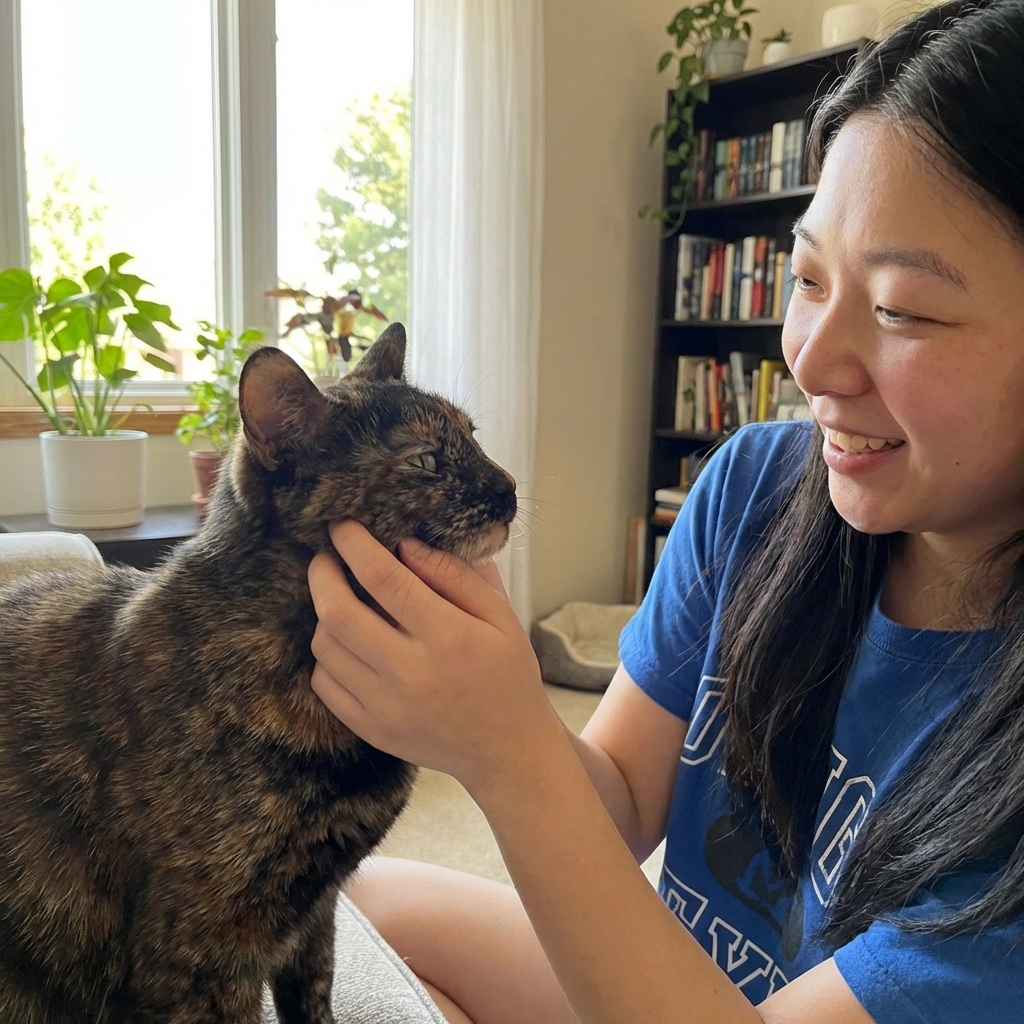
- Pet gently if she enjoys it, especially around the head and cheeks.
- Avoid repeated touching near the base of the tail if it escalates frantic behavior.
- Use soft brushing if she finds it calming.
4) Calming support
Some households find feline pheromone diffusers helpful for settling overall tension. For supplements or calming products, talk with your veterinarian first, especially if your cat is on any medications or has underlying health issues.
Safety note: Avoid giving over-the-counter sedatives, cannabis products, or human medications. If you feel you need medical help to get her through a cycle, your veterinarian can discuss safe options.
5) Litter box and spraying
- Keep litter boxes very clean (scooped daily, refreshed regularly).
- If spraying occurs, clean with an enzymatic cleaner designed for pet urine.
- Do not punish. Stress can worsen marking behaviors.
Pregnancy prevention
It only takes a brief escape for mating to occur, and cats can become pregnant even if they are still young. If you do not intend to breed, the most reliable prevention is spaying.
Important: Keep her away from intact males. Male cats can be persistent, and they may attempt to enter your home or linger outside.
If you think she may have mated, call your veterinarian. Cat pregnancy is typically around 63 to 65 days, and your vet can advise you on timing for an exam and next steps.
Spaying during heat
Spaying is the long-term solution for heat cycles and prevents unplanned litters. Many clinics can spay a cat while she is in heat, but there are extra considerations because the reproductive organs have increased blood flow during this time. That can mean a more delicate surgery, and it may take longer.
Some veterinarians prefer to schedule surgery when she is out of heat, while others proceed safely with appropriate planning. Your best next step is to call your veterinarian, explain that she is currently in heat, and ask:
- Whether they spay during heat at their clinic
- If there is an added cost or modified surgical plan
- How soon they can schedule, since cycles can repeat quickly
When to call the vet
Heat itself is normal, but you should contact your veterinarian if you notice:
- Straining to urinate, crying in the litter box, or frequent trips with little urine
- Loss of appetite lasting more than a day, lethargy, vomiting, or diarrhea
- Bleeding, discharge, or foul odor from the vulva
- Heat behaviors that seem continuous with no breaks for weeks
Also call if you suspect she may have mated. Your veterinarian can discuss next steps and appropriate timing for care.
Quick FAQs
Do cats bleed in heat?
Most cats do not bleed during heat. If you see blood or discharge, it is worth a vet call.
Can my cat be in heat and still seem happy?
Yes. Some cats become extra affectionate, while others get restless or vocal. Both can be normal.
Will heat stop on its own?
A heat cycle ends, but it often returns in a few weeks if she is not spayed or does not become pregnant.
How can I help my cat sleep at night?
Try a play session in the evening, then feed a small meal, and keep the home calm and dim. You may still hear vocalizing, but routine and enrichment can reduce intensity.
Are there meds to stop heat?
There are hormone-based medications that can suppress cycling, but they should only be used under direct veterinary guidance due to potential side effects and risks. If you are considering this, call your veterinarian and discuss safer long-term plans like spaying.
The bottom line
A cat in heat is guided by biology, not stubbornness. Keep her safely indoors, provide comfort and enrichment, and talk with your veterinarian about spaying, especially if the cycles feel frequent or intense. Once she is spayed and healed, heat behaviors stop, and many households notice a big improvement in day-to-day calm.