Your cat in heat? Learn common signs, how long estrus lasts, and practical at-home steps to reduce stress, prevent escape and pregnancy, and know when to cal...
Article
•
Designer Mixes
Cat Heat Cycle Stages Explained

Shari Shidate
Designer Mixes contributor
If you have an unspayed female cat, you may suddenly notice loud nighttime yowling, extra affection, rolling on the floor, and a tail held to the side. That is usually not “bad behavior.” It is estrus , also called being in heat . As a veterinary assistant, I see how stressful this can feel for both cats and people, especially the first time it happens.
The good news is that the feline heat cycle follows predictable stages. Once you understand what is happening and what to watch for, you can keep your cat comfortable and make safe, confident decisions.
At a glance
- Proestrus: often less than 1 to 3 days, early signs start
- Estrus (heat): about 3 to 10 days, sometimes longer, fertile window
- Interestrus: commonly 1 to 2 weeks (can be longer), a break if no ovulation
- Diestrus: about 30 to 45 days if ovulated but not pregnant, or about 63 to 65 days if pregnant
- Anestrus: seasonal downtime, varies by light exposure and environment
Quick overview: seasonally polyestrous
Most female cats are seasonally polyestrous, meaning they can have multiple heat cycles during the breeding season. In many parts of the U.S., longer daylight in spring through fall tends to trigger more cycling, but indoor cats exposed to artificial light can cycle year-round.
Another key point is that cats are usually induced ovulators. Ovulation typically happens after mating, not on a fixed schedule. This is why a cat can appear to go in and out of heat repeatedly if she is not bred.
Stages of the heat cycle
1) Proestrus
What it is: The body is gearing up. Hormones are rising, but your cat may not yet accept a male cat.
How long it lasts: Often less than 1 to 3 days, and it can be subtle or hard to distinguish from estrus in some cats.
What you might notice:
- Increased affection, rubbing on people and furniture
- Restlessness and more vocalizing than normal
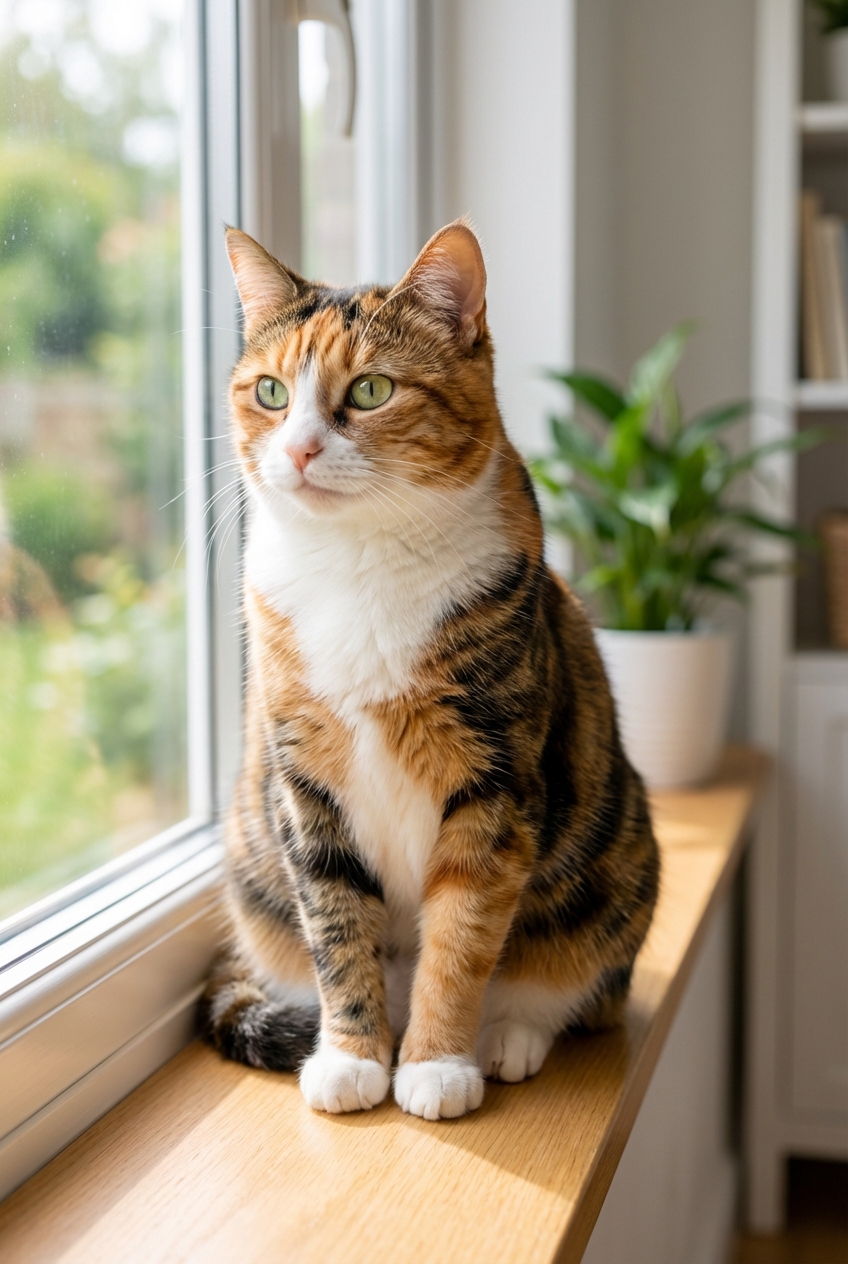
- Increased interest in doors and windows
- Some cats have a slightly decreased appetite
Important note: Unlike dogs, cats typically do not have obvious bloody discharge during heat. If you see blood, foul odor, lethargy, vomiting, or your cat seems painful, call your veterinarian.
2) Estrus (heat)
What it is: This is the fertile window when a female cat is receptive to mating.
How long it lasts: Commonly about 3 to 10 days. Some cats are shorter, and some can go longer, especially during peak season.
What you might notice:
- Loud, persistent yowling (often worse at night)
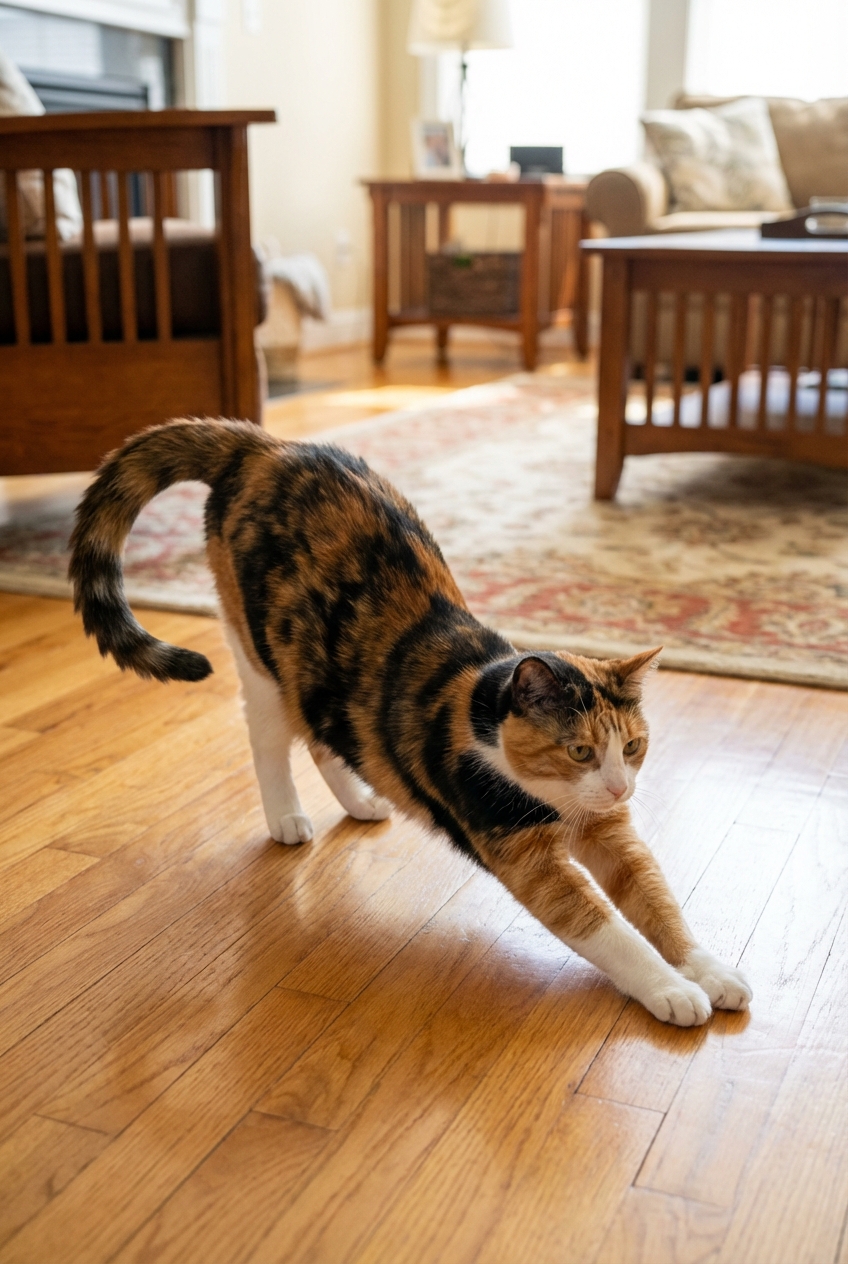
- Rolling, crouching, and rubbing
- The classic posture: front end low, hindquarters raised, tail held to the side
- Attempting to escape outdoors
- Increased affection, sometimes sudden mood shifts
Can she get pregnant now? Yes. If she mates during estrus, ovulation is likely to be triggered. Many queens require multiple matings for reliable ovulation, but from an owner perspective, the safest assumption is that one escape can lead to pregnancy .
3) Interestrus
What it is: A resting period between heats if ovulation did not occur.
How long it lasts: Often around 1 to 3 weeks, with many cats closer to 1 to 2 weeks (varies by cat and environment).
What you might notice: Heat behaviors typically quiet down or stop, and your cat may seem “back to normal” for a while.
This stage is why many owners feel like the heat cycle “keeps coming back.” If a cat does not ovulate and is not spayed, she may return to estrus again and again during the season.
4) Diestrus
What it is: This stage happens after ovulation. If your cat ovulates, her body produces progesterone whether or not she becomes pregnant.
How long it lasts:
- If pregnant: typically about 63 to 65 days
- If not pregnant (but ovulated): often about 30 to 45 days, sometimes called a pseudopregnancy phase
What you might notice: Heat behaviors stop. Some cats can develop signs that resemble pregnancy even when not pregnant.
5) Anestrus
What it is: A period of reproductive inactivity, often during shorter daylight months or when environmental conditions are not supporting cycling.
How long it lasts: Variable. Some cats have a clear seasonal break, while indoor cats may have little to none.
Common questions
When is the first heat?
In clinic, one of the most common questions I hear is when owners should expect the first heat. Many cats have their first heat around 4 to 10 months, but it can be earlier or later depending on body weight, season, and genetics. If you have an intact female kitten and you are seeing heat behaviors, assume pregnancy is possible if she has access to an intact male.
How often will my cat go into heat?
It varies, but during the breeding season, some cats cycle every 2 to 3 weeks if they do not ovulate and are not spayed. Some can seem even more frequent, closer to every 1 to 2 weeks during peak times.
Do cats have a period?
Not in the way humans do. Most cats do not visibly bleed during heat. Any significant bleeding is a reason to call your veterinarian.
Is she in pain?
Heat is driven by hormones and instinct. Many cats seem uncomfortable or restless, but it is not typically described as painful. That said, if your cat is panting, hiding, not eating for more than a day, lethargic, or acting ill, it is time to get her checked.
Do male cats go into heat?
No. Male cats do not go into heat, but intact males can react strongly to a female in estrus. You may see roaming, urine marking, vocalizing, and attempts to get to her.
Help a cat in heat at home
You cannot “train it out” because it is biology, but you can reduce stress and keep her safe.
- Keep her strictly indoors. Cats in heat are escape artists, and the risk of pregnancy is very real.
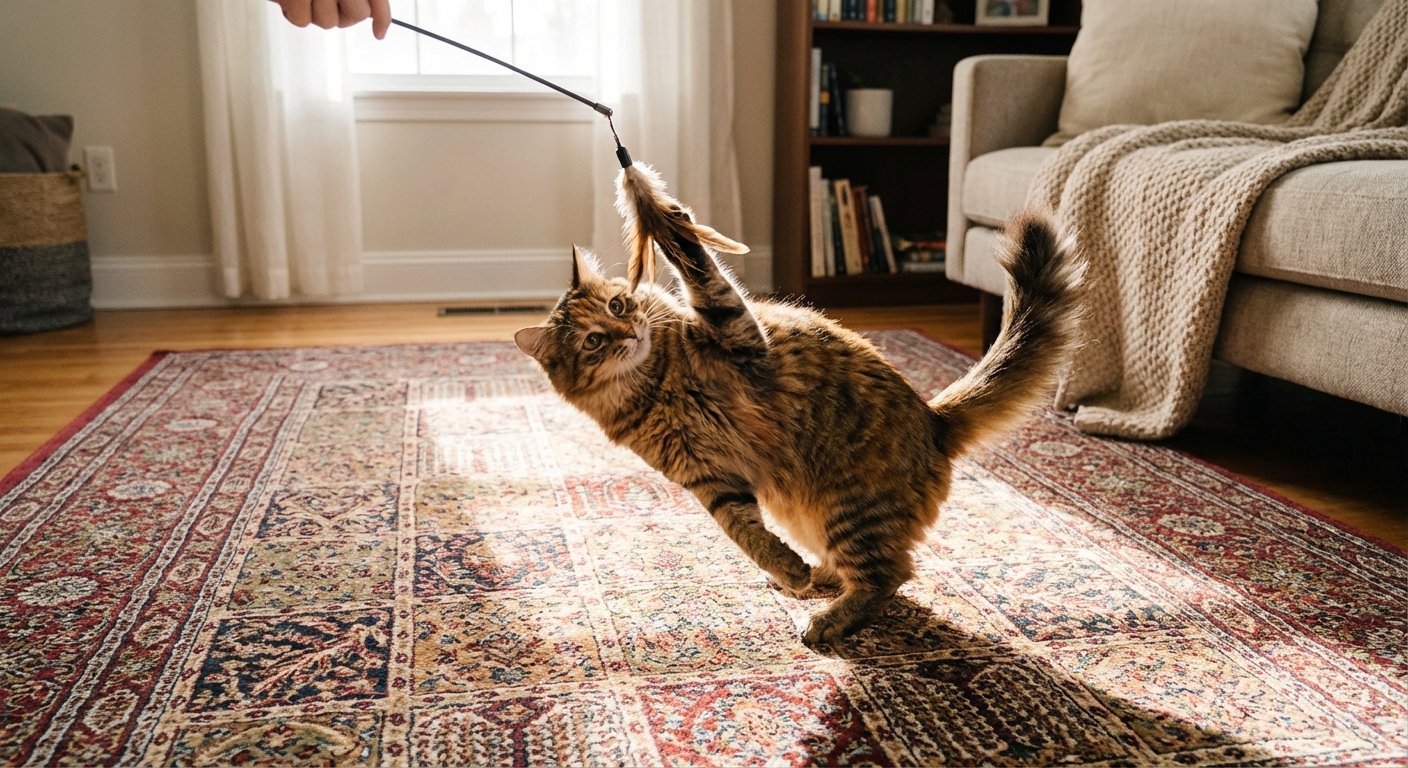
- Increase enrichment. Play sessions, food puzzles, and window perches help burn nervous energy.
- Use comfort strategies. Many cats like gentle brushing, a warm bed, or a heating pad on low with supervision.
- Reduce triggers. Close blinds if outdoor cats are visible and secure screens and doors.
- Ask your vet before using calming products. Some pheromone diffusers can be helpful, but it is best to choose them with veterinary guidance.
Call the vet right away
Please contact your veterinarian urgently if you notice any of the following:
- Vaginal discharge that is bloody, thick, or foul-smelling
- Abdominal swelling or distension, especially with illness signs (this can be seen with pregnancy or serious uterine infection)
- Vomiting, fever, severe lethargy
- Not eating for more than 24 hours or signs of dehydration
- Straining to urinate or crying in the litter box
These signs are not typical heat behaviors and can signal illness that needs treatment.
Long-term solution: spaying
If you are not planning to responsibly breed your cat with veterinary oversight, spaying is the most reliable way to prevent heat cycles and avoid unplanned litters. It also helps reduce the risk of serious reproductive infections like pyometra and greatly lowers the risk of mammary cancer, especially if done before the first heat (with less benefit after additional heats).
If your cat is currently in heat, you can still call your veterinary clinic to discuss timing. Some clinics prefer to spay when the cycle is over, while others may proceed depending on your cat’s situation and their medical protocols. If you think she may already be pregnant, ask directly about options. Some clinics can perform a pregnancy spay depending on stage and local regulations, while others may refer you.
When you understand the stages of the heat cycle, the behaviors feel less mysterious and a lot more manageable. You are not alone, and your veterinarian can help you choose the safest plan for your cat.