
Cat Hairball Blockage: Warning Signs and When to Go to the ER

Most cats retch or gag up a hairball now and then, and it is usually more gross than dangerous. The problem is that the early signs of a hairball blockage can look like “just another hairball” until your cat is dehydrated, painful, or truly obstructed.
As a veterinary assistant, I always tell pet parents the same thing: when in doubt, focus less on the hairball itself and more on your cat’s pattern of vomiting or retching, energy, appetite, and litter box output. Those details are what help your vet sort routine hairballs from a situation that needs urgent care.
Quick note on “coughing”: Some owners describe a hairball episode as coughing, but true coughing (a chesty, respiratory sound, sometimes with wheezing or increased breathing effort) can point to asthma, bronchitis, heart disease, or other respiratory problems. If it sounds like breathing trouble rather than gagging, call your vet.
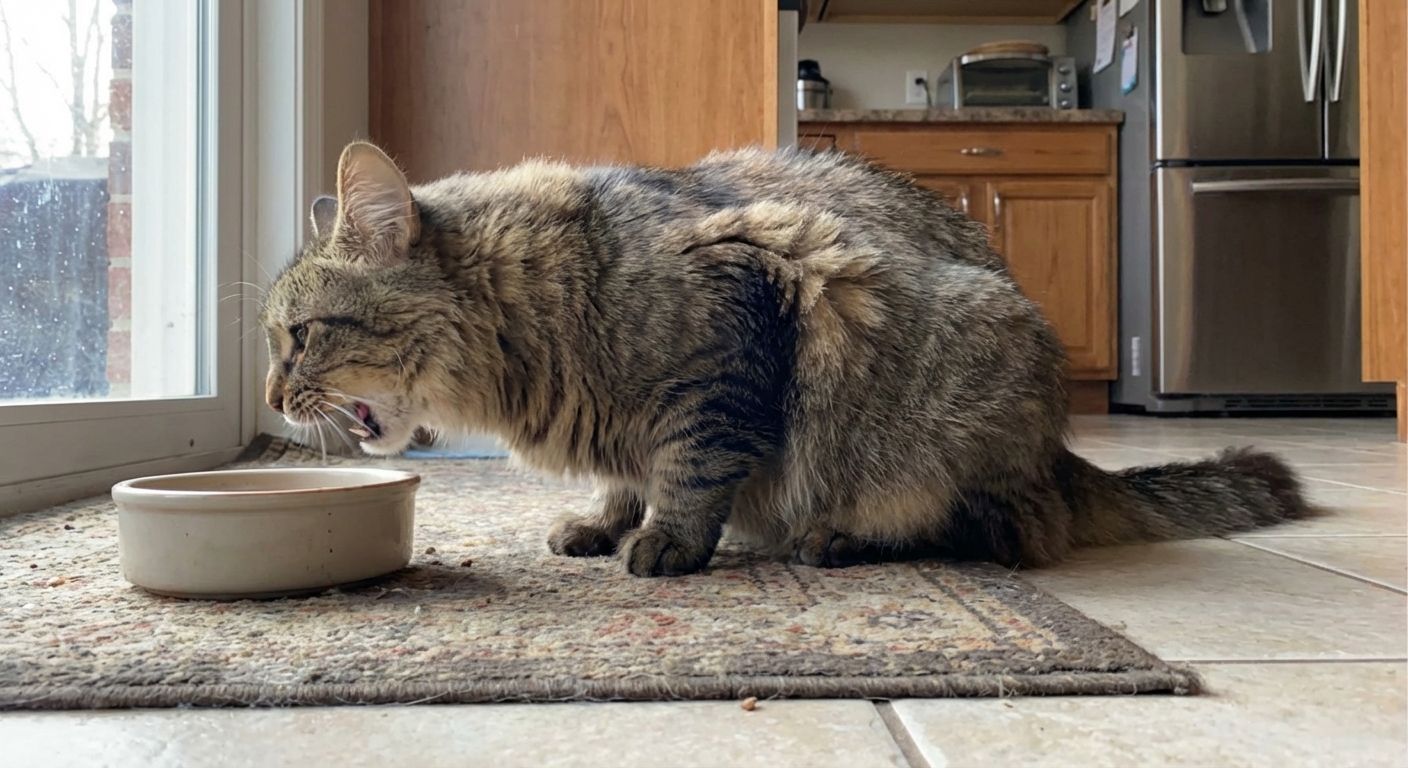
Hairball vs. blockage: what is the difference?
Routine hairball (common)
A routine hairball is typically a compact wad of hair and mucus that your cat vomits up. Cats also swallow hair that often passes in the stool unnoticed, but the classic “hairball event” most people recognize is vomiting.
- Typical pattern: brief gagging or retching, then a hairball appears, and your cat acts normal shortly after
- Appetite and energy: usually normal before and after
- Bathroom habits: normal urination and stool
Hairball blockage (potential emergency)
A blockage happens when a hairball or other material gets stuck and prevents food, fluid, or gas from moving through the digestive tract. Cats can also have partial obstructions that worsen over hours to days.
- Typical pattern: repeated unproductive retching (trying to vomit but nothing comes up) or frequent vomiting that does not resolve
- Appetite and energy: decreased appetite, hiding, weakness, or markedly quieter and less interactive than usual
- Bathroom habits: reduced stool output, constipation, diarrhea, or straining
Important: Not every obstruction is caused by hairballs. String, ribbon, hair ties, toy pieces, and even some bones can create a dangerous blockage. If you suspect your cat swallowed something, treat it like an urgent situation.
Warning signs that suggest more than a normal hairball
Hairballs are common. These signs are not. If you notice one or more, it is time to call your veterinarian for guidance, and in some cases go straight to an ER.
1) Unproductive retching
This is one of the biggest red flags: your cat repeatedly gags like a hairball is coming up, but nothing comes out, or only a small amount of foam or clear fluid appears.
2) Vomiting patterns that do not fit a hairball
- Vomiting multiple times in a day
- Vomiting on consecutive days
- Vomiting after every meal
- Vomiting with little to no food intake (dry heaving or bile)
If the vomiting continues or worsens, dehydration and electrolyte imbalances can happen quickly. Obstructions can also deteriorate fast, sometimes within hours.
3) Appetite changes and “food interest” changes
Many cats will still walk over to food, sniff, and then turn away when they feel nauseated or painful. That pattern is meaningful.
- Refusing food for about 24 hours
- Eating less than normal and not improving
- Trying to eat but stopping after a bite or two
Go sooner if your cat is a kitten, a senior, diabetic, has known liver disease, or has other chronic illness. In those cats, waiting can be riskier.
4) Lethargy, hiding, or behavior changes
A routine hairball usually does not cause a whole day of lethargy. Watch for:
- Sleeping far more than usual
- Hiding and avoiding interaction
- Reluctance to jump or move
- Restlessness and inability to get comfortable
5) Litter box red flags
A blockage can change what you see in the litter box.
- No stool or significantly smaller stools than usual
- Straining to defecate or repeated trips with little produced
- Diarrhea (sometimes seen with partial obstructions)
- Less urine (can indicate dehydration)
Separate emergency to know: If your cat is making frequent trips, straining, crying, or producing little to no urine, especially in male cats, treat this like a urinary blockage emergency and go in right away.
6) Abdominal pain or a tense belly
Some cats will growl, flinch, or try to move away when you touch their belly. Others just sit in a “meatloaf” position and look uncomfortable. Pain plus vomiting is a major reason to seek urgent care.
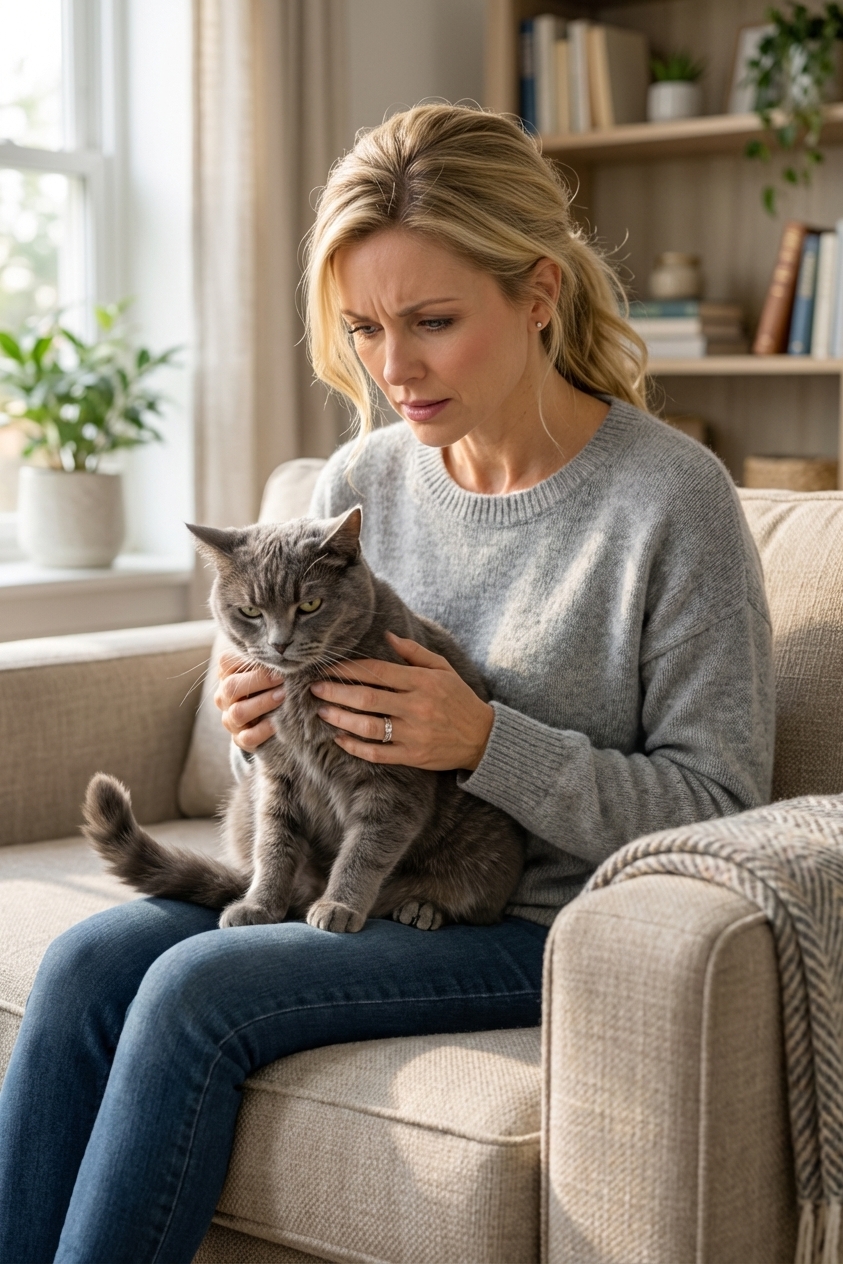
When it is an emergency (go now)
If you are seeing any of the following, do not wait for a “hairball day” to pass. These are ER-level concerns because obstruction can become life-threatening.
- Repeated unproductive retching for several hours
- Vomiting plus lethargy or collapse
- Vomiting plus a painful or swollen belly
- Blood in vomit, or vomit that looks like coffee grounds (this can be swallowed blood too, but it is still urgent)
- Cannot keep down water, or vomiting immediately after drinking
- No eating for about 24 hours (especially if paired with vomiting or hiding)
- No stool with ongoing vomiting or straining
- Known or suspected foreign material ingestion (string, ribbon, tinsel, toys, hair ties)
- Straining to urinate, frequent trips with little to no urine, or vocalizing in the litter box (possible urinary blockage)
- Kittens, seniors, or cats with chronic disease (kidney disease, diabetes, hyperthyroidism) showing vomiting or dehydration
If you suspect string ingestion: do not pull anything you see hanging from the mouth or rectum. Pulling can cause severe internal injury. Keep your cat calm and go to the ER.
Gentle home support vets often suggest (for mild, improving cases)
Home steps are for situations where your cat is bright, alert, still eating some, and has only mild symptoms that are not escalating. If your cat is repeatedly vomiting, lethargic, painful, having breathing-type coughing, or not eating, skip the home steps and call a vet.
Step 1: Pause and observe the pattern
Write down what you see. These details help your vet decide whether this sounds like routine hairball irritation, gastritis, constipation, pancreatitis, kidney disease nausea, parasites, food intolerance, or obstruction.
- How many times did your cat vomit or retch?
- Any hairball produced, yes or no?
- What did the vomit look like (food, foam, bile)?
- Is your cat still drinking?
- Last stool and last urination?
- Any access to string, toys, hair ties, or plants?
- Does it sound like gagging, or like true coughing or wheezing?
Step 2: Encourage hydration
Dehydration makes constipation and hairball issues worse. Offer fresh water in multiple locations, try a pet fountain, or offer a small amount of water added to food if your cat tolerates it.
If your cat vomits after drinking, that is a reason to call your vet right away.
Step 3: Consider a vet-approved lubricant hairball gel
Many veterinarians recommend an over-the-counter hairball lubricant gel for cats that are otherwise acting normal. Use only as directed on the label or by your veterinarian. If symptoms persist, gels are not a substitute for an exam.
Step 4: Small meals if your cat is hungry and not vomiting
If your cat is interested in food and keeping it down, smaller meals can be gentler than one big meal. Do not force food. If your cat is refusing food, focus on getting veterinary guidance.
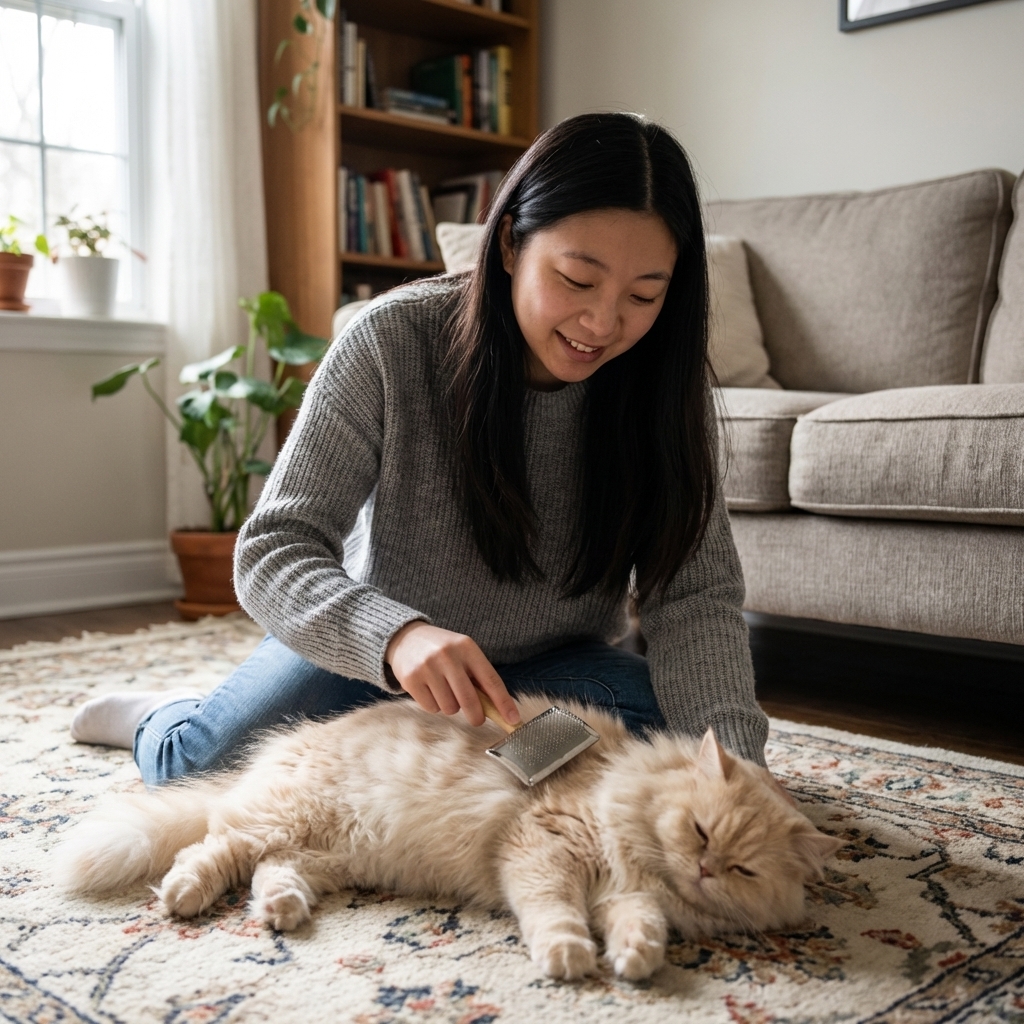
Step 5: Brush to reduce ongoing hair intake
This is prevention more than a fix, but it matters. Daily brushing during shedding seasons can dramatically decrease the amount of hair swallowed.
What not to do at home
- Do not give human laxatives or constipation products unless your veterinarian specifically instructs you to.
- Do not give oils like olive oil or mineral oil by mouth without veterinary advice. Aspiration risk is real in cats, and dosing is tricky.
- Do not “wait it out” if your cat is worsening, not eating, or repeatedly retching.
- Do not pull string if you see it. Go in.
What your vet may do (so you know what to expect)
If your cat needs to be seen, your veterinarian will typically start with an exam and a targeted history, then decide on next steps. Common diagnostics and treatments include:
- Hydration assessment and anti-nausea medication when appropriate
- Abdominal palpation to check for pain, constipation, or a firm mass
- X-rays to look for obstruction patterns or foreign material
- Ultrasound to assess intestinal walls, obstructive patterns, free fluid, and foreign material
- Bloodwork to check hydration status, kidney values, electrolytes, inflammation
- Fluids (subcutaneous or IV) if dehydration is present
- Endoscopy or surgery if obstruction is confirmed or strongly suspected
Prompt care can mean the difference between a simpler treatment plan and a more complicated emergency.
Quick checklist: is this likely a routine hairball?
This checklist does not replace veterinary advice, but it can help you decide how urgent things are.
More consistent with routine hairball
- One short episode of gagging or retching
- A hairball is produced
- Your cat returns to normal behavior within a few hours
- Normal appetite and normal litter box output
More concerning for blockage or another illness
- Repeated unproductive retching
- Multiple vomiting episodes, or vomiting continues into the next day
- Not eating, hiding, or low energy
- Abdominal pain, bloating, or litter box changes
- Episodes that sound like true coughing or wheezing, not gagging
If your gut is telling you your cat is “off,” trust that. Cats are masters at masking discomfort, and early intervention is often kinder and less costly.
Hairball blockage prevention that actually helps
This is not the typical “buy a hairball food” conversation. Prevention works best when it targets the reasons hairballs build up in the first place.
- Brush routinely, especially for longhaired cats and during seasonal shedding.
- Support hydration with wet food, water fountains, and extra bowls.
- Address constipation with your vet, especially in older cats. Constipation slows gut transit and can worsen hair accumulation.
- Ask about safe fiber options if your cat tends to hairballs. The right fiber can help move hair through the GI tract, but too much or the wrong type can backfire for some cats.
- Ask your vet about diet options if hairballs are frequent. Some cats do benefit from specific formulations or added fiber, and it is best individualized.
- Reduce stress and overgrooming triggers. Overgrooming can be driven by allergies, fleas, pain, or anxiety.
Bottom line
A routine hairball is usually a brief event with a quick return to normal. A possible blockage shows up as a pattern: repeated retching, persistent vomiting, appetite loss, lethargy, pain, and litter box changes.
If your cat is unproductive retching, cannot keep water down, seems painful, is acting unusually quiet or weak, has possible breathing-type coughing, or is straining to urinate, it is safest to call your veterinarian or go to an emergency clinic right away.