Stop fleas fast with a simple 3-part plan: use cat-safe medication, clean your home to break the life cycle, and prevent re-infestation for months. Avoid uns...
Article
•
Designer Mixes
Cat Fleas Symptoms Guide

Shari Shidate
Designer Mixes contributor
Fleas are tiny, fast, and incredibly good at hiding, but your cat’s body often gives you clues long before you ever spot a bug. As a veterinary assistant here in Frisco, Texas, I see this all the time: people think, “My cat never goes outside, so it can’t be fleas.” The truth is fleas can still show up indoors, especially if they are carried in by other pets, wildlife, or even people moving through shared spaces like hallways, yards, patios, or a new home where a previous pet lived.
This guide will help you recognize cat flea symptoms at every life stage, know what is normal versus urgent, and take practical steps that actually work.
Quick flea facts (so the symptoms make sense)
Adult fleas live on the pet, but a large portion of the flea population in a home is often off the pet as eggs, larvae, and pupae in carpeting, bedding, and cracks in floors. That matters because your cat can keep itching even after you kill the adult fleas if the environment is still hatching new ones.
- Flea saliva is what triggers itching and allergic reactions.
- One bite can cause big symptoms in sensitive cats.
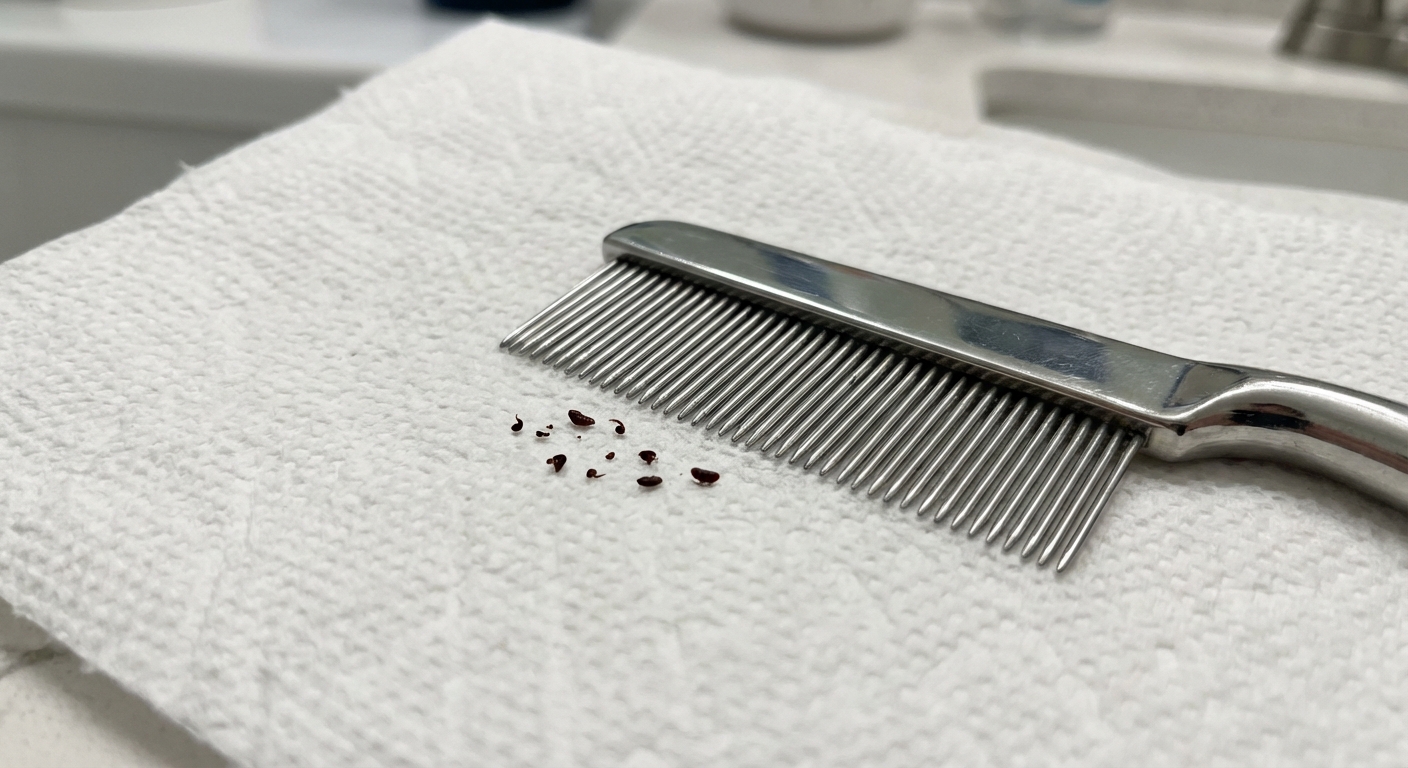
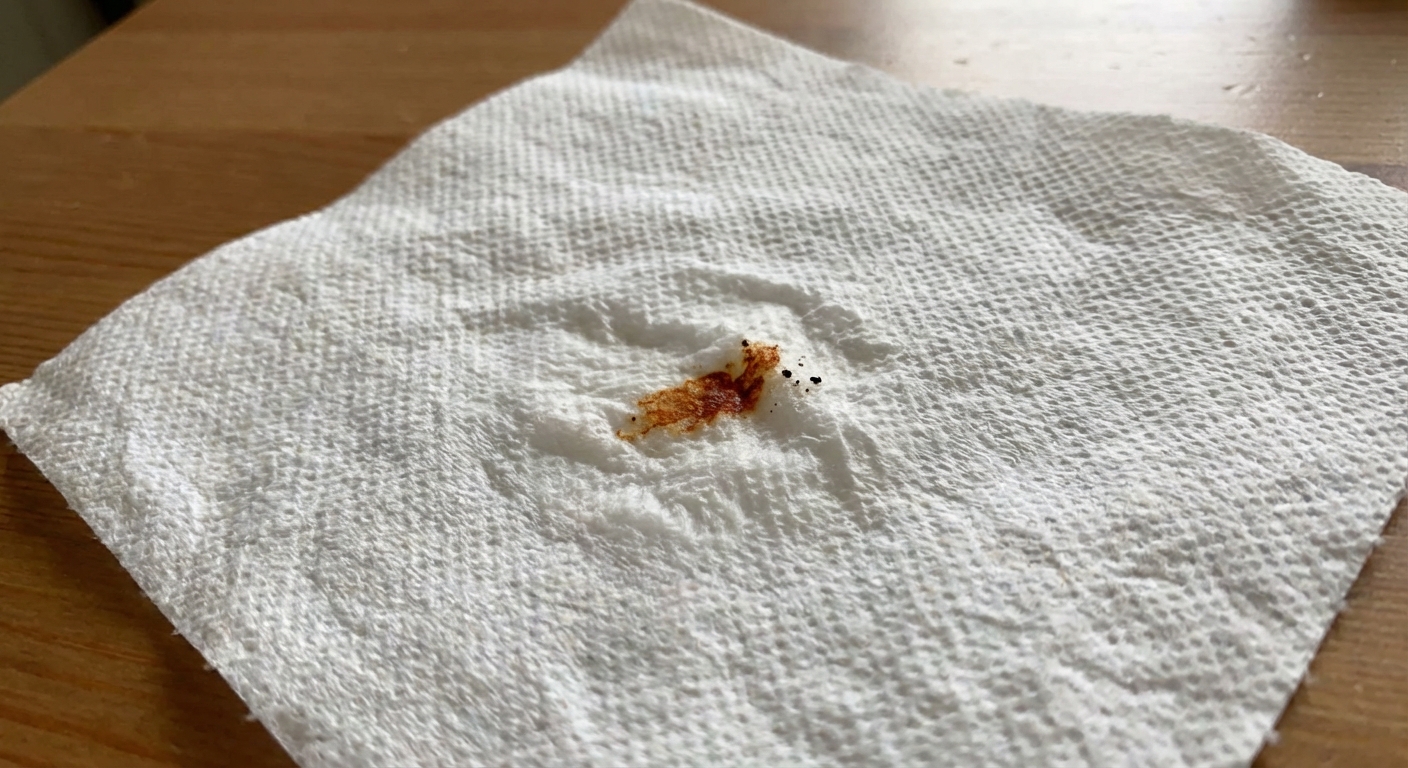
- Flea dirt looks like black pepper and turns reddish-brown when wet.
Most common cat flea symptoms (all ages)
1) Itching and over-grooming
The #1 sign is persistent scratching or licking, especially around the lower back, base of the tail, belly, and inner thighs. Many cats do not scratch dramatically. They “barber” their coat by licking so much that fur breaks off.
2) Skin changes
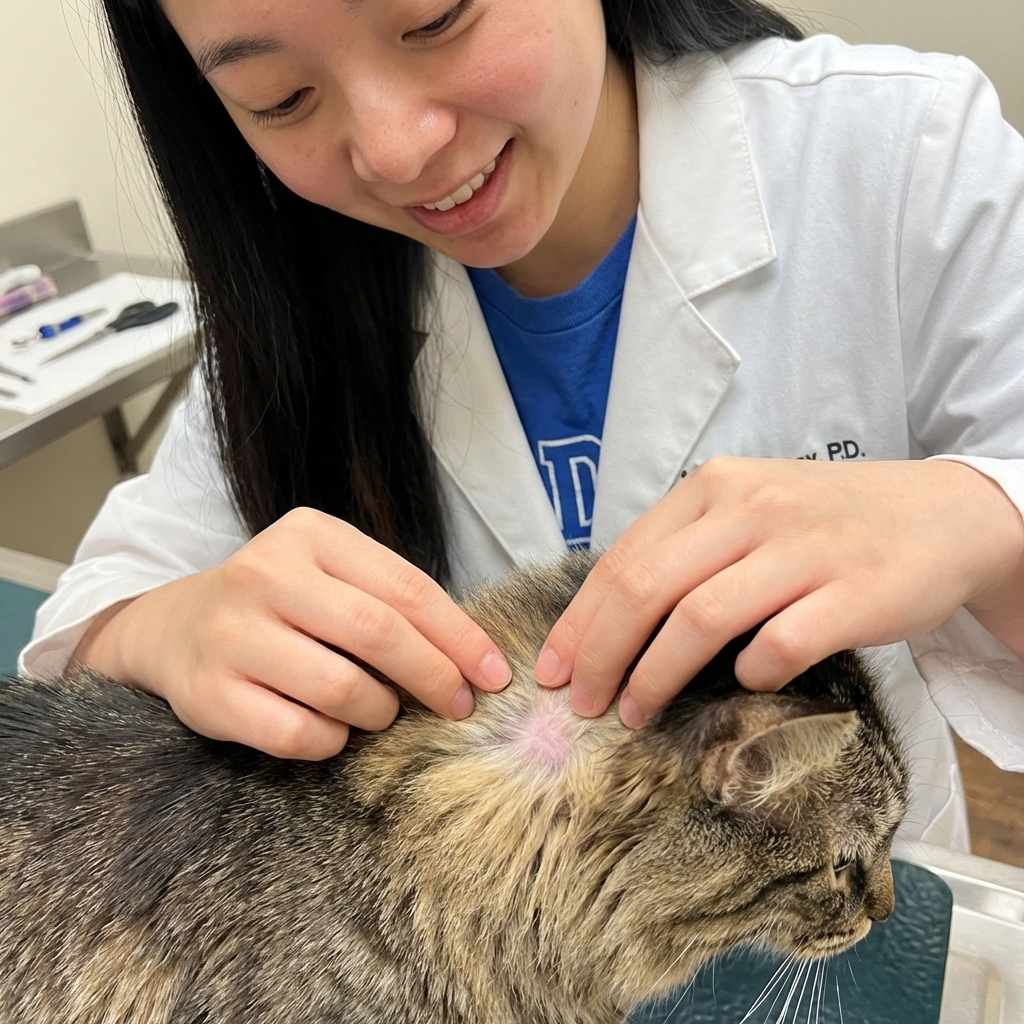
- Small red bumps or scabs, often on the neck and along the back
- Hair loss, especially at the tail base
- Thickened skin or darkened patches in chronic cases
- Hot spots (moist, inflamed skin) can happen, though they are more common in dogs
3) Flea dirt or actual fleas
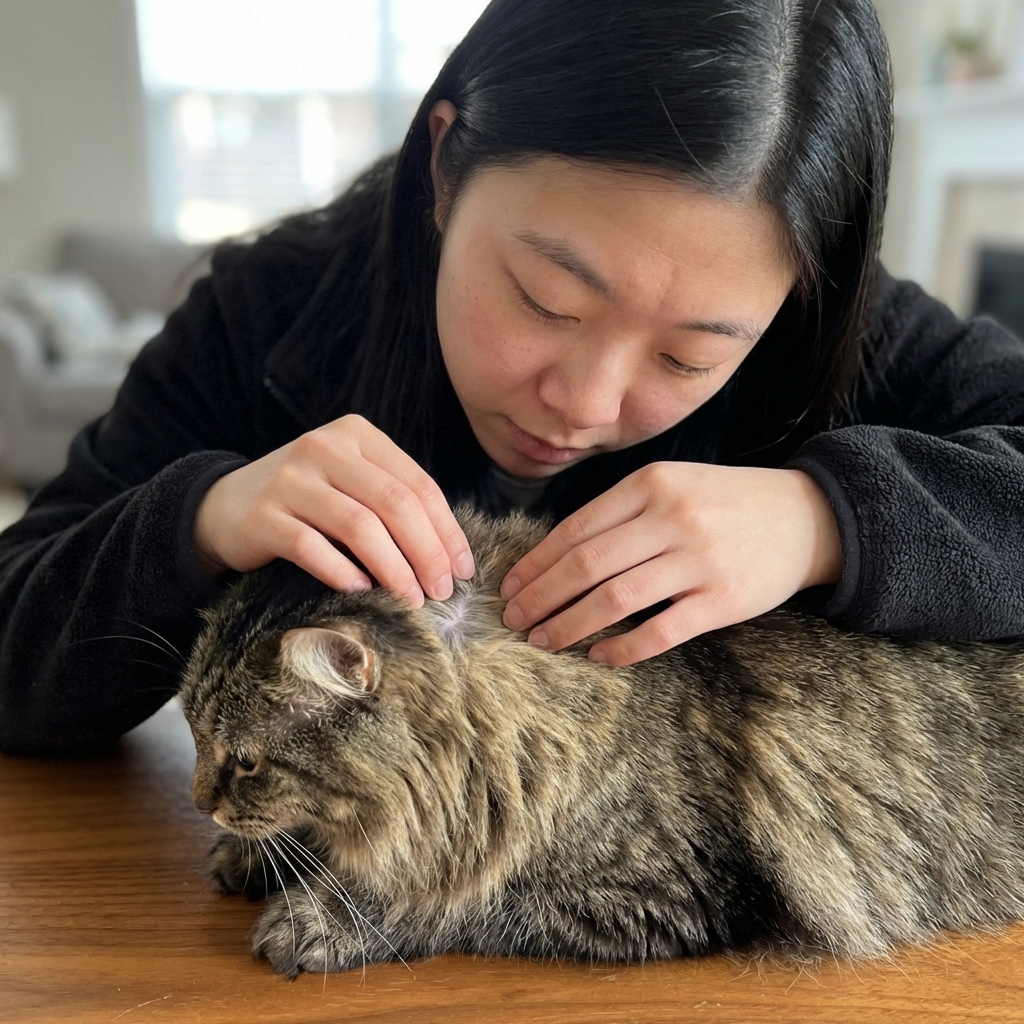
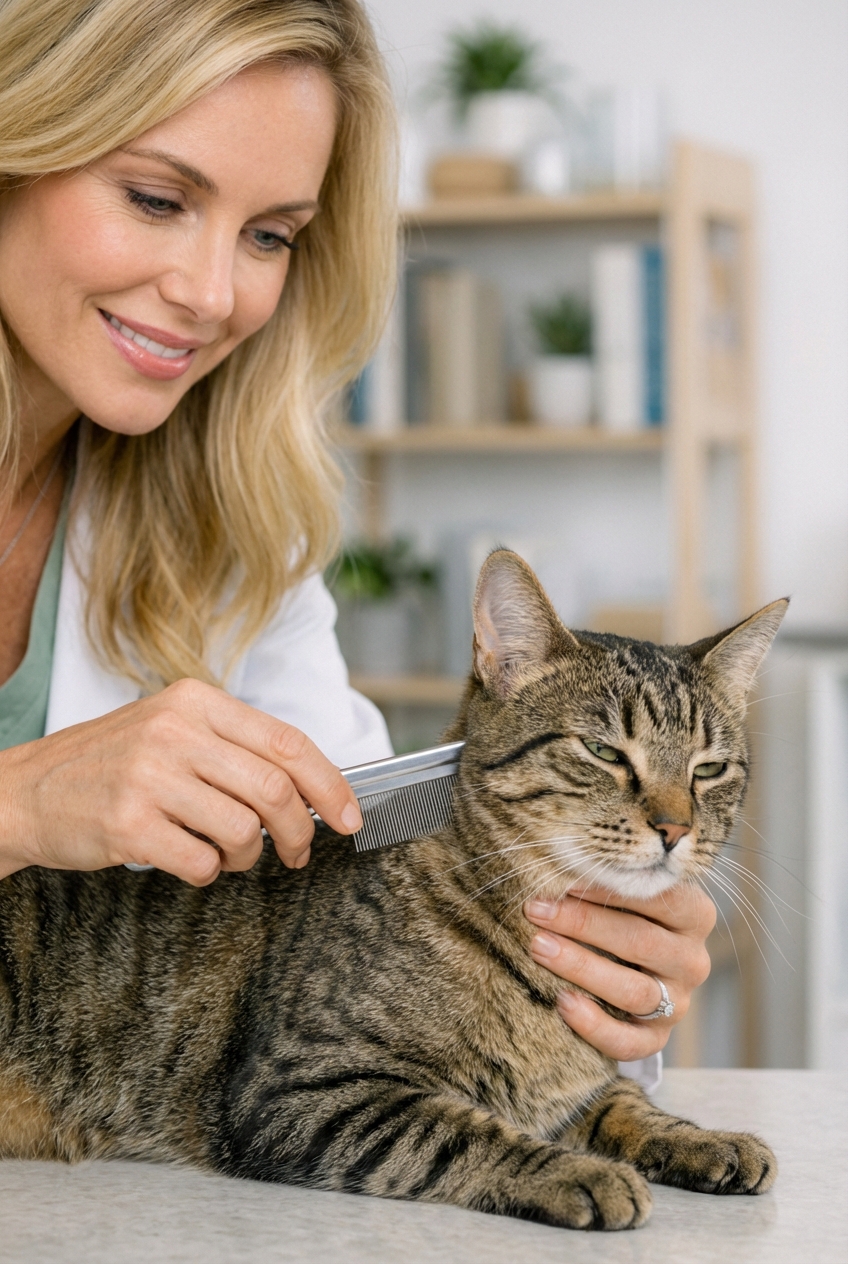
You might see fleas moving quickly when you part the fur, but flea dirt is often easier to find. Use a flea comb and check around the tail base and neck.
4) Restlessness and behavior changes
Some cats hide, seem irritable, or won’t settle. Chronic itching can disrupt sleep and appetite. In the clinic, we hear this described as “my cat is cranky and on edge” just as often as “my cat is scratching.”
5) Pale gums or weakness (more serious)
Heavy infestations can cause anemia, especially in kittens. Pale gums, lethargy, or rapid breathing should be treated as urgent. (Rapid or labored breathing is a general emergency sign in cats, and it is especially concerning if you also suspect anemia.)
Flea symptoms by age
Fleas can look a little different depending on age, coat type, and how sensitive your cat is to flea saliva. Here is what I tell families to watch for.
Kittens (0 to 6 months)
Kittens can go from “fine” to “dangerously anemic” faster than you’d expect. Their small body size means blood loss adds up quickly.
- Signs to watch: pale gums, low energy, poor weight gain, weakness, cool ears or paws
- Itching may be subtle: they may just seem fussy or not sleep well
Important: Do not use random over-the-counter flea products on kittens. Many products have minimum age and weight limits (commonly around 8 weeks and about 2 pounds, but it varies by product), and some dog products are toxic to cats. Very young kittens often need a vet-guided plan. Your vet can recommend kitten-safe options based on age, weight, and overall health.
Adult cats (6 months to senior)
Adults often show classic symptoms: over-grooming, scabs, and visible flea dirt. Even a single flea can create a big reaction if your cat has flea allergy dermatitis.
- Common pattern: intense itch at the tail base with small scabs along the back
- May look like: “mystery anxiety grooming” or stress, but fleas are a frequent culprit
Senior cats
Older cats may have thinner skin and may not groom as efficiently, so you might see more dandruff-like debris and patchy hair loss. Also, seniors may have other conditions that look similar (arthritis leading to poor grooming, thyroid issues, or skin infections), so it’s worth a vet check if symptoms persist. In the clinic, we often confirm fleas and still recommend checking for a second issue if the skin is not improving on a solid prevention plan.
Flea allergy dermatitis
Some cats are allergic to flea saliva. In those cats, you may not find many fleas at all, but you will see big symptoms.
- Intense itching
- Scabs and crusting, often around the neck and along the back
- Hair loss at the tail base
- Secondary skin infection from self-trauma
If your cat has flea allergy dermatitis, the goal is not “mostly flea-free.” The goal is zero bites, which usually means consistent vet-recommended prevention for every pet in the household.
How to check your cat for fleas at home
Step 1: Do a quick “hot zone” scan
Part the fur at the base of the tail, around the neck, and on the belly. Look for moving fleas or black specks.
Step 2: Use a flea comb
Comb in short strokes, especially at the tail base. Tap the comb onto a damp white paper towel.
Step 3: Do the flea dirt test
If the black specks smear reddish-brown when wet, that is consistent with flea dirt (digested blood).
Symptoms that can look like fleas
Itching is a symptom, not a diagnosis. If you have treated for fleas correctly and itching continues, consider these common look-alikes:
- Food allergies: often year-round itching, sometimes with vomiting or soft stools
- Environmental allergies: seasonal flare-ups, face and paw itching can be common
- Mites (ear mites, mange): intense itch, ear debris, crusting in certain areas
- Ringworm: patchy hair loss, sometimes minimal itch, contagious to people and pets
- Skin infection: odor, redness, oozing, scabs that keep returning
- Stress grooming: over-grooming without flea dirt, often belly or legs, can be linked to household changes
If you are unsure, a vet visit can save you time and money. We can often confirm fleas or flea dirt quickly, and rule out other causes.
What to do if you see flea symptoms
1) Treat every pet in the home
If you have a dog and a cat, both need a cat-safe and dog-safe flea preventive. If only one pet is treated, fleas can keep cycling between pets and the home environment, and it can feel like you are never getting ahead.
2) Choose a reliable preventive and stay on schedule
Evidence-based flea control usually comes down to consistent prevention, often a topical or oral (and sometimes prescription) product used monthly or on the interval your veterinarian recommends. Ask your veterinarian which option fits your cat’s age, weight, lifestyle, and medical history.
Safety note: Never use dog flea products on cats. Some ingredients used for dogs can be life-threatening to cats.
3) Address the environment
- Vacuum carpets, rugs, and baseboards regularly
- Wash pet bedding in hot water
- Empty the vacuum canister or bag promptly
Environmental steps help break the life cycle so you are not stuck in a “fleas keep coming back” loop.
4) Set a realistic timeline
Even with the right prevention, flea control can take time because pupae in the environment can keep emerging. Many households see steady improvement over 2 to 8+ weeks depending on the level of infestation and how consistently pets and the home are treated.
5) Soothe the skin and prevent secondary infection
If your cat has scabs, open sores, or significant redness, they may need prescription help to calm inflammation and treat infection. Avoid using human creams or essential oils. Many are unsafe for cats.
6) Ask about tapeworms
This surprises a lot of families: cats can get tapeworms from swallowing fleas while grooming. If you find fleas (or suspect them), ask your veterinarian whether your cat should also be treated for tapeworms.
When to call the vet right away
- Kitten with any suspected fleas plus weakness, pale gums, or not eating
- Rapid or labored breathing, collapse, or extreme lethargy
- Open sores, swelling, pus, or a strong skin odor
- Hair loss that is spreading quickly
- Itching that does not improve after using vet-recommended flea prevention as directed
Simple flea checklist
If you have children helping care for a family cat, this is a safe way to get them involved without fear or confusion. Think: observe, then tell an adult.
- Fur: Is there a new bald spot or thinning area?
- Skin: Any tiny scabs, red bumps, or crusty patches?
- Scratch count: Is your cat scratching more than usual today?
- Flea dirt: Any black specks that smear reddish-brown on a wet paper towel?
- Energy: Is your cat acting tired, hiding, or not playing?
Action step: If you check two or more boxes, it is time to do a flea comb check and contact your veterinarian about prevention. If you notice even one urgent sign like pale gums, severe weakness, or trouble breathing, contact a veterinarian right away.