Indoor cats thrive with choice and stimulation. Learn a simple daily plan with play sessions, vertical space, food enrichment, scratching setup, litter box t...
Article
•
Designer Mixes
Cat Enrichment Ideas for Small Apartments

Shari Shidate
Designer Mixes contributor
Living in a small apartment does not mean your cat has to live a small life. Cats are built for hunting, climbing, exploring, and solving little “puzzles” all day long. When their environment is predictable and a bit skimpy on stimulation, boredom can show up as nighttime zoomies, scratching, overeating, or clingy behavior.
The good news is that enrichment is more about smart setup than square footage. With a few simple changes, you can meet your cat’s needs for movement, mental challenge, and comfort without turning your home into a pet store aisle.
What enrichment really means
In veterinary behavior terms, enrichment supports normal species behaviors and reduces stress. For cats in particular, that usually comes down to these essentials:
- Vertical space (cats often feel safer and more confident when they can climb and perch)
- Hunting and foraging (cats naturally work for food in small “wins” throughout the day)
- Play that mimics prey (stalk, chase, pounce, catch)
- Choice and control (multiple resting spots, escape routes, and quiet areas)
- Predictability with variety (routine plus rotating novelty)
If you focus on those five, you can create a rich environment even in a studio apartment.
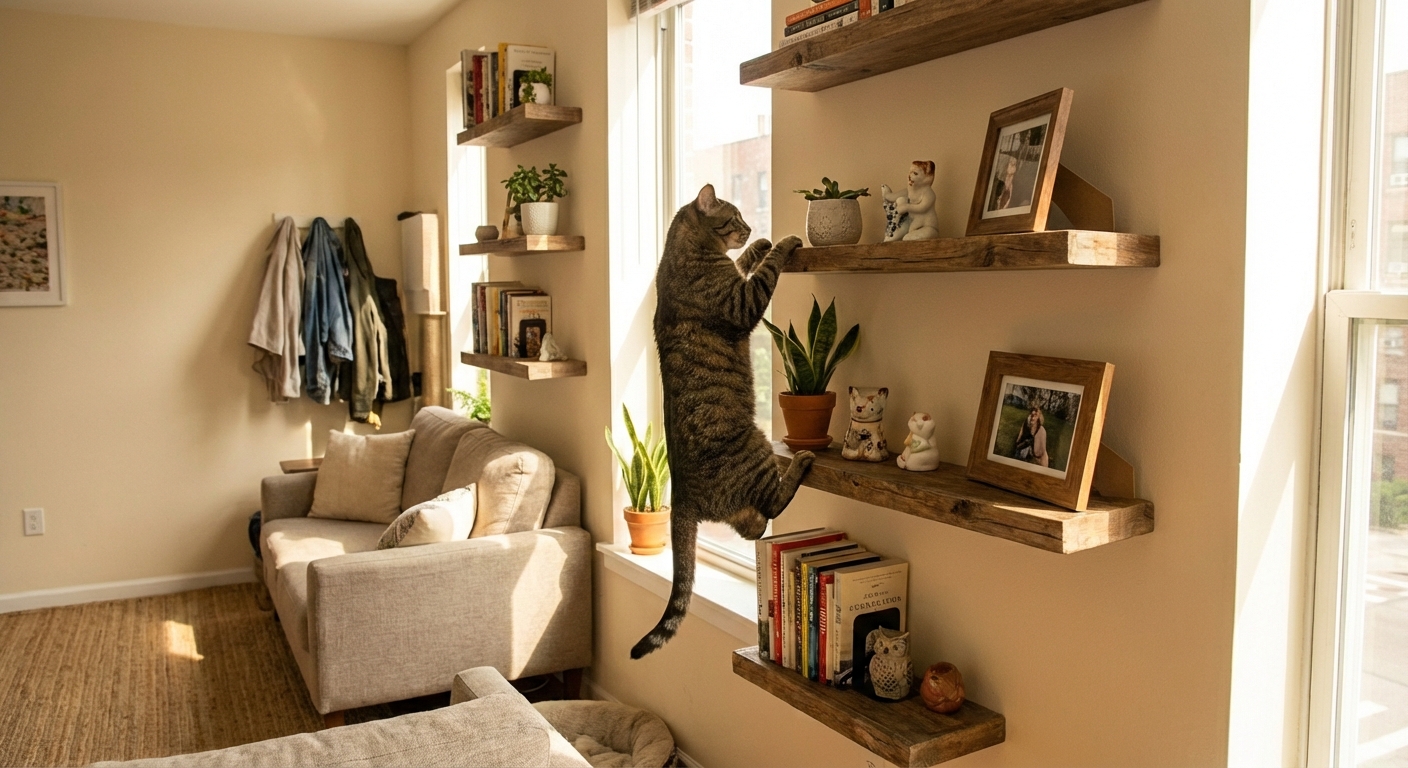
Go vertical to add space
Vertical territory is one of the best small-space hacks. Think of your apartment like a jungle gym with pathways. A confident cat often behaves like a calmer cat.
Easy vertical upgrades
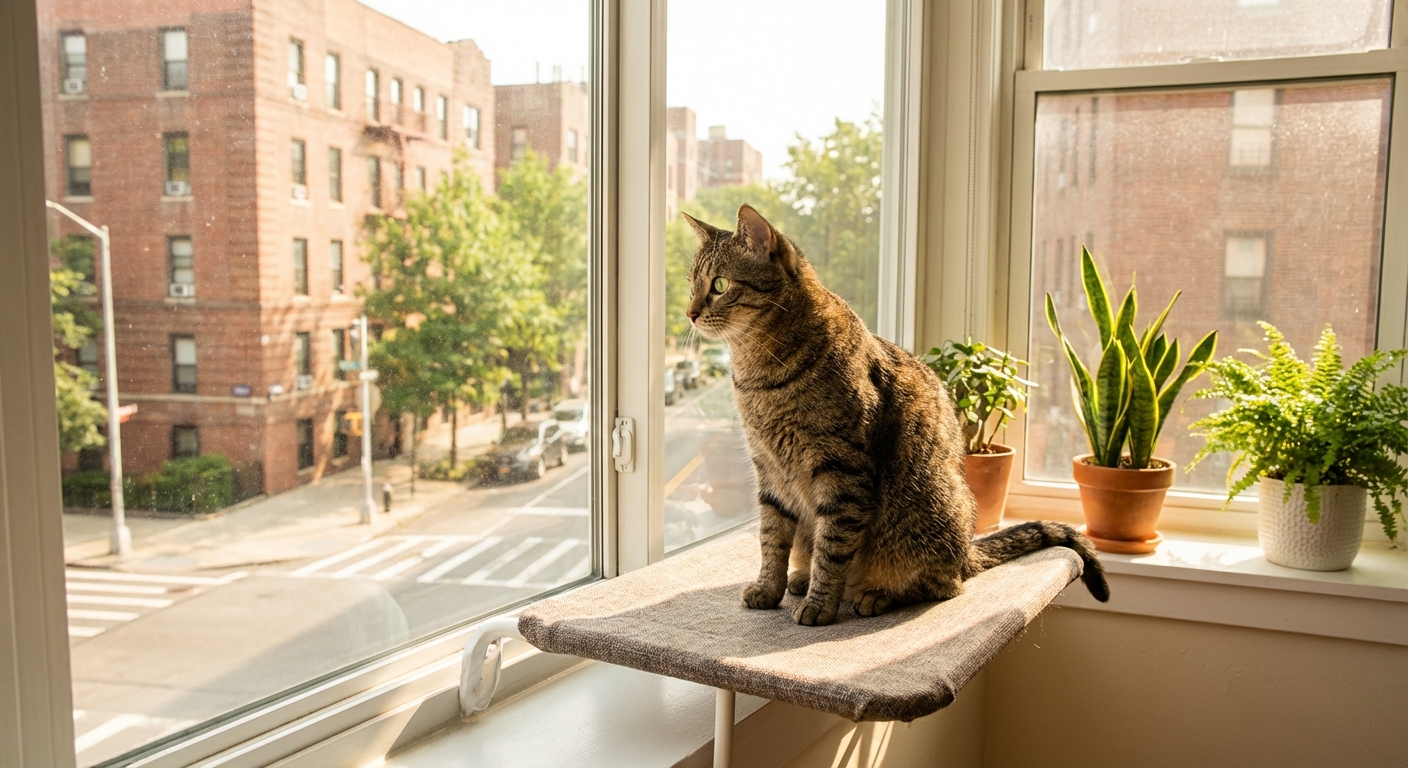
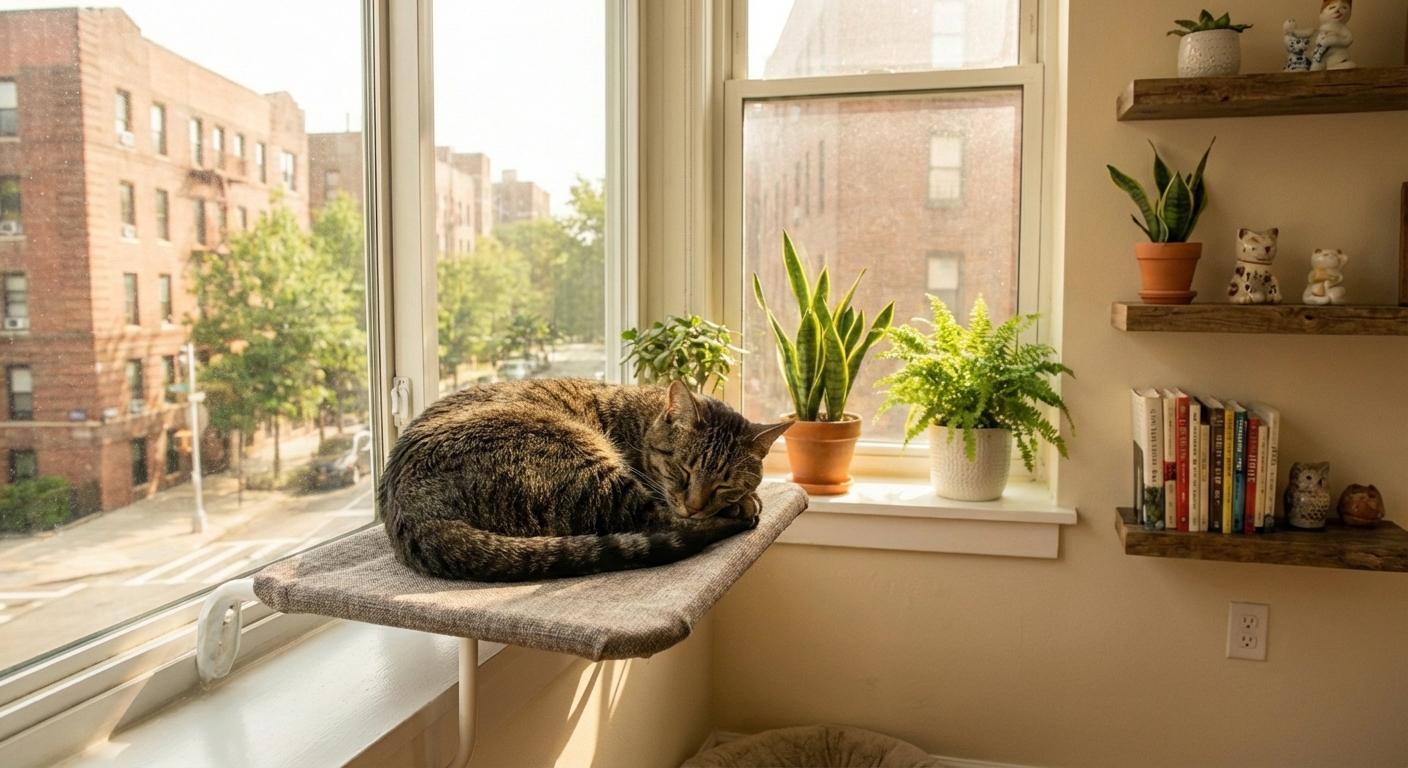
- Window perch: A suction-cup or bracketed perch gives your cat a “cat TV” seat without taking floor space.
- Tall cat tree: If you can fit only one big item, make it tall rather than wide.
- Wall shelves: A few sturdy shelves spaced like steps can become a climbing route. Add a non-slip surface for safety.
- Top-of-furniture spots: A folded blanket on top of a bookcase can become a favorite lookout.
Safety note: Secure anything your cat might jump onto. Cats are athletic, but misjudgments happen, especially with kittens, seniors, or cats with arthritis.
Turn meals into an activity
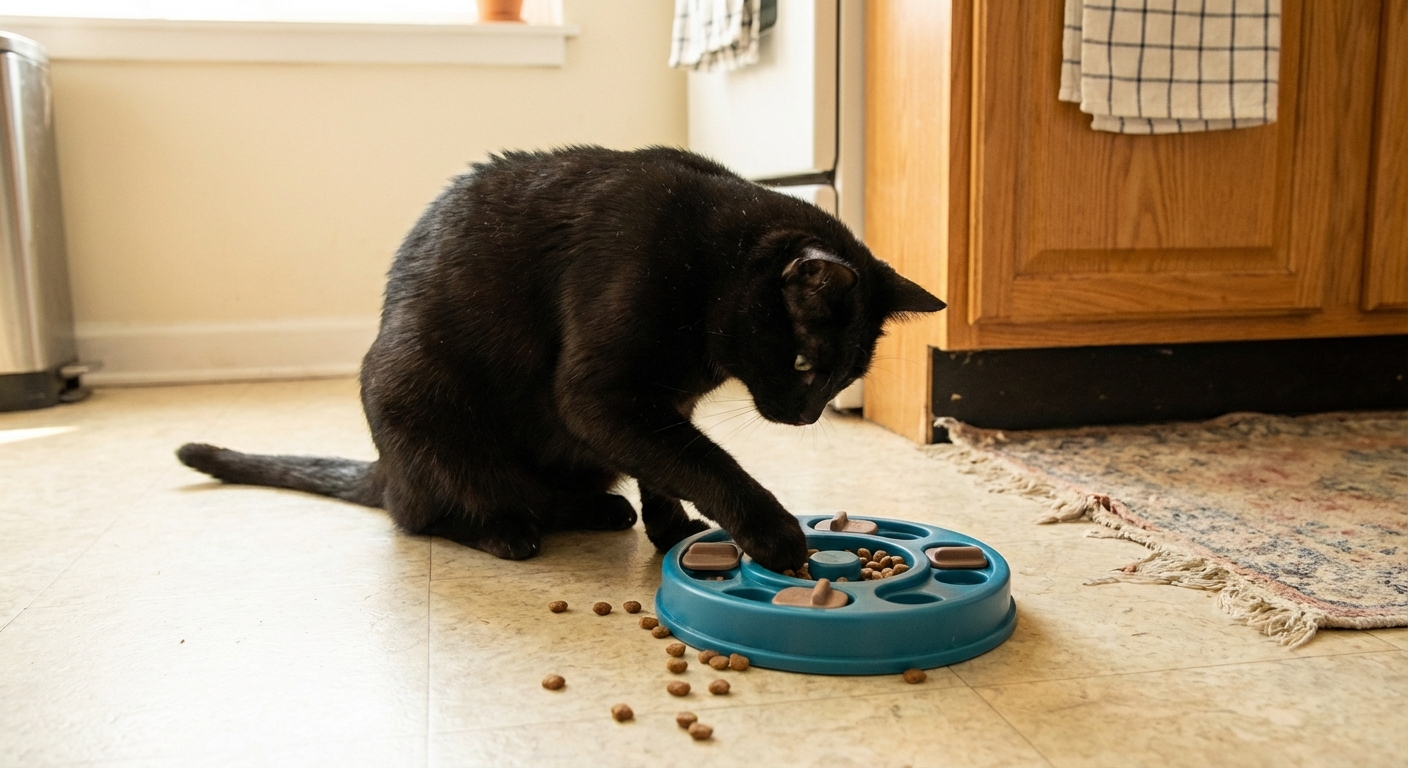
One of the most well-supported enrichment tools is food foraging, and it is commonly recommended in feline environmental needs guidelines (such as AAFP and ISFM resources). Instead of eating in 30 seconds from a bowl, your cat gets to problem-solve and “hunt.” This can help with boredom and can support healthier weight management when paired with appropriate portions.
Apartment-friendly foraging ideas
- Puzzle feeder: Start easy, then increase difficulty as your cat learns.
- Treat “treasure hunt”: Hide a few pieces of kibble in safe spots around one room to begin.
- Muffin tin game: Place kibble in a few cups and cover some with cat-safe balls or crumpled paper.
- Multiple micro-stations: Set out 3 to 5 tiny food stations rather than one main bowl.
Tip from the clinic: If your cat is new to puzzles, frustration can backfire. Make the first week very easy so your cat gets quick wins.
Play that satisfies
Many cats will bat at a toy for 20 seconds and walk away, and owners assume their cat is not playful. Often the toy is just not being used in a prey-like way.
The hunt sequence
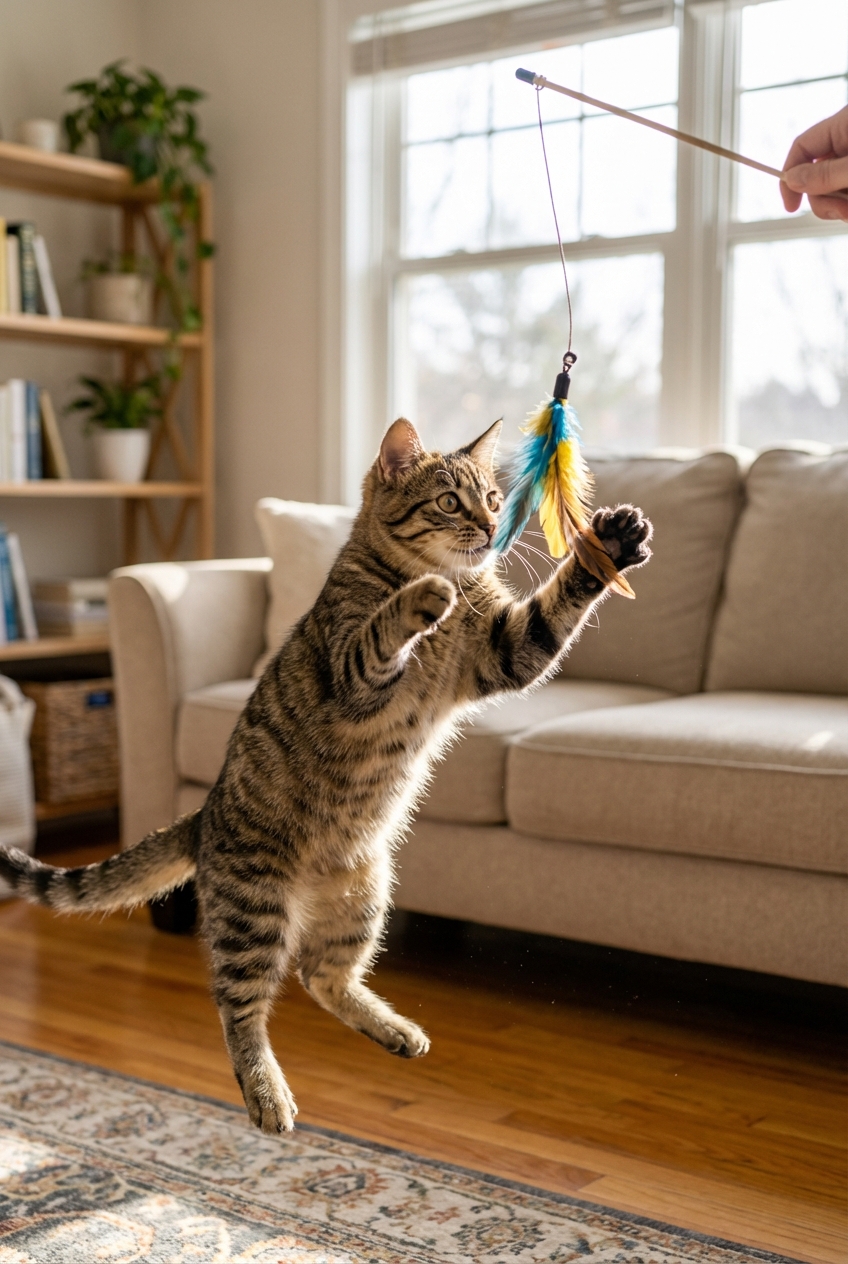
- Stalk: Move a wand toy slowly behind a chair or along the edge of a rug.
- Chase: Speed up in short bursts. Let your cat follow.
- Pounce: Pause the toy so your cat can catch it.
- Catch and chew: Let your cat hold it for a few seconds.
- End with a small snack or meal: This helps complete the cycle and can reduce post-play frustration.
Many cats do well with two to three short play sessions a day (even 5 to 10 minutes), but adjust based on age, health, and energy level.
Small-space toy picks
- Wand toys with interchangeable attachments
- Soft kick toys (great for high-energy cats)
- Lightweight balls that do not damage floors
- Crinkle tunnels that fold flat for storage
Toy safety note: Supervise wand toys and anything with string, feathers, or ribbons, then put them away after play. If it can be swallowed, it does not belong out unattended.
Skip laser-only play: Laser toys can be fun, but some cats do best when they get the satisfaction of catching something tangible. If you use a laser, finish by directing your cat to a toy they can grab or to a small treat.
Make windows work
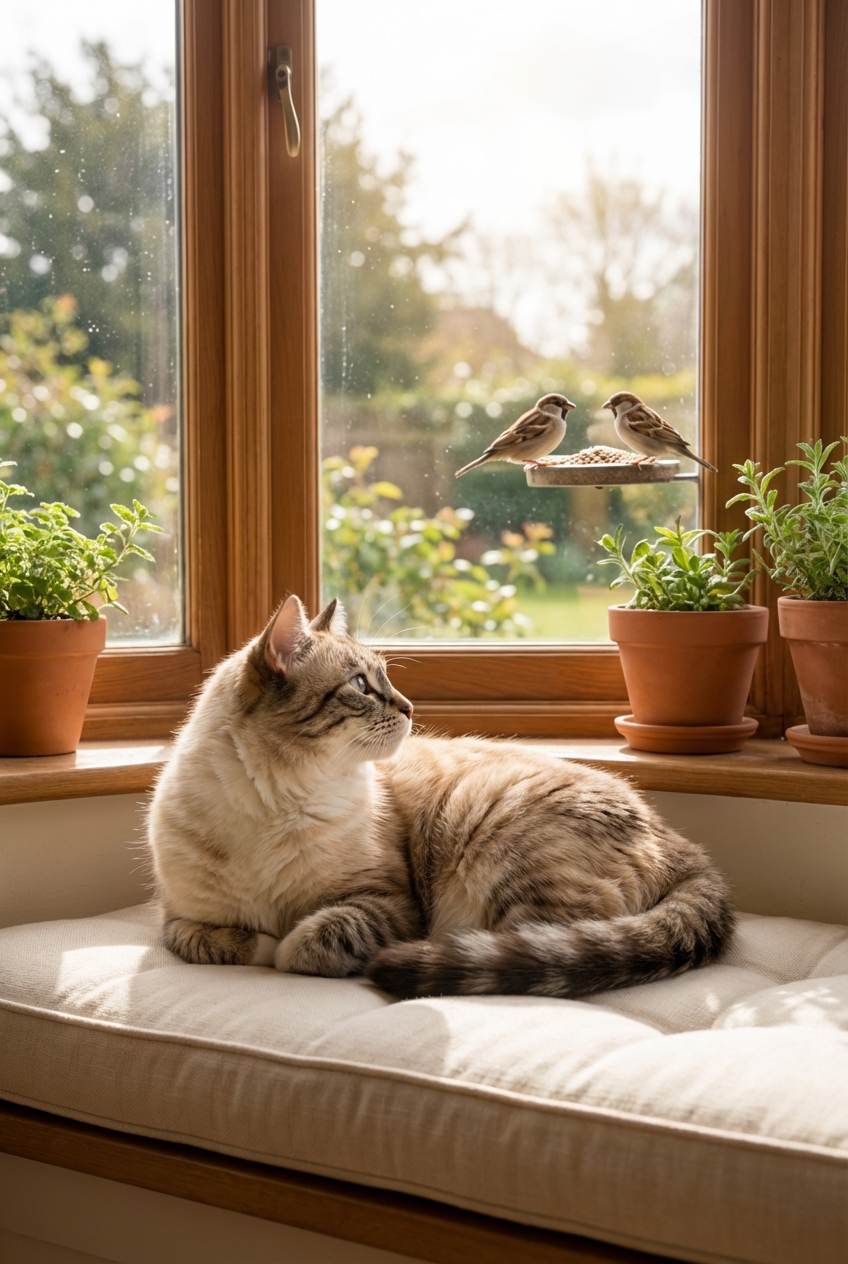
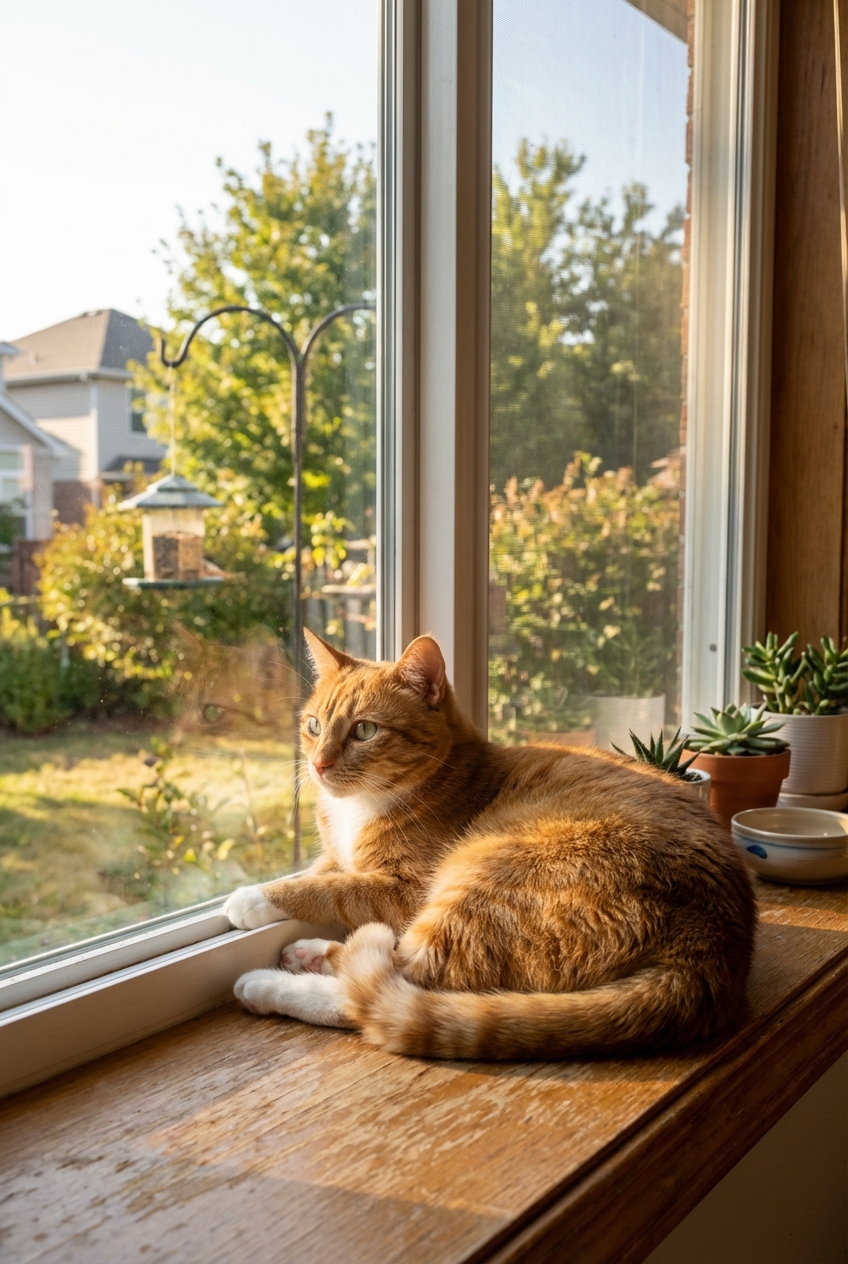
For apartment cats, windows are premium entertainment and enrichment. A single good window setup can improve a cat’s daily life dramatically.
Window checklist
- Comfortable perch: Stable and sized for your cat.
- Visual interest: Birds, people, or tree movement.
- Optional bird feeder outside: Only if allowed and safe for your building and local wildlife rules.
- Sun and shade options: Cats love warmth, but should be able to move away if they get too hot.
Scratch zones
Scratching is not misbehavior. It is normal maintenance and communication. In small apartments, the key is giving your cat better scratch options than your couch.
Set up scratching success
- Offer both vertical and horizontal scratchers: Cats have preferences.
- Place scratchers where your cat already scratches: Then gradually reposition if needed.
- Put a scratcher near sleeping spots: Many cats scratch after waking.
- Use attraction tools: Catnip, silvervine, or a tiny smear of wet food on the edge to encourage investigation.
Clinic reminder: If scratching suddenly increases or your cat seems restless, consider a vet check. Pain, stress, or changes in the home can all show up as behavior shifts.
Safe bubbles and quiet zones
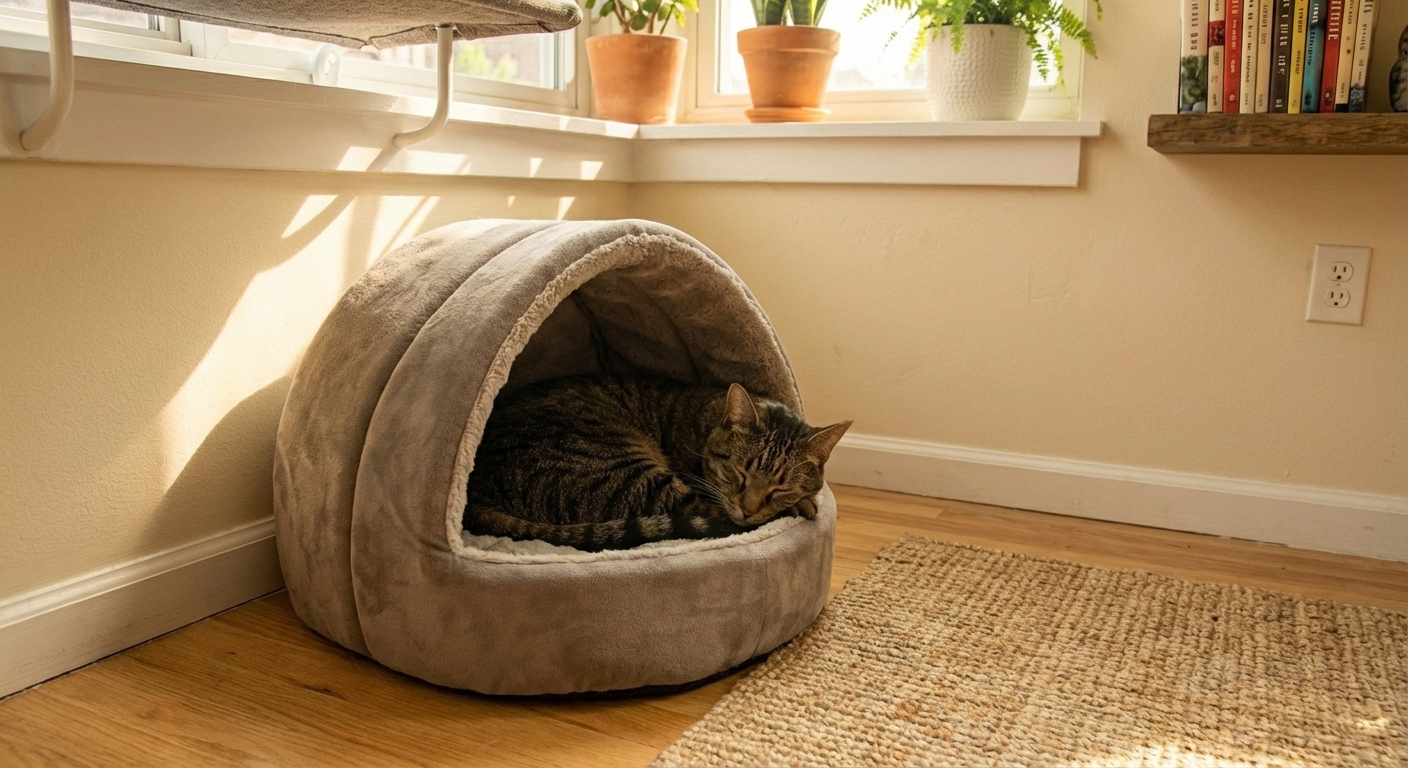
In tight living quarters, cats can feel exposed. Providing privacy reduces stress and can prevent conflict in multi-cat homes.
Simple comfort upgrades
- Covered bed or cube: A cozy retreat in a low-traffic corner.
- Under-bed access: If safe, this can be a secure hideout. If it becomes a “never come out” zone, block it and provide a better hiding place.
- Soft background sound: A fan or white noise can help in noisy buildings.
- Scent comfort: Consider a feline facial pheromone diffuser in the main room, especially during transitions.
Litter box setup
Litter box stress is a big deal in small homes. A few placement tweaks can improve comfort, reduce odors, and prevent “accidents” that are really just communication.
Small-apartment litter tips
- Quantity guideline: Many behavior pros suggest one box per cat, plus one extra when possible. In a tiny space, do your best and focus on quality and placement.
- Spread resources out: If you have multiple boxes, do not line them up like stalls. Give your cat options in different areas.
- Privacy, not isolation: Choose low-traffic locations, but avoid trapping your cat in a dead-end corner.
- Away from food and water: Most cats prefer separation.
- Easy access: Low-entry boxes help seniors or cats with joint pain.
- Clean matters: Scoop daily and do a regular full litter refresh based on your litter type.
Rotate novelty
You do not need 30 toys on the floor. In fact, too many items can feel chaotic in a small space. Rotation keeps things interesting and makes your cat’s environment feel “new” again.
An easy rotation system
- Keep 3 to 5 toys out at a time.
- Store the rest in a small bin.
- Swap toys every 7 to 10 days.
- Add novelty with household items: a paper bag (handles removed), a cardboard box, or packing paper.
Safety note: Supervise string, ribbons, hair ties, and anything that can be swallowed.
Training and social time
Training sounds fancy, but it is really just communication and confidence-building. A minute or two of positive reinforcement can give your cat mental work without taking up any space.
Easy skills to teach
- Touch: Teach your cat to boop your hand. Great for redirecting and moving them calmly.
- Come: Useful for safety and daily routines.
- Carrier comfort: Leave the carrier out with a soft blanket and occasional treats so it stops being a “scary object.”
Multi-cat note: In small apartments, resource distribution matters. Aim for multiple resting spots, scratchers, and feeding stations so one cat cannot guard everything.
Senior and mobility-friendly ideas
Not every cat wants to leap to the top shelf, and that is okay. Older cats still need enrichment, just with gentler access.
- Lower climbing steps: Use a short ottoman or sturdy step to reach a couch perch.
- Warmth support: A pet-safe heated bed can be deeply comforting for stiff joints. Choose a low-temperature model, protect cords, and ask your vet if your cat has medical conditions that affect heat tolerance.
- Sniff games: Hide treats in easy-to-reach spots, not up high.
- Short, frequent play: Slow wand play close to the ground is often a hit.
Quick routine
If you like simple routines, here is one that works well for many apartment cats:
- Morning: 3 to 5 minutes of wand play, then breakfast in a puzzle feeder.
- Midday: A few hidden kibbles or a short training session (touch, come, carrier treats).
- Evening: 5 minutes of play, then dinner, then a calm wind-down window perch or cuddle time.
Consistency helps. Cats feel safer when they can predict the rhythm of the day.
Fast recap
- Add vertical routes and one great perch
- Build in foraging at least once a day
- Play like prey, then let your cat “catch” and finish with food
- Protect sleep and hiding spots
- Keep litter boxes accessible and low-stress
- Rotate a few toys instead of piling them up
When to check with your vet
Enrichment helps many behavior challenges, but it is not a substitute for medical care. Talk with your veterinarian if you notice:
- Sudden aggression or hiding
- Changes in litter box habits
- Over-grooming or skin sores
- Reduced jumping or stiffness (possible arthritis)
- Changes in appetite, thirst, or weight
As a veterinary assistant, I have seen so many “behavior problems” improve once discomfort or illness is addressed. A healthy body makes enrichment work better.