From happy purring drool to dental pain, nausea, toxins, or heatstroke—learn what cat drooling can mean. Follow a step-by-step checklist and know when to c...
Article
•
Designer Mixes
Cat Drooling Excessively

Shari Shidate
Designer Mixes contributor
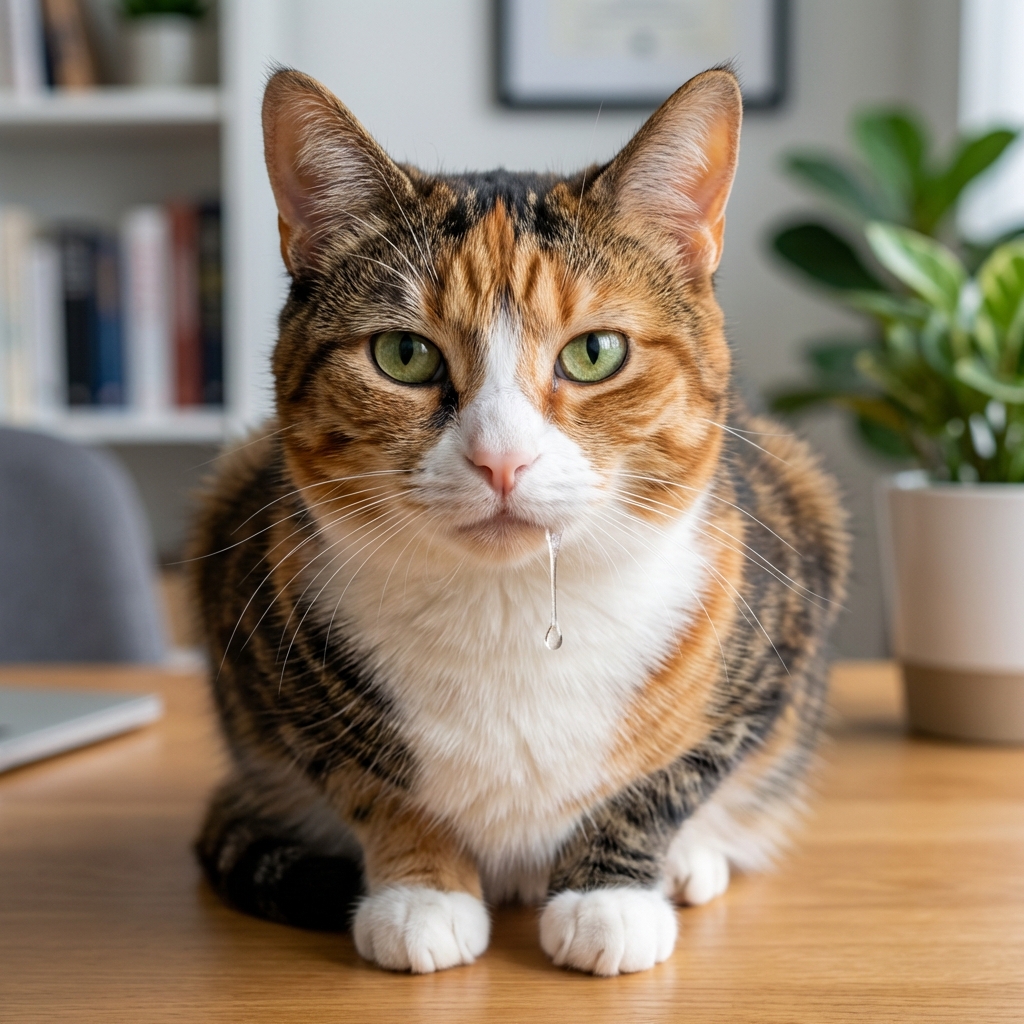
Seeing your cat drool can be surprising, and sometimes it is completely normal. Other times, it can be your cat’s way of showing discomfort, nausea, or trouble breathing. As a veterinary assistant, I always encourage pet parents to look at the whole picture: when the drooling started, how much there is, what else is going on, and whether your cat seems comfortable.
This vet-team-informed overview will help you sort out what is benign versus what needs prompt care, plus what you can do at home today.
Quick note: This article is for education and does not replace an exam. If you are worried, contact your veterinarian or an emergency clinic.
Is cat drooling ever normal?
Yes. Mild, occasional drooling can be normal in a few situations:
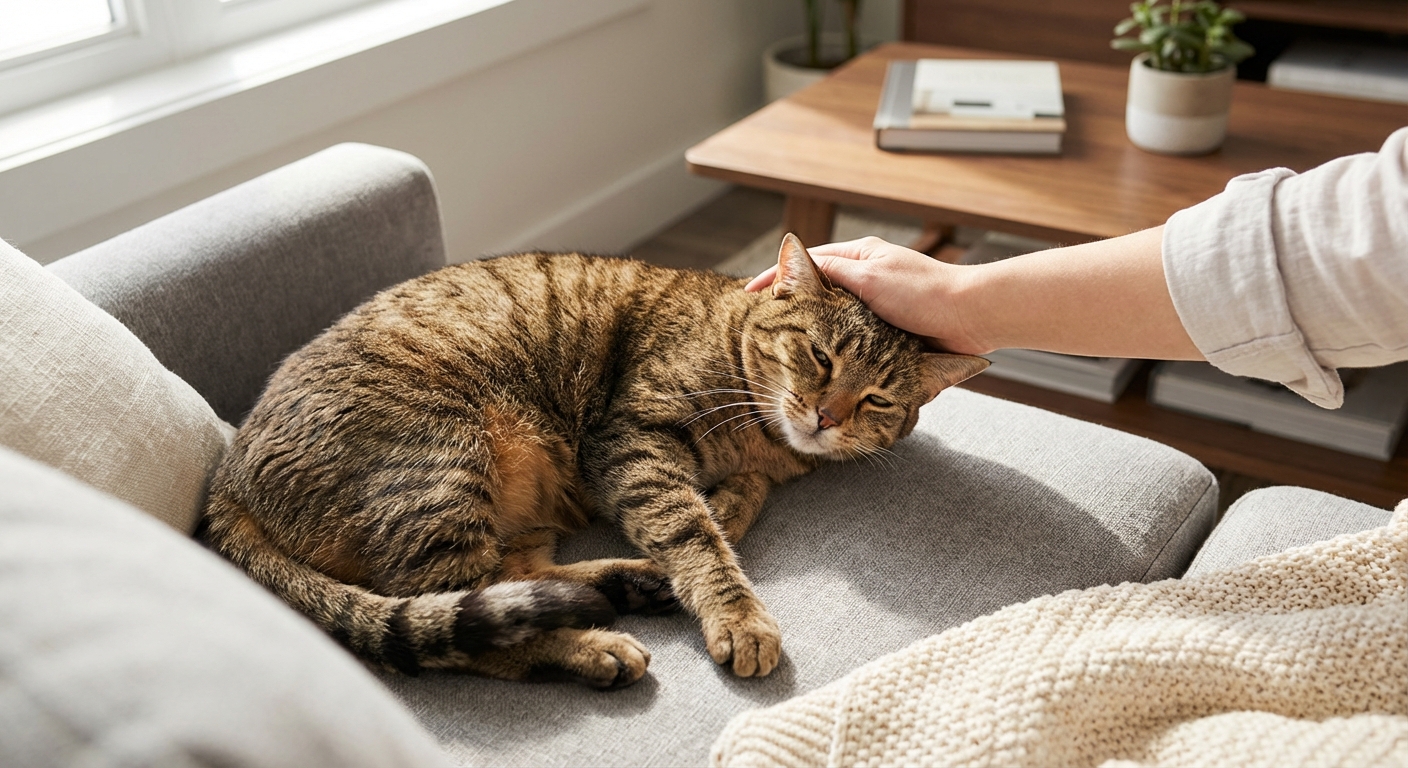
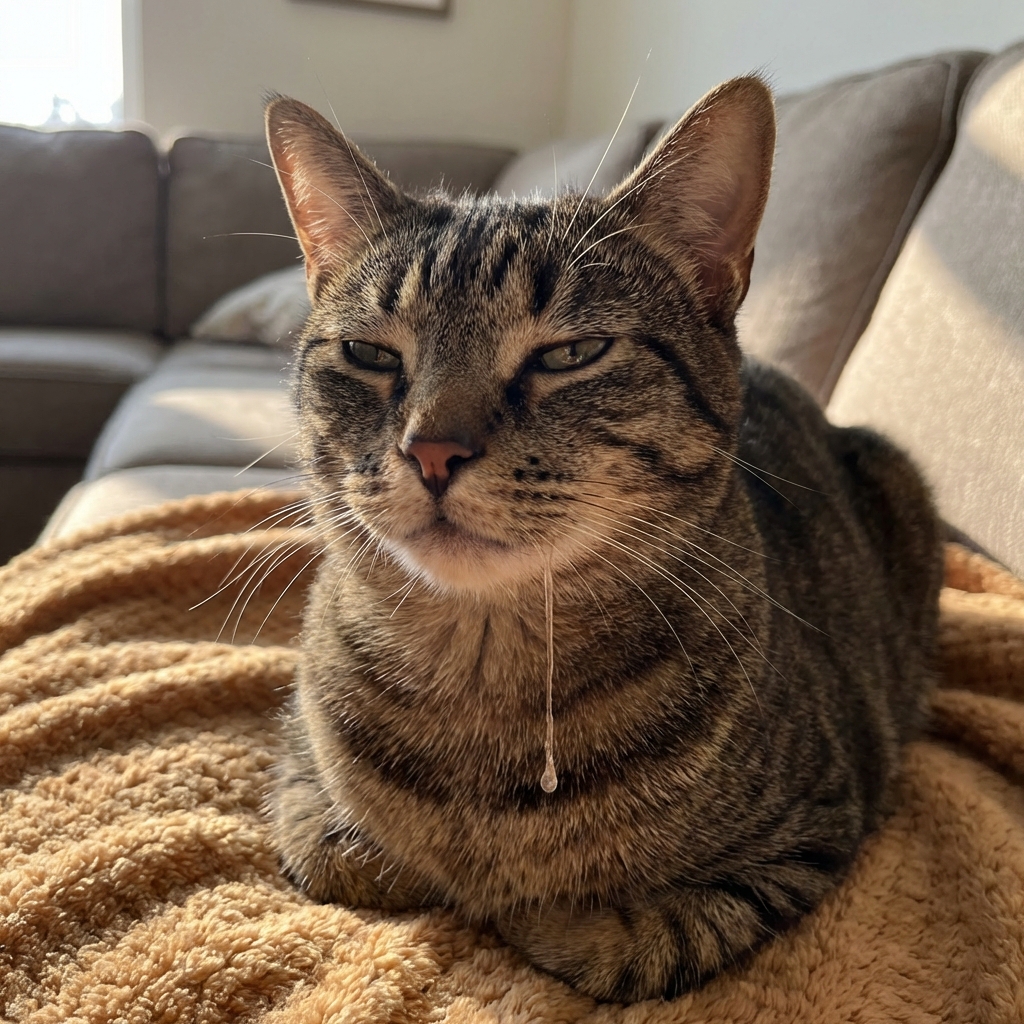
- Deep relaxation and purring: Some cats drool when they are extremely content, kneading, or purring.
- Stress or motion sickness: Car rides can trigger drooling from stress and nausea in some cats, and it usually resolves after the ride ends.
- Smelling something very tasty: Anticipation of food can cause temporary salivation in some cats.
- After bitter tasting meds: Certain oral medications (especially bitter antibiotics and supplements) can cause brief foaming or drooling.
Normal drooling should be short-lived, your cat should otherwise act like themselves, and you should not see bleeding, new bad breath, facial swelling, or changes in eating.
When drooling is a red flag
Excessive drooling (hypersalivation) is more concerning when it is new, persistent, or paired with other symptoms. Contact a veterinarian if drooling persists for several hours, keeps coming back, or if you notice any of the following:
- Not eating or dropping food
- Pawing at the mouth or head shaking
- Bad breath that is new or suddenly worse
- Blood-tinged saliva
- Vomiting, diarrhea, or lethargy
- Facial swelling or a “lopsided” look
- Noisy breathing, open-mouth breathing, or blue or pale gums
Helpful rule of thumb: If you see drool plus appetite changes, mouth pain, vomiting, or breathing changes, it is time to call your vet.
Common causes
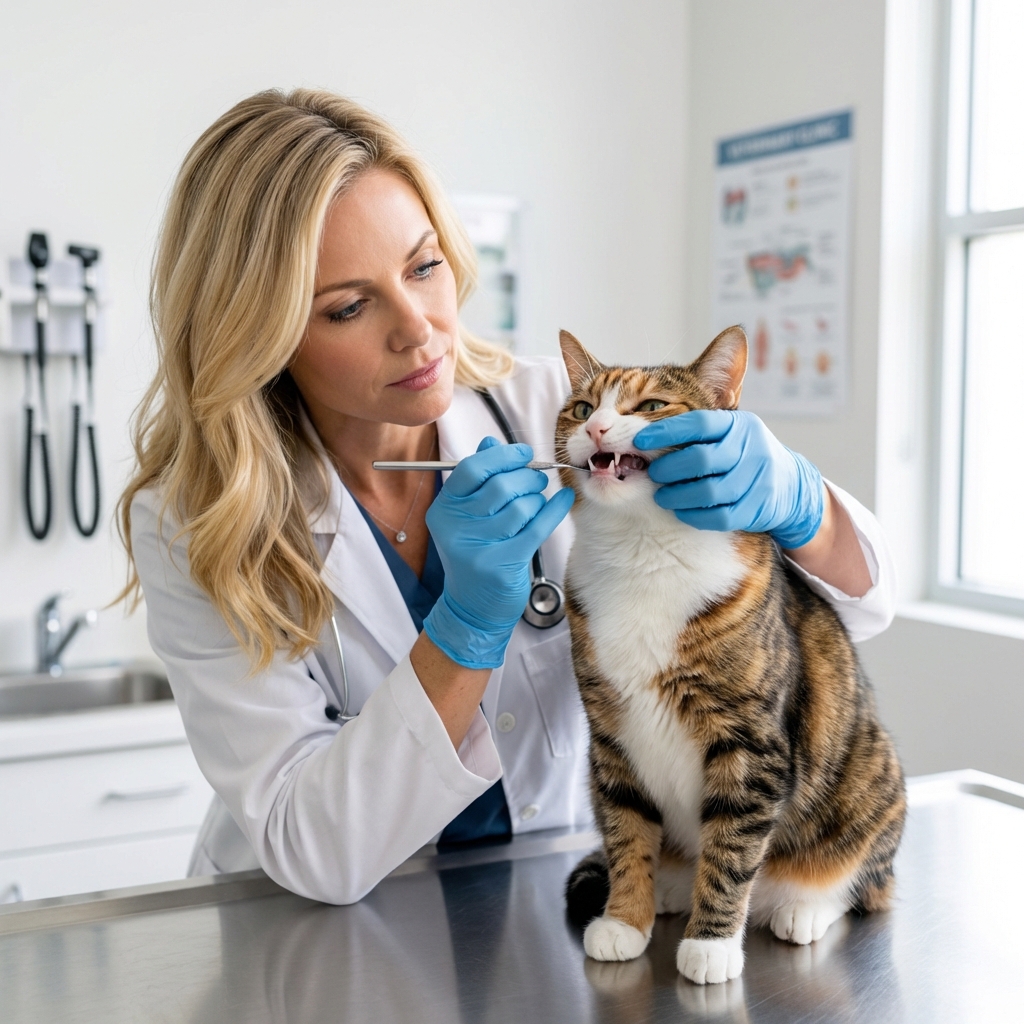
1) Dental disease and oral pain
This is one of the top causes we see. Cats are masters at hiding discomfort, but drooling can show up when the mouth hurts.
- Gingivitis and periodontal disease
- Tooth resorption (painful, common in cats)
- Broken tooth or mouth injury
- Stomatitis (severe inflammation; often causes bad breath and reluctance to eat)
Clues: bad breath, tartar, red gums, eating more slowly, chewing on one side, dropping kibble, hiding, or “chattering” teeth.
2) Nausea and stomach upset
Drooling can be a nausea sign in cats, similar to “mouth watering” in humans. Nausea has many causes, from mild to serious.
- Hairballs
- Diet changes or food intolerance
- Gastritis
- Foreign material in the stomach or intestines
- Systemic illness (kidney disease, liver disease, pancreatitis)
Clues: lip smacking, swallowing repeatedly, crouching, hiding, reduced appetite, vomiting, or dry heaving.
3) Toxins and caustic substances
Drooling can happen when a cat tastes or chews something irritating. Sometimes this looks like foaming. Common household exposures include:
- Cleaning products (especially concentrated solutions)
- Essential oils (cats are particularly sensitive, especially with direct contact, spills on fur, or concentrated diffusers in poorly ventilated spaces)
- Topical flea and tick products meant for dogs
- Toxic plants (for example, some lilies are extremely dangerous to cats)
- Bitter or caustic substances
Clues: sudden drooling, pawing at the mouth, vomiting, diarrhea, weakness, tremors, or trouble walking.
Important: If you suspect toxin exposure, call your veterinarian or a pet poison hotline immediately. Do not “wait and see.” Do not give over-the-counter medications unless instructed by a veterinary professional.
4) Something stuck in the mouth
String, ribbon, sewing thread, rubber bands, or small bones can get stuck under the tongue or between teeth. Cats may drool and paw at the mouth.
Clues: sudden distress, gagging, repeated swallowing, or refusal to eat.
Safety note: If you see string hanging from the mouth, do not pull it. It may be anchored farther down and pulling can cause internal injury. This is an urgent vet visit.
5) Breathing issues and congestion
Drooling can increase if a cat is breathing with an open mouth, panting, or in respiratory distress. Severe nasal congestion can also force mouth breathing and make saliva harder to manage.
Clues: open-mouth breathing, fast or labored breathing, noisy breathing, sneezing, nasal discharge, watery eyes, fever, or decreased interest in food (especially if they cannot smell).
6) Stress and pain elsewhere
Some cats drool when stressed, such as during car rides, grooming, or loud events. Pain in other areas can also cause nausea and drooling.
Clues: wide pupils, hiding, trembling, vocalizing, or behavior changes.
7) Heat stress or overheating
Overheating can cause panting and drooling. This can escalate quickly, especially in hot rooms, poorly ventilated spaces, or after being trapped somewhere warm.
Clues: panting, drooling, restlessness, bright red gums, weakness, or collapse. This is urgent.
8) Neurologic issues
Seizures, vestibular disease, or certain neurologic disorders may cause drooling, disorientation, or abnormal movements.
Clues: stumbling, head tilt, abnormal eye movements, collapse, or muscle twitching. This should be treated as urgent.
9) Masses in the mouth
Oral masses can lead to drooling, bleeding, bad breath, and difficulty eating. Early evaluation matters.
Clues: visible growth, one-sided swelling, bloody saliva, dropping food, weight loss.
10) Rabies (rare, but serious)
Rabies is uncommon in indoor cats, but it is a classic cause people worry about when they see drooling. Risk is higher in unvaccinated cats with outdoor exposure or a bite from wildlife. If you suspect possible exposure, contact a veterinarian immediately and avoid handling your cat’s mouth.
What to do now
Use this as a practical guide while you’re deciding on next steps.
Go to emergency care now
- Open-mouth breathing, labored breathing, or bluish gums
- Possible toxin exposure (cleaners, essential oils, dog flea meds, toxic plants)
- Continuous vomiting, severe lethargy, collapse, tremors, or seizures
- String or ribbon hanging from the mouth
- Facial swelling, hives, or suspected allergic reaction with weakness
- Panting and drooling with suspected overheating
Call your vet today
- Drooling persists for several hours or keeps returning
- Not eating, or eating less than normal
- Pawing at the mouth, head shaking, or obvious oral discomfort
- Bad breath that is new, or blood in saliva
- Vomiting, diarrhea, or signs of nausea
Monitor at home (only if mild and short-lived)
- Drooling happens only during purring or cuddling and stops quickly
- Your cat is eating, drinking, and acting normal
- No vomiting, no mouth pain, no odor, no swelling
How vets check drooling
Your veterinarian will tailor the workup to your cat’s symptoms, age, and medical history. Common steps include:
- History: sudden versus gradual onset, diet changes, exposure risks, medications, vomiting or appetite changes
- Physical exam: full oral exam, hydration status, abdominal palpation, lymph nodes
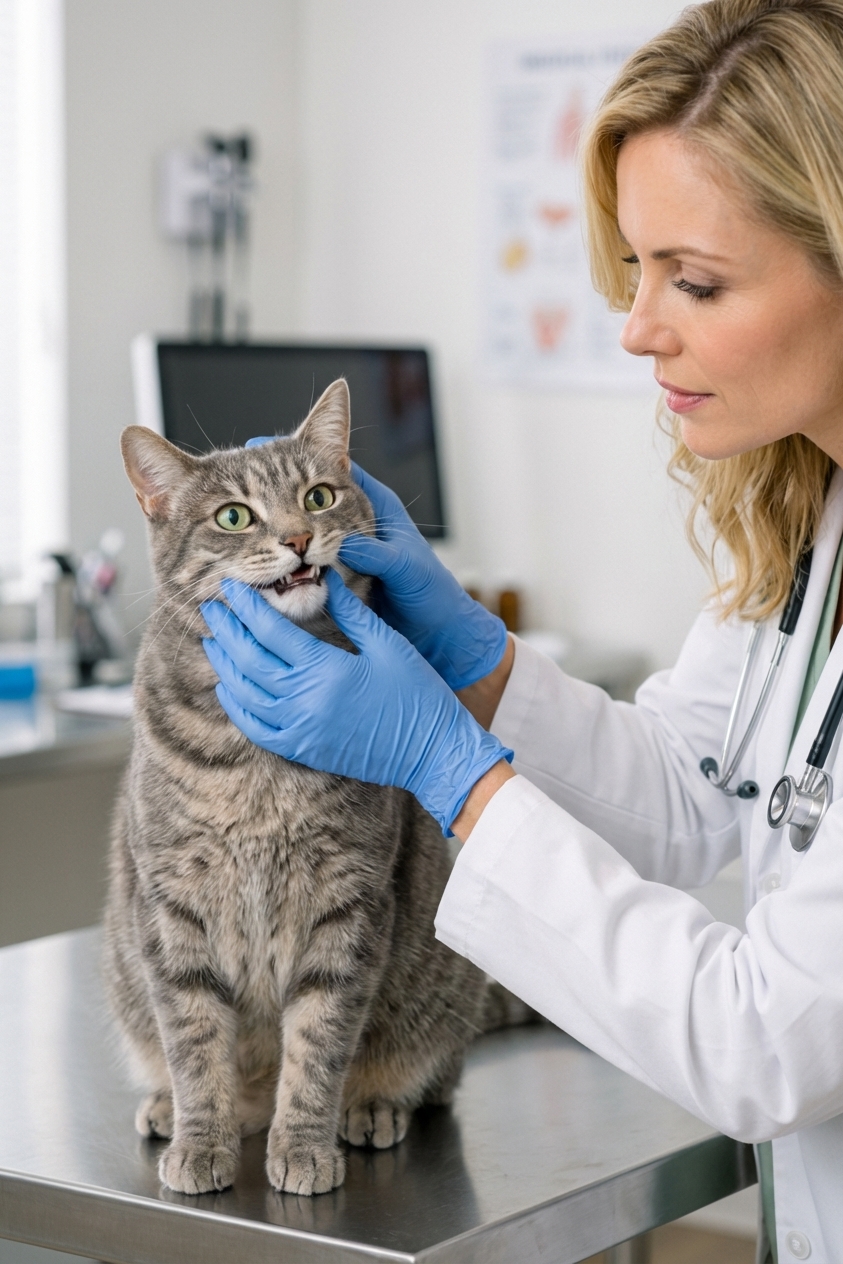
- Oral exam under sedation: often necessary to fully assess painful teeth, resorptive lesions, stomatitis, or hidden injuries
- Dental radiographs: important for detecting tooth resorption and root problems
- Bloodwork and urinalysis: to check kidney, liver, infection, inflammation, and metabolic issues
- Imaging: X-rays or ultrasound if a foreign body or GI disease is suspected
If drooling is linked to dental disease, treatment may include a professional dental cleaning and extractions. If nausea is the driver, your vet may recommend anti-nausea medication and diagnostics to find the root cause.
What you can do at home
If your cat is stable and you are not seeing emergency signs, these steps can help while you arrange care:
- Remove possible irritants: put away cleaners, essential oils, plants, and strings or ribbons.
- Offer fresh water: drooling can contribute to mild dehydration.
- Keep food simple: do not introduce new treats or foods right now.
- Check the mouth only if your cat allows it: look for obvious objects, swelling, or bleeding. Do not force the mouth open if your cat is stressed or painful.
- Document symptoms: note time of onset, appetite, vomiting, litter box habits, and take a quick photo or short video if you can. This helps your veterinarian.
Avoid: human pain medications, alcohol-based rinses, essential oils as “remedies,” over-the-counter anti-nausea meds, or attempting to pull string from the mouth. If you suspect caustic exposure, do not try to rinse or induce vomiting unless your vet or poison control instructs you to.
Prevention tips
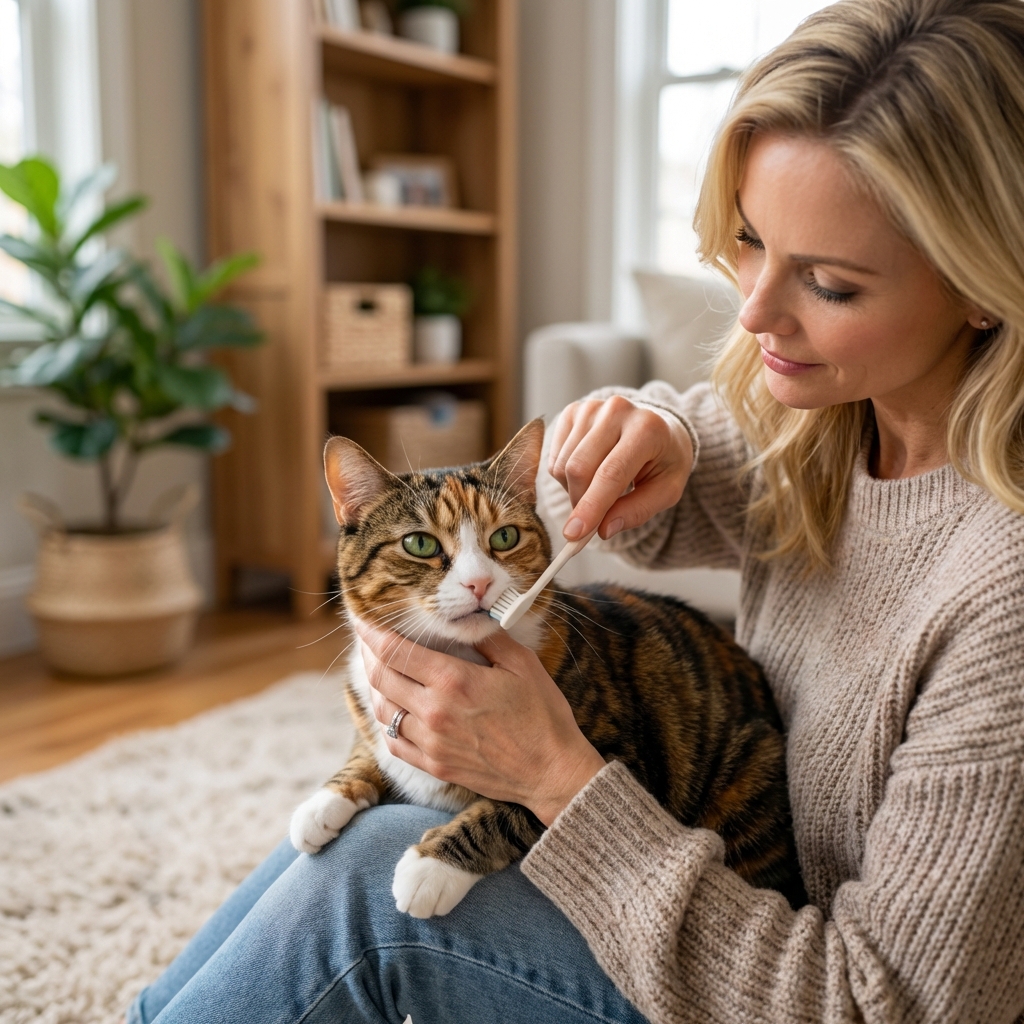
- Schedule regular dental checks: dental disease is extremely common in adult cats and often goes unnoticed at home.
- Use vet-recommended dental care: if your cat tolerates it, daily brushing is the gold standard. Dental treats and water additives can help, but they are not a substitute for professional care.
- Cat-proof stringy items: keep thread, yarn, ribbon, and hair ties locked away.
- Be cautious with home fragrance products: cats are uniquely sensitive to many concentrated oils and cleaners.
- Stay current on wellness exams: catching kidney disease, liver issues, or weight loss early can prevent confusing symptoms later.
FAQ
Why is my cat drooling but acting normal?
If it happens during purring or relaxation and stops quickly, it can be normal. If it is new, frequent, or increasing, it is still worth a vet check because early dental disease can be present even when a cat seems fine.
Why is my cat drooling and not eating?
This combination is most commonly linked to oral pain or nausea, and it should be assessed promptly. Cats that do not eat can get sick quickly, especially if they are overweight, due to the risk of hepatic lipidosis (fatty liver disease).
Is foamy drool always poisoning?
No. Foamy saliva can happen after bitter tasting substances, certain medications, or nausea. But because toxins are a possibility, it is important to consider what your cat could have licked, chewed, or walked through.
Bottom line
Occasional drooling can be harmless, but excessive or persistent drooling is often a sign of dental disease, nausea, irritation, breathing difficulty, or something stuck in the mouth. When in doubt, trust your instincts. If your cat’s drooling is new and you are seeing any change in appetite, behavior, or comfort, a veterinarian visit is the safest next step.