Spot cat dehydration early with gum, skin-tent and litter box checks. Learn common signs, causes, safe home hydration tips, and when it’s an emergency vet ...
Article
•
Designer Mixes
Cat Dehydration Symptoms: Answers for Pet Lovers

Shari Shidate
Designer Mixes contributor
Cats are masters at hiding discomfort. And because cats often drink less water than dogs, dehydration can sneak up quietly until it becomes serious. (Cats also evolved from desert-dwelling ancestors and may rely more on moisture from food than a big water bowl.) If you have ever wondered, “Is my cat dehydrated or just sleepy?” you are not alone.
Here is what to watch for, what the signs can mean, what you can do at home, and when it is time to call your veterinarian.
What dehydration means
Dehydration happens when your cat loses more fluid than they take in. Water is essential for circulation, digestion, temperature control, and kidney function. Even mild dehydration can make a cat feel weak and nauseated, and more significant dehydration can quickly become an emergency.
Some cats have a lower thirst drive, so the risk can be higher with mostly dry diets, hot environments, stress, and many common illnesses. That is one reason veterinarians often recommend moisture-rich diets for cats, especially as they age.
Common dehydration symptoms
These signs can show up gradually. The earlier you spot them, the easier it usually is to correct the problem.
1) Low energy, hiding, or “not quite themselves”
Dehydrated cats often act quiet, withdrawn, or less playful. You may notice more sleeping, less interest in toys, and less social behavior.
Sleepy vs. lethargic: A sleepy cat wakes up and responds normally. A lethargic cat may be hard to rouse, seem weak, or act “checked out” even when you try to engage them. Lethargy is a bigger concern.
2) Reduced appetite or nausea
When a cat is dehydrated, they may feel nauseated and refuse food. Some cats will sniff food and walk away. Others may eat a little, then stop.
3) Dry or sticky gums and tacky saliva
Healthy gums feel slick and moist. With dehydration, gums may feel tacky or dry, and saliva can look thick or stringy. If the gums look pale, white, blue-tinged, or brick red, that is urgent.
4) Sunken or dull-looking eyes
Eyes can appear dull or slightly sunken. This often suggests more significant dehydration or illness.
5) Constipation or smaller, drier stool
When the body is short on water, the colon pulls more water out of stool. That can lead to hard, dry poop, straining in the litter box, or going less often.
6) Fast heart rate, rapid breathing, or panting
Dehydration reduces circulating blood volume, and the body tries to compensate. This is a “call your vet” sign, especially if it is sudden. Panting is unusual in cats and should be treated as a prompt-care symptom.
7) Different urine output or litter box habits
Some dehydrated cats urinate less. With clumping litter, you might notice fewer clumps or smaller clumps than usual. But here is the tricky part: some underlying causes of dehydration, like kidney disease or diabetes, can cause increased urination that then leads to dehydration. Any noticeable change in urination habits deserves attention.
8) Drooling or a “not right” mouth
Some cats drool more when they feel nauseated or unwell. Drooling can also point to dental pain, toxins, or other issues, so it is worth a veterinary check if it is new or paired with other symptoms.
Skin tent test
You may have heard of gently lifting the skin over your cat’s shoulders and seeing how quickly it “snaps back.” In a well-hydrated cat, it returns quickly. With dehydration, it may fall back slowly.
Important: This test is less reliable in seniors (their skin can be less elastic), overweight cats, and very young kittens. Use it as one clue, not the only answer. Dehydration often needs a veterinary assessment to confirm severity and find the underlying cause.
Common causes
Dehydration is usually a symptom of something else going on. Common causes include:
- Not drinking enough water, especially in cats eating mostly dry food
- Vomiting or diarrhea from dietary upset, infection, parasites, or chronic GI disease
- Heat exposure or being trapped somewhere warm without water
- Kidney disease, common in older cats
- Diabetes (often paired with increased thirst and urination)
- Hyperthyroidism
- Urinary obstruction, especially in male cats (this is an emergency even before dehydration becomes obvious)
- Fever and systemic infection
When it is an emergency
Please contact your veterinarian the same day, or go to an emergency clinic, if you see any of the following:
- Repeated vomiting, inability to keep water down
- Diarrhea that is frequent, bloody, or paired with weakness
- Collapse, severe lethargy, or unresponsiveness
- Pale, blue-tinged, or brick red gums, or very rapid breathing
- Suspected heatstroke
- Straining to urinate, crying in the litter box, or very little urine output (possible blockage). This is urgent regardless of whether you think your cat is dehydrated.
- A kitten, senior cat, or cat with known kidney disease who seems dehydrated
Tip from a vet assistant’s perspective: if your gut says “this is more than a little off,” trust that feeling and call. Cats often look “fine” until they are not.
Extra caution for kittens
Kittens can get dehydrated faster than adult cats, and they have less “wiggle room” if they stop eating, have diarrhea, or vomit. If you suspect dehydration in a kitten, it is smart to call your veterinarian sooner rather than later.
At-home steps for mild dehydration
If your cat is alert, not vomiting repeatedly, and you are not seeing emergency signs, these gentle steps can help support hydration while you monitor closely.
Offer water in ways cats like
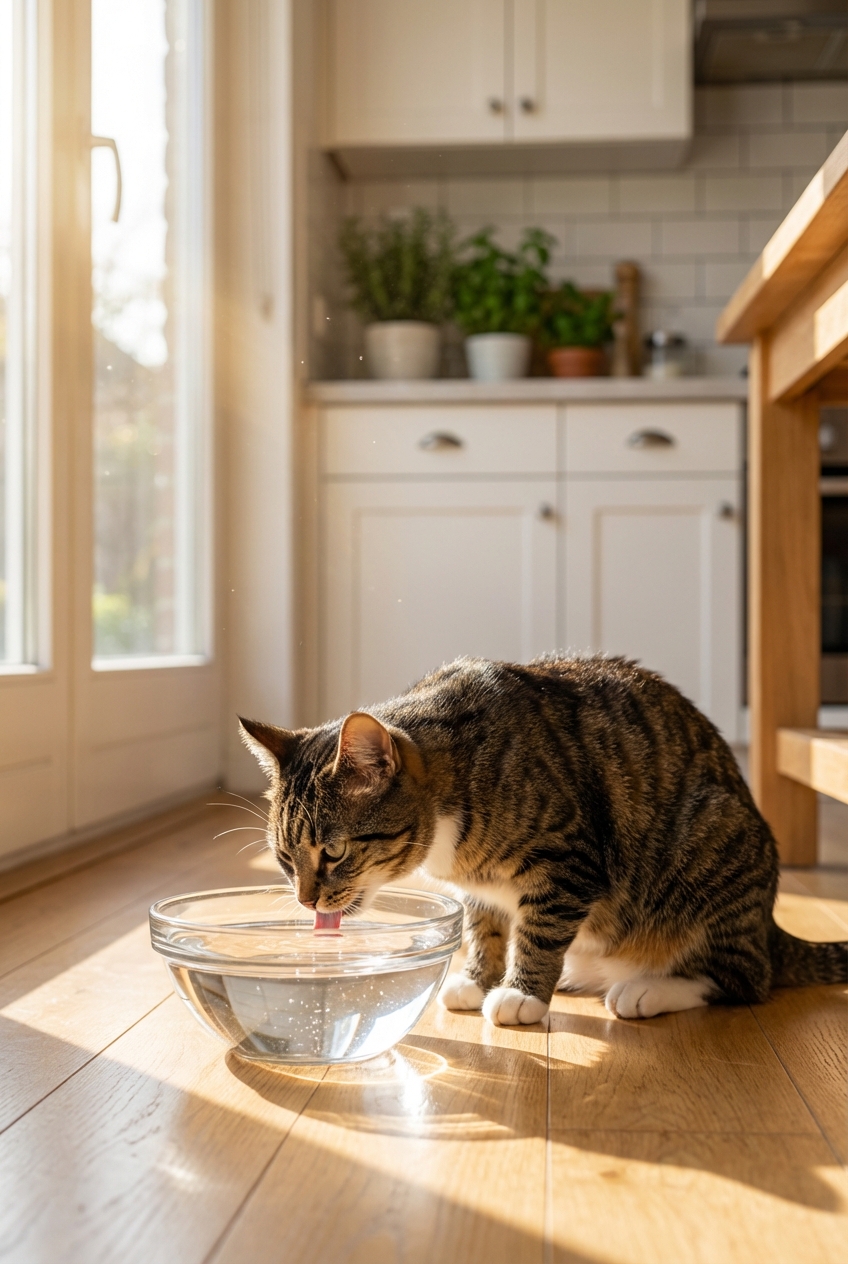
- Try a water fountain. Many cats prefer moving water. Clean it regularly to reduce slime and biofilm buildup.
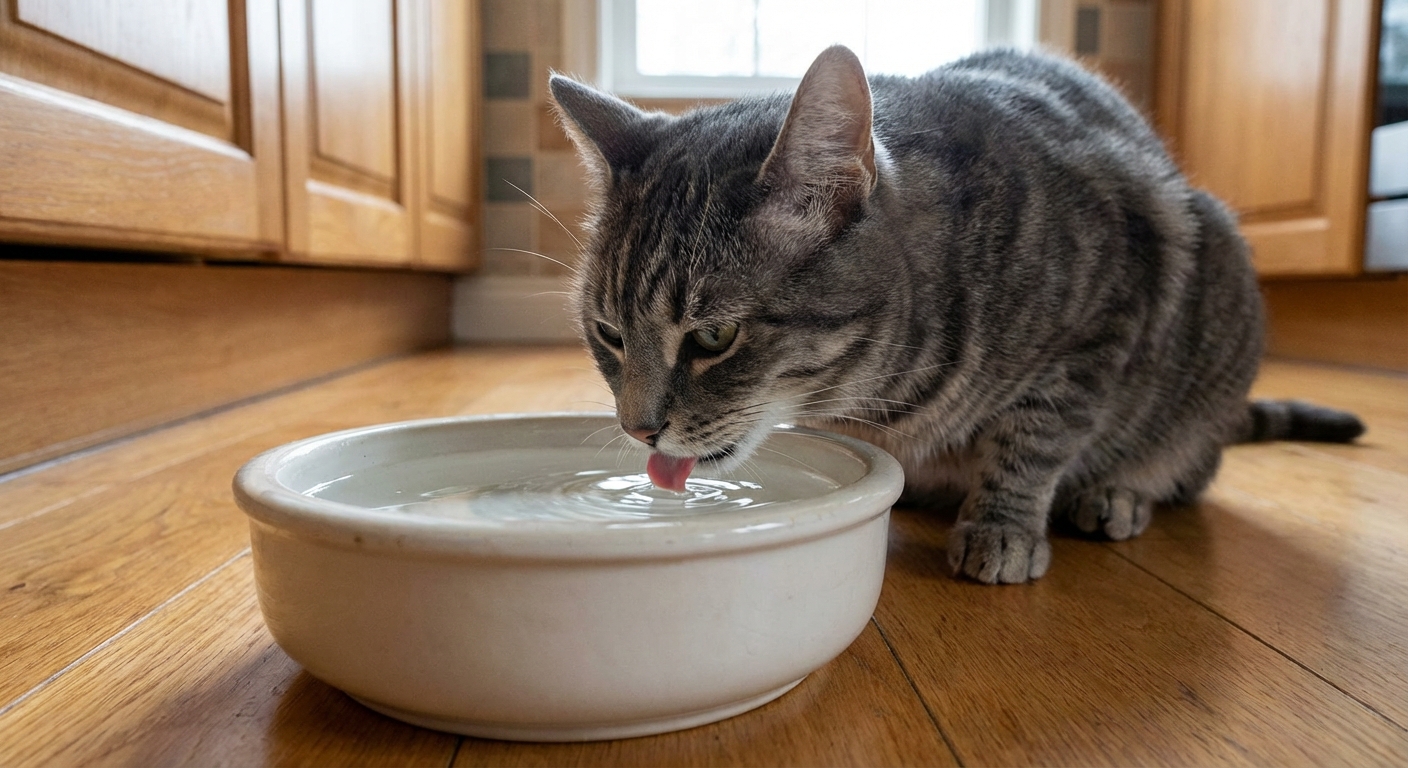
- Use wide, shallow bowls so whiskers do not touch the sides as much.
- Try a different bowl material. Some cats drink better from ceramic or stainless steel than plastic.
- Place multiple water stations around the home.
- Keep water away from the litter box and, for some cats, away from food.
- Refresh water daily and wash bowls regularly.
Increase moisture through food
- Switch to, or add, canned food for higher moisture intake.
- Add water or low-sodium broth (no onion or garlic) to wet food to make a “gravy.”
- Try a cat-safe hydration topper recommended by your veterinarian.
Monitor litter box output
Track how often your cat urinates and whether stool looks dry or hard. With clumping litter, it can help to note the number and size of clumps each day. A sudden decrease in urine output is not something to “wait and see” about.
Important: At-home steps are only for mild cases. If signs do not improve quickly, or if your cat is still not eating or acting normal within about 24 hours, call your veterinarian for guidance.
What not to do
- Do not force water into your cat’s mouth. It can lead to choking or aspiration.
- Do not give electrolyte drinks made for humans unless your veterinarian tells you to. Even products that seem “simple” (like unflavored pediatric electrolyte solutions) should only be used with vet guidance for the right dose and situation.
- Do not use broth with onion or garlic. These can damage a cat’s red blood cells.
- Do not delay care if your cat is vomiting repeatedly, very lethargic, panting, or straining to urinate.
Vet diagnosis and treatment
In clinic, your veterinarian will assess hydration through a physical exam and may recommend bloodwork and urinalysis to look for underlying causes, especially kidney disease, diabetes, infection, or electrolyte imbalances.
Treatment depends on severity and cause. It may include:
- Subcutaneous fluids (fluids under the skin) for mild to moderate dehydration in stable cats
- Intravenous fluids for more significant dehydration or unstable cats
- Anti-nausea medications if vomiting is involved
- Targeted treatment for the root cause, such as kidney support, parasite treatment, or diabetes management
Prevention tips
Hydration is a daily wellness habit. These small changes can make a big difference over time:
- Feed more moisture-rich meals (wet food or wet plus dry)
- Use a fountain and keep it clean
- Refresh water daily and wash bowls regularly
- Consider ceramic or stainless steel bowls if your cat avoids plastic
- Schedule routine vet visits, especially for senior cats
- Watch for subtle changes in appetite, thirst, coat quality, weight, and litter box output
If you have an older cat, ask your veterinarian about screening labs. Catching kidney disease early can improve quality of life and help you stay ahead of dehydration.
Quick checklist
If you are unsure, this quick checklist can help you decide your next step.
- Gums feel moist and cat is eating and acting normal: monitor, encourage water intake.
- Mildly tacky gums, slightly low appetite, but alert: increase moisture in food and call your vet for guidance.
- Very lethargic, repeated vomiting or diarrhea, abnormal gum color, sunken eyes, panting, or straining to urinate: urgent veterinary care.
You know your cat best. If something feels off, it is always appropriate to call your veterinary clinic and describe what you are seeing. Early help is often simpler, safer, and less stressful for everyone.