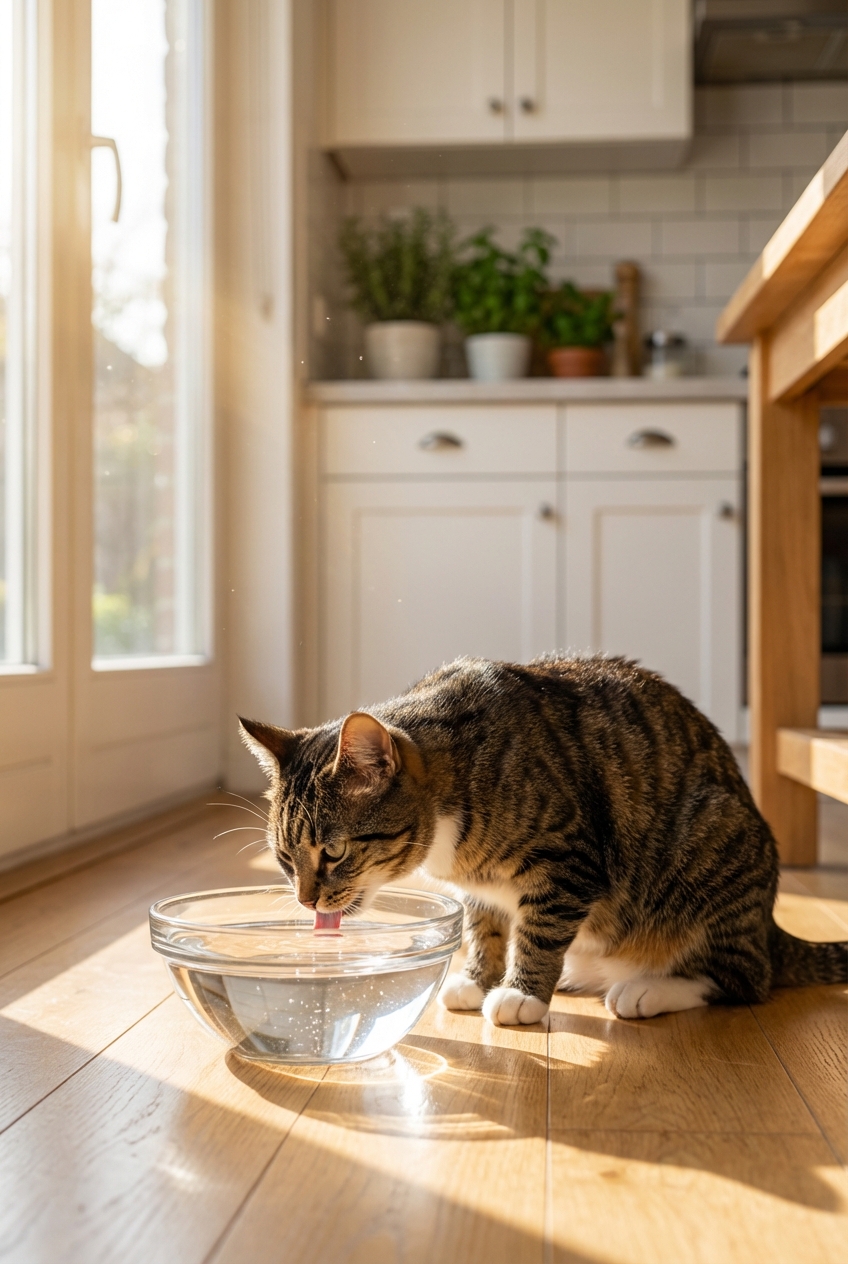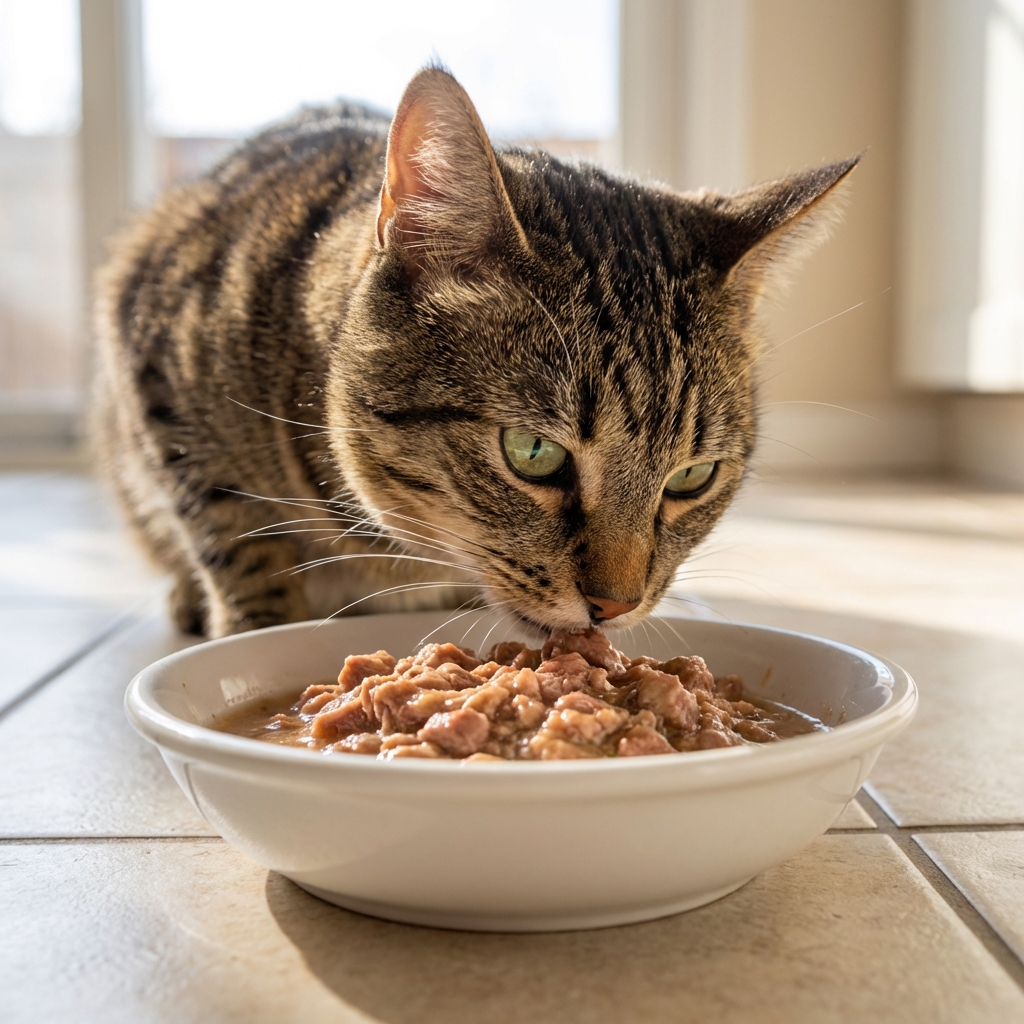
Compare wet vs dry cat food with vet-informed pros and cons. Learn how moisture affects urinary and kidney health, how carbs and calories differ, and when co...
Article
•
Designer Mixes
Cat Dehydration Secrets Revealed

Shari Shidate
Designer Mixes contributor
Cats are masters at hiding discomfort, and dehydration is one of the easiest problems to miss until it starts causing real trouble. As a veterinary assistant here in Frisco, Texas, I see it all the time: a cat who seems “a little off” and ends up needing fluids, lab work, and yes, sometimes a full detective story to figure out why they are not taking in enough water.
The good news is that many cases of mild dehydration are preventable when you know what to look for and how to make water more appealing. Let’s pull back the curtain on the subtle signs, the real risks, and the practical little tricks that can make a big difference.
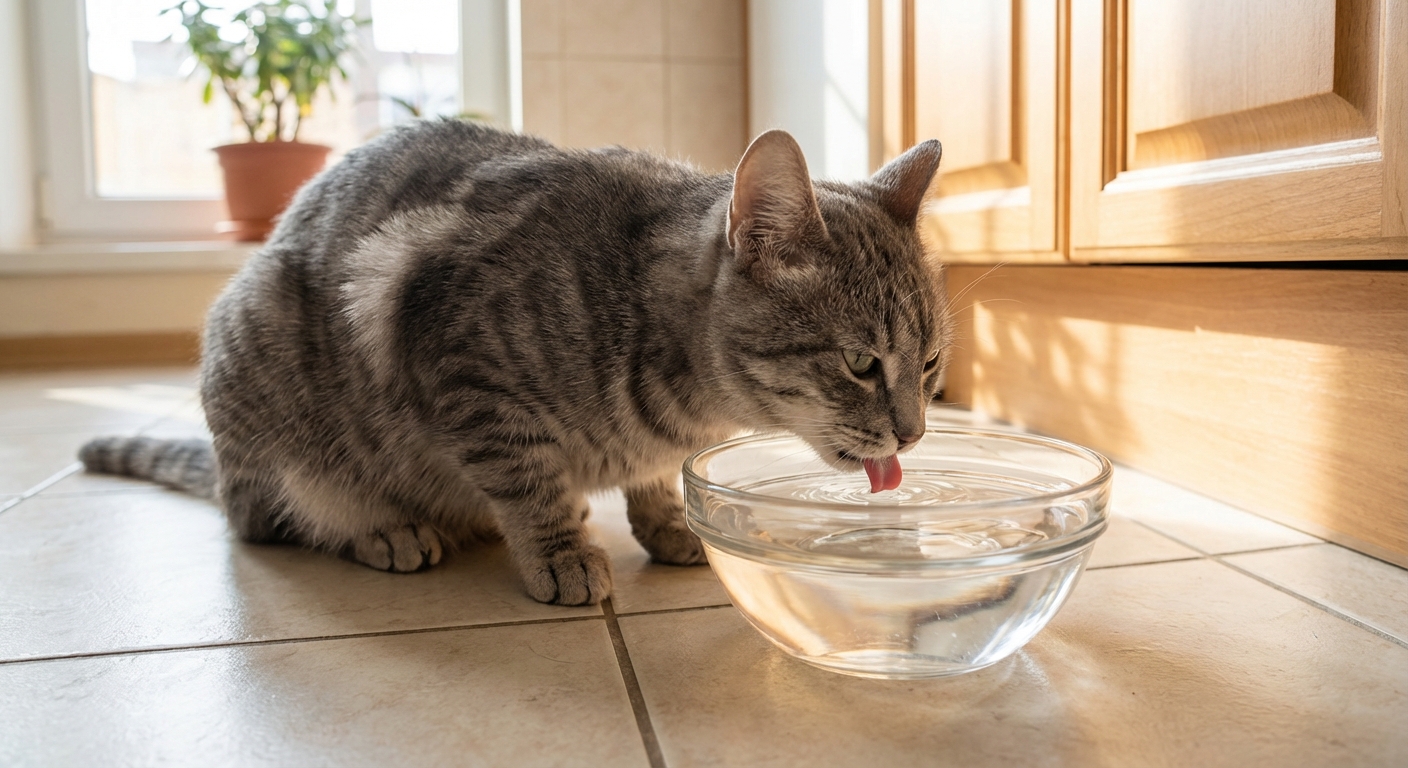
Why cats dehydrate easily
Cats have roots in arid environments, and many still have a relatively low thirst drive compared with other pets. They are built to get a lot of their moisture from food. In a modern home, that “prey moisture” often gets replaced with dry kibble, and the gap can add up fast.
Common reasons intake falls short
- Mostly dry-food diets: kibble is typically about 6% to 10% moisture, while canned foods are often about 75% to 82% (it varies by brand and formula).
- Stress and change: new pets, moves, noisy renovations, or even a new litter box location can decrease normal drinking habits.
- Pain or illness: dental pain, arthritis, kidney disease, diabetes, hyperthyroidism, and urinary issues can all change drinking patterns.
- Water preferences: some cats dislike bowls near food, narrow or deep bowls that touch whiskers, or water that smells like plastic.
One “secret” that surprises many pet parents is this: a cat can look perfectly fine while slowly running low on fluids. The signs are often quiet at first.
Quick clarity: some conditions cause more drinking and peeing (like diabetes, hyperthyroidism, and many kidney cases), while pain, nausea, stress, or FLUTD discomfort can lead to less drinking even when the body actually needs more water.
Higher-risk situations: kittens, seniors, cats with chronic disease, and cats exposed to heat (garage access, summer power outages, travel) can get dehydrated faster.
Early signs people miss
Severe dehydration can be obvious, but mild dehydration tends to show up as small changes in routine. If you notice two or more of these signs, it is worth taking it seriously.
Subtle red flags
- Smaller urine clumps in the litter box or fewer trips to urinate.
- Harder stools or constipation, especially in older cats.
- Less grooming or a coat that looks dull, flaky, or slightly greasy.
- Sleeping more or seeming less social.
- Bad breath or tacky, sticky gums.
At-home checks that can help
Gum check: Healthy gums should feel moist and slippery, not tacky.
Skin tent test: Gently lift the skin over the shoulders and release. It should snap back quickly. If it returns slowly, dehydration may be present. This test can be misleading in seniors, overweight cats, and very thin cats, so do not use it as the only indicator.
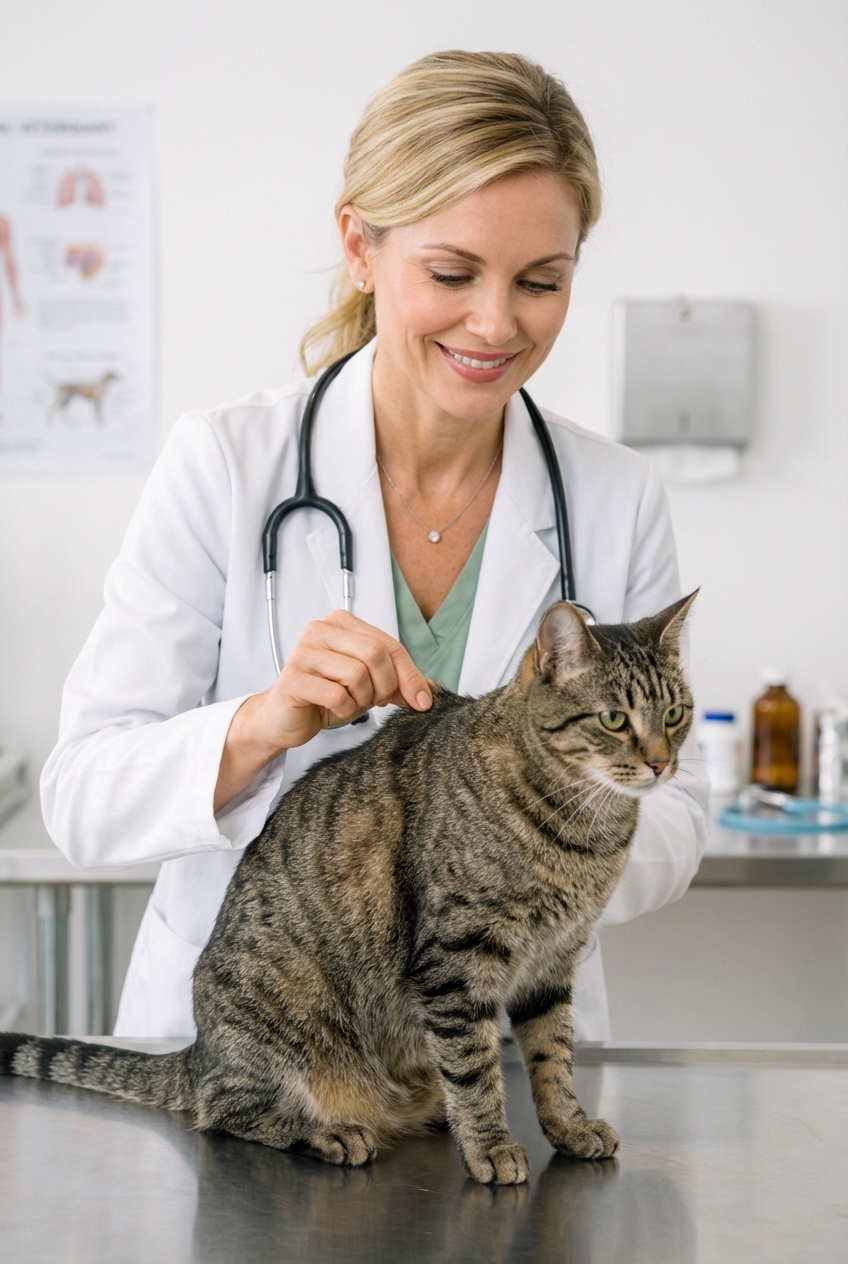
Quick note: If your cat is lethargic, vomiting, not eating, or not urinating normally, seek veterinary care the same day. Dehydration can become an emergency.
Why dehydration matters
Water is not just “nice to have.” Hydration supports circulation, digestion, body temperature regulation, and kidney function. For cats, one of the biggest concerns is urinary health.
Problems dehydration can contribute to
- Constipation: the colon pulls extra water from stool when the body is low on fluids.
- Urinary crystals and stones: more concentrated urine can raise risk in susceptible cats.
- Feline lower urinary tract disease (FLUTD): stress and low water intake can be part of the puzzle.
- Kidney strain: especially important for older cats, since chronic kidney disease is common.
Male cats deserve a special caution: if a male cat cannot pass urine, that can indicate a urinary blockage, which is life-threatening and requires immediate emergency care.
How to boost water intake
Cats can be particular. Instead of trying one thing and giving up, think of hydration as building a “water environment” that matches cat instincts.
1) Make water easy to reach
- Offer multiple water stations in quiet locations, not just one bowl in the kitchen.
- Keep water away from the litter box, and consider separating it from food, since many cats prefer distance.
- Use wide, shallow bowls to reduce whisker stress.
2) Improve freshness
- Wash bowls daily. A biofilm can form quickly and cats may refuse water that smells “off.”
- Try stainless steel or ceramic instead of plastic.
- Refresh water at least once daily, more often in warm weather.
3) Try moving water
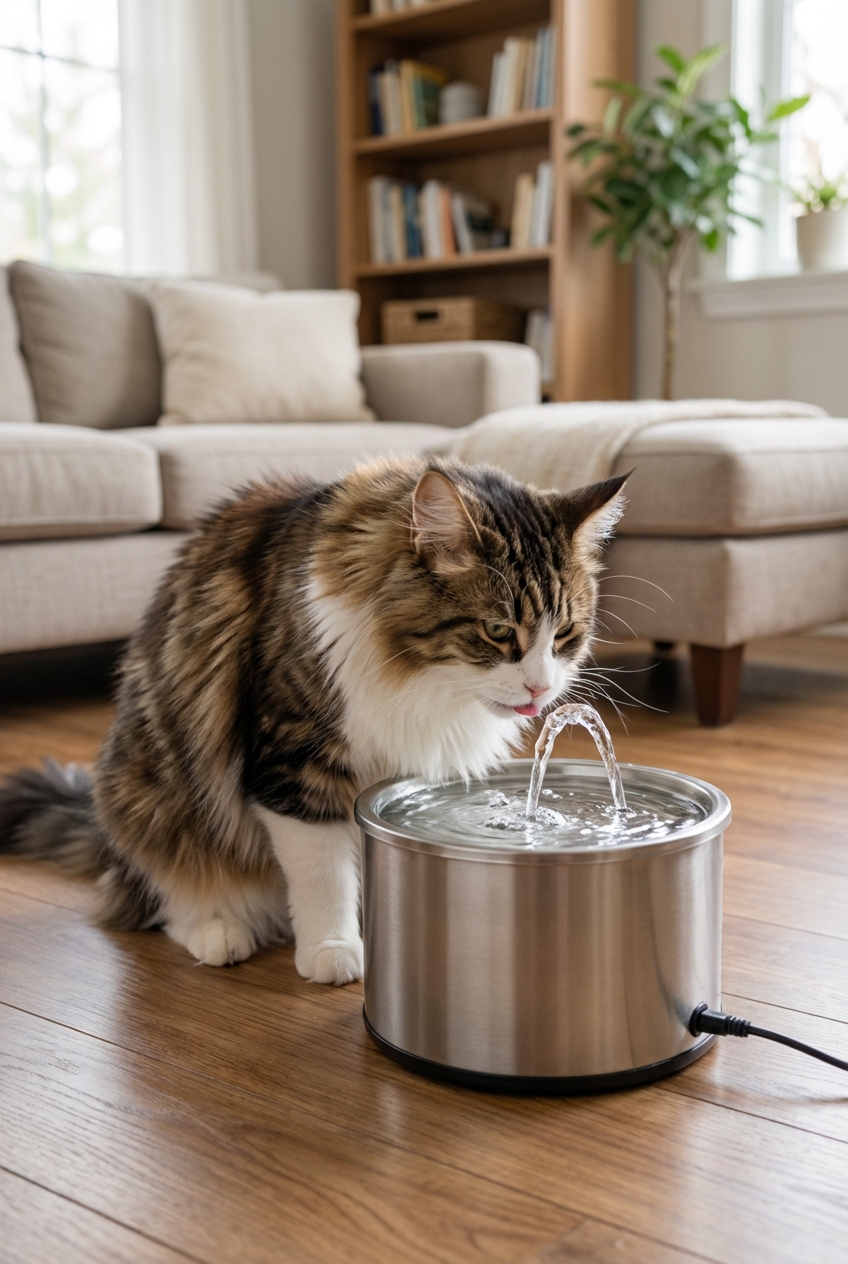
Many cats prefer running water. A pet fountain can increase intake for some cats, especially if it is cleaned regularly and the filter is changed as directed.
4) Add moisture through food
This is my favorite evidence-based strategy because it works even for cats who are not big drinkers. Options to discuss with your veterinarian include:
- Switching part or all of the diet to canned food for higher moisture intake.
- Adding water to canned food to make a stew-like texture.
- Using a low-sodium broth made for pets, or plain water from cooking unseasoned chicken, as a flavor boost. Avoid onion and garlic in broths.
If your cat has a medical condition, especially kidney or heart disease, ask your vet before using broths or changing diet texture.
5) Use hydration treats wisely
- Offer small portions of water-rich wet treats.
- Try ice cubes made from water or pet-safe broth for cats who like to bat and lick.
- For some cats, tuna water (tuna packed in water, not brine) can help, but use it sparingly. Too much can create picky eating habits, add extra sodium, and raises nutrition balance concerns. Mercury is another reason to keep tuna as an occasional tool, not a daily routine.
How much water is normal
There is no one perfect number because it depends on diet (wet vs. dry), temperature, activity level, and health status. Cats on a canned-food diet often drink less from the bowl because they are getting water from the food, and that can be totally normal.
If you want a simple reference point, many veterinary sources cite a cat’s total daily water needs at roughly 40 to 60 mL per kg per day from all sources (food plus drinking). That is a guideline, not a pass or fail test.
A more helpful approach is to watch patterns:
- Sudden increase in thirst can be a sign of diabetes, kidney disease, or hyperthyroidism.
- Sudden decrease in drinking can happen with illness, pain, stress, or if a water source is unpleasant.
If you want to measure intake, use a measured amount of water in a clean bowl each morning and note what is left at night. If you have multiple pets, this gets trickier, but trends still help.
What not to do
- Do not syringe water unless your veterinarian tells you to. It can cause aspiration (water going into the lungs), especially if your cat is nauseated or weak.
- Do not add salt to food or water to “make them thirsty.” That can be dangerous.
- Avoid human electrolyte drinks (sports drinks, Pedialyte) unless your vet specifically recommends a plan and dose. Sugar, flavorings, and electrolyte levels are not designed for cats.
- Do not delay care if your cat is not peeing normally. Urinary blockage is not a wait-and-see problem.
When it is an emergency
Please seek veterinary care urgently if you notice any of the following:
- Vomiting or diarrhea that lasts more than 12 to 24 hours, happens repeatedly in a short period, or includes blood
- Refusing food plus acting weak, hiding, or seeming painful
- Very dry or pale gums
- Rapid breathing, collapse, or extreme lethargy
- Straining to urinate, crying in the litter box, or no urine output (especially in male cats)
In-clinic, we can assess hydration status, check vital signs, and run labs if needed. Many dehydrated cats improve quickly with subcutaneous or intravenous fluids, but the most important part is identifying the underlying cause.
7-day hydration reset
If your cat is generally healthy and you want a simple plan, try this gentle one-week reset. Change one variable at a time so you can tell what helps.
- Day 1: Wash bowls, replace plastic with ceramic or stainless steel if possible.
- Day 2: Add one extra water station in a quiet area.
- Day 3: Switch to a wide, shallow bowl and move it away from food.
- Day 4: Add 1 to 2 tablespoons of water to wet food (or ask your vet about introducing wet food).
- Day 5: Offer a hydration treat like a broth ice cube made with pet-safe broth.
- Day 6: Try a fountain if your cat likes running water.
- Day 7: Reassess litter box output and overall energy. If anything looks worse or your cat is not peeing normally, call your veterinarian right away.
Small changes can create big wins. Hydration is one of the most powerful, low-cost ways to support urinary and kidney health over a cat’s lifetime.