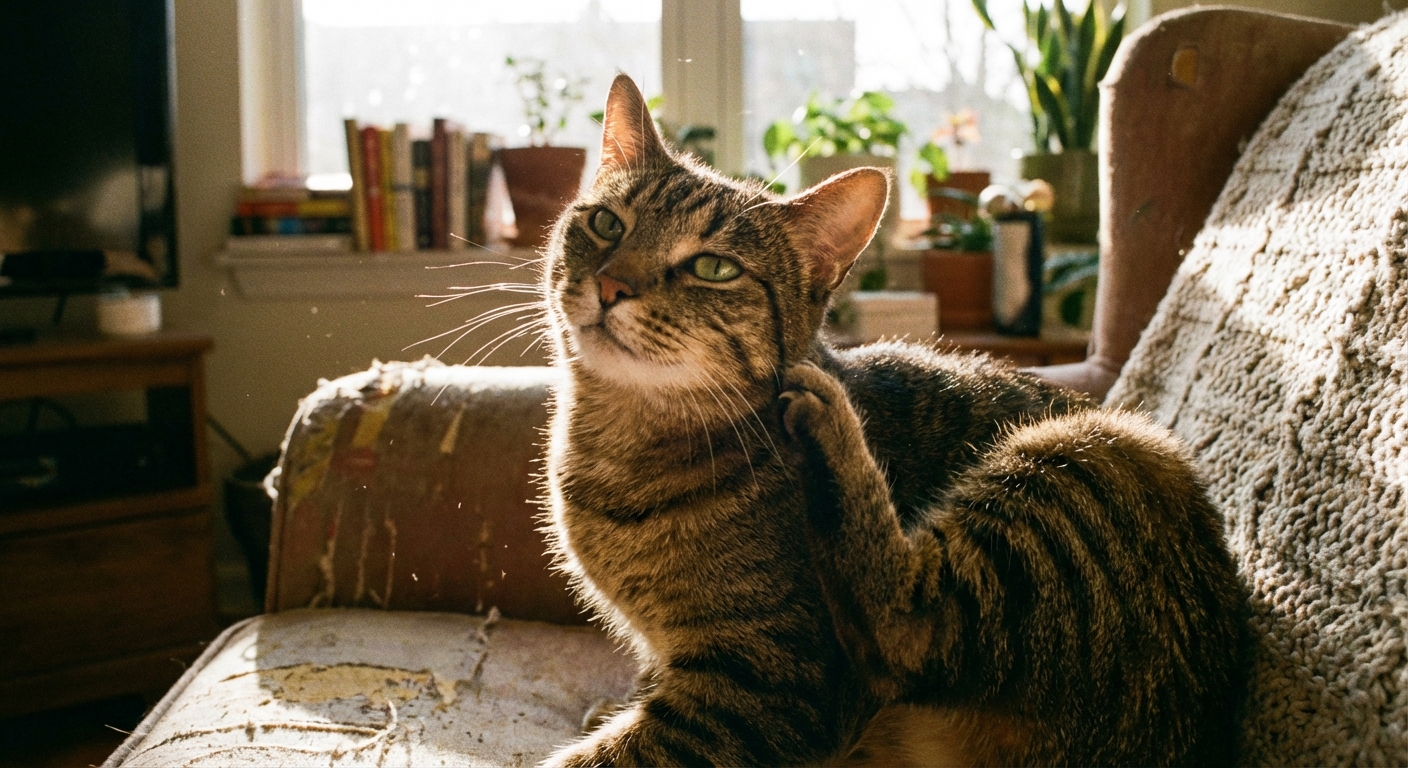
Cat itching, scabs, dandruff, or hair loss can have many causes. Learn how to spot patterns, run simple home checks, and know when veterinary testing is needed.
Article
•
Designer Mixes
Cat Dandruff: What to Do

Shari Shidate
Designer Mixes contributor
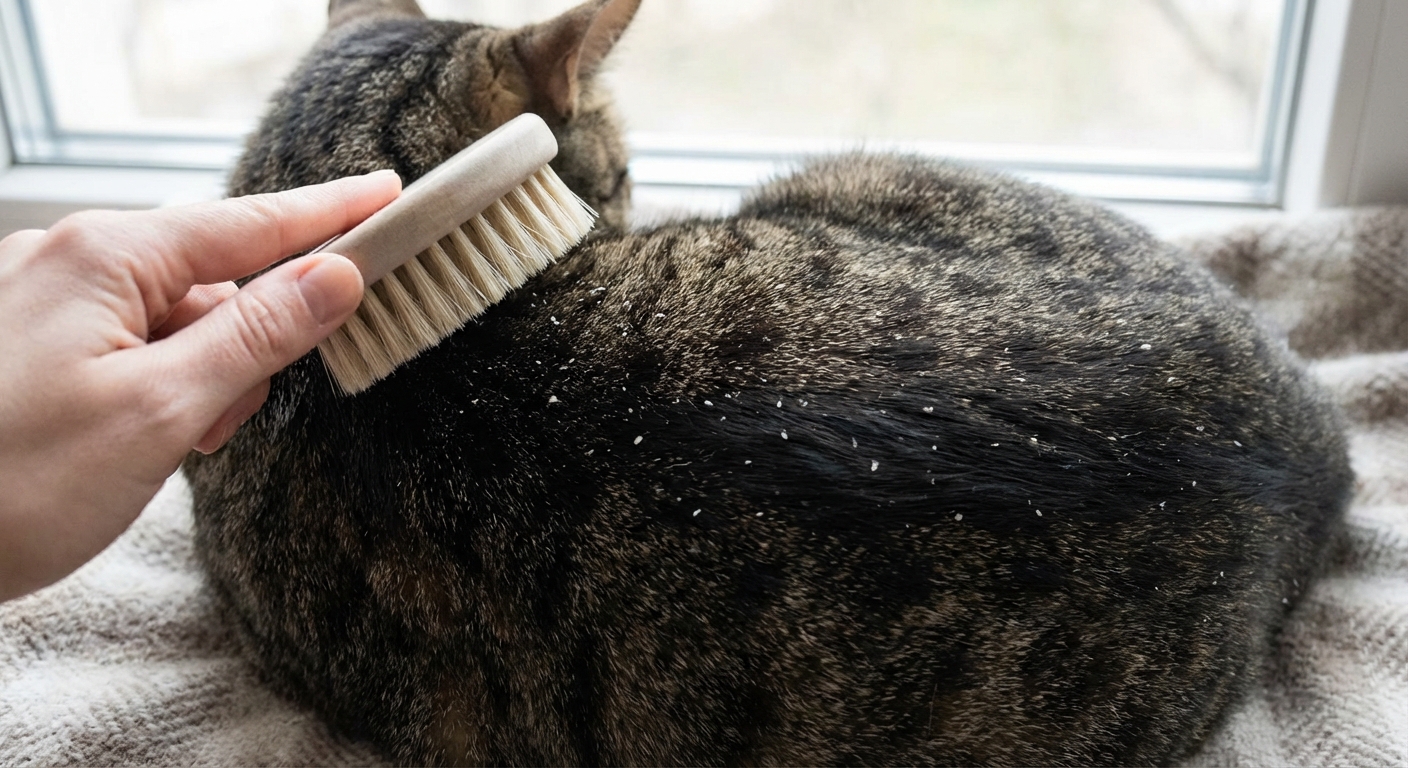
If you have noticed white flakes on your cat’s back, along their spine, or around the base of the tail, you are not alone. As a veterinary assistant here in Frisco, Texas, I see “cat dandruff” come up all the time, especially in winter or in cats who are a little less enthusiastic about grooming as they age.
The good news is that dandruff is often manageable once you identify the cause. The key is to treat the cause, not just the flakes.
Quick note: not every white speck is dandruff. Sometimes it is litter dust, dried shampoo, or pollen. And sometimes what looks like dandruff is actually flea dirt (more on that below).
What cat dandruff is
Dandruff is made up of dead skin cells that shed and cling to the coat. Some shedding is normal, but when the skin is too dry, irritated, or inflamed, you can see more flakes than usual.
Sometimes dandruff comes with other clues like greasy fur, a dull coat, itching , redness, hair thinning , or an unusual odor. Those details help narrow down what’s going on.
Common causes
Dry air and hydration
Indoor heating and low humidity can dry out skin, just like it does for people. Hydration also plays a role in overall skin health. Some cats that drink very little (or have medical reasons for low drinking) may be more prone to dry, flaky skin.
Overweight cats and limited grooming
Cats who cannot comfortably reach their back or tail base often groom less. That means oils and dead skin build up, leading to visible flakes.
Pain and arthritis
In older cats, arthritis or back pain can make grooming uncomfortable, especially along the spine and near the tail base. Flakes in those areas can be a subtle clue that something hurts .
External parasites
Fleas can cause skin irritation and flaking. Another classic culprit is Cheyletiella mites, often nicknamed “walking dandruff,” because the flakes can seem to move. Cheyletiella can spread between pets, and people in the home can sometimes get itchy bumps, too.
Not every itchy cat has fleas, and not every flaky cat is itchy, so it’s worth checking.
Allergies
Allergies can inflame the skin barrier, making it flaky and sensitive. Cats may also overgroom, leaving thin patches of hair.
Skin infections
Yeast or bacterial infections can cause flaking, odor, redness, and greasy coat. Ringworm (a fungal infection) can also cause scaling and hair loss and is contagious to people and other pets.
Nutrition
Coat and skin health depend on complete and balanced nutrition, including essential fatty acids. Diets that are not nutritionally complete can show up as dry coat, dandruff, and increased shedding.
Other medical issues
Conditions like hyperthyroidism, diabetes, and other systemic issues can affect skin and coat. Older cats, especially, deserve a closer look if dandruff is new or worsening.
Some cats also develop seborrhea (abnormal scaling and oiliness). Primary seborrhea is rare in cats, but secondary seborrhea can happen along with allergies, infections, parasites, and other medical conditions.
What to do at home
1) Brush gently and consistently
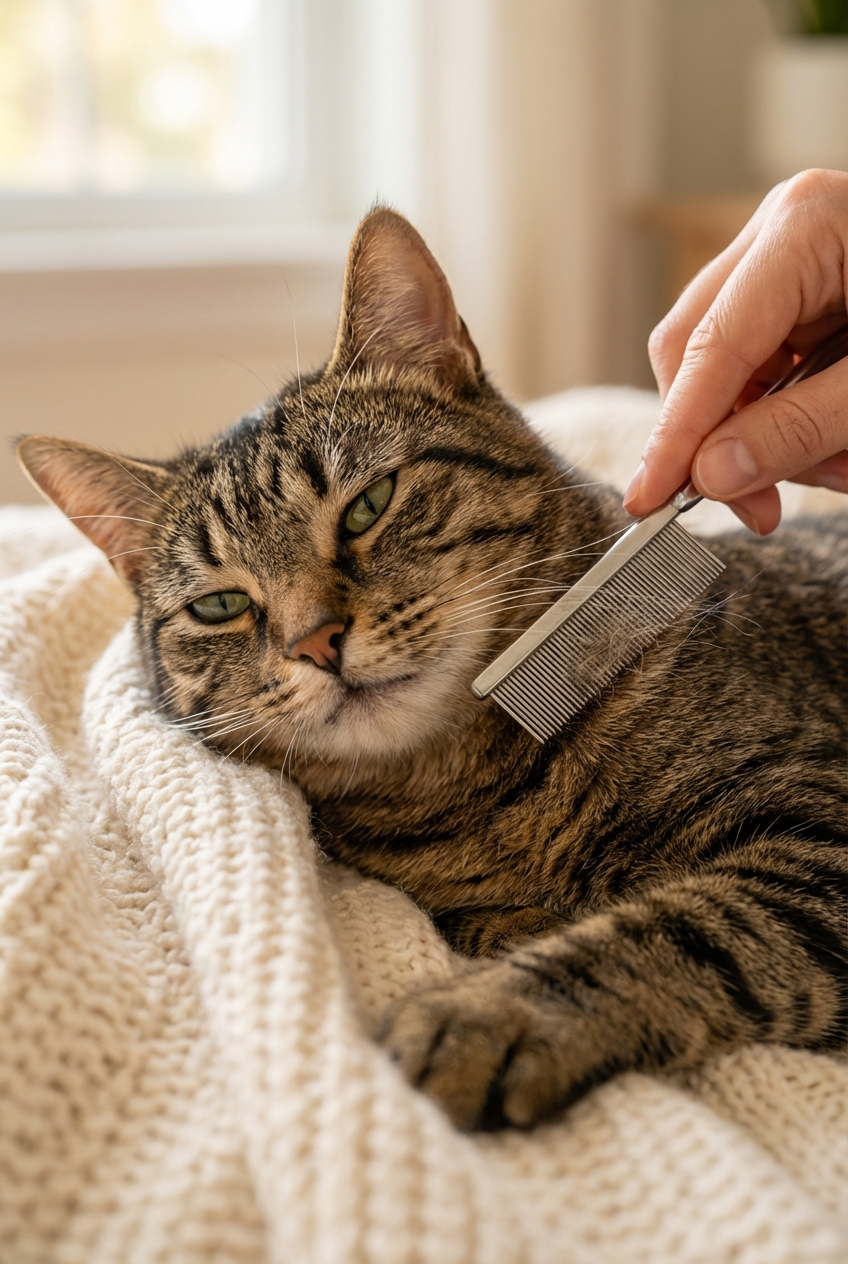
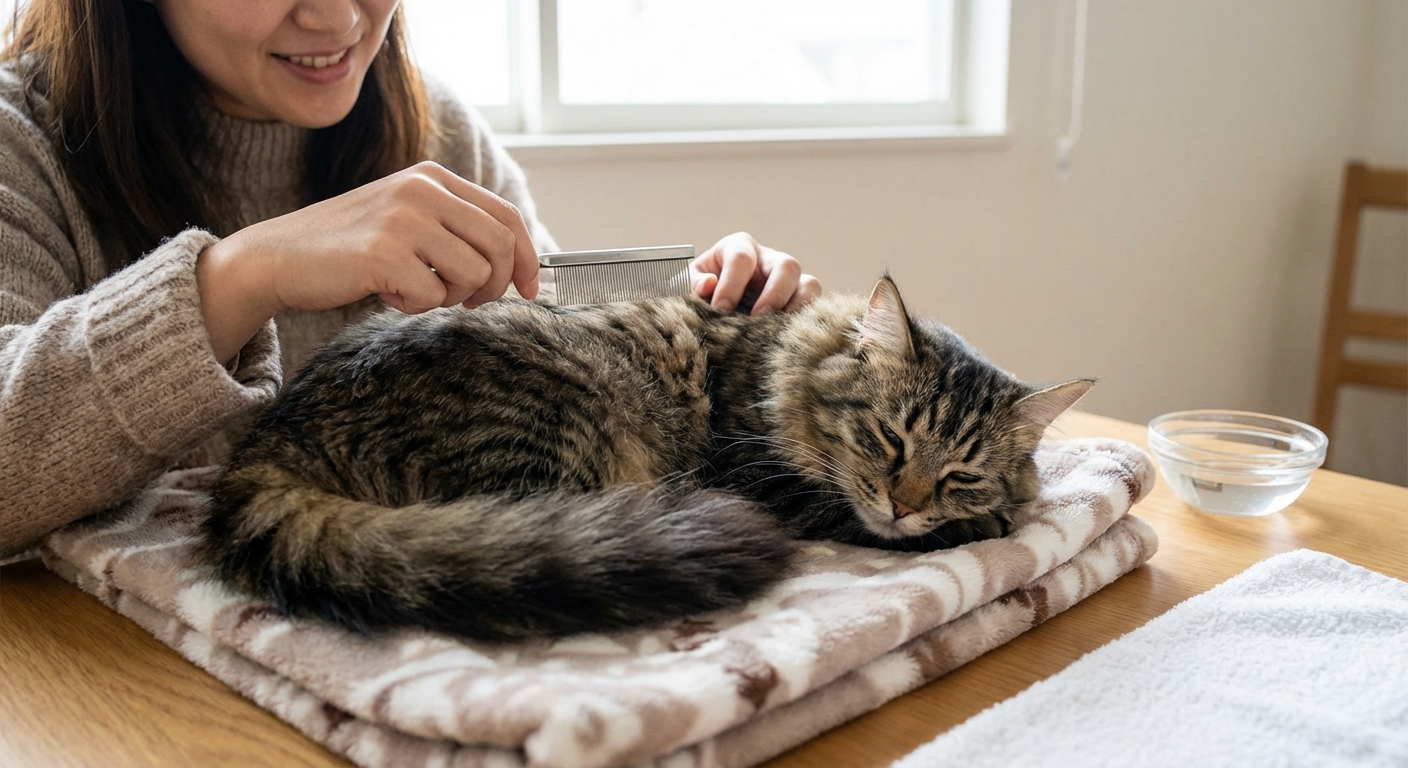
Regular brushing removes flakes, distributes natural oils, and helps you spot problems early. For most cats, 2 to 4 times per week is a great starting point.
- Short-haired cats: soft bristle brush or grooming glove.
- Medium to long-haired cats: a comb plus a slicker brush, used gently.
- If your cat hates brushing, start with 30 seconds, then build up slowly and reward with a treat.
2) Support hydration
Hydration supports healthier skin. Easy ways to help include:
- Offer a cat water fountain (many cats drink more from moving water).
- Add a little extra water to wet food.
- Feed more moisture-rich meals (canned diets tend to provide more water than dry kibble).
3) Support skin with nutrition
Look for a high-quality, complete-and-balanced cat food (AAFCO statement on the label). If your veterinarian approves it, omega-3 fatty acids can help some cats with dry, flaky skin, especially when inflammation is part of the picture.
- Use a veterinary or pet-specific fish oil, not human capsules that may include added ingredients.
- Ask your vet for dosing guidance based on your cat’s weight and health history.
- Possible downsides include stomach upset, extra calories, and (at high doses) increased bleeding risk. That is one reason dosing matters.
4) Adjust the environment
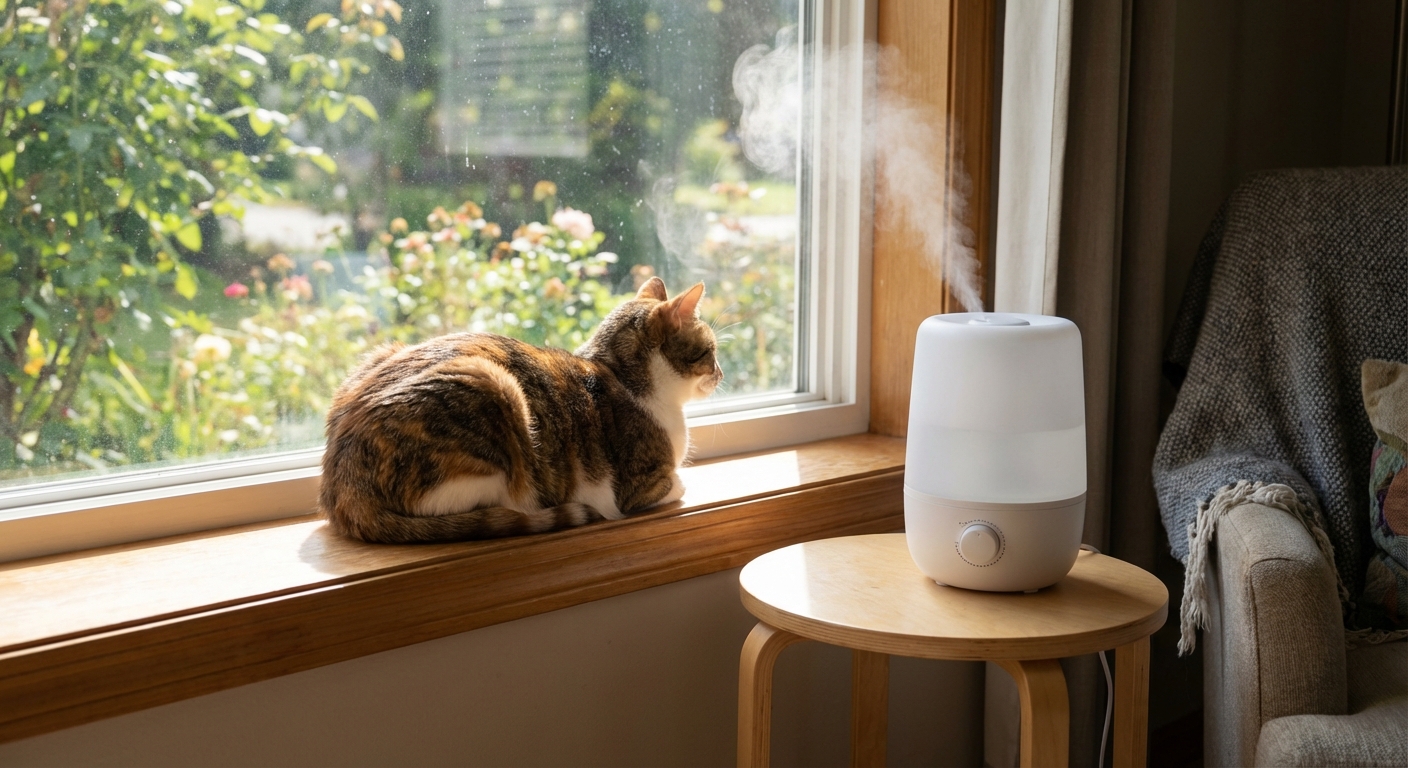
If your home is dry, especially in winter, a humidifier in the rooms your cat uses most can make a noticeable difference for skin and coat.
5) Avoid human dandruff products
Please skip human anti-dandruff shampoos. Cats groom themselves and can ingest topical products, and many human ingredients are irritating or unsafe for pets.
If bathing is truly needed, use only a cat-safe shampoo recommended by your veterinarian. Avoid essential oils unless your veterinarian specifically recommends them, since some can be unsafe for cats. For cats who stress easily, professional grooming may be a better option.
Checking for fleas and mites
Take a close look at the coat, especially around the rump, tail base, neck, and belly.
- Fleas: you may see flea dirt (tiny black specks). If you put it on a damp paper towel, it often turns reddish brown.
- Mites (walking dandruff): you may see heavy scaling along the back, sometimes with mild itching . Diagnosis can be tricky, and mites are not always easy to find. Your vet may use coat brushing, tape prep, skin scraping, or sometimes a trial treatment based on the overall picture.
If you suspect parasites, treat all pets in the home with veterinarian-recommended preventives. Over-the-counter products can be hit-or-miss, and some dog flea products are toxic to cats.
When to see the vet
Make an appointment if you notice any of the following:
- Intense itching, chewing, or overgrooming
- Redness, scabs, open sores, or swelling
- Hair loss, especially in patches
- Greasy coat, strong odor, or oozing skin
- Flakes that persist longer than 2 to 3 weeks despite home care
- Weight loss, increased thirst, increased appetite, vomiting, or behavior changes
- Multiple pets (or people) developing itchy rashes, which can happen with some parasites or ringworm
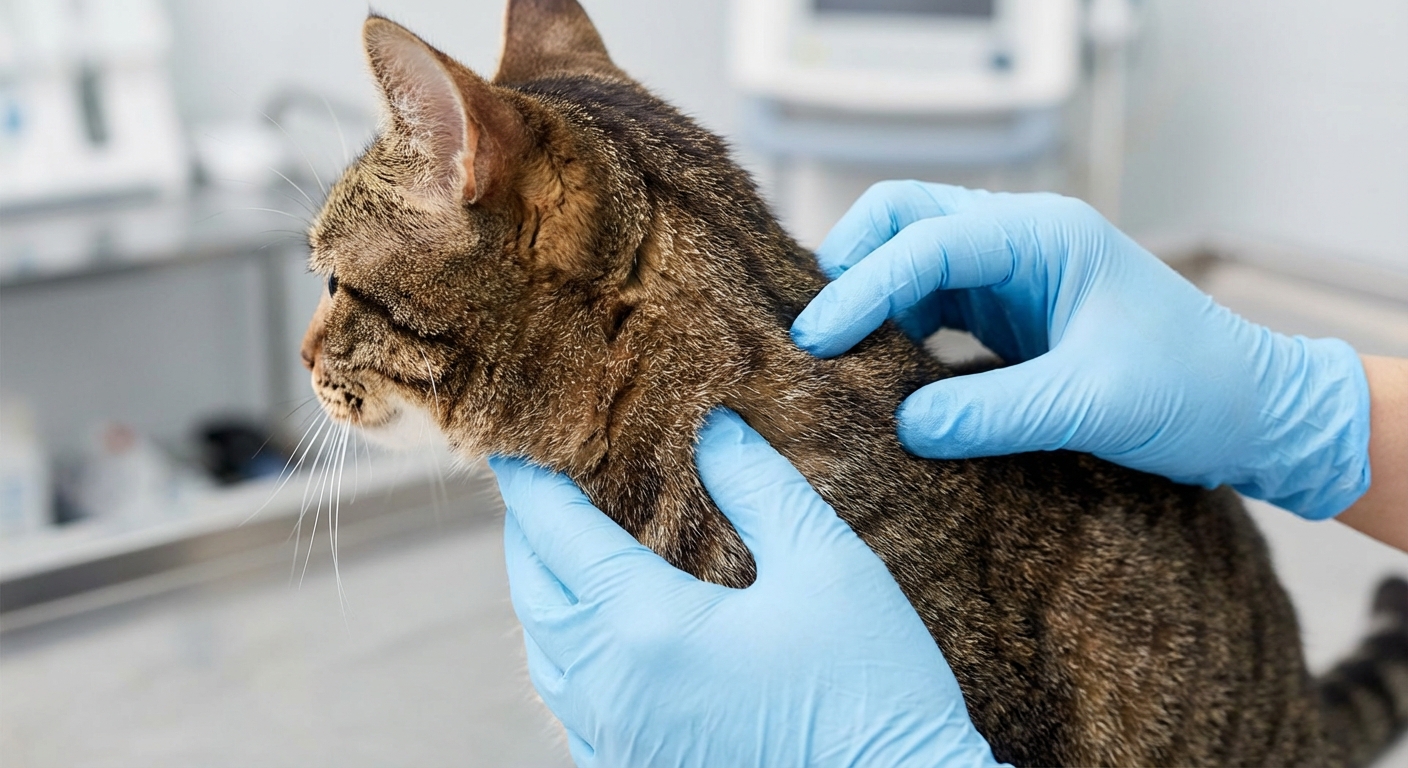
Your veterinarian may recommend a skin exam, flea combing, skin scraping, tape prep, fungal testing, cytology (looking at cells under a microscope), or bloodwork to rule out underlying illness.
Do this first
- Brush your cat regularly for 1 to 2 weeks and track changes.
- Boost hydration with wet food and/or a fountain.
- Confirm your cat is on a safe, effective flea preventive year-round .
- Use a humidifier if your home air is dry.
- Call your vet sooner if there is itching , hair loss , odor, greasy skin, or sores.
A gentle reminder: dandruff is a symptom, not a diagnosis. Once you identify the cause, the flakes often improve, but some underlying issues (like allergies or chronic skin disease) can take longer and may need ongoing care.