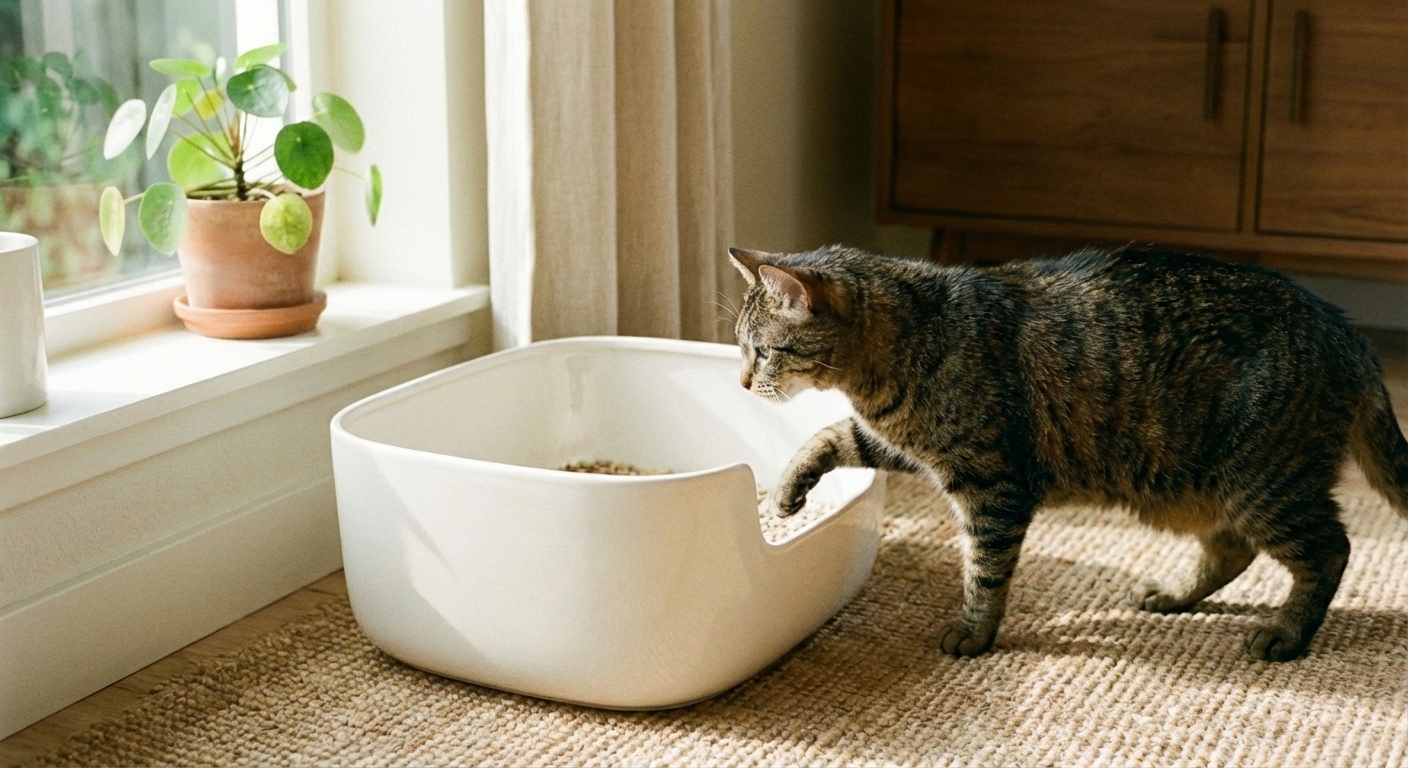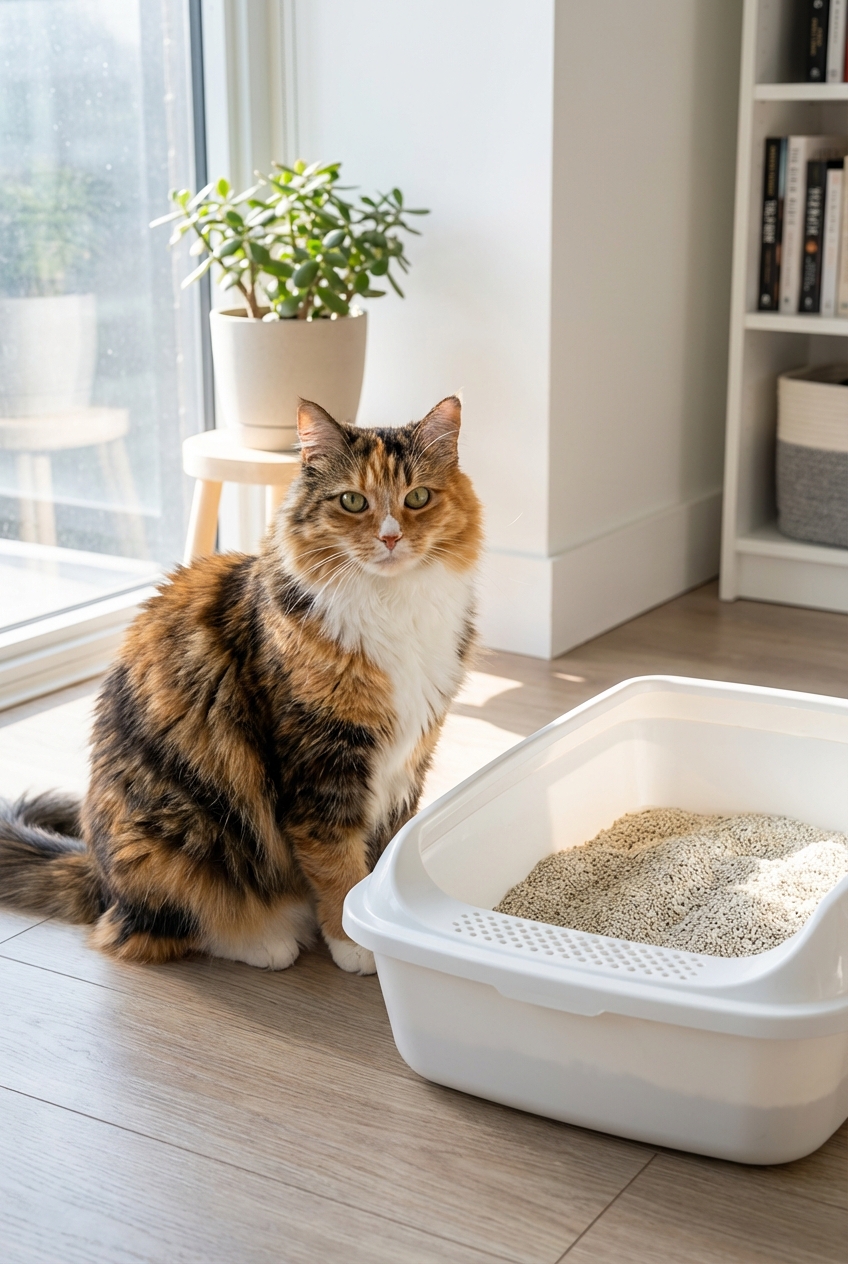
A practical guide to helping a constipated cat at home: hydration tips, plain pumpkin, vet-guided Miralax (PEG 3350), fiber, hairball support, red flags, and...
Article
•
Designer Mixes
Cat Constipation Home Remedies

Shari Shidate
Designer Mixes contributor
When a cat is constipated, it can look like lots of trips to the litter box, small hard stools, straining, or even crying out. As a veterinary assistant, I can tell you this is one of those issues where gentle, simple changes at home can help. It is also important to know when constipation is a true medical emergency.
Quick note: This article is educational and not a substitute for a veterinary exam. If you are unsure whether your cat is peeing normally, treat it as urgent.
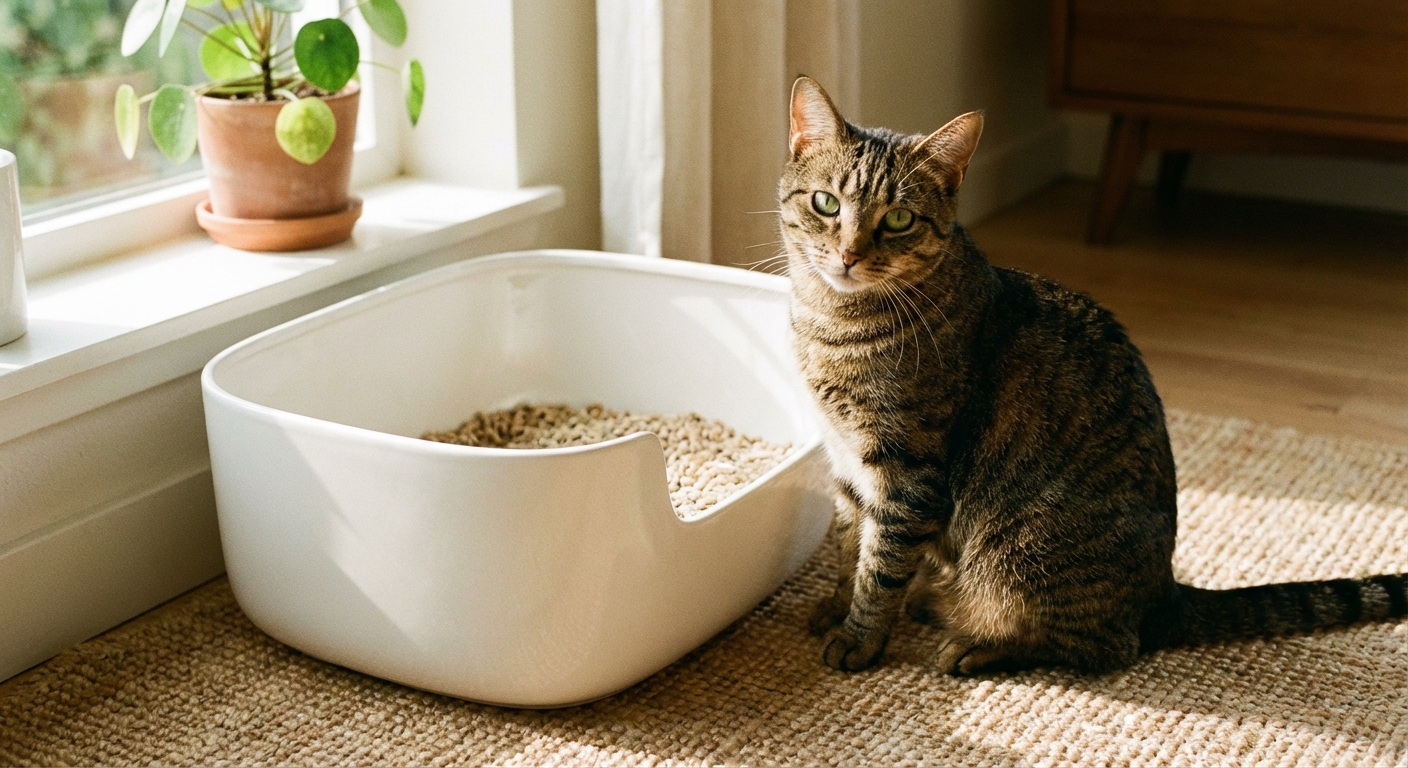
What constipation looks like in cats
Cats are private, so the signs can be subtle. Many pet parents assume their cat has a urinary problem because they see straining in the box. Both conditions can look similar from across the room, but they are very different in urgency.
Common signs
- Small, dry, hard stools or no stool at all
- Straining to poop, taking a long time in the box
- Pooping outside the litter box (because the box becomes associated with discomfort)
- Decreased appetite, hiding, or acting "off"
- Vomiting (sometimes, especially if constipation is significant)
Constipation vs. urinary blockage
If your cat is straining and not producing urine, or only producing a few drops, treat that as an emergency and seek veterinary care immediately. Urinary blockage can become life-threatening quickly, especially in male cats.
If you cannot tell whether urine is coming out, assume it might be a urinary issue and get help right away.
Why cats get constipated
Constipation is usually a symptom, not a diagnosis by itself. The most common underlying themes are not enough water intake, low activity, stress, pain, or a diet that is not supporting healthy stool moisture.
- Dehydration: Cats naturally have a low thirst drive, especially on dry-only diets.
- Hair and grooming: Hair ingestion can contribute, particularly in long-haired cats.
- Low movement: Less activity can slow gut motility.
- Stress and routine changes: New pets, moving, or litter box issues can lead to stool holding.
- Pain: Arthritis or back pain can make it uncomfortable to posture and push.
- Medical causes: Kidney disease, diabetes, megacolon, intestinal obstruction, and some medications are examples. Hyperthyroidism is more often linked with weight loss and GI upset, but it can contribute to constipation in some cats (often indirectly, such as through dehydration or concurrent disease).
Helpful definitions: Constipation means difficult or infrequent stools. Obstipation is severe constipation where little or no stool passes. Megacolon is a chronic loss of normal colon movement that can lead to repeated, severe constipation.
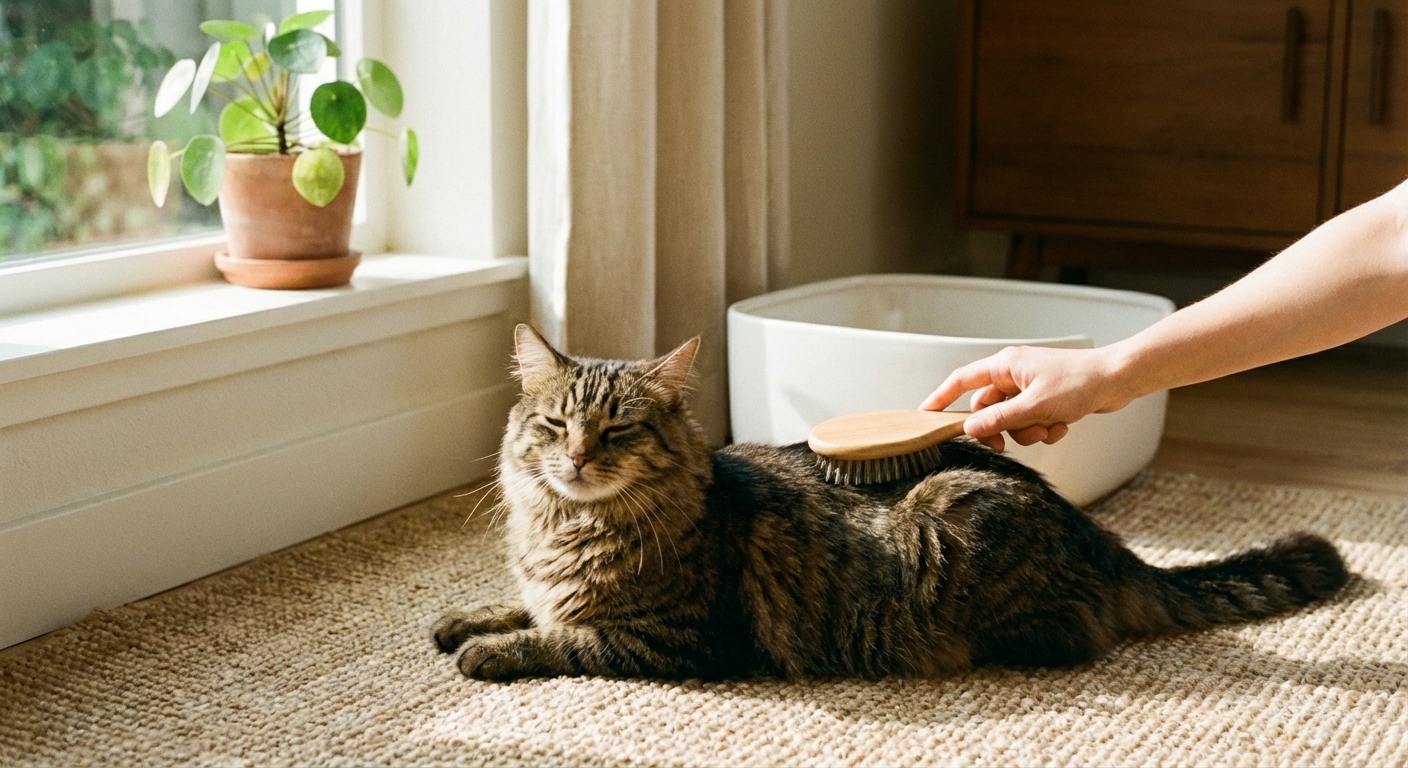
Safe home remedies that can help
The goal is to increase stool moisture, improve gut movement, and make the litter box experience calm and comfortable. Start with one or two changes, then reassess over 24 to 48 hours. If your cat seems painful, keeps straining, or worsens at any point, stop home trials and call your veterinarian.
1) Increase water intake
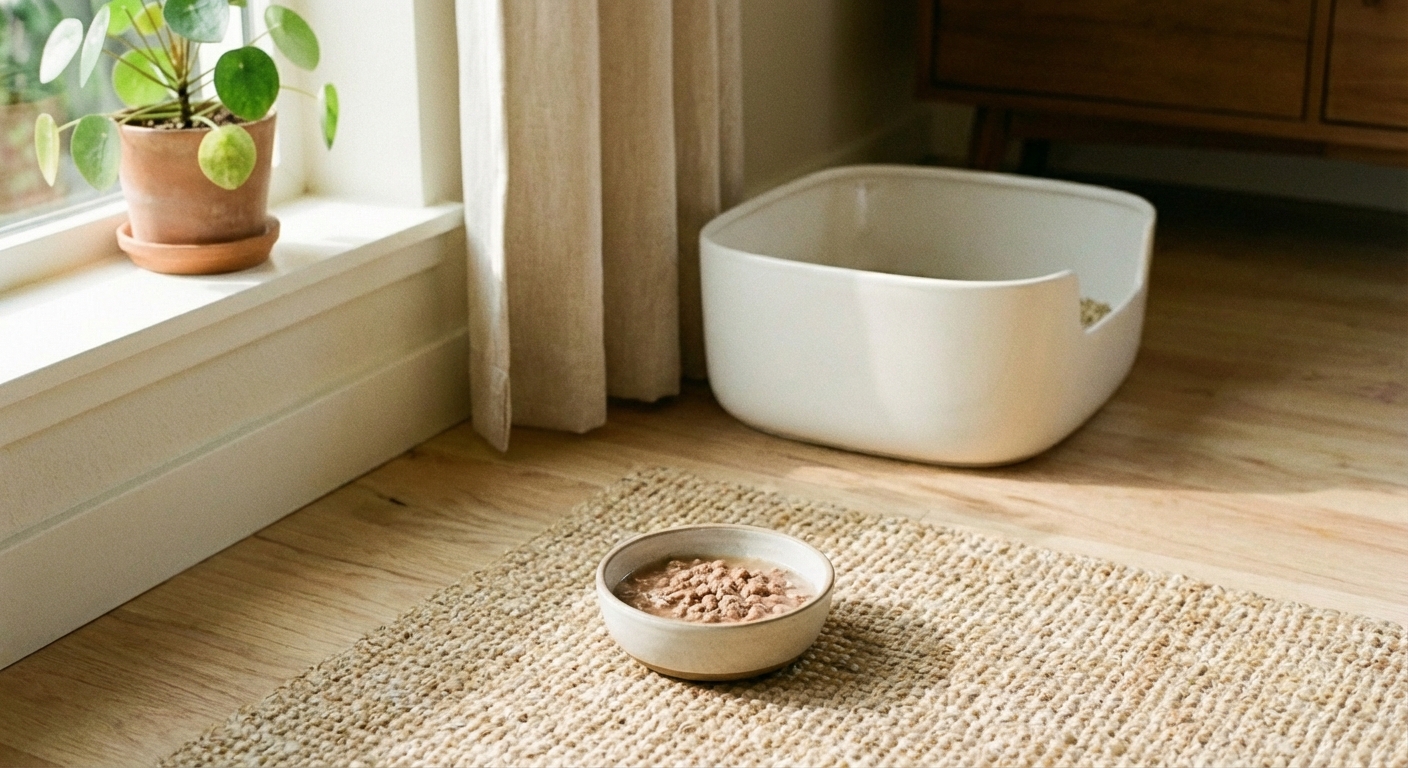
- Switch to more wet food: Even adding one wet meal daily can make a difference.
- Add water or broth to wet food: Aim for a "stew" consistency. If using broth, choose a pet-safe broth or one that is free of onion and garlic (including onion or garlic powder), since these are toxic to cats. Many store-bought broths, even low-sodium ones, contain them.
- Use a cat water fountain: Many cats drink more with moving water.
- Place multiple water bowls in quiet areas away from litter boxes.
2) Add fiber carefully
Fiber can help some cats, but too much can backfire, especially if your cat is dehydrated. Also, if constipation is being caused by a foreign body or intestinal obstruction, adding fiber or laxatives can make things worse. If your cat is vomiting, very lethargic, painful, or has a swollen belly, skip fiber and call your vet.
- Plain canned pumpkin (not pie filling): Start low. A cautious range is about 1/2 to 1 teaspoon once daily for many adult cats, mixed into food. Stop if you see diarrhea, gas, or discomfort, and check in with your veterinarian.
- Psyllium husk: Use only with veterinary guidance. Dosing varies, and it must be paired with adequate moisture.
3) Encourage movement and routine
- Short play sessions 2 to 3 times daily (wand toys, toy mice, treat puzzles).
- Keep feeding and litter box routines consistent.
- Reduce stressors where possible and offer safe hiding spots.
4) Make the litter box easy
- Keep boxes very clean and easy to access.
- For senior cats, use a low-entry box.
- Provide enough boxes: a common rule is one per cat plus one extra.
5) Support hairball control
If your cat is prone to hairballs, gentle daily brushing can reduce hair ingestion. Some cats benefit from veterinarian-recommended hairball diets or gels, but ask first if constipation is already present.
My favorite first step for many constipated cats is simple: add moisture. A wet-food meal with extra water often helps more than people expect.
What not to do at home
Some human remedies can be dangerous for cats. When in doubt, pause and call your veterinarian.
- Do not give human laxatives unless your vet instructs you (many are unsafe or dosing is risky).
- Do not use enemas at home unless specifically prescribed. Some enema ingredients can be toxic to cats.
- Do not use oils like mineral oil by mouth. Aspiration risk is real and can cause pneumonia.
- Do not force-feed if your cat is nauseated or vomiting.
- Do not keep trying fiber if your cat seems painful, keeps vomiting, or is not passing any stool, since obstruction is a concern.
When to call the vet now
Home care is for mild constipation in an otherwise bright, stable cat. If any red flags are present, please do not wait.
- No stool for 48 hours or longer (or 24 to 48 hours with straining or discomfort)
- Repeated vomiting, lethargy, or refusing food
- Distended or painful belly
- Crying, severe straining, or collapsing
- Straining with little or no urine, or you are unsure whether urine is coming out
- Known history of megacolon or prior severe constipation episodes
- Kittens, very old cats, or cats with kidney disease, heart disease, or other chronic illness (call earlier for guidance)
In-clinic, your veterinarian can check hydration, feel for stool buildup, assess for pain, and rule out obstruction. Treatment may include fluids, prescription stool softeners, motility medications, or an enema performed safely by the medical team. You might also hear about options like polyethylene glycol, lactulose, or cisapride, but these should be used only under veterinary direction.
Prevention habits
Once your cat is back to normal, prevention is the name of the game. Constipation tends to recur if the root cause is not addressed.
- Prioritize moisture with wet food or added water.
- Maintain a healthy weight with measured meals and play.
- Brush regularly, especially long-haired cats.
- Support joints for older cats with ramps, low-entry boxes, and veterinary guidance on arthritis care.
- Schedule regular checkups, particularly for seniors, since kidney and thyroid issues can contribute.
- Monitor the box: note stool frequency and consistency, and keep an eye on urine clumps too.