Help your cat heal fast after spay surgery. Get a day-by-day recovery timeline, safe feeding and room setup, incision care, cone options, activity limits, an...
Article
•
Designer Mixes
Cat Care After Spay

Shari Shidate
Designer Mixes contributor
Bringing your cat home after a spay can feel a little nerve-wracking, especially if she is still sleepy or acting “not like herself.” The good news is that most cats recover smoothly with simple, consistent home care. I have walked many families through this as a veterinary assistant, and it usually comes down to three things: protect the incision, keep activity low, and know what is normal (and what is not).
Quick note: This is general guidance. Always follow your clinic’s discharge instructions first, since closure method (skin glue, buried sutures, staples) and your cat’s individual needs can change the plan.
Below are must-know answers to the questions I hear most often, plus practical steps you can take today to help your cat heal comfortably and safely.
First 24 Hours
Most cats are groggy for the first evening after anesthesia. Some are wobbly, vocal, clingy, or even a bit grumpy. That is typically normal.
Normal after-effects
- Sleepiness and decreased interest in play
- Mild nausea or reduced appetite the first night
- Mild vocalizing or restlessness as the anesthesia wears off
- Disorientation or “wobbliness” (ataxia), especially in the first few hours
- Needing help getting onto furniture in the first few hours
Simple recovery setup
- Quiet room: A small bedroom or bathroom is perfect so she cannot sprint or jump.
- Warm, soft bedding: Keep it low to the ground.
- Low-sided litter box: This reduces strain. If needed, use a shallow pan temporarily.
- Separate from other pets: At least overnight, and often longer if they play rough.
Tip: Keep lights dim and the environment calm if your cat seems unusually disoriented. Too much stimulation can make the post-anesthesia “wobblies” worse.
Warmth and safety: Many cats run a little cool after anesthesia. Keep the room comfortably warm and offer blankets, but avoid heating pads or heated blankets unless your veterinarian specifically recommended one and you can supervise closely. Burns can happen surprisingly easily.
Food and Water
Many clinics recommend offering a small meal the evening of surgery. The goal is gentle reintroduction, not a big dinner.
How to feed
- Offer a small amount of her usual food first.
- If she keeps it down, you can offer a little more later.
- Keep fresh water available, but do not be alarmed if she drinks lightly at first.
When appetite is a concern
Call your veterinarian if:
- She cannot keep water down
- Vomiting happens more than once
- She refuses all food into the next day (unless your vet gave different instructions)
Some cats do better with a slightly warmed wet food meal because it smells stronger and is easier to eat.
Pain Control
A spay is real abdominal surgery, so some soreness is expected. Most cats are quieter for a few days.
Use only vet-prescribed meds
Please do not give human pain relievers. Many are dangerous for cats. Follow your clinic’s exact dosing instructions for any prescribed pain medication.
Medication reminders: Do not share medications between pets, and do not stop or change prescribed meds early unless your veterinarian tells you to.
Signs your cat may be painful
- Hiding more than usual
- Hissing or swatting when you approach the belly
- Not wanting to move, climb into the litter box, or get comfortable
- Low growling or tense posture
If you suspect pain is not well-controlled, call your vet. Pain relief is not “extra.” It can support recovery by reducing stress and helping her eat, rest, and use the litter box normally.
Incision Care
The incision is the most important thing to monitor daily. Plan to take a quick look twice a day in good light.
What is normal
- Edges closed and clean
- Mild swelling or mild bruising
- A small amount of pinkness right along the line
Not normal: contact your vet
- Open areas, gaps, or tissue visible
- Thick swelling that looks like a lump under the incision
- Yellow or green discharge
- Bad odor
- Bleeding that continues or soaks the fur
- Redness that spreads beyond the incision line
Do not put peroxide, alcohol, ointments, or sprays on the incision unless your veterinarian specifically told you to. Many products delay healing or encourage licking.
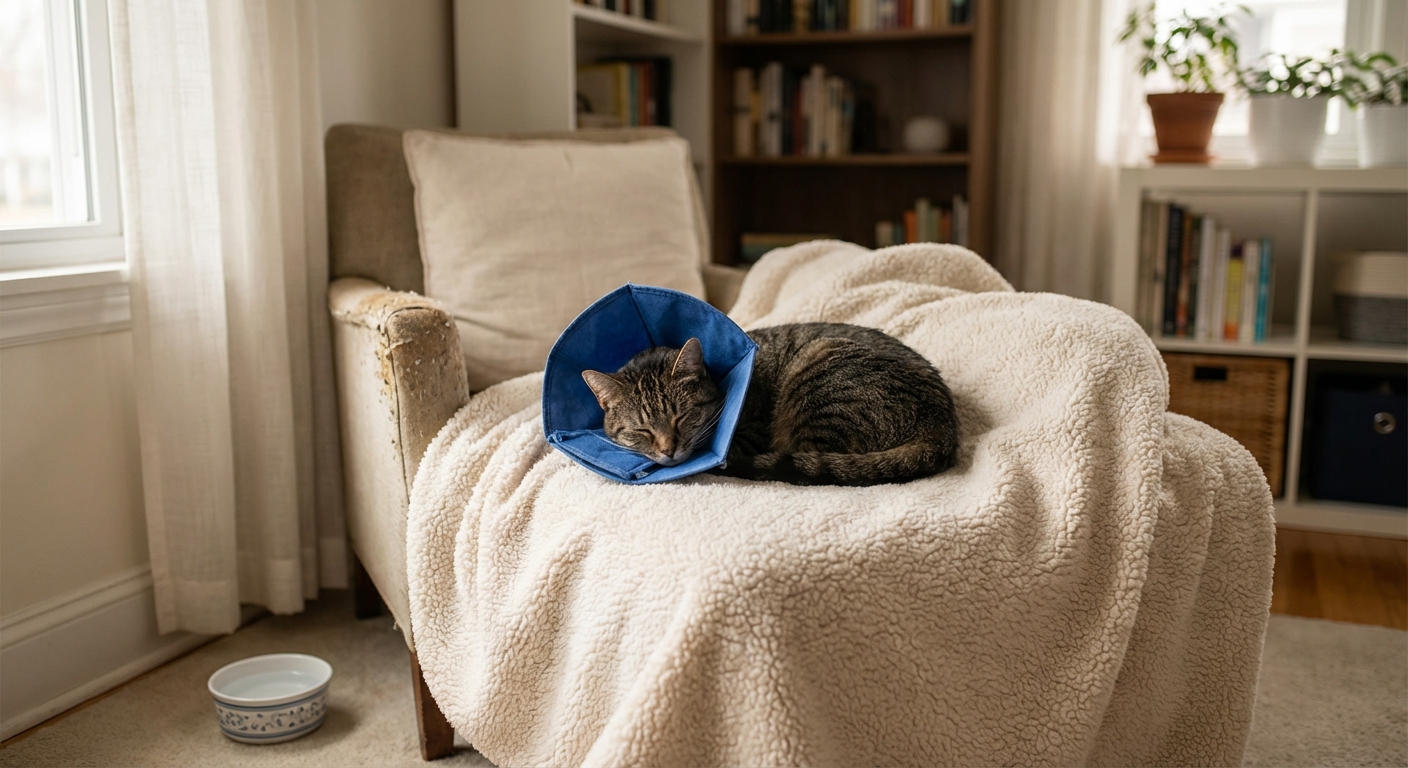
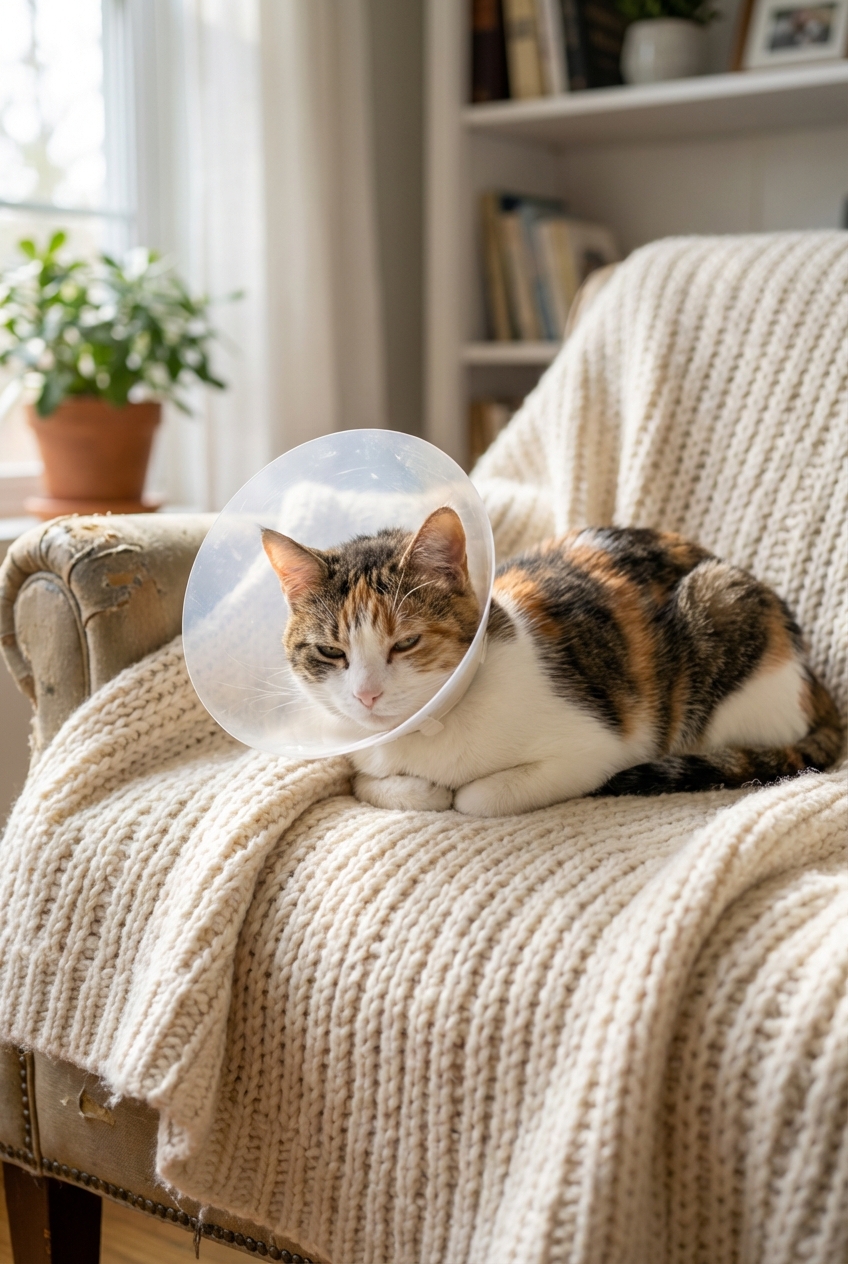
Cone, Suit, and Licking
One of the fastest ways a spay incision gets into trouble is licking. A cat’s tongue can irritate the skin, introduce bacteria, and even pull sutures loose.
How long is the cone needed?
Many cats need an e-collar (cone) or recovery suit until they are cleared by their veterinarian. This is often 10 to 14 days, but some clinics recommend a shorter window (such as 7 to 10 days) depending on the closure method and how healing looks.
Which option is best?
- E-collar: Often the most reliable. Make sure she can eat and drink and that it is snug enough she cannot back out.
- Soft cone: More comfortable for some cats, but some can still reach the incision.
- Recovery suit: Great for cats who panic in a cone, but it must fit well and stay dry and clean.
If you see licking even once, assume she will do it again when you are asleep. Prevention is much easier than treating an infected incision.
Activity Limits
I know, keeping a cat calm can sound impossible. But during the restriction period your clinic recommends, limiting jumping and rough play can help prevent swelling, bleeding under the skin, and incision opening.
What restricted activity means
- No running the house at top speed
- No jumping onto high furniture, shelves, or cat trees
- No wrestling with other pets
Practical ways to limit movement
- Use a smaller room as a recovery space
- Remove access to tall climbing areas
- Offer quiet enrichment like food puzzles that do not require jumping
Short, calm attention sessions can help. Gentle petting, brushing if she enjoys it, and simply sitting with her often reduces stress.
Picking up and handling
If you need to lift her, support her chest and hindquarters and avoid pressure on her belly. Keep movements slow and steady.
Litter Box Questions
It is common for bowel movements to be delayed a bit after surgery due to anesthesia, stress, and reduced appetite.
What can be normal
- Peeing within 24 hours (often sooner)
- Pooping within 24 to 48 hours, and sometimes up to 72 hours if she is otherwise bright, eating, and not straining
- Slightly smaller stools if she ate less
When to call or seek urgent care
- Urgent, same-day: Straining to pee, crying in the litter box, frequent trips with little or no urine, or you suspect she cannot urinate
- Call your vet: No urine in 24 hours
- Call your vet: No stool by 48 to 72 hours, especially if she is not eating or seems uncomfortable
If your cat is constipated, do not give laxatives unless your veterinarian instructs you. There are cat-safe options, but dosing matters.
Bathing and Getting Wet
In most cases, you should keep the incision dry until it is healed.
- Avoid baths until your veterinarian says it is safe (often until fully healed).
- If your cat gets a little dirty, use a damp cloth to gently spot-clean away from the incision.
- If the incision gets wet, pat dry and contact your vet if you notice redness or discharge afterward.
Back to Normal
Many cats act fairly normal within a day or two, but internal healing takes longer than their behavior suggests.
Typical timeline
- Days 1 to 3: Sleepy, tender, low appetite is possible
- Days 4 to 7: Energy increases, which is why activity limits matter
- About 7 to 14 days: Many cats are ready for an incision recheck and may be cleared for normal routines
Follow-up visits
Some cats have buried sutures that do not need removal. Others have external sutures or staples that need a recheck and removal on your clinic’s schedule. If you are not sure what your cat has, call and ask. They will be happy you did.
Always follow your clinic’s discharge instructions first, especially if your veterinarian used skin glue, buried sutures, or staples, since aftercare can differ.
Red Flags
Trust your instincts. If something feels off, it is worth a call.
- Labored breathing, pale gums, or collapse
- Repeated vomiting
- Swollen belly or sudden lethargy
- Incision opens or is actively bleeding
- Suspected fever (feels hot to the touch, or a measured temperature above about 102.5°F or 39.2°C)
If you are ever torn between “wait and see” and “call the vet,” call. A quick check can prevent a small issue from becoming an emergency.
Simple Tips That Help
- Keep her indoors during recovery. Outdoor germs and jumps are a recipe for complications.
- Check the incision twice daily and take a photo the first day so you can compare.
- Use the cone or suit consistently, especially at night.
- Stick to routine. Predictability lowers stress and supports appetite.
- Give all meds exactly as directed and do not share meds between pets.
You are doing a loving, preventative health step for her long-term wellbeing. A calm recovery window is a small investment for years of healthier life.