Vet-informed guide to blood in cat poop: what bright red vs black stool can mean, common causes in kittens/adults/seniors, safe home care, and when to seek e...
Article
•
Designer Mixes
Cat Bloody Stool Tips & Advice

Shari Shidate
Designer Mixes contributor
Seeing blood in your cat’s poop can be scary, and I get it. As a veterinary assistant, I have watched even the calmest pet parents go into full worry mode when they spot red streaks in the litter box. The good news is that not all bloody stool is an emergency, but it is always a clue that something needs attention.
This article will help you figure out what you are seeing, what to do today, and when to call your veterinarian right away.
What “bloody stool” can look like
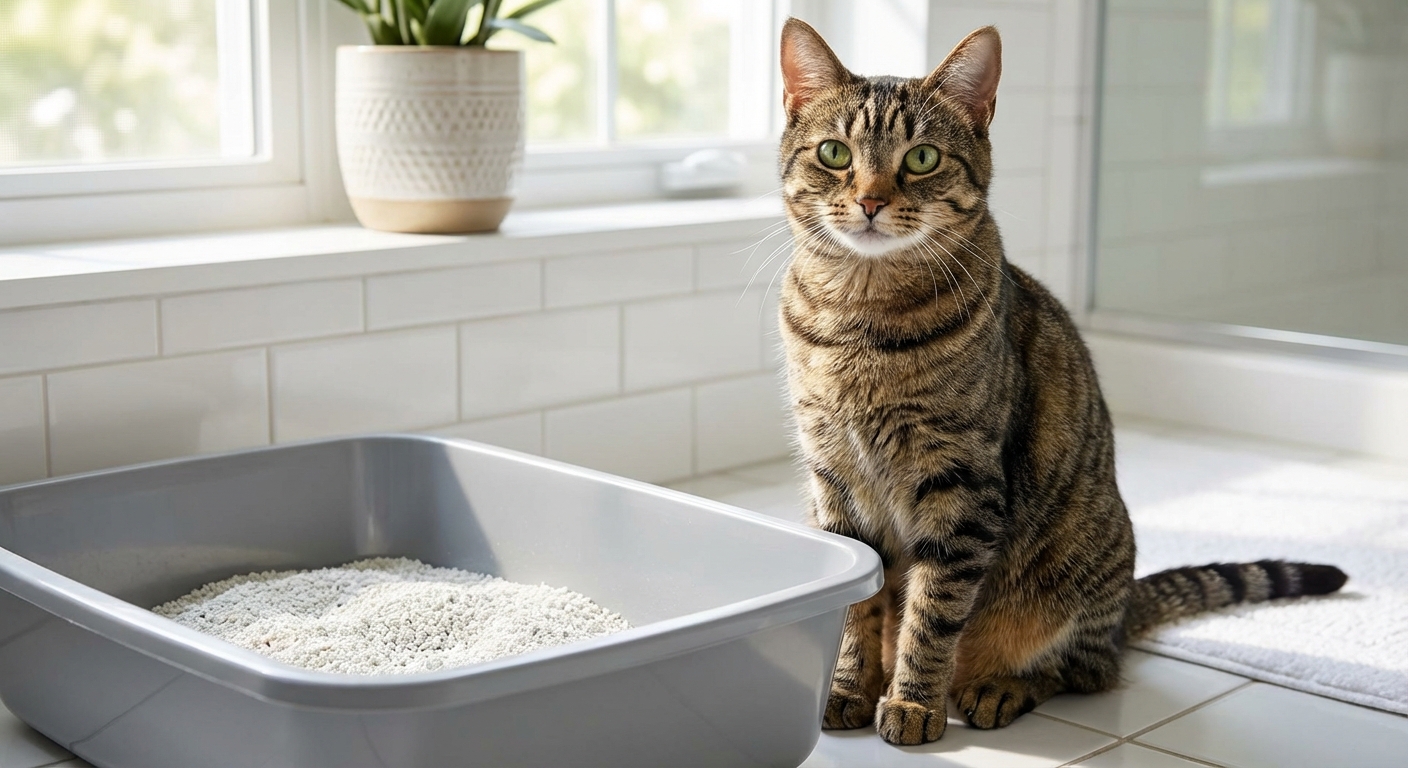
Blood can show up in a few different ways, and the details matter because they help your vet narrow down where the bleeding is coming from.
- Bright red blood on the stool or on the litter (hematochezia). This often points to the lower digestive tract (colon or rectum) or irritation near the anus.
- Dark, black, sticky stool (melena). This can suggest digested blood from higher up in the stomach or small intestine and is more concerning. It can also happen if a cat swallows blood (for example from a nosebleed or mouth bleeding), so your vet may ask about that too.
- Blood mixed with mucus and softer stool. This commonly shows up with colitis (inflammation of the colon).
- Blood with diarrhea or frequent small stools. This can happen with stress, parasites, diet changes, infection, or inflammatory bowel disease.
If you can safely do so, take a clear photo of the stool for your veterinarian. Not fun, but it can be genuinely helpful.

When it is an emergency
Please call an emergency vet or seek same-day care if you notice any of the following:
- Black, sticky stool (melena)
- Large amounts of bright red blood or blood clots
- Repeated vomiting, especially with blood or coffee-ground material
- Lethargy, weakness, pale gums, or your cat seems “off” in a way you cannot explain
- Straining without producing stool or only passing a tiny amount
- A distended, painful abdomen
- Kittens, seniors, or cats with chronic illness (they dehydrate and decline faster)
- Possible toxin exposure, especially anticoagulant rat bait or human medications like NSAIDs (ibuprofen, naproxen, aspirin)
- Recent surgery or known clotting disorders
Wondering what counts as a “large amount”? Trust your gut and treat it as urgent if you see pooling blood in the box, dripping blood, stool that looks mostly blood, or bleeding that keeps going.
Important safety note: Straining in the litter box is not always constipation. It can also be a urinary blockage, especially in male cats, and that is a life-threatening emergency. Red flags include frequent trips to the box, crying out, producing little or no urine, licking the genitals, or a tense painful belly. If you are not sure whether your cat is peeing or pooping, go in right away.
If your cat is bleeding and acting normal otherwise, it still deserves a call to your regular vet. But the signs above mean “do not wait and see.”
Common causes
There are many possibilities, and only your veterinarian can diagnose the cause. These are some of the more common reasons we see:
1) Constipation and straining
Hard, dry stool can scrape delicate tissue and cause bright red streaks. Straining can also cause small tears around the anus.
2) Parasites and protozoa
Hookworms, roundworms, whipworms (uncommon in cats), Giardia, and coccidia can irritate the gut. In some cats, Tritrichomonas foetus can cause chronic large-bowel diarrhea with mucus and blood, especially in young cats and multi-cat households. Even indoor cats can pick up parasites through fleas, contaminated soil tracked inside, or new pets. (And flea control helps reduce the risk of tapeworms.)
3) Diet changes or food intolerance
A quick switch in food, new treats, dairy, fatty table scraps, or a new protein can trigger inflammation and diarrhea with mucus or blood.
4) Stress colitis
Cats are sensitive. A move, new baby, boarding, visitors, construction noise, or even a new litter can contribute to colon inflammation.
5) Anal gland issues, rectal inflammation, or trauma
Scooting, overgrooming the rear end, or yowling during pooping can be clues.
6) Foreign material or string
Cats are talented at eating things they should not. Toy pieces, ribbon, tinsel, and string can irritate the GI tract and can become dangerous fast. If you suspect string ingestion, do not pull anything you see. Call a vet immediately.
7) Inflammatory bowel disease (IBD)
IBD can cause intermittent vomiting, weight loss, appetite changes, and stool changes including blood or mucus.
8) Infection, dysbiosis, or toxins
Infectious enteritis or gut dysbiosis can cause bloody diarrhea. Ingestion of irritants can also do it. Some human medications (especially NSAIDs) can be dangerous and may cause GI bleeding.
9) Polyps, tumors, or other chronic conditions
Less common, but important to consider, especially in older cats or when symptoms persist.
What you can do today
Home care is generally most reasonable when your cat is otherwise acting normal (good energy, eating, drinking, no vomiting) and the blood is a small amount of bright red. If the blood persists longer than 24 to 48 hours, worsens, or keeps recurring, book an exam even if your cat seems fine.
Step 1: Quick health check
- Appetite: Is your cat eating normally?
- Water intake: Drinking as usual?
- Energy: Alert and interactive?
- Vomiting: None, occasional, or frequent?
- Litter box behavior: Straining, crying, repeated trips?
- Urination: Are you seeing normal urine clumps? (If not, treat it as urgent.)
Step 2: Stool log for 48 hours
Write down:
- Number of bowel movements per day
- Stool consistency (formed, soft, watery)
- Color (normal brown, red streaks, black/sticky)
- Any mucus
- Any vomiting
- What your cat ate (including treats)
Step 3: Hydration support
Dehydration makes constipation worse and can intensify gut irritation.
- Offer fresh water in multiple bowls.
- Consider a cat water fountain if your cat likes moving water.
- If your cat eats kibble, ask your vet about increasing wet food for hydration support.
Step 4: Pause new foods and treats
If you recently introduced a new diet, treat, supplement, or flavored medication, stop the non-essentials and return to the last well-tolerated diet while you call your vet for guidance.
Step 5: Reduce stress
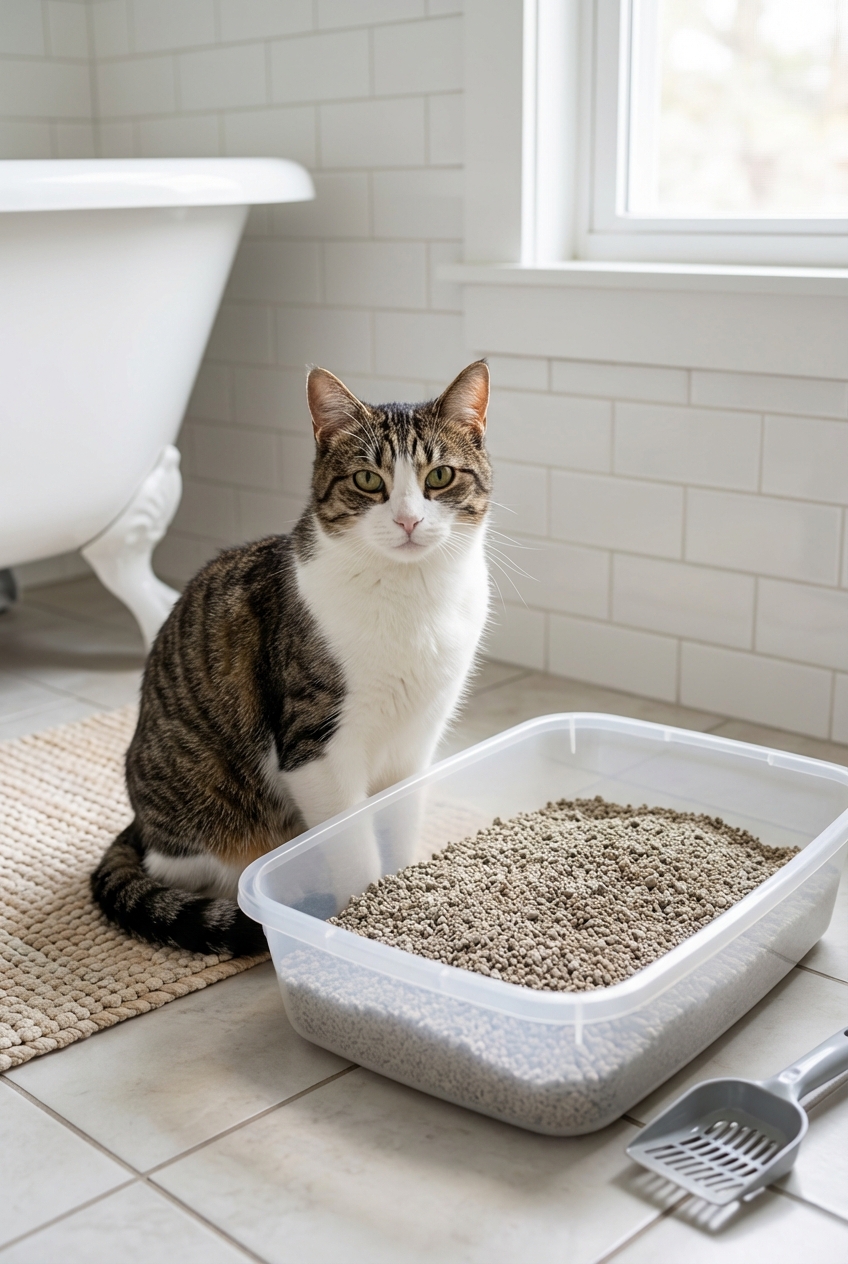
- Keep the litter box clean and easy to access.
- Maintain routine feeding times.
- Provide a quiet hiding spot and calm environment.
- Use feline pheromone diffusers if your cat is stress-prone.
Do not give human medications (including Pepto-Bismol, aspirin, ibuprofen, naproxen, or anti-diarrheals) unless your veterinarian specifically instructs you. Some can be toxic to cats.
What your vet may do
Your veterinarian will tailor testing and treatment to your cat’s age, symptoms, and exam findings. Common next steps include:
- Fecal testing to check for parasites and protozoa (and sometimes specific tests for Tritrichomonas, depending on history)
- Deworming (sometimes done even if the fecal is negative, depending on risk)
- Diet trial (highly digestible or novel protein) to calm inflammation and identify sensitivities
- Probiotics to support a healthier gut microbiome (use vet-approved options made for cats)
- Bloodwork if there are systemic signs like lethargy, weight loss, or vomiting
- X-rays or ultrasound if constipation, foreign material, or other internal disease is suspected
Be prepared to answer questions about diet, stress changes, flea prevention, and litter box habits. Those details speed up the diagnosis.
How to prevent flare-ups
Some causes are one-time events, while others are chronic and manageable. These practical habits help many cats:
- Keep diet steady and transition foods slowly over 7 to 10 days.
- Prioritize hydration with wet food, fountains, and fresh water stations.
- Use consistent parasite prevention recommended by your vet. Regular flea control also helps prevent tapeworms.
- Support a healthy weight, since obesity can worsen constipation and inflammation.
- Schedule routine wellness visits so subtle issues are caught early.
- Reduce stress with predictable routines, enrichment, and adequate litter boxes (often one per cat plus one extra).
Quick decision guide
- Small bright red streaks, cat feels normal: call your vet for advice, start a stool log, monitor closely for 24 to 48 hours. If it does not resolve or it returns, schedule an exam.
- Blood with diarrhea, mucus, or repeated litter box trips: call your vet the same day.
- Black/sticky stool, large bleeding, vomiting, weakness, pale gums: emergency vet now.
- Straining and you are not seeing normal urine clumps: emergency vet now (possible urinary blockage).
Your cat is not “being dramatic.” Bloody stool is a real symptom, and you are doing the right thing by paying attention. If you are ever unsure, call your veterinary clinic. That quick conversation can save you a lot of worry and can protect your cat’s health.