Vet-informed guide to blood in cat poop: what bright red vs black stool can mean, common causes in kittens/adults/seniors, safe home care, and when to seek e...
Article
•
Designer Mixes
Cat Bleeding From the Rectum

Shari Shidate
Designer Mixes contributor
Seeing blood from your cat’s rectum can be scary, and as a veterinary assistant, I want you to know two things can be true at once: many causes are treatable, and some situations need urgent care. This guide will help you sort out what you are seeing, what to do right now at home, and what your veterinarian will likely check.
Important note: This article is educational and not a substitute for an exam. Cats are also very good at hiding illness, so if you are unsure, it is always okay to call your vet or an emergency clinic for advice.
First, what “rectal bleeding” can look like
Blood may show up in a few different ways, and those details help your vet narrow down the cause.
- Bright red blood on the stool, on the litter, or on the hair around the anus often points to bleeding in the lower digestive tract (colon, rectum, anus).
- Dark, tarry stool (black, sticky, often foul-smelling) can suggest digested blood from higher up in the GI tract and should be treated as urgent. Note: black stool can also be caused by certain diets or medications and supplements (like iron or bismuth products), but it still warrants prompt veterinary guidance.
- Blood mixed with mucus can happen with inflammation of the colon (colitis).
- Small streaks may occur with constipation or minor irritation, but it still deserves attention if it repeats.
If you can safely take a quick photo of the stool in the litter box for your vet, it can be surprisingly helpful.
When to treat this as an emergency
Please seek urgent veterinary care (same day, often immediately) if you notice any of the following:
- Large amounts of blood, continuous dripping, or blood clots
- Black, tarry stool
- Repeated vomiting, refusal to eat, or severe lethargy
- Pale gums, weakness, collapse, or rapid breathing
- Straining with little to no stool (could be constipation, an obstruction, or mistaken for urinary blockage, which is an emergency)
- Suspected toxin exposure (rodent poison, certain human medications)
- A kitten, senior cat, or a cat with chronic illness (kidney disease, diabetes, hyperthyroidism) showing bleeding
- Obvious pain (hunched posture, yowling), a swollen belly, fever, or rapid worsening
Trust your instincts. If your cat “just seems off,” it is worth getting seen.
Common causes of rectal bleeding in cats
There are many possibilities, ranging from mild to serious. Here are the most common categories we see in clinics.
Constipation and hard stools
Hard, dry stool can cause small tears and irritation around the anus, leading to bright red streaks. You might also see straining, frequent trips to the box, or small pebble-like stool.
Colitis (colon inflammation)
Colitis often causes frequent small stools, mucus, and bright red blood. Triggers can include stress, diet changes, food intolerance, infections, or parasites.
Parasites and protozoa
Intestinal parasites like hookworms and roundworms can cause blood in the stool, especially in kittens or outdoor cats. Protozoal infections are also common culprits, including Giardia and, in some cats (often young or in multi-cat homes), Tritrichomonas foetus, which can cause chronic large-bowel diarrhea with mucus and blood. Coccidia can also cause diarrhea and sometimes blood. Flea exposure increases risk for tapeworms because cats can ingest fleas while grooming.
Anal area irritation and wounds
Cats can get irritation from diarrhea, overgrooming, bite wounds, or inflammation near the anus. Anal gland problems are less common in cats than dogs, but they do happen.
Dietary upset and sudden food changes
Switching foods quickly or eating something unusual can irritate the gut lining. Even “people food” that seems harmless can cause diarrhea and inflammation in some cats.
Inflammatory bowel disease (IBD)
IBD can cause intermittent diarrhea, vomiting, weight loss, appetite changes, and sometimes blood or mucus in stool. Diagnosis typically involves rule-outs and, in some cases, ultrasound or biopsy.
Growths (polyps or tumors)
In older cats, growths in the rectum or colon can cause bleeding and straining. This is one reason recurring bleeding should not be brushed off, even if your cat seems otherwise normal.
Clotting problems and toxins
Rodenticide exposure and some medical conditions can interfere with blood clotting. This can lead to bleeding in multiple places, including the GI tract.
Other concerns to keep in mind
Less common, but important: rectal prolapse (tissue protruding from the anus), foreign material or linear string trauma, and severe diarrhea that leaves the tissue raw and irritated can all cause visible blood and need veterinary attention.
What you can do at home right now
Home care depends on how your cat looks overall. If your cat is bright, eating, and the blood is a small amount one time, you can take a calm, organized approach while you arrange guidance from your vet. If it is recurring, even in small amounts, plan on a veterinary visit.
1) Check the basics safely
- Observe behavior: energy level, appetite, drinking, vomiting, and litter box habits.
- Look at the stool: formed or loose, mucus, bright red versus black.
- Check the rear end: if your cat allows, look for visible wounds, swelling, or matted stool. Do not force it.
2) Prevent dehydration
Diarrhea and inflammation can dehydrate cats quickly. Offer fresh water and consider adding a little extra water to wet food. If your cat refuses fluids or seems weak, that is a vet visit.
3) Do not give human medications
Many over-the-counter medications are dangerous for cats. Avoid ibuprofen, naproxen, aspirin (unless specifically prescribed), Pepto-Bismol, and human anti-diarrheal medications unless your veterinarian directs you.
4) Avoid abrupt diet experiments
It is tempting to switch foods quickly, but sudden changes can worsen GI upset. If your vet recommends a bland or GI diet, transition as instructed. If you already changed foods recently, mention that to your clinic.
5) Save a stool sample if you can
Place a fresh sample in a clean container or bag and refrigerate it (do not freeze) until your appointment, ideally within 24 hours. Wash your hands afterward and disinfect any surfaces that were contaminated. Parasite testing is common and a fresh sample helps.
What your vet may ask and test
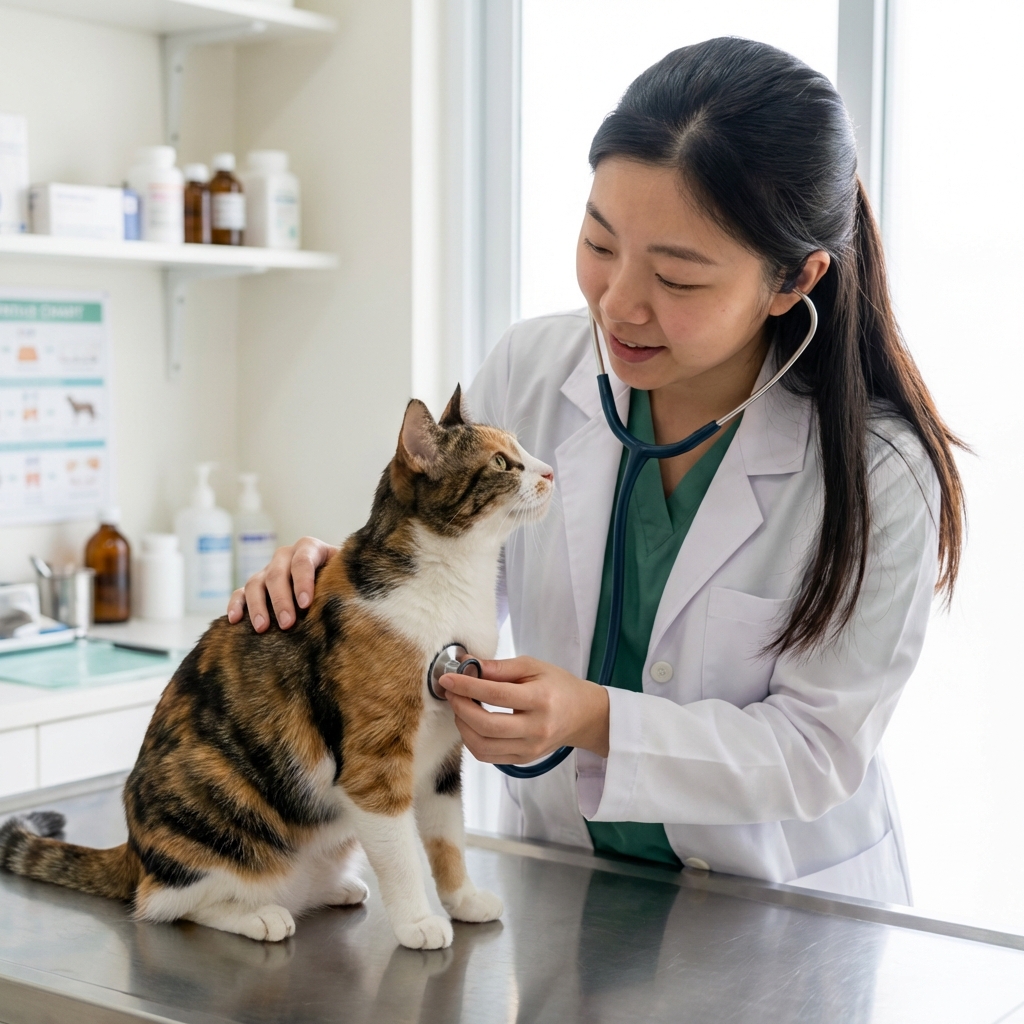
In the exam room, your veterinarian is trying to answer a few key questions: where is the blood coming from, how significant is it, and what is the root cause.
Questions you can expect
- When did the bleeding start and how often is it happening?
- Is your cat straining? Any vomiting?
- Any diet change, new treats, new medications, or possible toxin exposure?
- Indoor or outdoor? Any fleas? Deworming history?
- Any weight loss or appetite change?
Common diagnostics
- Fecal testing for parasites and protozoa (like Giardia) and, depending on history and region, additional testing for infectious causes (for example PCR panels for select pathogens)
- Physical exam including abdominal palpation and checking the anus for irritation, pain, or masses
- Bloodwork to evaluate anemia, infection, organ function, and clotting clues
- Urinalysis if straining could be urinary rather than GI
- X-rays for constipation, obstruction, foreign material, or masses
- Ultrasound for intestinal thickening, lymph nodes, and organ changes
Treatment may include parasite control, diet therapy, probiotics, anti-inflammatory medications, hydration support, or additional steps depending on findings.
Bleeding plus straining
One of the most important “watch-outs” is confusing constipation straining with urinary straining. Cats with urinary blockage may squat repeatedly and strain with little output. This is an emergency, especially in male cats.
- Constipation: small hard stool, dry litter box output, sometimes crying in the box.
- Urinary blockage: frequent trips, minimal urine, vocalizing, licking the genital area, hiding, sudden lethargy.
If you are unsure which one you are seeing, treat it as urgent and call an emergency clinic.
Prevention and wellness tips
Not all causes are preventable, but many are influenced by daily habits. These wellness steps support your cat’s digestive health over time.
- Keep parasite prevention current: talk with your vet about year-round parasite control based on your cat’s lifestyle.
- Support hydration: wet food, water fountains, and multiple water stations can help.
- Make diet changes slowly: transition over 7 to 10 days when possible.
- Reduce stress: predictable routines, enough litter boxes, and safe quiet spaces can lower stress-related colitis risk.
- Schedule wellness exams: recurring blood in stool, weight loss, or chronic diarrhea should never be normalized.
Bottom line: a single small streak may be minor, but repeated or recurrent bleeding is your cat asking for help.
Quick checklist before you call your vet
- Photo of the stool or litter box (if possible)
- When it started and how many times you have seen blood
- Stool consistency: formed, soft, watery, mucus present
- Any vomiting, appetite changes, or lethargy
- Diet history and recent food changes
- Current medications and supplements (including iron or bismuth products)
- Parasite prevention and flea status
If you want, you can copy this list into a note on your phone. It makes phone triage and appointments much smoother.