Stop kitten biting without punishment. Learn why kittens bite, how to freeze and disengage, redirect to toys, prevent ankle attacks, and build a daily play r...
Article
•
Designer Mixes
Cat Biting While Playing: How to Stop It

Shari Shidate
Designer Mixes contributor
Play biting is one of the most common cat behavior complaints I hear, and it is also one of the most fixable. The key is understanding what your cat is trying to do: practice hunting. When we use our hands as toys, we accidentally teach kittens and adult cats that human skin is an acceptable target.
The good news is you do not need to “dominate” your cat or punish them. With a few consistent changes, you can keep play fun and protect your hands, ankles, and guests.
Why cats bite during play
Cats are wired to stalk, pounce, grab, bunny-kick, and bite. In the wild, that sequence ends with a bite that stops prey from escaping. During play, your cat is running that same program.
Common reasons play turns into biting
- Hands were used as toys: Kittens learn early that moving fingers are “prey.”
- Overstimulation: Some cats get amped up and lose self-control, especially with fast petting or rough play.
- Under-enrichment: Bored cats invent their own entertainment, like ambushing ankles.
- Single-kitten syndrome: Cats that did not learn bite inhibition from littermates often bite harder.
- Pain or stress: Dental pain, arthritis, skin irritation, or stress can lower the bite threshold.
If the biting seems sudden in an adult cat who used to play gently, or if they are reluctant to be touched, it is worth ruling out medical causes with your veterinarian.
Play biting vs. fear or aggression
Not every bite is playful. Your plan changes depending on the emotion behind the behavior.
Signs it is likely play
- Loose, wiggly body and quick movements
- Stalking, pouncing, and “hunting” patterns
- Ears mostly forward or slightly to the side
- Cat returns for more play soon after
Signs it may be fear, overstimulation, or irritation
- Hissing, growling, or spitting
- Ears flattened back, tail lashing, pupils very dilated
- Skin twitching along the back, sudden whip-around during petting
- Cat tries to escape or hides after the bite
If you are seeing the second set of signs, skip “training through play” and focus on reducing triggers and getting professional help if needed.

How to stop play biting, step by step
1) Stop using hands and feet as toys
This is the biggest change and the hardest habit to break. No wrestling, no finger wiggling under blankets, no letting a kitten hang from your hand “because it is cute.” Every repetition trains biting.
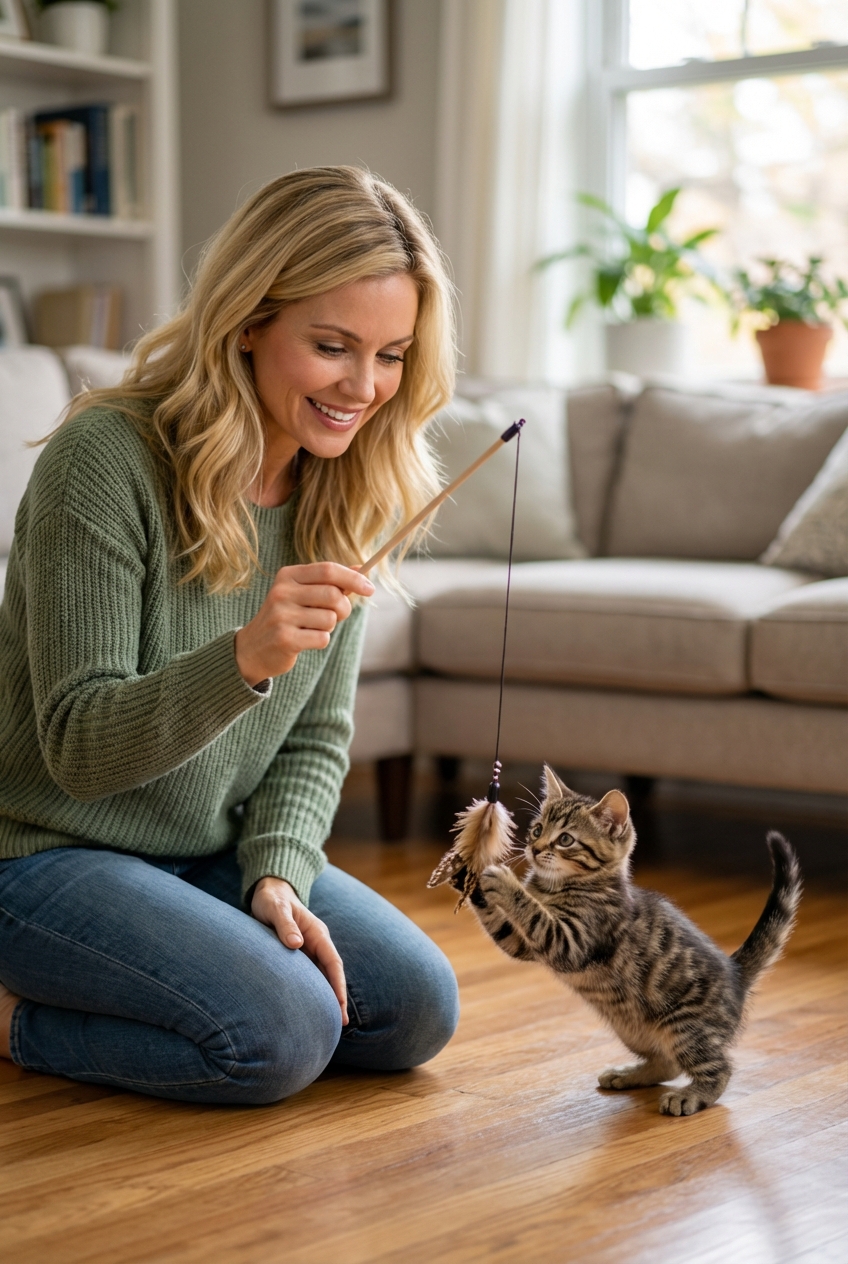
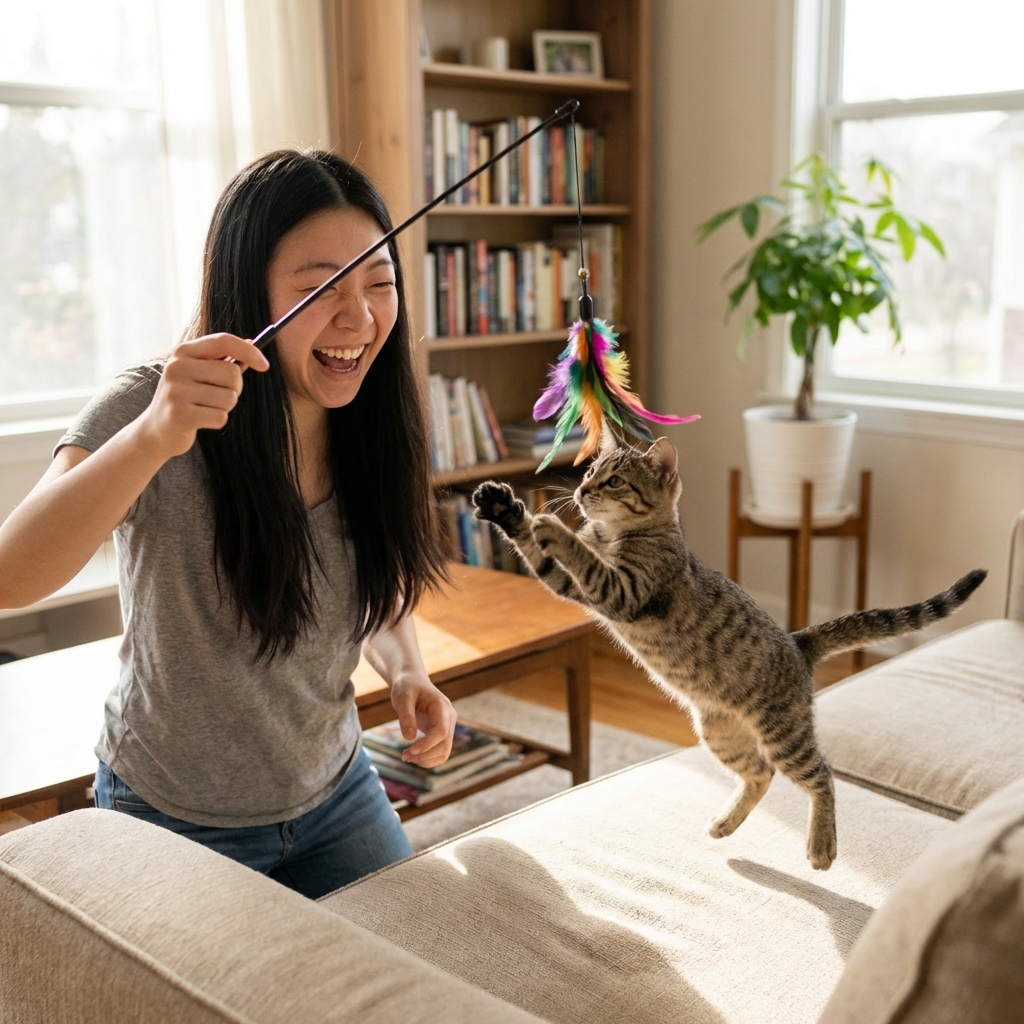
- Use wand toys, fishing-rod style toys, or toss toys instead.
- Ask all family members to follow the same rule, especially kids.
2) Redirect immediately to an appropriate toy
When your cat targets you, calmly present a toy that is acceptable to bite. Think of this as teaching what to do, not just what not to do.
- Keep a wand toy in the rooms where ambushes happen.
- Toss a small kicker toy away from your body to pull their focus.
3) End play the moment teeth touch skin
Cats learn from outcomes. If biting makes the fun continue, biting increases. If biting makes the fun stop, biting loses its value.
- Freeze your body. Do not yank your hand away, because fast movement triggers more chasing and biting.
- Calmly stand up and walk away for 20 to 60 seconds.
- Resume play later with a toy, not your hands.
A quick, consistent “game over” is often more effective than any verbal correction.
4) Avoid punishment
Yelling, tapping the nose, spraying water, or scruffing can increase fear and stress, which often increases biting long-term. It can also damage trust and make a cat avoid you except when they are in “attack mode.”
5) Build a daily play routine that satisfies hunting needs
Most cats do best with two to three play sessions per day, even if each is only 5 to 10 minutes. A predictable routine helps prevent “random” attacks.
- Start: slow stalk and chase with a wand toy
- Middle: short bursts of faster movement
- Finish: let your cat catch the toy, then offer a small meal or treat to complete the hunt cycle
That last step matters. A cat who never gets a “capture” often escalates intensity, including biting.

What to do in the moment if your cat clamps down
If your cat has already bitten and is holding on, your goal is to safely disengage without turning it into a chase game.
- Do not pull away. Pulling can tear skin and triggers stronger gripping.
- Go still and gently push toward the bite just enough to reduce the pulling sensation, then slowly slip away when they loosen.
- Use a barrier if needed: slide a pillow, folded blanket, or a piece of cardboard between you and the cat.
- Reset the room: give your cat space, dim lights if they are overstimulated, and reintroduce a toy later.
If skin is broken, wash with soap and water. Cat bites can become infected quickly, especially puncture wounds, so contact your healthcare provider for guidance.
Prevent ankle ambushes
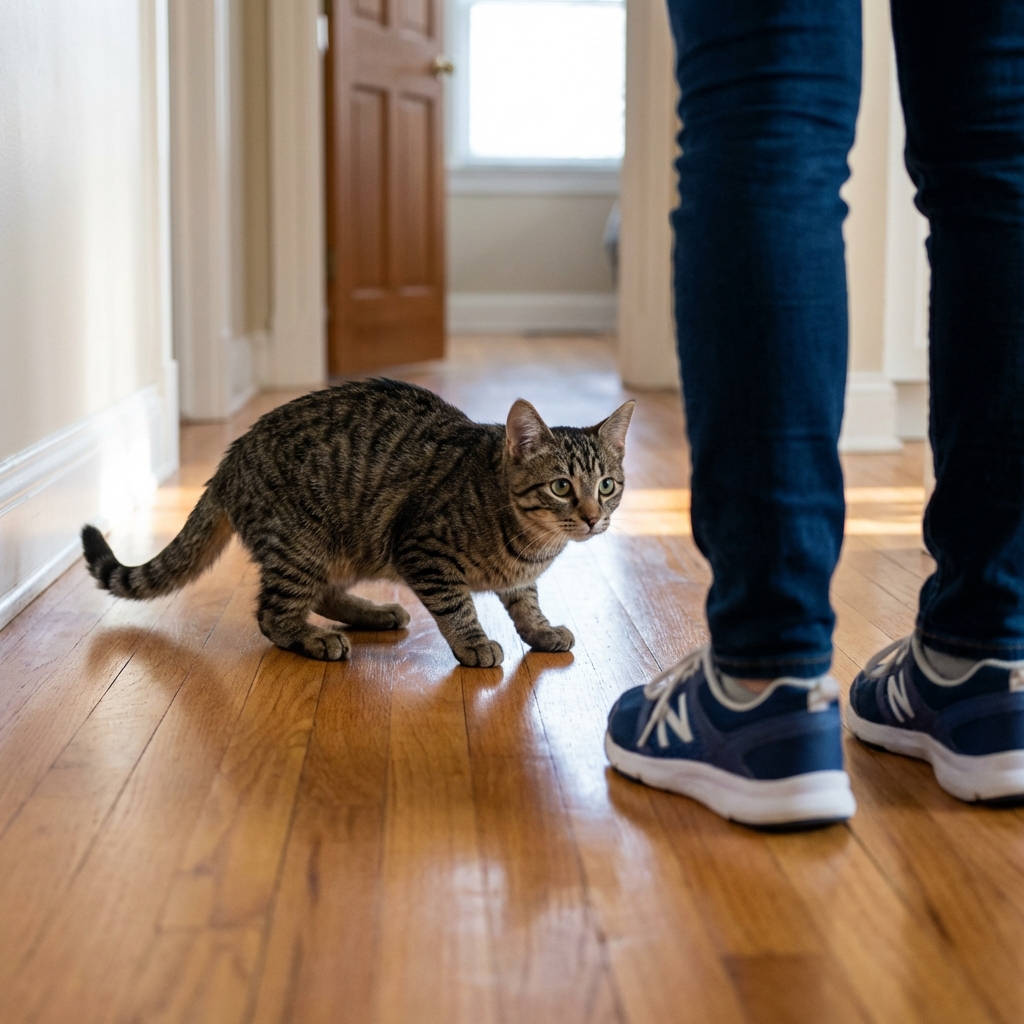
Ankle attacks are often a sign your cat has excess energy or is bored, especially in indoor cats.
Make the environment work for you
- Place toys where ambushes occur: hallway, stairs, bedroom doorway
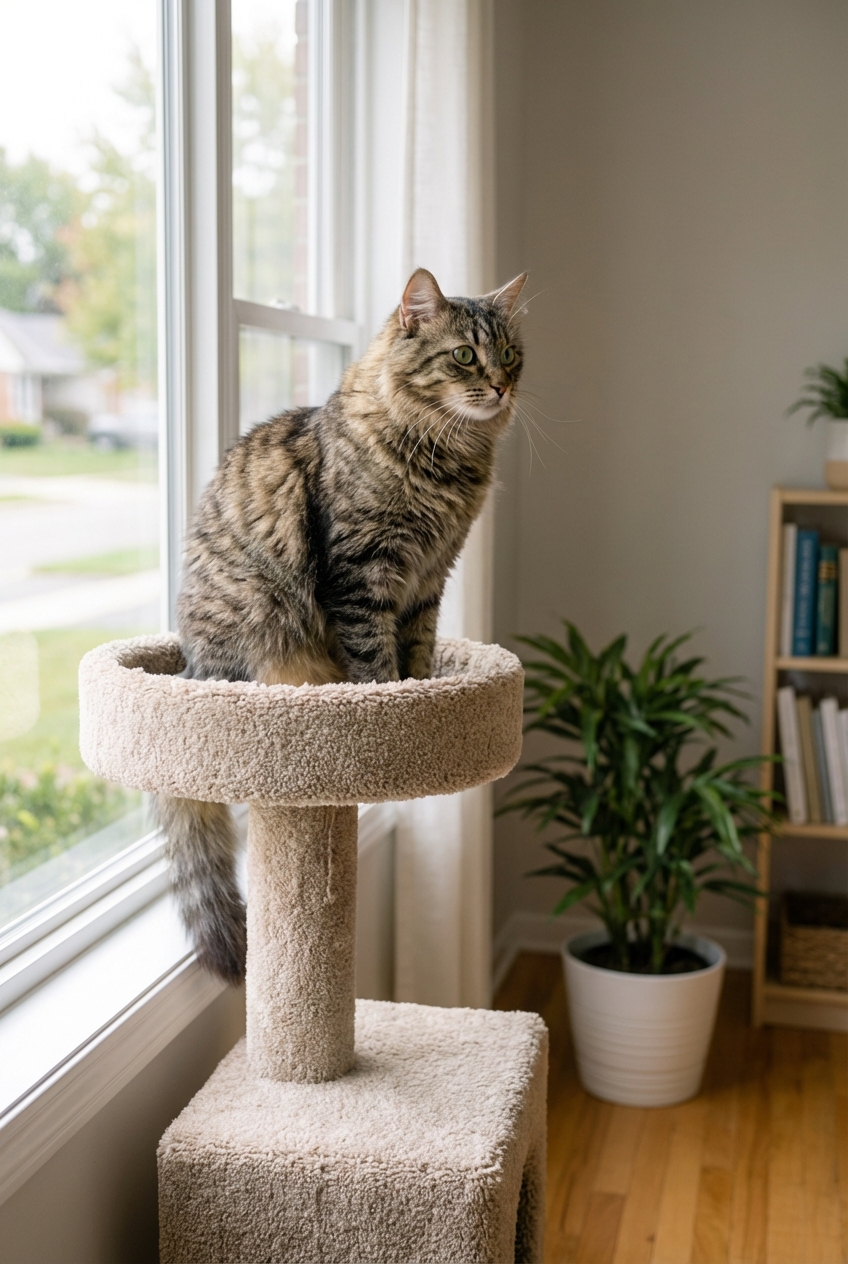
- Add vertical space: cat tree or wall shelves to encourage climbing and observation
- Use food puzzles: short “work for food” sessions reduce boredom and stress
- Try scheduled play before high-zoomie times, often morning and evening
Kittens: teaching bite inhibition gently
Kittens learn “how hard is too hard” from siblings and mom. If your kitten bites, you can teach that same lesson in a safe, consistent way.
- Keep play short and frequent, because kittens tire quickly and get frantic when overtired.
- Offer plenty of kicker toys and chew-safe items designed for cats.
- End play immediately at the first hard bite, then redirect to a toy on the next round.
If you have a single kitten, consider whether adopting a second kitten of similar age and energy level is a good fit for your household. Many families find that kittens bite humans less when they have an appropriate play partner.
When to call your vet or a behavior professional
Please seek help if any of the following are true:
- Biting started suddenly, especially in an adult or senior cat
- Your cat bites when touched in a specific area, or avoids petting they used to enjoy
- You see limping, hiding, appetite changes, drooling, or bad breath
- The bites are severe, frequent, or paired with hissing, growling, or fear
- There are kids, elderly adults, or immunocompromised people in the home and safety is a concern
A veterinarian can rule out pain, dental disease, skin issues, and other medical contributors. A credentialed feline behavior professional can help you build a tailored plan for your home and your cat’s personality.
A simple plan you can start today
- Today: Put wand toys in your main rooms and stop hand play completely.
- This week: Schedule two play sessions daily and end play every time teeth touch skin.
- Within 2 to 4 weeks: Add enrichment like a cat tree, puzzle feeder, and a rotation of toys.
With consistency, most cats learn quickly: toys are for biting, people are for trust and affection.