Stop cat biting by matching the bite to the cause—play, overstimulation, fear, pain, or redirected aggression. Get in-the-moment steps, training tips, and ...
Article
•
Designer Mixes
Cat Biting During Petting: Causes and Solutions

Shari Shidate
Designer Mixes contributor
One minute your cat is leaning in, purring, and asking for love. The next minute, there is a sudden bite on your hand. If you have ever thought, “But you were enjoying this,” you are not alone. As a veterinary assistant, I see this all the time, and the good news is that most petting-related biting follows a pattern, can often be prevented, and is not a sign your cat is “mean.”
What it is
You might see this described online as petting-induced aggression (also called petting-induced overstimulation). It usually means a cat goes from “this is nice” to “too much” fast.
Most petting bites fall into one of three buckets:
- Overstimulation (petting-induced arousal): the nervous system gets too “amped up,” even if the cat started out enjoying the touch.
- Boundary-setting: a clear “that’s enough” message when earlier signals were missed.
- Pain or sensitivity: petting triggers discomfort, so the cat uses teeth to make it stop.
Many cats prefer short, predictable interactions. Think of it like a volume knob. Petting can turn the sensation up quickly, and once it gets too loud, your cat hits “off” with a bite.
Common causes
1) Overstimulation
Overstimulation is one of the most common reasons cats bite during petting. Some cats love petting, but only in small doses. Repeated strokes can become irritating, especially along the back, near the base of the tail, or on the belly.
Why it happens: cats have many nerve endings in the skin, and certain types of touch can become uncomfortable quickly. This is more likely when petting is fast, heavy-handed, or lasts too long.
2) Choice and control
“Consent” is shorthand here for choice and control. Many cats enjoy initiating affection but do not enjoy being restrained or continuously handled. If a person keeps petting past the cat’s comfort point, the cat may escalate from subtle signals to a bite.
3) Pain or medical issues
If your cat bites when you touch a specific area, or the behavior is new or worsening, consider discomfort first. Common medical contributors include:
- Arthritis (especially in older cats, often painful along hips, spine, or shoulders)
- Dental pain (overall irritability, less tolerance for handling)
- Skin conditions like allergies, fleas, or dermatitis
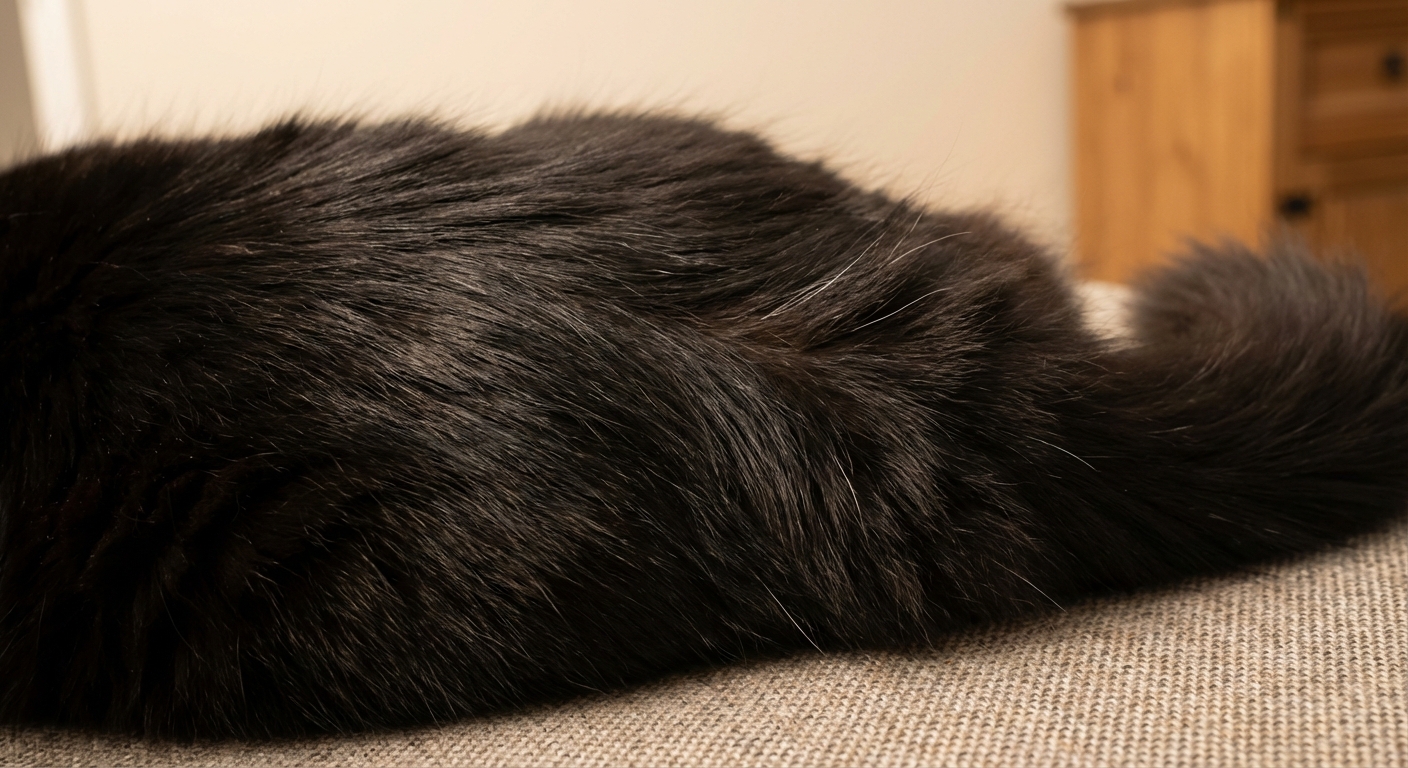
- Hyperesthesia syndrome (twitching skin, rippling along the back, sudden agitation)
4) Play and redirected energy
Sometimes what looks like “petting bites” is really play. Your hand becomes the toy. This is more common with young cats, under-stimulated indoor cats, or cats who did not learn appropriate play manners.
Key rule: try not to use hands and feet as toys, even with kittens. It teaches that skin is fair game.
5) Stress and unpredictability
Changes at home, tension with other pets, loud environments, or limited hiding spaces can lower a cat’s tolerance. When stress is higher, the bite threshold gets lower.
Warning signs
Most cats give signals before they bite. The trick is learning your cat’s early warnings and stopping while things are still calm.
- Tail tip starts flicking or thumping
- Ears rotate sideways or flatten slightly
- Skin ripples along the back
- Sudden stillness or freezing
- Pupils dilate, stare becomes intense
- Turning head toward your hand, mouth tenses
- Whiskers push forward, body tenses
- Low growl, hiss, or a short, sharp meow
If you notice any early warning sign, that is your cue to pause petting immediately and give your cat space. Some cats will bite with very subtle cues, especially if they have learned that polite signals do not work.
What to do
If your cat bites during petting
- Stop petting. End the interaction right away.
- Avoid jerking your hand away. With some cats, quick pulling can trigger chasing or harder biting. If you can, go still and wait for the release.
- If your cat is latched on or you feel unsafe, create space. Use a towel, pillow, or a nearby object as a barrier, or gently guide your cat away without using your bare hands.
- Do not yell, hit, or scruff. Punishment increases fear and can make biting worse.
- Take a short break. Step away for 30 to 60 seconds and let everyone reset.
- Wash the bite right away. Cat bites can lead to infection because punctures seal over quickly.
Important: If the bite breaks the skin, contact your human healthcare provider. Seek urgent care for deep punctures, swelling, spreading redness, warmth, pus, fever, worsening pain, a bite near a joint, or if you are immunocompromised.
What helps long term
1) Keep sessions short
A simple rule that helps many families: 3 to 5 seconds of petting, then pause. If your cat leans in, head-butts your hand, or stays relaxed, you can continue. If your cat turns away or tenses, you stop. This builds trust fast because your cat learns you listen.
2) Stick to preferred areas
Many cats prefer:
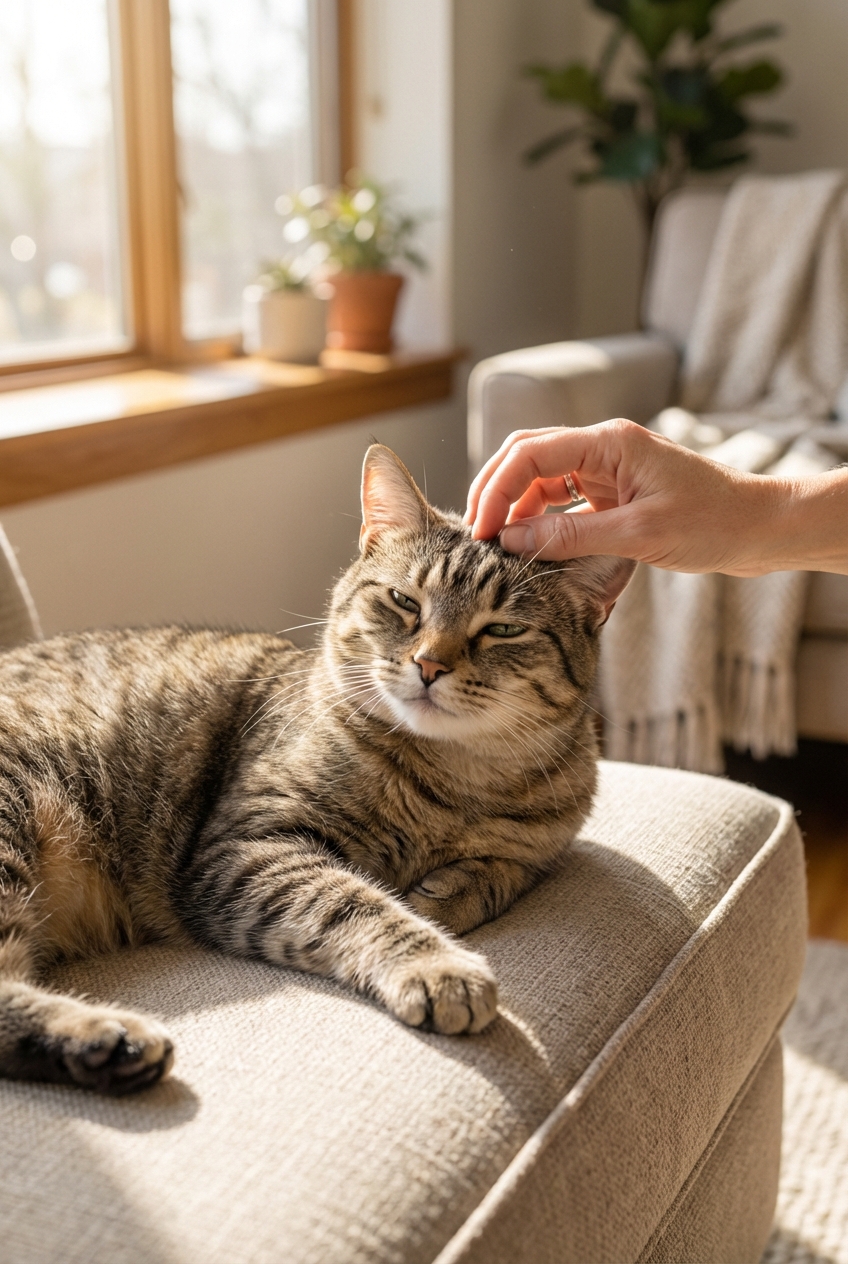
- Cheeks and chin
- Top of the head
- Base of the ears
Areas that often trigger overstimulation include the belly, feet, and the lower back near the tail base. That said, preferences are individual. Some cats love a tail base scratch or a belly rub, and some do not. Let your cat’s body language be the guide.
3) Change how you pet
- Use slower strokes with lighter pressure
- Avoid rapid back-and-forth rubbing
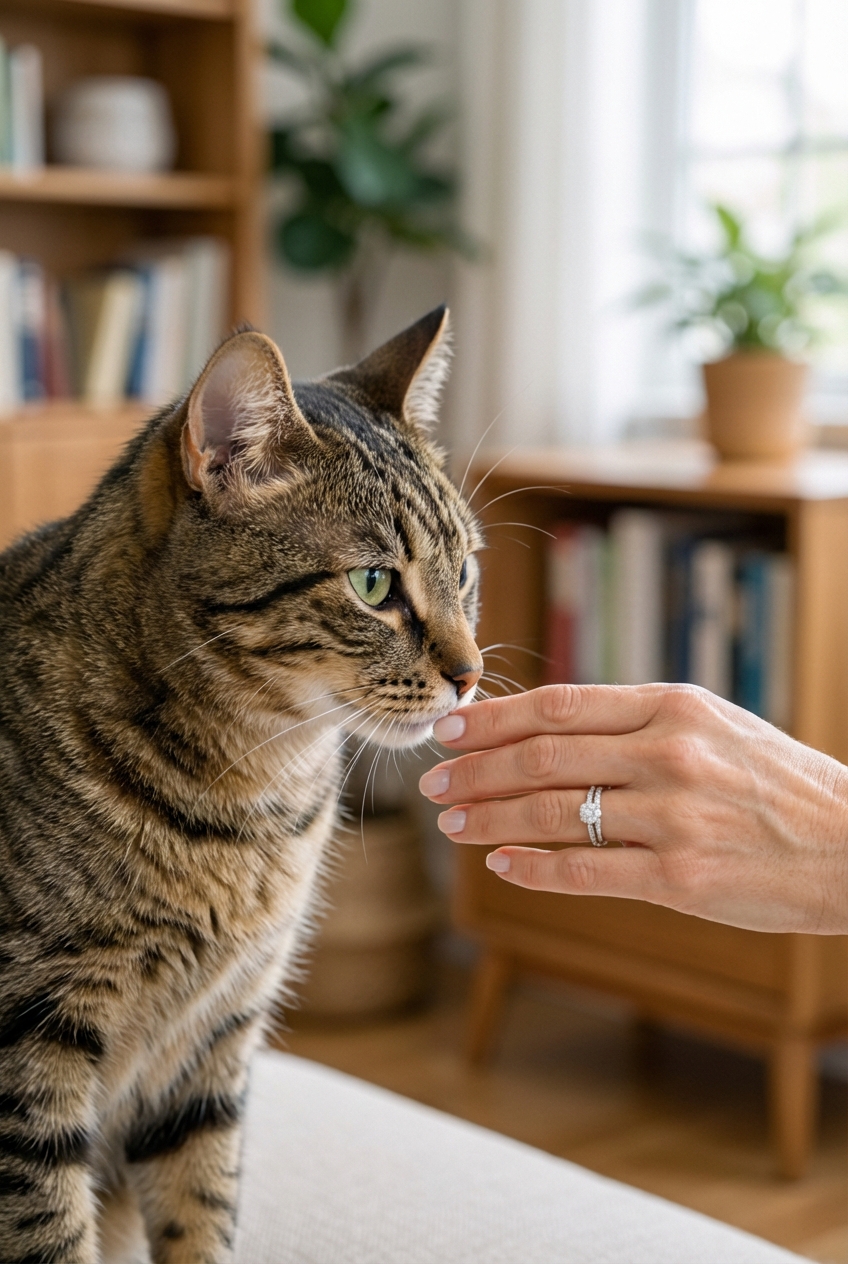
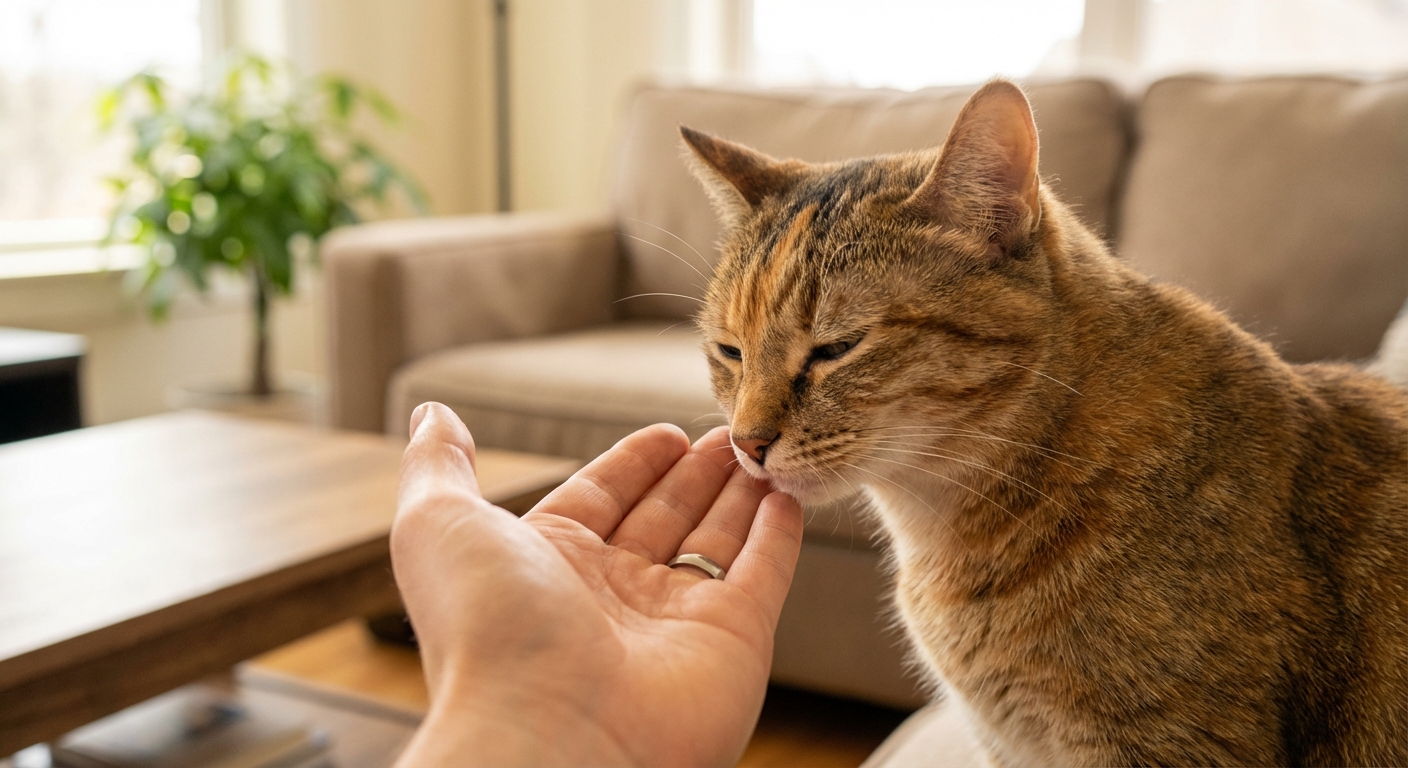
- Try “hand hovering” and offer a finger for sniffing first
4) Use an “all done” routine
Routine lowers arousal. Pick a phrase like “all done,” then gently stop petting and offer a treat on the floor. Over time, your cat learns the end of petting is not a conflict. It is just the routine.
5) Provide play outlets
If your cat bites as play, you want to move that energy to toys. Aim for two short play sessions daily using wand toys, kicker toys, or treat puzzles. Finish with a small snack to complete the hunt-catch-eat cycle.
If your cat switches from petting to biting, try a quick redirect: calmly stop touching, then toss a kicker toy or start a wand toy session away from your hands.

6) Reinforce calm behavior
When your cat asks for affection politely and stays gentle, reward it with:
- A small treat
- Soft praise
- More cheek and chin scratches for a few seconds
This is not bribing. It is teaching your cat what works.
7) Reduce stress at home
Small upgrades can make a big difference:
- Add vertical space like a cat tree or wall shelves
- Offer hiding options like covered beds or open boxes
- Use consistent daily routines for feeding and play
- Consider pheromone diffusers if your cat is anxious
8) Track the pattern
If this keeps happening, take simple notes for a week. Track the time of day, where you were petting, how long it lasted, and what your cat did right before the bite. Patterns are often the fastest route to prevention.
9) Kids and visitors
With kids, supervision matters. Teach a simple rule: one hand pets, one hand still, and stop at the first tail flick or ear change. For visitors, ask them to let the cat approach first and to keep petting brief.
When to call the vet
Please schedule a checkup if any of the following are true:
- The biting is new, sudden, or escalating
- Your cat reacts strongly when a specific body area is touched
- You see hair loss, scabs, dandruff, or fleas
- Your cat seems stiff, reluctant to jump, or less active
- There are other behavior changes like hiding, appetite changes, or litter box issues
Behavior is often the first sign of pain. Ruling out medical causes is one of the most compassionate steps you can take.
If your cat has been cleared medically and the biting is still frequent or intense, ask your veterinarian about a referral to a qualified behavior professional (for example, a certified cat behavior consultant or a veterinary behaviorist).
A simple plan
- Invite, do not insist. Let your cat come to you.
- Start with cheeks and chin. Avoid sensitive zones at first.
- Pet for 3 to 5 seconds, then pause.
- Watch tail and ears. Stop at the first warning sign.
- End calmly. Say “all done,” then toss a treat away from your hands.
Most petting bites are not random. Once you learn your cat’s pattern, you can prevent the bite and build a calmer, more trusting bond.