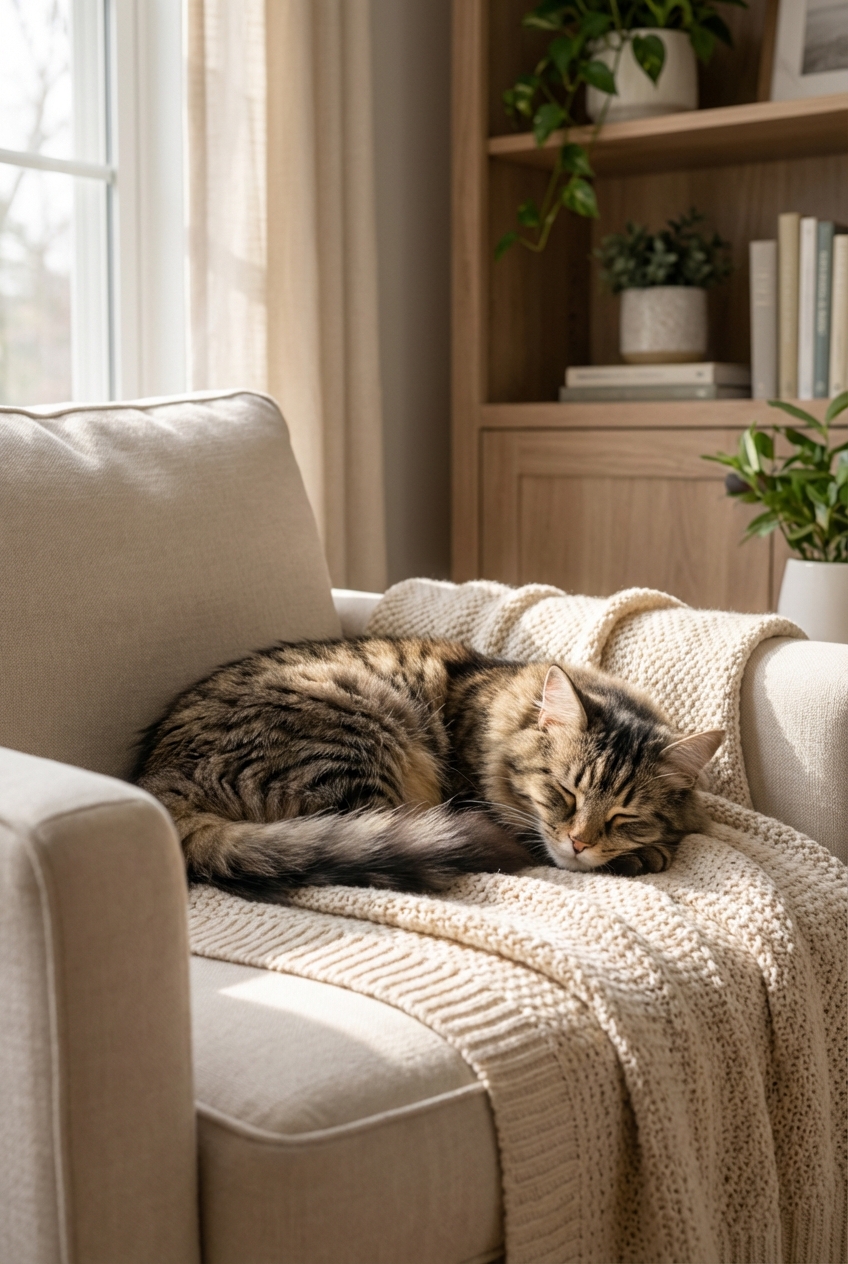
Is your cat yowling, restless, and trying to escape? Learn the signs and length of heat, calming care strategies, training tips, what to avoid, and why spayi...
Article
•
Designer Mixes
Cat Behavior During Heat

Shari Shidate
Designer Mixes contributor
If your unspayed female cat suddenly becomes extra vocal, clingy, and restless, you are probably seeing a heat cycle in action. As a veterinary assistant in Frisco, Texas, I hear this concern all the time: “My cat is acting weird. Is she in pain?” The reassuring news is that heat behavior is usually normal biology, not an emergency. The hard part is that it can feel intense for both you and your cat.
This guide walks you through what “in heat” looks like, what you can do at home to help, what to avoid, and when it is time to call your veterinarian. This is general education, not a diagnosis for your individual pet.
What it means when a cat is in heat
Heat, also called estrus, is the fertile part of a female cat’s reproductive cycle. Cats are seasonally polyestrous, meaning they can have multiple heat cycles during breeding seasons, often triggered by longer daylight hours.
Most cats have their first heat around 5 to 9 months of age, but some can cycle as early as about 4 months, or later, depending on body weight, breed, and environment. Once cycling, many cats repeat heats every 2 to 4 weeks if they do not become pregnant.
One key detail that surprises many families: unlike dogs, cats often do not bleed during heat. What you see is mostly behavior.
Common signs your cat is in heat
Heat behavior is designed to attract male cats and encourage mating. The most common signs include:
- Very loud vocalizing (yelping, howling, “crying” that can sound distressed)
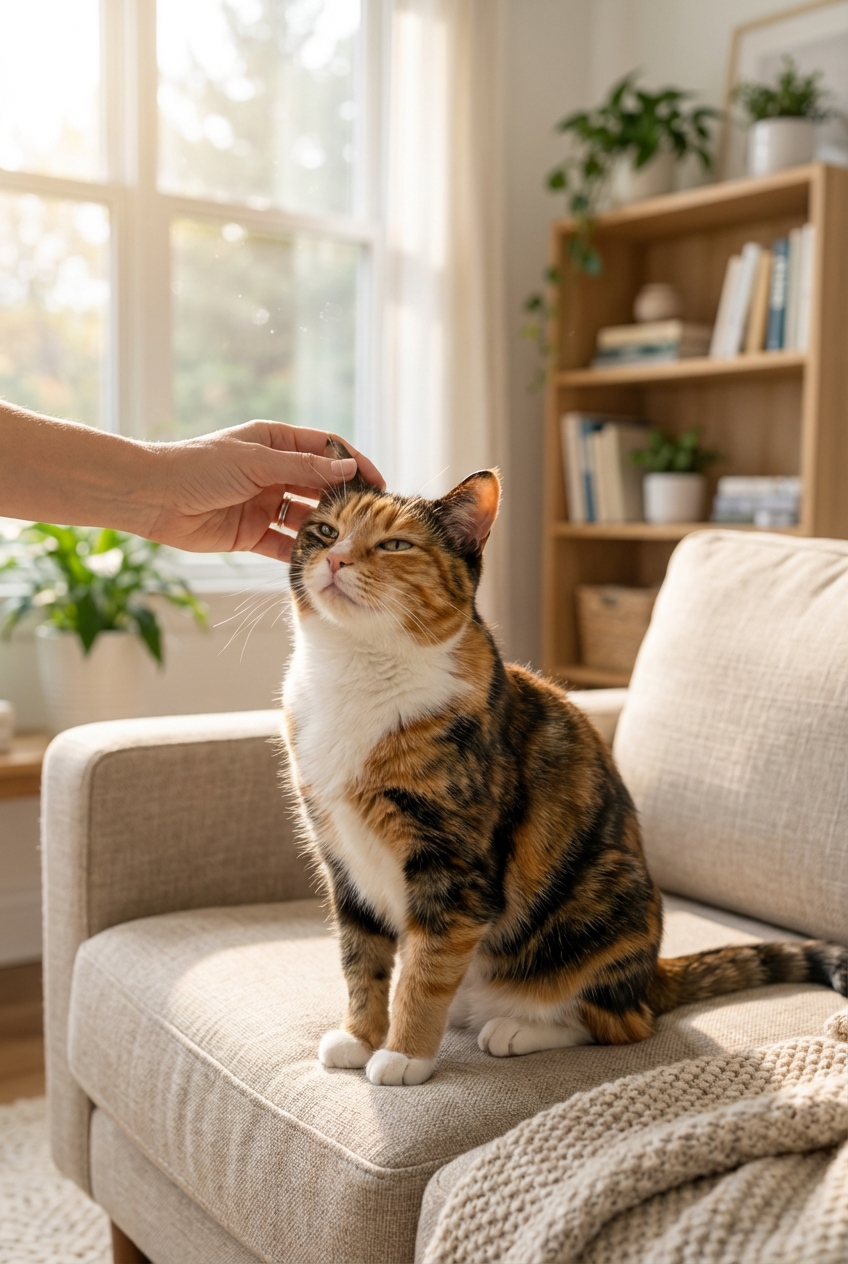
- Extra affection, rubbing on people and furniture
- Restlessness, pacing, difficulty settling
- Raised hindquarters, tail held to the side, and a low front end (lordosis posture)
- Rolling on the floor repeatedly
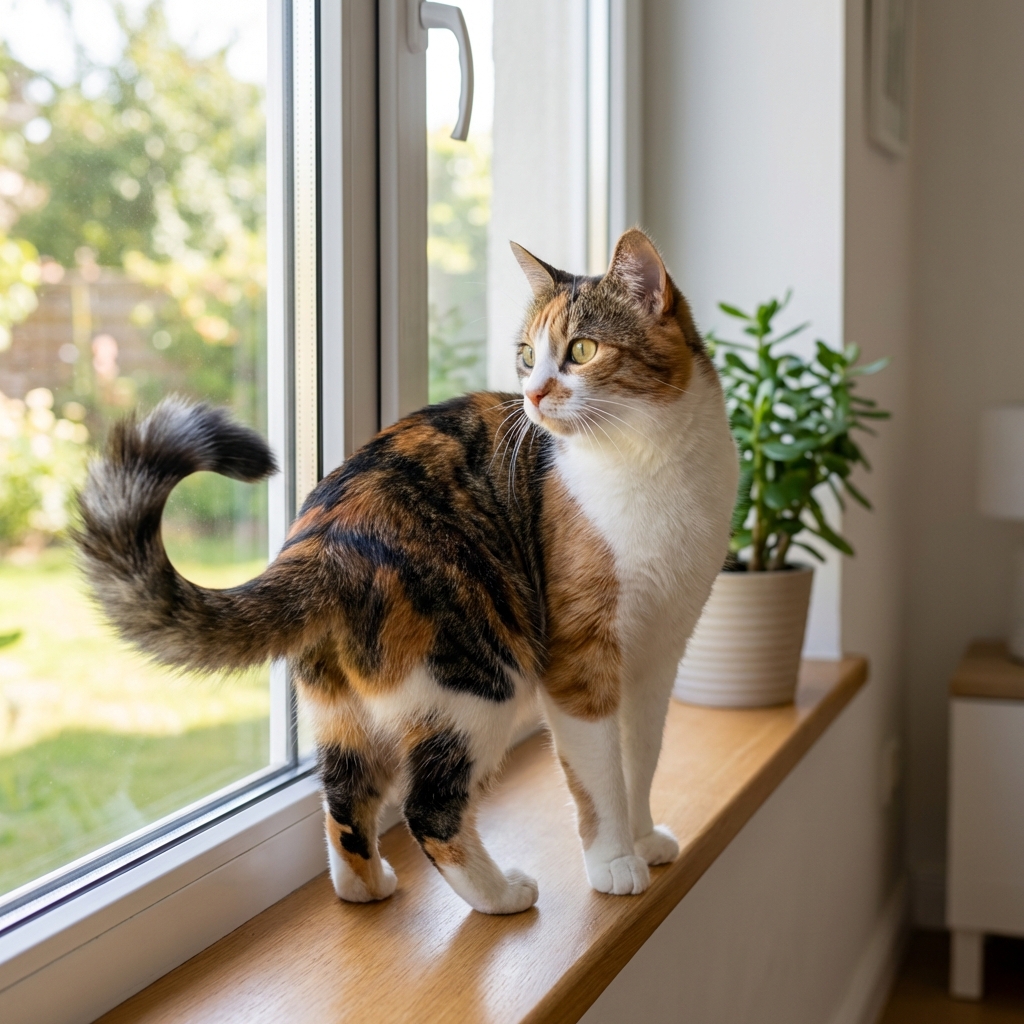
- Increased attempts to escape outdoors or through doors and windows
- Spraying or increased urine marking in some cats
- Decreased appetite or distracted eating
These behaviors can come on quickly, last several days, and then fade, only to return again in a couple of weeks.
Why it can feel nonstop
If you are thinking, “She just finished this,” you might be right. A simple way to understand the pattern is:
- Proestrus: early changes, often subtle
- Estrus: the loud, obvious “in heat” behavior
- Interestrus: a short break between cycles if she does not ovulate
- Anestrus: a quieter phase, more common when daylight hours are shorter
Indoor cats exposed to lots of artificial light can cycle more frequently, which is why it can seem continuous.
Step-by-step: how to help
You cannot “train away” heat, but you can absolutely make your cat more comfortable and reduce household stress. Here is an approach that is commonly recommended by veterinarians and clinic teams.
1) Keep her safely indoors
This is the most important step. A cat in heat may bolt unexpectedly, and intact males can show up at your home. Also, cats are induced ovulators, meaning mating can trigger ovulation, so pregnancy can happen quickly.
- Check screens, window latches, and sliding doors.
- Open doors carefully and use a baby gate or keep her in a quiet room during high-traffic times.
- If she goes outside, keep her on a secure harness and leash only.
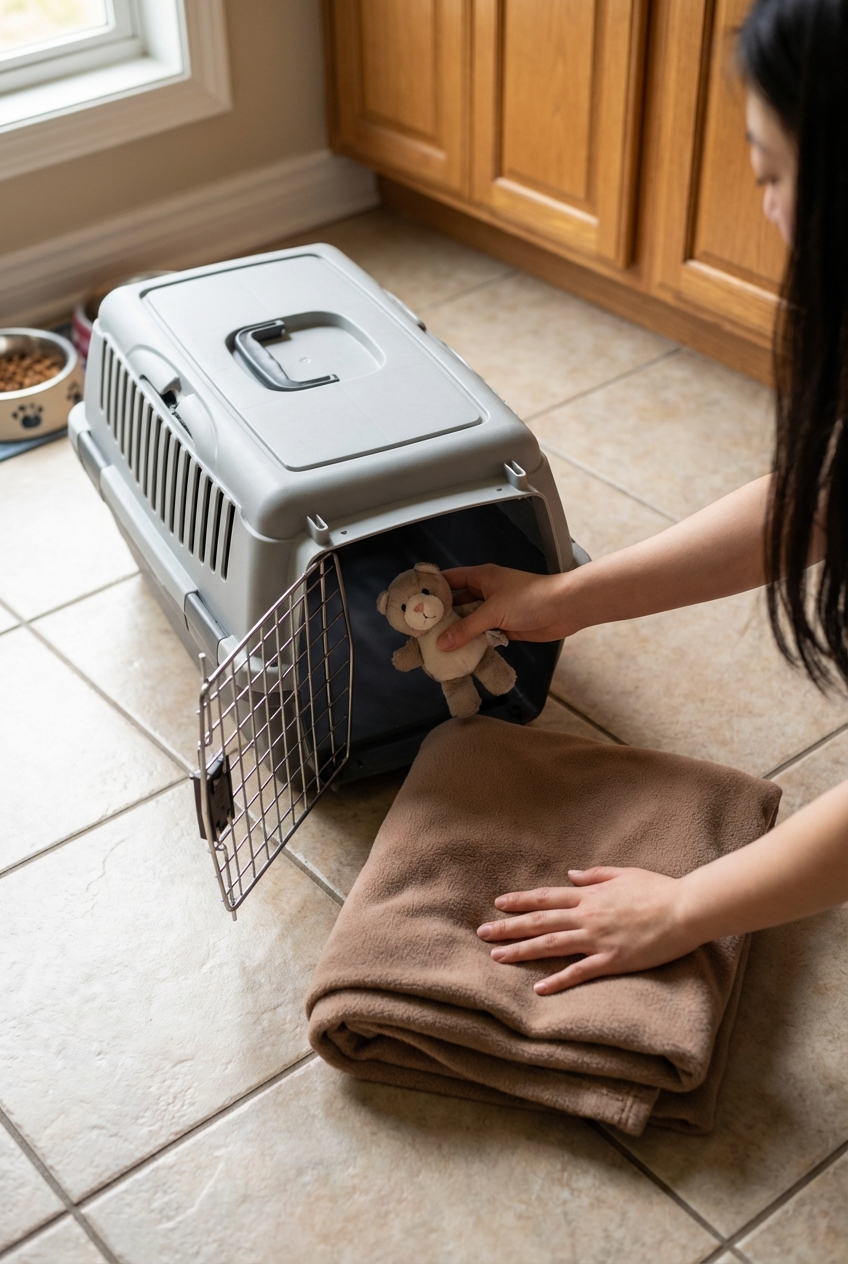
2) Set up a calm comfort zone
Many cats do best with a smaller, cozy area while they are cycling.
- Set up a quiet room with a litter box, water, and bedding.
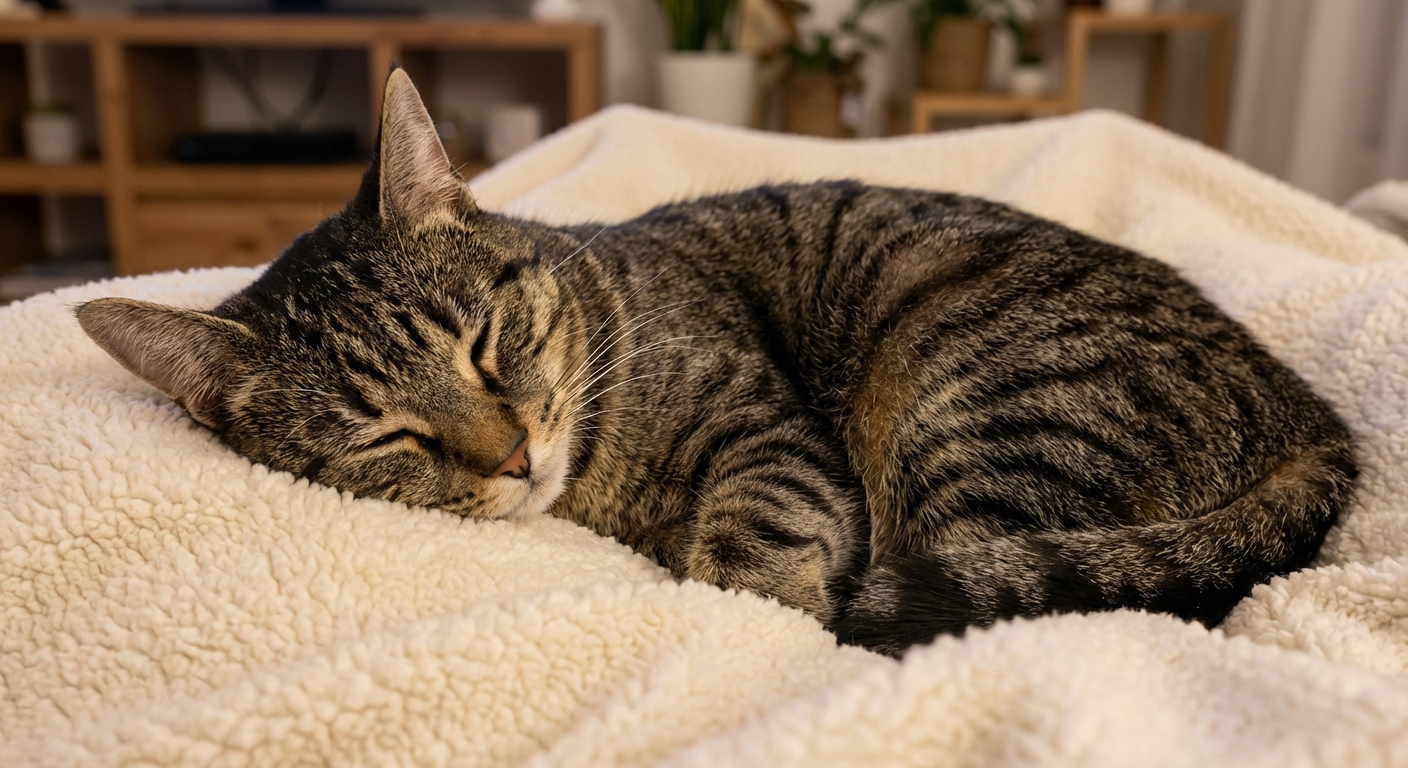
- Offer a covered bed or a cardboard box with a soft blanket.
- Use gentle background noise like a fan or white-noise machine.
3) Add enrichment to burn off restlessness
Heat can crank up energy and frustration. Short, frequent play sessions help.
- Use a wand toy for 5 to 10 minutes, 2 to 4 times daily.
- Try food puzzles or treat balls to keep her brain busy.
- End play with a small meal or treat to encourage settling.
4) Offer comfort, but respect her cues
Some cats want constant attention. Others become overstimulated.
- Pet her on the head, cheeks, and shoulders if she enjoys it.
- Avoid heavy petting over the lower back or base of the tail if it makes her more agitated.
- Let her choose interaction. If she walks away, give her space.
5) Keep the litter box extra clean
Heat can increase marking behaviors. A clean box reduces accidents and stress.
- Scoop at least once daily, twice if possible.
- Use an unscented litter and avoid sudden brand changes.
- If you have multiple cats, provide one box per cat plus one extra.
6) Consider pheromones
Many veterinarians recommend feline facial pheromone products (diffusers or sprays) to help take the edge off stress-related behaviors. These are not sedatives. Results vary by cat, but they are a low-risk option to try.
7) Manage other cats in the home
If you have a male cat at home, keep them separated while she is in heat, especially if he is intact. Even neutered males may still show interest and stress her out, so separation can help everyone settle.
8) Plan the real fix: spaying
The most reliable, humane long-term solution is to spay your cat. Spaying prevents future heat cycles and helps prevent reproductive diseases. It also prevents unplanned litters, which is a huge welfare issue in every community, including right here in North Texas.
What not to do
When you are tired and your cat is yowling at 2 a.m., it is tempting to try anything. A few options are unsafe or counterproductive.
- Do not give human pain medications or sleep aids. Many are toxic to cats, even in small doses.
- Do not use essential oils or “calming” aromatherapy around cats. Cats are uniquely sensitive to many compounds, and several commonly used oils are toxic. When in doubt, skip them and ask your vet.
- Do not punish vocalizing or spraying. Heat behavior is hormone-driven. Punishment increases fear and stress and can worsen marking.
- Do not let her “have one litter first.” There is no medical benefit to a first litter, and pregnancy and birth carry real risks.
- Do not attempt DIY hormone products. Hormonal manipulation should only be done under veterinary guidance because it can carry serious side effects.
Pain or just heat?
Heat looks dramatic, but it is usually not painful. That said, cats are experts at hiding discomfort, and some medical problems can mimic heat behaviors.
Call your veterinarian promptly if you notice:
- Blood in the urine, straining to urinate, or frequent trips to the litter box with little output
- Vaginal discharge that is thick, foul-smelling, or pus-like
- Lethargy, vomiting, fever, or loss of appetite lasting more than a day
- Swollen or painful abdomen
- Sudden aggression or behavior change that does not match her usual heat pattern
These can be signs of urinary tract issues or reproductive emergencies, including pyometra (a uterine infection), which is life-threatening and requires urgent care.
How long does heat last?
Many cats are in heat for about 3 to 7 days, but it can be shorter or longer, sometimes up to about 10 to 14 days. If she does not become pregnant, she may cycle again in a couple of weeks.
If it feels like it never ends, you are not imagining it. Some indoor cats exposed to artificial lighting can cycle frequently.
Spay timing
Spaying is commonly done around 5 to 6 months of age, but your veterinarian will recommend timing based on your cat’s health and weight.
Can a cat be spayed while in heat? Often yes, but it depends on the clinic’s preference. During heat, the reproductive tract can be more vascular, which can mean a slightly higher bleeding risk or a longer surgery time. Some clinics prefer to wait until the cycle ends, and some proceed. If your cat is currently cycling, call your vet and ask what they recommend for scheduling.
Quick checklist for tonight
- Keep her indoors and double-check exits.
- Set up a calm room with clean litter, water, and a cozy hideaway.
- Do two short play sessions to reduce restlessness.
- Use a pheromone diffuser if you have one.
- Separate her from male cats in the home.
- Book a spay consult or surgery date.
- Call your vet if you see discharge, urinary straining, fever, or sudden lethargy.
You are not doing anything wrong. Heat behavior can be loud, messy, and exhausting, but with a little structure and a plan for spaying, most families get through it smoothly.
Sources and notes
For readers who want to dig deeper, these are reputable veterinary references that align with the guidance above:
- The Merck Veterinary Manual: reproduction and estrous cycles in cats
- VCA Animal Hospitals: client education on heat cycles and spaying
- International Cat Care (iCatCare): feline reproductive behavior and neutering
- AAHA and AVMA client education resources on spaying and preventive care
This article is educational and not a substitute for a veterinary exam, since age, breed, and medical history matter.