Is your cat hiding, yowling, overgrooming, or having litter box issues? Learn common stress triggers and natural calming strategies—routine, safe zones, pl...
Article
•
Designer Mixes
Cat Anxiety: Signs and How to Help

Shari Shidate
Designer Mixes contributor
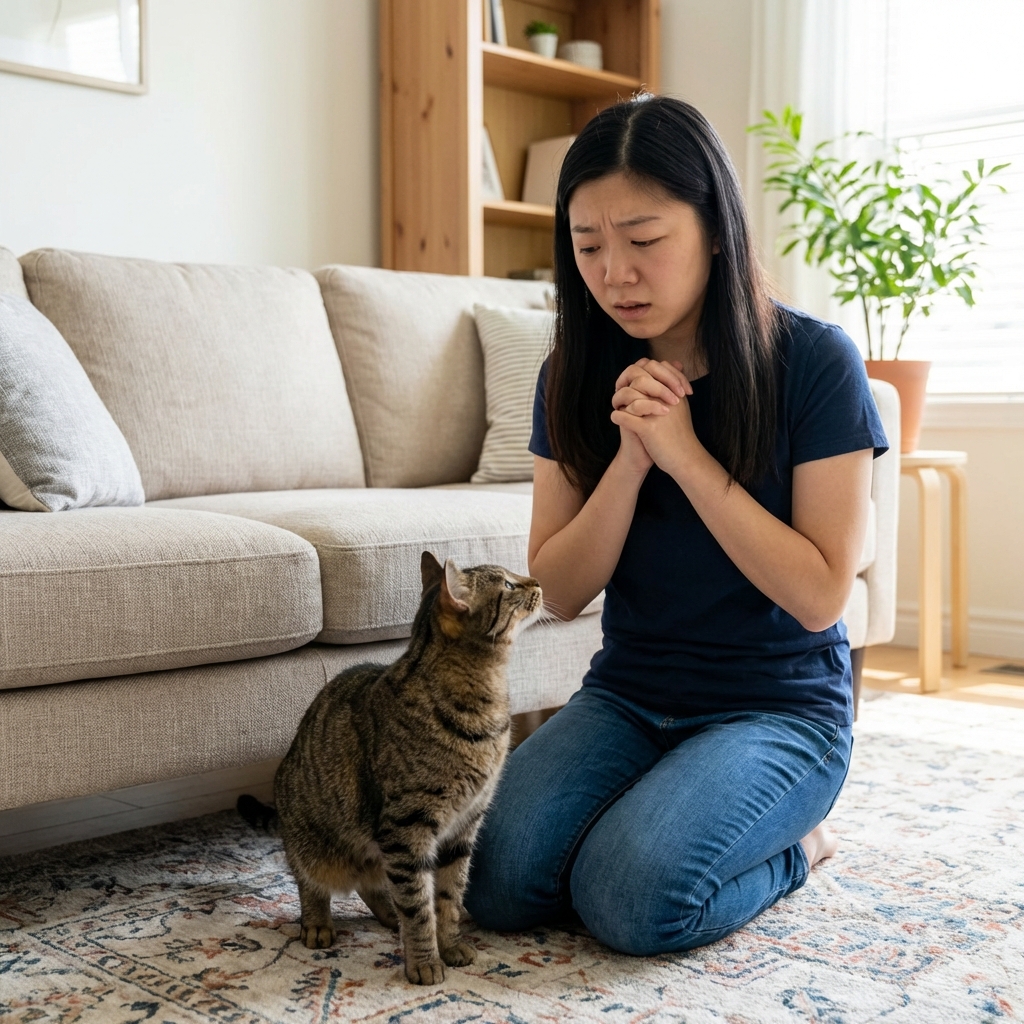
Anxious cats are not “bad” cats. They are stressed cats trying to feel safe. As a veterinary assistant, I see this all the time: a cat who starts hiding, over-grooming, hissing, or peeing outside the box is often communicating fear, pain, or change. The good news is that cat anxiety is common, and with the right steps, some cats become noticeably calmer within days to weeks. Others need more time, especially if the trigger is ongoing or there is an underlying medical issue.
This article offers general guidance and is not a diagnosis. If you are worried, your veterinarian is your best next step.
What cat anxiety looks like
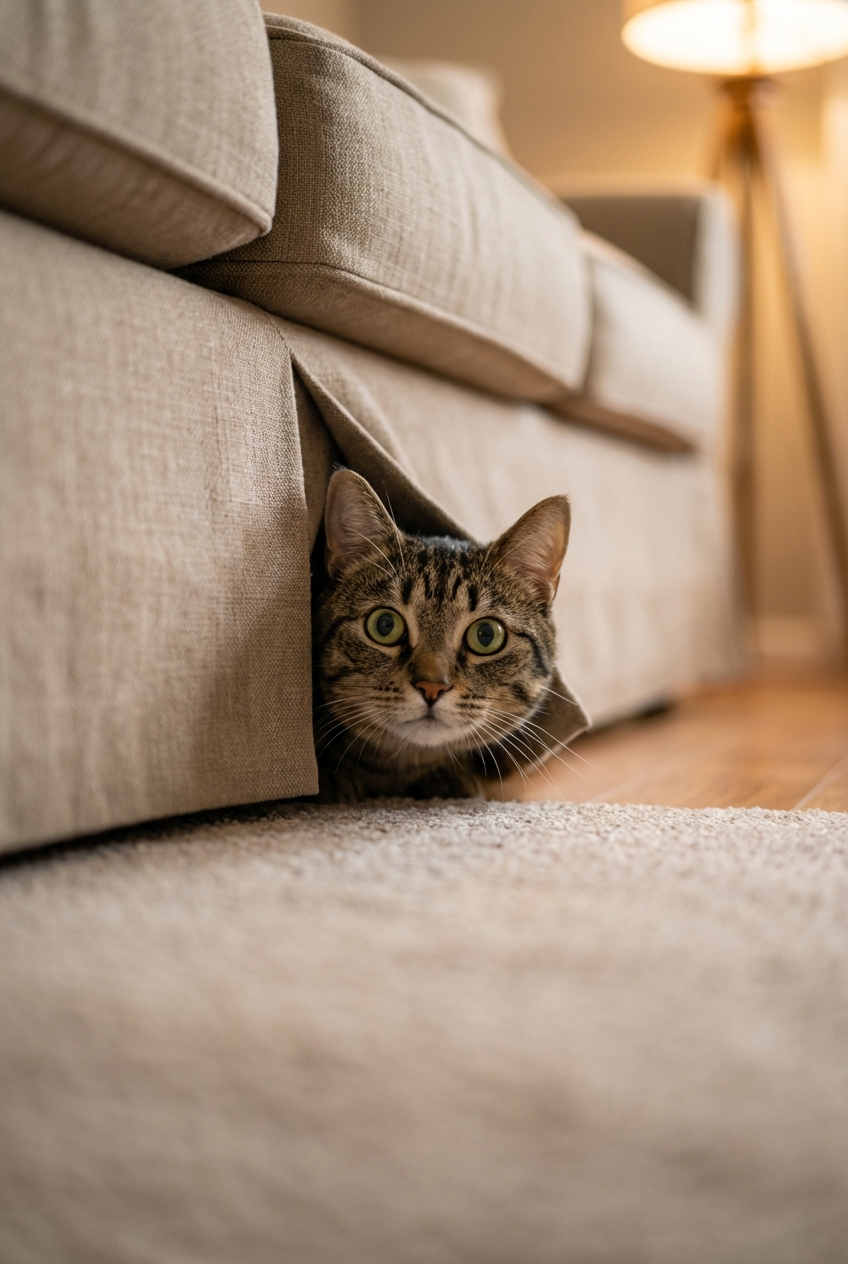
Cats tend to show anxiety through behavior and body language, not “sad eyes.” Some signs are subtle, especially in quiet cats.
Common signs of anxiety
- Hiding more than usual or staying in one room
- Startling easily, freezing, or running away
- Excessive grooming, hair loss, or barbering
- Changes in appetite (eating less, eating too fast, begging)
- Increased vocalizing (especially yowling at night)
- Clingy behavior or the opposite: avoiding touch
- Aggression that seems “out of nowhere” (swatting, biting)
- Urine marking or peeing/pooping outside the litter box
- Digestive upset like vomiting or diarrhea during stressful periods (and also with many medical issues)
Cat body language that signals stress
- Ears turned sideways or pinned back
- Dilated pupils, wide eyes
- Low posture, crouching, tail tucked
- Tail flicking, skin twitching, tense muscles
- Whiskers pulled back, avoiding eye contact
If your cat is showing new anxiety behaviors, especially litter box changes, it is worth taking seriously. Behavior is communication.
Rule out medical problems first
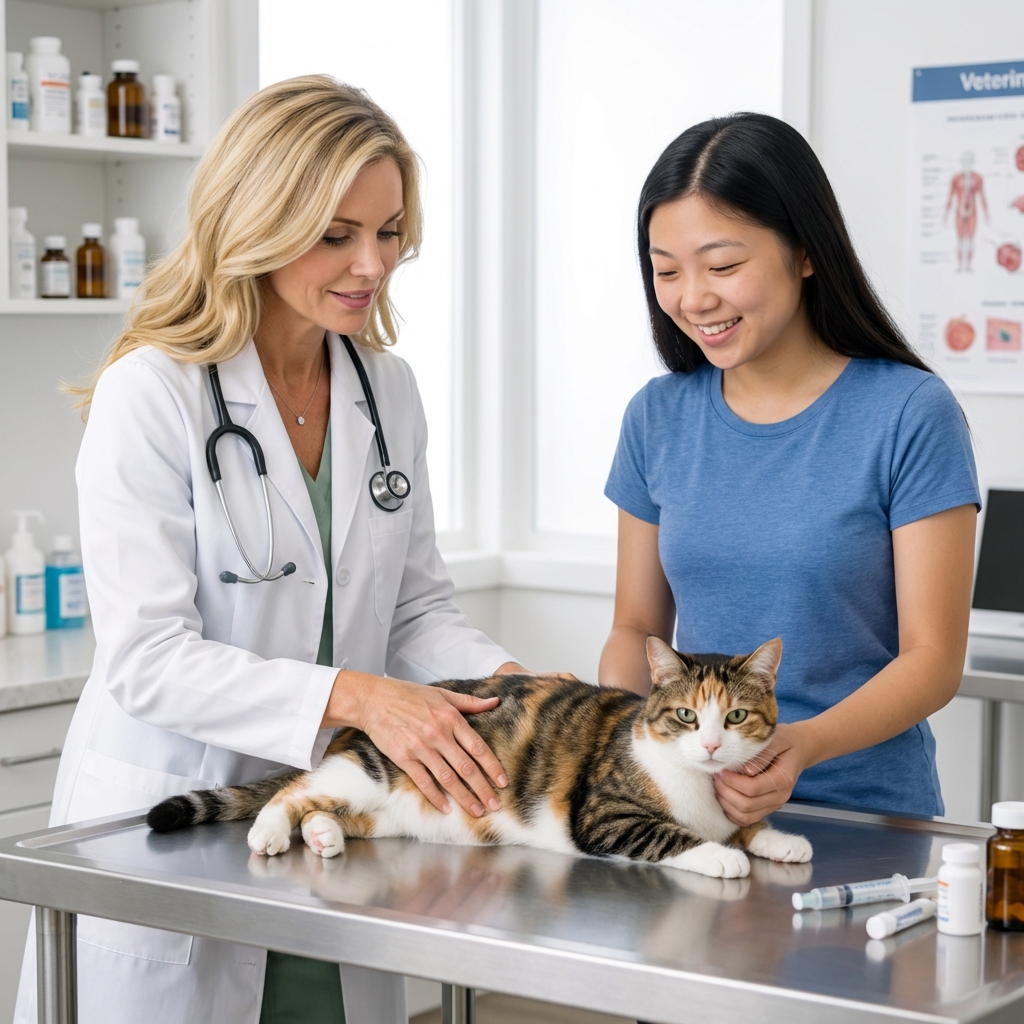
This part matters because pain and illness can look exactly like anxiety. Before you assume it is “just behavioral,” schedule a veterinary check, especially if the change is sudden.
Common medical issues that can mimic anxiety include:
- Urinary tract disease (cystitis, crystals, blockage risk in male cats)
- Dental pain and oral disease
- Arthritis (very common in senior cats, and also seen in adult cats)
- Hyperthyroidism (restlessness, vocalizing, weight loss)
- GI disease (nausea can cause hiding and irritability)
- Skin allergies (can drive over-grooming)
Any cat who strains to urinate, cries in the litter box, has blood in urine, or is making frequent litter trips needs urgent veterinary attention. If your cat is producing little to no urine, go to an emergency vet right away. This is especially critical for male cats.
Also call your veterinarian promptly if your cat has repeated vomiting/diarrhea, seems lethargic, is losing weight, or stops eating. Not eating for more than 24 hours can become dangerous, and kittens can get into trouble even sooner.
Why cats get anxious
Cats are creatures of predictability. When their environment, routine, or sense of security changes, stress can follow.
Common triggers
- Moving homes or rearranging furniture
- New baby, new roommate, or frequent visitors
- New pet, outdoor cats visible through windows
- Loud sounds (construction, storms, fireworks)
- Conflict with another cat in the home
- Boredom and lack of enrichment
- Past trauma or poor socialization
Some cats are also simply more sensitive by temperament. That is not a flaw, it just means they need a calmer setup and a gentler approach.
How to help at home
Think of this like building your cat a “support system.” You are not trying to force confidence. You are creating conditions where confidence grows.
1) Create a base camp
If your cat is overwhelmed, choose a quiet room and set it up with everything they need:
- Litter box
- Food and water (separate from the litter)
- Hiding spots (covered bed, box on its side)
- Vertical space (cat tree, shelf, window perch)
- Scratchers
Let your cat decompress there. Many cats do better when they can control exposure to the rest of the home.
2) Make the litter box easier
Litter box problems and anxiety often feed into each other. Stress can cause litter box issues, and a stressful litter setup can increase overall tension. A few evidence-based basics:
- Have one box per cat plus one extra (in different locations)
- Use unscented litter (many cats dislike strong fragrances)
- Scoop daily, wash boxes regularly
- Avoid trapping boxes in loud, tight spaces (next to washer, in a dead-end corner)
3) Add predictable routine
Cats thrive on “what happens next.” Aim for consistent:
- Mealtimes
- Play sessions
- Quiet rest times
Even small routines can reduce stress because your cat stops feeling like they have to be on alert all day.
4) Use play to release stress
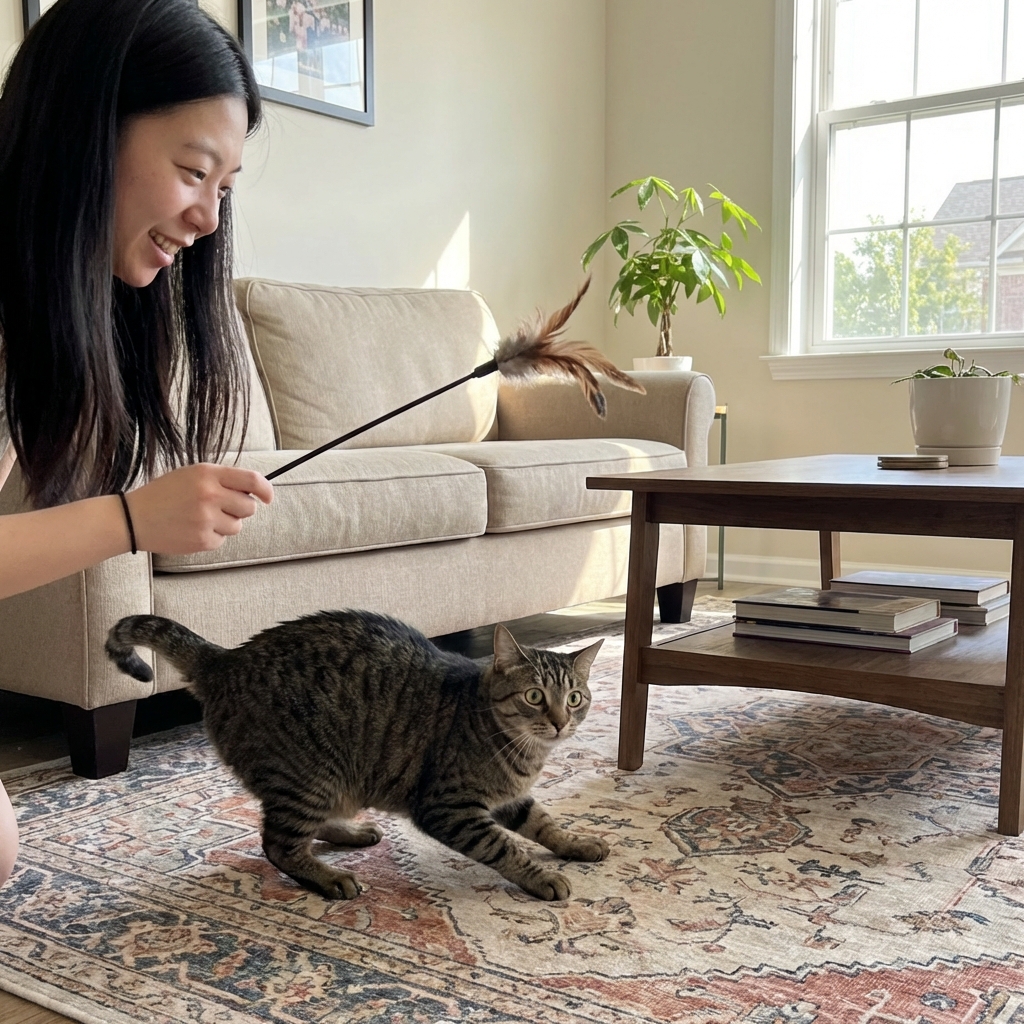
Short, daily play is one of the most effective tools for many cats. Try 5 to 10 minutes, one to two times a day.
- Use wand toys to mimic prey (stalk, chase, pounce)
- End with a small treat or meal to complete the “hunt” cycle
- Rotate toys to keep them interesting
If your cat is not into wand toys, try a crinkle tunnel, a ping-pong ball in a bathtub, or a treat tossed down a hallway for a gentle “chase.”
5) Add enrichment that makes sense for cats
Enrichment does not have to be fancy. You are aiming for more appropriate places to climb, scratch, hide, and hunt.
- Scratchers: offer both vertical and horizontal options, placed where your cat already spends time
- Perches: a window perch or cat tree near a quiet window can help many cats feel more in control
- Hiding spots: at least one “covered” option in main living areas (not only under the bed)
- Food puzzles: treat balls, snuffle mats, or a lick mat with wet food can turn meals into calming work
6) Consider pheromones and calming supports
Some families see improvement with feline facial pheromone diffusers or sprays, while others see little change. Think of these as a support, not a standalone fix. If you use a spray, follow label directions and give it time to dry before your cat enters the area.
Calming treats and diets can also help some cats. Because supplements vary widely, ask your veterinarian what is appropriate for your cat’s age, medications, and health conditions.
7) Reduce tension in multi-cat homes
Some “anxiety” is actually social stress. A helpful rule is resource distribution: more key resources in more places, so no one cat can control access.
- Multiple feeding stations and water stations
- Multiple litter boxes in separate locations
- More vertical space (so cats can pass without conflict)
- Separate playtime with each cat
If cats are fighting, do not force “together time.” Controlled, gradual re-introductions following a structured plan usually work better, and a veterinary behavior professional can help if it is escalating.
In the moment
When your cat is anxious, your goal is to lower pressure.
- Do not chase a hiding cat. Sit nearby and let them come to you.
- Speak softly and move slowly.
- Offer choice: a treat tossed gently nearby, a wand toy at a distance, an open door to leave.
- Avoid punishment for stress behaviors. It increases fear and can worsen litter box problems and aggression.
If your cat is in full panic mode, reduce noise, dim lights, and give them space in a quiet room until they settle.
Carrier and vet visit stress
Many anxious cats are also “carrier smart,” which makes everything harder. A few small changes can make vet visits less scary over time:
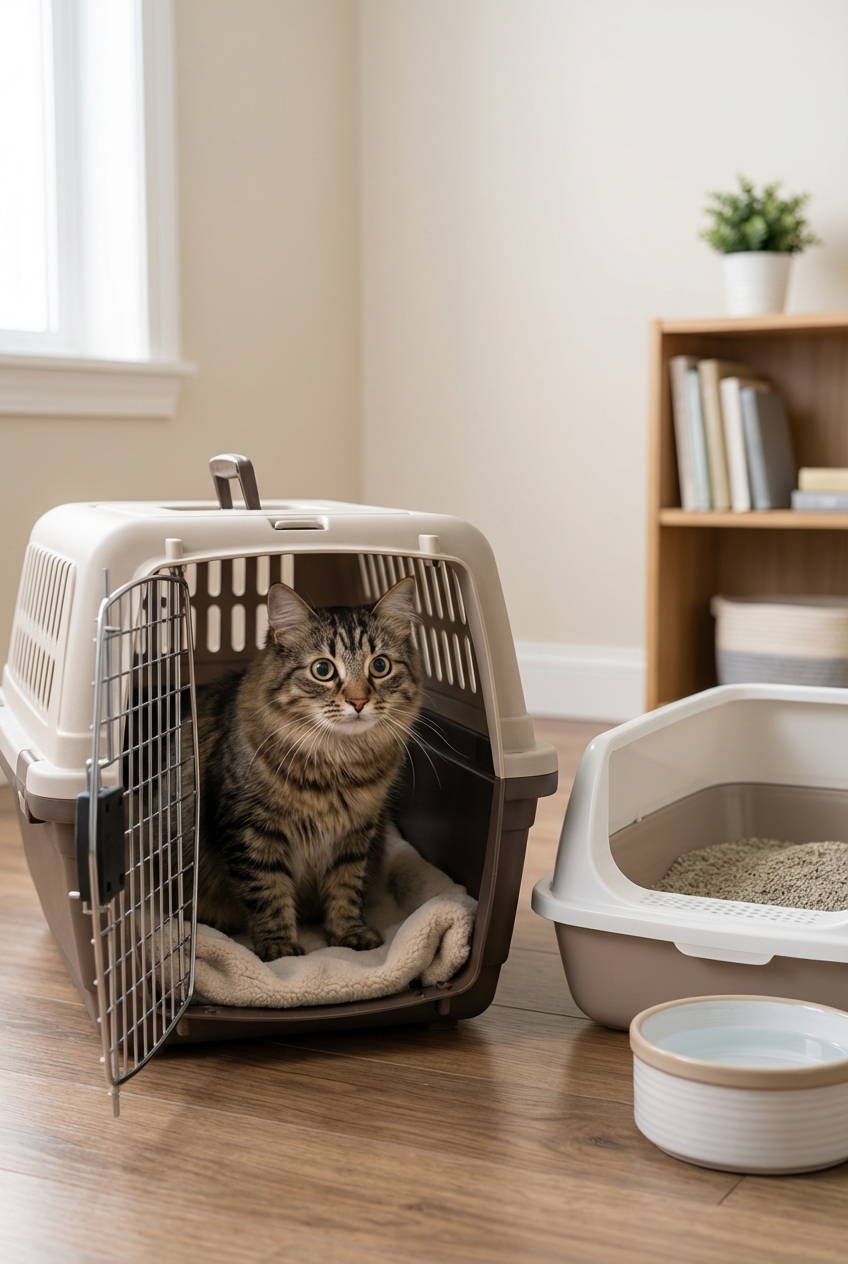
- Leave the carrier out year-round with a soft blanket inside
- Toss treats in the carrier regularly, even when you are not traveling
- Practice short, calm carrier sessions (in, treat, out)
- Use a towel to gently cover the carrier during transport to reduce visual stress
- Ask your veterinarian about pheromone spray or situational anti-anxiety medication for appointments if your cat panics
When to get professional help
Reach out to your veterinarian if:
- Anxiety signs last more than a couple of weeks
- Litter box behavior changes suddenly
- Aggression appears or escalates
- Your cat stops eating, hides constantly, or seems “not themselves”
- You see repeated vomiting/diarrhea, weight loss, or significant lethargy
- Your cat is open-mouth breathing or breathing hard at rest (this can be an emergency)
For moderate to severe cases, a veterinarian may discuss prescription anti-anxiety medication, short-term situational meds, or referral to a board-certified veterinary behaviorist. Medication is not a failure. For some cats, it is the bridge that allows learning and calmer habits to take hold.
7-day starter plan
If you want a clear place to begin, try this:
- Day 1 to 2: Set up base camp, add a consistent feeding schedule
- Day 3: Add one daily play session and one food puzzle or lickable treat
- Day 4: Add pheromone support (diffuser in the main area or base camp)
- Day 5: Improve litter box setup (location, number of boxes, unscented litter)
- Day 6: Add vertical space or a window perch
- Day 7: Reassess: appetite, grooming, hiding, litter habits, and overall relaxation
Small improvements count. With cats, steady and predictable wins the race.
Quick reminders
- Anxiety is common and treatable.
- Sudden behavior changes deserve a medical check.
- Security, routine, enrichment, and gentle handling are your foundation.
- Help early. Anxiety tends to grow when it is ignored.
If you are seeing signs of stress in your cat, you are already doing something important by paying attention. With a few thoughtful changes, many cats start to feel comfortable again, and their personality comes right back to the surface.