Is your cat scratching or over-grooming? Learn the top causes—fleas and flea allergy, environmental or food allergies, and dry skin—plus at-home tips and...
Article
•
Designer Mixes
Cat Allergy Symptoms vs Fleas vs Dry Skin

Shari Shidate
Designer Mixes contributor
If your cat is scratching, licking, or shedding more than usual, it can be surprisingly hard to tell what is going on. Cat allergies, fleas, and dry skin can look very similar at first glance, but the best next step depends on the cause. As a veterinary assistant, I always tell families to start with a calm, simple checklist: where is the itch, what does the skin look like, and do you see any evidence of parasites.
Below, I will walk you through the most common patterns we see in the clinic, what you can do at home, and when it is time to schedule a vet visit.
Quick differences
- Allergies: Often cause intense itching with recurrent flare-ups, skin redness, scabs, or ear issues. Many cats overgroom their belly, inner thighs, or along the back.
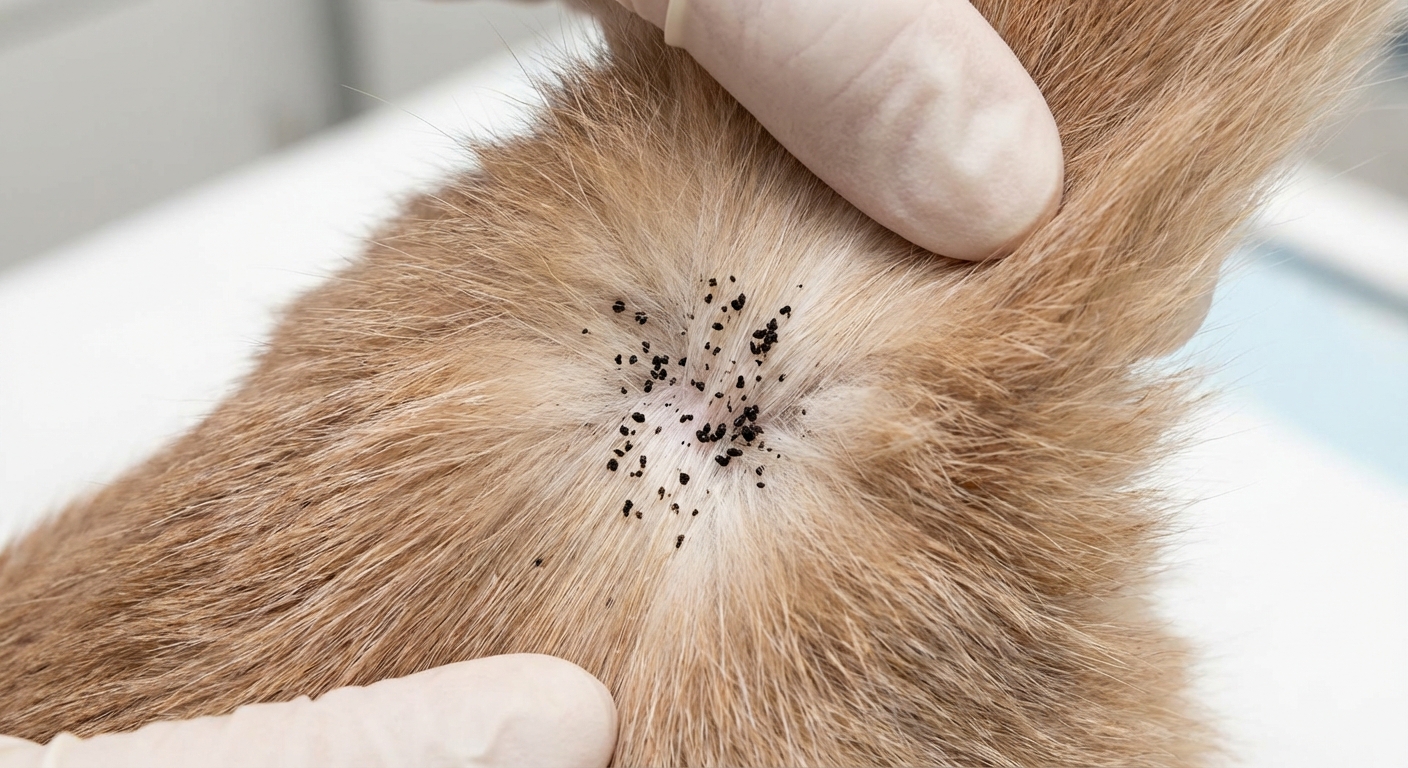
- Fleas: Itch can be sudden and dramatic, commonly worse at the base of the tail and over the back. You might find flea dirt, which is flea feces made of digested blood, even if you never spot a flea.
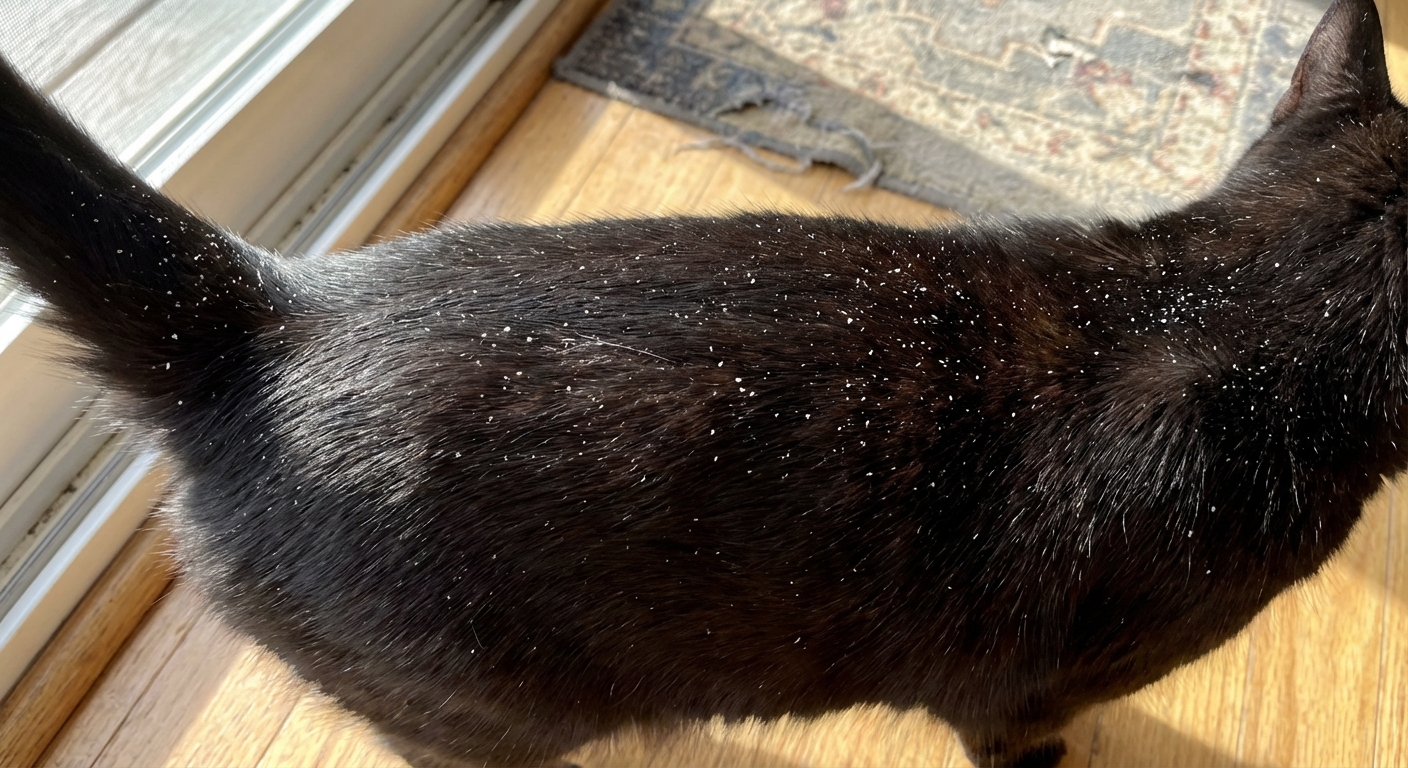
- Dry skin: More likely to look like flaking or dandruff with mild itch. Coat can feel dull or a little static, especially in winter or in very dry homes.
Allergy signs
When we say “allergies” in cats, we usually mean one (or more) of these:
- Flea allergy dermatitis: An allergic reaction to flea saliva. One or two bites can cause a big response.
- Environmental allergies (atopy): Pollens, dust mites, molds, and other inhaled or contact allergens.
- Food allergy: Less common than flea allergy and environmental allergy, but very real. Often linked to protein sources, and it does not always come with tummy trouble.
Common clues
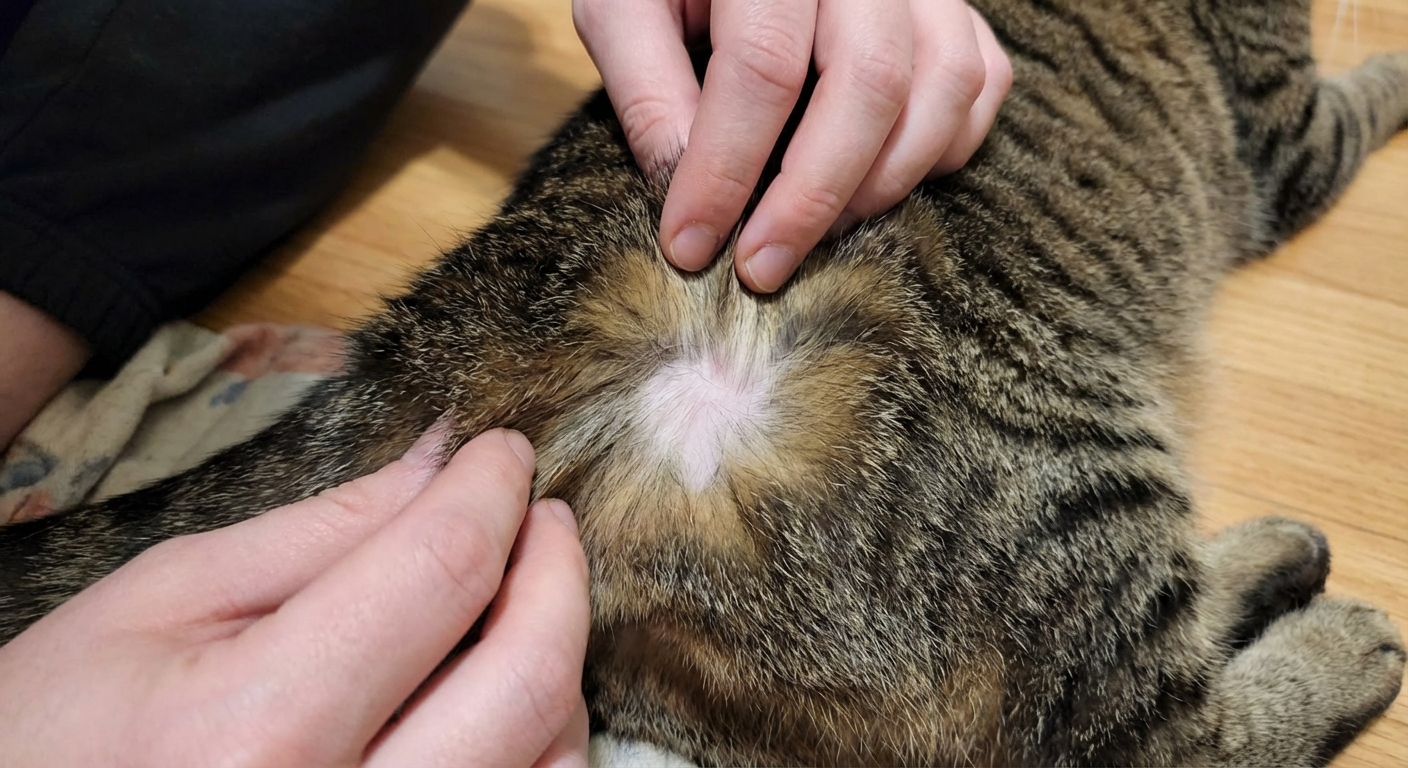
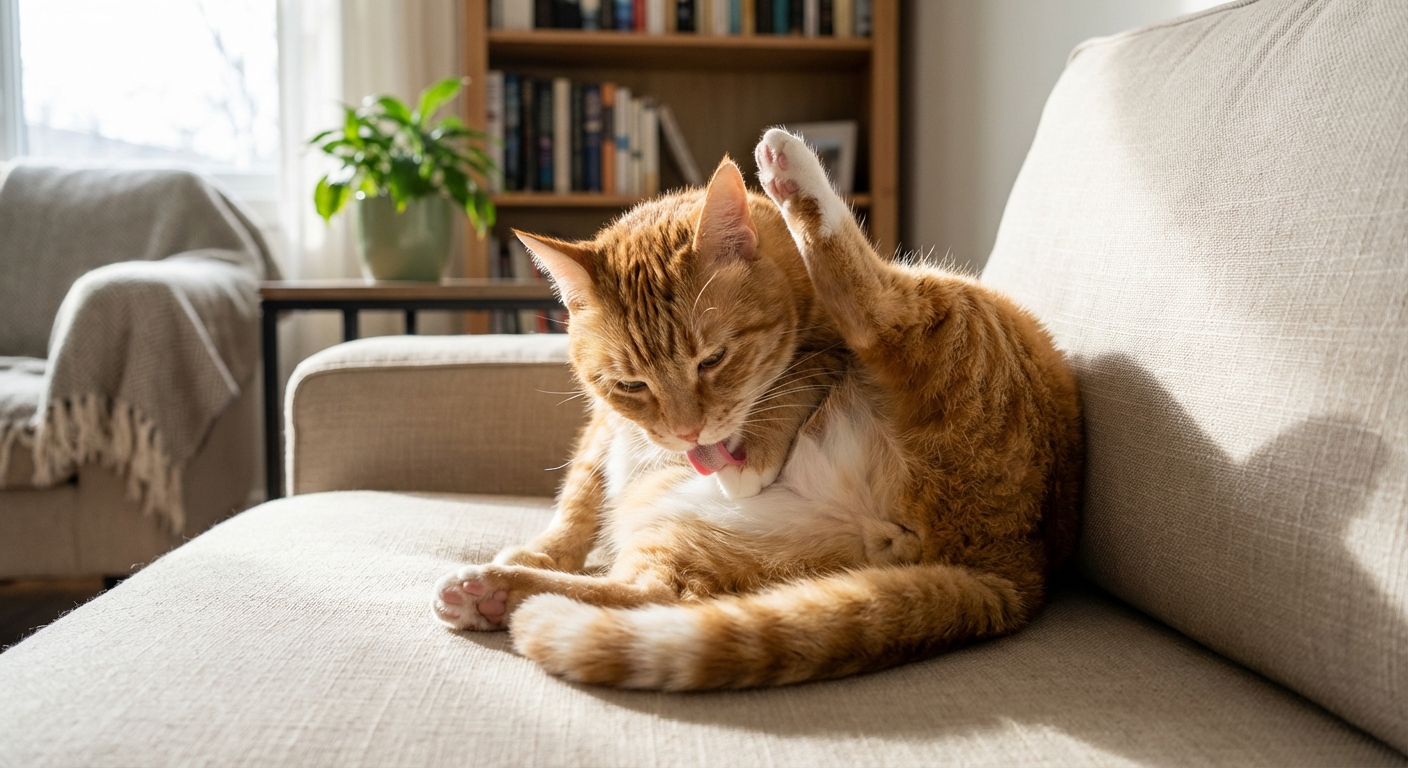
- Overgrooming (licking until the fur looks thin or “barbered”)
- Small scabs or crusts, especially along the back and neck (often called miliary dermatitis)
- Red, irritated skin and persistent itch
- Ear problems such as recurring wax, head shaking, or ear scratching
- Symmetry to the hair loss (for example, both sides of the belly)
One tricky thing about cats is that they may not scratch constantly like a dog. Many allergic cats lick. A lot.
What you can do at home
- Start flea control for every pet in the home, even if you suspect “not fleas.” Flea allergy can mimic other allergies, and fleas are one of the easiest causes to rule out safely when you use a cat-appropriate product.
- Track the pattern: seasonality, new litter, new detergent, new treats or foods, new household sprays or scented products.
- Reduce irritants: unscented laundry products, avoid aerosol fragrances, and use gentle, cat-safe cleaners.
- Avoid DIY itch fixes: skip essential oils, human anti-itch creams, and frequent bathing unless your veterinarian directs you. Many “natural” products are irritating or toxic to cats.
Food allergy note
If food allergy is on the list, diagnosis usually requires an 8 to 12 week strict elimination diet trial (often a prescription hydrolyzed or novel-protein diet). No other treats, flavored medications, or table food during the trial, or the results are not reliable.
When to see the vet
Make an appointment if symptoms last more than a week, if you see open sores, if your cat seems painful, or if the itching is keeping your cat from sleeping. Allergy cases often need a tailored plan, and it is important to rule out infections that can happen secondarily from licking and scratching.
Fleas
Fleas are masters of hiding. Cats groom quickly and thoroughly, and many cats remove (and often swallow) fleas before you ever spot one. Also, flea dirt can be easier to find than the flea itself.
Signs that point to fleas
- Itching focused on the lower back and tail base
- Small scabs around the neck or along the back
- Flea dirt that looks like black pepper specks in the coat
- Sudden onset, especially after a move, new pet, visitors with pets, or warmer weather
Simple at-home flea check
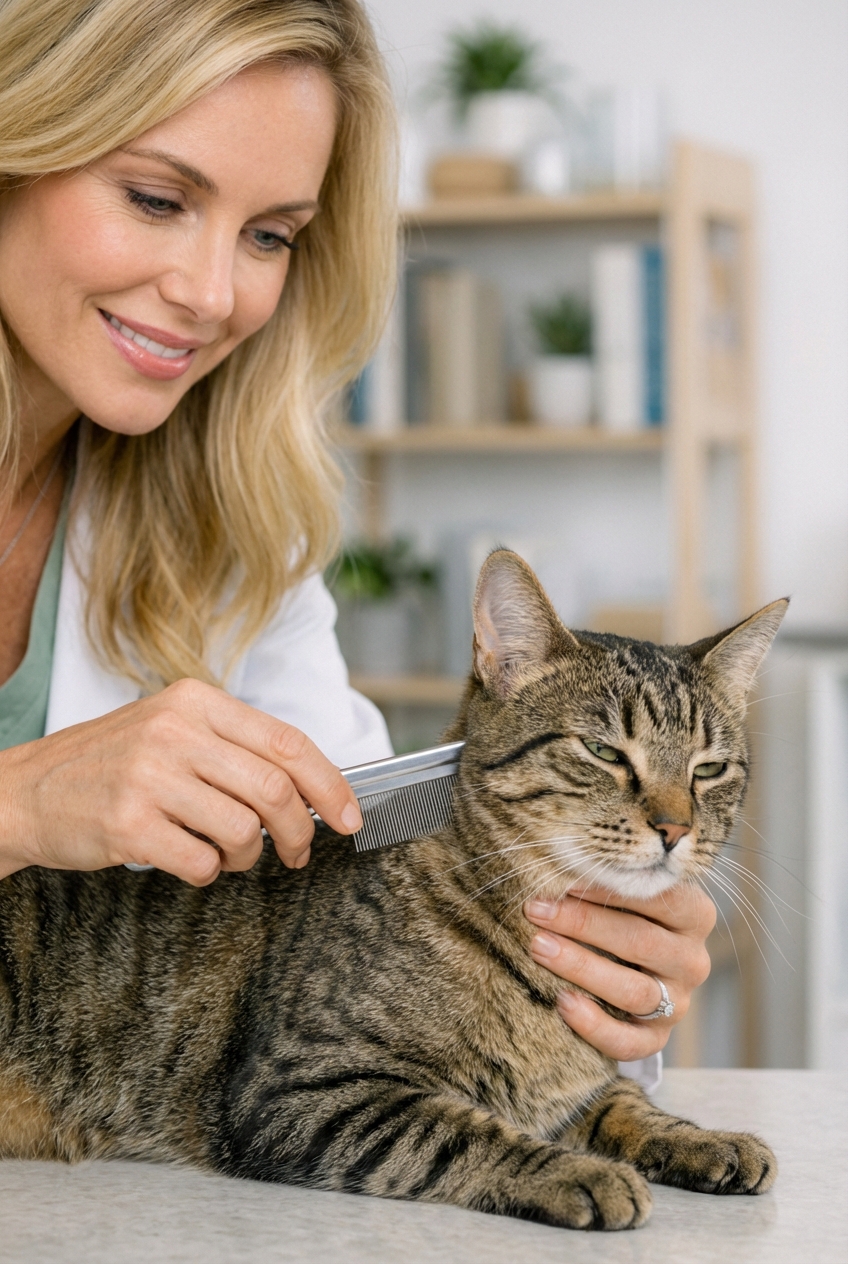
- Use a fine-tooth flea comb over the tail base, back, and neck.
- Comb onto a damp white paper towel. If the specks smear reddish-brown, that is digested blood and strongly suggests flea dirt.
What actually works
Evidence-based flea control usually means a vet-recommended topical or oral product used on schedule. Many over-the-counter products are less effective, and some can be unsafe if misapplied.
- Follow the label (often monthly, sometimes a different interval) and use the right product for your cat’s age and weight.
- Treat all pets in the home, not just the itchy one.
- Stay consistent for at least 3 months to disrupt the life cycle, and often longer in heavier infestations or multi-pet homes.
- Indoor cats can still get fleas via people, other pets, or wildlife near the home, so do not rule fleas out based on lifestyle alone.
- Wash bedding in hot water and vacuum regularly. Dispose of vacuum debris promptly.
Safety note
Never use dog-only flea products on cats. Products containing permethrin can be toxic to cats. If you are unsure what you have at home, call your veterinary clinic before applying anything.
Urgent flea concerns
Kittens can develop anemia from fleas. If you have a kitten who seems weak, pale-gummed, or is covered in fleas, contact a veterinarian promptly.
Dry skin
Dry skin is common, especially during winter or in homes with forced-air heating. It can also show up with over-bathing, poor grooming due to pain or arthritis, obesity, stress, low humidity, or underlying medical issues.
Signs that point to dry skin
- Flaking or dandruff, often along the back
- Dull coat or increased shedding
- Mild itch rather than frantic scratching
- Little to no redness and no obvious scabs
Helpful home steps
- Increase humidity with a humidifier, especially where your cat sleeps.
- Brush regularly to distribute natural oils and reduce flaking.
- Nutrition check: a complete, balanced diet supports skin barrier health. If your cat is on a boutique or unbalanced diet, talk with your vet.
- Ask your vet about omega-3s: fish-oil based omega-3 fatty acids can help some cats, but dosing matters and not every product is appropriate.
When it is not just dry skin
If dandruff is heavy, your cat is greasy, has bald patches, or seems uncomfortable, it is worth a vet visit. Dry skin can be a clue to parasites (including Cheyletiella, sometimes called “walking dandruff”), ringworm, allergies, systemic illness (for example, hyperthyroidism can affect coat quality), or skin infections.
Itch location clues
Location is not a perfect diagnostic tool, but patterns help.
- Tail base and lower back: fleas or flea allergy is high on the list.
- Belly and inner thighs: allergies, overgrooming, sometimes stress-related grooming.
- Head, neck, ears: allergies, ear infections, sometimes mites.
- All over with flakes: dry skin, poor coat condition, or systemic issues.
Other common causes
If you have ruled out fleas and your cat is still itchy, these are common mimics we see in clinic:
- Mites: ear mites, Cheyletiella, and other mites can cause itch and dandruff-like debris.
- Ringworm: often patchy hair loss and broken hairs, and it can be contagious to people and other pets.
- Bacterial or yeast infection: often shows up after licking and scratching, and may come with odor or oozing.
- Stress or pain overgrooming: some cats lick due to anxiety, arthritis, or other discomfort, even when the skin looks fairly normal.
Red flags
- Open sores, bleeding, or swelling
- Pus, odor, or thick crusting (possible infection)
- Hair loss that is rapidly spreading
- Head shaking, painful ears, or ear discharge
- Behavior changes, lethargy, appetite changes, or weight loss
- Any itch in a kitten, senior cat, or an immunocompromised cat
If your cat is itchy and you are unsure, start by ruling out fleas with a vet-recommended flea prevention plan. It is one of the most common, treatable causes, and it often overlaps with true allergies. If there is no improvement after a few weeks of consistent prevention, or if you see any red flags, schedule a vet visit.
What the vet may do
It can be tempting to guess and try product after product, but that can delay relief. A vet visit helps you get targeted treatment and avoid unsafe home remedies.
- Skin exam and flea combing, plus checking ears
- Skin cytology to look for yeast or bacteria
- Parasite testing when indicated (mites can mimic allergy)
- Flea prevention that matches your cat’s age, weight, and household risks
- Anti-itch medication when appropriate, plus treatment for secondary infection
- Food trial if food allergy is suspected (this requires a strict plan and time)
One loving reminder: cats suffer quietly. If you suspect discomfort, it is always okay to get help sooner rather than later.