No cat is truly hypoallergenic. Learn what causes cat allergies (Fel d 1), which breeds may trigger fewer symptoms, how to test before adopting, and ways to ...
Article
•
Designer Mixes
Cat Allergy Symptoms

Shari Shidate
Designer Mixes contributor
As a veterinary assistant here in Frisco, Texas, I talk with families every week who are sure they have “a cold,” “seasonal allergies,” or “just dry skin”… only to discover the real trigger is their sweet cat. Cat allergies can show up in surprisingly different ways depending on age, immune system, and other health conditions.
This guide walks you through in-depth cat allergy symptoms for all ages, what they can look like day to day, and what to do next. My goal is to help you spot patterns early, so you can breathe easier and keep your home as comfortable as possible for both people and pets.
Quick note: This article is for general education and is not a substitute for medical advice. If symptoms are persistent, worsening, or involve breathing, please reach out to your clinician.

What causes cat allergies?
Most people think cat allergies are caused by cat hair. Hair can carry allergens, but the main issue is usually a protein called Fel d 1. Cats make it primarily in saliva and skin glands. When a cat grooms, Fel d 1 spreads onto fur and skin. As the cat sheds skin flakes (dander) and dried saliva, those tiny particles become airborne and settle into carpets, bedding, furniture, and even clothing.
Fel d 1 gets most of the attention, but it is not the only cat allergen. Some people also react to other proteins (like Fel d 4), which helps explain why symptoms can vary from person to person.
Cat allergens are “sticky” and can linger longer than people expect. In soft furnishings and carpets, they can persist for weeks to months, even with regular cleaning. That is why some people still react after the cat leaves the room.
Allergy vs. irritation
Not every sneeze is an allergy. Irritants like dust, smoke, strong fragrances, and cleaning sprays can cause symptoms that feel similar. A true allergy involves the immune system reacting to an allergen, often with recurring symptoms and predictable triggers.
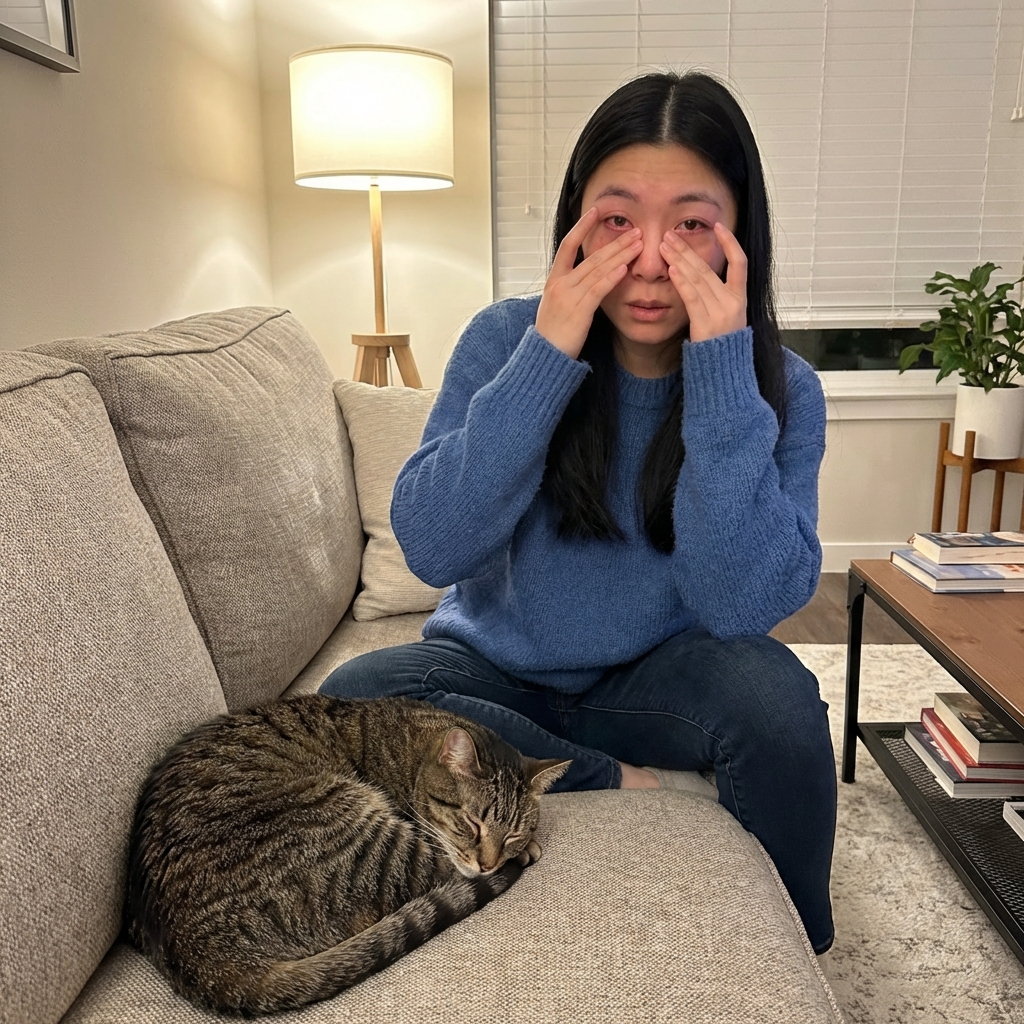
Common cat allergy symptoms in adults
Adults often recognize the classic allergy signs, but many are surprised by how “non-classic” symptoms can be, especially when exposure is daily.
Respiratory symptoms
- Sneezing, sometimes in clusters after petting the cat or entering a room
- Runny nose or congestion
- Postnasal drip that can lead to throat clearing
- Cough or a feeling of mucus in the throat
- Wheezing, chest tightness, or shortness of breath, especially with asthma
Eye symptoms
- Itchy eyes
- Redness
- Watery eyes
- Swollen eyelids, sometimes after touching eyes with hands that have cat allergen on them
Skin symptoms
- Itchy skin after holding or being licked by a cat
- Hives or raised welts
- Worsening eczema or dry patches
Some adults notice a slower, more “background” reaction: constant congestion, poor sleep, or recurring sinus pressure.
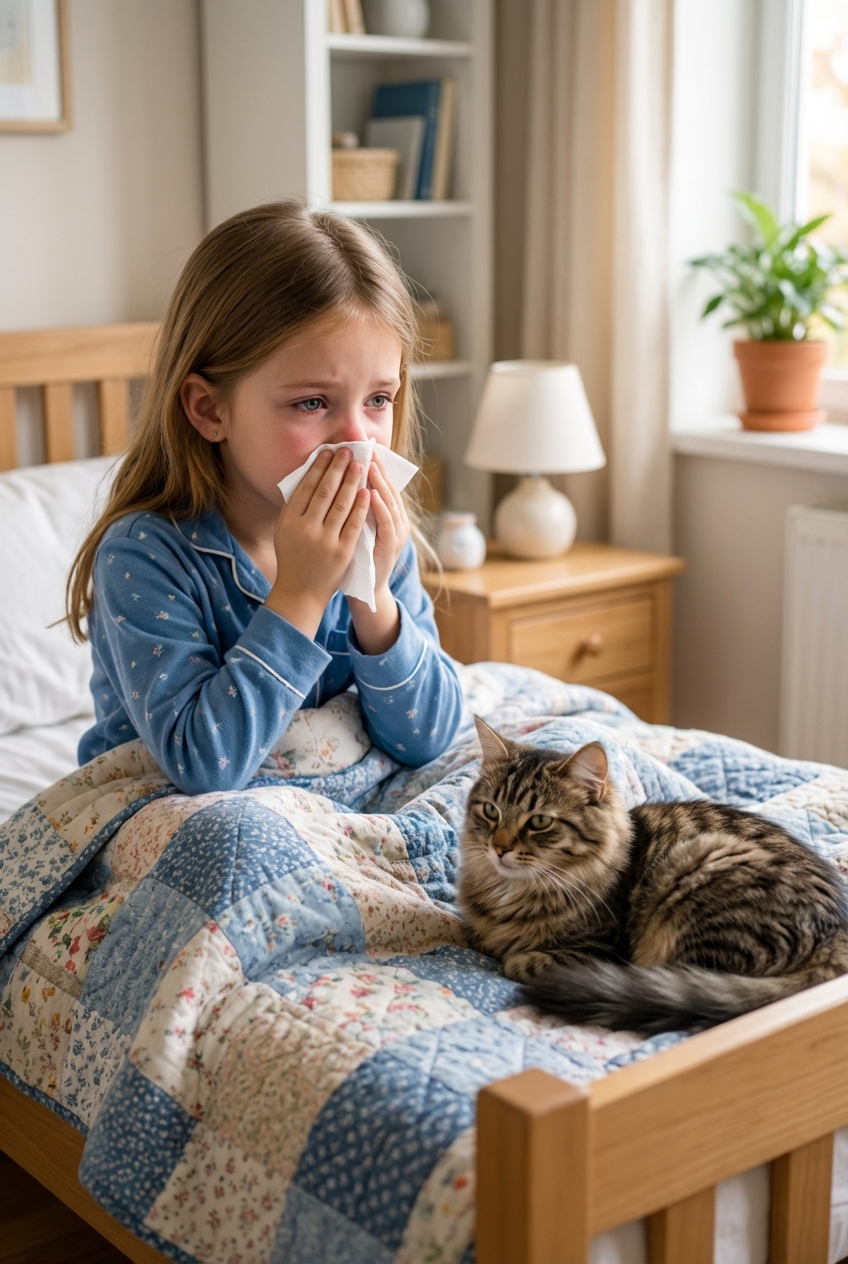
Cat allergy symptoms in children
Kids can have the same symptoms as adults, but they do not always describe them clearly. Sometimes it looks like frequent colds or a lingering cough that never fully goes away.
What parents notice
- Dark circles under the eyes (sometimes called allergic shiners)
- Frequent nose rubbing with an upward swipe (the “allergic salute”)
- Mouth breathing, especially at night
- Snoring or restless sleep from nasal congestion
- Recurring cough, often in the evening or after playing with the cat
- Itchy, watery eyes
Asthma link
Cat allergens can trigger asthma symptoms in children who already have asthma, and in some cases may be associated with asthma flares in kids who are prone. If you notice wheezing, chest tightness, rapid breathing, or a cough that worsens at night, it is worth discussing with your pediatrician or an allergist.
Babies and toddlers
In the youngest age group, symptoms can be subtle and easy to confuse with viral illnesses. Babies also cannot tell you they feel itchy or tight-chested, so watching patterns matters.
Possible signs
- Persistent runny nose without fever
- Frequent sneezing
- Rash, especially eczema flares
- Rubbing eyes or face
- Coughing that lingers or shows up around naps and bedtime
- Wheezing or noisy breathing (always take this seriously)
If a baby is having breathing trouble, poor feeding due to congestion, or any bluish color around lips, seek urgent medical care.
Teens
Teens are often exposed to cats in multiple places: their own home, friends’ homes, and sometimes part-time jobs (pet stores, shelters). Symptoms may show up as “I can’t breathe at my friend’s house” or “I always feel stuffy.”
- Chronic congestion and frequent throat clearing
- Headaches from sinus pressure
- Skin irritation (dermatitis, or rubbing-related breakouts) in some sensitive skin types
- Exercise-triggered cough if asthma is involved
Teens may also minimize symptoms to avoid giving up time with a pet, so gentle, practical conversations help.
Older adults
Older adults can experience typical allergy symptoms, but they may also have overlapping health conditions such as COPD, asthma, chronic sinus issues, or heart conditions that make breathing symptoms feel more intense.
Patterns to watch
- New or worsening wheeze
- Persistent cough that is worse indoors
- Sleep disruption from congestion
- Sinus pressure and recurrent sinus infections
If breathing symptoms are new, severe, or progressive, it is important to seek medical evaluation rather than assuming “just allergies.”
Easy-to-miss signs
Cat allergies do not always look like dramatic sneezing. Here are a few “sneaky” symptoms I hear about often:
- Constant throat clearing from postnasal drip
- Hoarseness, sometimes in the morning
- Ear pressure or popping, related to congestion
- Fatigue from poor sleep due to nasal blockage
- Dermatitis where the cat rubs or licks (hands, neck, forearms)
Symptoms vs. look-alikes
Because symptoms overlap, people can go months or years treating the wrong thing. Here are common look-alikes:
- Common cold: usually improves in 7 to 10 days, may include fever or body aches
- Seasonal pollen allergies: often worse outdoors and during specific seasons, though indoor exposure can still matter
- Dust mite allergy: often worse in bed and upon waking
- Mold allergy: can flare in damp environments, basements, or after water damage
- Non-allergic rhinitis: triggered by temperature changes, perfumes, smoke, spicy foods
A big clue for cat allergy is timing: symptoms spike when the cat is close, when you are cleaning, or when you enter a home with cats.
When symptoms are serious
Most cat allergy symptoms are uncomfortable but manageable. However, breathing symptoms can become urgent in certain situations.
Get urgent or emergency help if you notice
- Difficulty breathing, gasping, or struggling to speak in full sentences
- Severe wheezing or chest tightness
- Swelling of lips, tongue, or throat (rare with cat allergy, but urgent)
- Dizziness or fainting (rare, but urgent)
Cat allergies can trigger asthma attacks, and asthma symptoms should always be taken seriously.
How to confirm a cat allergy
Guessing can be stressful, especially when a beloved pet is involved. A clinician can help confirm the cause with:
- History and symptom patterns
- Skin prick testing (often done by an allergist)
- Specific IgE blood testing for cat allergen
If you are tracking symptoms at home, note the time, location, what you were doing (petting, cleaning, visiting a friend), and which symptoms showed up. That simple information can be surprisingly helpful at an appointment.
Action steps that help
You do not have to choose between suffering and giving up your cat. Many households improve symptoms with a few consistent changes. Here are evidence-based steps that tend to make a real difference.
Reduce allergens at home
- Create a cat-free bedroom, especially for the most sensitive person in the home
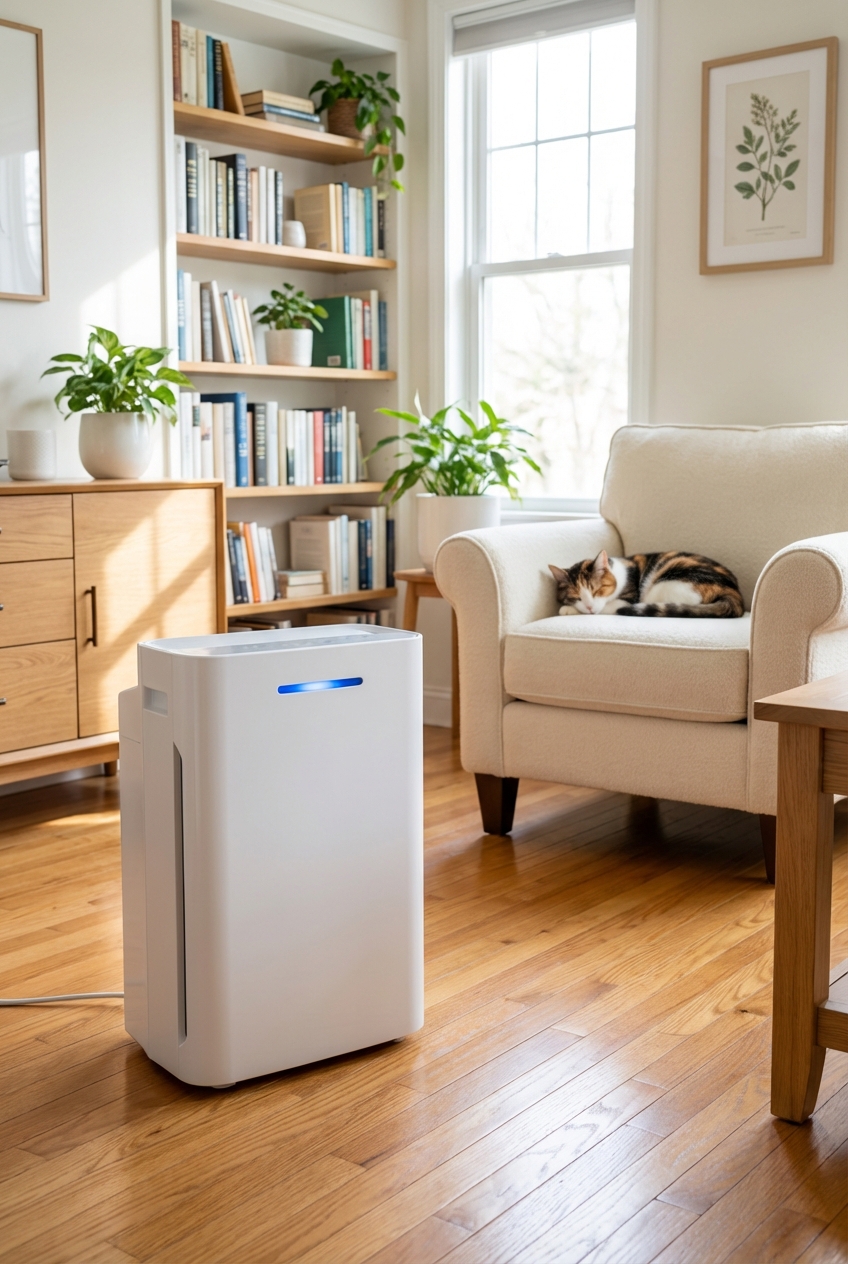
- Use a HEPA air purifier in the bedroom and main living area
- Upgrade HVAC filtration when possible (ask an HVAC pro what MERV rating your system can handle)
- Vacuum with a sealed HEPA system and vacuum slowly
- Wash bedding weekly in hot water when possible
- Use allergen-proof mattress and pillow encasements to reduce overall allergen exposure while sleeping
- Limit carpets and heavy fabric when you can (or focus extra cleaning there)
- Reduce fabric clutter (extra pillows, throws) that trap dander
- Wipe hard surfaces with a damp cloth to pick up allergens instead of pushing them into the air
Personal habits
- Wash hands after petting the cat
- Avoid touching your face after contact
- Change clothes after heavy exposure if symptoms are strong
- Shower before bed to remove allergens from hair and skin
Pet-focused strategies
- Brush the cat regularly if the cat tolerates it, ideally by a non-allergic person
- Use cat-safe wipes or grooming routines recommended by your veterinarian
- Be cautious with bathing: it can reduce allergens briefly, but results are temporary and many cats find baths stressful. If you want to try it, ask your veterinarian for guidance.
- Keep the litter area well-ventilated and cleaned frequently (litter dust can worsen irritation)
Medical options
For many people, environmental changes plus medical support are the sweet spot.
- Non-sedating antihistamines can help sneezing, itching, and runny nose
- Intranasal steroid sprays can be very effective for congestion and inflammation when used consistently
- Asthma inhalers may be needed if wheeze or tightness is present
- Allergy immunotherapy (shots) may reduce sensitivity over time
About “drops”: sublingual immunotherapy (drops or tablets) exists for some allergies, but cat treatment options vary by country and clinic. In the U.S., cat SLIT is not universally FDA-approved and is sometimes offered off-label by certain allergists. If you are curious, your allergist can walk you through what is available and appropriate for you.
If you are treating yourself with over-the-counter products and still struggling, it is absolutely worth talking with an allergist. You deserve relief, and there are options.
Hypoallergenic cats?
I get asked this one a lot. The honest answer is: there is no truly hypoallergenic cat. Some cats may produce less Fel d 1 than others, but it varies widely. Also, things like grooming habits, where the cat sleeps, and how your home holds onto allergens can matter just as much as breed.
Living with cats
I have a soft spot for this topic because I see how much comfort pets bring, especially for kids and older adults. If you are trying to make it work, start small and stay consistent. Most homes do best with a short plan you can actually maintain.
Pick your top three changes and do them daily for 2 to 3 weeks. Then reassess. Consistency matters more than perfection.
And please remember: if symptoms are mainly respiratory, especially wheezing, you are not “being dramatic.” Your airway health is important.
Quick symptom checklist
If you want a simple gut-check, cat allergy symptoms often include a cluster of the following:
- Sneezing fits after contact
- Congestion that is worse indoors
- Itchy, watery eyes
- Cough or throat clearing from postnasal drip
- Skin itching or hives where the cat touched you
- Wheezing or chest tightness (especially if you have asthma)