A practical, vet-informed guide to cat allergy relief: recognize symptoms, run flea and food trials, manage environmental triggers, treat secondary infection...
Article
•
Designer Mixes
Cat Allergies: Symptoms and Behavior Clues

Shari Shidate
Designer Mixes contributor
Why cat allergies can look confusing
When most people hear “allergies,” they think of sneezing. Cats can absolutely sneeze from allergies, but many allergic cats show it through skin and behavior instead. In my work as a veterinary assistant, I have seen many cats labeled as “moody” or “high maintenance” when they were actually itchy, inflamed, or uncomfortable.
This guide walks you through the most common symptoms of allergies in cats, the behavior changes that often go with them, and what to do next so you can get relief faster and avoid guessing.
Common allergy types in cats
Cat allergies are usually grouped into a few main buckets. A cat can have just one, or a mix.
- Flea allergy dermatitis (FAD): An allergic reaction to flea saliva. In sensitized cats, even a single bite may trigger intense itching.
- Environmental allergies (atopy): Pollens, molds, dust mites, grasses, and sometimes household irritants.
- Food allergies: A true food allergy is less common than food intolerance, but it happens. Proteins are a frequent trigger.
- Contact allergies: Reactions to something touching the skin, like certain litters, cleaning products, or fabrics.
Because the symptoms overlap, a vet exam and a step-by-step plan are often the quickest way to get answers.
Top symptoms of allergies in cats
Now for the part that usually brings people here. Allergy signs in cats can be subtle at first, and they often show up more on the skin than in the nose.
1) Itchy skin and overgrooming
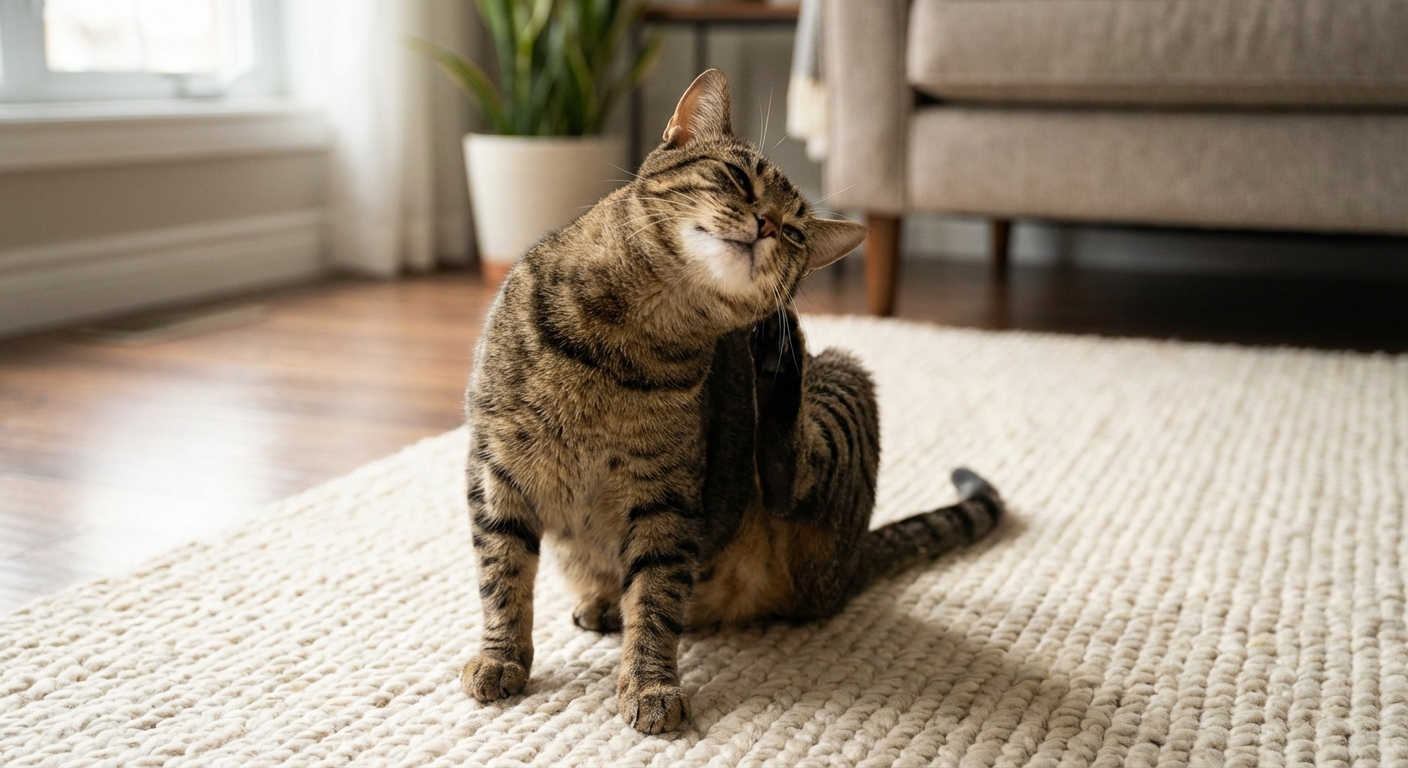
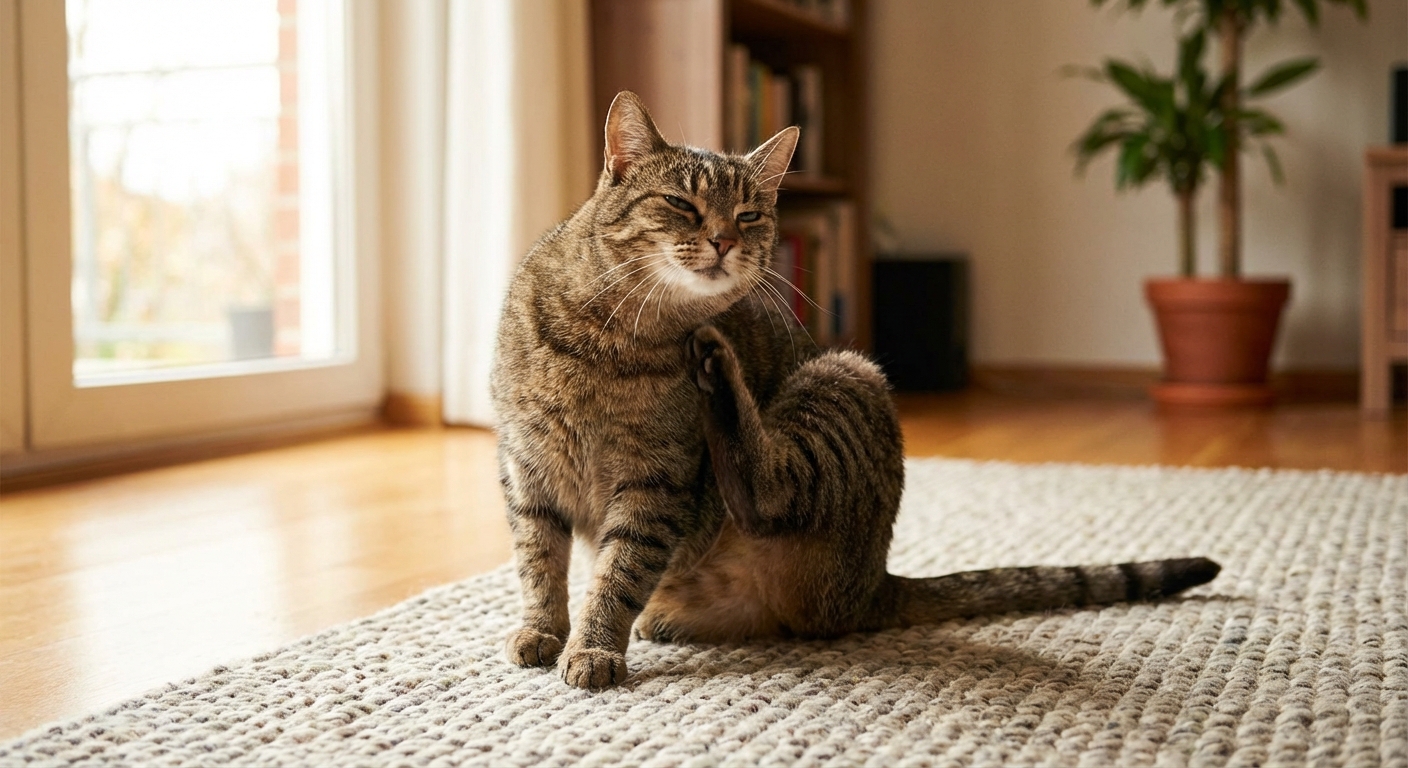
Itching is a big one, and it does not always look like constant scratching. Many cats “itch” by licking instead.
- Excessive licking of belly, inner thighs, or legs
- Chewing at paws or base of tail
- Repeated scratching around face, ears, neck
- Hair thinning or bald patches, often very smooth from grooming
2) Scabs, bumps, and skin inflammation
Allergic skin can become inflamed, leading to:
- Small crusty scabs, especially along the back or neck
- Redness and irritation
- Moist, inflamed areas or self-trauma lesions from licking (and sometimes secondary infection)
3) Ear problems
Recurrent ear issues can be a clue, especially with food allergy or environmental allergies.
- Head shaking
- Scratching at ears
- Red ear canals or dark debris
- Ear odor
Important note: ear mites and infections can look similar, so this is one area where an exam is very helpful.
4) Sneezing, watery eyes, and nasal symptoms
Some cats do show the “classic” allergy signs.
- Sneezing fits
- Clear nasal discharge
- Watery eyes
If you see thick yellow or green discharge, lethargy, or a fever, you may be dealing with an infection instead of allergies. Also, coughing or wheezing should be checked by a vet since asthma and respiratory infections can overlap with “allergy-looking” symptoms.
5) Digestive upset (sometimes)
Food-related issues can include:
- Vomiting more than occasionally
- Soft stool or diarrhea
- Increased gas
These symptoms are not specific to allergies, but when they happen alongside itchiness or ear trouble, they raise suspicion.
Behavior changes that can be allergy clues
Discomfort changes behavior. A cat that is itchy or inflamed may not “act sick” in an obvious way, but you will often notice little shifts.
- Irritability: Less tolerant of petting, especially along the back or near the tail.
- Restlessness: Frequent stopping to scratch or groom, difficulty settling.
- Hiding more: Some cats withdraw when they do not feel good.
- Overgrooming as a stress behavior: Allergies and stress can feed into each other. Itch triggers grooming, grooming irritates skin, irritation increases stress.
- Changes in sleep: Itch at night can disrupt rest, just like it does for people.
Where signs show up
Where symptoms show up can offer hints.
- Base of tail and lower back: commonly flea allergy dermatitis.
- Face, ears, neck: often environmental or food-related, but not exclusive.
- Belly and inner thighs: common overgrooming zones, often allergy-related.
- Paws: licking or chewing can suggest environmental allergies or contact irritation.
These are patterns, not guarantees. Cats love to keep us humble that way.
Allergies vs. other problems
Several conditions can mimic allergies. This is why self-treating for weeks can delay relief.
- Fleas: you may not see them. Cats groom them off, and flea dirt can be subtle.
- Ringworm: can cause hair loss and scaly skin, and it is contagious.
- Mites: can cause intense itch, ear debris, and scabbing.
- Skin infections: bacterial or yeast infections can be primary or secondary to allergies.
- Pain: some cats overgroom where they hurt, like an arthritic hip.
When to call the vet
Please seek veterinary care quickly if you notice:
- Open sores, bleeding, or swelling
- Sudden facial swelling or hives
- Difficulty breathing or noisy breathing
- Not eating for 24 hours, especially in overweight cats (this can be an emergency)
- Rapidly worsening itch or severe discomfort
Even when it is “just allergies,” secondary infections can escalate fast, and cats can feel miserable.
How vets diagnose allergies
Diagnosis is usually a process, not a single test. Your veterinarian may recommend:
- Skin and ear cytology: to look for yeast, bacteria, and inflammatory cells.
- Parasite checks: flea control trial, mite evaluation, or skin scraping when appropriate.
- Food trial: a strict elimination diet using a prescription hydrolyzed diet or a novel protein diet for 8 to 12 weeks.
- Allergy testing: blood or intradermal testing, usually to guide immunotherapy for environmental allergies. These tests are not used to diagnose food allergies, and they are most useful after parasites and food allergy have been addressed.
If your cat has been itchy for months, you are not behind. You are simply at the point where a clear plan matters most.
Common vet treatments
Once your vet narrows down the likely cause, treatment is often a combination of reducing triggers and calming the inflammation. Depending on your cat, your veterinarian may use:
- Prescription flea prevention: often the foundation, even for indoor cats.
- Treatment for secondary infection: antibiotics or antifungals when indicated, plus ear medication if ears are involved.
- Anti-itch and anti-inflammatory medications: options may include steroids or other prescription therapies chosen for your cat’s needs and medical history.
- Allergen immunotherapy: “allergy shots” or oral drops based on allergy testing results for environmental allergies.
- Topical support: medicated wipes, rinses, or shampoos when appropriate to reduce yeast and soothe skin.
The goal is not just to stop scratching today. It is to reduce flare-ups and protect the skin barrier long-term.
At-home steps that help
You do not have to wait helplessly for the next appointment. Here are practical steps that are safe and often very effective.
1) Commit to excellent flea prevention
This is the biggest “hidden” issue I see. Even indoor cats can get fleas. Use a veterinarian-recommended product and treat all pets in the household as advised.
2) Reduce environmental triggers
- Use a HEPA air purifier in your cat’s favorite room.
- Vacuum frequently, especially rugs and upholstery.
- Wash bedding regularly with fragrance-free detergent.
- Avoid strong sprays, plug-ins, incense, and heavy fragrances.
3) Support the skin barrier
Ask your vet whether omega-3 fatty acids are appropriate for your cat. Omegas can support skin health and may reduce inflammation. Product and dosing matter, so this is worth a quick check-in.
4) Do not change diets randomly
It is so tempting to switch food again and again. Unfortunately, that can muddy the waters. If food allergy is suspected, the most useful step is a structured elimination trial with no treats, no flavored medications, and no table scraps.
5) Skip unsafe home remedies
Please do not apply essential oils (including tea tree oil) or human skin creams to your cat unless your veterinarian specifically tells you to. Cats are extra sensitive to many ingredients, and licking makes accidental ingestion very likely.
6) Keep a simple symptom log
Write down itch level, stool quality, vomiting, ear scratching, and any new products used in the home. Patterns can show up in weeks, not days.
Frequently asked questions
Can cats develop allergies later in life?
Yes. Environmental allergies often begin in young adulthood, but I have also seen seniors develop new sensitivities.
Are hairballs always hairballs?
No. Frequent “hairball” vomiting can sometimes be gastrointestinal irritation. Also, itchy cats often ingest more hair because they are overgrooming, which can mean more hairballs or hairball-like vomiting. If it is happening often, it is worth discussing with your veterinarian.
Is it safe to give my cat over-the-counter allergy medicine?
Do not give human medications unless your veterinarian specifically instructs you to. Cats are sensitive to many drugs, and dosing is not one-size-fits-all.
The bottom line
Allergies in cats are common, and the signs are often subtle at first. If your cat is licking more, acting touchy, or developing scabs or ear problems, trust your instincts. Allergies are not just “a little itch.” They can affect sleep, mood, and quality of life.
Start with the basics: strong flea control, fewer irritants, and a vet-guided plan. With a little patience and consistent steps, most cats can get real, lasting relief.