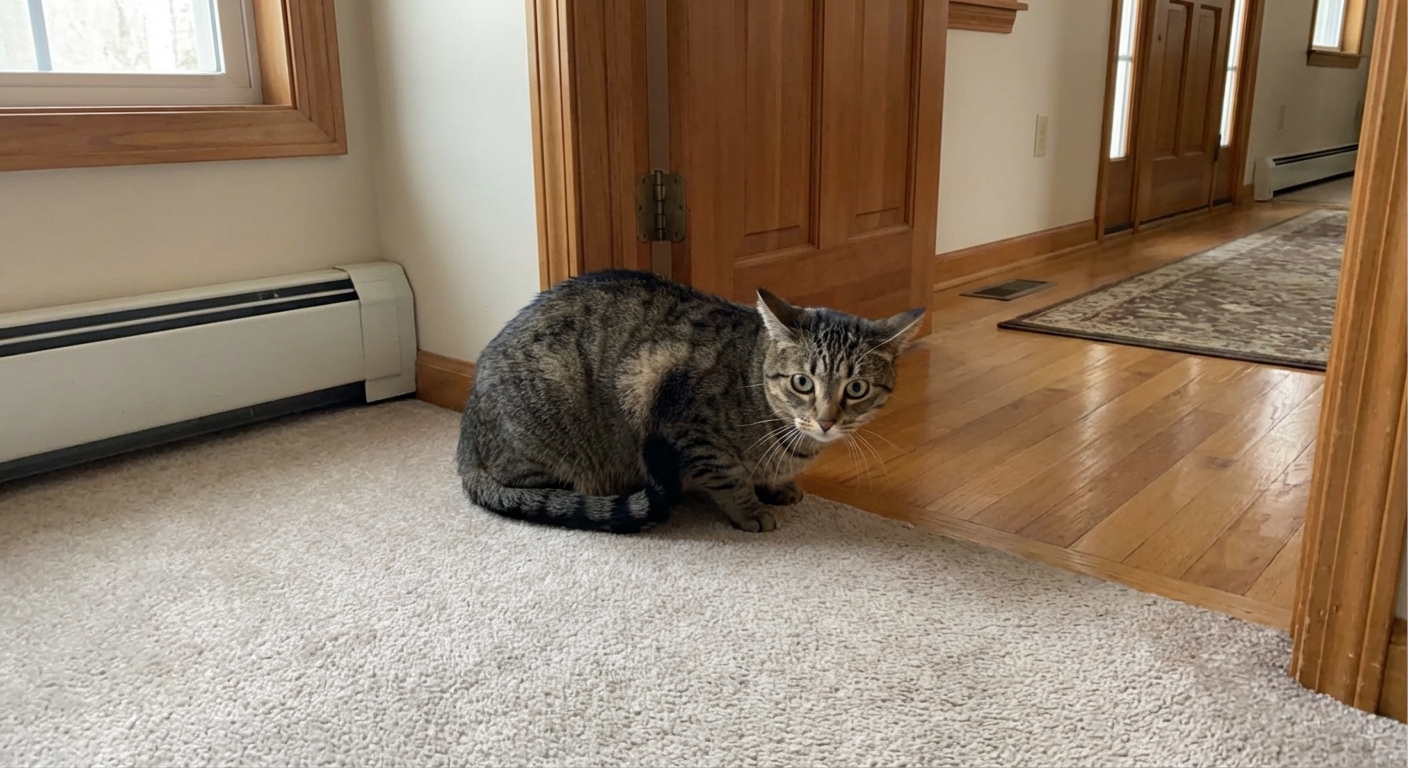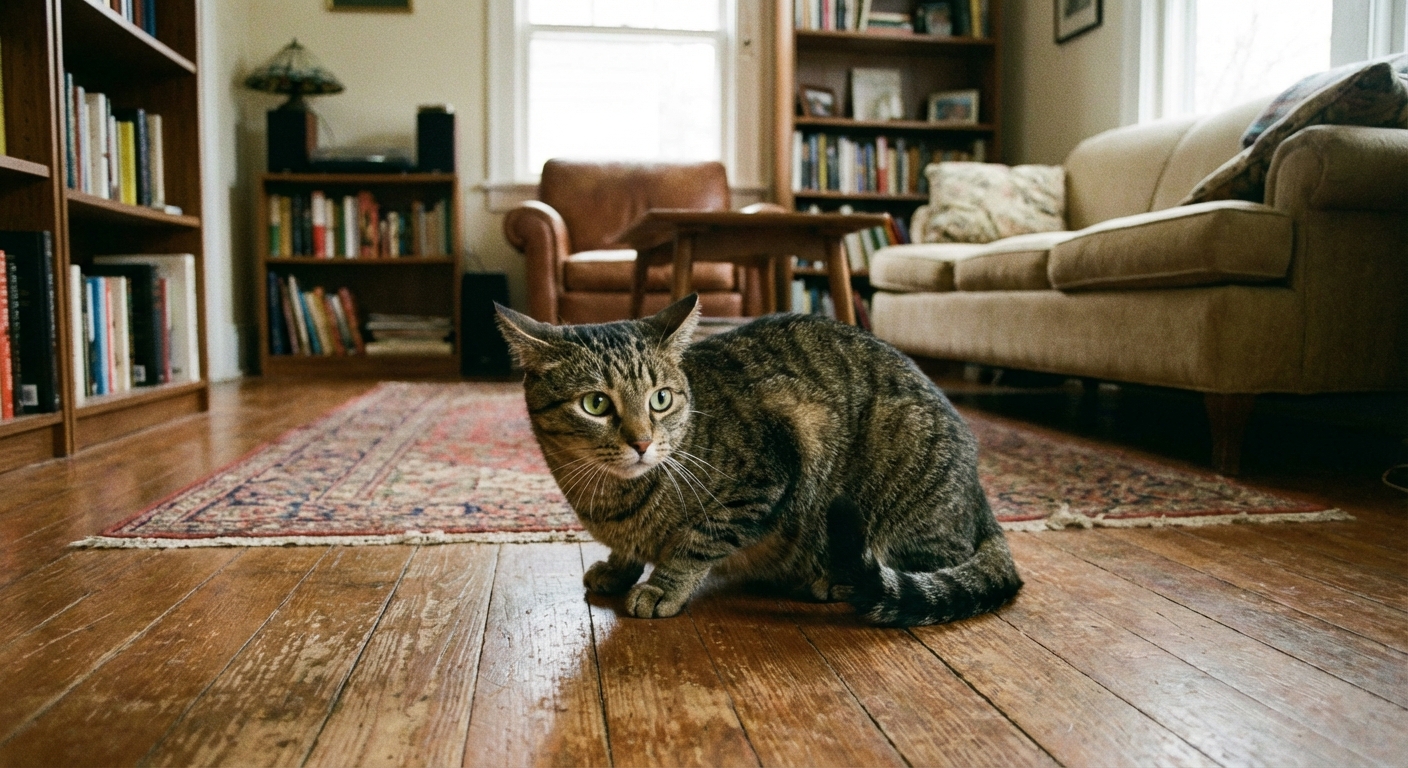
Sudden hissing, swatting, or biting is usually communication—not “bad behavior.” Learn the main types of cat aggression, how to spot triggers, de-escal...
Article
•
Designer Mixes
Cat Aggression Toward Guests: Strategies That Work

Shari Shidate
Designer Mixes contributor
When a cat hisses, swats, or charges at visitors, it can feel scary and confusing, especially if your cat is normally sweet with you. The good news is that most “guest aggression” is rooted in fear, overstimulation, or territorial stress, and there are evidence-based ways to improve it. You do not have to “teach your cat a lesson.” You can teach your cat to feel safe.
Quick reframe: Hissing and growling are warning signals, not “bad behavior.” They are your cat’s way of asking for distance. If we listen to those early warnings, we can often prevent escalation.
Why cats get aggressive with guests
Cats are experts at reading change. A new person can mean new scents, unfamiliar movement, louder voices, direct eye contact, or attempts to pet too soon. For many cats, that combination flips on a defensive response.
- Fear-based defensiveness: Your cat feels cornered, surprised, or threatened and uses aggression to create distance.
- Territorial stress: The home is your cat’s safe zone. A stranger can feel like an “intruder,” especially in small spaces.
- Overstimulation: Doorbells, greetings, kids running, and multiple people talking can overload a sensitive cat.
- Secure-base behavior: Some cats stick close to their person because that proximity feels safest. This is usually stress-driven, not “protection.”
- Resource guarding (sometimes): In a smaller subset of cases, a cat may guard a favorite person, seat, or pathway. This is still typically rooted in anxiety and feeling the need to control access.
- Pain or medical issues: Arthritis, dental pain, hyperthyroidism, urinary discomfort, and neurologic changes can lower a cat’s tolerance and increase irritability.
Important: If aggression appears suddenly, escalates quickly, or happens with other changes like hiding more, appetite changes, litter box accidents, or excessive vocalizing, schedule a vet visit first. We do not want to miss pain or illness.
Start with safety and prevention
Before you work on training, set everyone up to succeed. Preventing an incident is not “giving in.” It is protecting your cat’s emotional baseline and keeping guests safe.
Create a guest plan
- Use a quiet retreat room: A bedroom with food, water, litter box, a scratcher, and hiding spots. Turn on white noise if your home gets loud.
- Set the room up early: Prepare it before guests arrive so you are not rushing while your cat is already stressed.
- Keep arrivals controlled: Many cats react right at entry. Use a closed door, or a baby gate with a sheet draped over it, or keep your cat in the retreat room during arrivals.
- Post a simple sign: “Cat resting. Please keep this door closed.” This prevents well-meaning interruptions.
- No chasing, no forced greetings: Tell guests ahead of time: “Please ignore the cat at first.”
- Children need extra rules: Kids should not approach, chase, corner, or pick up the cat. If children cannot reliably follow instructions, the kindest and safest option is to keep the cat in the retreat room.
- Watch body language: Flattened ears, wide pupils, a twitching tail, a low crouch, growling, or sudden freezing means your cat needs space now.

Strategy 1: Make guests predict good things
This is the foundation: change your cat’s emotional association with visitors from “danger” to “good stuff happens.” In behavior science, this is called counterconditioning and desensitization.
Step-by-step (simple and effective)
- Start far away: Put your cat in the same room only if they can remain calm. If not, start with the cat behind a door or gate.
- Guest enters quietly: No talking to the cat, no reaching, no eye contact. Just exist.
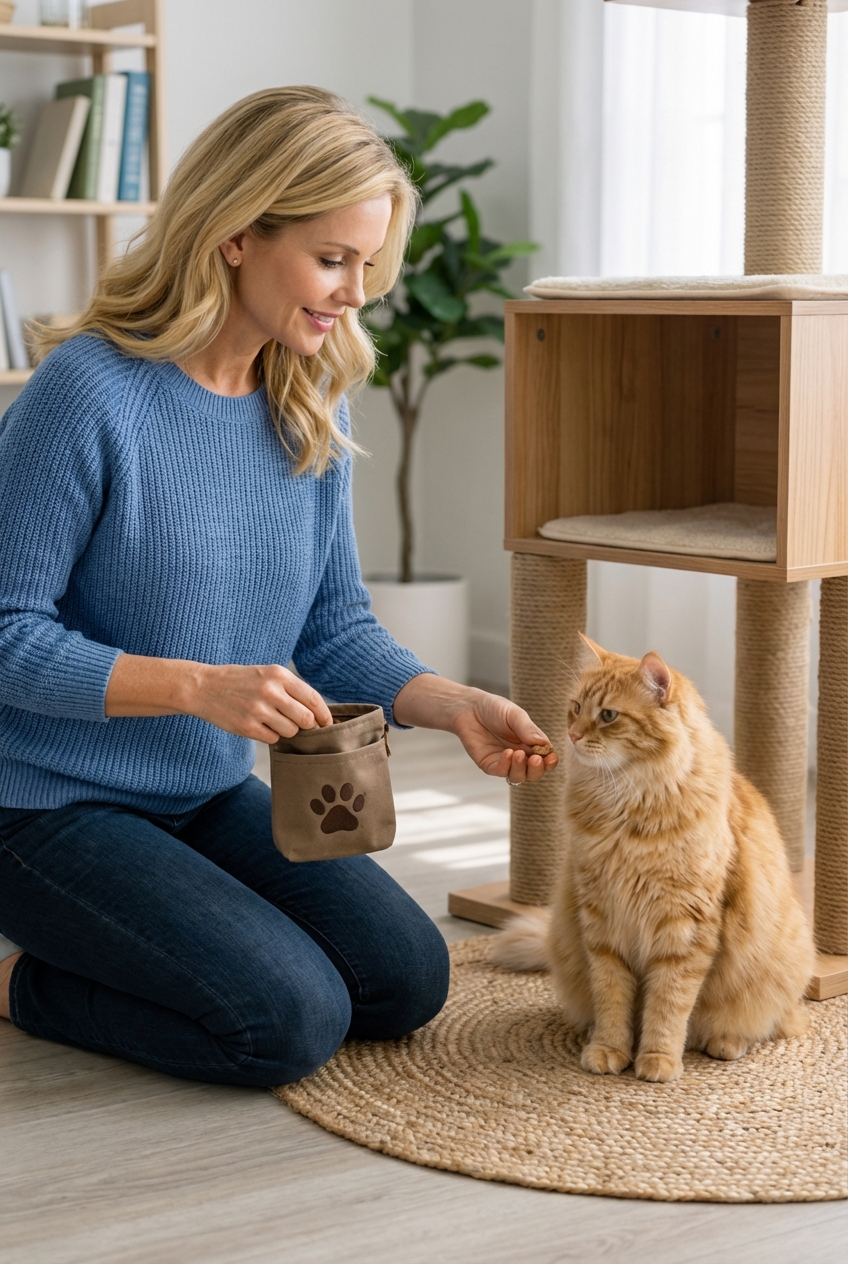
- High-value treats happen: The moment the guest appears, feed your cat something special (Churu, tiny chicken pieces, favorite wet food). When the guest leaves, treats stop.
- Keep sessions short: 1 to 3 minutes is plenty at first. Repeat many times across days.
- Decrease distance slowly: Only move closer when your cat shows relaxed body language and is still eating.
Simple rule to remember: Guest appears = treats start. Guest leaves = treats stop.
Key concept: stay under threshold. “Under threshold” means your cat is still able to eat, disengage, and choose to move away. If your cat hisses, swats, stiffens, or stops taking food, you went too fast. Increase distance next time.
Strategy 2: Teach a “station” behavior
A predictable job helps anxious cats. You are not rewarding aggression. You are rewarding a calm, safe alternative.
How to train it
- Pick a station: a cat tree perch, a bed, or a mat in a calm corner of the living room.
- Several times daily, toss a treat onto the station and say a cue like “Perch”.
- When your cat steps on it, calmly drop more treats there.
- Gradually reward longer stays: treat every few seconds, then every 10 seconds, then randomly.
When guests arrive, cue your cat to the station before the door opens if possible. Your goal is for the station to feel like the safest place in the room.
Strategy 3: Reduce trigger stacking
Cats can handle one stressful thing better than five stressful things in a row. Trigger stacking is when small stressors pile up and explode into aggression.
- Do play first: 10 to 15 minutes of wand-toy play, then a small meal. Hunt, eat, groom, sleep is a calming sequence for cats.
- Lower noise and chaos: Soft music, fewer people greeting at once, no crowding the entryway.
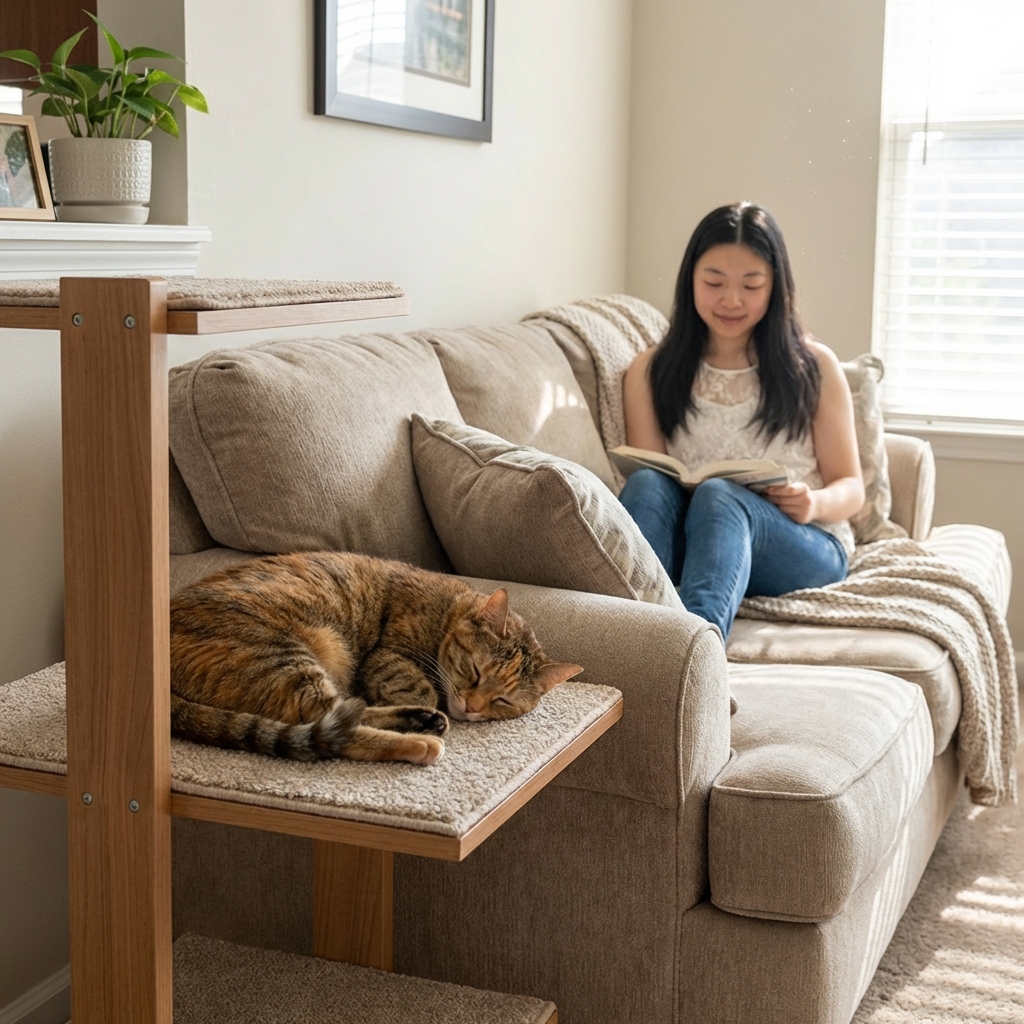
- Give vertical space: Cat trees and shelves let cats observe without feeling trapped.
- Keep hands off: Do not ask guests to pet your cat until your cat is consistently approaching with relaxed body language.
Strategy 4: Use calming supports
These tools can support behavior work. They are not magic on their own, but they can make training easier for some cats.
At-home supports
- Pheromone diffuser or spray: Feline facial pheromone products may help some cats, but response varies and effects are often modest. If you try one, plug in a diffuser in the main guest area for at least a week before a big gathering if possible.
- Food puzzles and lick treats: Many cats find licking calming. Choose options that fit your cat’s diet and health needs, and ask your vet if your cat has conditions like diabetes, food allergies, or GI issues.
- Appropriate confinement: For some cats, a quiet retreat room during parties is the kindest option.
When to discuss medication
If your cat’s aggression is intense, frequent, or your cat cannot eat or relax around visitors even at a distance, talk with your veterinarian. Short-term situational medication or longer-term anxiety medication can be life-changing when paired with training. This is especially true for fear-based aggression.
Strategy 5: Coach guests
Most well-meaning people accidentally do the exact things that worry cats. Give guests a simple script.
Guest rules that work
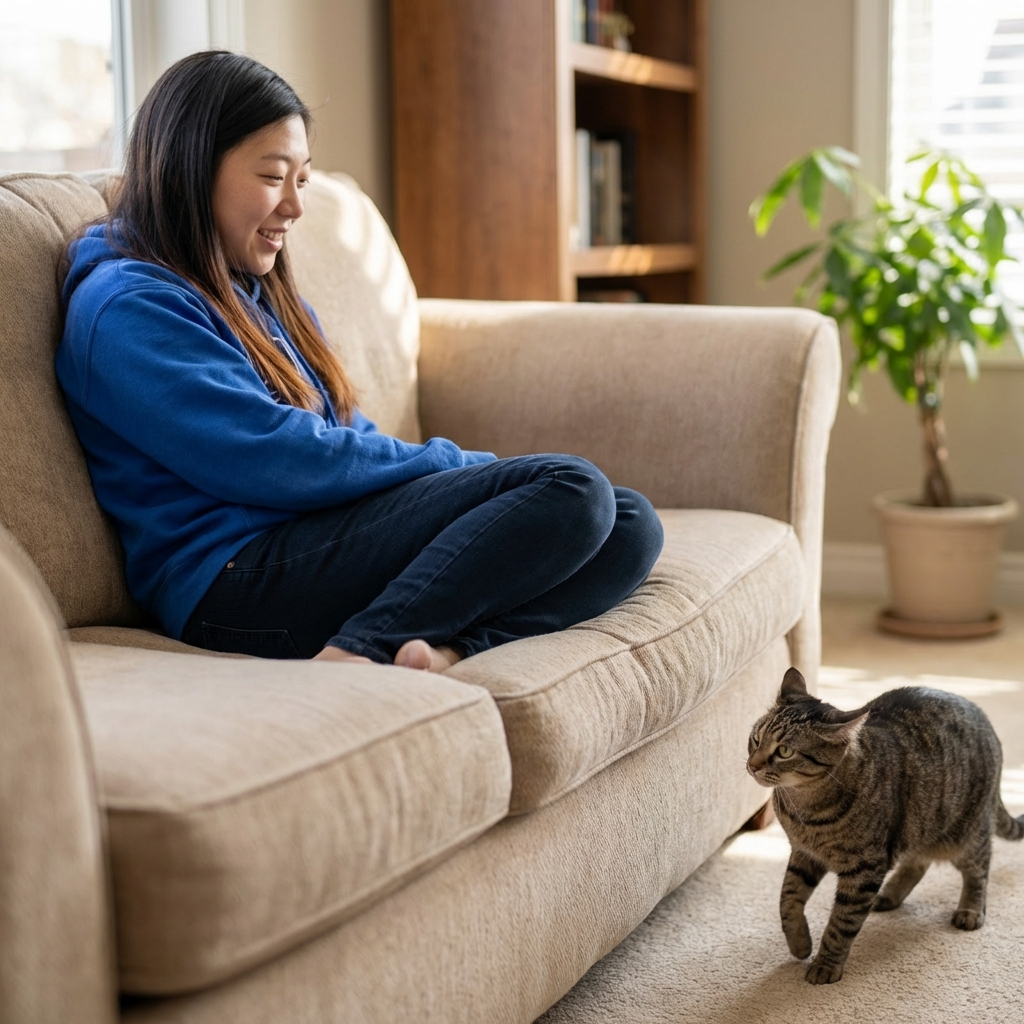
- Ignore the cat at first: No staring, no reaching, no following.
- Turn sideways: A side profile is less threatening than facing head-on.
- Let the cat initiate: If the cat approaches, offer one finger at a distance and let the cat choose.
- Pet only if invited: If petting happens, keep it brief and stop before the cat gets twitchy.
- No picking up: Even friendly cats often dislike being lifted by strangers.
- Kids follow the same rules: Quiet voices, slow movements, hands to themselves.
What to do if your cat escalates
If your cat is already over threshold, training is not possible in that moment. Your job is to reduce intensity safely.
- Do not punish: Yelling, spraying water, or “scruffing” increases fear and makes future aggression more likely. It can also suppress warning signs, which raises the risk of sudden “no warning” bites.
- Create space: Calmly guide guests to stand still or step back.
- Use a barrier safely: Instead of throwing anything, place a cushion, a folded blanket, a laundry basket, or a piece of cardboard between the cat and the guest. If possible, step behind a door or gate.
- Use a treat redirect: Toss treats away from the guest to redirect movement, or slide a toy across the floor away from people.
- End the interaction: Move your cat to the retreat room with food, water, and a litter box.
If a bite breaks skin: Wash with soap and water, seek medical advice, and contact your veterinarian. Cat bites can become infected quickly.
When progress stalls
- Moving too fast: Your cat must stay under threshold to learn.
- Guests keep trying to pet: Even “just once” can set training back.
- No escape routes: Cats lash out more when they feel trapped.
- Inconsistent exposure: Random exposure without treats can teach “guests are unpredictable.”
- Undiagnosed pain: If your cat is uncomfortable, behavior plans rarely stick until pain is treated.
- Too much too soon: Multiple guests, long visits, and high noise can overwhelm a cat that is still learning.
How to track progress
Use simple markers so you know when to advance:
- Can eat: Your cat will take treats when a guest appears (even if at a distance).
- Body softens: Ears and tail are looser, the body is not crouched and rigid.
- Can choose: Your cat can look away, move to their station, or leave the area without escalating.
- Recovery is quicker: After the guest leaves, your cat returns to normal faster than before.
Only decrease distance or increase visit time when these markers are consistent.
When to get professional help
Please reach out for help if you see any of the following:
- Aggression is escalating in frequency or intensity.
- Your cat stalks, ambushes, or repeatedly attacks guests.
- Your cat cannot be redirected with distance and treats.
- There are bites, especially multiple bites or deep punctures.
Ask your veterinarian about a referral to a board-certified veterinary behaviorist or a qualified behavior professional who uses reward-based methods. A good plan is customized, safe, and surprisingly doable once you have the right support.
Your cat is not being “mean.” They are communicating that they feel unsafe. When we help them feel safe, the behavior usually improves.
A realistic timeline
Some cats improve within a few weeks with consistent practice. Others, especially cats with long-standing fear or poor early socialization, may need a few months. The wins often come in small steps: fewer hisses, quicker recovery, eating in the same room, then eventually choosing to approach.
If you want one simple place to start: pair every guest appearance with something your cat loves, keep your cat under threshold, and give them an escape option every time. That is how trust is rebuilt.