A family-friendly, vet-tested timeline to introduce two cats safely: set up a base camp, swap scents, feed by the door, use barriers, and build calm, supervi...
Article
•
Designer Mixes
Cat Aggression After a Vet Visit: Reset Routine

Shari Shidate
Designer Mixes contributor
If your sweet cats come home from the vet and suddenly act like strangers, you are not imagining it. I see this all the time in clinics, and it can feel upsetting quickly: hissing, swatting, chasing, hiding, or one cat refusing to let the other come near.
The good news is that most post-vet tension is temporary and very fixable with a calm reset routine. Below is a practical plan you can start today, based on widely used feline behavior principles (such as gradual reintroduction, scent exchange, and positive associations), as recommended by veterinary behavior professionals and cat-focused organizations like ISFM.
Why cats fight after the vet
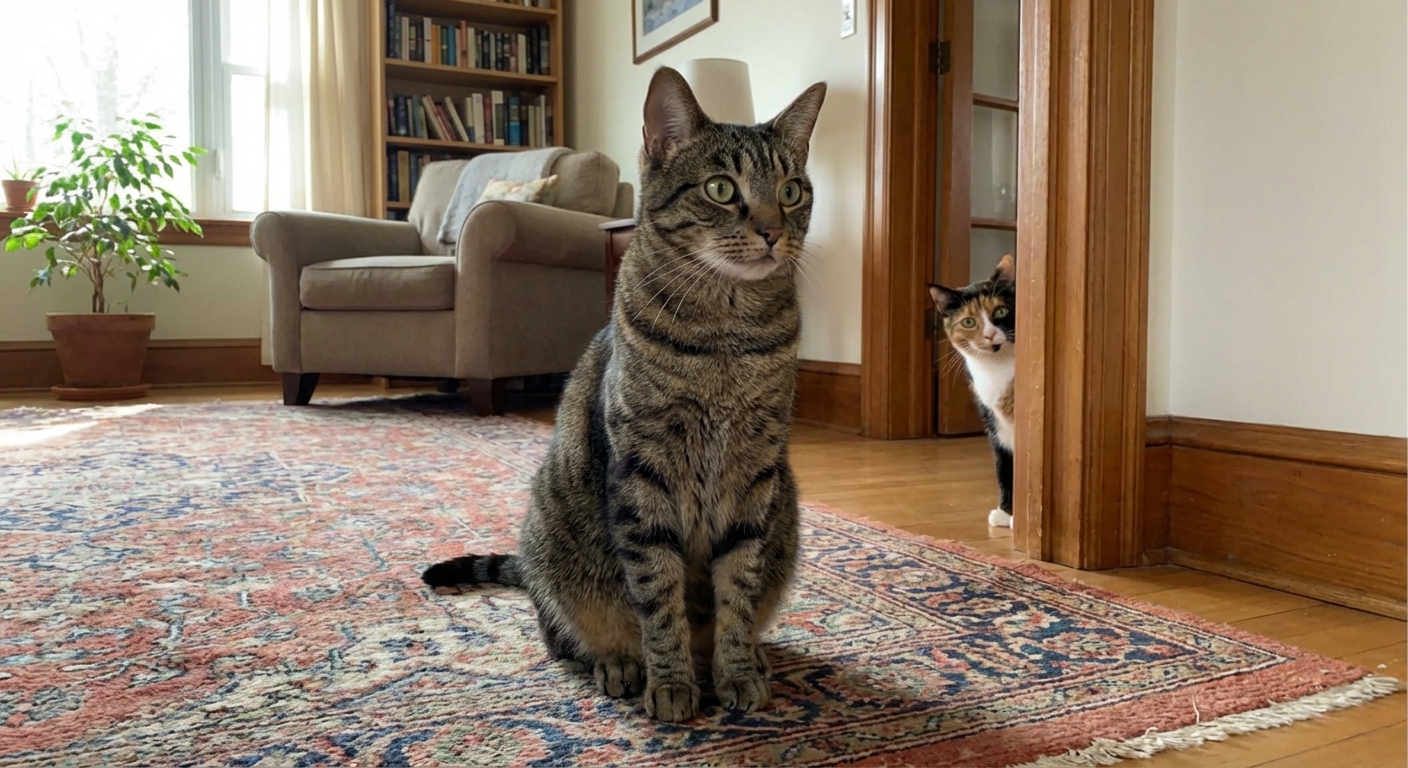
In multi-cat homes, the most common culprit is nonrecognition aggression. Cats rely heavily on scent to decide who is safe and who belongs. A vet visit changes that scent picture.
- Smell changes: disinfectants, other animals, medications, and stress-related odors can make a returning cat smell unfamiliar.
- Fear and adrenaline: the returning cat may be tense, sore, or overwhelmed and react defensively.
- Redirected aggression: if a cat is already worked up (car ride, barking dogs in the lobby), they may take it out on the closest target at home.
- Pain or discomfort: injections, dental procedures, or an underlying issue can make a cat more reactive.
- Post-procedure meds: sedation, anesthetic after-effects, or pain medications can temporarily change a cat’s behavior, coordination, or tolerance for handling.
Many cats settle within 24 to 72 hours, but some need a longer reintroduction, especially after a bigger procedure or if your cats already have some underlying tension.
First steps when you get home
1) Do not force a reunion
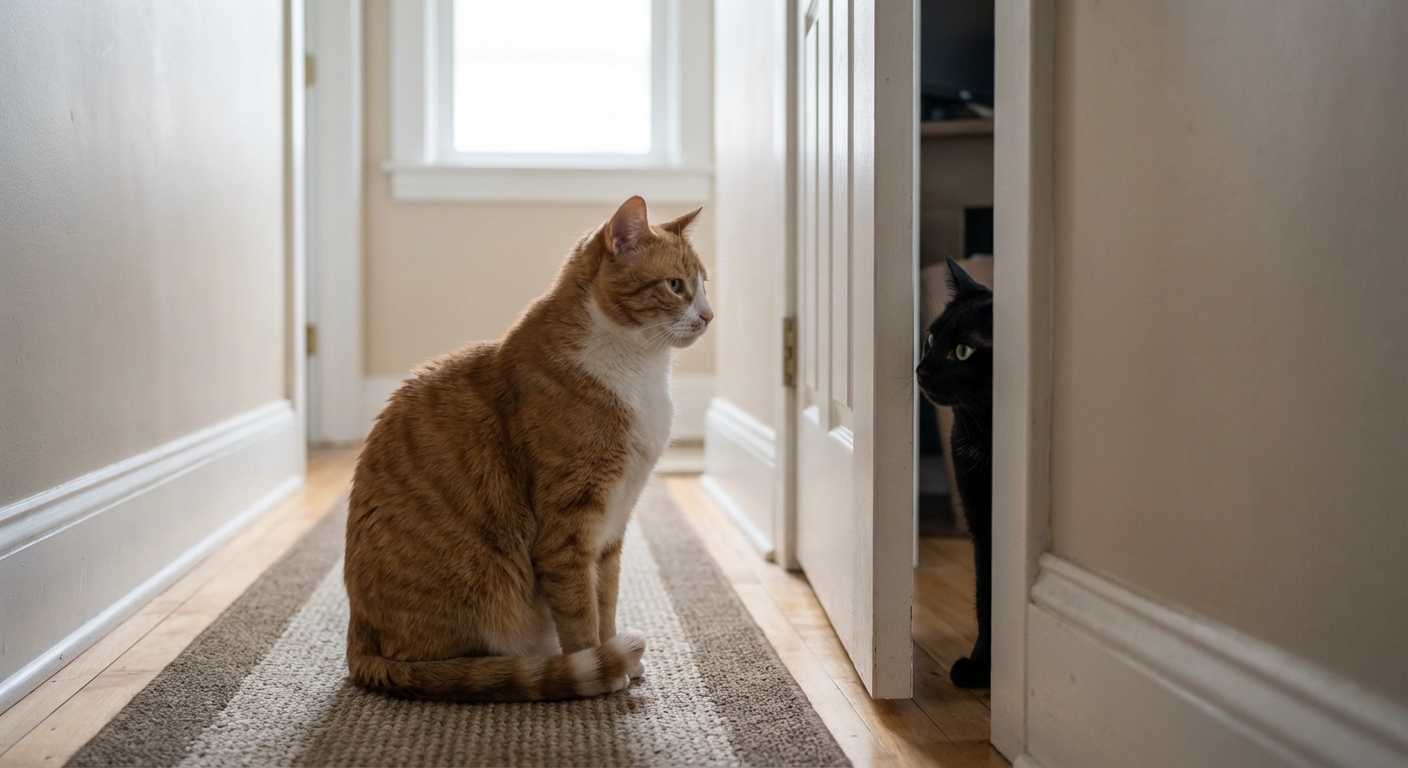
If there is hissing, growling, stalking, or hard staring, separate right away. A negative first interaction can teach them to fear each other, which can prolong the problem.
Not sure what “hard staring” looks like? Think unblinking eyes, a stiff frozen body, and a cat that will not look away even when the other cat moves.
2) Set up a calm decompression room
Put the returning cat in a quiet room for a few hours or overnight with:
- litter box
- water and a small meal
- soft bedding
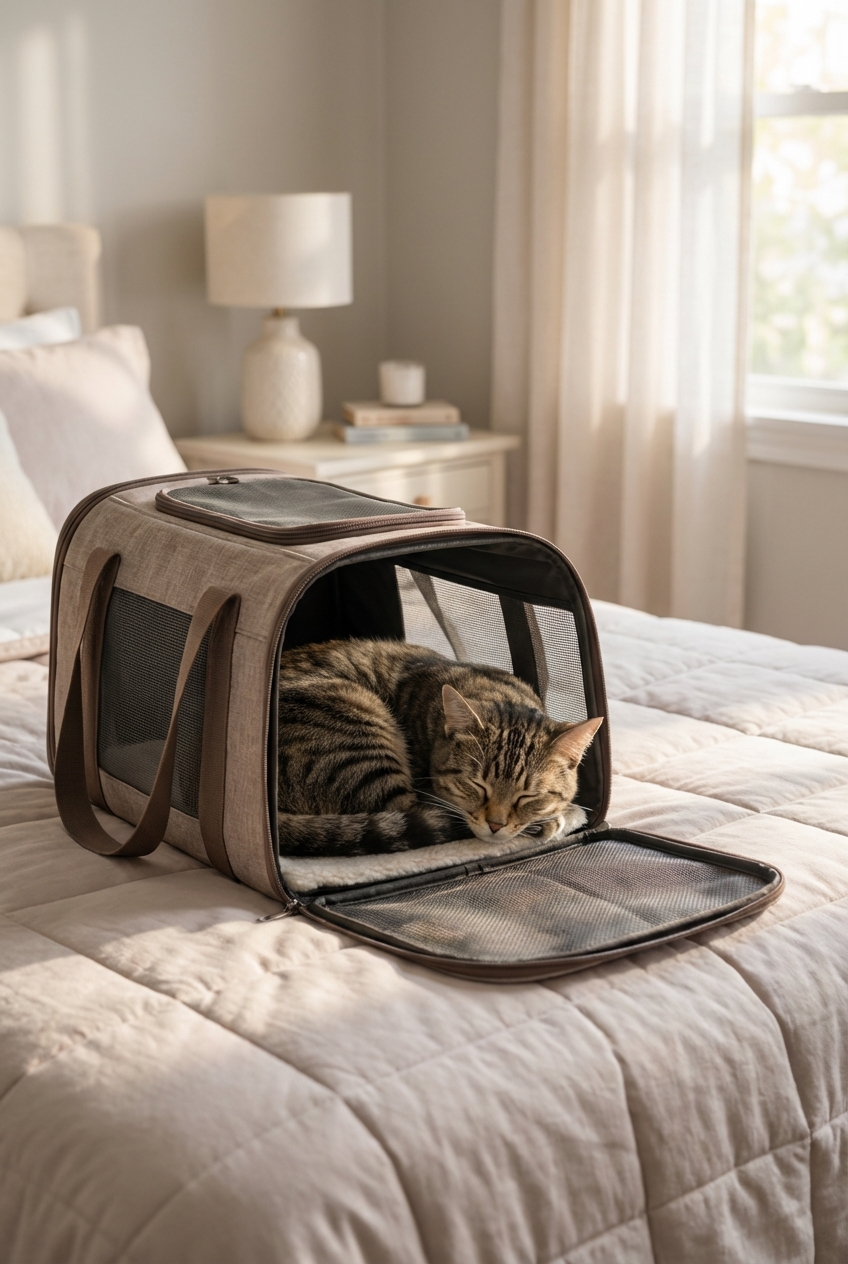
- a hiding option (covered bed or open carrier)
- something that smells like home (a blanket or your worn t-shirt)
3) Let the other cat relax too
The cat who stayed home may be startled by the strange smell and energy. Give them normal routine time, play, and treats so they do not linger outside the door getting more worked up.
Keep separation in place until both cats are relaxed (eating, grooming, resting, and not camping at the barrier).
4) Quick safety check
If your returning cat seems painful, is limping, crying when touched, panting, or hiding more than usual, call your veterinarian. Pain can look like aggression.
If you see any bite wounds, even tiny punctures, call your veterinarian promptly. Cat bites can seal over and form abscesses quickly.
The 48-hour reset routine
Think of this like hitting the reset button on their relationship. You are rebuilding comfort and positive associations.
Step 1: Scent first
- Swap bedding: exchange blankets between cats once or twice daily.
- Scent mingle: gently rub each cat’s cheeks with a soft cloth and place that cloth near the other cat’s resting spot.
- Group scent: lightly wipe a shared cloth on door frames, cat trees, and favorite furniture to spread family smell.
Tip: avoid bathing the returning cat unless your veterinarian specifically instructs it. You want the returning cat to smell like your home, not like shampoo.
Step 2: Feed on opposite sides of a closed door
Mealtimes are powerful. Start with bowls several feet from the door and move closer over a day or two as long as both cats are calm. If either cat will not eat or is growling, move bowls farther away and slow down.
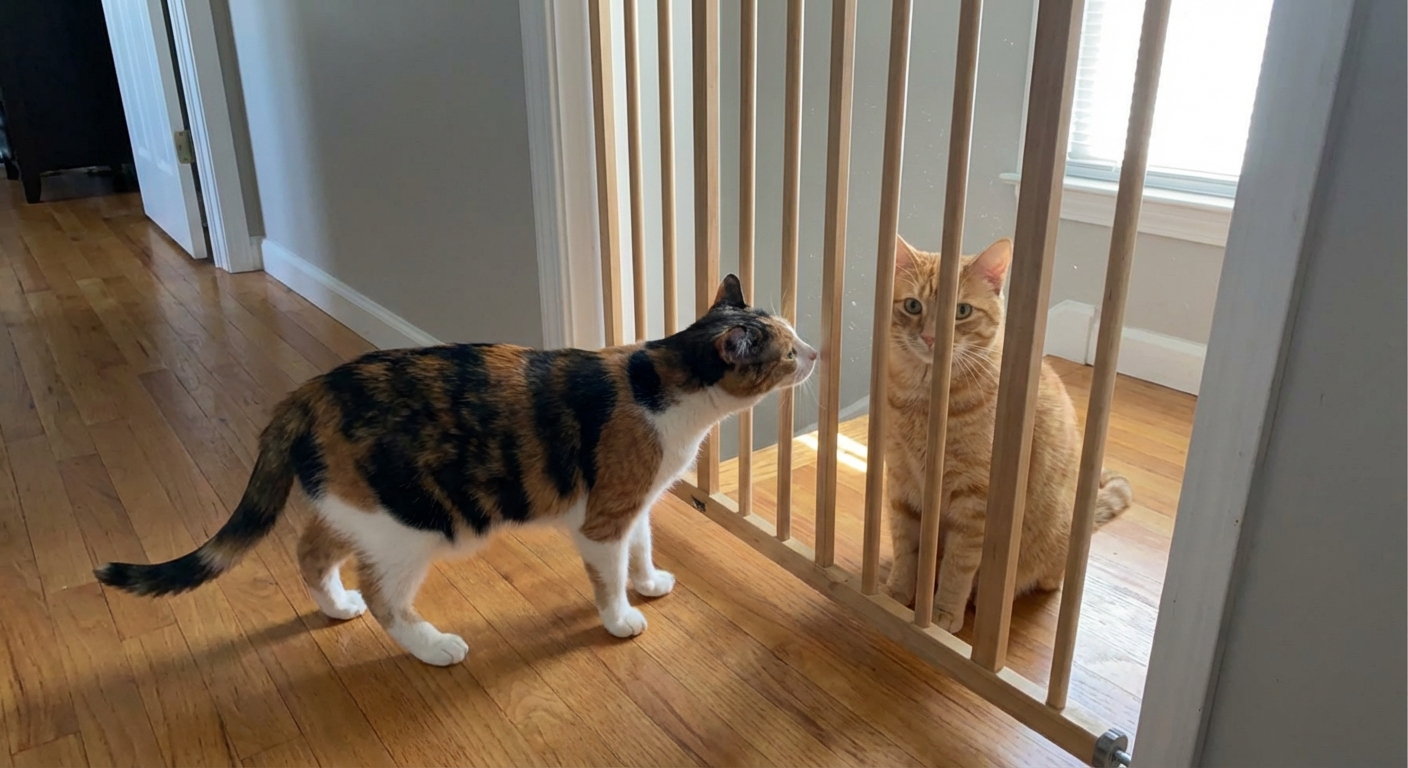
Step 3: Add safe visual contact
When both cats can eat calmly near the door, try short visual sessions through a barrier. Safer options are:
- a baby gate (or two stacked gates if your cat can jump)
- a sturdy screen
- a slightly opened door only if it is secured so it cannot swing, slam, or open wider (for example, two doorstops and an opening of just an inch or two to prevent paws from reaching through)
Keep sessions short (30 to 60 seconds at first) and pair them with treats. End on a calm note before anyone escalates.
Step 4: Short, supervised time together
Start with 2 to 5 minutes. Use calm activities:
- treat scatter on the floor
- parallel play with wand toys (one toy per cat)
- lickable treats on separate plates
Watch body language: tucked tail, ears pinned, stiff posture, growling, or stalking means the session is over. Separate, decompress, and try again later.
How to stop a fight safely
If things erupt, avoid grabbing cats with your hands. You can get badly bitten.
- Create a barrier first: slide a piece of cardboard, a pillow, or a folded blanket between cats.
- Distract without fear when possible: toss a soft blanket between them or gently herd one cat away with a large cushion.
- Use noise only if needed: a loud sound from a distance (never right over them) can interrupt, but for some cats it can increase fear. If noise makes things worse, stop and switch back to barriers.
- Separate: guide one cat into a room and close the door.
- Cool down: give them 12 to 24 hours before attempting contact again.
Make home feel secure
Once they are calm, these environment tweaks reduce friction and help prevent repeat episodes.
- Resource rules: provide multiple food and water stations, and follow the n+1 rule for litter boxes (one per cat plus one extra).
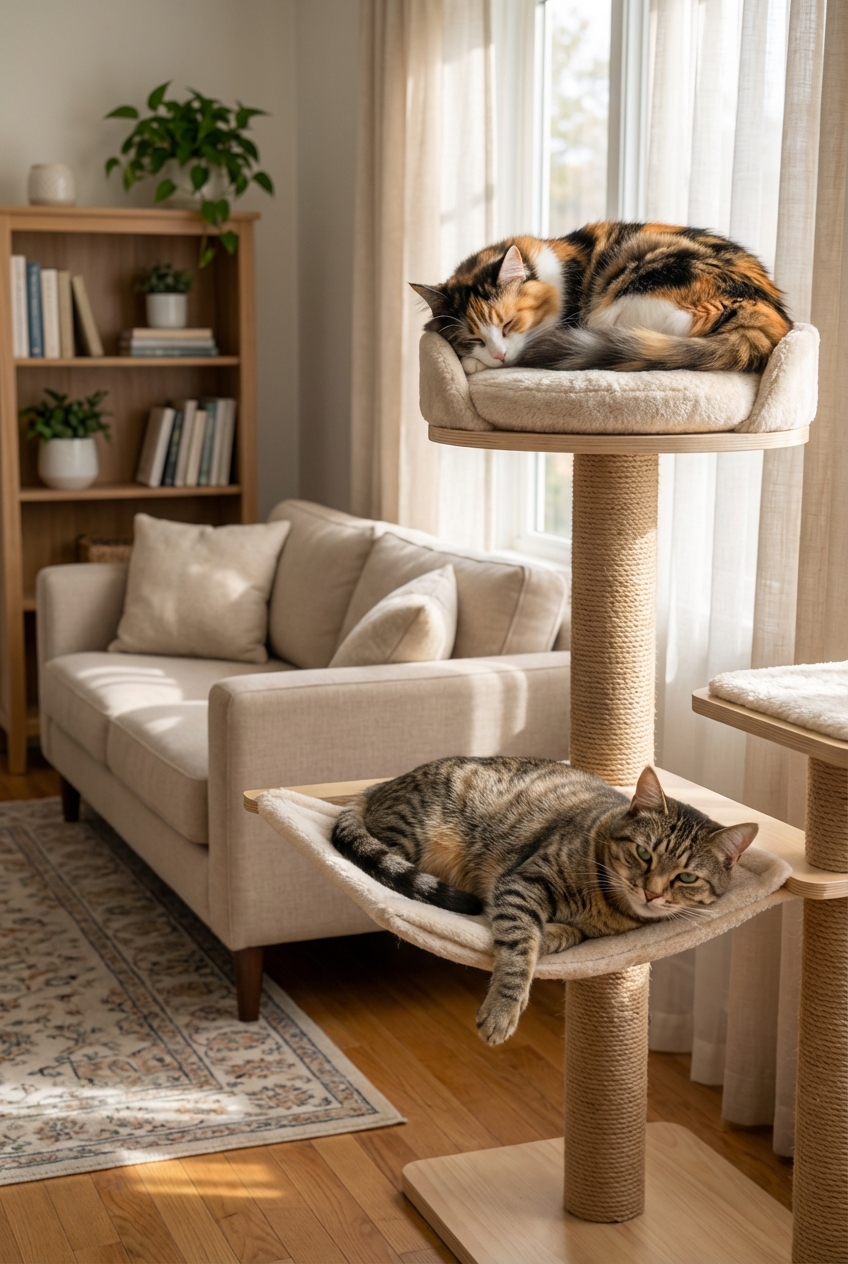
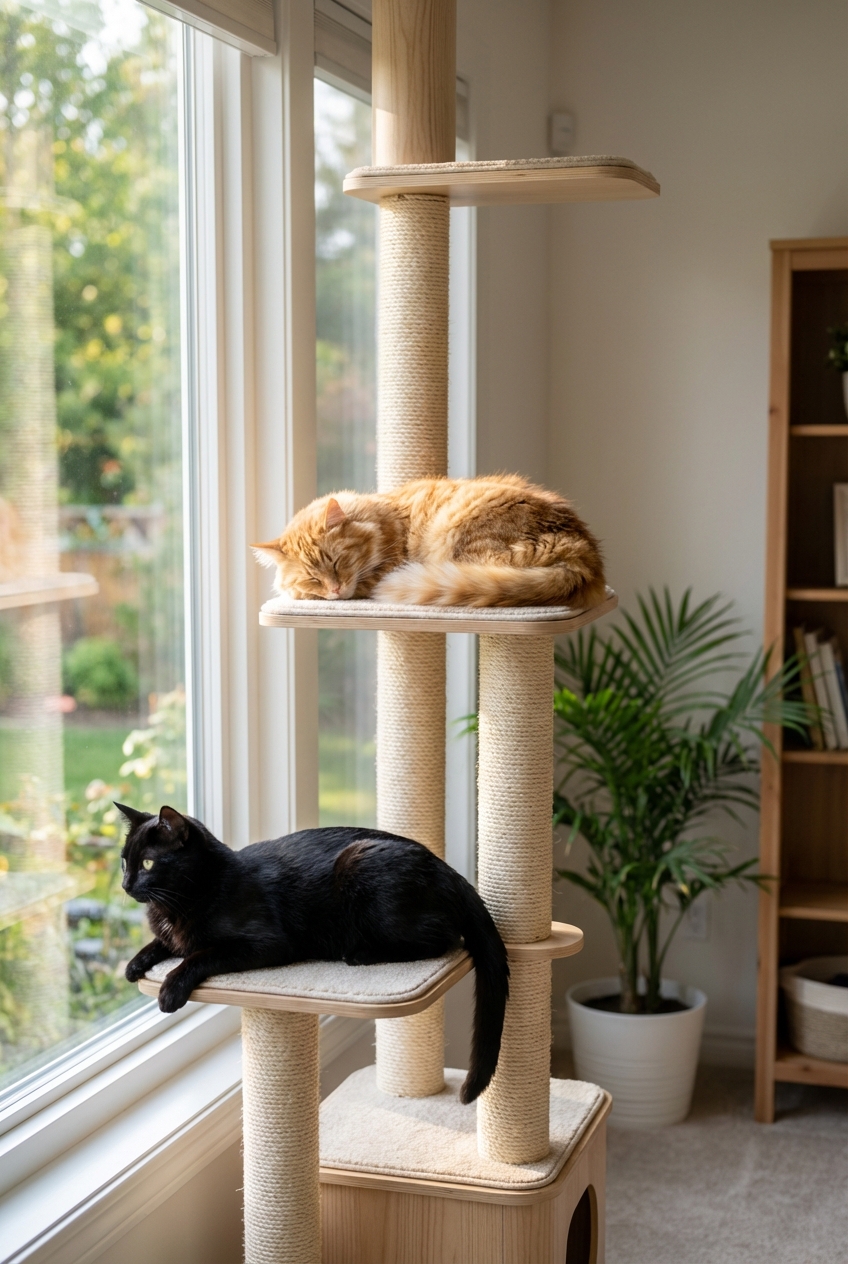
- Vertical space: cat trees, shelves, or window perches give cats escape routes without confrontation.
- Predictable routine: same feeding times, play times, and quiet rest periods.
- Daily play: one or two short play sessions can help reduce stress and build confidence, especially when paired with a predictable routine.
Also avoid punishment. Yelling, spraying water, or “making them work it out” tends to increase stress and can worsen aggression.
Do pheromones help?
For many households, yes. Synthetic feline facial pheromones can support calmer social interactions, especially during transitions like vet visits, but results vary by cat and household. Place the diffuser in the primary traffic area, not tucked behind furniture, and give it at least a week to evaluate.
Timeline: what progress looks like
- Day 1: full separation if needed, both cats eating and using the litter box normally, scent swapping starts.
- Day 2: calm door feeding closer to the barrier, brief safe visual contact if both cats stay relaxed.
- Day 3 and beyond: short supervised visits, then gradually longer time together as long as there is no stalking, cornering, or chasing.
If you hit a setback, that is normal. Go back one step for a day and rebuild.
When to call your vet or a behavior pro
Reach out promptly if:
- aggression is intense or escalating (chasing, cornering, repeated attacks)
- one cat is not eating, not using the litter box, or hiding constantly
- there are bite wounds, limping, or other signs of pain
- the problem lasts longer than 3 to 5 days without improvement
- this happens after every vet visit
Your veterinarian can rule out pain and medical causes. For ongoing issues, a qualified feline behavior consultant can help you create a personalized reintroduction plan.
Prevention for next time
- Bring both cats when possible: when they return together, there is often less stranger scent drama.
- Use familiar bedding in the carrier: a towel from home helps keep scent consistent.
- Keep carriers out year-round: turn them into safe nap spots so vet day is less stressful.
- Ask about pre-visit meds if needed: some cats do better with veterinarian-prescribed anti-anxiety medication before travel.
- Plan decompression time: even 4 to 8 hours of separation can prevent a blowup.
Quick do-not list
- Do not force face-to-face contact when either cat is tense.
- Do not punish, yell, or spray water.
- Do not try to break up a fight with your hands.
- Do not bathe the returning cat unless your vet tells you to.
- Do not rush the process after a setback.
Most importantly, be gentle with the process. Cats are not being mean. They are trying to feel safe. With a structured reset routine, you can usually get your peaceful home back.