Cat itching, scabs, dandruff, or hair loss can have many causes. Learn how to spot patterns, run simple home checks, and know when veterinary testing is needed.
Article
•
Designer Mixes
Cat Acne: Yes, Cats Get Pimples Too

Shari Shidate
Designer Mixes contributor
If you’ve ever noticed little black specks on your cat’s chin or a few red bumps that look like tiny pimples, you are not imagining it. Cats can get acne, too. The good news is that many cases are mild and manageable with simple changes at home. The not-so-good news is that some cases can turn into painful infections if the skin is irritated or bacteria move in.
As a veterinary assistant, I like to remind pet parents that “cat acne” is a description of what it looks like, not a judgment about how clean your cat is. Many cats with excellent grooming habits can still develop it, and it is not a sign you are doing something wrong.
If you are not sure it is acne, or if your cat seems uncomfortable, it is always okay to call your vet for guidance. Several skin issues can look similar at first.
What cat acne looks like
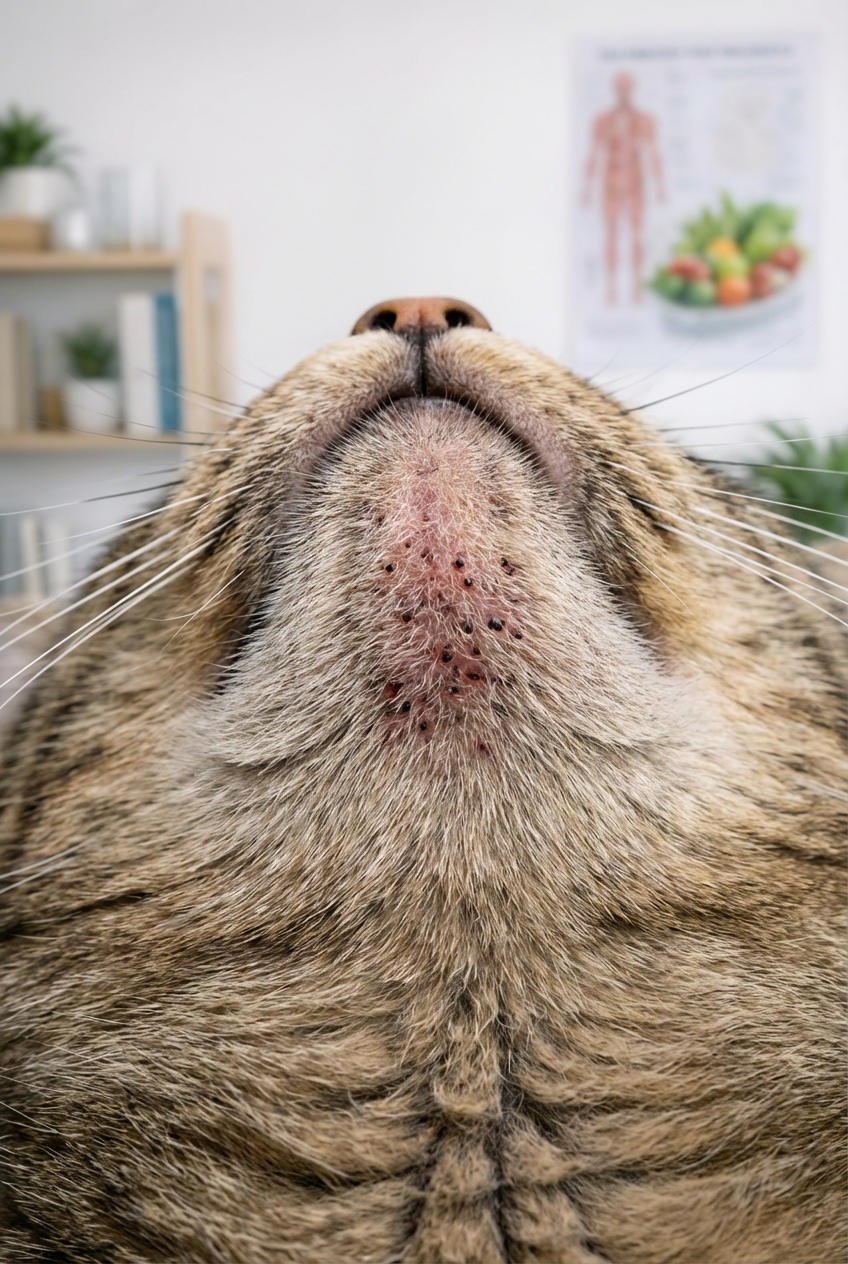
Cat acne most commonly shows up on the chin and sometimes the lower lip. It can range from a few clogged pores to swollen, crusty, sore skin.
Common signs
- Blackheads that look like dirt or flea dirt on the chin
- Red bumps or small pustules (pimple-like lesions)
- Swelling or thickened chin skin in chronic cases
- Crusting, scabs, or oozing if it becomes infected
- Itchiness or tenderness (some cats rub their face more)
If you wipe the chin gently with a damp cotton pad and the “black specks” do not easily come off, that is a clue you may be dealing with comedones (blackheads) rather than surface dirt.
Why cats get pimples
Cat acne is typically caused by plugged hair follicles and overactive sebaceous (oil) glands on the chin. Once follicles are clogged, inflammation follows, and bacteria or yeast can take advantage of irritated skin.
Common triggers
- Plastic bowls: scratches in plastic can harbor bacteria and biofilm, even when bowls look clean
- Food residue and saliva: moisture and grime build up around the chin area
- Allergies: environmental or food allergies can contribute to skin inflammation
- Stress: stress can affect immune function and skin health
- Poor grooming due to pain or obesity: some cats cannot clean the chin area well
- Underlying skin infections: bacterial or yeast overgrowth can worsen outbreaks
- Chin folds or long hair: some cats are simply more prone to buildup and irritation
Some cats are simply prone to it. In those cases, management and prevention make a big difference.
How to treat mild cat acne at home
If your cat has a few blackheads and the skin is not swollen, bleeding, or oozing, you can often start with simple, low-stress care at home.
As a general rule, think mild acne (blackheads, minimal redness) versus infected acne (swelling, pus, open sores, pain). If you are seeing signs of infection, skip home care and call your vet.
1) Switch bowls first
- Replace plastic bowls with stainless steel, ceramic, or glass.
- Wash bowls daily with hot, soapy water and rinse well.
- Consider using a wide, shallow dish to reduce chin contact.
2) Keep the chin clean and dry
Once or twice daily for 7 to 14 days, gently wipe the chin after meals using one of these options:
- Warm water on a soft cloth or cotton round
- Saline (sterile wound wash is a good option; use homemade saline only if your veterinarian specifically advises it)
Pat dry. Moisture left behind can worsen irritation.
3) Use vet-approved topical products only
Many cats do well with antiseptic wipes or cleansers your veterinary team recommends, often containing chlorhexidine in a cat-safe formulation. Concentration matters, so avoid using random household chlorhexidine solutions unless your vet tells you exactly what to use and how to dilute it.
Please do not use human acne products on cats. Ingredients like benzoyl peroxide, salicylic acid, tea tree oil, and retinoids can be irritating and may be harmful if licked or ingested.
4) Do not pick, pop, or scrub
I know it is tempting, especially when you see blackheads. But squeezing can push bacteria deeper and turn a minor issue into an abscess. Gentle care wins here.
5) Avoid common “DIY disinfectants”
Skip rubbing alcohol and hydrogen peroxide. They can damage healthy tissue, sting, and delay healing.
What to expect: mild cases often start improving within 1 to 2 weeks of bowl changes and gentle chin hygiene. If you see no improvement in that time, or things look worse at any point, contact your vet.

When cat acne needs a vet visit
Some cases need prescription help, especially when infection, pain, or deeper inflammation sets in.
Call your vet if you notice
- Swelling, heat, or significant redness
- Pus, bleeding, or a bad odor
- Your cat seems painful, won’t let you touch the chin, or stops eating well
- Hair loss, open sores, or thickened “crusty” chin
- Acne that keeps returning despite bowl changes and gentle cleaning
- Lesions spreading beyond the chin or involving the lips
Seek urgent care
- Rapidly worsening swelling, especially facial swelling
- Draining wounds, a suspected abscess, or significant bleeding
- Lethargy, fever, or your cat seems “off” in a way that worries you
- Trouble eating, drooling, or obvious mouth pain
Your veterinarian may recommend diagnostics to rule out look-alikes such as ringworm, mites, allergic dermatitis, eosinophilic granuloma complex, dental disease with draining tracts, or even a mass. Treatment can include prescription topical therapy, oral antibiotics for bacterial folliculitis, antifungals if yeast is involved, and anti-inflammatory medication when needed.
Prevention tips that work
Once your cat’s chin settles down, prevention is usually about lowering bacteria exposure and reducing irritation.
- Keep food and water bowls spotless and replace scratched bowls.
- Wipe the chin after messy meals, especially wet food.
- Reduce stress with predictable routines, enrichment, and safe hiding spots.
- Support skin health with a balanced diet. If you suspect food sensitivity, talk to your veterinarian before switching to avoid nutritional gaps.
- Address dental issues if your cat has bad breath, drooling, or trouble chewing.
Recurrence is common. If your cat is a repeat offender, ask your vet about a simple maintenance routine, like a chin wipe a few times a week. Many cats do great with that small habit.
Quick FAQ
Is cat acne contagious?
No. Cat acne itself is not contagious. However, if there is a secondary infection, good hygiene is still important. Wash your hands after handling inflamed skin.
Should I stop feeding wet food?
Not necessarily. Wet food has many benefits for hydration. Often, the fix is wiping the chin after eating and switching bowl materials.
Can I use coconut oil?
It is not my first choice. Oils can trap debris and may encourage more clogged follicles. If you want a topical product, ask your veterinary team for a cat-safe antiseptic option that does not leave the skin greasy.
The bottom line
Cat acne is common, usually minor, and often improves with a simple bowl swap and gentle chin hygiene. If you see swelling, pus, pain, rapid worsening, or repeated flare-ups, get your veterinarian involved sooner rather than later. Treating early is the best way to keep a small chin problem from becoming a big discomfort for your cat.