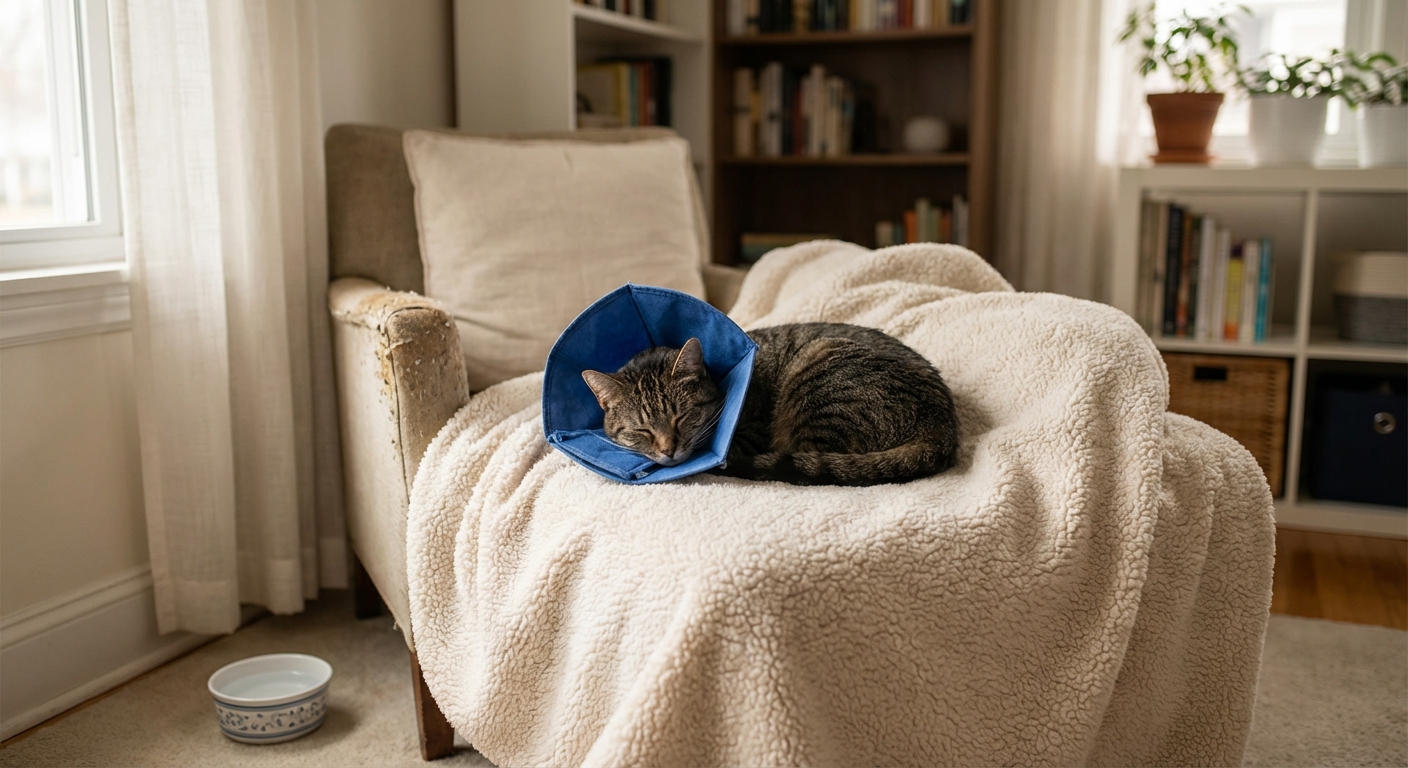
Learn what’s normal after a cat spay and how to help her heal: first-day setup, feeding and water, vet-safe pain control, incision checks, cone/suit use, a...
Article
•
Designer Mixes
Caring for Your Cat After Spaying

Shari Shidate
Designer Mixes contributor
Spaying is one of the most common surgeries cats have, and most recover smoothly with a little planning and a lot of quiet. As a veterinary assistant, I like to tell families this: the surgery itself is just one day. The healing happens over the next 10 to 14 days, and your job is to protect that incision and keep your cat comfortable.
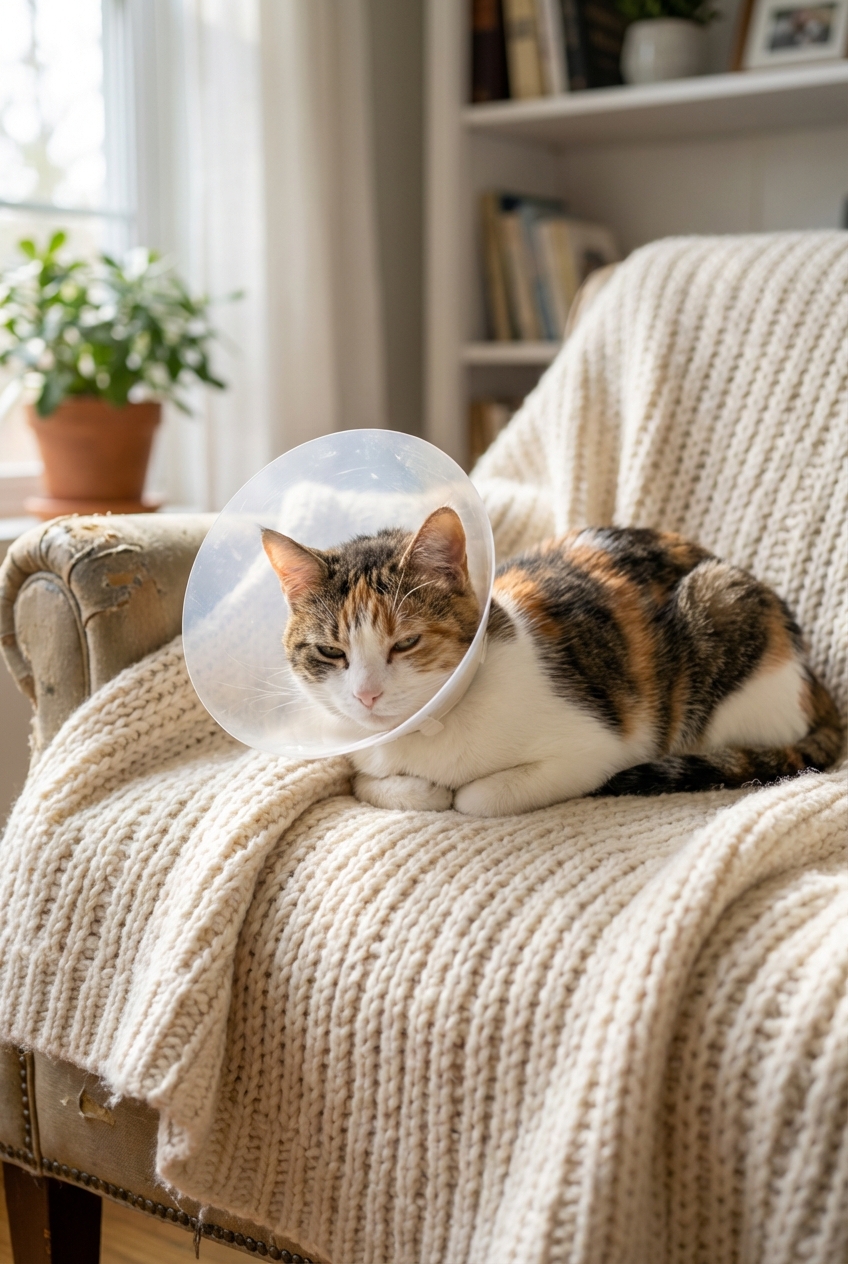
One quick note before we dive in: always follow your clinic’s discharge instructions first. Protocols vary based on your cat, the technique used, and what your veterinarian saw during surgery.
Below are practical, evidence-based “after spay” facts every cat owner should know, plus easy steps you can take today to help healing go as smoothly as possible.
What spaying is and what your cat feels afterward
Spay surgery removes the ovaries, and sometimes the uterus too (you may hear this called an ovariectomy or an ovariohysterectomy). Your cat is fully asleep under anesthesia, then sent home with a small incision on the belly (or, less commonly, a flank incision on the side).
Normal after-effects you might see
- Sleepiness for the first 12 to 24 hours as anesthesia wears off.
- Mild wobbliness or being “off balance,” especially the first evening.
- Less appetite for one meal, sometimes up to 24 hours.
- Quiet behavior and wanting to hide.
- Mild incision swelling that stays small and does not worsen.
If your cat seems uncomfortable, do not reach for human medications. Many are toxic to cats. Use only the pain medication your veterinarian prescribed, exactly as directed.
The first 24 hours at home
The first night is mostly about safety: preventing falls, preventing licking, and keeping your cat warm and calm.
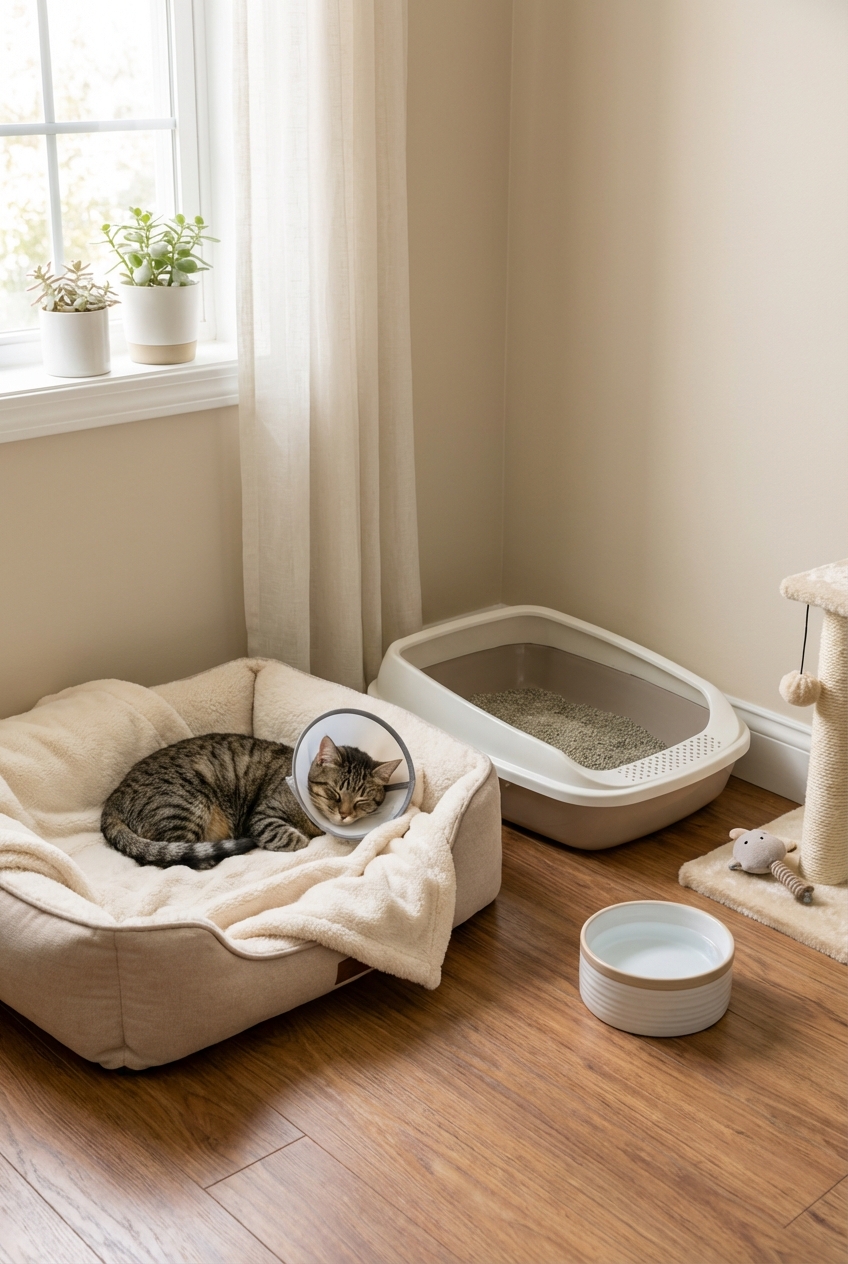
Set up a recovery room
- Choose one small, quiet space like a bedroom or large bathroom.
- Keep everything low so your cat is not tempted to jump. No cat trees, no high windowsills.
- Provide soft bedding that is easy to wash.
- Offer water right away and a small meal later, if your vet says it is okay.
Feeding tip
Many clinics recommend a small meal the evening of surgery. If your cat eats too quickly and vomits, pause food for a couple of hours and try a smaller portion. If vomiting repeats, call your veterinarian.
Incision care
Check the incision once or twice a day in good light. You are looking for changes, not perfection.
What “normal” can look like
A spay incision is usually a thin line that is closed and slightly pink. Depending on the closure method, you might see:
- No visible stitches (buried sutures under the skin)
- Skin glue (a shiny or slightly crusty line)
- External sutures or staples (less common in some clinics, but still used)
- Edges closed
- Dry or only slightly moist the first day
- Minimal swelling
- Light pink skin
- Mild bruising near the incision (small, localized) can be normal
- A small, firm bump under the incision can happen as tissues heal
Red flags that need a vet call
- Bleeding that does not stop quickly
- Discharge (yellow, green, cloudy, or pus-like fluid)
- Bad odor
- Gapping of the incision edges
- Worsening swelling or a growing lump
- Hot, angry redness spreading outward
- A lump that is getting larger, squishy, painful, or seems fluid-filled (this can be a seroma and should be checked)
Important: Do not apply peroxide, alcohol, ointments, or powders unless your veterinarian specifically instructs you to. Many products delay healing or encourage licking.
Keep it clean and dry
Do your best to keep the incision dry during recovery. If the incision gets wet or dirty, do not scrub it. Gently prevent further licking, take a clear photo, and call your clinic for the next step.
Cone basics
Licking and chewing are one of the most common reasons spay incisions get infected or opened. Even a few minutes of focused licking can cause trouble.
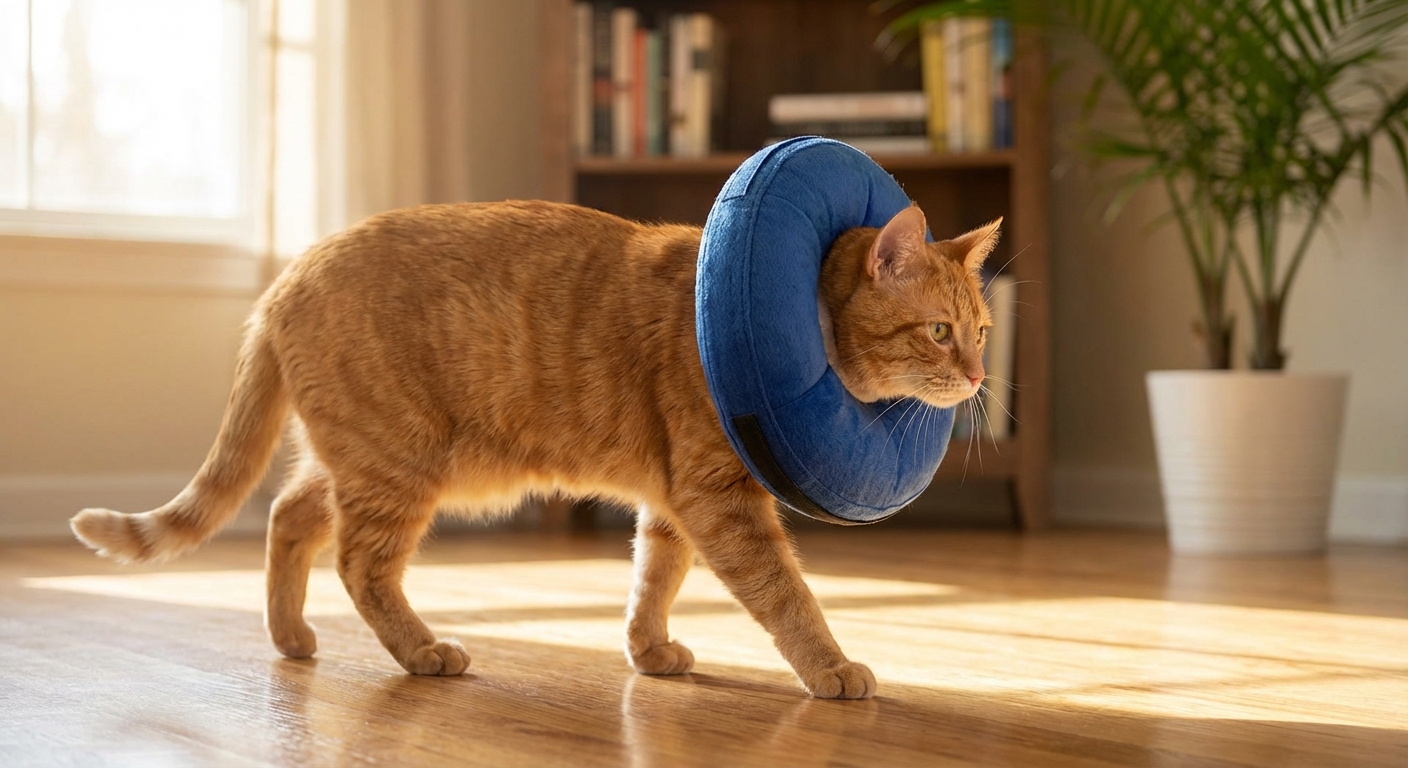
Options that can work
- Traditional e-collar (cone): Often the most reliable for preventing licking.
- Soft cone: Can be more comfortable for some cats.
- Recovery suit: A fabric bodysuit that covers the incision. Great for cats who panic in a cone, but it must fit correctly and stay clean and dry.
In most cases, a cone (or a truly effective alternative) is essential until your veterinarian says it is safe to stop. If your cat can still reach the incision with a suit or soft cone, switch to a standard cone and call your clinic for help with sizing.
Activity restrictions
Cats feel better before their body is actually healed. This is where well-meaning owners get surprised. Your cat might act normal on day three, but internal healing is still happening.
For 10 to 14 days (or as your vet instructs)
- No running, jumping, or wrestling
- No outdoor time
- Separate from other pets if play gets rowdy
- Use low-sided litter boxes if possible
If confinement feels impossible, ask your veterinarian whether a calming plan is appropriate. Some cats benefit from environmental calming and, in certain cases, short-term prescription medication.
Litter, bathing, and grooming
Litter
Most cats can use their normal litter after spaying. Litter is not usually a major problem for a properly closed abdominal incision, but very dusty litter can be irritating and messy. If your cat tends to kick litter aggressively or you notice dust sticking to fur, ask your vet if a lower-dust option is worth using for the first week.
No baths
Avoid bathing until your veterinarian confirms the incision is fully healed. Moisture softens the skin and can introduce bacteria.
Light grooming only
You can brush your cat gently if it relaxes her, but avoid stretching her belly or putting pressure near the incision.
Pain control and meds
Pain control is a major part of humane care and it supports healing because comfortable cats eat, sleep, and move normally.
- Only use medications prescribed for your cat. Common human pain relievers like acetaminophen and ibuprofen can be life-threatening to cats.
- Finish antibiotics only if prescribed. Not every spay patient needs antibiotics, and leftovers should never be used later without veterinary guidance.
- Watch for side effects such as vomiting, diarrhea, severe sleepiness, or loss of appetite that persists beyond a day.
If you missed a dose or your cat spit out medication, call your clinic for the safest next step.
When to call the vet
Trust your instincts. If something feels “off,” it is always okay to call.
- Your cat is not eating for more than 24 hours (or sooner if your cat is a kitten, very small, or has other medical issues)
- Repeated vomiting or diarrhea
- Difficulty breathing, pale gums, or collapse
- Continuous crying or signs of severe pain
- Swollen belly or sudden lethargy
- Incision problems like discharge, bleeding, gaping, or rapidly increasing swelling
If your clinic is closed, use the emergency hospital number they provided. After-hours issues are common enough that ER teams handle them every day.
Comfort ideas
Recovery does not have to feel miserable. A calm environment plus a few enrichment tweaks can keep your cat content while she is restricted.
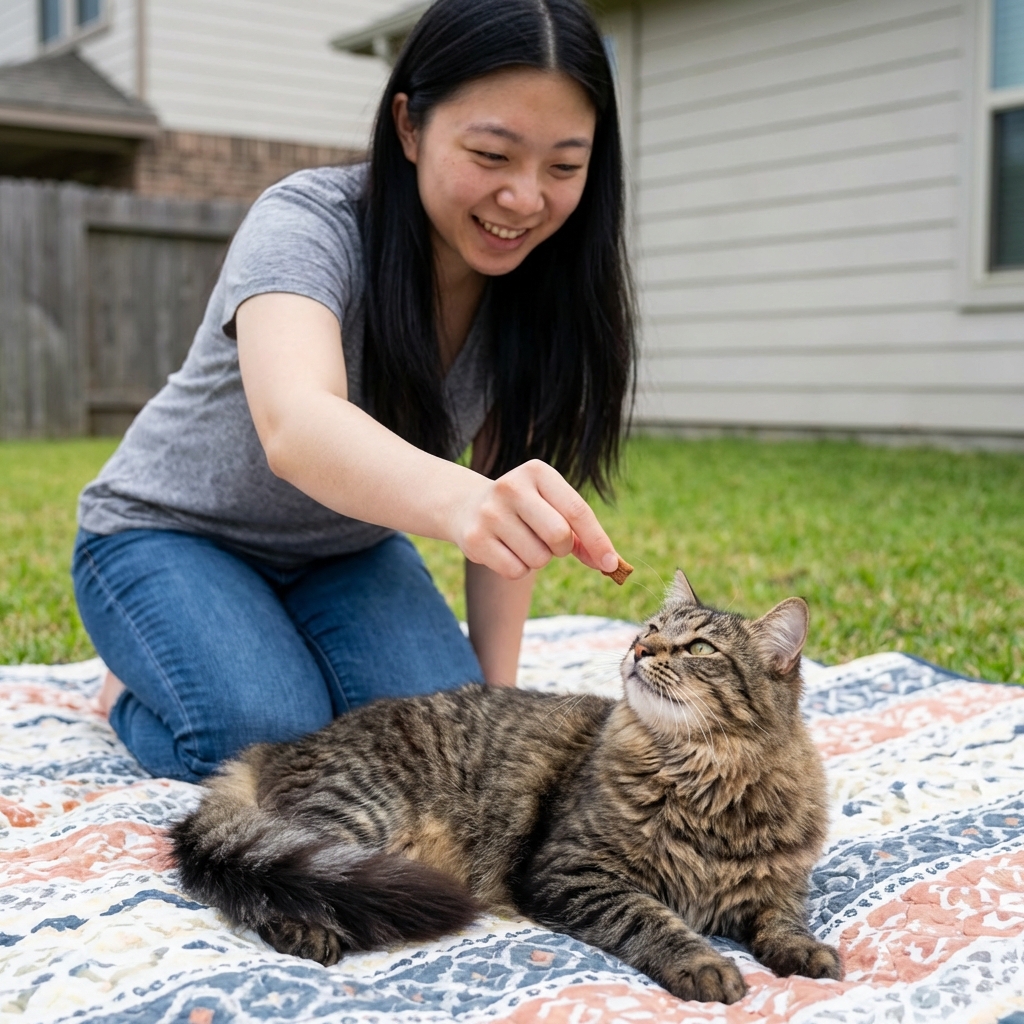
- Food puzzles that do not require jumping, like a snuffle mat or a slow feeder.
- Short play sessions with a wand toy kept low and gentle.
- Cozy hiding spots using a box with a soft towel.
- Quiet companionship: sit nearby, speak softly, and let your cat choose interaction.
And yes, take pictures. The cone phase is temporary, but it is also weirdly memorable.
Recovery timeline
- Day 0: Sleepy, smaller meal, keep warm and quiet, cone on.
- Days 1 to 3: Appetite and energy improve, still strict rest, check incision daily.
- Days 4 to 7: Many cats feel normal, but internal healing continues. Keep restrictions.
- Days 10 to 14: Typical recheck or suture removal if needed. Return to normal activity only when your vet says it is safe.
Follow-up varies. Some cats have external sutures or staples that must be removed, while others have buried sutures and glue and may only need a quick incision check. If your cat had a heat cycle recently, was pregnant, or had complications, your veterinarian may recommend a longer rest period.