A practical week-by-week guide to caring for newborn puppies, from setting up the whelping area and maintaining safe temps to daily weights, weaning, dewormi...
Article
•
Designer Mixes
Caring for Newborn Puppies

Shari Shidate
Designer Mixes contributor
Newborn puppies are tiny, fragile, and completely dependent on their mom or their human caregivers. In those first two weeks, the goal is simple: keep them warm, fed, clean, and closely monitored. As a veterinary assistant here in Frisco, Texas, I can tell you that most early puppy problems start with one of three things: chilling, not getting enough milk, or missing early warning signs.
This guide walks you through what “normal” looks like, what you can do at home, and when it is time to call your veterinarian right away.

The first 48 hours
The first two days are all about colostrum, warmth, and calm. Colostrum is the first milk that provides antibodies and helps protect puppies from infection while their immune system is immature. Puppies should begin nursing soon after birth and spend most of their time sleeping and nursing.
What you should see
- Strong rooting and nursing within the first few hours
- Quiet sleep between feedings
- Warm bodies when you touch them (not cool or cold)
- Steady weight gain starting very early, especially after the first day
What is not normal
- Crying continuously (often a sign of hunger, cold, pain, or illness)
- Weakness, limpness, or trouble latching
- Cold to the touch
- Milk bubbling from the nose or coughing while nursing
If anything feels off, trust that instinct and call your veterinarian. Newborns can decline quickly.
Set up the whelping area
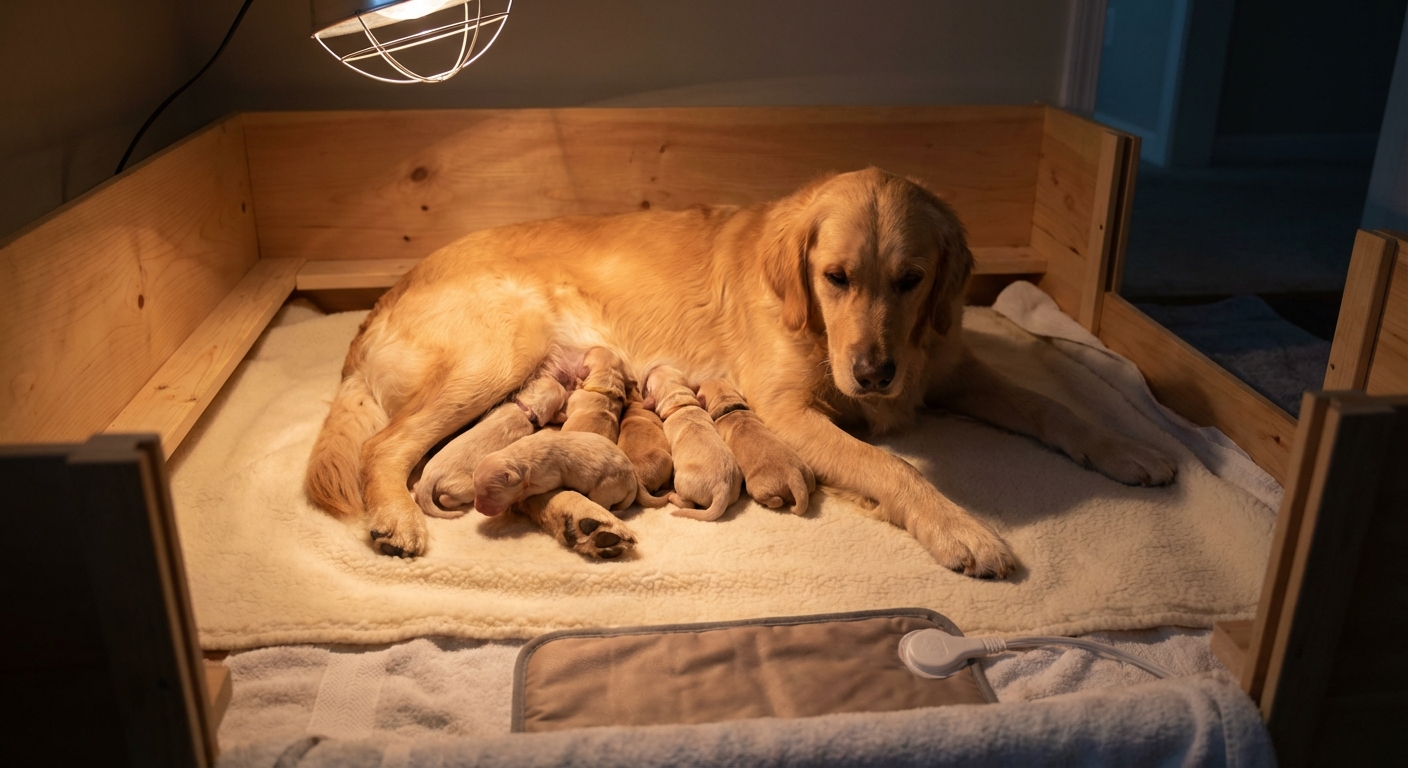
Newborn puppies do best in a quiet, draft-free area with easy-to-clean bedding. The space should feel like a cozy nest, not a busy hallway. Stress in the environment can reduce mom’s comfort and milk letdown.
Whelping box basics
- Clean, washable bedding (layer towels or blankets so you can swap quickly)
- Good traction (slippery surfaces can contribute to leg issues)
- Pig rails if you have them, to reduce risk of mom accidentally laying on a pup
- Low lighting and low noise
- A separate warm zone so puppies can move away if they get too hot
Temperature and humidity
Puppies cannot regulate their body temperature well in the first weeks. Chilling is one of the fastest ways a newborn can get into trouble, because a cold puppy cannot digest milk properly and often becomes too weak to nurse.
Recommended temperatures
These ranges are commonly used in veterinary and breeder guidance, but the “right” number can vary based on litter size, breed, and whether mom is in the box providing heat. Use puppy behavior as feedback, and ask your veterinarian if you are unsure.
- Week 1: about 85 to 90°F (29 to 32°C) in the puppy area
- Week 2: about 80 to 85°F (27 to 29°C)
- Week 3: about 75 to 80°F (24 to 27°C)
Humidity targets are less standardized than temperature. If you can, aim for a comfortable mid-range, often around 50 to 60%. Many normal homes are fine if puppies are warm, nursing well, and hydrated.
Safe warming
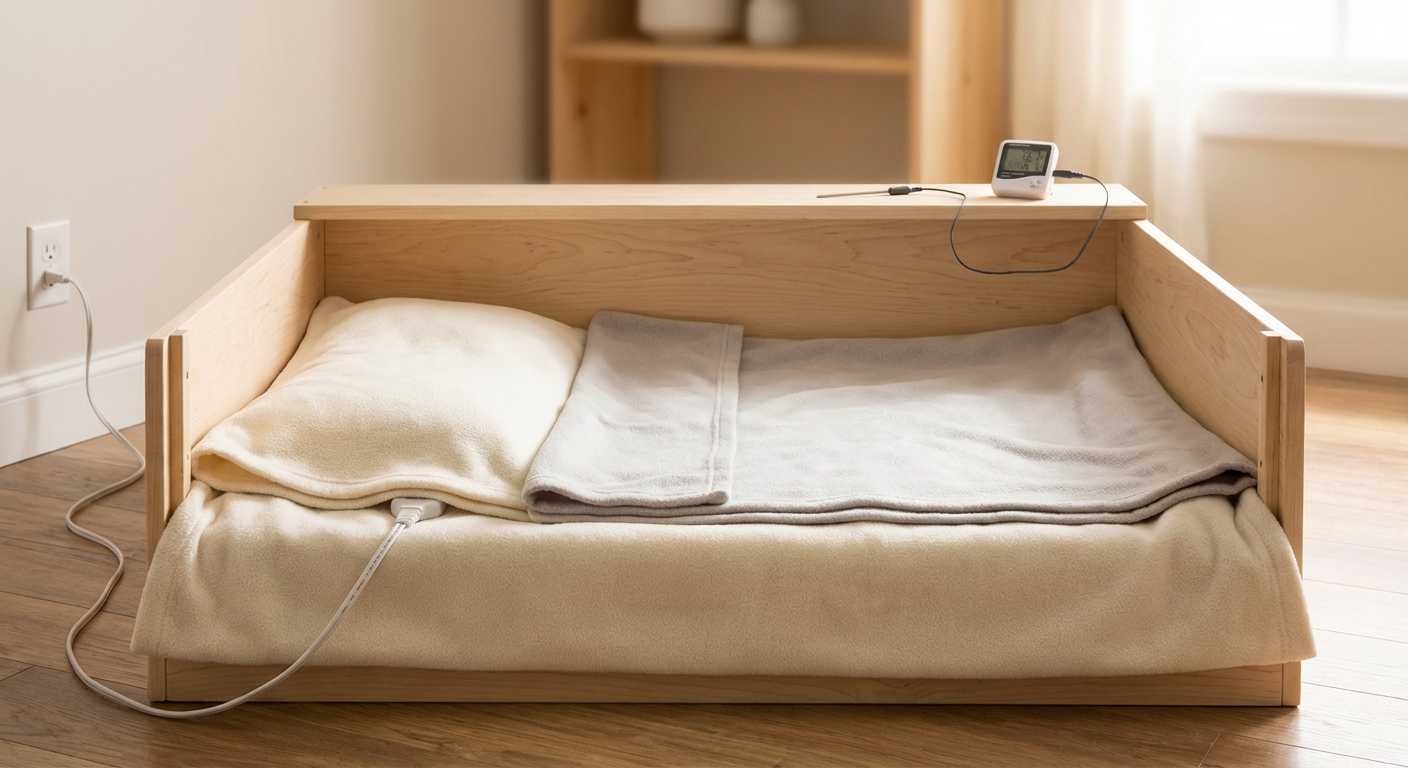
- Use a heating pad on low under half the box, never the full box
- Always add thick layers between puppies and any heat source to prevent burns
- Consider pet-specific heating discs or other well-monitored heat sources designed for animals
- If you use a microwavable heat pack, wrap it well and temperature-check it before it goes near puppies
- Use a thermometer at puppy level, not across the room
- If a puppy is cold, warm slowly before feeding
If a puppy feels cool, do not rush to feed first. Warm them gradually, then feed. Cold puppies do not digest well, and feeding too soon can worsen problems.
If a puppy is severely cold, limp, or not responsive, contact your veterinarian or an emergency clinic right away while you begin gentle warming. These cases may need clinic-level support.
Nursing and milk intake
For most healthy litters, mom does the heavy lifting. Your job is to make sure each puppy gets consistent access to a nipple and is not being pushed away by stronger littermates.
Quick nursing check
- Puppies latch and suck rhythmically
- They settle after nursing, rather than crying
- Bellies look gently rounded, not tight like a drum
- They gain weight daily
Weigh daily for 2 weeks
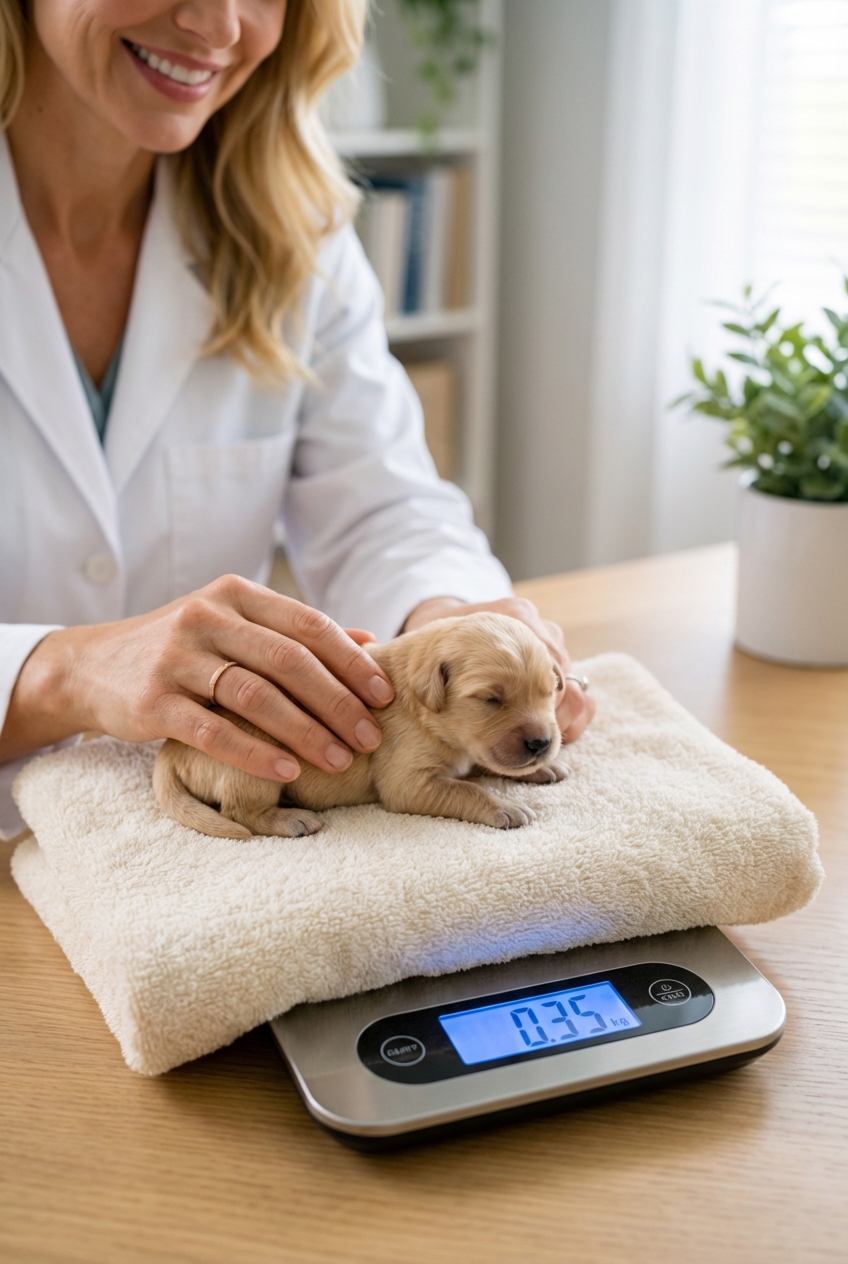
Daily weights are one of the most evidence-based tools you have at home. Use a small digital kitchen scale and record weights at the same time each day.
- Most puppies should gain weight every day after the first day
- A common benchmark many clinics use is roughly 5 to 10% of birth weight per day, and many puppies double birth weight by about 7 to 10 days (there is variation by breed and size)
- A puppy that does not gain, or loses weight after day one, needs attention
- A puppy that falls behind the litter should be evaluated quickly
If you are supplementing, your veterinarian can recommend an appropriate puppy milk replacer and feeding plan. Avoid homemade milk recipes unless directed by a veterinary professional, because nutrient balance matters.
How often they eat
Newborn puppies nurse frequently. In general, during the first week, many nurse about every 2 hours (sometimes more often), then sleep. If you are bottle-feeding or tube-feeding under veterinary guidance, follow the schedule your clinic provides, since overfeeding and aspiration are serious risks.
If you are supplementing
- Keep the puppy sternal (belly down), never on their back
- Feed slowly and stop if you see coughing, gagging, or milk from the nose
- Burp gently after feeding
- Clean and sterilize feeding equipment carefully
If you suspect aspiration, which can lead to pneumonia, contact your veterinarian immediately.
Potty help
Until around 2 to 3 weeks of age, puppies cannot urinate and defecate on their own reliably. Many begin doing more on their own closer to about 3 weeks. Mom stimulates them by licking. If mom is not doing this, you must step in.
How to stimulate
- Use a warm, damp cotton ball or soft cloth
- Gently rub the genital and anal area after feeding
- Continue until the puppy urinates and/or defecates
- Keep bedding clean and dry to prevent skin irritation
Stools vary, but persistent watery diarrhea, blood, or a strong foul smell can signal infection, parasites, or feeding problems and should be addressed quickly.
Navel care
Most umbilical stumps dry up and fall off on their own within the first few days. Keep the area clean and dry, and avoid picking at it.
Call your vet if you see
- Swelling, redness, or warmth around the navel
- Discharge, bleeding that does not stop, or a foul odor
- A puppy that seems painful when the area is touched
Navel infections can become serious quickly in newborns, so it is always worth calling early.
Home health checks
You do not need fancy equipment to spot early problems. You need consistency and a calm routine.
Daily checklist
- Warmth: bodies feel warm, not cool
- Weight: recorded daily, trending up
- Nursing: latching and settling after feeding
- Activity: normal wiggle and rooting when awake
- Skin: no sores, redness, or swelling
- Breathing: quiet, no clicking, wheezing, or open-mouth breathing
Normal newborn quirks
- Irregular breathing patterns during sleep can be normal, as long as the puppy is warm, pink, and settles easily
- Small twitches or jerks during sleep are often normal
Warning signs
- Constant crying or restlessness
- Weak suckle or repeated failure to latch
- Separation from the litter, not seeking warmth
- Bloated abdomen or repeated vomiting
- Diarrhea, especially with lethargy
- Any sign of dehydration (sticky gums, poor skin elasticity)
Fading puppy basics
“Fading puppy” is not a diagnosis, it is a pattern: a puppy that becomes weak, quiet or constantly crying, chilled, and stops nursing. This is an emergency in newborns. Call your veterinarian or an emergency clinic immediately.
Clinic-style tip: when you call, have the puppy’s current weight, weight trend, feeding schedule, and (if you can safely get it) a rectal temperature ready.
Mom’s care
When mom is healthy, puppies usually thrive. Nursing moms need hydration, calories, rest, and a low-stress environment. If she is underfed or stressed, milk supply can drop.
Support mom
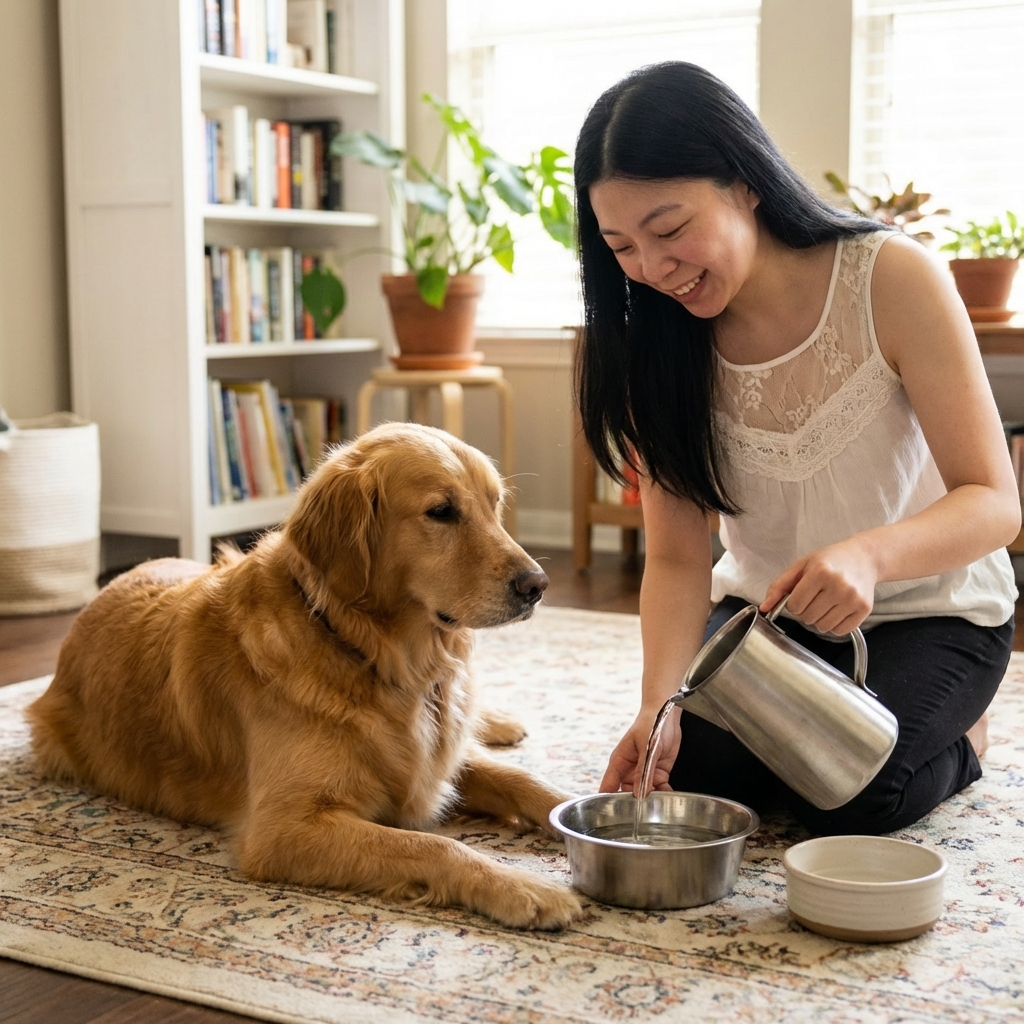
- Provide fresh water at all times
- Feed a high-quality diet formulated for growth and reproduction, as recommended by your veterinarian
- Give frequent potty breaks and quiet time
- Keep other pets away if mom is anxious
Red flags in mom
- Refusing to eat or drink
- Fever, lethargy, or shivering
- Foul-smelling vaginal discharge
- Hard, painful, or hot mammary glands (possible mastitis)
- Neglecting puppies or acting unusually aggressive or confused
These situations are urgent. Postpartum complications can become serious fast and directly impact the litter.
Handling and hygiene
In the first week, keep handling gentle and brief. A quick daily weigh-in and a short check is plenty unless you are supplementing. Always wash your hands before touching puppies, especially if you have been around other animals.
Cleaning routine
- Replace soiled bedding promptly
- Use pet-safe cleaners and rinse well
- Keep the area dry to prevent chilling and skin issues
Avoid baths for tiny newborns unless your veterinarian advises it. Wiping with a warm, damp cloth is usually safer.
Development timeline
Knowing what is coming helps you worry less and prepare more.
Week 1
- Sleep and nursing dominate
- Eyes and ears are closed
- They need consistent warmth and frequent feeding
Week 2
- Eyes begin to open, usually around 10 to 14 days
- Movement becomes stronger and more coordinated
- Weight gain should be steady
Week 3
- Hearing improves
- They start standing and wobbling around
- They begin eliminating more independently
Week 4 and beyond
- Weaning begins gradually with guidance
- Social learning accelerates
- Veterinary planning for deworming and vaccines becomes important
Many veterinarians start deworming around 2 to 3 weeks and begin vaccines around 6 to 8 weeks. Follow your veterinarian’s protocol for your litter.
When to call the vet
Newborns have very little reserve. It is always better to call early than wait.
- A puppy is cold, limp, or non-responsive
- Labored breathing, coughing, or milk from the nose
- Persistent vomiting or severe diarrhea
- Not nursing for multiple feedings
- No weight gain or weight loss after the first day
- Signs of pain, swelling, or a fading, weak puppy
- Swollen, red, or draining navel area
- Mom shows signs of illness, mastitis, or distress
If your clinic is closed, contact an emergency veterinary hospital. Bring your weight log and note the feeding schedule you have been using.
Simple supply list
Having supplies ready lowers stress for everyone.
- Digital kitchen scale (grams)
- Notebook or phone notes for weight tracking
- Thermometer for the room and puppy area
- Safe heat source (pet-specific warming device preferred) and thick towels for insulation
- Clean towels and blankets
- Disposable gloves and hand soap
- Puppy milk replacer and bottles only if your veterinarian recommends supplementing
You do not need a complicated setup. You need a safe, warm nest and a consistent routine.