
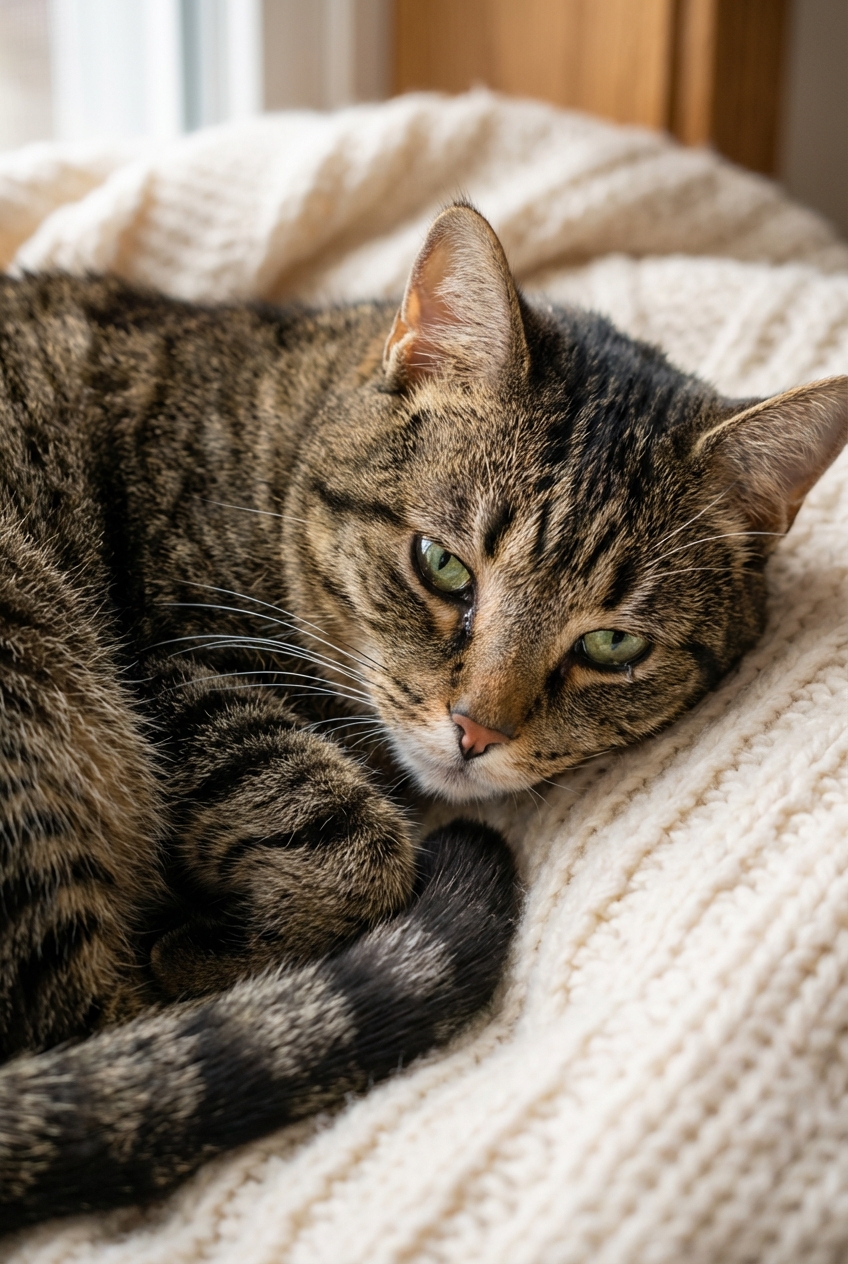
From sneezing and congestion to low appetite, learn practical home care that helps cats with URIs feel better—plus red flags, antibiotics guidance, and pre...
Article
•
Designer Mixes
Caring for Cat Congestion

Shari Shidate
Designer Mixes contributor
If your cat sounds stuffy, is sneezing, or has watery eyes, you are not imagining it. Congestion is common, especially during upper respiratory infections, but it can also be a clue that something more serious is going on. The goal is to keep your cat comfortable while you watch closely for red flags that need a veterinarian.
What cat congestion looks like
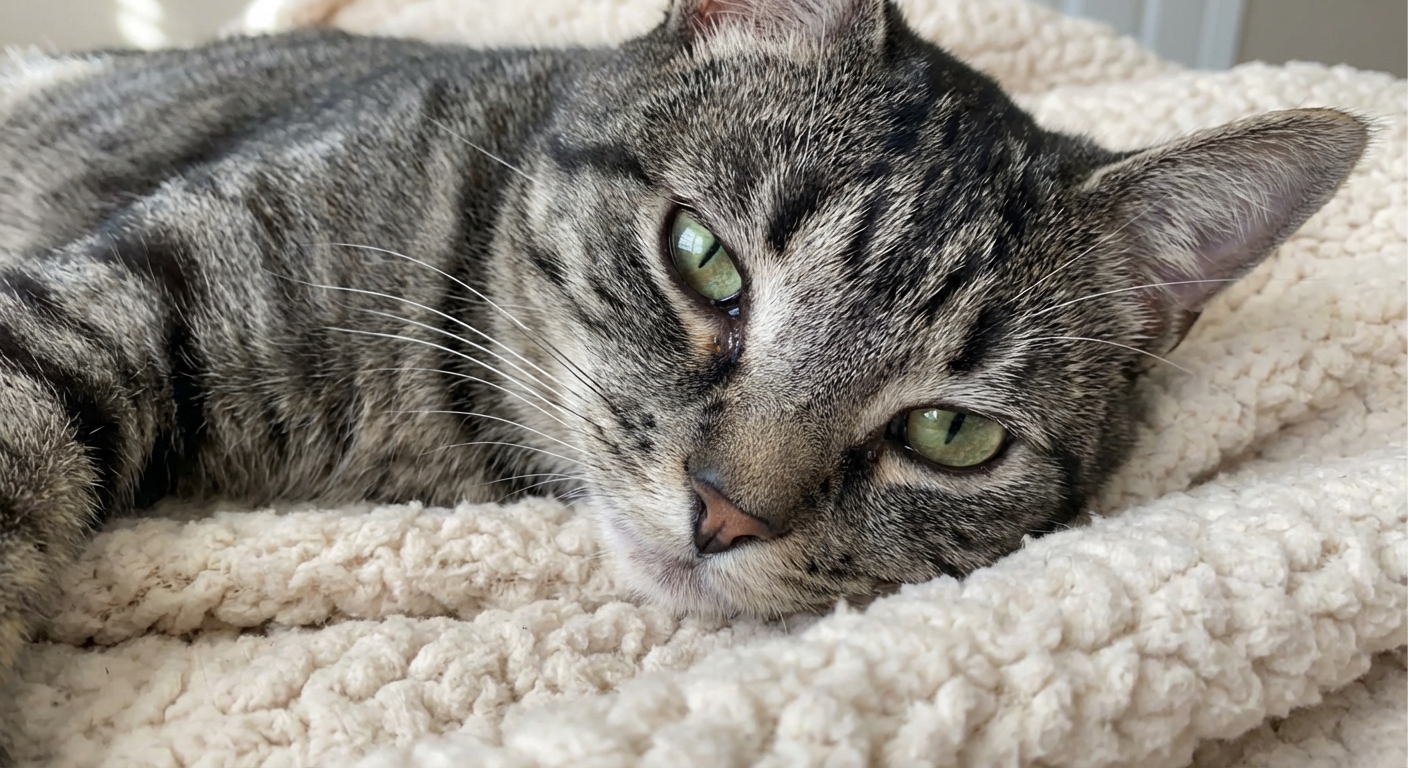
Cats do not always cough like people. Congestion often shows up as noisy breathing and changes in normal habits.
- Sneezing or frequent sniffling
- Runny nose that is clear, cloudy, yellow, or green
- Watery eyes or eye discharge
- New snoring or “snorty” breathing when awake
- Open-mouth breathing (often a sign of distress in cats)
- Less interest in food because smell drives appetite
- Hiding, low energy, or acting “off”
Note: Some flat-faced (brachycephalic) cats like Persians and Exotic Shorthairs can have baseline noisy breathing. What matters most is a new change, worsening effort, or any open-mouth breathing.
Common causes
Congestion is a symptom, not a diagnosis. These are some of the most common reasons veterinarians see in clinics and that are also common in shelters and rescues.
Upper respiratory infection (URI)
Most feline URIs are caused by viruses like feline herpesvirus or calicivirus. Stress, moving, boarding, or a new pet can trigger flare-ups, especially for herpes.
Secondary bacterial infection
A virus can inflame nasal passages, then bacteria can take advantage. This is one reason discharge may turn thick and colored, but color alone does not prove it is bacterial. Duration, severity, fever, appetite, and your cat’s overall comfort matter too.
Allergies or irritants
Dusty litter, smoke, strong fragrances, diffusers, cleaning sprays, and even wildfire smoke can irritate the upper airway. Some cats also have environmental allergies.
Dental disease
Infection around upper teeth can extend toward the nasal area and cause sneezing or one-sided discharge.
Nasal foreign material or polyps
Grass seeds, plant bits, or inflammatory polyps can cause persistent congestion, sometimes worse on one side.
Other medical issues
Less commonly, chronic rhinitis, fungal infection, asthma (more lower airway), or nasal tumors can be involved, especially if symptoms are long-lasting or worsening.
When to call the vet
Cats can go downhill faster than we expect when breathing or appetite is affected. If signs are mild, you can start supportive care at home, but you should see at least some improvement within 48 to 72 hours. If your cat is getting worse, not improving, or you are uneasy about what you are seeing, contact your veterinarian.
Contact your veterinarian urgently if you notice any of the following:
- Any open-mouth breathing, heavy effort to breathe, or gums that look pale or blue
- Not eating or eating much less for about 24 hours (or earlier for kittens, seniors, or cats with chronic illness)
- Not drinking, vomiting, or signs of dehydration along with congestion
- Lethargy that is significant, weakness, or collapse
- High fever (your vet can guide you, since home temperature checks can be tricky)
- Thick discharge with worsening symptoms, especially if your cat seems painful or unwell
- Eye squinting, swelling, or thick eye discharge (eye ulcers can happen with herpes)
- Dehydration (dry or tacky gums, decreased urination, very low energy)
- Kittens under 6 months with any notable breathing signs
If you are unsure, it is always okay to call. A quick conversation can prevent a crisis.
At-home care that helps
These supportive steps can make a big difference, especially in mild cases. They are generally safe, but they do not replace veterinary care when red flags are present.
1) Increase humidity
Moist air helps loosen nasal secretions.
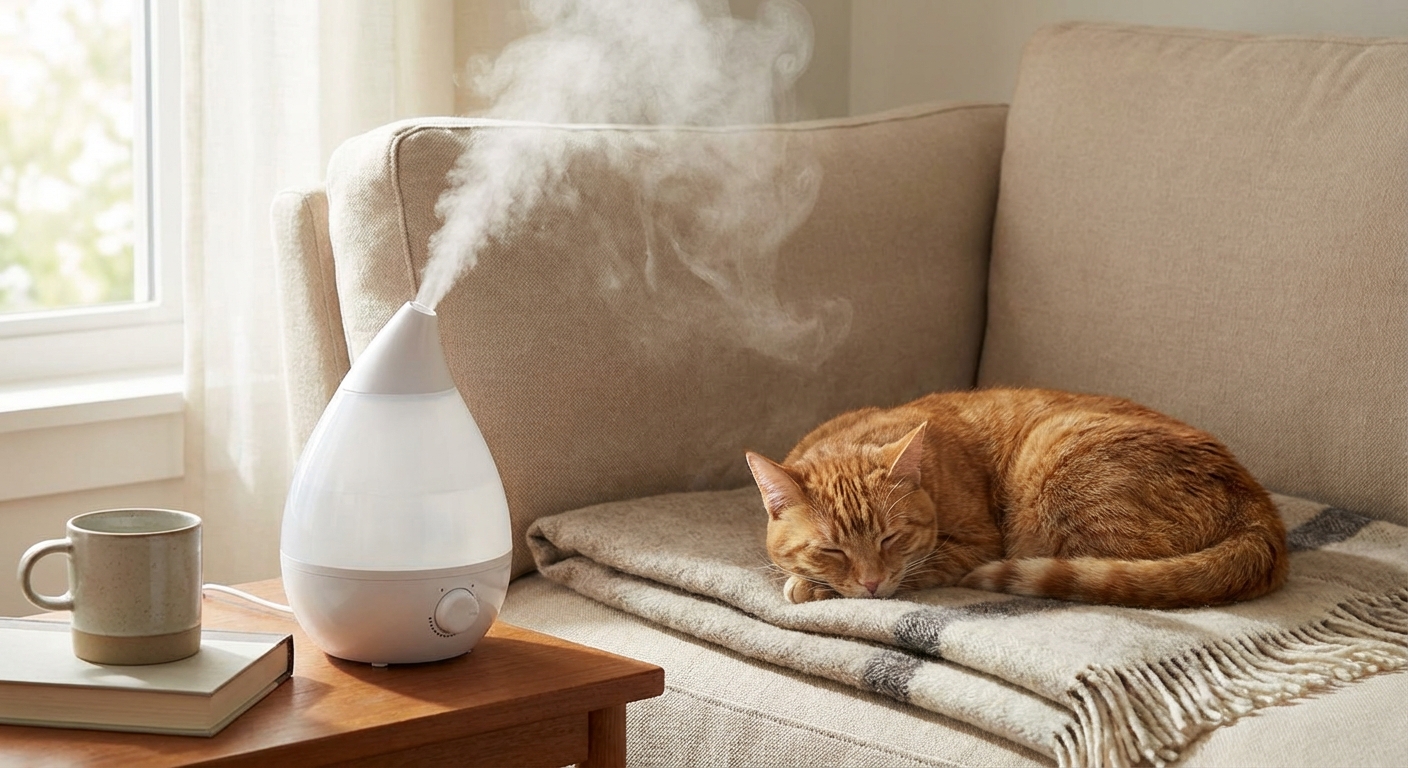
- Run a cool-mist humidifier near your cat’s favorite resting spot.
- Let your cat sit in a steamy bathroom for 10 to 15 minutes while you run a hot shower. Stay with them and keep it calm.
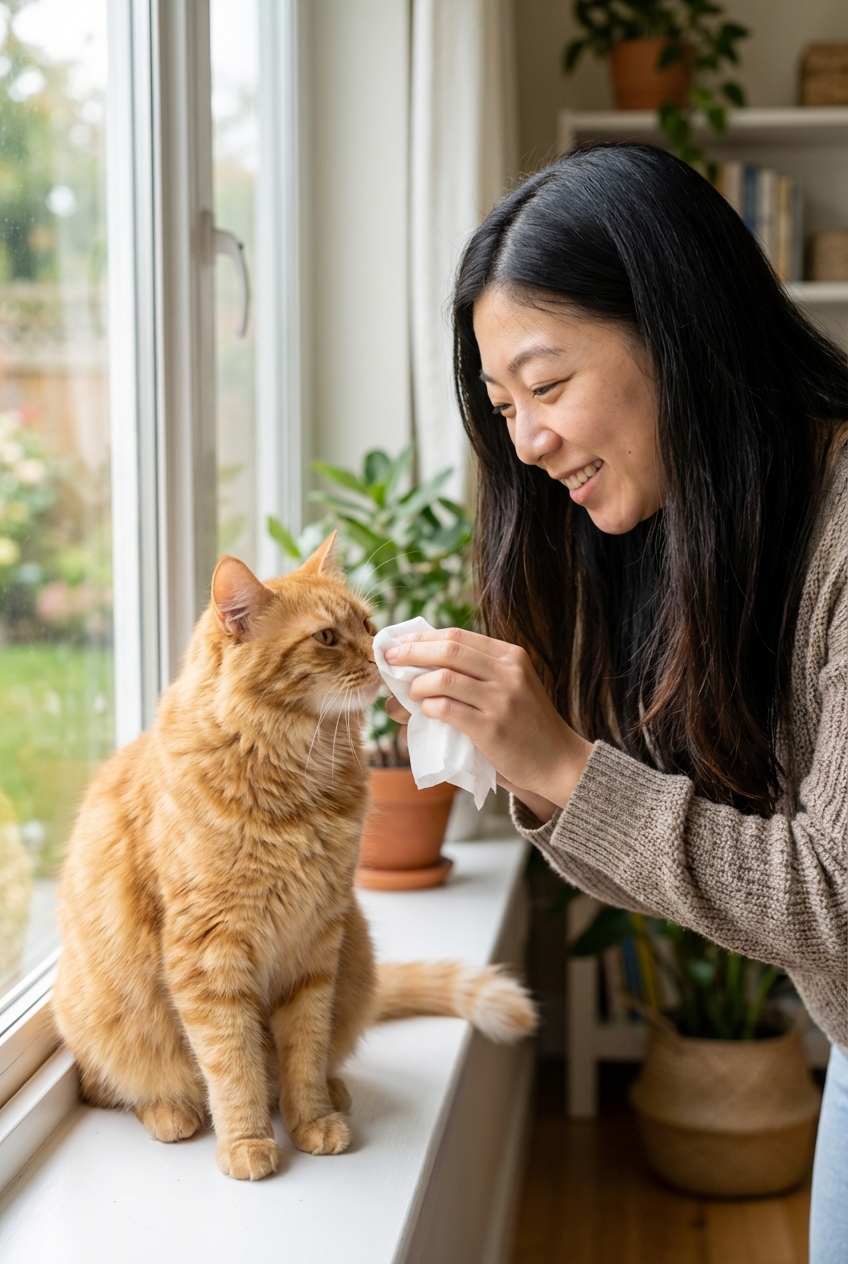
2) Gentle nose and eye cleaning
Crust can block airflow and make cats feel miserable.
- Use a warm, damp cotton round or soft cloth to wipe discharge.
- Wipe from the inner corner of the eye outward, using a fresh pad each time.
- If the nose is crusted, soften first with a warm compress for 30 to 60 seconds.
3) Make food easier to smell and eat
When the nose is blocked, many cats stop eating. That can become its own medical problem.
- Offer strong-smelling wet food or warmed food (warm, not hot).
- Try small, frequent meals.
- Choose softer textures if your cat seems sore.
4) Encourage hydration
- Add a little extra water to wet food for a “stew” texture.
- Offer pet-safe broth with no onion or garlic.
- Use a cat fountain if your cat prefers moving water.
5) Reduce irritants
- No smoke, vaping, incense, wax melts, or essential oil diffusers.
- Switch to unscented litter and avoid dusty types if possible.
- Use gentle cleaners and let areas fully dry before your cat re-enters.
6) Keep stress low
Stress can worsen respiratory signs, especially for herpes-prone cats.
- Provide a warm, quiet resting area.
- Keep routines consistent.
- Separate from rambunctious pets if needed.
7) Limit spread in multi-cat homes
If you suspect a URI, take simple steps to reduce transmission.
- If possible, separate the congested cat in a comfortable room.
- Use separate food and water bowls and a separate litter box.
- Wash hands after handling the sick cat and before touching others.
What not to do
Some well-meaning home remedies are risky for cats.
- Do not give human cold medicines (decongestants, acetaminophen, ibuprofen). Many are toxic to cats.
- Do not use essential oils to “open the sinuses.” Cats are especially sensitive to many oils and fumes.
- Do not force-feed if your cat is struggling to breathe or is very stressed. Call your vet for safer options.
- Do not use leftover antibiotics. Wrong drug or dose can cause harm and may delay proper treatment.
- Do not put drops, sprays, or saline in the nose unless your veterinarian specifically recommends it. Many cats inhale or panic, and the wrong approach can make things worse.
What your vet may recommend
Treatment depends on the cause and how sick your cat is. Your veterinarian may suggest:
- Exam of eyes, mouth, and lungs, and sometimes an oral exam focused on dental roots
- Supportive meds such as appetite stimulants or anti-nausea medication
- Antiviral support or herpes-focused management in recurring cases
- Antibiotics if there is evidence of bacterial infection
- Eye medications if the eyes are involved
- Fluids if dehydrated
- Diagnostics like imaging or nasal evaluation for chronic or one-sided congestion
Mild viral URIs often improve within 7 to 14 days. If symptoms are not improving, are worsening, or are still significant beyond about 10 to 14 days, it is a good reason to recheck. Some cats, especially those with herpes, can have recurring flare-ups.
Cats can also shed virus even after they look better, which is one reason URIs spread quickly in multi-cat settings.
Preventing flare-ups
You cannot prevent every sneeze, but you can lower the odds of big flare-ups.
- Keep vaccines current, especially in multi-cat homes or cats who have contact with other cats.
- Quarantine new cats for a period recommended by your vet or rescue, and watch for sneezing and eye discharge.
- Improve air quality with good ventilation and low-dust litter.
- Support overall wellness with quality nutrition, hydration, dental care, and stress reduction.
Trust your instincts. If your cat’s breathing looks different, their appetite drops, or they seem “not themselves,” it is always worth a veterinary check.

