A complete bearded dragon care guide covering habitat setup, safe substrates, UVB and basking temps, feeding by age, supplements, hydration, cleaning routine...
Article
•
Designer Mixes
Caring for an African Pygmy Hedgehog: Pet Tips

Shari Shidate
Designer Mixes contributor
Hedgehogs are charming, curious little pets with very specific needs. If you have ever met one doing tiny snuffles around a blanket, you already understand the appeal. But here is the truth I share with every new exotic pet parent: hedgehogs do best with consistent routines, the right temperature, and gentle, respectful handling.
This guide focuses on African Pygmy Hedgehogs, the species most commonly kept as pets. Care for wild European hedgehogs and other species can be very different, so always confirm what you have and follow species-specific guidance.
In this guide, I will walk you through practical, evidence-based care so your hedgehog can stay comfortable, active, and as stress-free as possible.

Before you bring one home
Check legality and find a vet
Hedgehog ownership is restricted in some areas, so confirm local rules before you purchase or adopt. Next, locate an exotics veterinarian in advance. Many general clinics do not treat hedgehogs, and when a hedgehog is sick, waiting to find care can become an emergency.
- Ask if the clinic has hedgehog experience and what their after-hours options are.
- Schedule a wellness visit soon after adoption to establish a baseline weight and overall health.
Learn your hedgehog’s “normal”
Hedgehogs are masters at hiding illness. A pet that seems “a little off” can decline quickly. Your best tool is routine observation: appetite, activity level, stool consistency, and weekly weight checks on a small kitchen scale.
Housing basics
House them alone
Pet hedgehogs are typically solitary and should be housed individually. Sharing an enclosure can lead to stress, food guarding, fighting, and serious injuries, even if two hedgehogs seem fine at first. If you have more than one hedgehog, plan on separate enclosures and separate playtime.
Cage size and setup
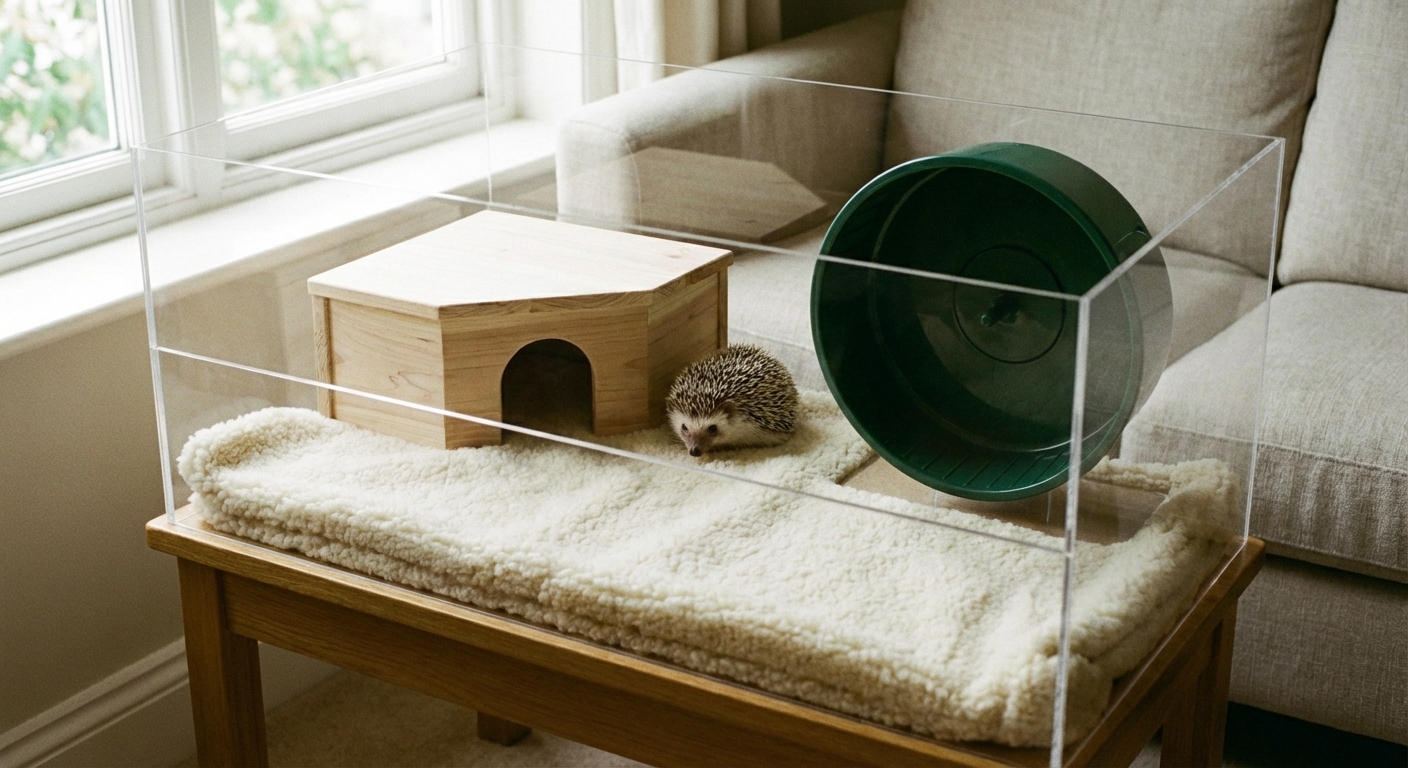
Bigger is usually better. Hedgehogs are active at night and benefit from space to explore. Choose a well-ventilated enclosure that is easy to sanitize.
- Flooring: solid-bottom housing is safest. Avoid wire floors that can injure feet.
- Hideout: provide a snug hide so your hedgehog can sleep during the day.
- Enrichment: tunnels, fleece strips, and safe foraging toys help reduce boredom.
Temperature
One of the most important parts of hedgehog care is warmth. Many hedgehogs do best with an ambient temperature generally around 74 to 80°F (23 to 27°C), with some individuals doing better slightly warmer. Your breeder or exotic vet may recommend a specific target for your hedgehog, so use their guidance and watch your pet’s behavior closely.
When temperatures dip too low (often below about 72°F (22°C)), some hedgehogs may attempt to hibernate. For pet hedgehogs, that can become dangerous fast.
- Use a ceramic heat emitter or a safe space heater for the room.
- Always pair heat sources with a thermostat and place a thermometer at hedgehog level.
- Watch for signs of chilling: lethargy, wobbliness, cool belly, refusal to eat.
Lighting
Temperature is the top priority, but a steady light schedule helps too. Aim for a consistent light and dark cycle, often close to 12 hours of light and 12 hours of darkness, so your hedgehog’s body clock stays predictable. Keep nights truly dark when possible, avoid bright lights at night, and do not use heat-producing bulbs that can overheat the enclosure. Never place the enclosure in direct, hot sun.
Bedding and cleaning
Choose bedding that is low-dust and comfortable. Many pet parents use fleece liners because they are reusable and easy to wash. If you prefer disposable bedding, pick paper-based options.
- Avoid aromatic wood shavings, especially cedar and pine.
- Avoid dusty sand, clumping cat litter, and loose substrates that can be inhaled or accidentally eaten.
Spot-clean daily, and do a deeper clean weekly. Strong scents can be stressful, so use pet-safe cleaners and rinse thoroughly.
Nutrition
What they eat in nature
Hedgehogs are often described as insectivores. In the wild, they eat insects and other small prey, plus some plant matter. In captivity, most do well on a carefully chosen base diet plus appropriate supplements and treats.
Everyday diet
Many owners use a high-quality, meat-forward kibble as a base, commonly an adult maintenance cat food, then add insects. This can work well, but it is not one-size-fits-all. Some cat foods are too high in fat or not ideal in fiber and micronutrients for hedgehogs, so label-reading matters. A quality hedgehog-specific diet can also be an option. Your exotic vet can help you choose a staple and set targets for your individual hedgehog.
- Staple: a reputable, meat-based kibble with moderate fat.
- Insects: offer a rotation of captive-bred feeders such as dubia roaches, crickets, and black soldier fly larvae. Mealworms are tasty but fatty, so keep them as an occasional treat.
- Fresh water: a heavy bowl is often best to encourage natural drinking. Clean and refill daily. A bottle can be used if your hedgehog reliably drinks from it, but monitor intake closely.
Portion needs vary based on age, activity, and metabolism. Because obesity is common in pet hedgehogs, measured portions and regular weigh-ins are worth the effort.
Small add-ons
Some hedgehogs enjoy tiny portions of cooked lean meats or plain scrambled egg. Offer any new food slowly and monitor stool. Treat foods should stay treats, not the main course.
Foods to avoid
When in doubt, skip it and ask your vet. Avoiding gastrointestinal upset is worth being cautious.
- Milk and most dairy products (many hedgehogs are lactose intolerant)
- Sticky foods that can gum up the mouth
- Seasoned, salty, sugary, or fried human foods
- Wild-caught insects from outdoors (risk of pesticides and parasites)
Exercise and enrichment
Choose the right wheel
Most hedgehogs will run. A lot. Provide a large, open-sided wheel with a solid running surface (not a wire wheel) to protect feet and nails. For many African pygmy hedgehogs, that means a wheel around 11 to 12 inches (28 to 30 cm) in diameter, or larger if needed. The goal is a wheel big enough that your hedgehog’s back stays relatively flat while running.
- Clean the wheel frequently. It will get messy fast.
- If your hedgehog stops running suddenly, that can be an early sign something is wrong.
Out-of-cage time
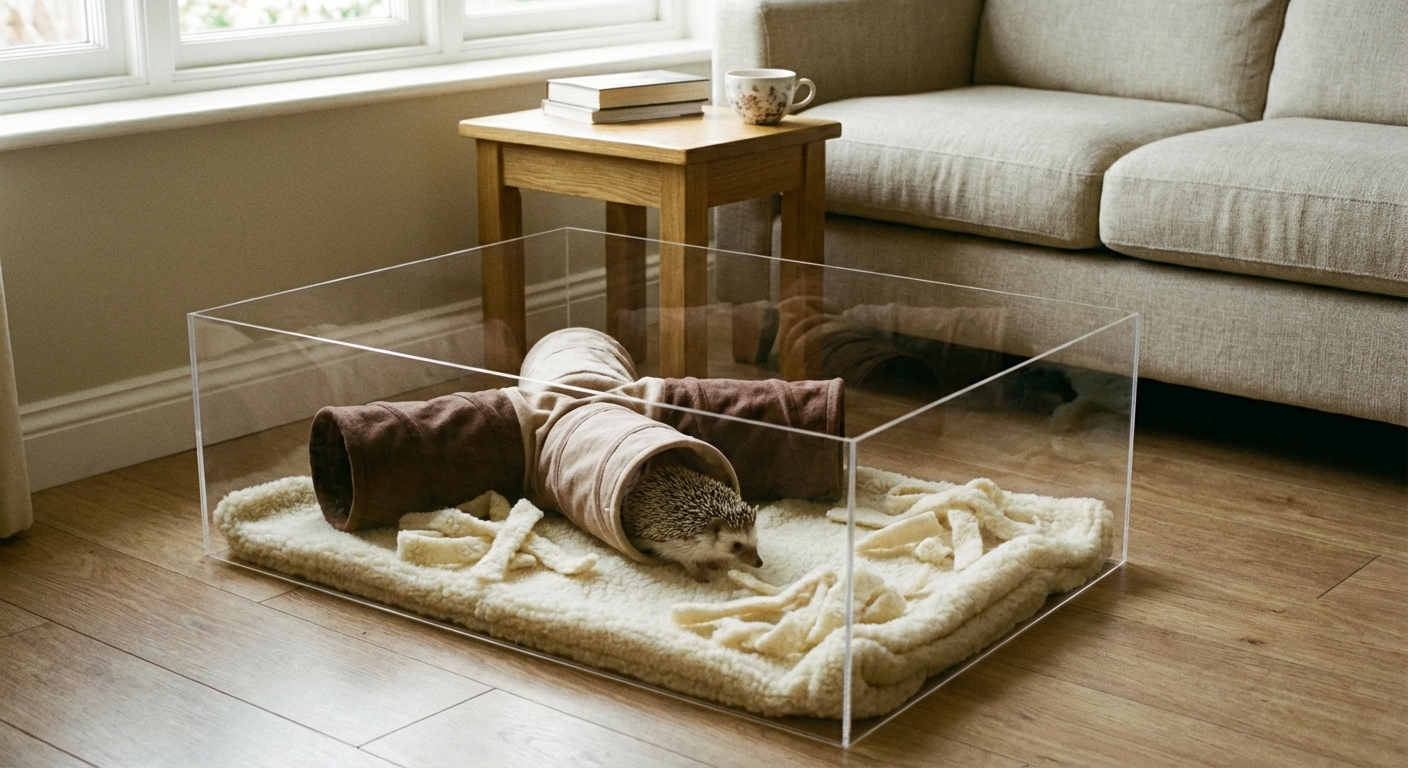
Supervised playtime in a hedgehog-safe space adds enrichment. Use a playpen or block off hazards. Keep the room warm and quiet, dim the lighting, and never allow access to stairs, recliners, or open vents.
Handling
Hedgehogs are not like puppies or kittens, and that is okay. Many are shy at first and may huff or ball up. Consistent, gentle handling helps them learn you are safe.
- Handle daily in short sessions, especially in the early weeks.
- Approach calmly, scoop from underneath, and support the body.
- Use a fleece blanket or cuddle sack to help them feel secure.
- Avoid loud environments and sudden movement.
- Wash hands before and after handling and keep your hedgehog away from your face. Like many small animals, hedgehogs can carry germs (including Salmonella) even when they look healthy.
Because they are nocturnal, your hedgehog will usually be more receptive in the evening when they naturally wake up.
Grooming and routine care
Baths and skin
Hedgehogs do not need frequent baths, but occasional foot baths or gentle cleaning can help, especially if they get poop on their feet after wheel time. Use warm water and a soft brush. Avoid harsh soaps unless your vet recommends a specific product.
Dry thoroughly and keep them warm afterward.
Nails and feet
Nails can overgrow and snag. Regular nail trims help prevent foot issues. If you are nervous, ask your vet team to demonstrate or schedule trims at the clinic.
While you are there, do a quick foot check. Look for redness, swelling, scabs, or sores (sometimes called bumblefoot). Catching tiny problems early can prevent big pain later.
Teeth
Oral disease can happen in hedgehogs. Bad breath, drooling, or dropping food are red flags. This is another reason an established exotic vet relationship is priceless.
Health issues to watch for
Hedgehogs can develop a range of health concerns. Some conditions are more common than many new owners expect, so early detection matters.
- Obesity: often tied to high-fat diets and low activity.
- Mites and skin problems: scratching, flaky skin, quill loss.
- Respiratory illness: sneezing, clicking sounds, nasal discharge.
- Dental disease: drooling, reluctance to eat hard foods.
- Wobbly Hedgehog Syndrome (WHS): progressive neurologic signs like unsteadiness.
- Tumors: lumps, swelling, unexplained weight loss.
If your hedgehog is not eating, seems weak, is breathing differently, cannot stay warm, has blood in stool or urine, has a seizure, or develops a sudden head tilt, do not wait it out. Call an exotic vet the same day.
Home safety
“Pet-friendly” for hedgehogs means thinking small: tiny bodies, tiny airways, and a strong sensitivity to temperature and stress.
- Other pets: keep dogs and cats supervised and separated. A single paw swipe can cause serious injury.
- Air quality: avoid smoke, strong fragrances, and dusty bedding.
- Quiet zone: place the enclosure away from speakers, slamming doors, and high-traffic areas.
- Heat safety: secure cords and protect your hedgehog from direct contact with heaters.
Daily care routine
If you love checklists, this one is for you. Consistency is soothing for hedgehogs and makes it easier for you to notice small changes early.
Daily
- Check ambient temperature and heat source function
- Keep the light and dark schedule consistent
- Refresh water and food
- Spot-clean stool and wet areas
- Quick health scan: eyes, breathing, activity level, appetite
Weekly
- Weigh your hedgehog and note trends
- Deep clean enclosure and wheel
- Check nails, skin, and feet
Final thoughts
A healthy hedgehog life is built on a few pillars: warmth, a safe enclosure, a balanced diet, and gentle handling. When those basics are steady, you will often see your hedgehog’s personality bloom, one curious nighttime adventure at a time.
If you are ever unsure, trust your instincts and call an exotic vet. With small pets, acting early is one of the kindest things you can do.