Track your dog’s pregnancy week by week with vet-informed milestones, common symptoms, confirmation tests, feeding guidance, whelping setup, labor signs, a...
Article
•
Designer Mixes
Caring for a Pregnant Dog: Trusted Secrets

Shari Shidate
Designer Mixes contributor
Start with the truth: pregnancy care is prevention
When a dog is pregnant, the goal is simple: keep mom steady, calm, well-fed, and closely observed so you can prevent emergencies instead of reacting to them. Many complications give small warning signs first, but some problems can escalate quickly, so it helps to know what is normal and what is not.
Quick safety note: This article is for educational purposes and does not replace veterinary care. If your dog is pregnant or you suspect complications, contact your veterinarian or an emergency animal hospital right away.
As a veterinary assistant in Frisco, Texas, I have seen that the best outcomes usually come from three habits: consistent vet check-ins, steady nutrition (not sudden changes), and a safe whelping setup planned before labor starts.
Confirm pregnancy with your vet
Home guessing can lead to missed problems like false pregnancy, uterine infection, or an unplanned high-risk litter. A veterinarian can confirm pregnancy and help estimate timing, then tailor a plan for your dog’s size, breed, and medical history.
What your vet may recommend
- Ultrasound to confirm pregnancy and check fetal heartbeats (often around 3 to 4 weeks after breeding, sometimes earlier depending on timing).
- X-rays later in pregnancy to estimate puppy count and skull size, which helps with delivery planning (commonly after day 45 when bones are visible). Counts can still be imperfect, but they are often very helpful.
- A parasite control plan that is safe for pregnancy. Do not assume your usual product is safe.
Clinic note: Knowing the expected puppy count before labor reduces panic. If you expect six puppies and only five arrive, you will know to call promptly instead of waiting and hoping.
Helpful prenatal timing
- Early visit once pregnancy is suspected or confirmed, to discuss nutrition, safe medications, and basic planning.
- Late-pregnancy visit to review X-ray results (if done), talk through labor expectations, and discuss whether a C-section plan is wise for your dog.
Nutrition: do not “feed for two” too early
One of the biggest myths is that pregnant dogs need a big calorie increase right away. In the first half of pregnancy, most dogs need little to no increase in calories. Overfeeding early can cause excess weight gain, which can make labor harder.
When to increase food
Most fetal growth happens in the last third of pregnancy. That is when appetite and calorie needs usually rise. Your vet can help you adjust based on body condition, breed, and litter size.
Best diet choices
- Choose a complete and balanced “growth” or “all life stages” diet that meets AAFCO standards. This is a reliable option for pregnancy and nursing.
- Small, frequent meals can help because the abdomen gets crowded and big meals can be uncomfortable.
- Fresh water always. Dehydration makes everything harder, including nursing later.
Clinic note: Skip calcium supplements unless your veterinarian specifically prescribes them. Extra calcium during pregnancy can suppress normal parathyroid response and may increase the risk of postpartum hypocalcemia (eclampsia) in some dogs.
Exercise and stress
Movement helps maintain muscle tone and circulation, which supports labor and recovery. The key is gentle consistency, not intensity.
What to do
- Daily walks at a comfortable pace.
- Short play sessions that avoid jumping, slippery floors, and roughhousing.
- Keep routine stable. Dogs often handle pregnancy best when the household schedule stays predictable.
What to avoid
- Overheating, especially in warm weather. Walk early or late and offer water breaks.
- Dog parks and unknown dogs. During pregnancy, you want to reduce risk of injury and contagious disease.
- Any activity that causes heavy panting, lagging behind, or reluctance to continue.
Vaccines and medications
Pregnancy is not the time to experiment with new meds or supplements. Many common products have not been studied for pregnancy safety.
- Do not give over-the-counter pain medications unless your veterinarian directs you. Human medications can be dangerous for dogs.
- Ask before using flea and tick prevention. Some are appropriate, some are not.
- Discuss vaccines early. In general, veterinarians prefer vaccines be up to date before breeding, not during pregnancy, unless there is a specific risk and clinical reason.
Clinic note: Keep a written list of everything your dog eats or takes, including treats and supplements. If a problem pops up, that list saves time and can guide safer decisions.
Plan the whelping area early
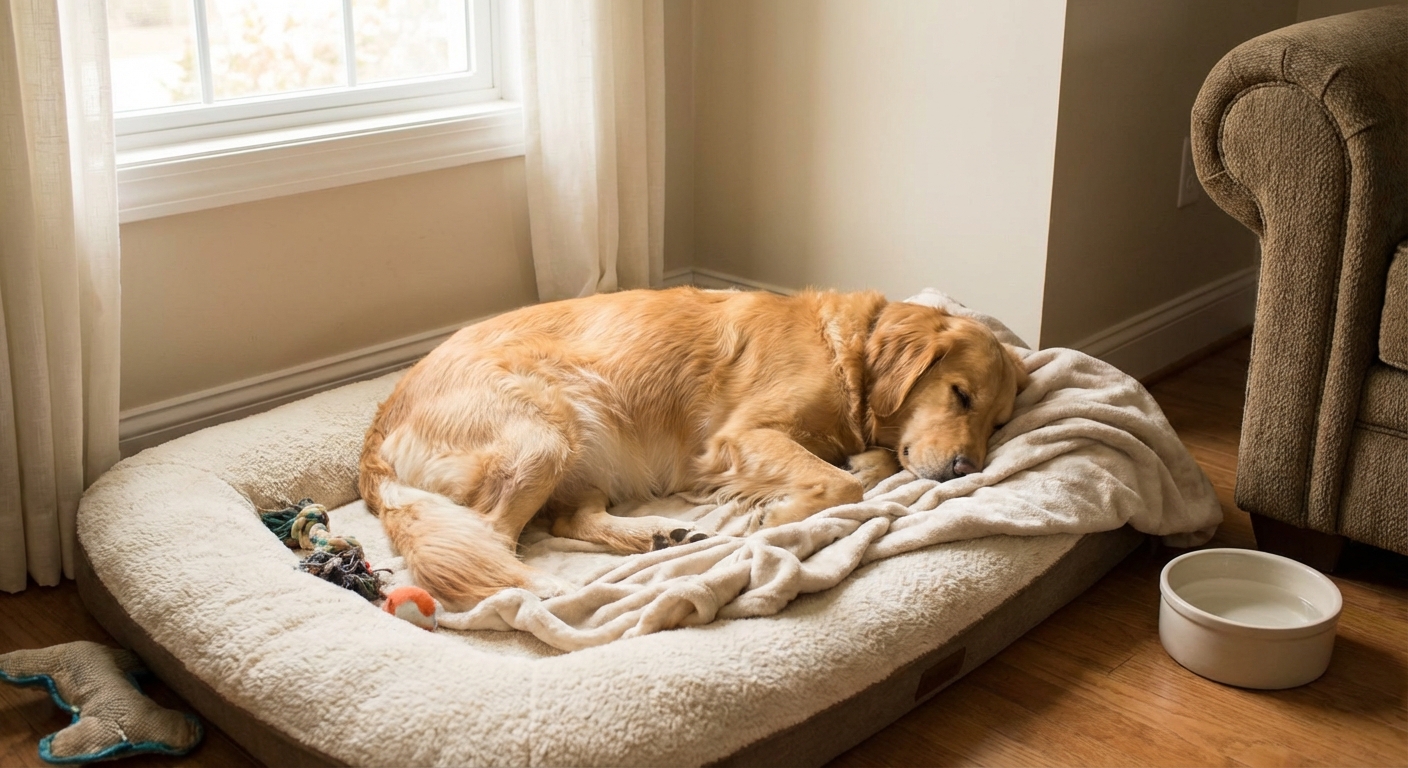
If you can set up the whelping area before labor, it is a big advantage. You want your dog to view the space as her safe, familiar nesting spot.
Whelping space essentials
- Quiet, warm, draft-free room with low traffic.
- Whelping box large enough for mom to stretch out, with sides that keep puppies contained.
- Easy-to-wash bedding. Plan on a lot of laundry.
- Traction for puppies so they can crawl well. Slippery surfaces can contribute to orthopedic issues.
Helpful supplies to gather
- Digital rectal thermometer for dogs (ask your vet for correct technique and normal ranges).
- Kitchen scale that measures in grams for daily puppy weights.
- Clean towels, disposable gloves, and unscented baby wipes.
- Heating pad designed for pets or a safe heat source positioned so puppies can move away from it.
- Your veterinarian’s number and the nearest 24-hour emergency clinic number saved in your phone.
Clinic note: Practice “settling” in the whelping area during calm moments. Offer a chew or a meal there so the location is emotionally positive.
Know the timeline
Dog pregnancy averages about 63 days from ovulation, but due dates can vary when breeding dates are uncertain. Your vet’s dating helps you avoid two dangerous mistakes: assuming it is too early to worry, or assuming it is too late and panicking.
Signs labor may be close
- Nesting behavior, restlessness, clinginess, or wanting privacy.
- Decreased appetite in the 12 to 24 hours before labor for some dogs.
- Milk production may start days before, or not until after birth.
Labor stages in plain English
- Stage 1 (prep): restlessness, panting, trembling, nesting, and mild contractions that you may not see clearly.
- Stage 2 (active delivery): visible abdominal contractions and puppies being born.
- Stage 3 (placentas): placentas pass, sometimes after each puppy or grouped together. Your vet can tell you what is typical for your dog.
Temperature drop: helpful, not required
Some dogs have a rectal temperature drop about 12 to 24 hours before labor. Many owners watch for a drop to around 99°F (37.2°C), but baselines vary and technique matters. Ask your veterinarian to show you how to do this safely and what number is meaningful for your dog. Do not panic if you never see a clear drop.
Breed and size risks
Some dogs are more likely to struggle with delivery. Toy breeds, dogs with a history of dystocia, and brachycephalic breeds (like Bulldogs and Boston Terriers) can have a higher risk of needing a C-section.
Clinic note: If your dog is in a higher-risk group, ask your veterinarian ahead of time about an emergency plan, after-hours options, and what a scheduled C-section conversation should look like.
Red flags: call the vet now
This is the part I always want families to read twice. Most whelpings are normal, but when a true emergency happens, minutes matter.
- Green or foul-smelling discharge before the first puppy, or a bad odor at any time.
- Strong contractions for 30 minutes with no puppy produced, or prolonged straining with no progress.
- Weak or infrequent contractions for 2 or more hours with no puppy, especially if you know puppies are still expected.
- More than about 2 hours between puppies when you know more puppies are still expected, especially with ongoing straining, distress, or worsening fatigue. Some moms do rest longer between puppies, so comfort and progress matter.
- Heavy bleeding or signs of shock (pale gums, collapse, extreme weakness).
- Severe pain, crying, or sudden exhaustion.
- Vomiting repeatedly, fever, or extreme lethargy around delivery.
Clinic note: If you are thinking “Should I call?” you should call. A quick phone conversation with your clinic or an emergency vet can prevent heartbreak.
After delivery: the first 48 hours
Once puppies arrive, your job becomes monitoring, warmth, and nutrition. This is also when a few serious postpartum problems can show up quickly.
For mom
- Expect increased appetite while nursing. Many moms need significantly more calories during lactation.
- Watch for mastitis: hot, painful mammary glands, fever, and refusal to nurse.
- Watch for eclampsia: restlessness, tremors, stiff gait, panting, fever, or seizures. This is an emergency.
Normal vs not normal discharge
A small amount of dark, blood-tinged discharge can be normal after whelping (lochia), especially in the first days. What is not normal is a foul smell, heavy bleeding, worsening weakness, or discharge that looks like pus. When in doubt, call.
For puppies
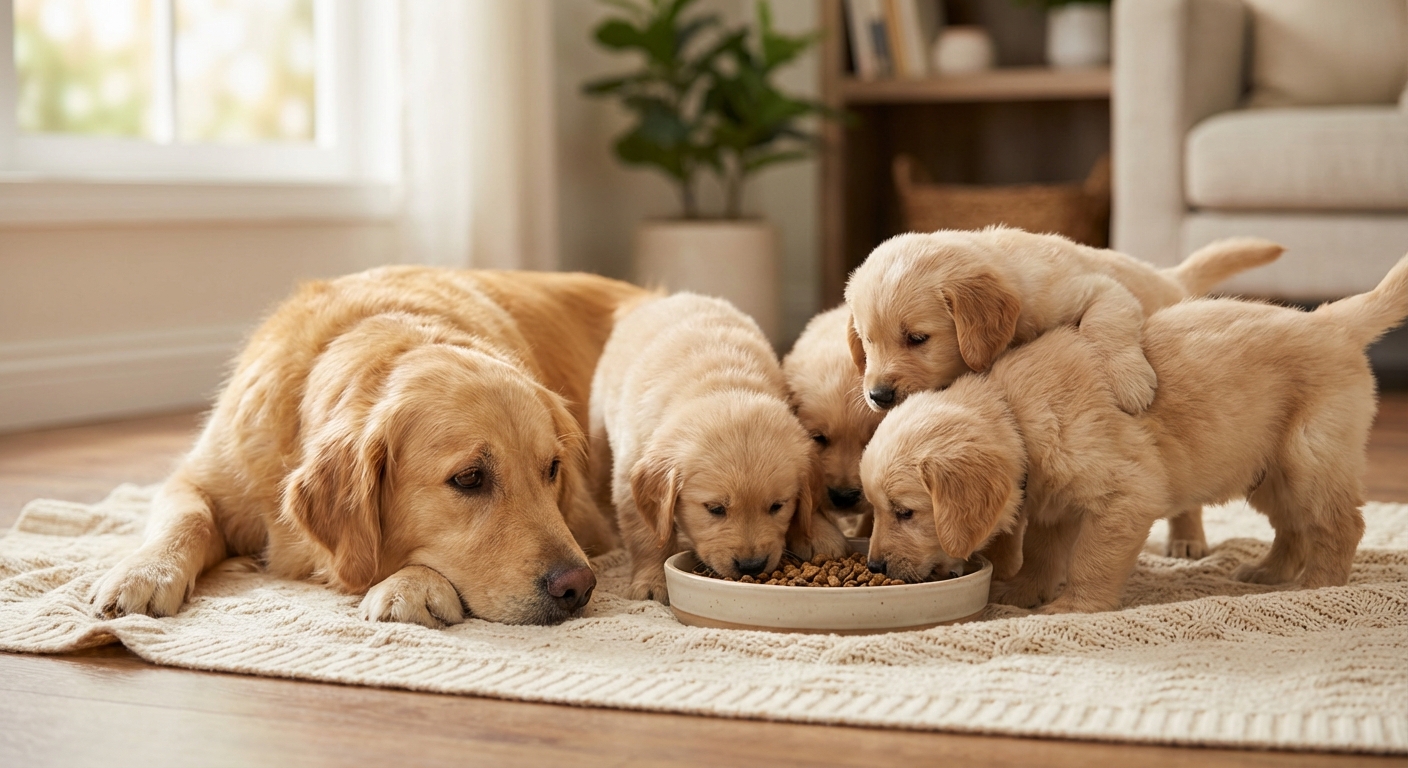
- Colostrum matters. The first milk in the first 12 to 24 hours helps protect puppies. Make sure each puppy is nursing and latched.
- Daily weights at the same time each day. Steady gain is one of the best indicators of adequate milk intake. If a puppy is not gaining, is fading, or feels cool, contact your vet immediately.
- Warmth is essential. Chilled puppies cannot digest milk well and can fade quickly.
- Quiet. Limit visitors and handling early on so mom feels safe and focused.
Common questions
Can I switch foods during pregnancy?
If your vet recommends a growth or all life stages diet, transition slowly over 7 to 10 days to avoid diarrhea. Sudden diet switches are a top reason pregnant dogs end up dehydrated and uncomfortable.
Is it okay if she eats less some days?
Mild appetite changes can happen, especially late in pregnancy. But complete refusal to eat, repeated vomiting, lethargy, or dehydration are reasons to call your veterinarian.
Should I deworm her?
Many veterinarians recommend a pregnancy-safe deworming plan because some parasites can be passed to puppies. Do not guess on the product or timing. Ask your vet for a tailored plan, and keep the whelping area clean to reduce reinfection.
Simple checklist
- Schedule a vet visit to confirm pregnancy and discuss imaging, nutrition, and parasites.
- Ask if your dog has breed or size risks that make delivery planning or a C-section conversation important.
- Keep her lean, not skinny and not heavy. Body condition matters for an easier delivery.
- Switch to a vet-approved growth or all life stages diet when advised, and increase calories mainly in the last third.
- Set up the whelping area as early as you reasonably can and let her get comfortable in it.
- Save emergency numbers and know the red flags.
- Buy a gram scale and start daily puppy weights once they arrive.
The best “secret” to caring for a pregnant dog is not a trick. It is steady, informed preparation and asking for help early.
Quick safety note
This article is for educational purposes and does not replace veterinary care. If your dog is pregnant or you suspect complications, contact your veterinarian or an emergency animal hospital right away.