Learn what’s normal after neutering, how to manage pain, protect the incision, use the cone, restrict activity for 10–14 days, and spot red flags that ne...
Article
•
Designer Mixes
Caring for a Neutered Dog

Shari Shidate
Designer Mixes contributor
Neutering is one of the best long-term health and community choices many families make for their dogs. But once the surgery is done, caring for a neutered dog is not exactly the same as caring for an intact dog. Hormones affect metabolism, appetite, muscle mass, behavior, and even some medical risks. The good news is that with a few simple, evidence-based habits, most neutered dogs do wonderfully.
Below are the “secrets” I share most often as a veterinary assistant in Frisco, Texas. They are not gimmicks. They are the practical details that keep your dog lean, comfortable, and thriving for years.
What changes after neutering
Neutering removes the testes, which reduces testosterone. That hormonal shift can be beneficial, but it can also change a few day-to-day needs.
- Metabolism often slows. Many dogs do better with fewer calories after neutering. A common starting adjustment is roughly 10 to 20% less, but the “right” amount varies by age, breed, body condition, and activity.
- Appetite can increase. Some dogs act hungrier and become more food-motivated, which is a big reason post-neuter weight gain is so common.
- Body composition can shift. If calories and activity are not adjusted, some dogs gain fat more easily and may lose conditioning over time.
- Behavior may soften. Roaming, marking, and some hormone-driven behaviors may decrease, but neutering is not a stand-alone training fix.
Key takeaway: Neutering does not “make” a dog overweight. Calories and activity do. But neutering can change how easy it is for weight to creep up.
The first 14 days
The safest recoveries are usually the boring ones. Your goal is simple: protect the incision, control pain, and prevent infection. In plain terms, that usually looks like: cone on, leash-only potty breaks, and no baths.
Incision care
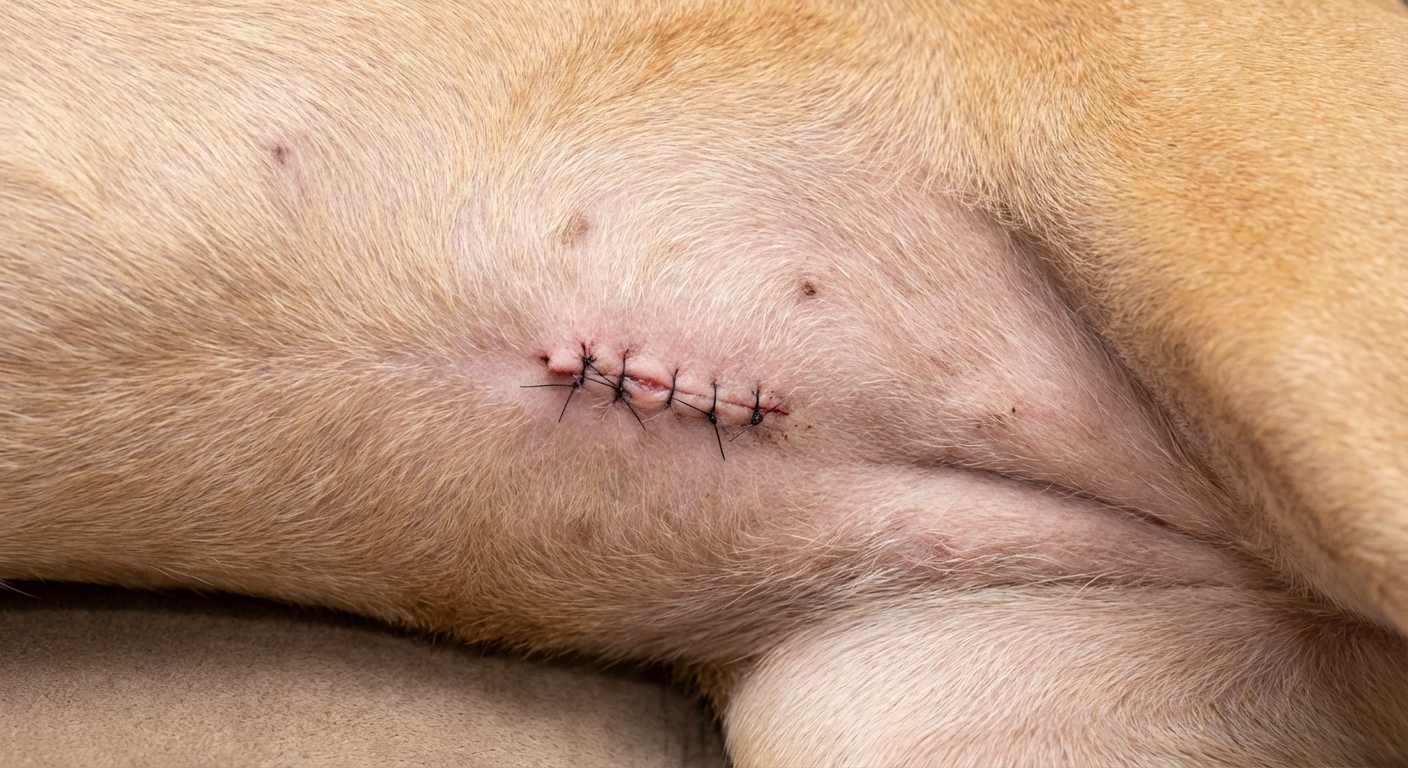
- Look at the incision twice daily. A small amount of swelling or mild bruising can be normal. Worsening redness, heat, gapping, discharge, or a bad odor is not.
- Expect some variation. Depending on your dog’s age and surgical technique, mild scrotal swelling or puffiness can happen for a few days. If it is rapidly enlarging, painful, or you are unsure, call your vet.
- Keep it clean and dry. No baths, pools, or muddy play until your veterinarian clears it.
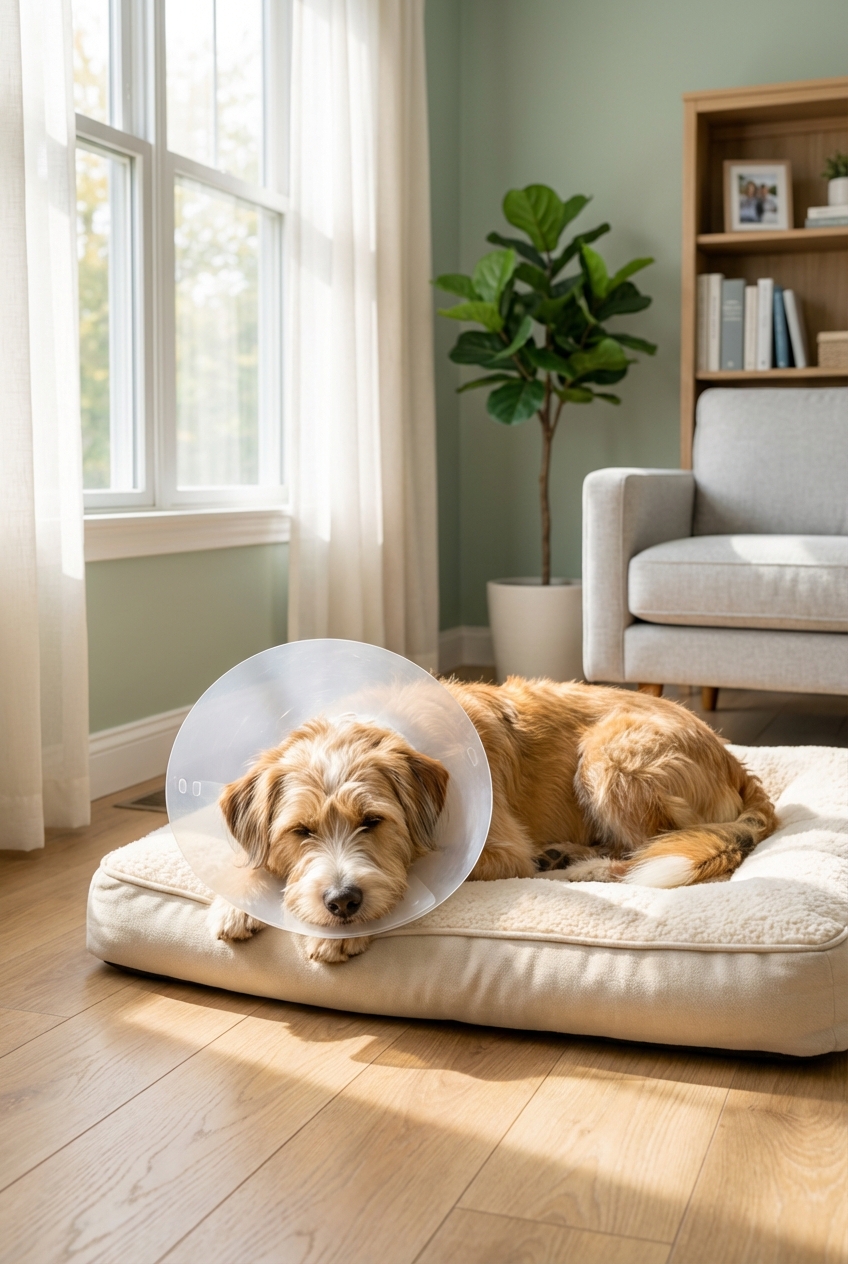
- No licking, even if it looks fine. Licking can introduce bacteria and can cause swelling or the incision to open.
Stop licking: collar options
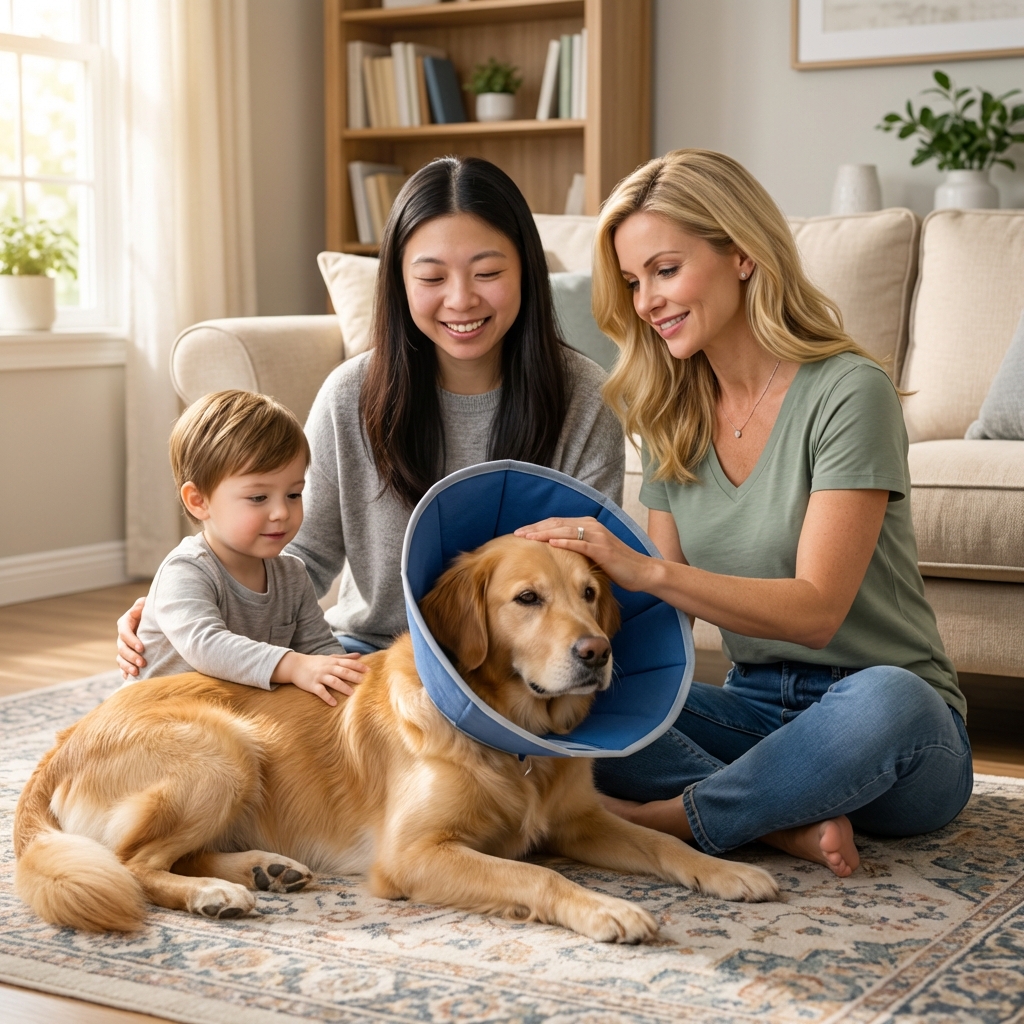
- Elizabethan collar (cone). Still the most reliable option for many dogs.
- Inflatable collar. Works for some dogs, but not all incisions are protected equally depending on your dog’s body shape and flexibility.
- Surgical suit or recovery onesie. Great for dogs that tolerate clothing, but it must stay clean and dry.
If your dog can reach the incision with the option you chose, switch to a cone or ask your clinic for a better fit.
Activity restrictions
- Most dogs need 10 to 14 days of restricted activity.
- Leash walks for potty only at first, then slow increases if your vet approves.
- No running, jumping on furniture, wrestling, or rough play.
Pain control matters
If your veterinarian prescribed pain medication, use it as directed. Pain can reduce appetite, reduce sleep quality, and make dogs more likely to lick the incision. Never give human pain medications unless your veterinarian explicitly instructs you to.
Eating and bathroom habits
- Appetite the first 24 hours: Many dogs eat less the night of surgery. That can be normal.
- When it is concerning: Refusing food beyond 24 hours, repeated vomiting, diarrhea, or extreme lethargy should prompt a call.
- Bathroom note: A slightly delayed bowel movement can happen after anesthesia and pain meds. Straining to urinate or being unable to urinate is an urgent reason to call.
Start weight control now
If I could put one message on every post-neuter discharge sheet, it would be this: adjust food early, not after weight gain happens.
Feeding without overthinking it
- Re-check calories with your vet. Ask for a target weight and a daily calorie range. If your dog is still growing or is a large breed, ask what a healthy growth and body condition goal looks like.
- Portion accurately. Use a measuring cup or, even better, a kitchen scale.
- Keep treats to 10% of daily calories. Treats add up faster than most people realize.
- Prioritize protein and balance. A complete and balanced diet with adequate protein supports lean muscle, which supports a healthier metabolism.
- Fiber can help. For dogs that act extra hungry, your vet may recommend a higher-fiber diet or specific weight-management formulas.
Action step: Take photos from above and from the side once a month, and weigh your dog monthly. Subtle changes are easier to catch in pictures than in the mirror.
Body condition check
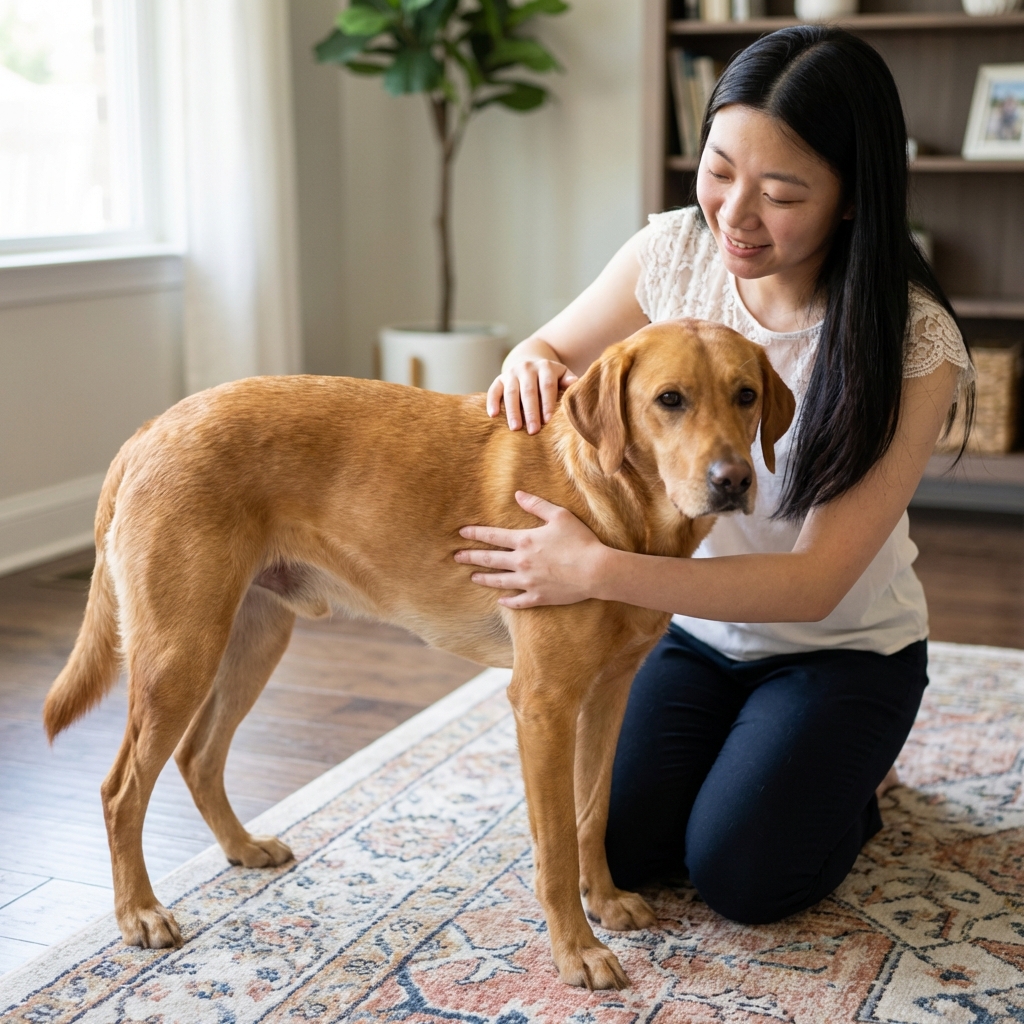
The scale matters, but body condition matters more. Some dogs are naturally stocky, and some are naturally lean.
In 30 seconds, check for:
- Ribs you can feel easily with a light touch (not see them sharply, but feel them without pressing hard).
- A visible waist when looking from above.
- An abdominal tuck when looking from the side.
Many clinics use the Body Condition Score (BCS) scale, where a healthy target is often around 4 to 5 out of 9 for most dogs. Ask your clinic for a BCS chart so you can compare at home.
If you cannot feel ribs without pressing, or your dog has lost a defined waist, it is time to tighten up the plan. Extra weight increases the risk of arthritis, diabetes, breathing strain, and shorter lifespan.
Exercise after recovery
Once your veterinarian clears full activity, consistent exercise is your best friend. It is not about exhausting your dog. It is about building routine movement that maintains muscle and supports mental health.
Smart activity ideas
- Leash walks with sniff breaks. Sniffing is calming and enriching for many dogs.
- Short play sessions. Fetch, tug, or flirt pole in controlled bursts (especially for young dogs).
- Strength-building basics. Sit-to-stand reps, controlled stairs (if joint-safe), and slow hill walks.
- Food puzzles. Great for dogs who seem hungrier post-neuter.
Joint note: If your dog is a large breed or is still growing, ask your vet about safe exercise volumes and the best timing of neuter for your specific dog. Keeping a lean body is one of the best ways to protect hips and knees long-term.
Behavior: what changes
Neutering can reduce some hormone-driven behaviors, but it does not automatically create a polite dog. Think of it like turning down the volume, not rewriting the song.
Behaviors that may improve
- Roaming to seek females in heat
- Some urine marking
- Some mounting behaviors
- Some hormone-related tension in certain contexts (results are variable)
Behaviors that still need training
- Jumping on guests
- Leash pulling
- Reactivity and fear-based behaviors (often unchanged)
- Resource guarding
Important nuance: Effects on aggression and reactivity are not predictable. Some dogs improve, many stay the same, and behavior challenges should be addressed with training and veterinary guidance, not surgery alone.
Action step: Use the post-surgery period to build calm routines. Reward settling, practice short training sessions, and reinforce polite behaviors consistently. If behavior issues feel intense or unsafe, work with a qualified trainer and your veterinarian.
Long-term health
Neutering changes the risk profile for a few conditions. This does not mean your dog will develop them. It means you can be proactive.
Common concerns
- Weight gain (most common and most preventable)
- Orthopedic strain if weight increases or if high-impact activity is excessive
- Urinary changes are more often discussed in spayed females, but any dog with urinary symptoms should be checked
- Skin and coat changes can show up in some dogs, but they are more often tied to nutrition, allergies, or underlying endocrine issues than neutering itself
Preventive care that pays off
- Annual wellness exams (twice yearly for seniors)
- Dental care and cleanings when recommended
- Parasite prevention suited to your region and lifestyle
- Routine bloodwork, especially as your dog ages
Nutrition upgrades
You do not need a perfect diet to make real progress. You just need a consistent, balanced plan.
If you feed kibble
- Ask your vet whether a weight management or lower-calorie option is appropriate after neutering.
- Serve measured portions and avoid free-feeding.
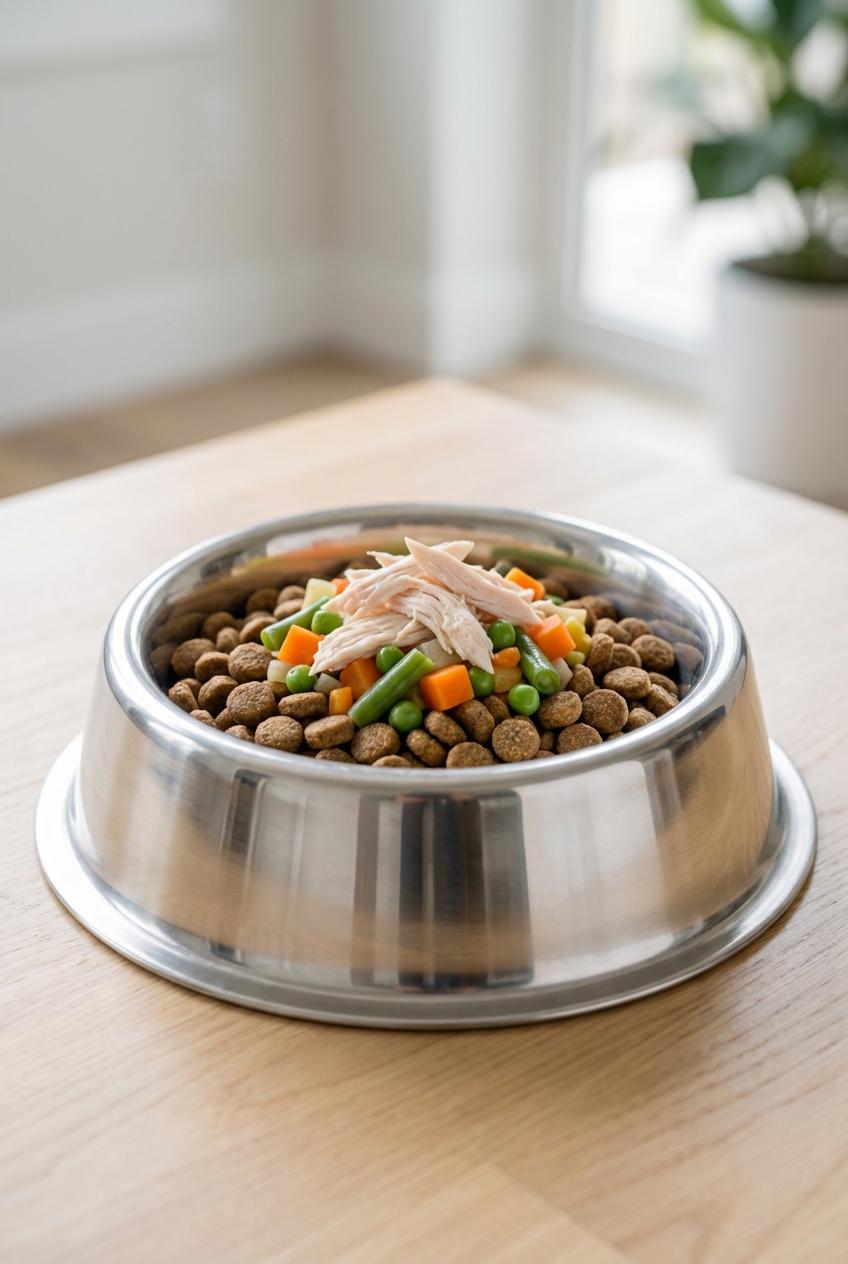
- Add low-calorie toppers like a spoon of plain pumpkin or lightly cooked green beans (as long as your dog tolerates them).
If you want to add fresh foods
Fresh, whole foods can be a wonderful addition, but keep them balanced and safe. Start slowly. A simple starting point is replacing a small portion of the meal with a vet-approved fresh option, then watching stool quality and weight.
Small changes, done consistently, are what keep neutered dogs lean and energetic.
Safety note: Any home-prepared diet should be balanced for calcium, vitamins, and essential fatty acids. If you want to go fully homemade, ask your veterinarian for a board-certified veterinary nutritionist referral.
Safety and ID
Recovery is a time when dogs can slip out a door or bolt because their routine is off. A few quick safeguards help protect your dog and your neighborhood.
- Use a leash for all potty breaks until your vet clears normal activity.
- Check that your dog’s collar fits properly and tags are up to date.
- If your dog is not microchipped, ask your clinic about microchipping at a future visit (many dogs are already chipped, so it may just be a quick scan and registry check).
When to call the vet
Trust your instincts. If something feels off, it is always okay to ask.
Call your veterinarian promptly if you notice:
- Incision swelling that worsens after the first couple of days
- Discharge, bleeding, bad odor, or incision opening
- Repeated vomiting, diarrhea, refusal to eat for more than 24 hours, or extreme lethargy
- Straining to urinate or inability to urinate
- Signs of pain that are not improving with prescribed medications
The bottom line
Caring for a neutered dog is mostly about three things: smart recovery, smart calories, and smart routines. When you protect the incision early, adjust food before weight gain happens, and keep your dog moving in a consistent way, you set them up for a long, comfortable life.
If you want one simple place to start today, start here: portion your dog’s food for the next two weeks and schedule a weight check. That single habit prevents so many problems down the road.