Thinking about a Sphynx cat? Get realistic expectations on temperament, weekly bathing and skin care, ear and nail routines, keeping them warm, feeding tips,...
Article
•
Designer Mixes
Caring for a Hairless Cat: Step-by-Step Facts

Shari Shidate
Designer Mixes contributor
Hairless cats are unforgettable. They are warm to the touch, full of personality, and often surprisingly cuddly. But they are not “low maintenance.” Without fur, your cat’s skin becomes the front line for temperature control, sun protection, and oil management.
As a veterinary assistant in Frisco, Texas, I’ve seen how quickly small skin issues can turn into big discomfort for hairless breeds when routine care slips. The good news is that once you learn a few basics, caring for a hairless cat becomes simple, consistent, and very rewarding.
Hairless cat basics owners should know
Most “hairless” cats still have some fuzz
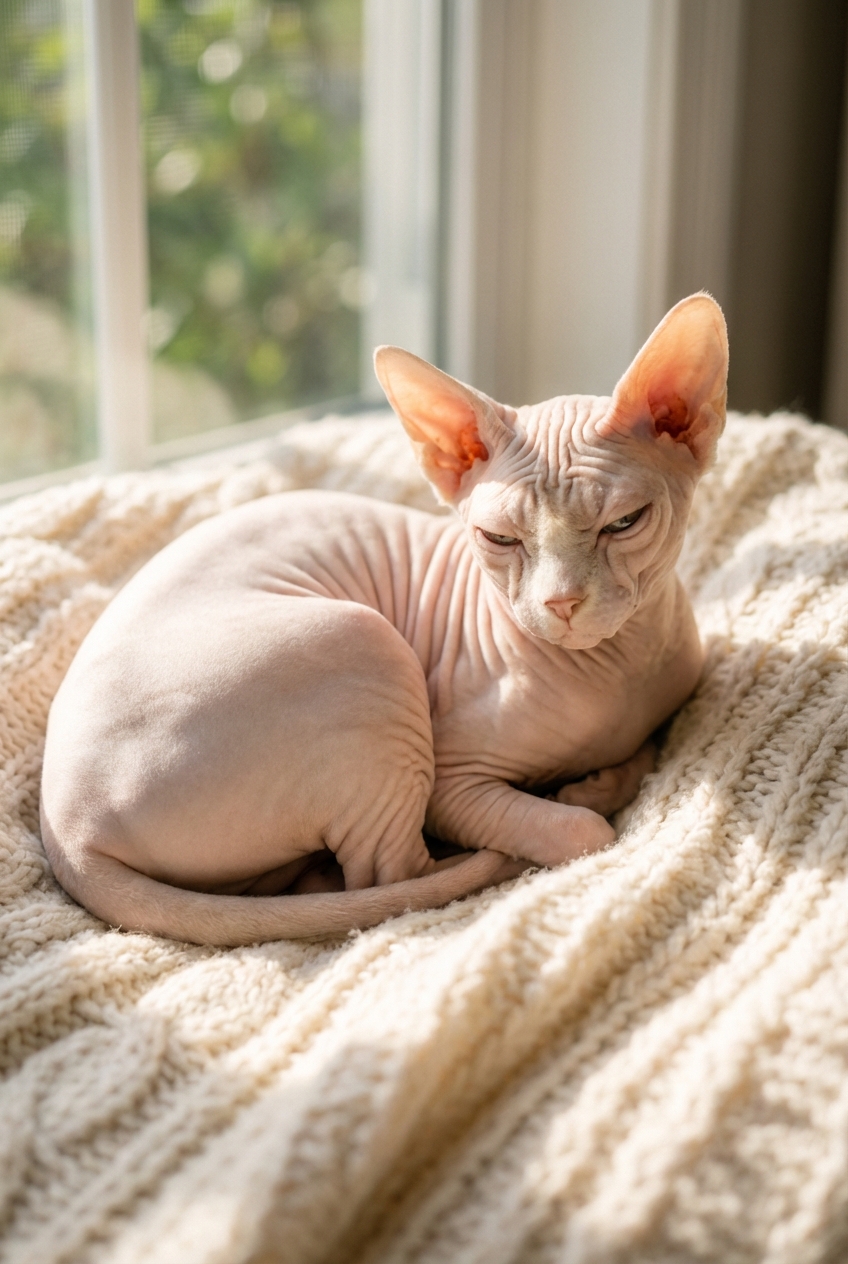
Many hairless cats have a peach-fuzz coat. Even so, they lack the protective, insulating fur that helps most cats regulate temperature and keep skin oils distributed.
Skin oils build up faster
Fur usually absorbs and helps spread natural oils. Without it, oil stays on the skin. That can lead to greasy buildup, clogged pores, blackheads (especially on the chin), and that “dirty” feeling even when your cat lives indoors.
They lose body heat quickly
Hairless cats can get chilled easily, which may increase calorie needs for some individuals and drive them to seek warm spots like laps, blankets, and sunny windows. The best guide is your cat’s body condition and weight trends, not a bigger bowl by default.
They can sunburn
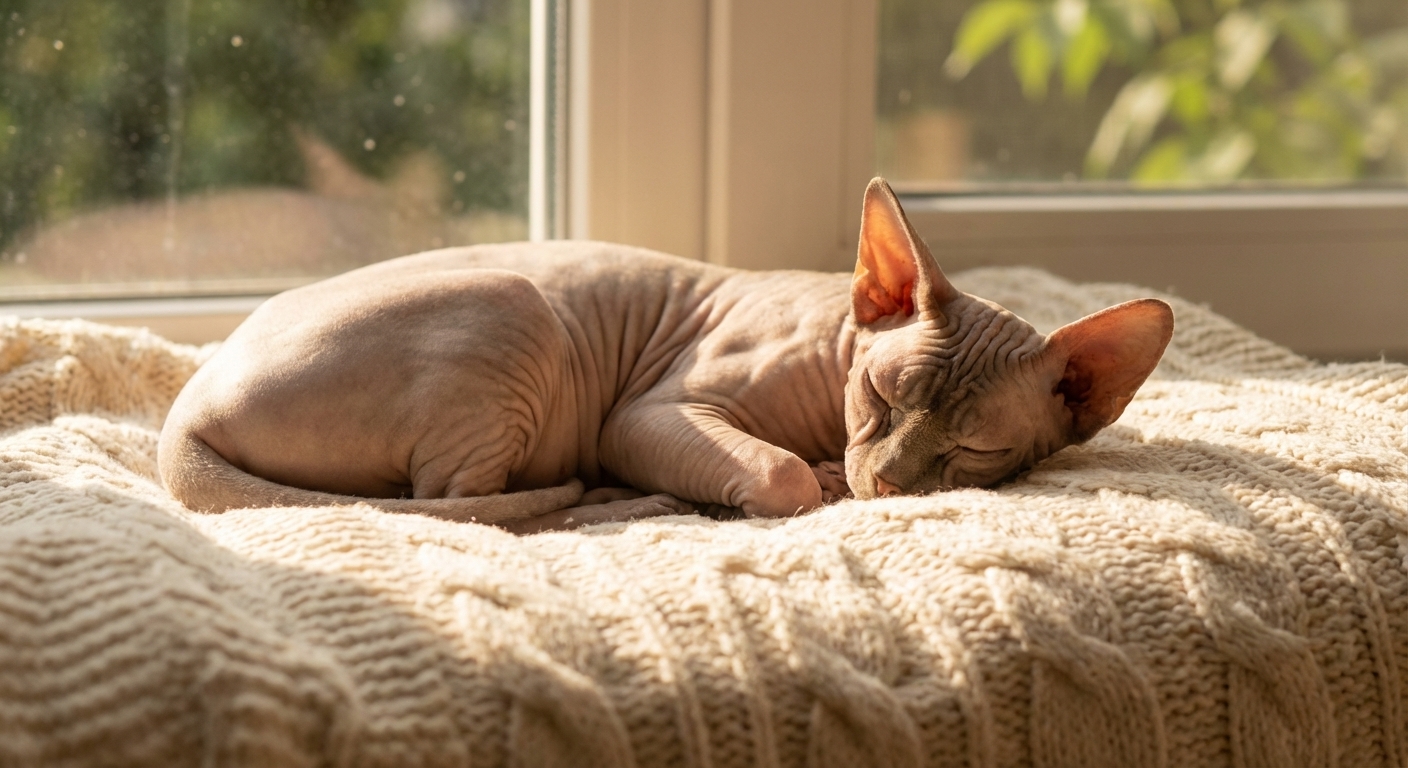
Yes, indoor cats can sunburn. A hairless cat lounging in a bright window can get red, tender skin, especially on the back, ears, and nose.
Some breeds are prone to heart disease
Sphynx cats, in particular, have a known risk for hypertrophic cardiomyopathy (HCM). Responsible breeders screen breeding cats with echocardiograms, but owners should still plan for veterinary monitoring. Also, a normal echocardiogram today does not guarantee a cat will never develop HCM later.
Step-by-step daily care
1) Do a quick skin check
Take 30 seconds once a day to scan for:
- Redness, swelling, crusts, or open sores
- New bumps, pimples, or blackheads
- Greasy patches or strong odor
- Scratching, head shaking, or rubbing on furniture
Early spotting is everything. Skin infections and yeast overgrowth are much easier to treat when caught quickly.
2) Keep them comfortably warm
Aim for a cozy home environment and offer multiple warm rest options.
- Soft blankets and fleece beds are ideal.
- Heated pet beds can be great if they are designed for pets and used per instructions.
- Cat sweaters can help, but choose breathable fabric and check daily for rubbing or irritation. Avoid tight elastics and loose threads. Remove clothing if it gets damp or dirty.
3) Wipe as needed
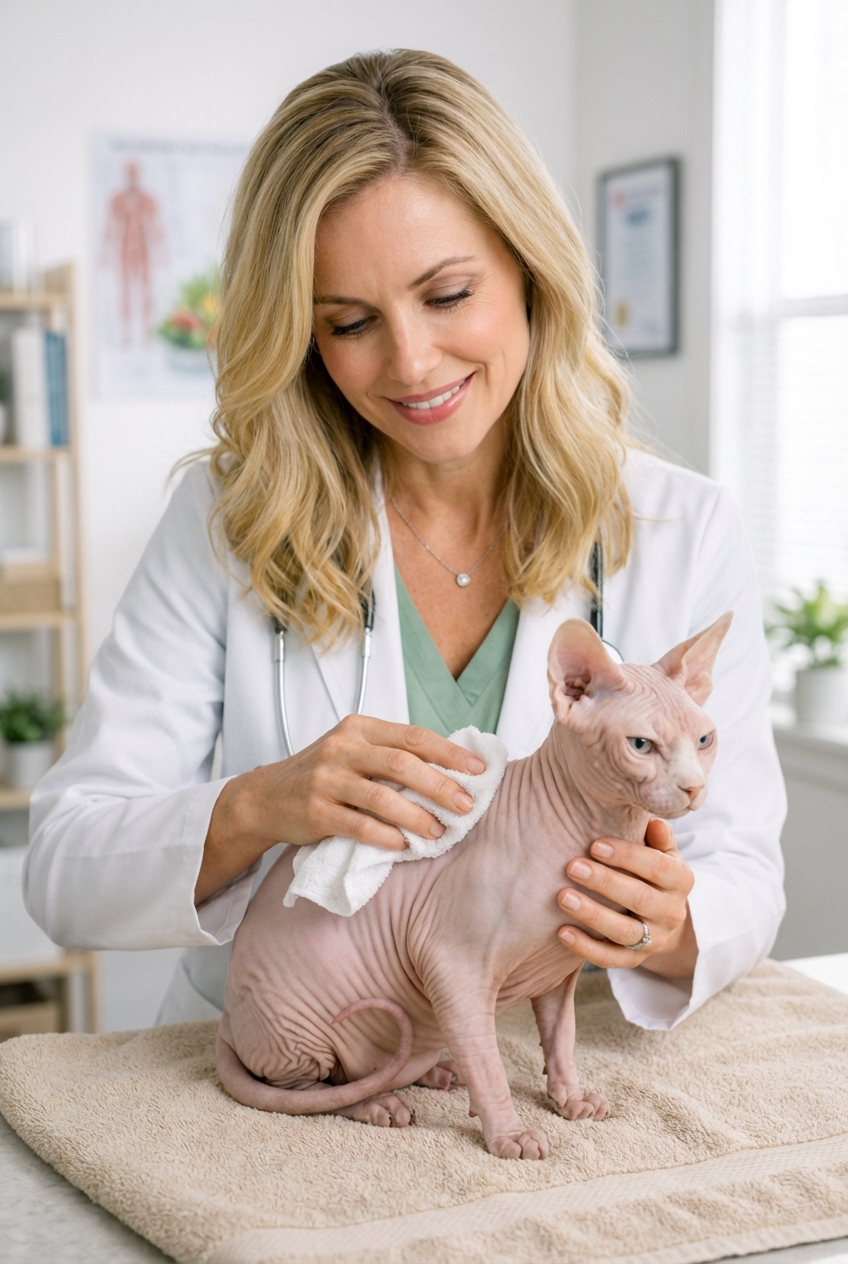
Some hairless cats do well with a gentle wipe-down between baths. A good cue is when your fingers pick up visible residue after petting, your cat feels tacky or greasy, or they leave brown marks on bedding.
Use a soft, damp cloth or a fragrance-free pet wipe and focus on oily areas like the neck folds, armpits, and belly. Avoid harsh rubbing. Skip products with fragrances or essential oils, since those can irritate skin and may be unsafe if licked.
4) Eye and ear quick checks
Hairless breeds often have faster wax buildup in the ears, but it varies by cat. Eyes can also look mildly watery depending on facial structure.
- Eyes: If you see light tearing or mild staining, gently wipe with a damp cotton pad. Call your vet if you see squinting, thick yellow or green discharge, marked redness, or your cat seems painful.
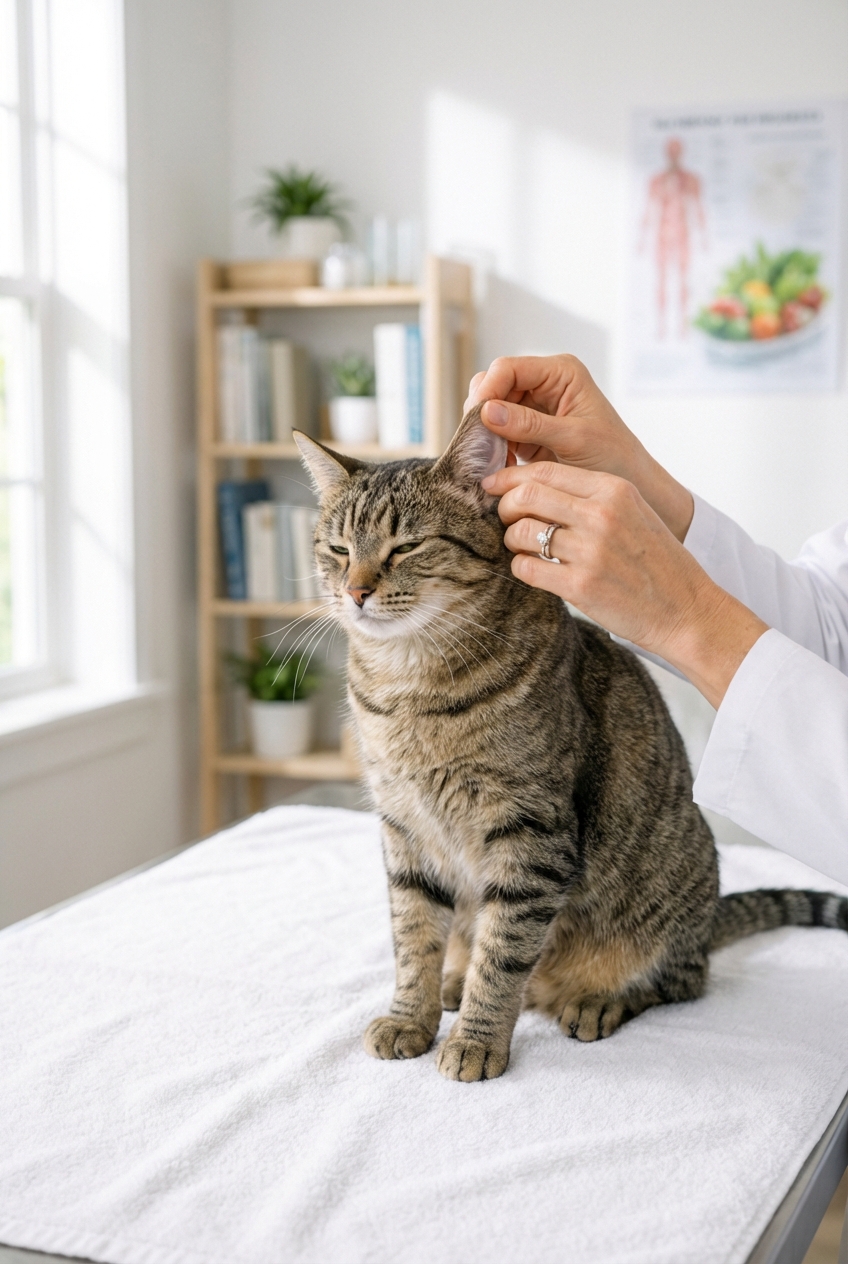
- Ears: If there is visible wax buildup, plan a cleaning session. Never use cotton swabs down the canal. Excessive wax, a strong odor, redness, or sensitivity can also signal infection or mites and needs a veterinary check.
5) Quick litterbox cleanup (optional but helpful)
Some hairless cats pick up litter dust or get a little messy more easily. If you notice residue on paws or the rear, a gentle wipe with a damp cloth can prevent irritation and staining on bedding.
Weekly to monthly routine: bathing and skin care
How often should you bathe a hairless cat?
A common starting point is every 1 to 2 weeks, but it varies widely by individual. Some cats do best every 2 to 4 weeks, and some need more frequent touch-ups in skin folds.
Over-bathing can dry or irritate the skin, so adjust based on oiliness, odor, breakouts, and what your veterinarian recommends.
Step-by-step bath routine
- Prep your supplies: a mild, cat-specific, fragrance-free shampoo, 2 to 3 soft towels, a cup for rinsing, and a non-slip mat. Avoid human shampoo or baby shampoo unless your veterinarian specifically approves it.
- Warm the room: Hairless cats chill fast when wet.
- Use lukewarm water: Not hot. Their skin is sensitive.
- Lather gently: Focus on oily spots and skin folds. Do not scrub.
- Rinse very well: Leftover shampoo residue is a common cause of itchiness.
- Pat dry thoroughly: Especially between toes, around the tail base, and inside skin folds.
- Keep them warm after: A blanket can help as they fully dry.
Skin fold care
If your cat has deeper folds, keep them clean and dry. Moisture trapped in folds can contribute to yeast dermatitis. If you ever notice a sour smell, redness, or sticky buildup in folds, call your veterinarian for a targeted plan.
Do you need lotion or oil?
Usually, no. Over-moisturizing can clog pores and worsen breakouts. If your cat is flaky or dry, talk with your veterinarian before applying any product. Many human lotions contain ingredients that are unsafe if licked.
Ears, nails, and teeth
Ears: more wax can be normal, but odor is not
Many hairless cats need ear cleaning weekly or every other week, but your cat’s needs may be lighter or heavier.
- Use a vet-approved ear cleaner.
- Apply the cleaner per label or vet directions. Do not force the tip deep into the canal.
- Massage the base of the ear for 20 to 30 seconds, then let your cat shake.
- Wipe away debris you can see on the outer ear with cotton or gauze.
Call your vet if you notice a strong smell, painful ears, head tilt, or thick dark discharge. Those can signal infection or mites.
Nails: keep them trimmed and check nail beds
Hairless cats can accumulate oily debris around nails. Trim nails every 1 to 2 weeks and gently wipe around the nail beds with a damp cloth.
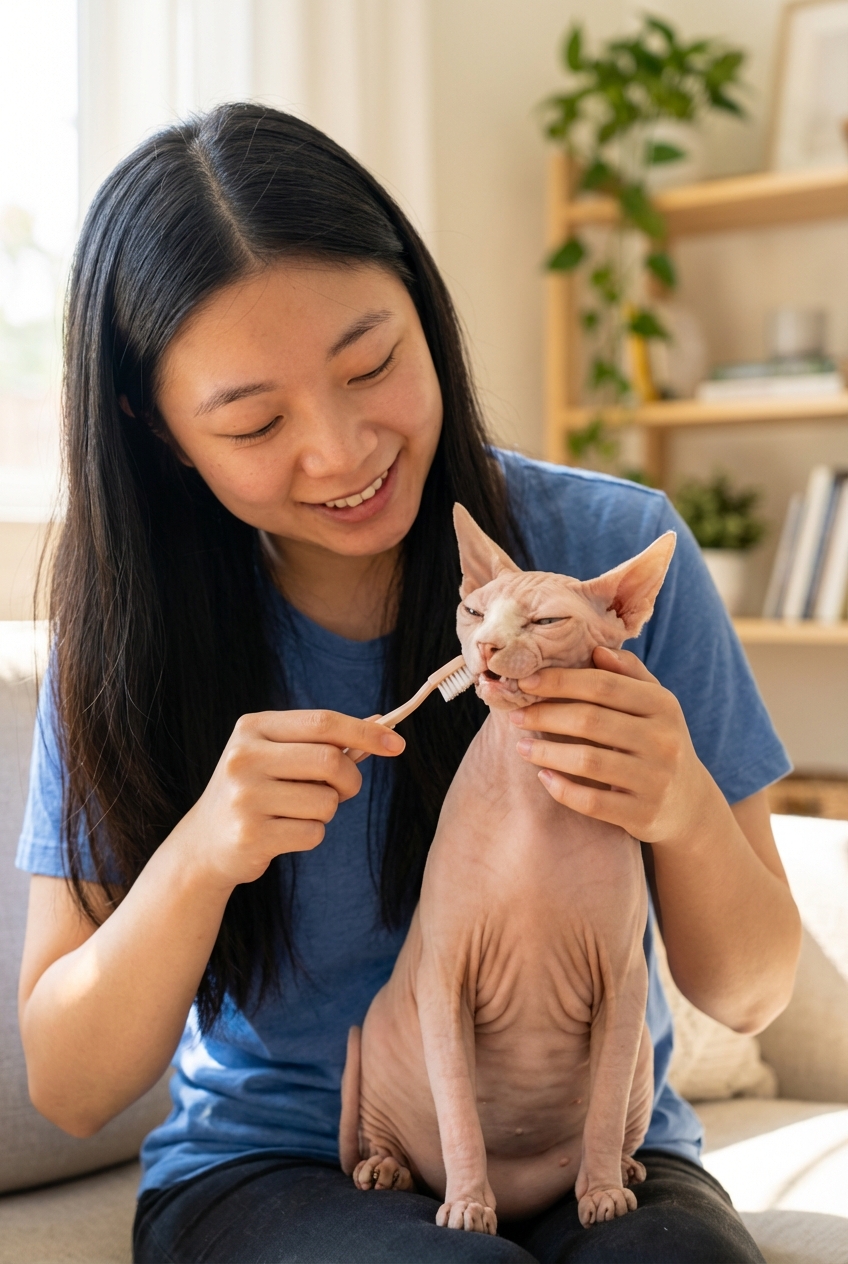
Teeth: start early
Dental disease is common in cats across the board. Aim for:
- Daily brushing with cat toothpaste, or as close as you can manage
- VOHC-accepted dental treats or diets when appropriate
- Regular dental exams and cleanings per your veterinarian
Nutrition and hydration for skin health
Skin reflects nutrition. A balanced, complete-and-balanced cat diet supports:
- Healthy skin barrier: essential fatty acids and adequate protein
- Weight stability: some hairless cats burn more calories staying warm
- Hydration: moisture supports skin and urinary health
Helpful, evidence-based tips
- Prioritize high-quality protein from reputable brands that meet AAFCO standards for your cat’s life stage.
- Consider wet food to boost water intake, especially if your cat is prone to urinary issues.
- Ask your vet about omega-3s if your cat has chronic dry skin or inflammation. Supplements should be veterinary-guided to avoid overdosing or gastrointestinal upset.
- Monitor body condition monthly by weighing your cat and asking your vet to show you a body-condition score. Adjust portions based on trends, not guesses.
If you want to try homemade food, please do it with a veterinary nutritionist involved. Cats have very specific needs for taurine, vitamin A, and other nutrients that are easy to miss without a formulated recipe.
Sun, temperature, and home environment
Sun safety
Limit long sunbathing sessions in intense direct light. Use curtains or UV-filtering window film if your cat camps in one sunny spot daily. Physical barriers like shade and UV film are preferred.
Do not apply human sunscreen unless your veterinarian specifically approves a pet-safe option and tells you how to use it. Many sunscreen ingredients can be toxic if ingested.
Humidity and bedding
- Dry winter air can worsen flaking. A room humidifier may help if your home is very dry.
- Wash bedding weekly with fragrance-free detergent to reduce skin irritation.
Safe heat sources
Avoid space heaters close to bedding and heating pads not designed for pets. Burns can happen faster than most owners realize.
Common problems and what to do
Blackheads and chin acne
- Switch to stainless steel or ceramic bowls and wash daily.
- Keep the chin clean and dry.
- Do not use human acne products (like benzoyl peroxide or salicylic acid) unless your veterinarian specifically directs you.
- See your vet if bumps become inflamed, ooze, or your cat seems painful.
Yeast or bacterial skin infections
Signs include redness, greasy skin, odor, crusting, or itchiness. These need veterinary diagnosis because treatment differs for yeast versus bacteria.
Ringworm
Ringworm is contagious and can look like scaly patches. Hairless cats can show it more clearly on the skin. If you suspect it, contact your vet promptly and limit contact with other pets and children until evaluated.
Allergies
Allergies can show up as itchy skin, ear infections, or recurrent chin acne. Work with your veterinarian on a plan that may include diet trials and parasite control.
Vet care and screening to plan for
Routine exams
Plan at least annual wellness exams, and twice-yearly exams for seniors or cats with chronic skin issues.
Heart screening
If you have a Sphynx or another hairless breed with HCM risk, ask your veterinarian about:
- Baseline cardiac evaluation
- Referral for echocardiogram when indicated, then repeats as recommended (since HCM can develop later)
- Monitoring for symptoms like fast breathing at rest, lethargy, weakness, or sudden hind-limb pain (emergency)
Parasite prevention
Even indoor cats can get fleas or mites. Choose a veterinarian-recommended product and use it consistently.
A simple care schedule
Daily
- Quick skin check
- Make sure they have warm resting spots
- Wipe oily areas if needed
- Quick eye and ear glance
Weekly
- Ear check and clean if needed
- Nail trim and nail bed wipe
- Wash blankets and bedding
Every 2 to 4 weeks (adjust as needed)
- Bath (some cats do best every 1 to 2 weeks, others every 2 to 4)
- Extra skin fold attention if your cat has deeper folds
Every 6 to 12 months
- Veterinary wellness exam
- Dental evaluation
- Discuss heart screening if your breed is at risk
When to call the vet
Reach out promptly if you see:
- Sudden widespread redness, hives, or facial swelling
- Open sores, bleeding, or pus
- Strong odor from skin or ears
- Loss of appetite, lethargy, fever, or hiding
- Rapid breathing at rest or breathing with open mouth (emergency)
If your hairless cat’s skin changes quickly, trust your gut and call your veterinarian. Skin issues are easier to treat early, and your cat will be much more comfortable.