Chicken and rice can soothe mild stomach upset and help dogs transition back to normal food. Learn safe recipes, portions, how long to feed it, and when to c...
Article
•
Designer Mixes
Caring for a Dog With Reduced Mobility

Shari Shidate
Designer Mixes contributor
When a dog starts moving more slowly, slipping on floors, or struggling to stand up, it can feel scary and heartbreaking. The good news is that there are practical steps you can take at home to improve comfort and keep your dog safely included in everyday life. Whether your pup has arthritis , general weakness, a neurologic condition, or paralysis, the goal is the same: reduce pain, prevent injury, and support confident movement.
As a veterinary assistant, I want you to know one important thing up front: mobility changes are common, but they are not something your dog has to simply endure. With the right vet care and a few home adjustments, many dogs move more comfortably and maintain an excellent quality of life.
Start with the why
Reduced mobility is a symptom, not a diagnosis. Arthritis is a big one, but so are injuries, spinal disease, nerve problems, muscle loss, endocrine disease, and pain from nails, paws, teeth, or skin issues that make movement miserable.
Signs to take seriously
- Hesitating before stairs, jumps, or getting into the car
- Slipping on tile or hardwood
- Stiffness after rest, especially in the morning
- Reluctance to play, shorter walks, or stopping often
- Muscle loss in the hind end, wobbliness, knuckling, or dragging paws
- Licking at joints, panting at rest, or irritability when touched
- Accidents in the house because squatting or posturing is hard
Quick foot check: Overgrown nails, cracked pads, foxtails or debris between toes, and painful lumps between toes can all change how a dog walks.
If your dog has sudden weakness, cannot stand, has severe pain, loses bladder or bowel control, or you suspect a spinal injury, treat it like an emergency and call your veterinarian right away.
Vet care that can help
Mobility problems often improve when pain and inflammation are addressed properly, especially in arthritis and many orthopedic injuries. Some neurologic or degenerative conditions may not improve, but many can still be supported and managed to protect comfort and function.
This is also where you avoid dangerous guesswork. Some human medications can be toxic to dogs.
Medication safety
- Never give human pain meds unless your veterinarian tells you to. Common examples include ibuprofen, naproxen, and acetaminophen.
- Call your vet if your dog got into any medication, even “just one.”
Common options your vet may recommend
- Prescription pain control such as NSAIDs, sometimes paired with other medications for multimodal pain relief
- Joint support often omega-3 fatty acids and other supplements based on your dog’s needs
- Physical rehabilitation including targeted strengthening exercises, stretching, and gait work
- Laser therapy or similar modalities that may help some dogs and are used in many rehab programs
- Weight management because less load on joints often means less pain
- Diagnostic imaging like X-rays or advanced imaging when needed to pinpoint the cause
Ask your vet for a clear plan with goals, what to monitor, and when to recheck. Mobility care works best when it is adjusted over time.
Make your home safer
Small changes around the house can prevent slips, reduce pain flare-ups, and help your dog feel confident again.
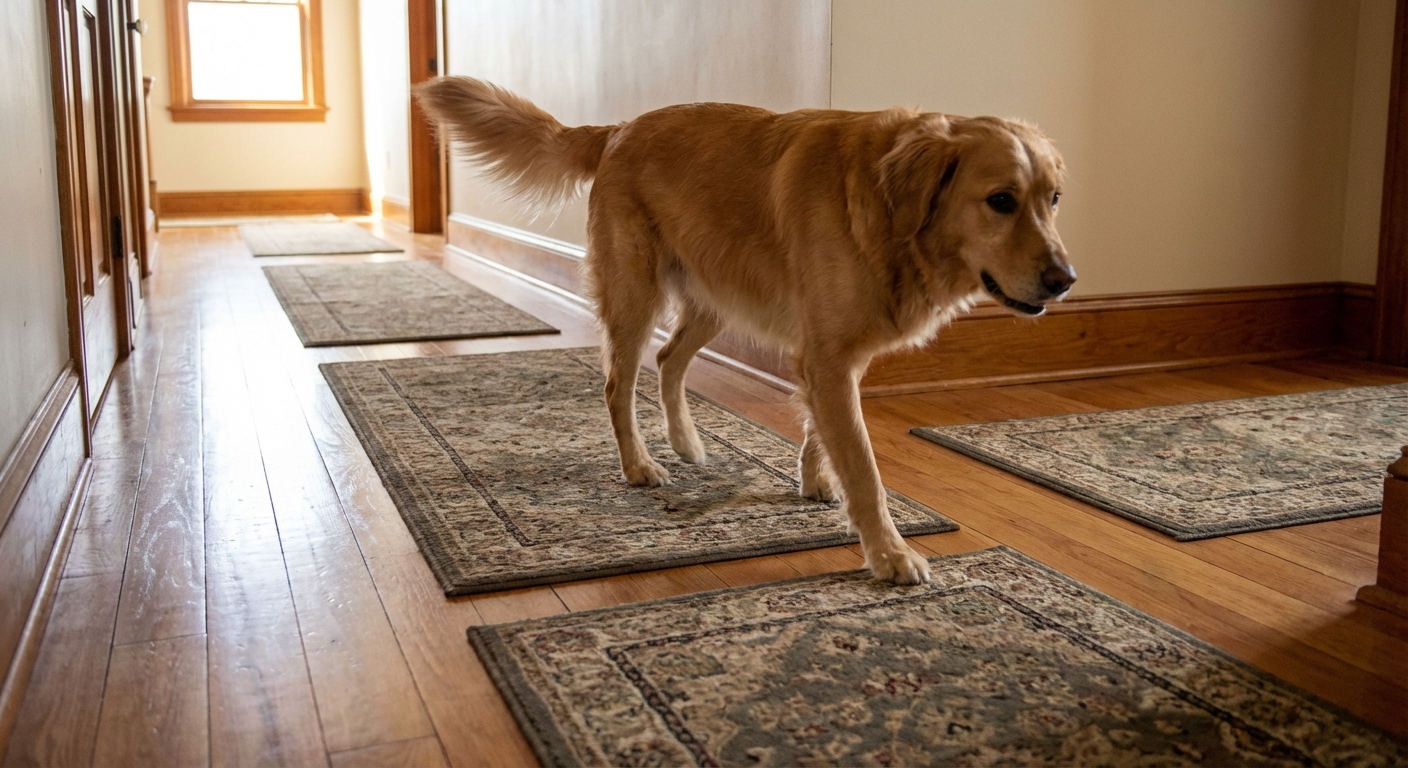
Flooring
- Place runner rugs or yoga mats on main walking paths.
- Use non-slip rug pads under rugs.
- Keep nails trimmed and paw fur clipped for better traction.
- If your dog hates booties, ask your vet about traction aids like toe grips or adhesive paw pads.
Bedding
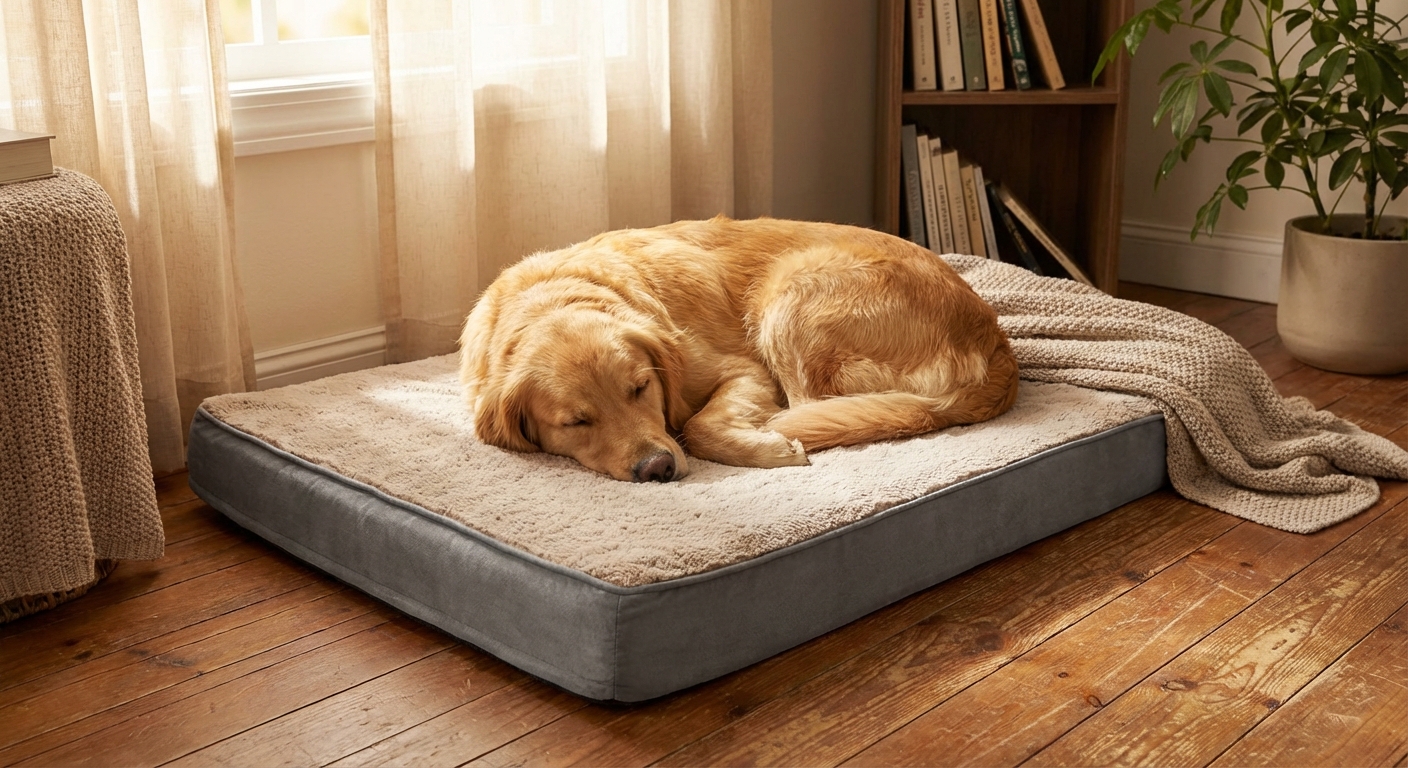
- Choose a thick orthopedic bed, especially for bony dogs or dogs that lie down more.
- Keep bedding warm and dry. Some dogs seem stiffer in cold or damp weather.
- For dogs with paralysis or very limited movement, rotate resting positions if possible and check skin daily for redness.
Stairs, furniture, and cars
- Use pet ramps or sturdy steps for beds, couches, and vehicles.
- Block access to steep stairs when unsupervised.
- Use baby gates to prevent risky attempts.
Food and water
- Elevated bowls can help some dogs, especially those with neck or shoulder discomfort.
- Place bowls on a non-slip mat so they do not slide.
- Keep essentials close to your dog’s main resting area during flare-ups.
Support gear
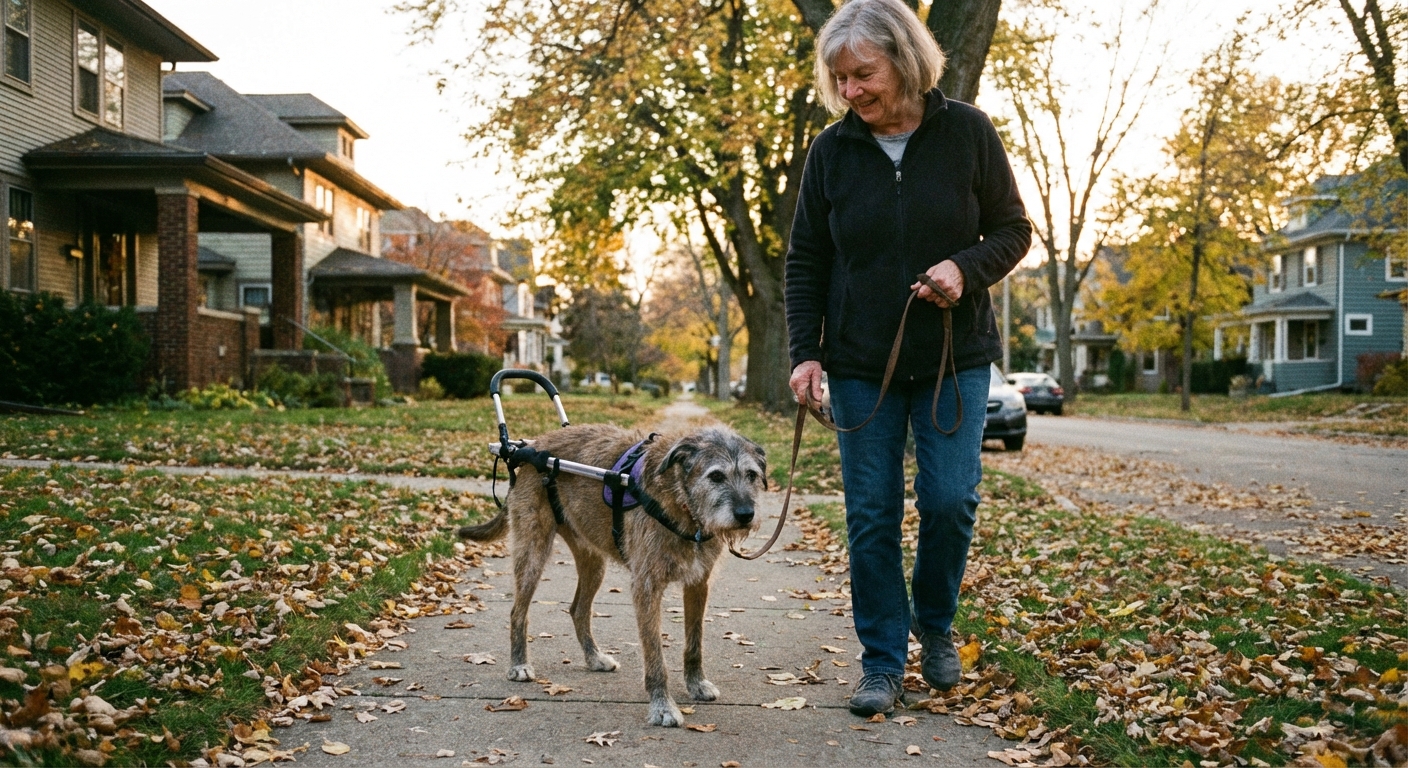
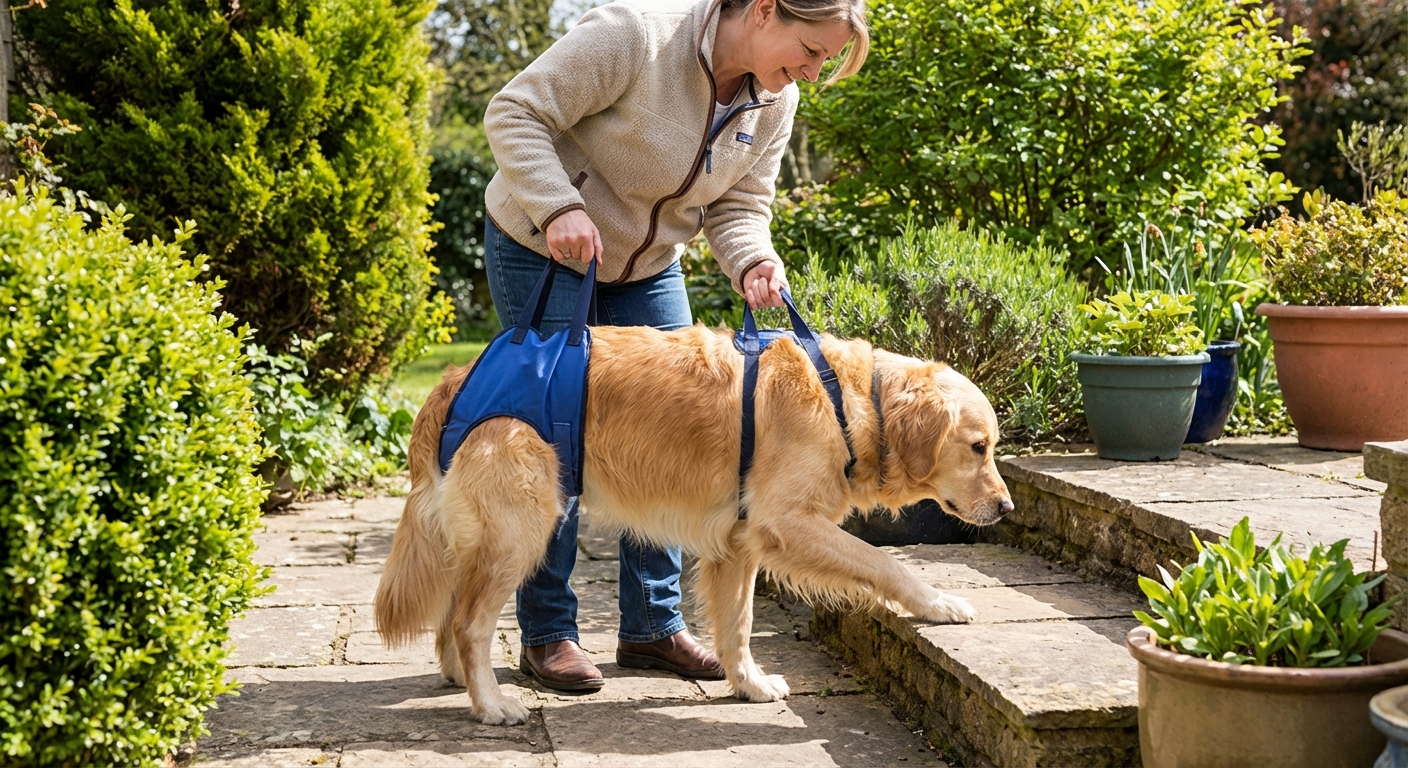
Support equipment can be life-changing, but fit matters. If something rubs, pinches, or twists your dog’s body, it can create new pain.
Helpful tools
- Harness with a handle for dogs who need help standing or navigating steps
- Rear-end support sling for hind limb weakness
- Traction socks, booties, or paw pads for dogs who slip, especially on smooth floors
- Wheelchair for some dogs with paralysis or severe weakness, when recommended by your vet or rehab team
- Full-body support harness if your dog has front-end weakness or needs more balanced help
Quick safety tip
If your dog drags toes, ask your vet about protective boots and checking for wounds. Dragging can quickly cause abrasions that become infected.
Safe movement
Many dogs with arthritis or weakness do best with consistent, low-impact activity. Too little movement leads to muscle loss and stiffness. Too much can cause a painful flare.
Low-impact exercise ideas
- Short, frequent walks on flat ground
- Slow leash walks with plenty of sniff breaks
- Controlled sit-to-stand exercises if approved by your vet
- Gentle hill walking for strengthening, when appropriate
- Swimming or underwater treadmill therapy when available and vet-approved
Warm up and cool down
Just like people, dogs often move better after a brief warm-up. Start slowly for the first 5 minutes, then keep the pace easy. After activity, allow a calm cool-down and provide a comfortable resting spot.
Avoid flare triggers
- Skip uncontrolled fetching, jumping, or wrestling during flare-ups.
- Watch the temperature. Older dogs and painful dogs can overheat faster, especially on humid days.
Watch for overdoing it
- Lagging behind, stopping, or refusing to continue
- Heavier panting than usual
- Stiffness that is worse the next day
- Limping, trembling, or restlessness at night
If you see these signs, scale back and talk with your veterinarian about adjusting the plan.
Nutrition and weight
One of the most evidence-supported ways to help arthritic dogs is maintaining a healthy body weight. Less weight means less stress on joints, and that often means less pain.
Practical steps
- Ask your vet for your dog’s ideal weight range and calorie target.
- Measure food with a real measuring cup or kitchen scale.
- Use low-calorie treats and count them, especially if your dog gets multiple “just because” snacks.
- Consider vet-recommended diets for joint health or weight management when needed.
If you are interested in homemade food, it can be a great option, but balance matters. Work with a veterinarian or board-certified veterinary nutritionist to make sure calcium, fatty acids, and overall nutrients are appropriate for your dog’s life stage and medical conditions.
Care for paralysis
Dogs with severe weakness or paralysis can still live happy, connected lives, but they need a few extra layers of care to prevent complications.
Skin and hygiene
- Check elbows, hips, and hocks daily for redness or sores.
- Keep your dog clean and dry, especially if urine leaks or accidents happen.
- Use gentle wipes and barrier creams only if your vet says they are safe for your dog.
Bladder and bowel support
Some dogs with spinal or neurologic disease cannot fully empty their bladder. This can lead to urinary tract infections. If your dog is dribbling urine, leaking, straining, or you notice strong urine odor or cloudy urine, ask your vet about a bladder assessment and whether manual expression is needed.
Important: Manual expression should be taught by a veterinary professional. Doing it incorrectly can cause pain or injury.
Preventing sores and stiffness
- Use thick bedding and keep it smooth, without wrinkles.
- Help your dog change sides if they do not reposition independently.
- Ask a rehab professional for safe range-of-motion exercises.
Pain and behavior
Dogs often express pain through subtle changes, not dramatic crying. A dog who seems “grumpy,” hides, avoids touch, or suddenly refuses normal routines may be telling you they hurt.
Common pain clues
- Restlessness, pacing, or difficulty settling
- Shaking or trembling
- Changes in appetite
- Guarding, snapping, or avoiding being picked up
- Sleeping more and engaging less
Let your vet know what you are observing. Pain control is not a luxury. It is a quality-of-life issue.
Daily routine
Dogs with mobility challenges do best with predictability. Routine reduces anxiety, supports muscle maintenance, and helps you spot changes early.
A gentle plan
- Morning: short potty break, easy walk or rehab exercises, breakfast, then rest on supportive bedding
- Midday: quick movement break, nail and paw traction check if slipping is an issue
- Evening: another short walk, dinner, calm enrichment like a food puzzle, then bedtime routine
Call the vet fast
- Sudden inability to stand or walk
- Crying out in pain, especially with back or neck pain
- Dragging legs suddenly or worsening weakness
- Loss of bladder or bowel control, or inability to urinate
- Open sores, swelling, or foul odor from skin
- Refusing food or water, or severe lethargy
A hopeful note
Reduced mobility can change your dog’s pace, but it does not have to shrink their world. The dogs I see do best are the ones whose families focus on comfort, safe movement, and small daily wins. Start with one or two home changes, get a pain plan in place with your vet, and build from there.
Your dog does not need perfection. They need support, patience, and a home that makes it easier to be a dog.