Learn practical cockatiel care for multi-pet homes: cage setup, enrichment, safe air, balanced diet, cleaning routines, sleep support, and vet red flags to w...
Article
•
Designer Mixes
Caring for a Cockatiel

Shari Shidate
Designer Mixes contributor
Cockatiels are one of those pets that win you over fast. They are curious, social, and full of personality, but they are also sensitive little animals who thrive on routine, safety, and gentle handling. If you are new to cockatiels, you do not need to be perfect. You just need a solid setup, a balanced diet, and a daily rhythm that makes your bird feel secure.
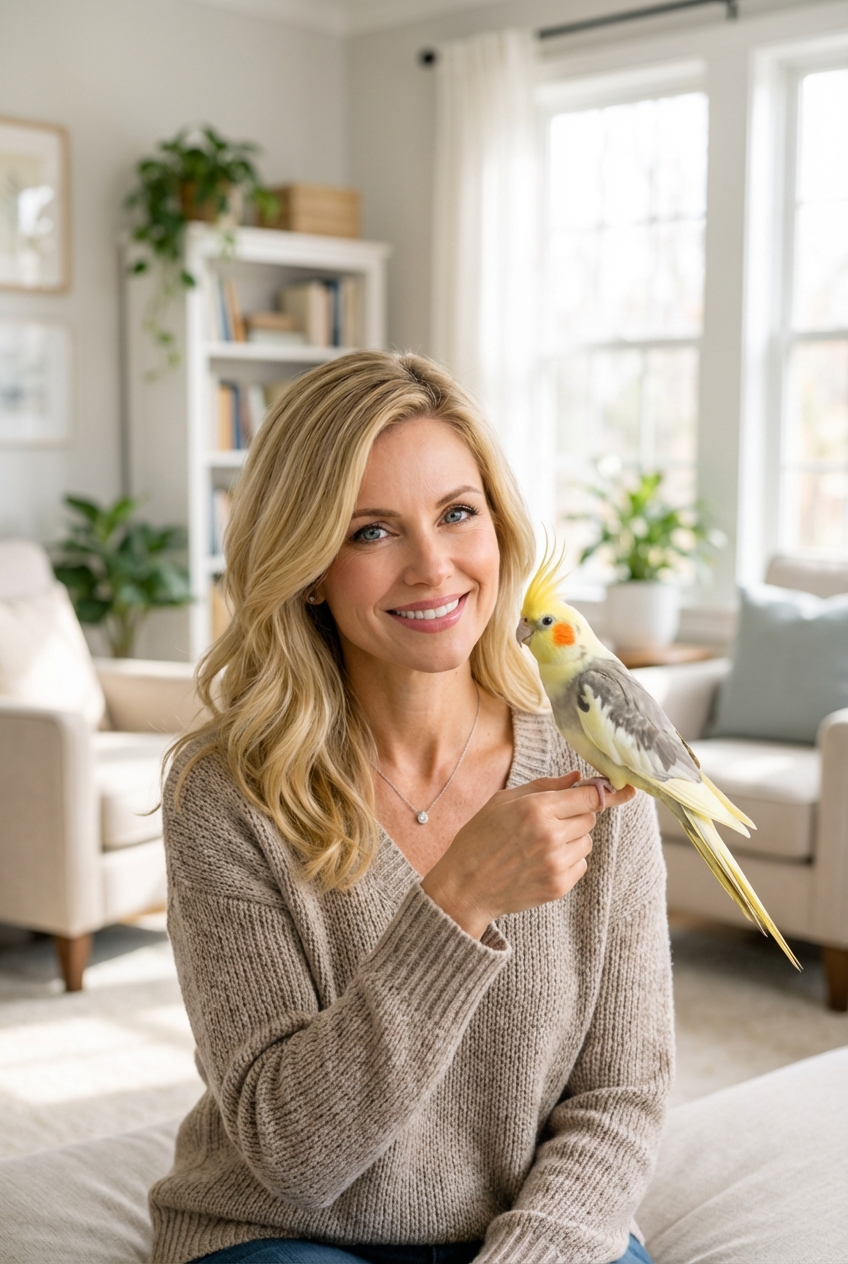
As a veterinary assistant, I always tell new bird owners this: small, consistent care beats occasional big efforts. A cockatiel’s health is shaped by what happens every single day, especially food, air quality, sleep, and stress levels.
Meet the cockatiel
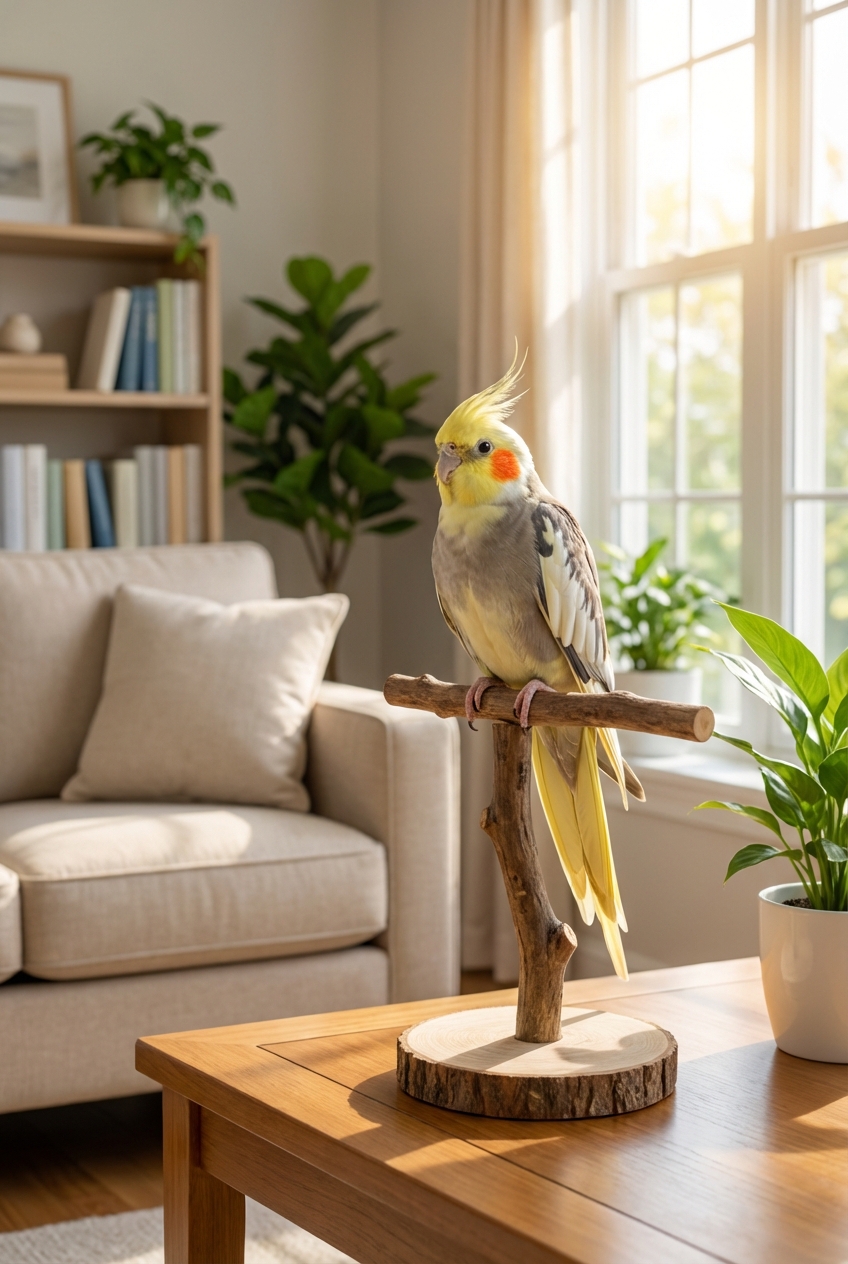
Cockatiels are small parrots native to Australia. In a home, they typically bond closely with their people and may show affection through whistling, following you around, and leaning in for head scratches. Many are shy at first, and they do not do well with rough handling or chaotic environments.
Normal behaviors you should expect
- Whistling and chirping: Many cockatiels love to whistle tunes, especially males.
- Crest changes: A raised crest often means alert or excited; a flattened crest can mean fear or irritation.
- Powder down: Cockatiels produce fine feather dust. This is normal, but it matters for household air quality. Consider frequent dusting and vacuuming, plus a HEPA air purifier in the main bird area if dust is an issue.
- Chewing: They need safe things to shred and explore with their beak.
Learning your bird’s baseline is one of the best health tools you have. When behavior, appetite, droppings, or energy suddenly change, that is your early warning system.
Housing that keeps your bird safe and happy
A good cage setup is not about fancy accessories. It is about space to move, safe materials, and an environment that supports sleep and calm.
Cage size and placement
- Go bigger than the minimum: Aim for a cage where your cockatiel can fully spread wings and climb. Wider is often better than taller.
- Bar spacing: Typically around 3/8 to 1/2 inch (about 1.0 to 1.3 cm). Smaller is safer than larger for preventing head entrapment.
- Location: Place the cage in a living area where your bird can be near the family, but not in the middle of constant traffic.
- Avoid hazards: Keep away from kitchens, drafty doors, and direct blasting AC or heat vents.
Perches, bowls, and the floor
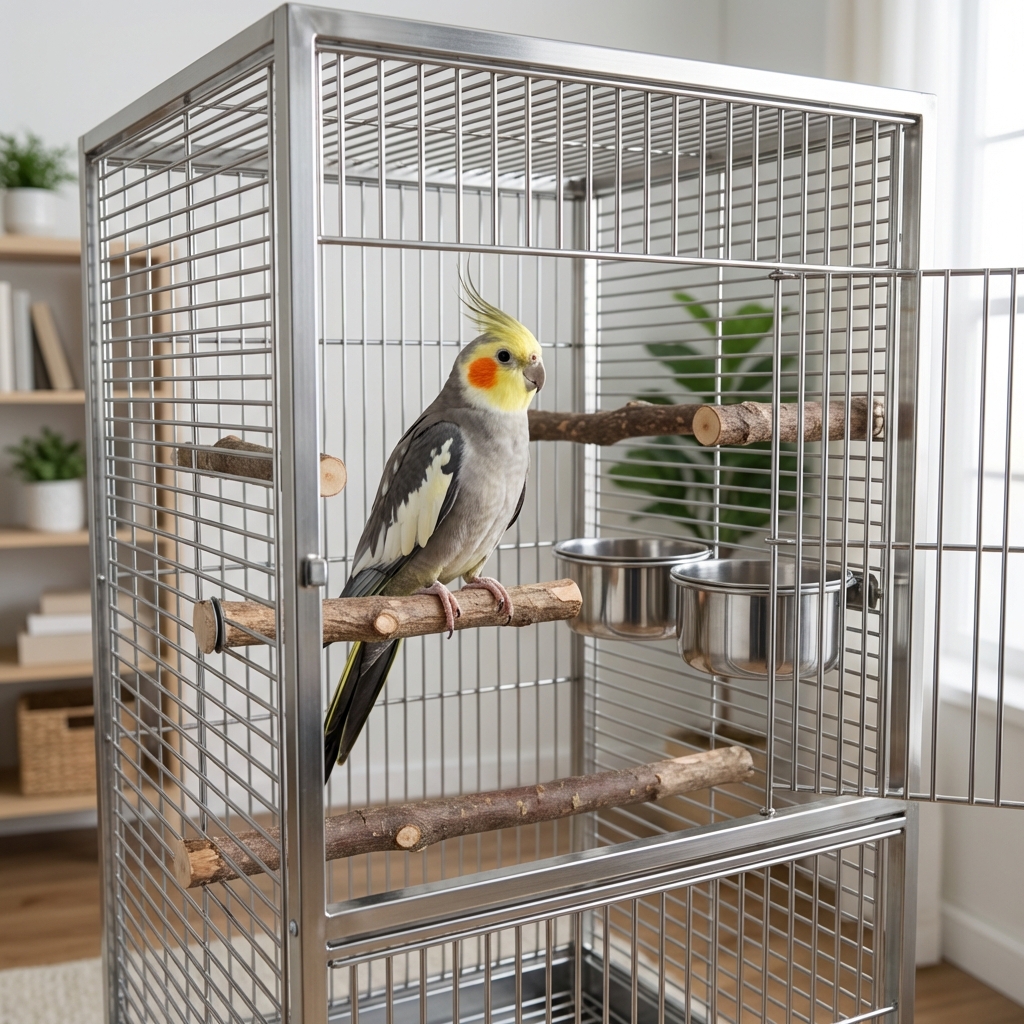
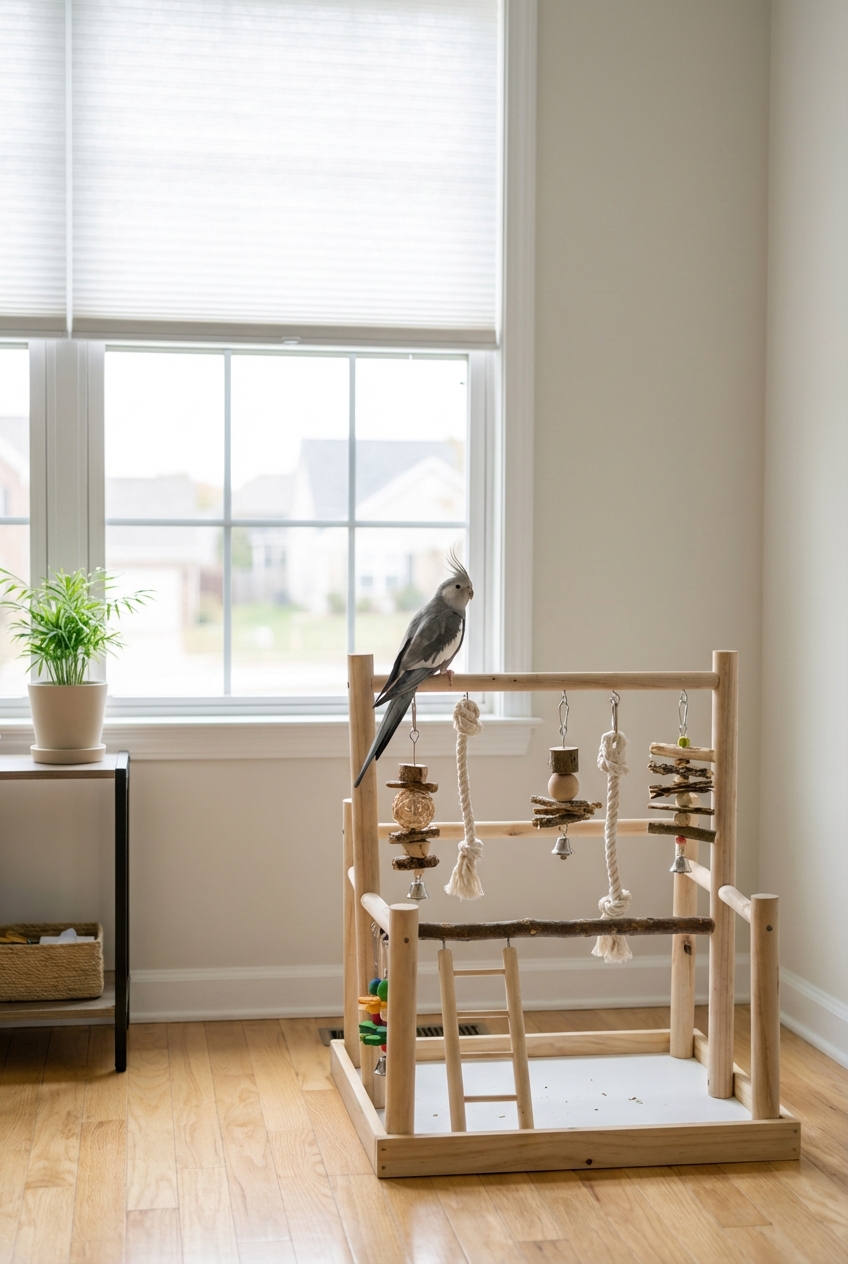
- Perches: Use a variety of diameters and textures, especially natural wood perches. Avoid sandpaper covers which can irritate feet.
- Food and water bowls: Stainless steel or ceramic is easiest to clean and less likely to harbor bacteria.
- Cage liner: Plain paper is simple and helps you monitor droppings. Avoid scented products.
Sleep needs
Cockatiels usually do best with about 10 to 12 hours of quiet, dark sleep each night, often closer to 12 for many birds. Overtired birds can become nippy, more vocal, and more stressed. A separate sleep space or a breathable cage cover can help, as long as airflow stays good.
Try to keep day and night cues consistent. Avoid keeping your bird up late with bright lights or a noisy TV area if you can. If you have questions about specialty lighting (like full-spectrum or UV), ask your avian veterinarian for guidance based on your setup.
Nutrition basics: what to feed a cockatiel
Food is the foundation for energy, immunity, and feather health. Many cockatiels come from backgrounds where they ate mostly seeds, but an all-seed diet is not balanced and can lead to vitamin deficiencies, obesity, and fatty liver disease.
The best everyday diet
- Quality pellets: Often recommended as the main staple because they are formulated to be complete.
- Fresh vegetables: Offer daily. Think dark leafy greens, bell pepper, broccoli, carrots, and squash.
- Seeds: Best as a treat or training reward rather than the whole diet.
- Fresh water: Change daily, and more often if your bird drops food in it.
If your cockatiel is currently seed-only, transition slowly over weeks. Mix pellets into the seeds, offer veggies at predictable times, and celebrate small progress. Birds can be stubborn, and that is normal.
For calcium, many cockatiels do well with a cuttlebone available in the cage. Pellets typically cover a lot nutritionally, so avoid adding supplements unless your avian veterinarian recommends them.
Foods to avoid
- Avocado
- Chocolate, caffeine, and alcohol
- Onion and garlic (especially in larger amounts)
- Fruit pits and apple seeds
- Very salty, sugary, or greasy human foods
If you are ever unsure about a food, check a reputable avian veterinary source before offering it.
Daily care that builds trust
Cockatiels do best when life is predictable. A simple daily routine supports both behavior and health.
A simple daily checklist
- Morning: Fresh water, breakfast, quick glance at droppings and posture.
- Out-of-cage time: At least 1 to 2 hours if possible, in a bird-safe room. More time is even better if your schedule allows, especially for social birds.
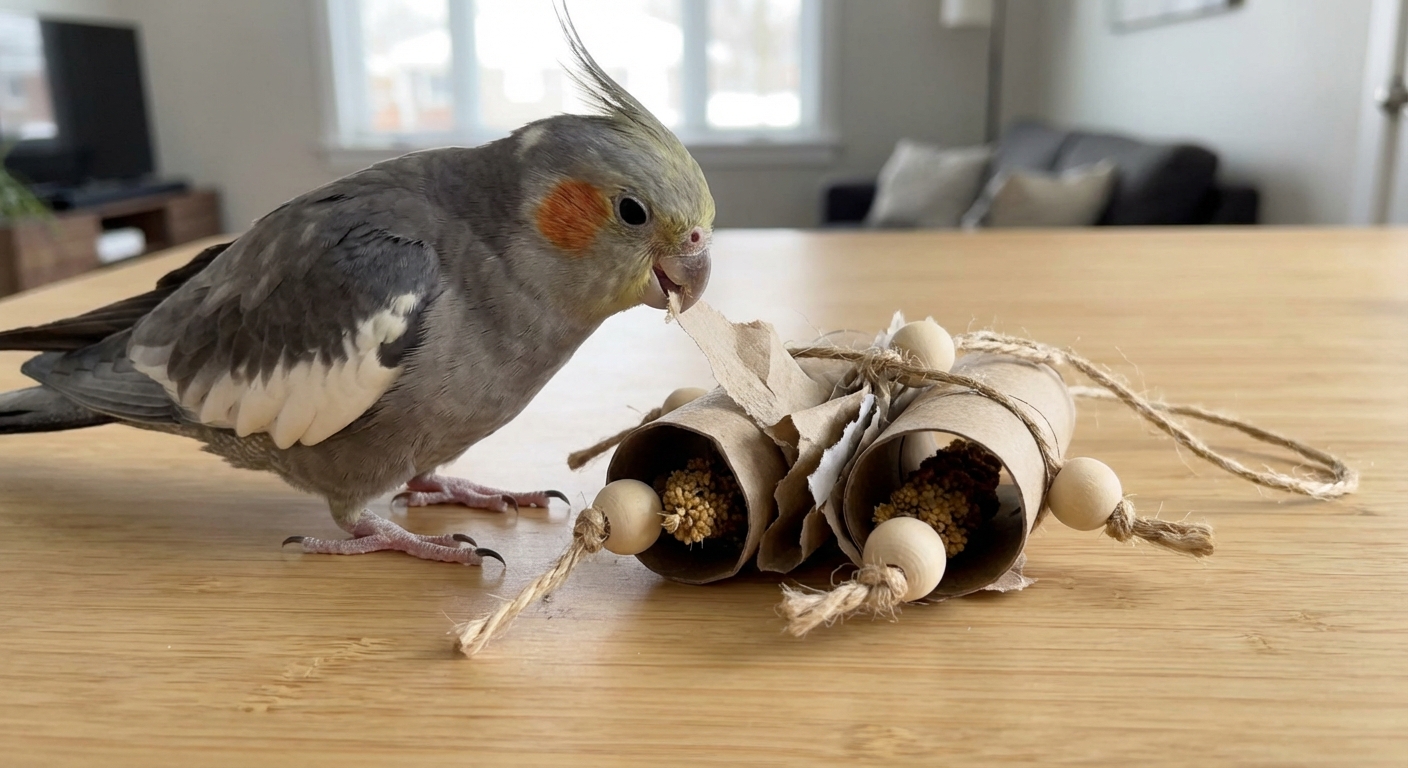
- Enrichment: Rotate a shredding toy or foraging activity.
- Evening: Calm interaction, tidy food bowls, lights down for sleep.
Handling and taming tips
Trust is earned in tiny steps. Start by sitting near the cage and talking softly. Offer a favorite treat through the bars. When your bird is comfortable, teach “step up” using a finger or handheld perch. Keep sessions short and end on a win.
Important safety note: never grab a cockatiel unless it is an emergency. Forced handling can damage trust and can physically injure them.
Enrichment and play
A bored cockatiel may scream more, chew the wrong things, or start feather-destructive behavior. Enrichment is not optional, it is basic care.
What cockatiels love
- Shredding toys: Paper, palm leaf, and soft wood are favorites.
- Foraging: Hide a few pellets or seeds in a crumpled paper cup or foraging wheel.
- Music and whistling: Many cockatiels enjoy gentle music and will whistle back.
- Training: Simple cues like “step up” and target training build confidence.
Rotate toys weekly. Your cockatiel does not need a cage packed to the brim, but they do need novelty.
Health watch
Birds are prey animals, so they often hide illness until they are truly unwell. That is why your daily observations matter so much.
Signs your cockatiel needs a vet
- Fluffed up and sleepy for long periods
- Tail bobbing, open-mouth breathing, or wheezing
- Sitting on the cage bottom or falling off perches
- Not eating, or a sudden drop in appetite
- Vomiting, persistent diarrhea, or very watery droppings
- Any blood, swelling, or new lump
Do not wait. If you notice these signs, contact an avian veterinarian or an emergency clinic that sees birds.
If you only do one proactive health step, do this: schedule a wellness exam with an avian vet after you bring your cockatiel home. Establishing care early makes emergencies less scary later.
Simple health habits that help
- Weigh weekly: Use a small gram scale. Many owners weigh at the same time each week. A sudden drop in weight can be an early red flag even before obvious symptoms.
- Plan routine care: Many cockatiels benefit from annual wellness exams. Some birds, especially seniors or those with known issues, may need checkups more often. Ask your avian vet what schedule fits your bird.
Common preventable problems
- Nutritional issues: Often from seed-heavy diets.
- Respiratory irritation: From smoke, aerosols, dusty litter, or poor ventilation.
- Injury accidents: Ceiling fans, windows, other pets, and unsafe out-of-cage areas.
Home safety
A large share of cockatiel emergencies come from household hazards, not rare diseases. A little prevention goes a long way.
Air and toxin safety
- No Teflon or nonstick fumes: Overheated nonstick cookware can release fumes that are dangerous to birds.
- No smoking or vaping around birds: Their lungs are extremely sensitive.
- Avoid aerosols: Perfume sprays, air fresheners, and harsh cleaners should not be used near your cockatiel.
Out-of-cage safety
- Turn off ceiling fans before your bird comes out.
- Close windows and doors and cover mirrors if needed.
- Keep other pets separated.
- Watch cords, houseplants, and small objects that can be swallowed.
Emergency prep helps a lot when you are stressed. Keep a travel carrier ready, and look up the nearest avian vet and avian-capable emergency clinic before you actually need them.
Bathing and grooming
Many cockatiels enjoy bathing when it is offered in a gentle, low-pressure way.
- Bath options: A shallow dish of water, a fine mist spray, or bringing your bird into a steamy bathroom (not hot, just humid).
- Nails: If nails get sharp or snag, ask an avian vet or experienced groomer for a trim. Over-trimming can cause bleeding.
- Wings: Whether to clip is a personal decision best discussed with an avian veterinarian, especially for households with safety concerns.
Healthy feathers are tied closely to diet, bathing opportunities, sleep, and low stress.
Bringing your cockatiel home
The first week sets the tone. Give your bird time to settle in and learn that your home is safe.
First-week tips
- Keep the environment quiet and predictable.
- Let your cockatiel observe you without pressure to interact.
- Offer the foods they are familiar with, then start slow improvements.
- Limit visitors and handling early on.
With patience, most cockatiels become affectionate companions who truly enjoy their people.