Help your cat heal fast after spay surgery. Get a day-by-day recovery timeline, safe feeding and room setup, incision care, cone options, activity limits, an...
Article
•
Designer Mixes
Care of Your Cat After Neutering

Shari Shidate
Designer Mixes contributor
Bringing your cat home after neutering can feel a little intimidating, especially if this is your first post-surgery experience. The good news is that neutering is one of the most common veterinary procedures, and most cats recover smoothly with a few days of calm, consistent home care.
As a veterinary assistant, I always tell pet parents the same thing: your job is not to “do a lot.” Your job is to create a quiet space, prevent licking, follow medication directions, and watch for a few key red flags. That simple approach protects healing and helps your cat feel safe.
What recovery usually looks like
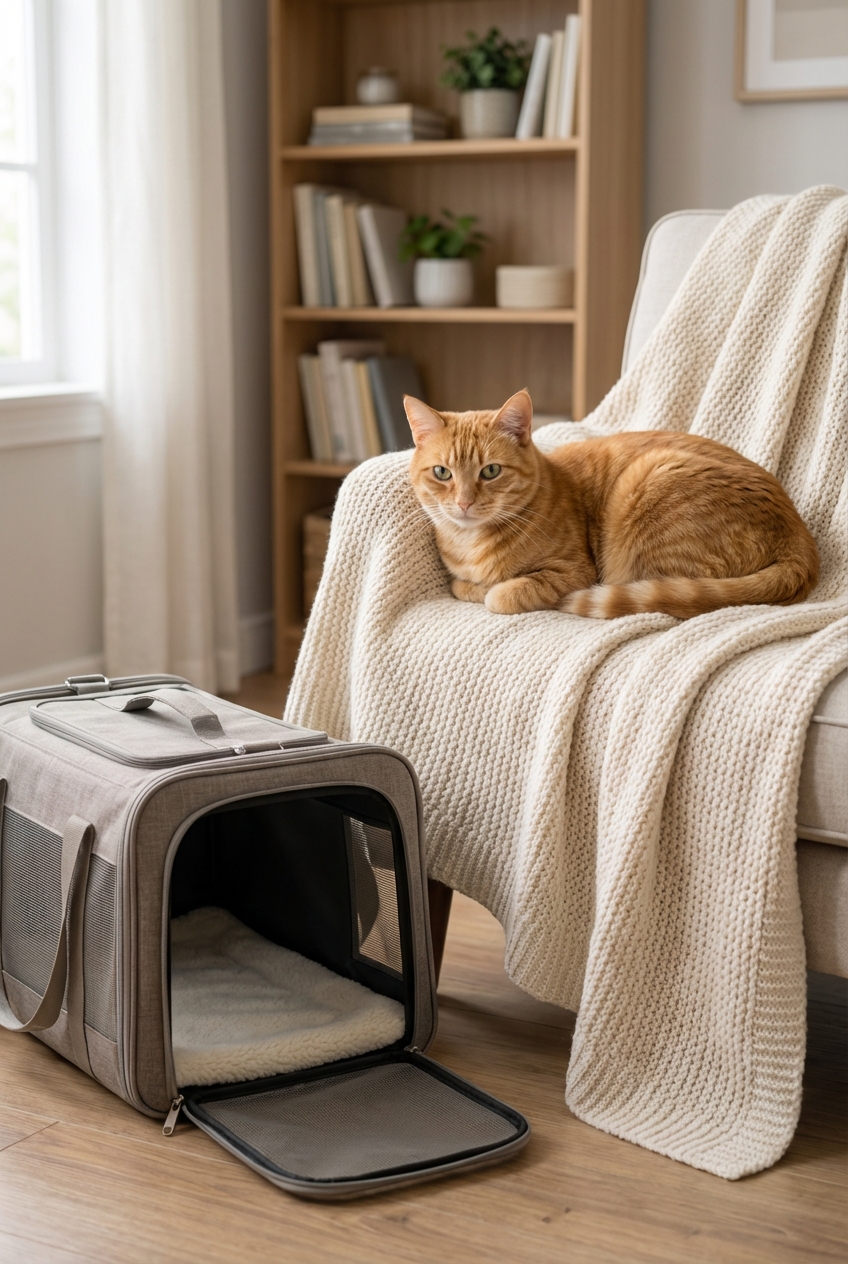
Neutering (castration) removes the testicles through one or two tiny incisions. In many cats, the incisions are made directly on the scrotum, but some clinics use a slightly different approach. Closure method varies too (dissolvable sutures, tissue glue, or no visible external stitches). Even when the outside looks “fine,” your cat still needs rest because the body is healing on the inside.
Typical timeline
- First 24 hours: Sleepy, wobbly, or a little extra clingy or grumpy. Mild nausea can happen after anesthesia.
- Days 2 to 3: Energy begins to return, which is where you may need to limit jumping and rough play.
- Days 4 to 10: Most cats are back to normal. Incision should look clean and dry. Many clinics recommend activity restriction for about 5 to 10 days, sometimes longer depending on technique and your cat’s energy level. Follow your clinic’s timeline if it differs.
Every cat is unique. Kittens often bounce back faster than adult cats, but they can also be more determined to play before they are fully healed.
Your first night at home
The first night is mostly about monitoring and comfort. Keep things boring in the best way possible.
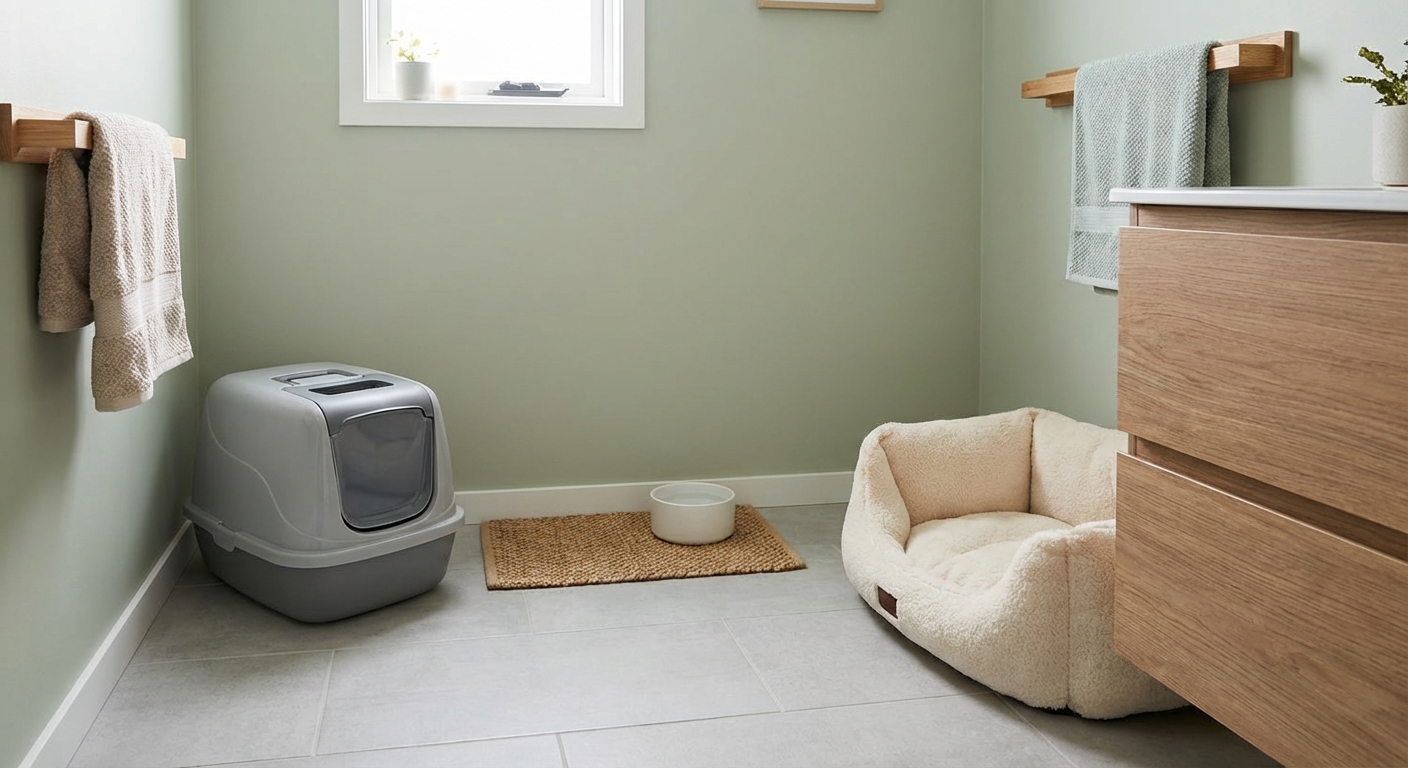
Set up a recovery space
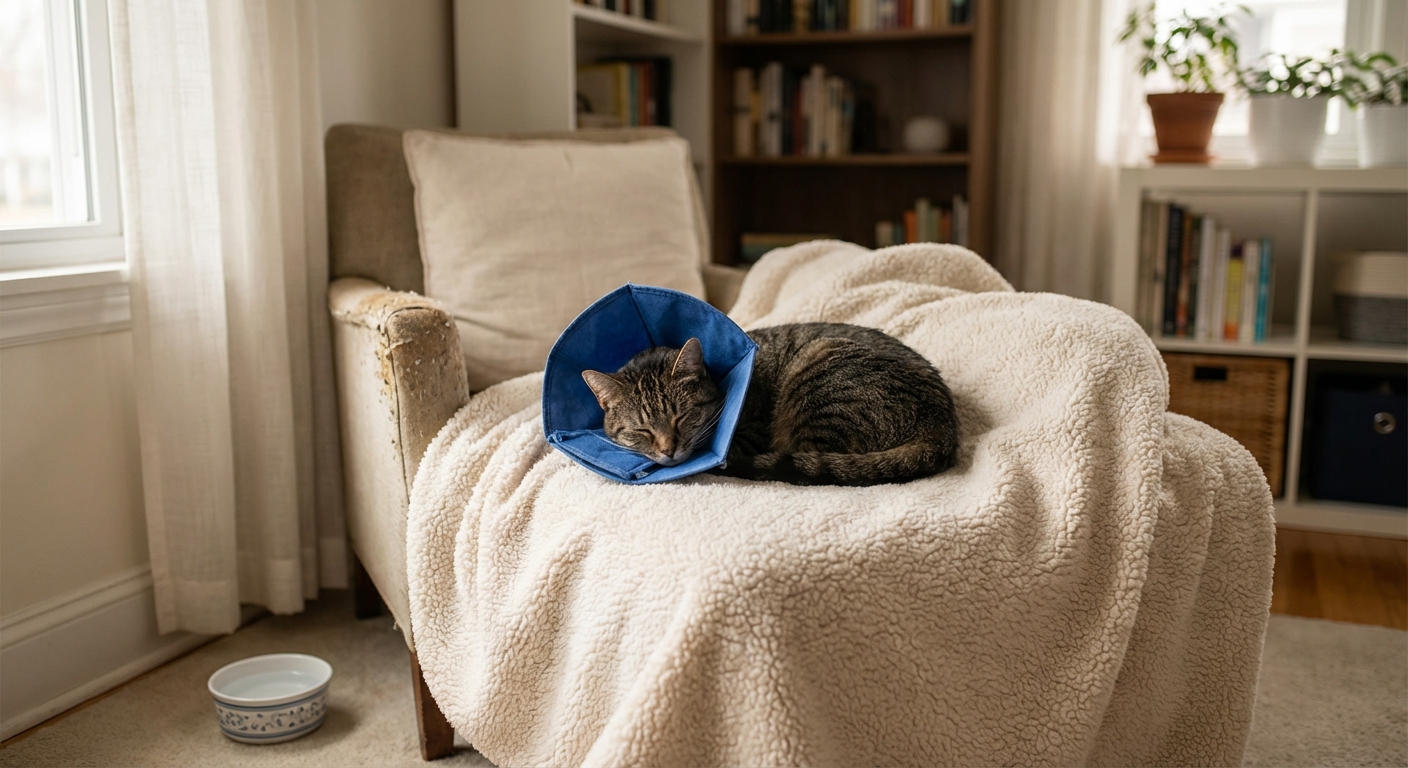
- Choose a small, quiet room where you can close the door.
- Provide soft bedding, fresh water, and a clean litter box.
- Keep other pets and energetic kids separated.
- Dim lighting can help a cat who feels disoriented after anesthesia.
Food and water
Follow your discharge instructions first, but a common plan is:
- Offer a small meal once your cat is fully awake and steady on their feet.
- If your cat vomits, remove food for a few hours and offer water. If vomiting continues, your cat refuses water, or cannot keep water down, call your veterinarian.
- Do not force food. Appetite often returns within 12 to 24 hours.
Grogginess and odd behavior
Mild grogginess, dilated pupils, or acting “off” can be normal during the first day. However, collapse, pale gums, or difficulty breathing are never normal and need emergency care.
Incision care
For most cats, incision care is simple: keep it clean, keep it dry, and keep the tongue away from it.
A quick note on location: many feline neuter incisions are on the scrotum. That means the area you are checking may be a little lower than people expect.
What can be normal
- Closed edges with minimal swelling
- Slight pinkness
- A tiny scab
- Mild bruising or mild scrotal puffiness that improves over a couple of days
What is not normal
- Rapidly increasing swelling, a firm balloon-like lump, or swelling that looks worse each day
- An open gap, active bleeding, or tissue protruding
- Pus-like discharge, strong odor, or heat and worsening redness
What to avoid
- No baths and no topical ointments unless your vet specifically told you to use them.
- No licking or chewing. This is one of the most common reasons incisions get infected or open.
- No vigorous activity like wrestling, chasing, or high jumping during the restriction period.
- Keep it dry. Keep your cat indoors, avoid damp bedding, and do not let them go outside where the area can get dirty or wet.
Daily incision check
Once daily, in good light, take 10 seconds to look:
- Is it dry?
- Is swelling getting better, not worse?
- Any discharge, odor, or open gap?
If your cat hates being handled, do the best you can without wrestling. Stress slows healing too.
Cones and licking prevention
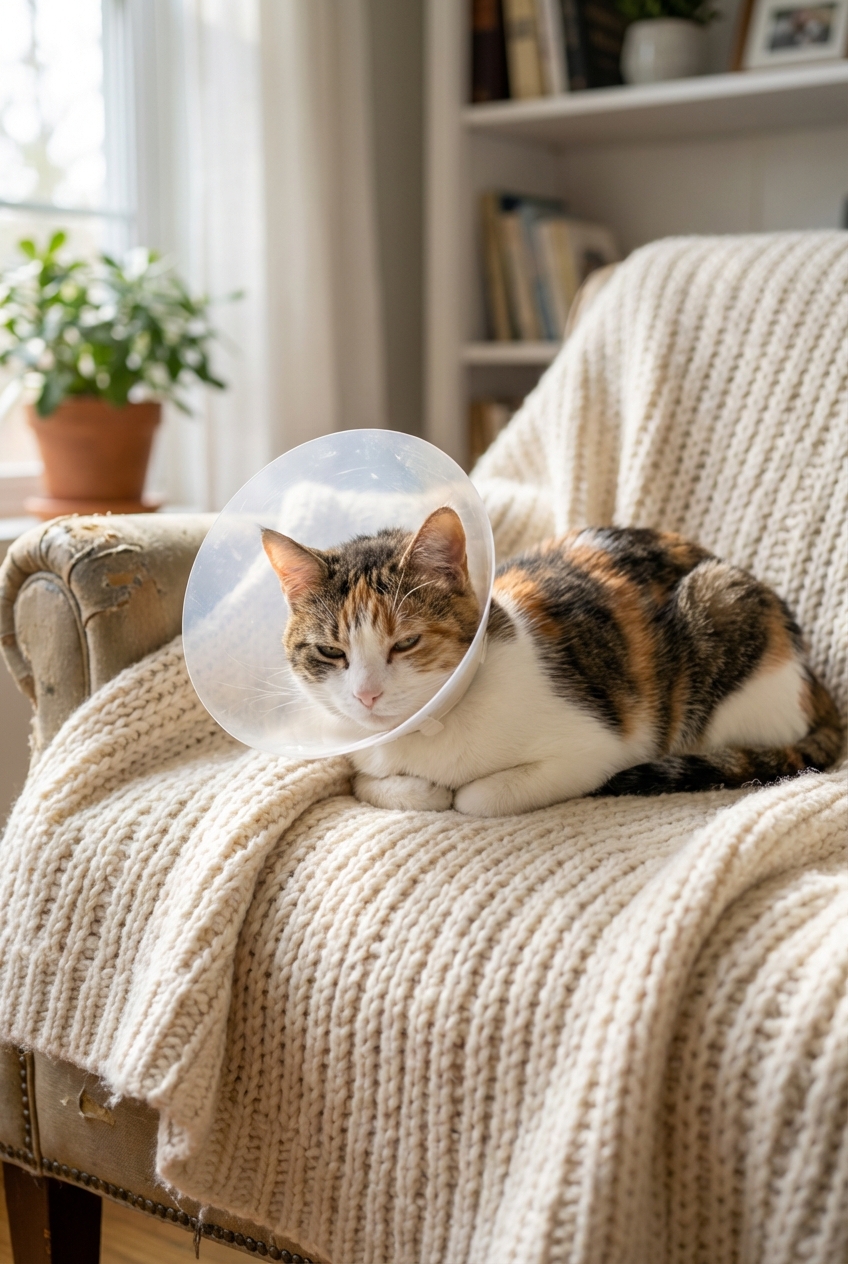
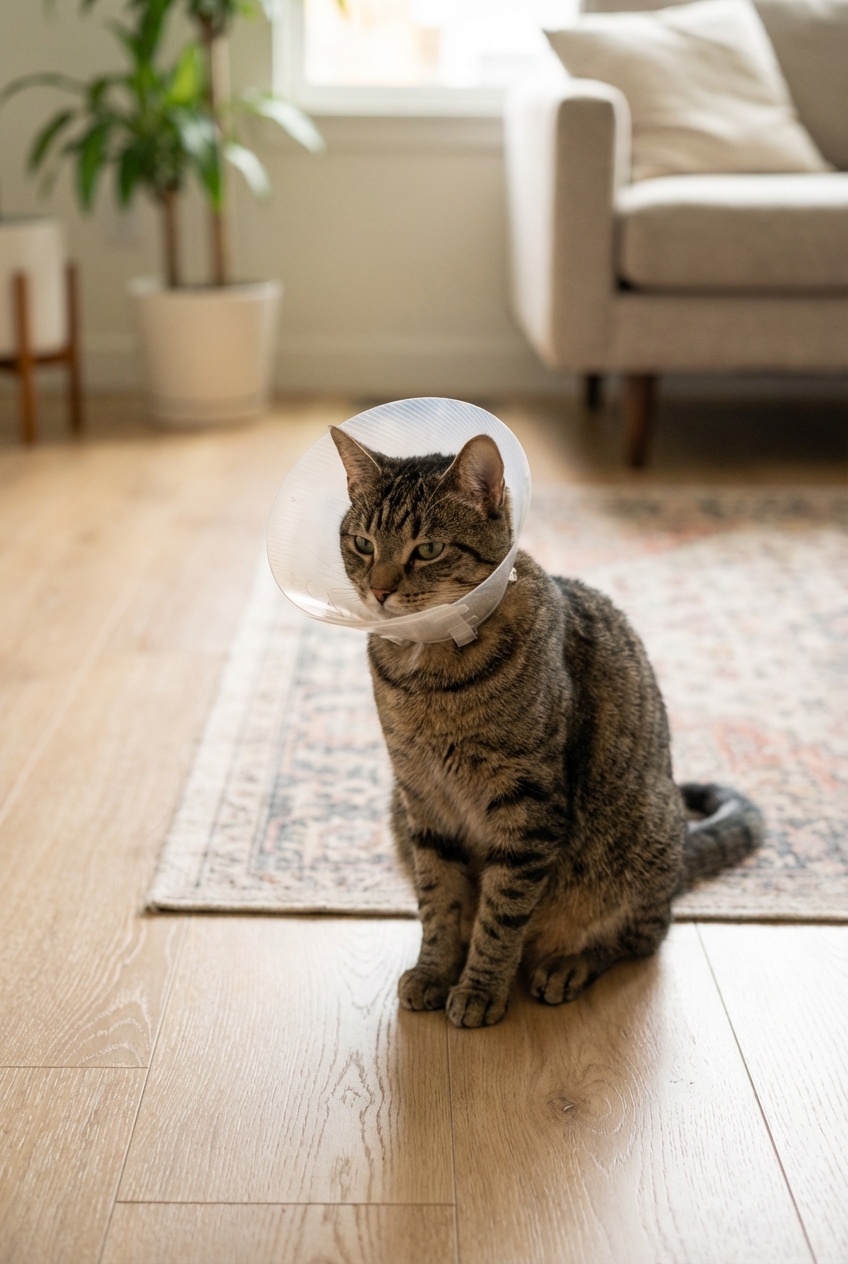
If your cat was sent home with an e-collar (cone), it is for a reason. Many male cats do not bother their incision, but the ones who do can cause big problems fast.
Options your vet may recommend
- E-collar: Most effective for persistent lickers.
- Soft collar: Often more comfortable, but not always effective for flexible cats.
- Recovery suit: Sometimes used, but fit matters and some cats find it stressful.
A helpful rule: if you cannot watch your cat, licking prevention should be on.
Pain control and medications
Pain management helps healing. A comfortable cat rests more, eats better, and is less likely to obsessively lick.
Medication safety basics
- Give exactly what your veterinarian prescribed, at the exact dose and schedule.
- Never give human pain meds like ibuprofen, naproxen, or acetaminophen unless a veterinarian specifically instructs you. These can be toxic to cats.
- If your cat drools, vomits, seems extremely sedated, or you miss a dose, call your clinic for guidance.
If you feel like your cat is painful (hiding, growling when picked up, rapid breathing at rest, not eating) even with medication, that is a good reason to call and check in.
Litter box tips
Keep the litter box easy to access and very clean. Good hygiene reduces infection risk and helps you notice changes quickly.
Simple, practical tips
- For the first few days, many vets prefer paper-based pellets or another non-clumping litter so fine grains do not stick to a fresh incision or tissue glue. Follow your clinic’s instructions if they recommend a specific litter.
- Watch for straining, frequent trips, or crying in the box. Male cats can develop urinary issues unrelated to surgery, and those signs always deserve a prompt call to your vet.
- Track stool and urine for the first couple of days. No poop for 24 to 48 hours can happen with reduced appetite, but if there is no stool beyond 48 hours, your cat is straining, or your cat seems lethargic or uncomfortable, call your veterinarian. No urination is urgent.
Activity restriction
This is usually the hardest part. Your cat may feel “ready to party” before the body is ready.
Ways to limit jumping
- Use a smaller room for a few days with minimal furniture to climb.
- Temporarily block access to tall cat trees, shelves, and window ledges.
- Offer calm enrichment: food puzzles, gentle brushing if your cat enjoys it, and quiet companionship.
- If your cat is bouncing off the walls, ask your veterinarian whether a short-term calming strategy is appropriate.
When to call the vet
Trust your instincts. If something feels wrong, call. Here are the most important red flags:
- Bleeding that does not stop or is more than a few drops
- Incision opening, rapidly increasing swelling, or any pus-like discharge
- Foul odor from the incision area
- Repeated vomiting, refusal to drink, or inability to keep water down
- No urination within 24 hours of coming home, or obvious straining to urinate
- Extreme lethargy beyond the first day, collapse, pale gums, or breathing trouble
- Suspected fever or acting unwell (if you have a rectal thermometer, a temperature over 103°F or 39.4°C is a fever). If you suspect fever, call your vet.
Most clinics would rather you call with a small question than wait until it becomes a big emergency.
Less stress, better healing
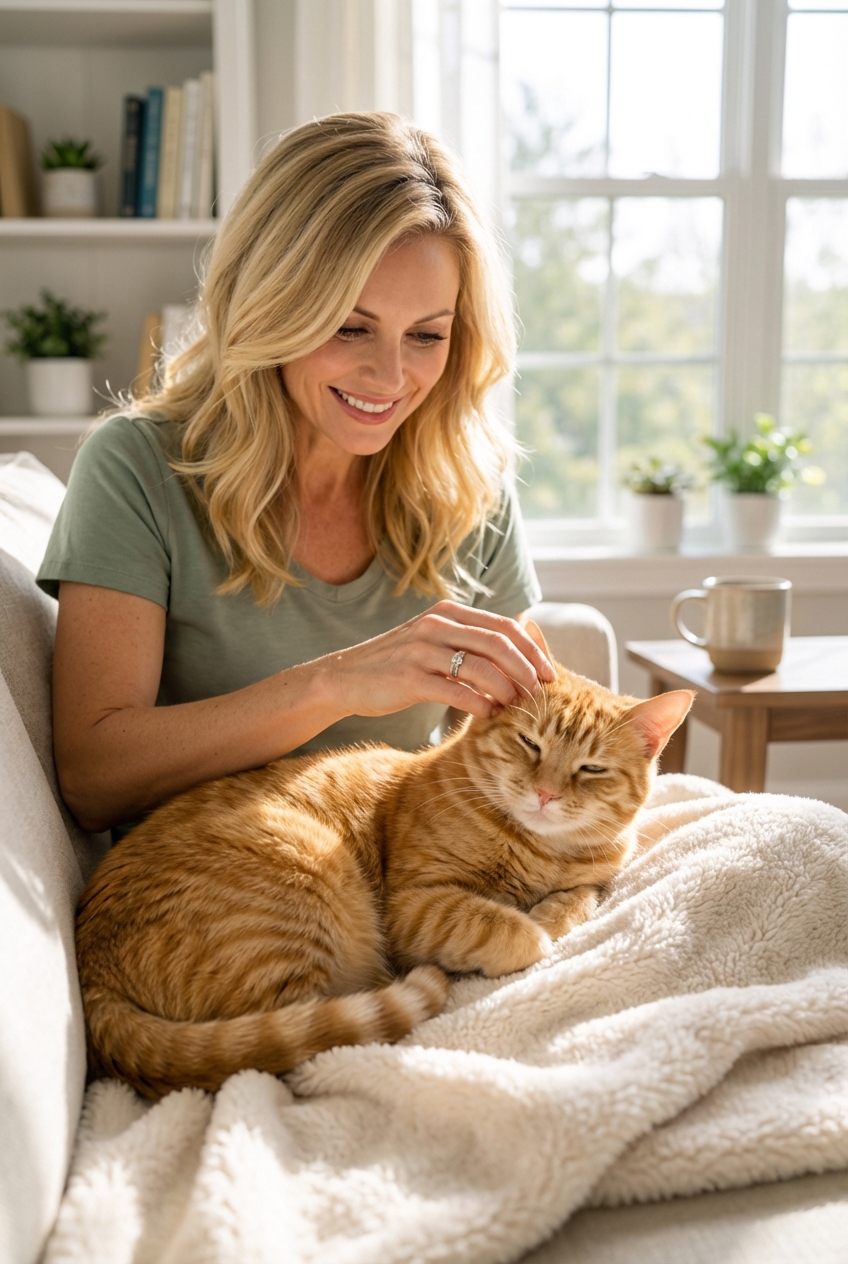
Your cat reads your energy. A calm voice, a predictable routine, and a cozy space go a long way. Keep handling gentle and brief, offer comfort without forcing attention, and celebrate small wins like a normal appetite and a clean, dry incision.
Neutering is a loving, preventive choice that can reduce roaming, fighting, and certain health risks. A few days of recovery is a short chapter in a long, healthier life together.
Quick checklist
- Quiet room, clean litter, water available
- Small meal when fully awake, normal appetite within 24 hours
- Incision check once daily, keep dry
- No licking, cone on when unsupervised
- Medications exactly as prescribed, no human meds
- Limit jumping and rough play for the number of days your clinic advised
- Call the vet for swelling that is worsening, discharge, bleeding, vomiting, urinary straining, breathing issues, or severe lethargy