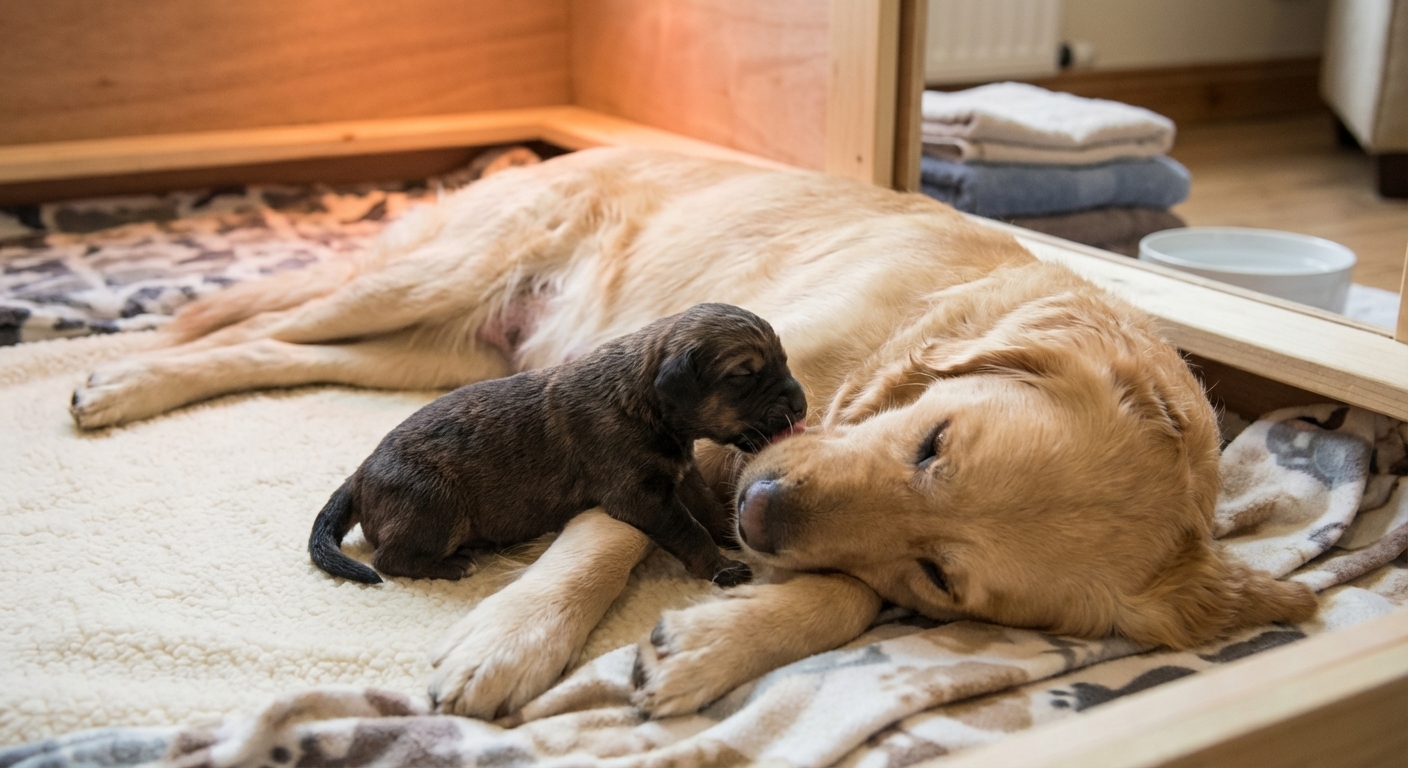
A curious nose. A very waggy welcome.
The first days in the whelping box can be surprisingly fragile. Newborn puppies can go from “tiny squeaks” to “something is wrong” fast. One of the scariest reasons is canine herpesvirus (often shortened to CHV-1). It can look like simple fading at first, especially if the litter gets chilled, but it is a contagious infection that can sweep through a whelping box.

What canine herpesvirus is
Canine herpesvirus (CHV-1) is a virus that dogs can carry for life. In adult dogs it often causes mild signs or none at all. The trouble is that very young puppies have almost no ability to fight it, especially in the first couple of weeks.
CHV-1 is sometimes described as a “cold sore” type herpesvirus for dogs. Like other herpesviruses, it can hide (stay dormant) and then reactivate during stress. For a mother dog, pregnancy, whelping, boarding, shipping, shows, or illness can all be stressful enough to wake the virus up and increase shedding.
Why chilled newborns are at higher risk
Here is the detail that matters most for newborns: CHV-1 replicates best at cooler temperatures, closer to a newborn puppy’s normal body temperature than an adult dog’s. Newborn puppies also cannot regulate their body temperature well. If a puppy becomes chilled, the virus has an easier time multiplying, and the puppy’s immune system becomes less effective.
This is why herpesvirus outbreaks are often described alongside “fading puppy” stories. The chill is not just a symptom. It can be a big part of what lets the infection turn severe.
What “chilled” can look like
- Puppies drifting away from the pile instead of staying tucked in
- Weak nursing or falling asleep at the nipple
- Crying that sounds different, or a pup that gets oddly quiet
- A puppy that feels cool in the mouth or on the paws and belly
Even if you are doing your best, a draft, damp bedding, a tired mom who will not settle, or a puppy that cannot compete for a warm spot can start the dominoes.
Why one sick puppy matters
I like to think of a whelping box as a shared ecosystem. If one puppy is infected with CHV-1, that puppy is not having a private problem. CHV-1 can spread through:
- Nose and mouth secretions (licking, nuzzling, shared bedding)
- Vaginal secretions during birth
- Close contact between littermates and with the dam
Most spread is close-contact and around the time of birth, but in utero transmission is also reported. Newborn puppies are constantly touching each other and mom, so an outbreak can move quickly from “one fading pup” to “multiple pups declining.”
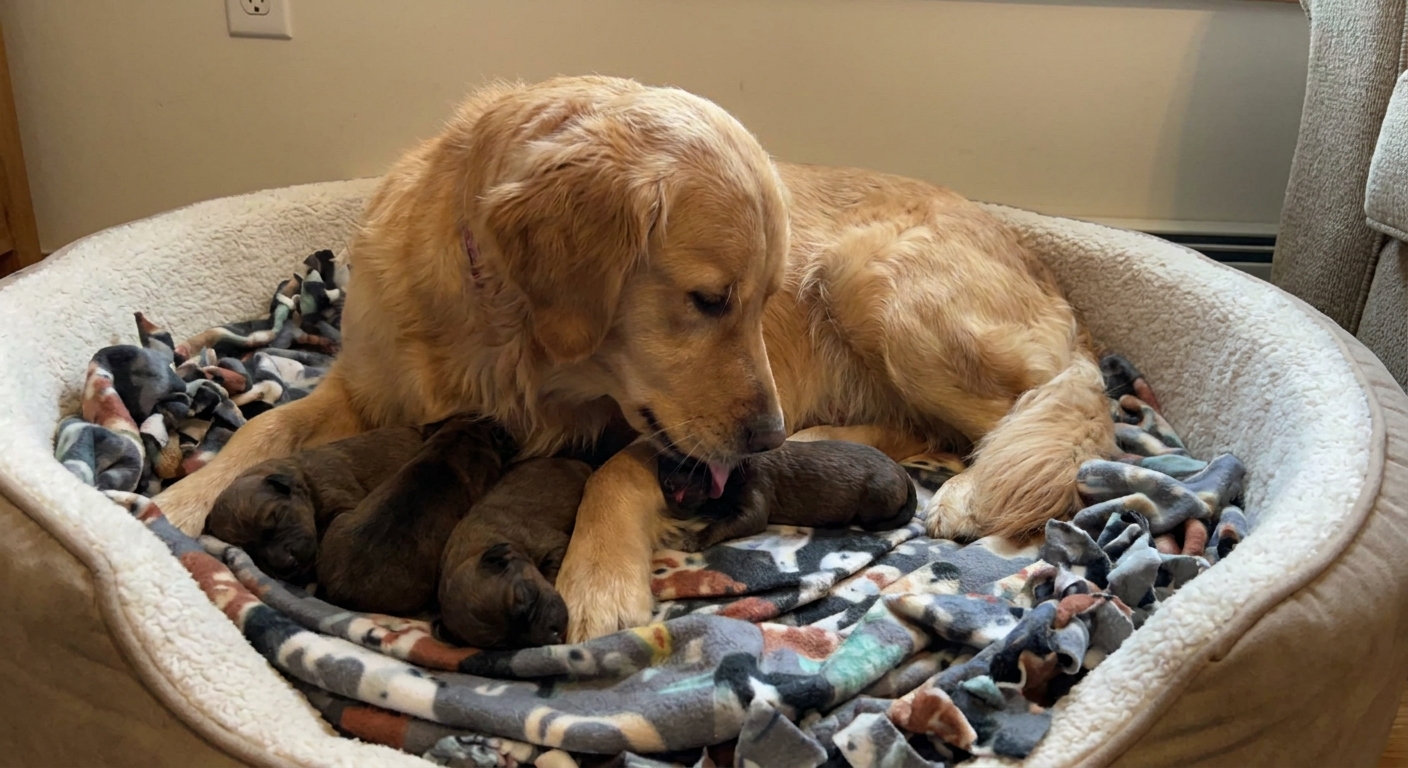
Signs in newborn puppies
CHV-1 in newborns can be subtle at first, then suddenly severe. Call your veterinarian urgently if you see fading plus any of these signs, especially in pups under 2 to 3 weeks old:
- Weakness, poor suckle, or inability to latch
- Persistent crying or a sudden quiet, “flat” puppy
- Chilling or pups that keep separating from the warm pile
- Diarrhea, dehydration, or weight loss
- Abdominal pain (pup seems uncomfortable, tense belly)
- Respiratory signs like nasal discharge or trouble breathing
- Small bleeding spots on the skin or gums, bruising, or sudden collapse (emergency)
Some puppies with CHV-1 die very suddenly. That is not to frighten you. It is to explain why fast action matters.
CHV-1 vs chilling or low blood sugar
Chilling (hypothermia) and low blood sugar (hypoglycemia) are common reasons a puppy fades, and they are treatable. CHV-1 is different because it is an infection that can be triggered or worsened by those problems and can continue progressing even after you warm a puppy up.
When low temperature is the main issue
- Puppy feels cool, moves less, cannot nurse well
- With gentle, gradual warming and access to mom, the puppy may become more active and try to latch
- Improvement can be fairly quick once body temperature is safely back up
When low blood sugar is the main issue
- Puppy is weak, sleepy, may tremble, and cannot sustain nursing
- After appropriate veterinary guidance and correction, energy and suckle can return
- If the puppy then stays warm and nurses, it may stabilize
What can make CHV-1 stand out
- More than one puppy may begin fading within a short window
- A puppy may briefly perk up with warming, then decline again
- There may be GI signs (diarrhea, painful belly) or respiratory signs
- The dam may seem fine, because adult dogs often have mild or no symptoms
Bottom line: hypothermia and hypoglycemia can be the whole story, but they can also be the first chapter of a contagious illness. If you have a fading puppy and anything feels “off” about the pattern, it is time to involve your vet.
When the litter needs a vet today
If you suspect canine herpesvirus, the safest assumption is that the litter has been exposed. Rapid guidance is especially important when puppies are very young and signs can escalate quickly.
Seek urgent care if:
- Any puppy under 3 weeks is fading, weak, or not nursing well
- Two or more puppies are declining, even if the signs seem mild
- A puppy is cold to the touch and not responding to gentle warming
- There is diarrhea, significant weight loss, or dehydration in any puppy
- You see nasal discharge, labored breathing, or a bluish tongue or gums
- A puppy has bleeding, bruising, collapse, or seizures (go immediately)
- The mother dog is unwell (feverish, foul discharge, lethargic) or not caring for the litter
When you call, tell the clinic you have newborn puppies and describe the age in days, the number affected, and whether the puppies are warm, nursing, and gaining weight. If you can, mention whether you are doing daily weight checks. Trends help clinics triage you appropriately.
How vets diagnose and manage it
Diagnosis can involve a combination of history, exam findings, and laboratory testing. Depending on the situation, a veterinarian may use PCR testing (often from swabs) to look for CHV-1.
In outbreaks with sudden neonatal losses, definitive confirmation sometimes comes from necropsy with PCR testing on tissues. In real-time outbreaks with living newborns, vets may also treat based on suspicion because waiting can cost time.
Management is primarily supportive care and environment control, plus any clinic-specific plan your veterinarian recommends. For newborn puppies, supportive care can include:
- Careful warming and monitoring of temperature
- Fluids and nutrition support if a puppy cannot nurse well
- Oxygen support if breathing is affected
- Monitoring for secondary infections and complications
In some cases, your veterinarian may also discuss antiviral medication. Use varies, and it is very much a vet-directed decision in neonates. Antibiotics do not treat viruses, but a vet may still use them in specific situations where secondary infection is a concern.
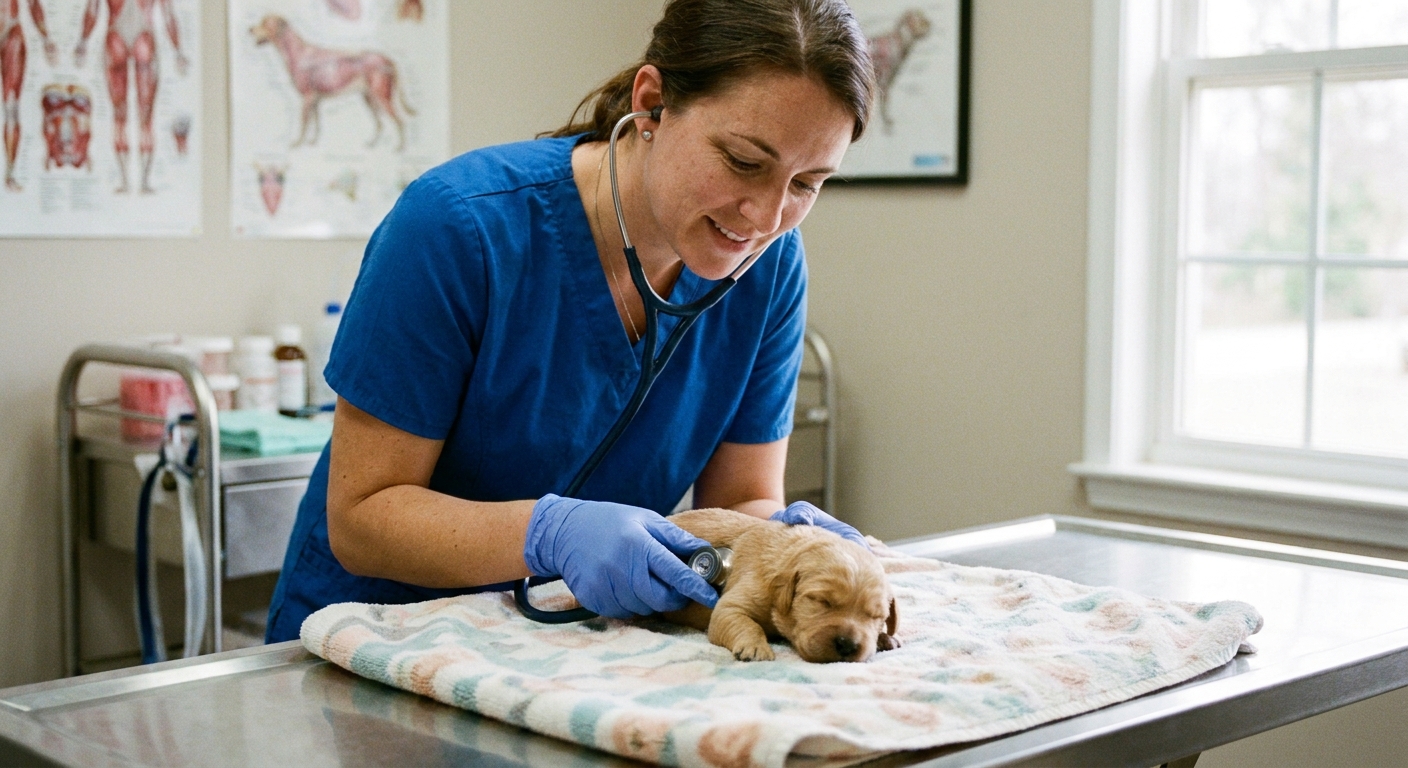
What to do while calling
If a newborn is fading, time matters. While arranging urgent care, focus on two goals: stabilize warmth and avoid spreading anything through unnecessary contact.
Quick, sensible steps
- Keep puppies warm with a steady heat source that cannot burn them. Puppies must be able to crawl away from heat if they get too warm.
- Swap damp bedding for dry, clean bedding.
- Limit handling to what is necessary for safety and assessment.
- Wash your hands before and after touching any puppy, and between litters if you are caring for multiple dogs.
- Change shirts or use a clean cover layer if you are moving between adult dogs, litters, or kennel areas.
- Watch the whole litter for weak suckling, constant crying, diarrhea, or chilling.
A very important caution: do not force-feed a weak puppy unless your veterinarian has shown you exactly how and when. Aspiration, meaning inhaling fluid into the lungs, is a serious risk in neonates.
Adult dogs and CHV-1
Adult dogs can get sick from CHV-1, but it often looks mild. They may have no signs, or they may have vague respiratory signs. CHV-1 can also affect reproduction. The biggest emergency, though, is the newborn period, because neonates are uniquely vulnerable.
Prevention basics
You cannot control every risk, but you can lower the odds of an outbreak affecting a litter:
- Keep the whelping area warm, dry, and draft-free, especially for the first 2 to 3 weeks.
- Limit visitors and dog-to-dog contact around late pregnancy, whelping, and early nursing.
- Practice good hygiene with bedding, hands, and any supplies moved between dogs.
- Use kennel-level biosecurity if you have multiple dogs or litters, including dedicated cleaning tools and minimizing foot traffic between areas.
- Talk to your veterinarian before breeding if you have had prior unexplained neonatal losses or suspect CHV-1 in your lines.
In some regions, a CHV vaccine for pregnant dogs is available, and it may be used as part of a prevention plan. Availability varies by country, so the practical step is to ask your veterinarian what is and is not offered where you live.
Because CHV-1 can be carried silently, prevention is mostly about reducing exposure opportunities and keeping puppies warm enough that their defenses can do their job.

FAQ
How fast can CHV-1 affect newborn puppies?
In very young puppies, it can move quickly. Mild signs like weak nursing can progress within hours, especially if puppies are chilled.
When do puppies usually get sick?
When CHV-1 causes severe illness, it most often shows up in the first 1 to 3 weeks of life, when puppies are least able to regulate temperature and fight infection.
If one puppy dies suddenly, should I assume herpesvirus?
Not automatically. Newborn puppies can die from several causes. But a sudden loss, especially alongside chilling or more than one puppy fading, is a strong reason to contact your veterinarian immediately and discuss CHV-1 as a possibility. If your vet recommends it, testing after death can sometimes clarify what happened and help protect the rest of the litter.
Can I separate a sick puppy to protect the litter?
Ask your veterinarian. Separation can reduce contact exposure, but newborn puppies also need warmth and frequent feeding. In many cases, the litter has already been exposed, and the plan focuses on stabilizing everyone while your vet advises next steps.
The sniff-test takeaway
If a newborn puppy is fading and cold, warming and steady nursing support matter. But if you have a chilled litter plus rapid decline, multiple puppies affected, diarrhea, or breathing trouble, think bigger than temperature or low blood sugar alone. Canine herpesvirus should be on your urgent-call list, because one sick puppy can be a warning flag for the whole whelping box.