Canine Cognitive Dysfunction (CCD) is one of the most heartbreaking diagnoses I see families face. It can look like your dog is physically present, but the day-to-day reality becomes a loop of pacing, confusion, nighttime restlessness, and accidents that seem completely out of character.
If you found this page searching “dog dementia when to put down”, I want you to know two things right away: you are not alone, and asking the question does not mean you love your dog any less. It means you are paying attention to quality of life, including your dog’s comfort and your own ability to provide safe, compassionate care.
What CCD can look like
Veterinarians often describe CCD using the acronym DISHA (sometimes expanded to DISHAA). Different sources expand the letters a little differently, but the core idea is the same: changes in orientation, social interactions, sleep, house training or learning, activity, and anxiety. Here are the signs families most often tell me about.
Pacing and restlessness
Pacing can be a form of anxiety, confusion, or an inability to settle. You might notice your dog walking the same route repeatedly, circling, or standing and staring for long periods.
- They pace even after exercise and potty breaks
- They cannot get comfortable, especially in the evening
- They seem “stuck” in corners or behind furniture
Disorientation
Disorientation is more than being forgetful. Your dog may appear lost in familiar spaces, get turned around in the yard, or stare at walls.
- Getting stuck behind doors or under tables
- Walking into a room and seeming unsure why they are there
- Not recognizing familiar routines right away
Sleep changes
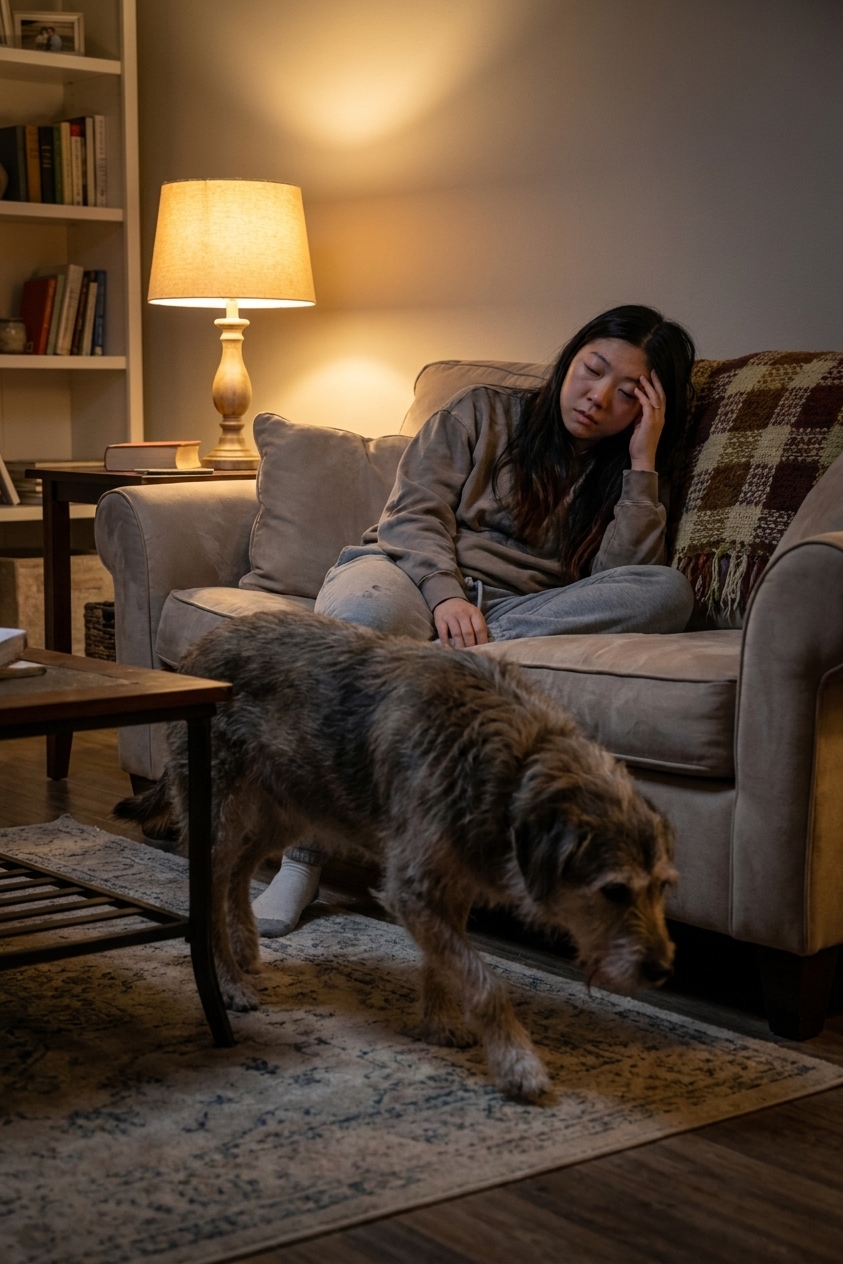
This is a big driver of family exhaustion. Many dogs with CCD sleep more during the day and become restless at night, vocalizing, wandering, or asking to go out repeatedly.
- Wandering from room to room overnight
- Whining, barking, or seeming panicked after bedtime
- Frequent nighttime potty requests that may not lead to actual elimination
House soiling
Accidents happen for many reasons, so it is important not to assume every accident is dementia. With CCD, the pattern often looks like your dog truly does not understand that they need to go out, cannot find the door, or forgets they just went.
- Urinating or defecating soon after coming inside
- Soiling in unusual places, such as near the bed or food bowl
- Seeming surprised or unconcerned afterward
Rule out treatable problems
CCD is common in older dogs, but how common it is depends on age and the study you look at. Either way, several medical issues can mimic or worsen these symptoms. A thorough veterinary visit is not just a formality. It is how we avoid missing something fixable.
Ask your veterinarian about screening for:
- Pain (arthritis, dental pain, spine pain) which can cause pacing and sleep disruption
- Urinary tract infection or urinary incontinence contributing to accidents
- Kidney disease or diabetes increasing thirst and urination
- GI disease causing urgency and house soiling
- Vision or hearing loss contributing to “confusion”
- Neurologic disease (including brain tumors) which can overlap with CCD signs
Your vet may recommend bloodwork, urinalysis, blood pressure, and sometimes additional diagnostics based on what they find on exam.
If you can, take short videos of episodes like pacing, getting stuck, circling, staring, or nighttime vocalizing. Those clips can help your veterinarian distinguish pain, anxiety, vestibular problems, and other neurologic issues from CCD progression.
Hospice vs euthanasia
With dementia, families often feel stuck because their dog may still eat, still wag, and still look physically okay. At the same time, their dog may be frightened much of the day, unable to rest, and unable to perform normal daily functions.
In my experience, hospice is often appropriate when symptoms are present but can be managed with medication, environmental support, and a realistic caregiving plan. A hospice consult usually means setting clear goals (comfort, dignity, safety), trying targeted changes for a defined time window, and creating a follow-up and emergency plan so you are not making decisions in the middle of a crisis.
Euthanasia becomes a reasonable question when suffering outweighs comfort, when good moments become rare, or when safety and basic care are no longer feasible.
When hospice can fit
- Your dog has predictable “good windows” most days
- Nighttime restlessness improves with a vet-guided plan
- Accidents are manageable with routine changes and support
- Your dog still seeks comfort, enjoys food, and can relax
When euthanasia may be near
- Your dog seems persistently anxious or panicked, especially at night
- Pacing, vocalizing, or agitation is frequent and not responding to treatment
- They cannot settle enough to get restorative sleep
- House soiling is frequent and distressing for your dog, not just inconvenient
- They get “stuck” often or seem frightened in familiar places
- They stop engaging with family or seem distant most of the day
- Caregiver burnout is escalating and safety is becoming a concern
It is not only about extending life. It is about protecting your dog from ongoing fear and confusion, and protecting your household from breaking under the strain.

Good days vs bad days
When emotions are high, memories get blurry. Many families tell me, “Yesterday was awful, but today seems okay. Am I overreacting?” A written score helps you see the trend over time and gives your veterinarian something concrete to work with.
Daily 5-point checklist (0 to 5)
Each evening, score these five categories. Use 0 for “not acceptable today” and 1 for “acceptable today.” Add them up for a daily score out of 5. If you are unsure, mark 0 and add a quick note about what you saw.
- Comfort and anxiety: Did your dog seem calm and safe in their body today?
- Rest: Did your dog get real sleep and settle without prolonged pacing?
- Orientation: Could your dog navigate familiar spaces without repeated “stuck” moments?
- Hygiene: Were accidents minimal, or if accidents happened, were they manageable without distress?
- Connection and enjoyment: Did your dog show interest in food, affection, gentle play, sniffing outside, or other favorite things?
How to use it
- 4 to 5: Generally a good day
- 3: A mixed day, watch closely and adjust supports
- 0 to 2: A hard day, consider contacting your vet for next-step changes
Now track the pattern. There are a few practical guidelines many families find helpful, but they are not strict medical rules. Use them as conversation starters with your veterinarian, not as a pass or fail test.
- If bad days outnumber good days over a 2-week period, it may be time for a serious end-of-life conversation.
- If there are clusters of 0 to 2 days despite adjustments, euthanasia may be the kindest option.
You can also note “red flag events” in a journal, like nighttime panic episodes, getting trapped and vocalizing, biting out of fear, or wandering until they are exhausted.
Caregiver burnout matters
I want to say this plainly because many people feel guilty even thinking it: your wellbeing matters in this decision. CCD can turn into round-the-clock care. Sleep deprivation and constant vigilance are not sustainable for most families, and they can put everyone at risk.
Burnout often shows up as:
- Severe sleep loss from nighttime wandering or vocalizing
- Missing work, struggling with childcare, or conflict at home
- Constant cleaning and worry about damage or sanitation
- Feeling dread rather than warmth when you hear your dog moving
- Feeling trapped because you cannot leave your dog safely
Burnout does not mean you failed. It often means the disease has progressed beyond what a loving home can reasonably manage without your dog and your family suffering.
Supportive care that can help
Some dogs truly do improve with the right plan. The goal is not perfection. The goal is less fear, more rest, and more predictable good days.
Home setup
- Use nightlights in hallways and near the water bowl
- Block access to tight corners and behind furniture
- Keep furniture layout consistent
- Try a comfortable, easily washable “safe zone” with familiar bedding
- Use a harness and non-slip rugs for stability
- Consider gates to limit wandering, and waterproof covers for beds and favorite resting areas
Accident support
- Increase potty opportunities and keep a predictable schedule
- Use enzymatic cleaners and avoid punishment (punishment increases fear and does not help CCD)
- Ask your vet about options like belly bands, dog diapers, washable pads, and barrier setups that reduce stress for everyone
Routine and enrichment
- Keep feeding, potty, and bedtime consistent
- Gentle sniff walks can reduce anxiety more than intense exercise
- Food puzzles can help some dogs, but avoid frustration
Veterinary-guided options
Your veterinarian may discuss medications and supplements that support cognition, sleep, and anxiety. Some dogs benefit from a combination approach that targets nighttime restlessness and overall brain aging. Ask specifically about options for:
- Nighttime agitation
- Anxiety and pacing
- Underlying pain control
- Prescription diets or supplements with evidence for cognitive support
Never start or combine calming supplements and prescription medications without your veterinarian’s guidance, especially for seniors who may have liver, kidney, or heart disease. Product quality can vary widely, and some supplements can interact with other drugs or cause unexpected sedation.
What euthanasia is like
Many families fear the process as much as the decision. While details vary by clinic and by patient, euthanasia is typically designed to be gentle and not frightening.
- Where it happens: Often at the clinic, and sometimes at home with a mobile veterinarian if that is available in your area.
- Sedation first: Many veterinarians give a calming injection first so your dog is deeply relaxed and sleepy before the final medication.
- The final medication: It is usually given through a vein and leads to a peaceful passing within minutes, similar to drifting into unconsciousness.
- Aftercare: Your clinic can explain cremation and memorial options ahead of time so you are not deciding under pressure.
If you want, ask your veterinarian to walk you through the exact steps they use and what you can expect emotionally and practically. Having a plan can reduce fear for you and for your dog.
Questions for your vet
These questions can help you leave the appointment with clarity and a plan.
- Based on my dog’s symptoms, what stage of CCD do you suspect?
- What medical issues do we still need to rule out?
- What changes could realistically improve sleep and reduce anxiety within 1 to 2 weeks?
- What would you consider “uncontrolled suffering” in a CCD case?
- If we choose hospice, what is our follow-up schedule and what is the emergency plan?
- What signs would tell you that euthanasia is the kindest option?
- Can you explain how euthanasia works, step by step, including sedation options?
When it feels too soon and too late
CCD creates an especially painful kind of doubt because your dog may still have flashes of their old self.
A phrase you may hear in hospice spaces is: better a week early than a day too late. This is not a clinical cutoff. It is a values-based reminder to avoid a crisis night where your dog is panicked, cannot settle, or becomes unsafe, and your only option is an emergency visit under stress.
If your dog’s life has become mostly confusion, fear, and sleeplessness, choosing euthanasia is not giving up. It is choosing a peaceful ending over prolonged distress.
If you are on the fence, bring your good-day and bad-day scores to your vet. Ask them to help you interpret the trend and build a clear threshold for when you will say, “This is no longer fair to my dog.”
Quick safety notes
- Sudden worsening of disorientation, circling, head tilt, falling, or seizures warrants urgent veterinary care.
- Increased drinking and urination can be medical, not “just dementia.”
- If your dog is snapping or biting due to confusion or fear, discuss safety immediately with your veterinarian.
One gentle next step: Start the daily 5-point checklist tonight and schedule a vet visit or hospice consult within the week. You do not have to decide everything in one day, but you deserve a plan.