If your dog’s itching seems to have a calendar, like springtime paw chewing, summer belly redness, or fall ear infections, you may be dealing with canine atopic dermatitis (often shortened to “atopy”). Atopy is a long-term, allergy-driven skin condition where a dog’s immune system overreacts to things in the environment. It can look like “just itchy skin” at first, but over time it often becomes a pattern of seasonal or cyclical flares, recurring ear infections, and skin that never fully settles down.
I’m Shari Shidate, a veterinary assistant in Frisco, Texas, and one of the most helpful mindset shifts I can offer is this: atopy is usually manageable, but it is rarely “one-and-done.” The goal is a long-term plan that reduces flare frequency, protects the skin barrier, and keeps your dog comfortable with the least medication necessary.
Quick note: This article is educational and cannot diagnose your dog. If your dog is itchy, has ear debris or odor, or keeps getting skin infections, your veterinarian should help guide the plan.
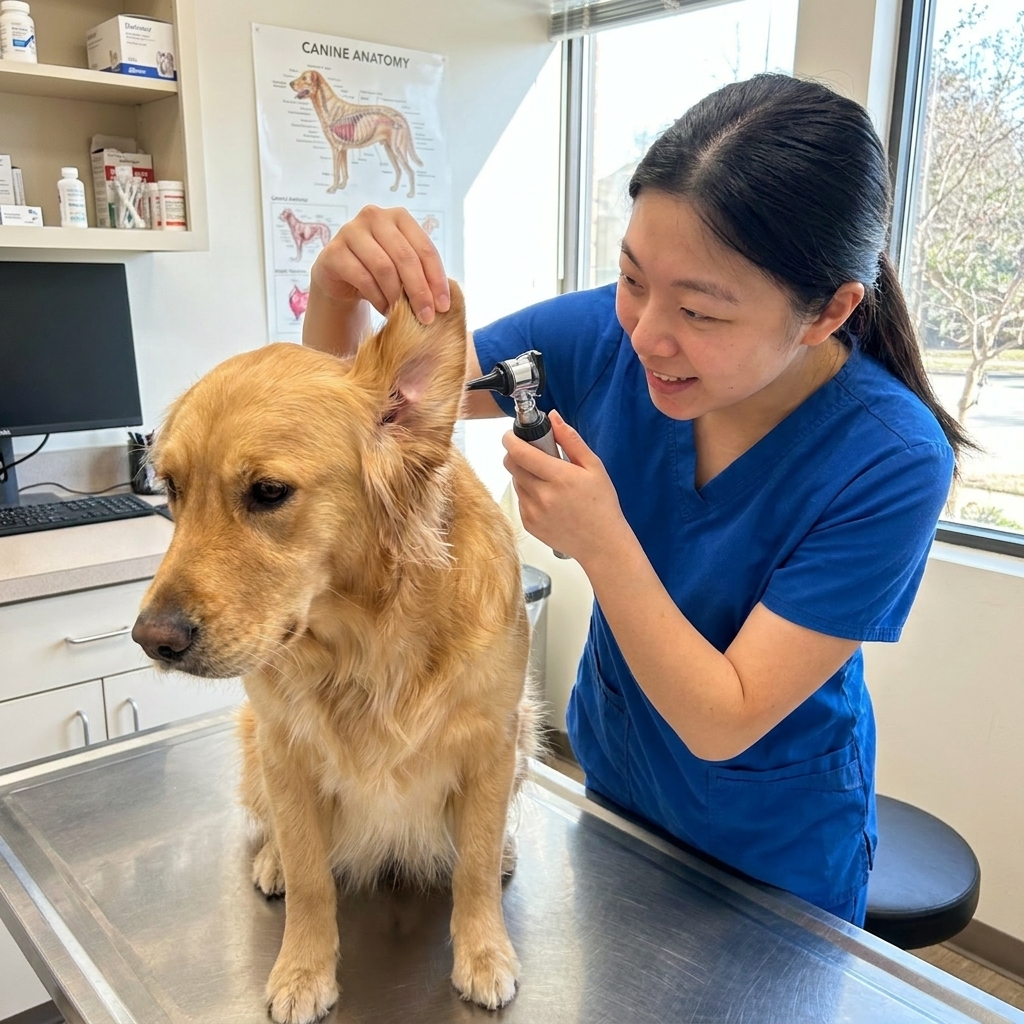
What atopy is and why it flares
Atopic dermatitis is a combination of two big problems happening at the same time:
- A “leaky” skin barrier that lets allergens and irritants in more easily.
- An overactive immune response that releases inflammatory signals when those allergens arrive.
Many dogs with atopy are genetically predisposed, meaning their skin and immune system are simply more reactive. You cannot change that predisposition, but you can change how intense and frequent the flares become.
Common environmental triggers
Environmental allergies are the classic drivers of atopy. Depending on where you live, a dog can react to:
- Pollens (trees, grasses, weeds)
- Dust mites (often year-round, worse indoors)
- Molds (common in humid areas, leaf piles, damp patios)
- Animal dander (less common, but possible)
Seasonality is a major clue, but it is not required. Some dogs are predictable every spring or fall, while others are itchy year-round (dust mites are a common reason).
Environmental allergies vs food triggers
This is one of the most confusing parts for families, so let’s make it simple.
Atopy is most commonly environmental
With canine atopic dermatitis, the immune system often reacts to inhaled or skin-contact allergens. Dogs “wear” their allergies, so you commonly see:
- Paw licking or chewing
- Rubbing face on carpet
- Itchy belly and armpits
- Redness around eyes and muzzle
- Recurrent ear inflammation
Food reactions can look similar
Food-triggered itch can overlap with atopy. Some dogs have both. Food allergy (or adverse food reaction) is often:
- Non-seasonal (itching all year, not just in “allergy months”)
- Less responsive to simple environmental changes
- Sometimes paired with GI signs like soft stool, mucus, or frequent bowel movements (not always)
Important note: most adverse food reactions are to proteins (like chicken, beef, dairy, egg), not grains. Grain-free diets are not automatically better for itchy dogs, and some grain-free, boutique, or exotic-ingredient diets may be associated with diet-associated dilated cardiomyopathy (DCM) in certain cases. Your veterinarian can help you choose a safe approach for your dog’s whole-body health, not just the skin.
The most reliable way to check food as a trigger
Blood, saliva, and hair tests marketed for food allergies in pets are not considered reliable for diagnosis. The diagnostic standard is a veterinarian-guided elimination diet trial using a prescription hydrolyzed diet or a truly novel protein diet, followed by controlled re-challenges.
If your dog’s itch is seasonal, we often start by tackling environmental atopy first. If it is year-round, or if progress stalls, then we revisit food as a possible contributor.
How vets diagnose atopy
There is no single “atopy test” that confirms the diagnosis on day one. In most clinics, diagnosis is a combination of history, pattern, exam findings, and ruling out look-alikes. Your veterinarian may recommend:
- Flea control review and a strict prevention plan, because flea allergy can stack on top of atopy.
- Skin and ear cytology (microscope exam of swabs) to check for yeast and bacteria.
- Skin scraping or other parasite testing if mites are a concern.
- Fungal testing if ringworm is on the list.
- Diet trial if food is suspected, especially with non-seasonal signs.
Less commonly, if the picture is atypical or treatment response is poor, your veterinarian may discuss broader medical screening (for example, endocrine disease) or referral to a veterinary dermatologist.
Ear infections: a common clue
Many dogs with atopic dermatitis do not start with full-body itching. They start with ears.
The ear canal is lined with skin. When allergy inflammation is active, the canal swells and produces more wax. That warm, moist environment is perfect for yeast and bacteria to overgrow. Then the infection adds more inflammation, which adds more itch, and the cycle builds.
Signs your dog’s ears may be allergy-driven
- Recurring infections, especially with seasonal timing
- Head shaking or scratching at one or both ears
- A “corn chip” smell (can be associated with yeast)
- Dark waxy debris
- Red, thickened ear canal skin over time
Ear infections are painful. If you see head tilt, crying, loss of balance, or swelling of the ear flap, that is an urgent vet visit.

The itch cycle (cytokines in plain terms)
Here is the science without the headache. When your dog encounters a trigger, the immune system releases tiny “messenger proteins” that tell the body to inflame and itch. These messengers are called cytokines. One of the key itch messengers in dogs is IL-31.
Think of cytokines like group texts your immune system sends out:
- Allergen arrives (pollen, dust mite, mold).
- Skin barrier lets it in more easily than it should.
- Immune system sends cytokine messages that turn up itch and inflammation.
- Your dog scratches and chews, damaging skin further.
- More allergens and microbes get in, so the body sends even more messages.
That is why atopy can look like it escalates overnight. It is not just the trigger. It is the self-feeding itch loop.
A staged long-term plan
The best outcomes come from a layered plan. You do not have to do everything at once, but you do want a strategy that covers: trigger reduction, itch control, infection control, and skin barrier repair.
Stage 1: Reduce exposure
You cannot remove all allergens, but you can lower the “allergy load” enough to reduce flare intensity.
- Wipe-downs after outdoor time: Use a damp cloth or pet-safe wipes on paws, belly, and face.
- Rinse paws after walks during high pollen days.
- Weekly bedding wash in hot water when possible.
- HEPA vacuuming and minimizing dust collection zones.
- Limit mold exposure: avoid leaf piles, damp shaded areas, and musty garages.
If fleas are present in your region, be extra careful: flea allergy dermatitis can stack on top of atopy and make everything feel out of control.
Stage 2: Control itch and inflammation
This is where your veterinarian’s guidance matters most. The “right” medication depends on your dog’s age, infection history, flare frequency, and other health conditions.
- Apoquel (oclacitinib): Helps reduce itch signals quickly in many dogs. Not appropriate for every dog (for example, very young puppies), and your vet will weigh infection history and other risk factors.
- Cytopoint (lokivetmab): An injectable antibody that targets IL-31, the itch messenger. Many dogs do well on it, especially when owners want to avoid daily pills. Your vet will still consider the full medical picture.
- Short courses of steroids: Can be very effective for severe flares, but they have more side effects when used long-term.
- Antihistamines: Mild benefit for some dogs, often used as part of a bigger plan rather than a standalone fix.
- Antibiotics or antifungals: If a secondary infection is present, you cannot simply suppress the itch and expect it to resolve. The infection must be treated.
Ask your vet if cytology (looking at ear or skin swabs under a microscope) is appropriate. It is one of the fastest ways to confirm yeast and bacteria and guide treatment.
If infections keep returning, your vet may discuss culture and targeted therapy. This supports good antibiotic stewardship and can help avoid repeated trial-and-error medications.
Stage 3: Skin barrier care
When the skin barrier is healthier, fewer allergens get through and your dog may need less rescue medication. Barrier care can include:
- Regular bathing with a veterinarian-recommended shampoo (often 1 to 2 times weekly during flares, then taper).
- Leave-on conditioners or sprays that support the skin barrier.
- Medicated wipes for paws, skin folds, and “hot spot” prone areas.
- Ear maintenance with the right cleaner, especially for dogs with chronic otitis. Your vet can recommend what is safe based on the eardrum and infection history.
If bathing sounds intimidating, start small. Even a paw soak or belly rinse during peak season can reduce allergens sitting on the skin.

Testing and immunotherapy
If your dog’s atopy is persistent or severe, talk to your veterinarian about referral to a veterinary dermatologist. They may recommend:
- Intradermal skin testing or serum allergy testing for environmental allergens.
- Allergen-specific immunotherapy (allergy shots or oral drops) tailored to your dog’s results.
Immunotherapy is the closest thing we have to changing the long-term trajectory of atopy. It does not work overnight. Many dermatologists recommend giving it 6 to 12 months for a fair assessment, and results can range from partial improvement to major reduction in flares and medication needs.
Maintenance plan vs flare plan
One of the most practical things you can do is create two plans with your vet: a maintenance plan and a flare plan.
Maintenance plan
- Consistent flea prevention if recommended in your area
- Skin barrier routine (baths, wipes, leave-on products)
- Scheduled itch control medication if needed
- Ear cleaning schedule for chronic otitis prone dogs
Flare plan
- How quickly to start rescue itch control
- When to come in for ear or skin cytology
- What signs mean infection is likely
- When to recheck if symptoms do not improve
This takes the panic out of flare-ups. You are not guessing. You are following a plan.
Common complications
Atopy is rarely just “itchy skin.” Common issues that ride along include:
- Secondary bacterial skin infections (pyoderma)
- Malassezia (yeast) dermatitis
- Interdigital paw inflammation and recurrent paw licking
- Lick granulomas from persistent licking
- Chronic otitis that becomes harder to control over time
The good news is that when you treat the allergy pattern and the infections together, many dogs feel dramatically better.
Red flags
Itchy dogs deserve a full workup, especially early on. Contact your veterinarian promptly if you notice:
- Hair loss in patches, circular lesions, or intense scaling (possible mites or ringworm)
- Pus, draining sores, or widespread crusting
- Strong odor and greasy coat (often infection or seborrhea)
- Ear pain, head tilt, balance issues, or swelling
- Itching that is severe and sudden with facial swelling (possible acute allergic reaction)
Atopy is common, but it is not the only cause of itch. Getting the diagnosis right is what makes the long-term plan work.
Supporting your dog at home
If you are feeling overwhelmed, start with the basics and build:
- Track patterns: note season, weather, walks, and flare days.
- Keep nails trimmed: less damage when scratching happens.
- Use a cone or recovery collar during intense chewing periods to protect the skin while treatment kicks in.
- Ask about omega-3s: many dogs benefit from veterinary-recommended EPA and DHA for skin support. Dosing matters, so check with your vet.
And please be kind to yourself. Atopic dermatitis is frustrating, but with a layered plan and good follow-up, many dogs go from miserable to comfortable and playful again.
If your dog has recurring ear infections plus seasonal itching, do not just treat the ears. Treat the allergy pattern underneath them.